
Best Non Comedogenic Self Tanner for Face 2026
You want a healthy, believable glow on your face. You do not want clogged pores, a forehead breakout, or that weird too-dark jawline that gives self tanner away instantly. That's why facial tanning feels so much riskier than body tanning, especially if your skin already gets congested, reactive, or shiny by midday.
The good news is that a breakout-safe glow is possible. The trick is choosing a non comedogenic self tanner for face that behaves more like lightweight skincare than a heavy body product, then applying it in a way that doesn't push your skin over the edge. I've pulled together the ingredient shortcuts, the affordable dupe-style picks worth buying, and the application fixes that matter.
This post may contain affiliate links, which means I may receive a commission if you purchase through my links, at no extra cost to you. Please read the disclosure policy for more information.
Introduction
You wash your face, do your acne-safe skincare routine, and then hesitate at the last step because one bad self tanner can mean clogged pores, uneven fade, and a week of trying to calm your skin back down.
That hesitation is reasonable. Facial tanning products have improved, but the label still does not do all the work for you. A product can say non comedogenic and still feel too rich, too fragranced, or too occlusive for skin that breaks out easily.
The better approach is to shop like you would for skincare. Check the format first. Lightweight drops, waters, gels, and thin serums are usually easier for acne-prone skin to tolerate than heavy creams. Then check the ingredient base, because the breakout risk often comes from the supporting formula, not just the tanning active.
That is the gap I want to close here. Instead of relying on marketing terms, use a simple safe-ingredient cheat sheet and compare affordable dupes that make sense for congested, sensitive, or oily skin.
A good face tan should look believable and keep your skin calm. You should not have to choose between the two.
What Non Comedogenic Really Means for Facial Tanners
Non-comedogenic is a helpful filter, not a guarantee.
On a facial tanner, the label usually means the formula was designed to be less likely to clog pores. That matters, but acne-prone skin still reacts to texture, fragrance, rich emollients, and how often you apply the product. I treat face tanner like skincare first and color second, because a nice glow is not worth a week of congestion.
The issue usually is not the tanning active itself. In facial tanners, DHA is generally considered low risk for clogging pores, while the more common problem is the base formula around it, as explained in this DHA and non-comedogenic facial tanner overview.
The color ingredient usually isn't the pore problem. The base formula is.
That distinction helps you shop smarter. If a product breaks you out, check the carrier oils, esters, fragrance, and finish before blaming the tan.
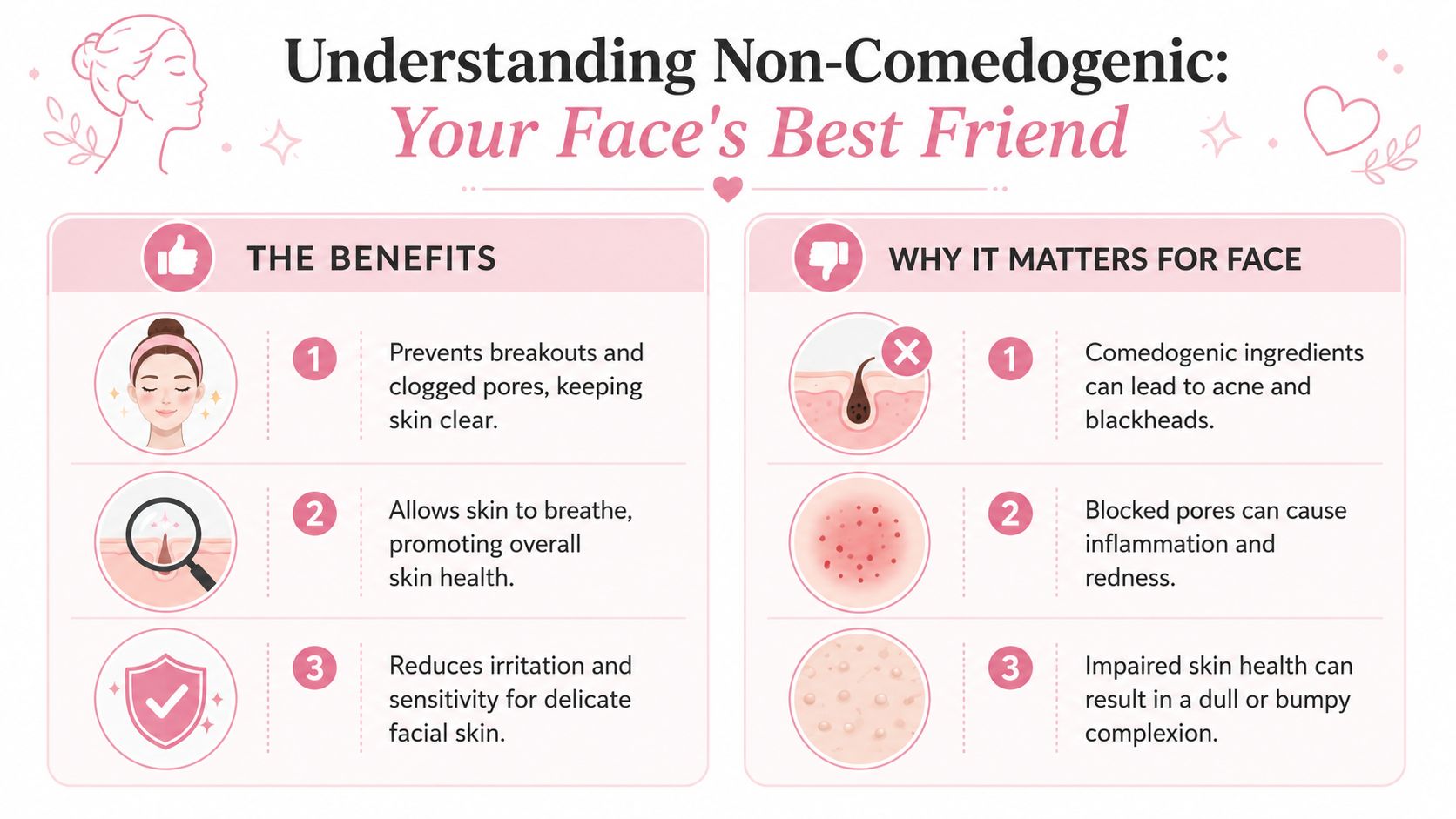
Red flags and green flags to screenshot
Here is the quick cheat sheet I would use while comparing ingredient lists.
Red flags
- Heavy butters like cocoa butter or shea butter, especially near the top of the list
- Rich oils that leave a greasy film and sit on the skin
- Fatty-acid esters such as isopropyl myristate or isopropyl palmitate
- Strong fragrance if your breakouts are tied to irritation
- Creamy, buttery textures that feel closer to body tanner than facial skincare
Green flags
- Drops, mists, waters, and serums with a lighter finish
- Water-based textures that dry down cleanly
- Humectants like aloe or hyaluronic acid
- Alcohol-free or fragrance-free formulas if your skin is easily irritated
- Face-specific products built for daily or gradual use
That is the gap between skincare marketing and what works in practice. A bottle can say non-comedogenic and still be too rich for oily or acne-prone skin. Texture tells you a lot.
For anyone also trying to simplify the rest of their routine, pairing your tanner with a gentle cleanser matters. If your skin gets congested easily, this guide to face wash for acne is useful because the wrong cleanser can make a decent self tanner routine much harder to manage.
If shine and clogged pores are a constant issue, these non-comedogenic products for oily skin can help you build a routine that supports the tan instead of fighting it.
What works better in real life
For facial tanning, lighter formulas usually win. Drops and watery serums are easier to spread thinly, easier to layer, and less likely to create the patchy fade you often get from richer creams. They also give you more control, which matters if you are trying to keep breakouts calm while still adding color.
A gradual result is usually the better trade-off. Fair and reactive skin tends to look better with a softer build than with one heavy application. That approach costs less in the long run too, because you are less likely to waste money on products that look good on day one and trigger problems by day three.
Top 5 Non Comedogenic Self Tanner Dupes Under $25
You buy a face tanner because it says non-comedogenic, use it for two nights, and then end up treating clogged pores instead of enjoying the glow. That is why price alone is not the filter I use. For acne-prone skin, the better budget buy is the one with a light texture, a short ingredient list, and a format you can control.
These five picks all stay under $25, but they are not here just because they are cheap. They make sense as dupes because they copy the parts people usually want from pricier face tanners: drops, serum-like textures, flexible depth, and less of that heavy overnight feel. The key test is whether they fit into a skincare routine without turning your forehead or chin into a mess.
A quick cheat sheet before the list. For breakout-prone skin, I usually look for drops, waters, mists, or thin serums first. I am more cautious with rich oils, thick creams, coconut-heavy formulas, and anything that feels overly occlusive on the face. “Non-comedogenic” on the box helps, but the texture and supporting ingredients usually tell you more.
Quick comparison
| Product Dupe | Best For | Approx. Price |
|---|---|---|
| Garnier Ambre Solaire Natural Bronzer Self-Tan Face Drops | Most people, especially beginners | Under $25 |
| Bondi Sands Pure Self Tanning Drops | Custom glow with a simple routine | Under $25 |
| Isle of Paradise Self-Tanning Face Drops | Flexible shade options | Under $25 |
| L'Oréal Sublime Bronze Facial Drops or serum-style face tan options | Drugstore shoppers who want lightweight texture | Under $25 |
| b.tan facial tanning drops or mist-style face tan options | Very budget-focused shoppers | Under $25 |
1. Garnier Ambre Solaire Natural Bronzer Self-Tan Face Drops
If someone wants one low-risk place to start, this is usually it. The formula style is close to what people like about luxury tanning drops, but the price is easier to justify, especially if facial tanning is still an experiment for you.
Why it works well in practice:
- Drop format gives you control over strength
- Lighter feel tends to sit better on oily or combination skin than a cream tanner
- Easy to mix with a moisturizer you already know your skin tolerates
Safe-ingredient angle: this type of formula makes sense if your skin does better with simple layering and fewer heavy leave-on products.
Best dupe for: prestige tanning drops with a skincare-style finish.
2. Bondi Sands Pure Self Tanning Drops
Bondi Sands Pure is a smart buy for someone who already has a moisturizer that behaves well and does not want to replace half their routine. You add the tan step without adding another thick product on top.
What makes it worth the money:
- It gives the same customizable result many shoppers want from premium brands
- The texture category is usually easier for acne-prone skin to handle
- It works well for people who prefer a subtle build instead of one dramatic jump in color
This is one I would choose over a richer facial lotion if your skin gets congested around the cheeks or jawline.
3. Isle of Paradise Self-Tanning Face Drops
This one earns its spot because shade flexibility matters. If your skin tone shifts easily, or if past self tanners have turned too orange or too deep, having more control can save you from wasting money.
Why acne-prone skin often gets along with it better than cream formulas:
- Drops layer thinly
- You control the number of drops
- You can pair it with a moisturizer your skin already likes
Trade-off: if your skin is very reactive, more customization can also mean more room for overdoing it. Start lower than you think you need.
Best dupe for: expensive face drops sold on custom bronze and shade control.
4. L'Oréal Sublime Bronze facial drops or serum-style options
L'Oréal is the practical pick. It is the sort of product you can replace without hunting through specialty beauty sites, and that matters if you find something your skin tolerates well.
Why I keep it in the under-$25 conversation:
- Drugstore availability makes it easy to repurchase
- Serum-style or drop textures usually feel lighter than classic self-tan creams
- It fits the skincare-meets-tanning category many acne-prone shoppers need
If you want a dupe that feels familiar, accessible, and low-effort, this is a strong option.
5. b.tan facial tanning drops or mist-style options
b.tan is the budget end of the list, but it still serves a purpose. If the choice is between a cheap face-specific tanner and using body mousse on your face, I would choose the face product almost every time.
Why it can still be the smarter buy:
- Face-specific formats are usually lighter and easier to spread
- Lower price makes patch testing less financially annoying
- Mist or drop options give you more control than a thick body formula
Money-saving rule: A basic face tanner that suits acne-prone skin is usually a better purchase than a more expensive product with the wrong texture.
How I'd choose between them
For the safest all-around starting point, pick Garnier Ambre Solaire Natural Bronzer Self-Tan Face Drops.
For a simple skincare routine you do not want to disrupt, pick Bondi Sands Pure Self Tanning Drops or Isle of Paradise Self-Tanning Face Drops, then mix them into a moisturizer you already trust.
For easy drugstore replacement, go with L'Oréal.
For the lowest spend, try b.tan, but stay picky about texture. If it feels sticky, greasy, or overly coated after application, it is probably not the best long-term match for acne-prone skin.
How to Prep and Apply for a Streak-Free Glow
You do your usual skincare, add face tanner, wake up hopeful, and then spot a darker ring around the hairline and clogged pores along the jaw. That usually comes down to prep, product amount, and where the formula sits on the skin while it develops.
For acne-prone skin, application starts with ingredient awareness. A face tanner can be labeled non comedogenic and still wear badly if you apply too much, mix it with a heavy cream, or let dry patches grab all the pigment. The goal is simple. Keep the skin surface smooth, keep the routine calm, and keep the formula light.
A patch test is still required. Curology advises testing first so you can check both skin reaction and final color before using a new product on your whole face, and Bondi Sands also recommends patch testing in its face tan guidance.
Prep checklist
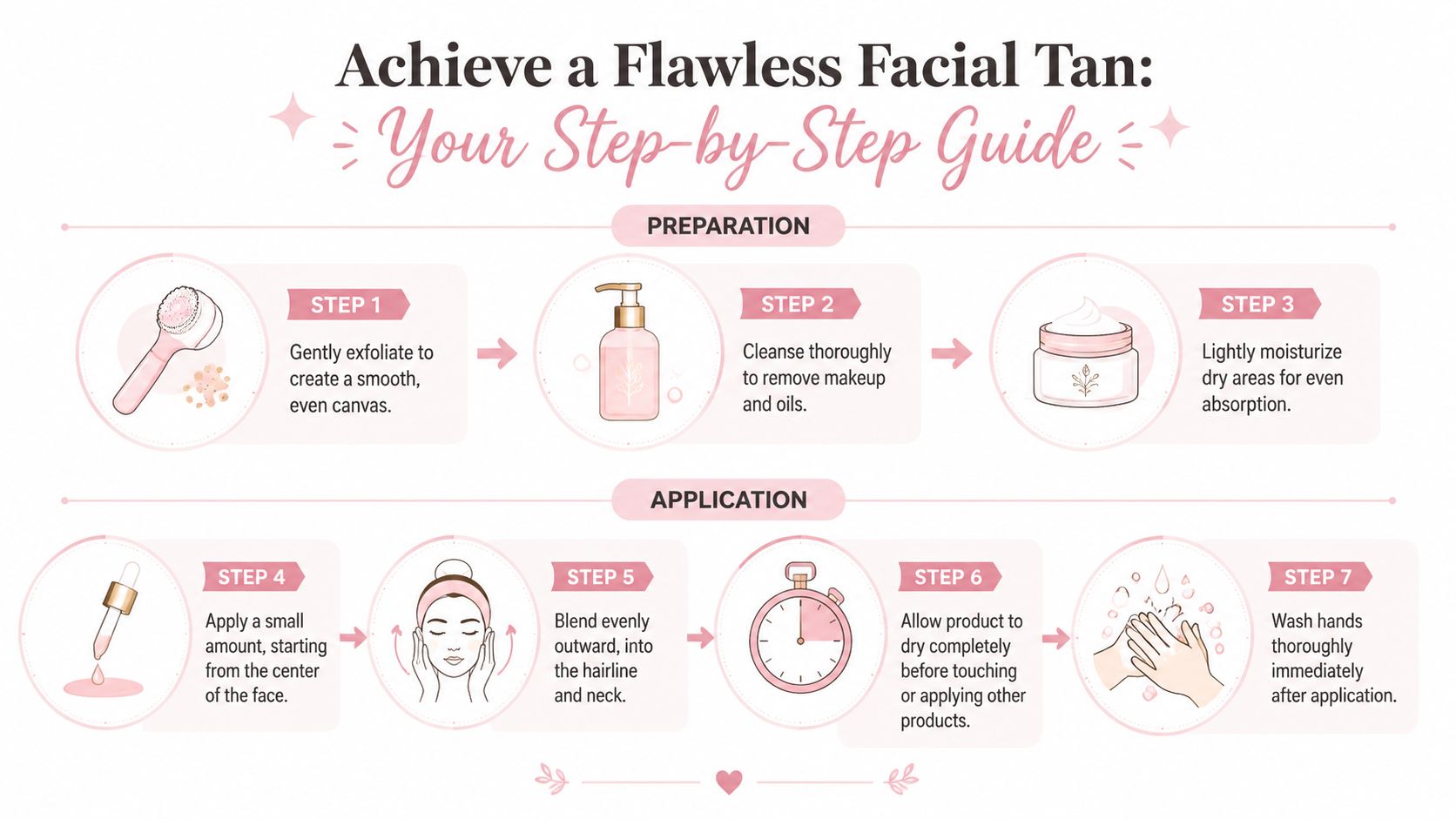
Prep matters more than technique.
- Use the lightest format your skin tolerates well. Drops, watery serums, and fine mists usually sit better on oily or breakout-prone skin than rich creams.
- Skip strong actives that night. Retinoids, exfoliating acids, scrubs, and peel pads can leave skin irritated or uneven, which makes color catch in patches.
- Start with very little product. Facial tanner develops more than it looks like it will.
- Mix drops only into a moisturizer you already know your skin likes. Many breakouts often originate here, not from the DHA, but from the cream base underneath it.
- Keep the rest of the routine bland. A gentle cleanser and a familiar moisturizer are enough.
If your skin gets irritated easily, pairing your tan with a non-comedogenic toner for acne-prone skin can help keep the rest of the routine low-drama.
Application that looks natural
This is the method I trust most for acne-prone skin because it limits overload and keeps the tan looking like skin, not product.
- Cleanse, then let skin dry fully. Water left around the nose or jaw can dilute the product and create uneven spots.
- Apply a small amount of plain moisturizer only where you run dry. Usually that means around the nostrils, between the brows, along the hairline, or on any healing blemish marks that grab color.
- Use fewer drops than you think you need. For most face-drop formulas, a small amount mixed into moisturizer or serum gives a more forgiving result than applying the tanner at full strength.
- Apply from the center of the face outward. Spread over cheeks, forehead, and chin first, then soften what is left over the hairline and jaw.
- Go light around active breakouts, brows, and the sides of the nose. Those areas can turn darker fast.
- Blend the leftover product onto the neck. That keeps the face and neck in the same color family without making the neck too deep.
- Wash hands right away and leave the face alone while it develops. No makeup, no extra serum, no touching.
This demo gives a good visual for blending and placement:
What usually goes wrong
The biggest mistake is chasing instant color. Facial tanners often look sheer at first, so people add more, especially around the center of the face. A few hours later, the nose crease, brows, and hairline are noticeably darker.
The second mistake is using the wrong partner product. If you mix tanning drops into a rich moisturizer with pore-clogging ingredients, the tan may look fine while your skin pays for it later. This is why I care more about the full formula combo than the non comedogenic claim alone.
If you want the safest approach, do less. Use a lighter base, a smaller amount, and one extra application the next day if needed. That usually looks better and costs less than trying to correct an overdone face tan.
Troubleshooting Common Face Tanning Problems
You do your usual skincare, add a face tanner, wake up glowing, then spot a new clogged pore on your chin and a dark patch around your nose. That usually comes down to one of two things. The base formula was too heavy for your skin, or the product grabbed onto dry, uneven areas.
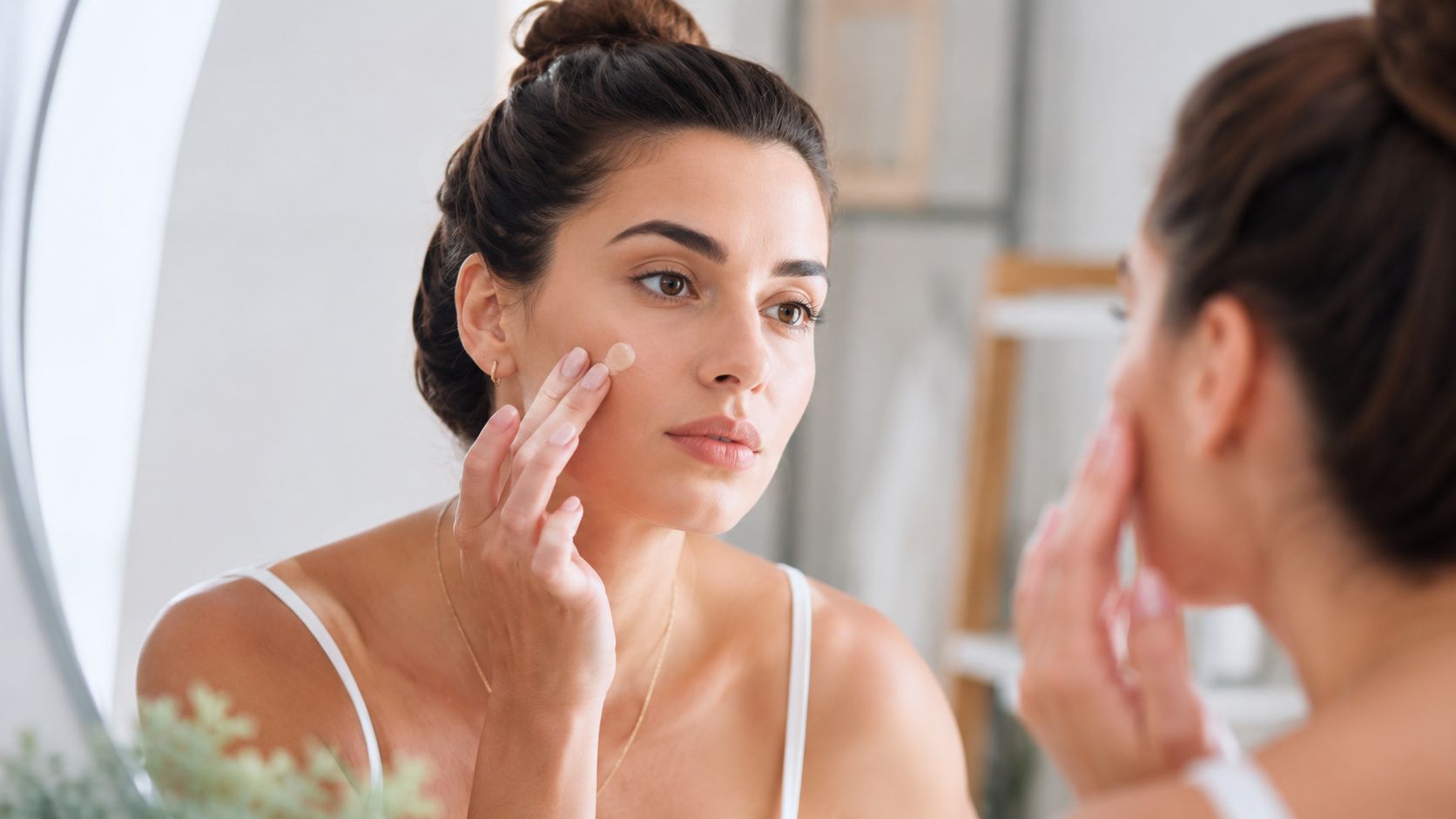
You broke out anyway
A non-comedogenic label helps, but it does not tell you everything. I look at the ingredient list first, especially if skin clogs easily. Rich oils, heavy butters, and common fatty-acid esters can be the actual problem, especially in cream formulas.
Use this quick cheat sheet:
- Usually lower-risk textures: drops, watery serums, mists, gel-cream formulas
- Ingredients acne-prone skin often tolerates better: glycerin, hyaluronic acid, squalane, aloe, panthenol, niacinamide
- Ingredients worth extra caution with if you clog easily: coconut oil, cocoa butter, isopropyl myristate, ethylhexyl palmitate, heavier waxy bases
What to do next:
- Pause that tanner
- Keep the rest of your routine simple for a few days
- Try a lighter format next
- Patch test the full combo, meaning the tanner plus the moisturizer you plan to mix it with
That last step saves money. A good tanner can still fail if you pair it with the wrong base.
Your tan is streaky or patchy
Patchiness usually starts before application. Dry flakes around the nose, old acne marks, healing spots, and rough texture on the chin all catch pigment faster than the rest of the face.
Before your next round:
- Smooth texture gently the day before
- Use only a thin layer of moisturizer on dry zones
- Keep product light around brows, nostrils, and the hairline
- Do not keep blending once it starts setting
If uneven texture is a repeat problem, fix that first. A budget-friendly best cheap exfoliator for face can make a bigger difference than switching tanners again.
The color turned too dark
This happens fast with facial tanners because the face has smaller zones where color pools. Sides of the nose, under the brows, along the hairline, and around active breakouts are the usual trouble spots.
Go into correction mode gently. Use a mild cleanser, lukewarm water, and a soft washcloth. Then leave it alone. Scrubbing hard only adds irritation, and irritated skin tends to fade unevenly.
Next time, adjust one variable only:
- Use fewer drops
- Choose a lighter moisturizer mix
- Skip consecutive-night applications
- Build depth over two or three sessions
It looks orange on you
The problem is often depth, not undertone alone. Fair and acne-prone skin usually looks better with a softer result because inflammation and post-breakout marks already add visible color variation.
A sheer application reads more skin-like. That is also why I prefer acne-safe dupes that develop gradually instead of rich express formulas that push too much color in one go.
Your Non Comedogenic Self Tanner Questions Answered
Can I use body self tanner on my face
You can, but it's usually not the best move. Face-specific tanners exist for a reason. The category has shifted toward lighter, gentler formulas because the face is more reactive and more prone to clogged pores than the body. If your skin breaks out easily, a dedicated facial format is the safer bet.
Are drops better than creams for acne-prone skin
Often, yes. Drops tend to be easier to customize and they usually feel lighter, especially when mixed into a moisturizer your skin already tolerates. Rich cream formulas can be fine for some people, but if you're congestion-prone, I'd start with drops, a mist, or a serum texture.
How often should I reapply face tanner
There isn't one perfect schedule because it depends on how often you cleanse, exfoliate, and use active skincare. In practice, a gradual top-up approach often yields the best results, rather than waiting until the color disappears completely and then applying a heavy layer again.
Can I use retinol or acids with facial self tanner
You can, but don't pile everything on the same night if your skin is reactive. Strong actives can make skin more sensitive and can also make your tan fade less evenly. A simple routine works better. Use your tanner on a calm-skin night, then bring actives back in carefully.
What's the best format for beginners
Drops are an easy starting point because they offer more control. You can mix a small amount into moisturizer and build from there. If you're nervous about overdoing it, avoid rich facial tanning creams at first.
What's the best affordable dupe overall
For most readers, Garnier Ambre Solaire Natural Bronzer Self-Tan Face Drops is the best all-around pick. It fits the lighter facial tanning format, it's budget-friendly, and it makes it easier to build color without committing to a heavy formula.
Conclusion The Best Way to a Breakout-Free Tan
A good facial tan shouldn't cost you clear skin. The best results usually come from choosing a light, face-specific formula, avoiding rich occlusive bases, and applying less than your instincts tell you to. If your skin is acne-prone, the label matters, but the ingredient base and texture matter more.
Out of all the affordable dupes here, Garnier Ambre Solaire Natural Bronzer Self-Tan Face Drops is the best value pick. It matches what is needed from a non comedogenic self tanner for face: control, lighter texture, and a lower-risk way to build glow gradually. Keep the routine simple, patch test first, and your tan will look a lot more like healthy skin and a lot less like damage control.
If you love finding affordable beauty picks that perform like the expensive stuff, Finding Favourites is worth bookmarking. It's packed with practical dupe roundups, budget-friendly skincare finds, and smart swaps that help you spend less without settling for disappointing products.