
Glycolic Acid vs AHA: Which Is Best? + 5 Top Dupes
You're probably here because you picked up one product labeled glycolic acid and another labeled AHA, then realized the skincare aisle somehow turned into chemistry class. One bottle sounds specific. The other sounds broad and clinical. Both promise smoother, brighter skin. Neither makes the choice easy.
The short answer is simple. Glycolic acid is an AHA. The actual question isn't glycolic acid or AHA as if they're separate categories. It's whether you want glycolic acid specifically, or another AHA that may suit your skin better and cost less.
This post may contain affiliate links, which means I may receive a commission if you purchase through my links, at no extra cost to you. Please read the disclosure policy for more information.
| Pick | Best for | Budget note |
|---|---|---|
| The Ordinary Glycolic Acid 7% Toning Solution | Texture and brightness on more tolerant skin | Budget favorite |
| The INKEY List Lactic Acid Serum | Dry or easily irritated skin | Affordable gentle option |
| Good Molecules Glycolic Exfoliating Toner | Beginners who want a milder glycolic feel | Wallet-friendly |
| Byoma Clarifying Serum | Congestion-prone skin that needs a gentler approach | Good mid-budget choice |
| Naturium Glycolic Acid Resurfacing Gel 10% | Experienced acid users | Higher, but still accessible |
Your Guide to Navigating the World of Skincare Acids
Why this comparison confuses so many shoppers
The phrase glycolic acid vs AHA sounds like a fair matchup, but it's a little misleading. It's like asking “poodle vs dog.” One is the category. The other is one member inside it.
That matters when you shop, because brands often use “AHA” on the front of the bottle when they want flexibility. Sometimes that means the product contains glycolic acid. Sometimes it means lactic acid, mandelic acid, or a blend. If your skin is sensitive, acne-prone, dry, or just easily annoyed, that difference can completely change whether a product works beautifully or leaves you red and over-exfoliated.
What actually matters when choosing
I'd narrow the decision down to three practical questions:
- Your goal: Do you want smoother texture, more glow, help with dullness, or a stronger resurfacing effect?
- Your tolerance: Can your skin handle a faster-acting acid, or does it sting from half the products you try?
- Your budget: Do you need one reliable product that pulls its weight without luxury branding?
Bottom line: The best acid isn't the strongest one. It's the one your skin will actually tolerate long enough to show results.
A lot of people waste money by buying the “most powerful” formula first. That sounds efficient, but it often backfires. If a product irritates your skin, you won't use it consistently. Then even a well-formulated exfoliant becomes expensive clutter.
The money-saving way to shop
If you want to spend smart, don't start by chasing prestige packaging. Start by identifying the type of AHA that fits your skin.
- Choose glycolic acid if your main priority is visible resurfacing and your skin isn't especially reactive.
- Choose lactic acid if you want a gentler, more comfortable experience.
- Choose mandelic acid if your skin tends to be sensitive and congestion-prone.
- Choose an AHA blend if you want a middle ground and don't need the strongest single-acid option.
Once you know that, dupes get easier to spot. You stop shopping by hype and start shopping by function.
What Are AHAs The Skincare Powerhouse Family
You're standing in the skincare aisle looking at one bottle that says “glycolic acid” and another that says “AHA serum,” and it sounds like you need to choose between them. You don't. Glycolic acid already belongs to the AHA group.
The family name versus the individual member
AHA stands for alpha-hydroxy acid. These are water-soluble exfoliating acids that work on the skin's surface by loosening the bonds that keep older dead cells hanging around. As those cells shed more evenly, skin tends to look smoother, brighter, and less rough.
That surface action is the key reason AHAs are usually a smart starting point for dullness, flaky texture, and uneven-looking tone.
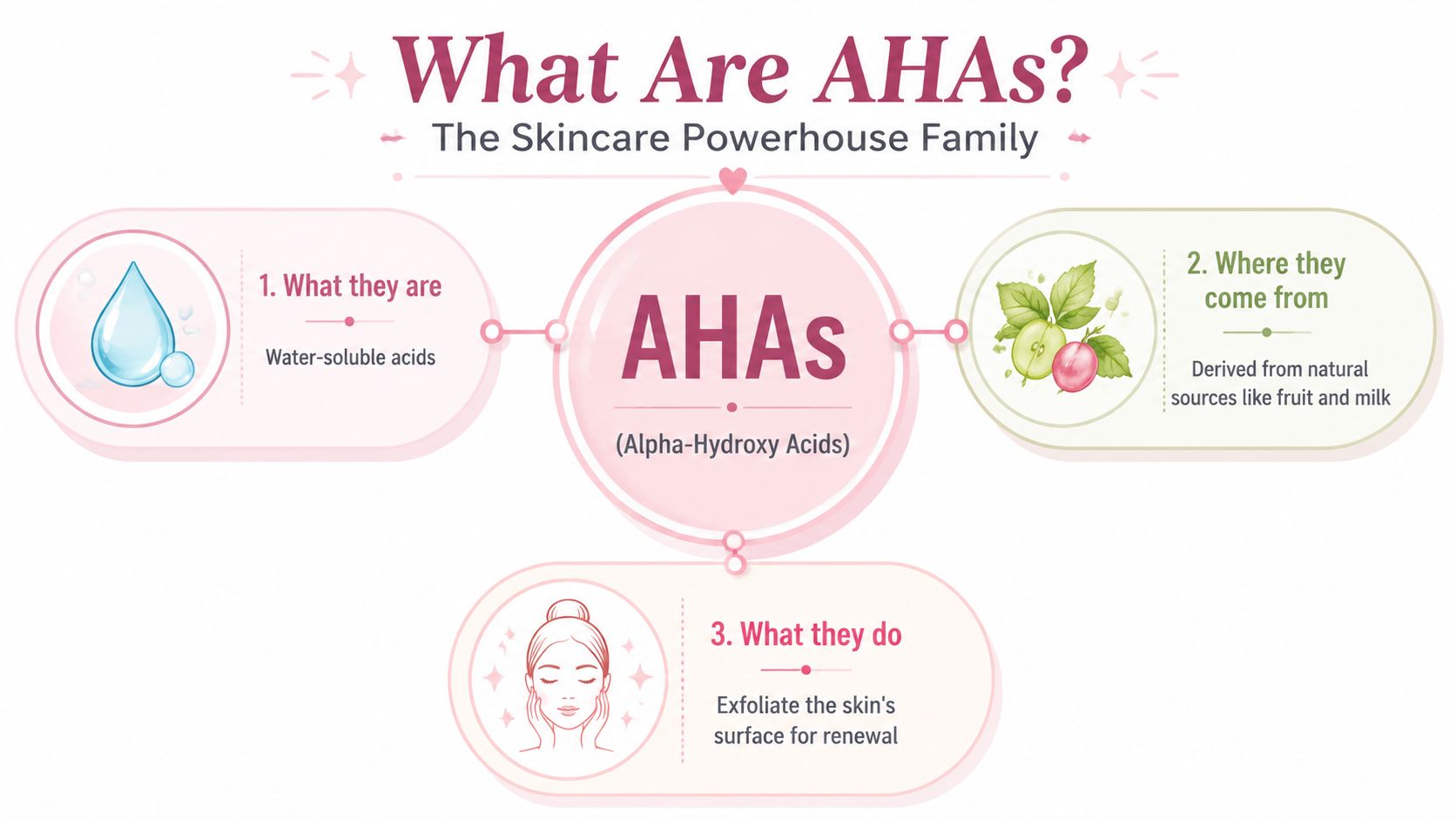
One label-reading rule clears up a lot of confusion fast. Glycolic acid is an AHA. It is not a separate category. AHAs mostly target the surface, while BHA is usually the better-known option for oilier, pore-focused concerns. That distinction is explained clearly in NYC Laser's exfoliation guide, especially if you want a practical overview of where exfoliation helps on the face and body.
Why AHAs got so popular
AHAs became skincare staples because the payoff is easy to understand in real life. If dead skin is making your face look tired, uneven, or a little gray, the right AHA can help bring back a fresher look without using a scrub.
Common AHA names you'll see on labels include:
- Glycolic acid: Often chosen for stronger, faster-feeling resurfacing.
- Lactic acid: Usually a better fit for dry skin or anyone who wants a gentler experience.
- Mandelic acid: Slower-acting and often easier for reactive or breakout-prone skin to tolerate.
- AHA blends: Useful if you want a balanced formula instead of putting all the work on one acid.
If you are deciding between the gentler options, this comparison of mandelic acid vs lactic acid can help narrow down which one makes more sense before you spend money on the wrong bottle.
AHAs are a category. Glycolic acid is simply one member of that category, and not always the best buy for every skin type.
Where glycolic fits in
Glycolic became the best-known AHA because it has a reputation for giving visible results on rough texture and dullness. That reputation is deserved, but it also leads shoppers to assume “glycolic” means “better.” In practice, the better choice depends on how much exfoliation your skin can handle and whether you will use the product consistently.
That is where the science matters for your wallet. Different AHAs behave differently on skin, so two products with similar marketing claims can deliver very different experiences. If your skin gets irritated easily, a cheaper lactic or mandelic formula may give you better value than a stronger glycolic product you end up avoiding after two uses.
The smart takeaway is simple. Shop by acid type first, then by formula and price. That cuts through a lot of branding fluff and makes dupes much easier to spot.
Glycolic vs Lactic vs Mandelic A Deep Dive
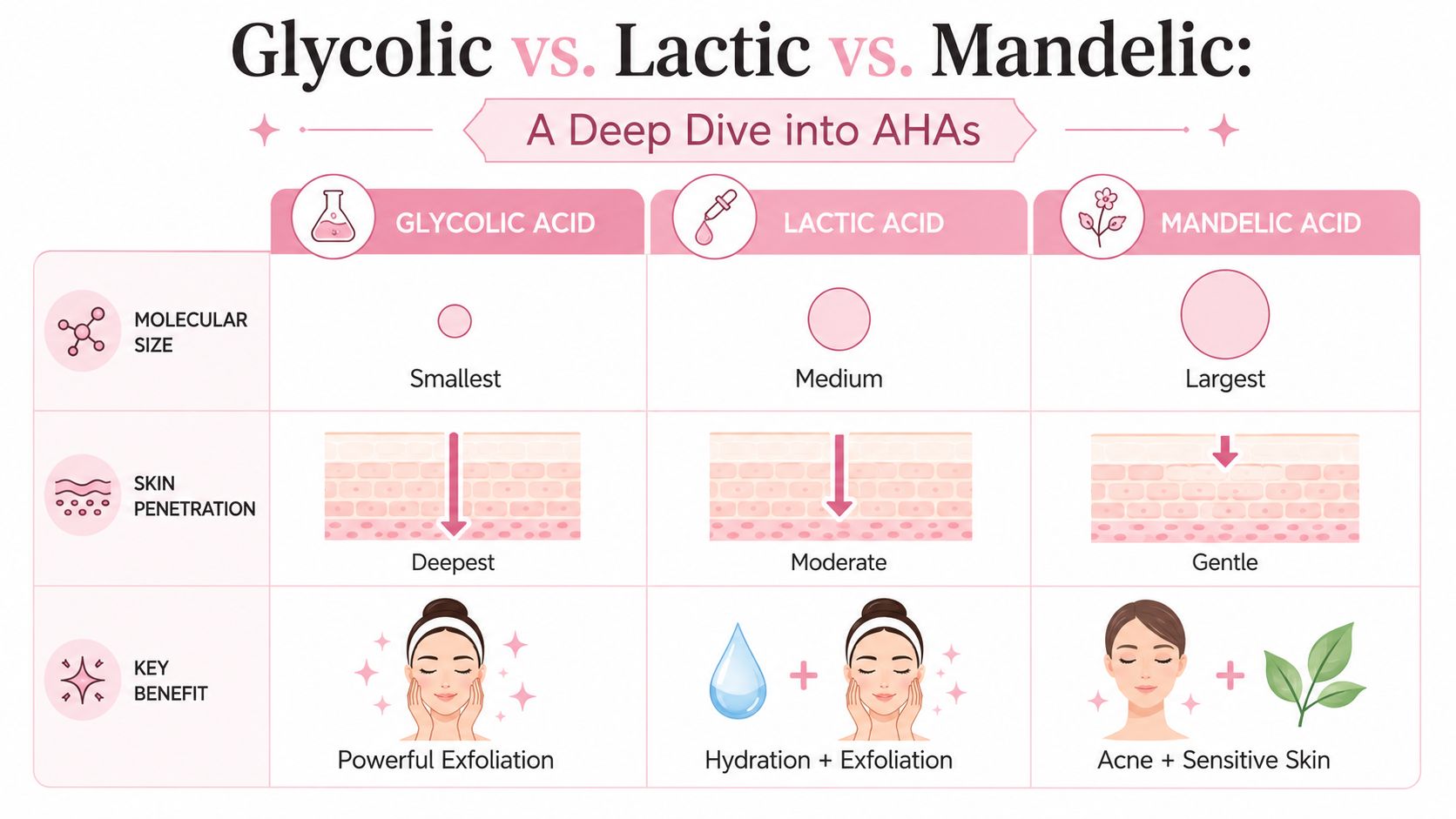
The biggest practical difference between AHAs is molecule size. Smaller molecules tend to penetrate more readily. Larger ones usually move more slowly and feel gentler.
That's why two products can both say “AHA” and still behave very differently on your skin.
Glycolic acid
Glycolic acid is the heavy hitter in this family. It's the smallest AHA molecule in common skincare, with a molecular weight of about 76 Da, while lactic acid is about 90 Da. That helps explain why glycolic acid penetrates the skin more readily than larger AHAs, as outlined in this review on glycolic acid in skincare.
In real-life routine terms, glycolic often feels faster and stronger. If your skin can tolerate it, that can be great for rough texture, dullness, and visible resurfacing. If your barrier is fragile, it can feel like too much, too fast.
Lactic acid
Lactic acid sits in the middle. It's still an AHA, still exfoliating, but usually less aggressive in feel than glycolic acid.
I tend to think of lactic as the “I want glow, but I don't want drama” option. It makes sense for people who want the benefits of an AHA without jumping straight to the punchiest version.
Here's a quick comparison:
| Acid | What it's like | Best fit |
|---|---|---|
| Glycolic | Stronger, quicker resurfacing feel | Texture, dullness, more resilient skin |
| Lactic | Gentler, more comfortable | Dry, beginner, or sensitive-leaning skin |
| Mandelic | Slowest, mildest feel of the three | Easily irritated or blemish-prone skin |
If you want a more detailed side-by-side on two gentler options, this comparison of mandelic acid vs lactic acid is useful.
A visual breakdown helps make the differences click:
Mandelic acid
Mandelic acid is usually the calmest choice of the three. It tends to suit people who say things like “every active irritates me” or “my skin likes exfoliation until it suddenly doesn't.”
That gentler feel makes it appealing when your goal is steady improvement without pushing your skin into an irritated cycle. It may not feel as dramatic as glycolic acid, but for many people, consistency beats intensity.
If glycolic acid is the fast track, mandelic is the safer scenic route.
Which AHA Is Right for Your Skin
Picking the right acid gets easier once you stop asking which one is “best” and start asking which one matches your skin's behavior.
If your skin is fairly resilient
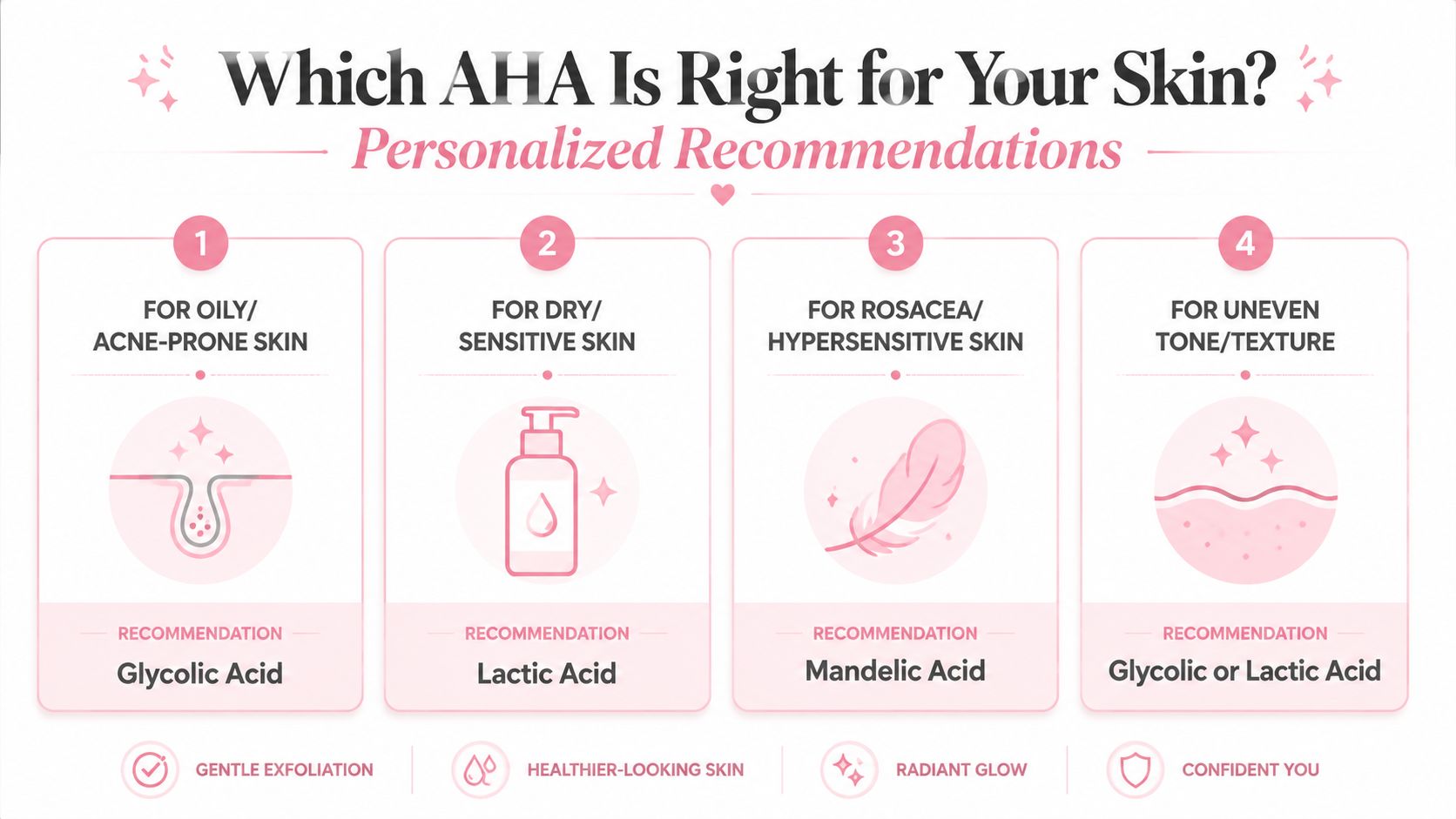
Glycolic acid usually makes the most sense when your skin handles actives well and your priorities are rough texture, uneven tone, or a stronger glow effect. It's often the option people notice fastest.
That doesn't mean you should automatically choose the strongest bottle on the shelf. A well-chosen moderate formula usually beats a too-intense product that ends up abandoned after a week.
If your skin gets dry or reactive
Lactic acid is often the smarter buy. You still get exfoliation, but the experience is usually less harsh. If your skin often feels tight, easily flushed, or temperamental during seasonal changes, glycolic can be more acid than you need.
A lot of shoppers think gentler means less effective. Usually, it just means more sustainable.
Practical rule: Buy for the skin you actually have on a stressed, average day, not the skin you wish you had during a perfect week.
If breakouts and irritation tend to travel together
Mandelic acid is worth a serious look. It's the AHA I'd steer toward when someone wants help with texture and post-breakout marks but knows their skin punishes over-exfoliation quickly.
For readers comparing broader brightening and resurfacing options, these Dermatologist-recommended serum insights give useful context on how product goals can differ even when formulas seem similar at first glance.
Quick matching guide
- Choose glycolic acid if your goal is stronger resurfacing and your skin is not especially sensitive.
- Choose lactic acid if comfort matters as much as glow.
- Choose mandelic acid if you're cautious, breakout-prone, or easily irritated.
- Choose blended AHA products if you want a middle-ground formula rather than a single-acid approach.
How to Safely Use AHAs In Your Routine
You buy an acid toner for brighter skin, use it three nights in a row, then wake up wondering why your face feels hot, tight, and oddly shiny. That usually is not a sign the product is “working better.” It is a sign your routine got too aggressive too fast.
Safe AHA use comes down to matching the format to your experience level, then giving your skin enough time to adjust. As noted earlier, leave-on formulas are often an easier starting point because you control the dose with frequency, not just strength.
Start with the right format
A toner, serum, pad, and peel can all contain AHAs, but they do not behave the same way on skin. That distinction matters more than many shoppers realize.
If you are new to AHAs, start with one leave-on product and use it sparingly. A mild or mid-strength toner or serum is usually the better buy than a high-strength peel sitting in your cart because it looked like a faster fix. Peels have their place, but they also shrink your margin for error.
A good beginner routine is simple:
- One AHA product
- Night use
- A plain moisturizer
- Daily sunscreen the next morning
That setup is cheaper, easier to track, and far less likely to leave you guessing which product caused the irritation.
Build tolerance without damaging your barrier
Patch test first. Then use your AHA once or twice a week and hold that pace for a couple of weeks before you decide whether your skin wants more.
A little dryness at the start can happen. Persistent burning, ongoing redness, and flaking that lasts beyond the first day usually mean the product is too strong, too frequent, or layered with too many other actives.
I usually tell readers to judge an acid by how their skin looks on day four, not day one. Plenty of products give you a quick polished look after the first use. The better question is whether your skin still feels calm enough to repeat the routine next week.
Professional peels are a separate category. If you want a clearer sense of how supervised treatments differ from at-home exfoliation, this overview of the Maidenhead PRX-T33 treatment is a useful reference point.
Be careful with ingredient stacking
The most expensive mistake is not buying the wrong acid. It is buying three “good” products that all exfoliate or irritate in different ways, then using them together.
Use extra caution if your routine also includes:
- Retinoids
- Other exfoliating acids
- Scrubs
- Strong vitamin C products if your skin is already reactive
Some pairings are easier than others. Niacinamide, for example, is often one of the more practical ingredients to keep in the routine because it can support barrier function while you exfoliate. If you want a clear breakdown, this guide on how to use glycolic acid with niacinamide can save you some trial and error.
Keep the routine boring
That is usually how you get better results for less money.
You do not need a cleanser with acids, a toner with acids, and a resurfacing serum all in the same week to get smoother skin. One well-chosen AHA product used consistently beats an overstuffed routine that leaves you irritated and shopping for barrier-repair products two weeks later.
And yes, sunscreen matters here. Freshly exfoliated skin is more likely to react to sun exposure, which can undo the brightening you paid for in the first place.
5 Affordable AHA and Glycolic Acid Dupes
Here's the shopping part. These picks are widely available in the US, easy to repurchase, and cover different skin needs without forcing you into prestige pricing.
| Product | Best for | Price point |
|---|---|---|
| The Ordinary Glycolic Acid 7% Toning Solution | Texture and brightness | Budget |
| The INKEY List Lactic Acid Serum | Dry or sensitive skin | Budget |
| Good Molecules Glycolic Exfoliating Toner | Beginners | Budget |
| Byoma Clarifying Serum | Congestion-prone skin | Affordable |
| Naturium Glycolic Acid Resurfacing Gel 10% | Experienced users | Mid-range |
1. The Ordinary Glycolic Acid 7% Toning Solution
This is the easiest budget recommendation for someone who specifically wants glycolic acid. It's widely known, easy to find, and straightforward. No luxury fluff. Just a clear glycolic option for people chasing smoother, brighter skin.
If your skin is fairly tolerant and you want the classic glycolic-acid experience, this is still hard to beat for the money.
2. The INKEY List Lactic Acid Serum
This is the one I'd point beginners toward when they're nervous about overdoing it. It gives you the broader AHA benefits without jumping to the most assertive member of the family.
It's also a smart “save money by avoiding mistakes” purchase. Many people don't need glycolic first. They just need an AHA they'll use consistently.
3. Good Molecules Glycolic Exfoliating Toner
Good Molecules tends to do a nice job with approachable skincare, and this fits that pattern. It's a good pick if you want glycolic acid, but want the formula to feel a little less intimidating than some of the more famous stronger-feeling options.
For shoppers building an affordable routine overall, this roundup of the best cheap exfoliator for face is worth bookmarking too.
4. Byoma Clarifying Serum
This is the curveball pick. It's not the classic single-acid glycolic bottle, but it makes sense for people whose skin gets congested and irritated at the same time.
That's an important shopping lesson in the glycolic acid vs AHA debate. Sometimes the “best” dupe isn't the strongest acid. It's the formula you can use without setting off a chain reaction of sensitivity.
5. Naturium Glycolic Acid Resurfacing Gel 10%
This is for people who already know their skin tolerates acids well. If you want a stronger glycolic-led product and don't want to pay high-end serum prices, Naturium is a solid step up.
It's not the first product I'd hand a beginner. For experienced users, though, it makes a lot of sense.
The best dupe for most people is the one that matches both their skin type and their consistency level. Not the one with the most intense marketing.
AHA FAQs and Final Thoughts
Can I use AHAs with vitamin C or retinol
You usually can, but not all at once if your skin is sensitive or still adjusting. Separating them across different routines is often more effective than layering everything together and hoping for the best.
Is glycolic acid better than other AHAs
Not automatically. Glycolic acid is often the stronger, faster-feeling option. That makes it a great match for some people and a bad match for others. If your skin gets irritated easily, a gentler AHA can be the better performer because you'll keep using it.
Why do product labels say AHA instead of naming the acid clearly
Usually because the formula uses a blend, or because “AHA” sounds broader and easier to market. That's why ingredient lists matter. Front labels often tell you less than you think.
Which affordable dupe is the best overall
For a lot of shoppers, The Ordinary Glycolic Acid 7% Toning Solution is the standout. It's easy to find, reasonably priced, and gives you a direct glycolic-acid option without prestige markup. If your skin is dry or reactive, though, The INKEY List Lactic Acid Serum may be the better buy.
The takeaway is simple. AHA is the family. Glycolic acid is one member of that family, and usually the strongest-feeling one. If your skin can tolerate it, glycolic is often the most obvious choice for texture and brightness. If your skin needs a softer approach, lactic or mandelic is often the smarter place to spend your money. For the best all-around dupe, I'd still give the edge to The Ordinary Glycolic Acid 7% Toning Solution because it delivers the most recognizable glycolic experience at a very approachable price.
If you want more practical beauty swaps without the luxury markup, Finding Favourites is a great place to browse affordable dupes, compare formulas, and narrow down what's worth buying before you spend.