
Best Skincare Routine for Aging Skin: 10 Dupes for 2026
You're probably here because your bathroom shelf has started to look like a skincare graveyard. Half-used retinol. A vitamin C serum that oxidized before you finished it. A rich cream that felt amazing for three nights, then suddenly seemed too heavy. That's what happens when anti-aging advice gets sold as a shopping list instead of a system.
The best skincare routine for aging skin isn't the longest routine, and it isn't the most expensive one. It's the one you'll consistently keep using, with a tight edit of products that protect, hydrate, and support renewal without wrecking your barrier.
This post may contain affiliate links, which means I may receive a commission if you purchase through my links, at no extra cost to you. Please read the disclosure policy for more information.
Building Your Anti-Aging Skincare Foundation
Aging skin usually doesn't need more steps. It needs better choices. An effective routine is typically built around a gentle cleanser, one treatment step, a moisturizer that matches their skin type, and sunscreen every morning.
That sounds almost too simple, but simple is the point. Once skin gets drier, more reactive, or less resilient, overdoing it shows up fast. Skin feels tight, makeup catches on flakes, and every active suddenly “stops working” because the barrier is irritated.
A strong routine has to do three things well:
- Protect daily: Sun exposure drives visible aging, so prevention matters more than chasing correction later.
- Support collagen and texture: Retinoids, vitamin C, and consistent hydration do more than trendy one-off treatments.
- Keep the barrier calm: If skin is inflamed, dehydrated, or over-exfoliated, even good ingredients become hard to tolerate.
If you want a useful refresher on how collagen support fits into the bigger picture, VitzAi.com's collagen insights are worth reading alongside skincare advice. It helps frame why ingredients and habits matter more than miracle claims.
For readers who need the broader basics first, this guide on how to build a skincare routine is a good companion piece.
Bottom line: A routine for aging skin should feel sustainable. If it leaves you confused, stinging, or constantly replacing expensive products, it's not a good routine.
The Core Principles of Skincare for Aging Skin
The products that keep showing up in dermatologist guidance aren't there by accident. They're the categories with staying power. Cleveland Clinic's guidance highlights gentle cleansers, moisturizers, vitamin C, retinoids, and sunscreen, and notes that exfoliating should stay limited to once or twice a week rather than turning into daily scrubbing (Cleveland Clinic guidance on anti-aging skincare).
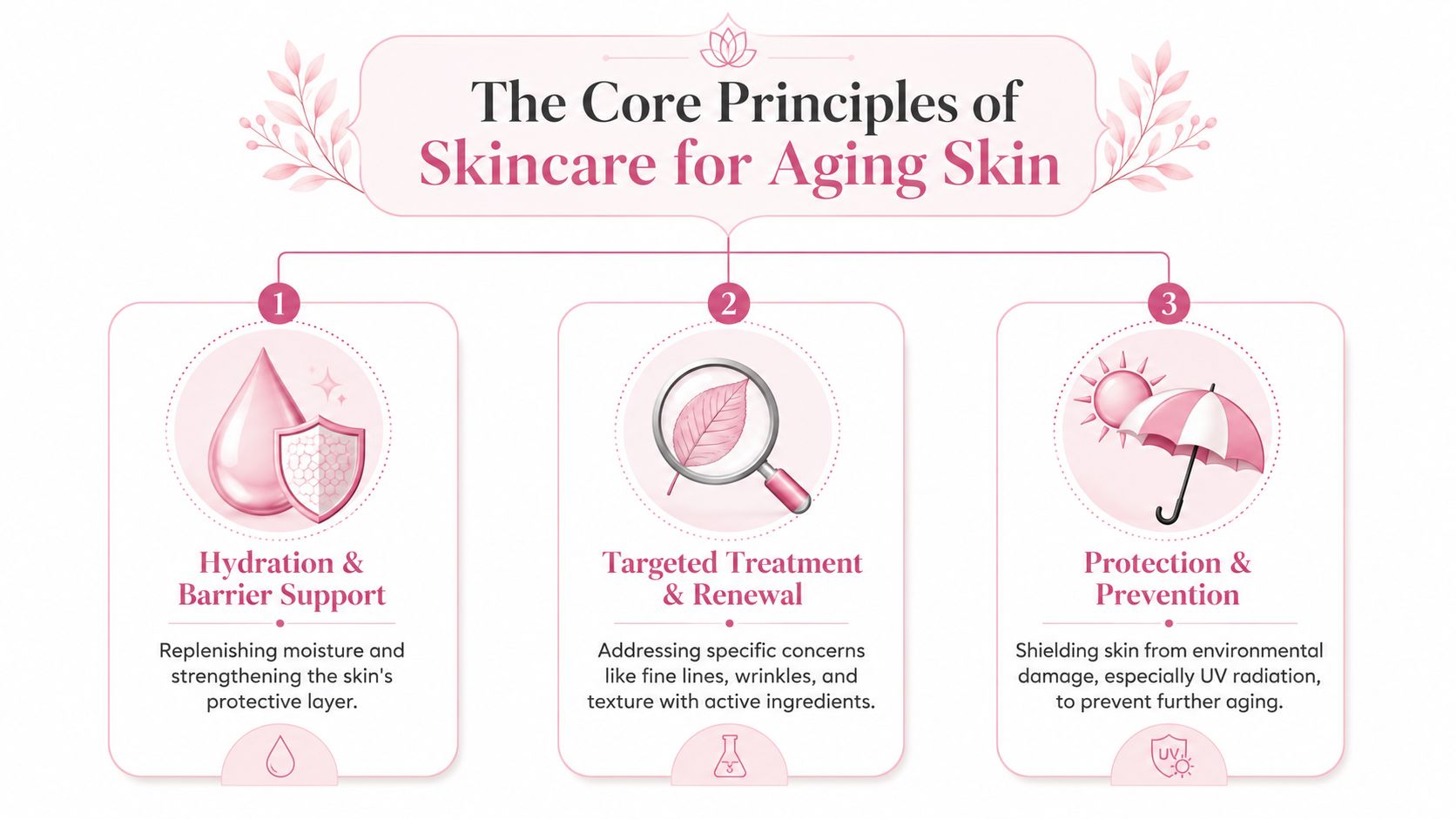
Hydration and barrier support
Aging skin often gets drier and less forgiving. That's why a non-stripping cleanser and a reliable moisturizer matter so much. You're not just making skin feel comfortable. You're making it easier to tolerate everything else in your routine.
Look for textures that fit your reality. Gel-cream if you hate heaviness. Cream if your skin feels papery by afternoon. Lotion if you want something that layers cleanly under sunscreen and makeup.
Targeted treatment and renewal
Many individuals overspend. They pile on acids, peptides, growth factors, retinal, retinol, and masks in the same week, then wonder why their face feels raw.
A better approach is tighter and less dramatic:
- Vitamin C in the morning: Helpful if you want antioxidant support and a brighter look.
- Retinoid at night: Still the classic move for smoothing texture and supporting renewal.
- Exfoliation sparingly: Useful, but not a daily badge of honor.
Skin that's constantly “tingling” isn't getting premium care. It's getting pushed too hard.
Protection and prevention
This is the part that people know, skip, and regret. If your routine doesn't include sunscreen every morning, you're spending money uphill. If you're trying to improve visible sun damage, ProMD Health's sun damage solutions offer a helpful overview of what topical care can and can't realistically do.
The smartest anti-aging routine isn't built around novelty. It's built around repeatable decisions. Cleanse gently. Treat strategically. Protect every day.
Your Step-by-Step Morning AM Routine
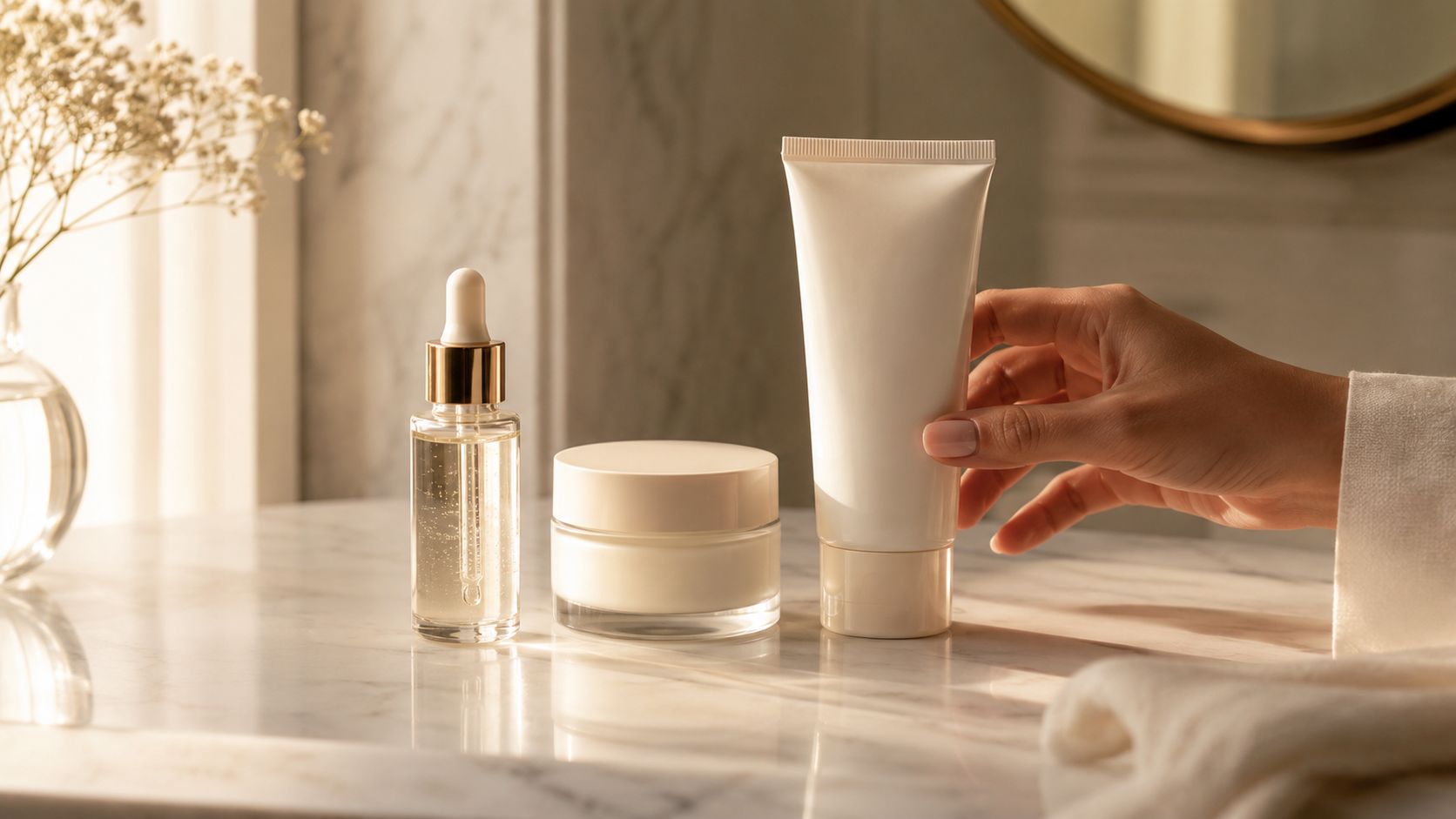
Morning skincare has one job. Keep skin comfortable, defend it from daily stress, and set up your sunscreen to sit well.
Harvard's guidance makes the priorities clear. Daily broad-spectrum sunscreen with at least SPF 30 is the most evidence-backed anti-aging step, and a 4.5-year randomized trial found that people assigned to daily sunscreen use had about 24% less visible skin aging than those who used sunscreen at their own discretion. The American Academy of Dermatology advises SPF 30 or higher, and the National Institute on Aging recommends at least SPF 15 with reapplication every 2 hours (Harvard Health on aging skin care and sunscreen).
Step 1 Cleanse lightly
Not everyone needs a full cleanser in the morning. If your skin is very dry, a lukewarm water rinse may be enough. If you wake up oily, sweaty, or with heavy nighttime products still sitting on your skin, use a gentle hydrating cleanser.
Keep it quick. The goal isn't to “deep clean” first thing. It's to start fresh without stripping away comfort.
Step 2 Apply your antioxidant or hydrating serum
A vitamin C serum can be a beneficial addition. If you like the brightening look it gives and your skin tolerates it well, morning is the right place for it. If vitamin C formulas tend to sting, swap in a simple hydrating serum and keep the routine moving.
A practical order helps. One routine guide recommends cleansing with lukewarm water for 30 to 60 seconds, applying 2 to 3 drops of serum while skin is still slightly damp, then waiting about 60 seconds before moisturizer and SPF as the final morning step. I like that sequence because it keeps people from overapplying and piling products into mush.
Here's a visual walkthrough if you want to see a straightforward routine in action.
Step 3 Moisturizer if you need it, then sunscreen always
If your sunscreen is already moisturizing enough, you may not need a separate cream underneath. That's a smart budget move, not a compromise. If your skin feels dry by midday, add a lightweight moisturizer before SPF.
A good morning routine often looks like this:
- Gentle cleanse or rinse
- Vitamin C or hydrating serum
- Moisturizer if needed
- Broad-spectrum sunscreen as the last step
Practical rule: The sunscreen you'll wear every day beats the sunscreen with the fanciest label that stays in a drawer.
Your Step-by-Step Evening PM Routine
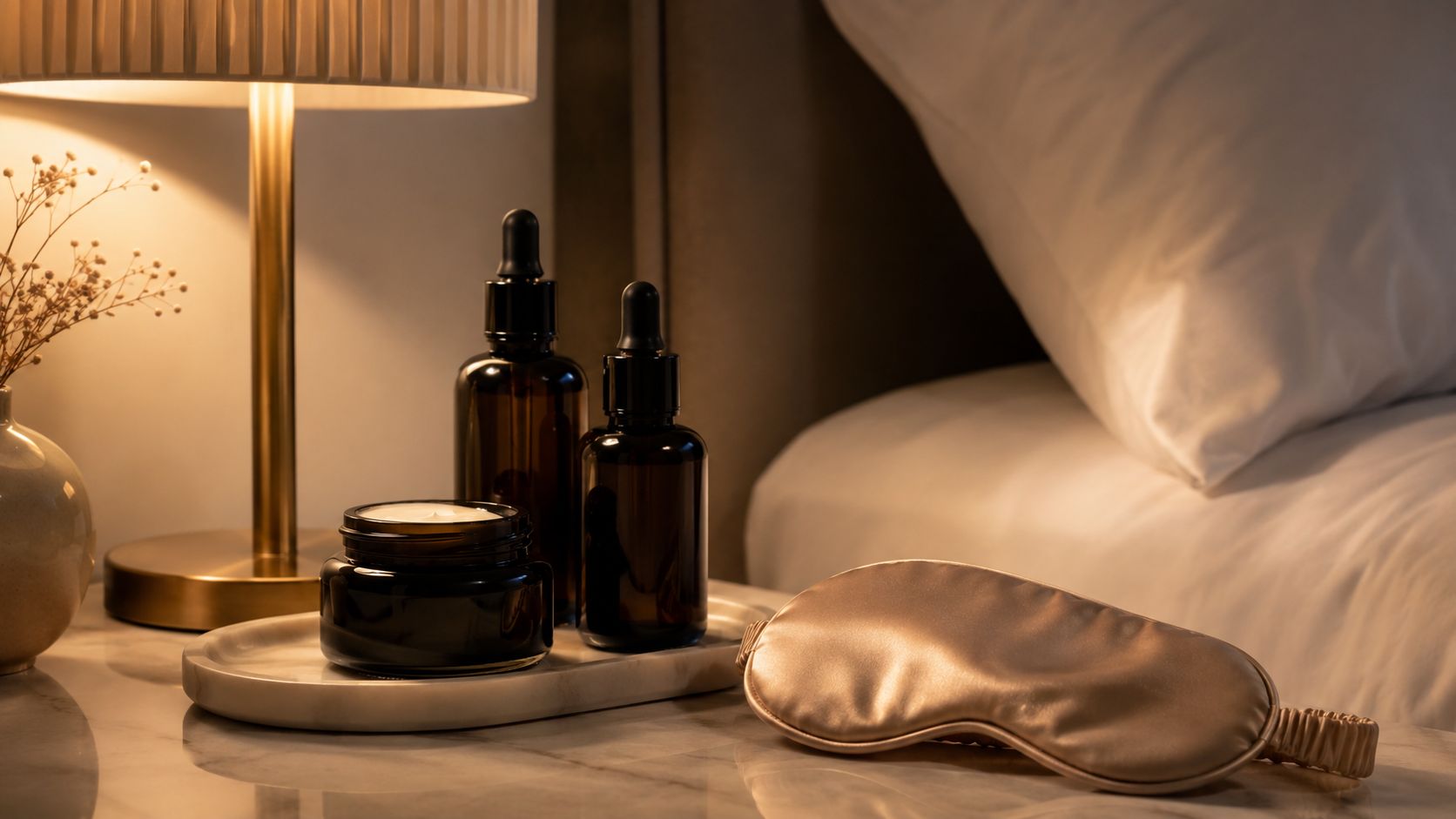
Nighttime is where you earn your results. This is the slot for removing the day properly, using your treatment step, and keeping skin from drying out while you sleep.
Step 1 Remove sunscreen and makeup fully
If you wore sunscreen, makeup, or both, one quick wash may not cut it. A practical routine source recommends double cleansing at night when makeup or sunscreen is present, because a single cleanser may not remove all residue (aging skin routine sequence and cleansing order).
That doesn't mean you need a complicated two-product ritual every single night. It means your skin should feel clean, not coated. A balm, oil, or micellar first step followed by a gentle cleanser usually gets the job done.
Step 2 Use your treatment step
A retinoid often belongs at this point in the routine. Retinol, retinal, or a prescription retinoid can all fit here depending on your tolerance and goals. If your skin is sensitive, fewer nights done consistently will outperform a nightly routine that leaves you flaky and annoyed.
If you're new to retinol, this guide to a skincare routine with retinol can help you avoid the usual mistakes.
A smart evening order looks like this:
- First cleanse: Remove sunscreen, makeup, or grime
- Second cleanse: Wash skin clean without stripping
- Treatment: Retinoid or another focused active
- Moisturizer: Seal in hydration and reduce irritation risk
Step 3 Moisturize like you mean it
A basic moisturizer can outperform a prestige cream. If your treatment leaves you dry, a plain ceramide-focused cream or a hyaluronic-acid moisturizer can make the routine far more tolerable.
Some of the best night routines look boring on paper. That's usually a good sign.
You do not need five treatment layers at night. You need one active you can stick with, plus enough moisture to keep your skin calm. That's the version that survives real life.
10+ Affordable Dupes for Every Step of Your Routine
You don't need a luxury lineup to build the best skincare routine for aging skin. You need dependable categories that perform well, feel pleasant enough to use daily, and are easy to replace without financial resentment.
Here's the quick-scan version first.
| Product Category | Top Dupe Pick | Best For |
|---|---|---|
| Hydrating Cleanser | CeraVe Hydrating Facial Cleanser | Dry, mature, sensitive skin |
| Foaming Gentle Cleanser | Vanicream Gentle Facial Cleanser | Reactive skin that hates fragrance |
| Vitamin C Serum | Naturium Vitamin C Complex Serum | Daily antioxidant support |
| Vitamin C Option | L'Oréal Revitalift 10% Pure Vitamin C Serum | Brighter-looking skin |
| Retinoid Serum | The Ordinary Retinol in Squalane | Beginners who want flexibility |
| Retinoid Cream | RoC Retinol Correxion Night Cream | A simple one-step night treatment |
| Barrier Moisturizer | CeraVe Moisturizing Cream | Dry skin and retinoid buffering |
| Gel Cream Moisturizer | Neutrogena Hydro Boost Gel-Cream Fragrance Free | Dehydrated skin that dislikes heavy creams |
| Sunscreen Lotion | Eucerin Age Defense SPF 50 | Daily wear with a skincare feel |
| Sunscreen Fluid | La Roche-Posay Anthelios Melt-In Milk SPF 60 | People who prioritize elegant texture |
If you want more wallet-friendly picks in the same lane, this roundup of affordable anti-aging skincare is useful.
Cleansers that act expensive without being expensive
CeraVe Hydrating Facial Cleanser
Best if your skin feels tight after washing. It's boring in the best way. Creamy, non-dramatic, and easy to use twice a day.Vanicream Gentle Facial Cleanser
Good for readers who react to fragrance, essential oils, or “active” cleansers marketed as anti-aging.
Vitamin C dupes worth trying
Luxury vitamin C is one of the easiest places to overspend. Texture and packaging matter, but many mid-priced formulas do the job well enough for daily use.
Naturium Vitamin C Complex Serum
A nice middle ground if you want antioxidant support without the feeling of using something harsh.L'Oréal Revitalift 10% Pure Vitamin C Serum
Widely available, easy to find in the US, and a practical pick if you want a brighter-looking finish.
Retinoid swaps that keep your routine realistic
The Ordinary Retinol in Squalane
Useful if you want to start lower and control how often you use it.RoC Retinol Correxion Night Cream
Great for people who don't want separate serum and cream steps.Olay Regenerist Retinol 24 Night Moisturizer
A solid all-in-one format for anyone who wants convenience over a “custom” routine.
Moisturizers that pull more than one job
CeraVe Moisturizing Cream
Excellent as a night cream, retinoid buffer, or dry-patch rescue option.Neutrogena Hydro Boost Gel-Cream Fragrance Free
Better if heavy creams make you feel greasy but you still need hydration.La Roche-Posay Toleriane Double Repair Face Moisturizer
A strong in-between option when you want something richer than a gel, lighter than a thick cream.
Sunscreens that people actually finish
This category matters because the best SPF is the one you'll reapply and repurchase.
Eucerin Age Defense SPF 50
A smart fit if you want sunscreen that feels aligned with an anti-aging routine.La Roche-Posay Anthelios Melt-In Milk SPF 60
Popular for a reason. It tends to feel more elegant than many drugstore body-style SPFs.Olay Complete+ Daily Moisturizer SPF 30 Sensitive
Good if you prefer one morning step that combines moisture and sun protection.
Budget skincare wins when it gets used consistently. Luxury skincare wins only if you love it enough to keep replacing it.
Troubleshooting Common Skincare Issues
Even a well-built routine can go sideways if you introduce too much too fast. Most problems come down to three things. Irritation, dehydration, or messy layering.
If retinoid makes your skin red or flaky
Slow down before you quit. Guidance for anti-aging actives emphasizes controlled introduction, and if dryness or irritation shows up with daily retinoid use, adding a ceramide- or hyaluronic-acid moisturizer on top is a common recommendation. The same source also notes that facial masks are generally best kept to twice weekly so they don't strip the skin barrier (No7 routine guidance for anti-aging actives).
A better adjustment usually looks like this:
- Use it less often: Every night isn't mandatory.
- Moisturize after: A plain barrier cream often solves what people think is a “bad reaction.”
- Skip other strong actives temporarily: Don't combine irritation with more irritation.
If your skin feels tight all day
That's usually a barrier issue, not a sign that your cleanser is “working.” Pull back to basics for a few days. Gentle cleanser, moisturizer, sunscreen. At night, use your moisturizer generously and pause any extra exfoliation or masks.
A compromised barrier can make every product seem wrong. Fix the barrier first, then judge the product.
If products pill under sunscreen or makeup
Pilling usually comes from too many layers, too much product, or not enough time between steps. Keep your morning routine lean. Serum, maybe moisturizer, then sunscreen. Let each layer settle before the next.
Try this if your routine keeps balling up:
- Use less product per layer
- Avoid mixing multiple silicone-heavy formulas
- Let serum sit briefly before cream
- Make sunscreen your final morning step
If you're not seeing results
The usual reason isn't that you need a stronger product. It's inconsistency. Switching constantly makes it impossible to know what's helping. Stick with a small routine long enough to judge it fairly, and don't let a single breakout or flaky week convince you to rebuild everything.
FAQ Your Aging Skin Questions Answered
Do I need a separate eye cream
Not always. If your face moisturizer is gentle and doesn't irritate the eye area, it may be enough. A separate eye cream is more of a texture preference than a universal necessity.
Is exfoliation still important for aging skin
Yes, but not aggressively. Mature skin usually looks better with restrained exfoliation, not daily scrubbing. If your skin is already dry or using retinoids, treat exfoliation like a side step, not the main event.
Should I choose retinal, retinol, or something gentler
Choose the version you'll stick with. If your skin is sensitive, a gentler retinoid used consistently can beat a stronger one that sits unused. The “best” active is the one your skin tolerates.
Are LED masks, red light devices, and growth factor products worth it
Skincare can quickly become expensive. Recent dermatologist content often pairs anti-aging routines with red light therapy and growth factors, but there's still a real gap in comparing their value against a simpler routine built around the basics. For budget-conscious shoppers, that matters because the core topical routine is easier to sustain and easier to judge over time (discussion of newer anti-aging devices and value).
My take is straightforward:
- Start with the essentials first: Cleanser, moisturizer, retinoid, sunscreen.
- Add devices later if you're curious: Don't buy gadgets to compensate for inconsistency.
- Judge upgrades by use, not hype: If it's cumbersome, it won't become a habit.
Can I build a full routine on a drugstore budget
Absolutely. In fact, that's often the smartest way to start. Affordable staples make it easier to stay consistent, replace products without stress, and figure out what your skin likes before spending more.
If you're building a routine and want smart, affordable swaps without the trial-and-error spiral, Finding Favourites is a helpful place to compare beauty dupes and budget-friendly skincare picks that are worth considering.
The best dupe strategy in this guide is the simplest one: spend the least on basics you use the most, and save experimentation for one treatment step at a time. The standout budget pick is CeraVe Hydrating Facial Cleanser, often recommended as the foundation of the routine because it supports everything else without creating new problems. Keep your routine tight, prioritize sunscreen and a tolerable retinoid, and you'll get far more from consistency than from a cabinet full of expensive extras.