
Liquid Contour Makeup Guide: 7 Dupes That Actually Work
You know the moment. You've got foundation on, the mirror is unforgiving, and that bronzer stripe under your cheekbone looks more like dirt than definition. Liquid contour fixes that faster than powder ever does, because it's built to act like shadow, not warmth, and the best formulas blend into skin instead of sitting on top of it.
This post may contain affiliate links, which means I may receive a commission if you purchase through my links, at no extra cost to you. Please read the disclosure policy for more information.
Why Liquid Contour Belongs in Your Routine
The first time many reach for contour, they end up with one of two problems. The shade is too orange, so the face looks sun-kissed instead of sculpted. Or the texture is too dry, so the product skips across the skin and leaves a muddy line that won't soften no matter how much you blend.
Liquid contour makeup solves that by giving you a more forgiving starting point. Major brand guides describe it as a product you place sparingly in the natural shadow zones, then blend out so the face looks more structured, not more made up. That's why it feels easier than powder for beginners who want dimension without the chalky finish.
The format also isn't some new gimmick that appeared overnight. Mintel traces contouring's mainstream surge to late 2014, after Kim Kardashian shared a widely seen makeup-and-contouring photo, and Tom Ford Beauty's Autumn 2014 collection already included a Contouring Cheek Colour Duo with a lighter highlighting shade and a deeper contour shade. In other words, the move from editorial technique to everyday routine happened in the 2010s, and liquid contour came in as a modern, consumer-friendly version of that shift. Mintel's contouring trend history
Practical rule: If your contour keeps turning muddy or disappearing by lunch, the issue is usually format or placement, not your face.
That's why I keep telling people to treat liquid contour as the easier path to believable definition. It's built for controlled placement, gradual blending, and a softer finish that looks more like real shadow than makeup. Next up is the part that separates a true contour from a bronzer in disguise, because those two get mixed up constantly.
What Liquid Contour Actually Is
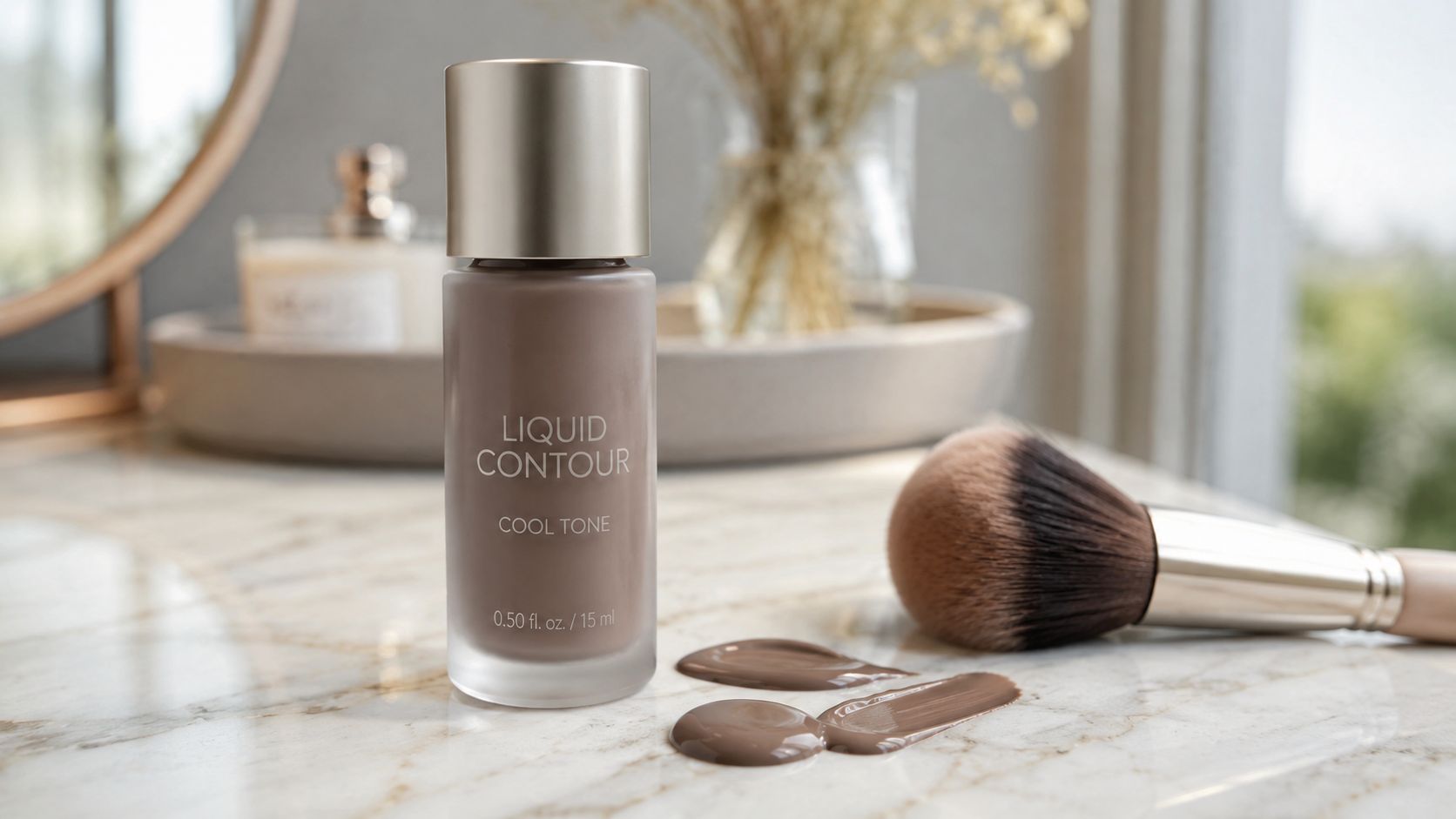
Liquid contour makeup is a cool-toned, fluid product meant to change the shape of the face by creating shadow. It's usually applied after foundation, dabbed on in tiny amounts, then blended until it disappears into the base while leaving the illusion of structure behind. A good one should look like a sheer shadow cream, not like a colored stripe fighting your complexion.
What's usually inside the formula
The most useful formulas tend to use water-in-silicone or hybrid emulsion systems. That means volatile carriers such as cyclopentasiloxane or isododecane help the product glide, while film formers like trimethylsiloxysilicate help it set into a flexible layer that resists transfer. Structuring agents such as disteardimonium hectorite or silica keep the pigments suspended so the product doesn't separate or go patchy.
That ingredient architecture is why liquid contour feels smoother than a dry stick on a textured cheek. It spreads easily, stays blendable long enough to fix mistakes, and then settles into a finish that reads as skin-like instead of heavy. You can see that style of formula in products such as Milani Conceal + Perfect Liquid Contour, e.l.f. Halo Glow Beauty Wand Contour, and Sacheu Contour STAY-N.
Why some formulas feel better on dry skin
Some formulas also add humectants like glycerin, squalane, or hyaluronic acid derivatives. Those ingredients don't turn contour into skincare, but they do make the texture more forgiving while you buff it out. If your skin gets dry around the jaw or under the cheekbones, those extras can keep the contour from catching on dry patches.
A real liquid contour should read as shadow, not color correction and not bronzer. Bronzer adds warmth. Liquid contour subtracts visual roundness. That difference is the shopping filter that saves you from the most common mistake, buying a warm product and wondering why your face looks striped.
Liquid vs Cream vs Stick vs Powder Contour
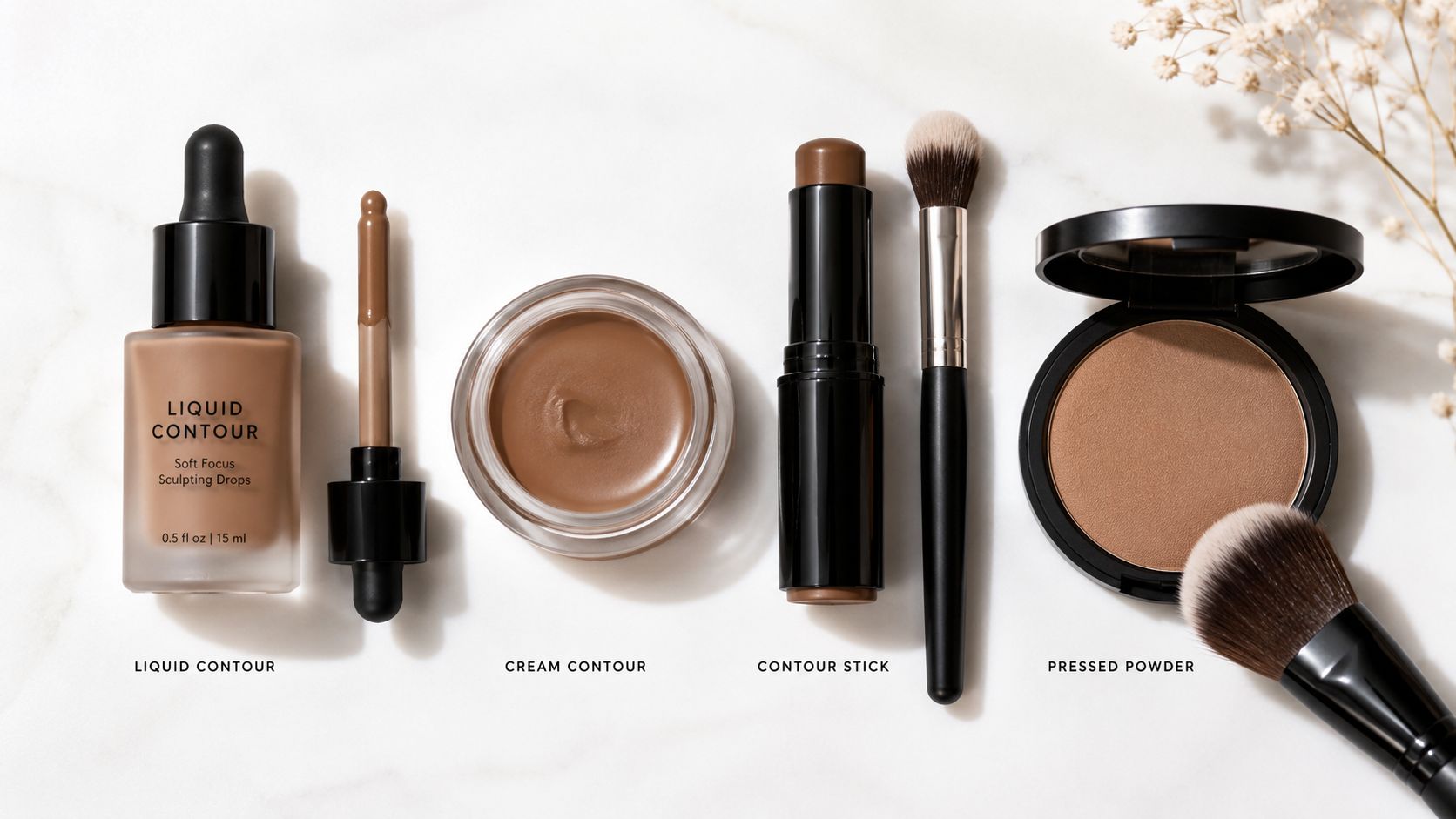
Liquid contour wins on softness and realism. Cream contour gives you more working time and feels kinder on drier skin. Stick contour is the quickest option for travel and precise placement. Powder contour is the easiest choice when you want a fast, set-and-forget finish, especially on oilier skin.
The trade-offs
| Format | Best at | Best for |
|---|---|---|
| Liquid contour | Soft, blendable shadow and gradual build | Beginners, dry to normal skin |
| Cream contour | Blendability and flexibility | Dry skin, everyday sculpting |
| Stick contour | Precision and portability | On-the-go touchups, targeted shaping |
| Powder contour | Speed and control on top of set makeup | Oily skin, quick finishing |
Liquid contour makeup usually gives the most skin-like result because it merges into foundation instead of sitting on top as a separate layer. That said, oily skin can make it slide around or fade too fast if you skip setting, and that is where people get annoyed. Powder holds up better in that situation, but it rarely looks as believable up close.
Cream and stick formulas each have their own drawbacks. Creams can turn heavy if you apply too much, and sticks can catch on textured areas if you drag them straight across the skin instead of warming them up first. Liquids avoid a lot of that pull, which is why I reach for them when someone wants a softer face without the harsh lines that come from overcarving.
Best use case: If you want everyday dimension that disappears into your base, liquid is the cleanest choice. If you want speed, powder still has a place.
If you are still choosing between formats, start with liquid unless your skin is very oily and you refuse to use powder. For a closer look at texture and budget-friendly format options, this contour stick guide is useful if you want to compare liquid against stick formulas side by side. If you want help matching the undertone before you buy, identify your undertone first, then choose a contour that looks like shadow on your face.
Choosing the Right Shade and Undertone
The easiest way to ruin a contour is to choose a warm shade and call it “neutral.” That usually gives you bronzer stripes instead of shadow. Liquid contour should sit one to two shades deeper than your foundation, and the undertone should lean cool so it mimics the way a hollow looks on the face. Allure's liquid contour guidance
How to test the shade
Swatch on the jawline, not the back of your hand. The hand lies to you because its depth is different, and it's usually more exposed to sun. A correct contour shade should sink into the face without turning rusty, gray, or orange.
The placement map matters just as much as the shade. Current product guides place contour along the hollows of the cheeks, jawline, sides of the nose, hairline, and sometimes the temples. Some routines use just two or three tiny dots per cheek area instead of drawing long stripes, which is the better move if you want control and less cleanup later. Raydar Magazine's placement guide
How undertone changes the final look
Cool-toned contour works because it copies natural depth, not sun exposure. If your skin is fair, medium, or deep, the logic stays the same, a contour that leans too warm will read as bronzer on all of them. The trick is to look for shades that appear slightly ashy in the tube, then disappear into a believable shadow once blended.
For dry skin, formulas with glycerin or squalane usually behave better because they don't catch so hard on texture. For oilier skin, plan on setting the applied contour with a light powder pass after blending so it holds its shape. If you want a quick way to sanity-check your undertone reading before you buy, this undertone guide is the kind of reference that stops expensive mistakes.
Fast check: If the shade warms up your face instead of carving it, it's the wrong contour.
Step-by-Step Application and Troubleshooting
Start with skin prep. Clean skin, moisturizer, and primer make liquid contour easier to blend because the product has something smooth to move across. Then apply foundation first, because contour works best when it sits on top of an even base rather than bare skin with random texture showing through.
The simplest placement routine
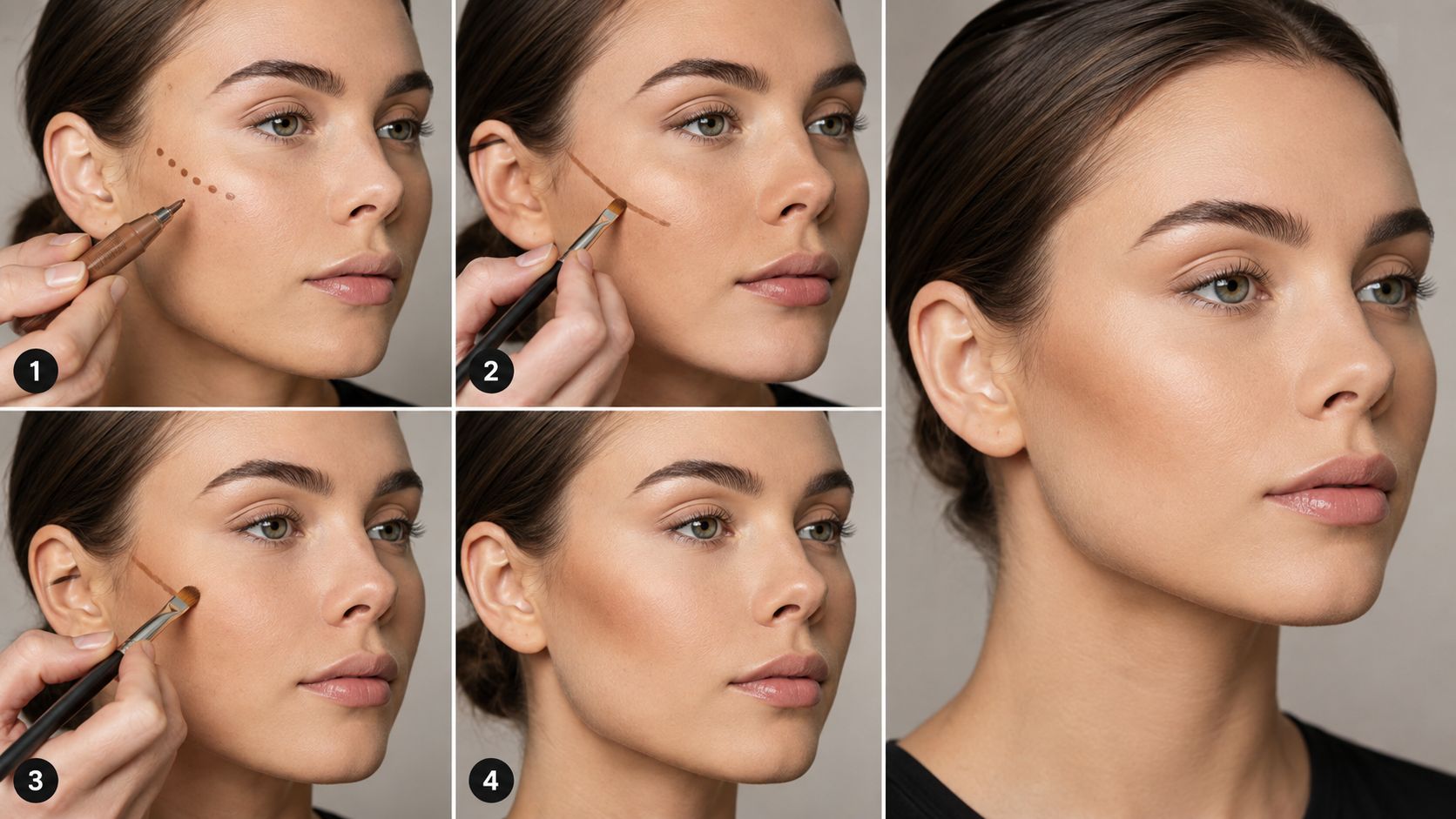
Use a small amount. For a beginner-friendly cheek contour, place three dots under the cheekbone, then a little at the jawline and the hairline. That's enough for most faces. If you want a fuller map, add the sides of the nose and the temples, but keep the product sparse.
Blend upward, not down. That direction matters because dragging pigment downward can make the face look heavier instead of lifted. Fingers work when you want warmth and a quick melt. A dense buffing brush is better when you need to blur the edges. A damp sponge gives the sheerest finish.
Blend rule: Less product, more movement. Liquid contour gets muddy when you keep adding more before the first layer is diffused.
If you want a visual walkthrough, the process in this beginner contour guide mirrors what works in real life, not just on camera. I'd use that approach for daytime wear, then build slightly more product for evening when you want the sculpt to show under flash or low light.
Fix the common mistakes
- Muddy edges: Blend upward and stop smearing product all over the cheek.
- Vanishing contour: Set it after blending, especially on oily skin.
- Patchy dry skin: Mist the face first or mix the contour with a tiny drop of foundation.
- Orange cast: The undertone is wrong, swap to a cooler shade.
- Creasing on texture: Use less product and press on a light layer of setting powder.
If you want all-day hold on oily skin, you can top liquid contour with a matching powder contour in the same zone. That keeps the shape visible without forcing you to keep rebuilding it during the day.
7 Liquid Contour Dupes Worth Buying
| Luxury Original | Best Drugstore Dupe | Best For |
|---|---|---|
| Rare Beauty Soft Pinch Liquid Contour | Milani Conceal + Perfect Liquid Contour | Creamy blend, everyday sculpt |
| Rare Beauty Soft Pinch Liquid Contour | e.l.f. Halo Glow Beauty Wand Contour | Soft-focus glow with definition |
| Rare Beauty Soft Pinch Liquid Contour | NYX Wonder Stick Contour and Highlight | Quick reference point for cool sculpting |
| Rare Beauty Soft Pinch Liquid Contour | L'Oréal True Match Glow Contour | Balanced, skin-like finish |
| Rare Beauty Soft Pinch Liquid Contour | e.l.f. Camo Liquid Bronzer and Contour | Budget-friendly liquid sculpt |
| Rare Beauty Soft Pinch Liquid Contour | Maybelline Instant Age Rewind Eraser Multi-Use Concealer in a deeper shade | Minimalist routine, easy blending |
| Rare Beauty Soft Pinch Liquid Contour | Wet n Wild MegaGlo Makeup Stick Contouring Palette | Travel-friendly backup option |
Rare Beauty's Soft Pinch Liquid Contour is the reference point here because it's one of the clearest examples of the cool-toned, blendable shadow effect shoppers want. For the best current discounts and promo scanning, Special8 makeup deal finder is a handy place to check before you buy, especially if you're trying to catch a sale instead of paying full price.
The seven pairings that actually make sense
1. Milani Conceal + Perfect Liquid Contour
This is the dupe I'd hand to first. Milani's formula leans creamy, blends fast, and gives that soft shadow look without making the face appear dusty. If you want the closest drugstore feel to a luxury liquid contour, this is the most sensible start. Milani's product page
2. e.l.f. Halo Glow Beauty Wand Contour
This one suits people who want a lighter, more diffused finish. It's especially good if you prefer sculpting that looks subtle in daylight and still shows up after foundation. The wand format also makes quick cheek placement easy.
3. NYX Wonder Stick Contour and Highlight
This is the most practical option if you're still learning placement and want a familiar drugstore counter pick. It's not as fluid as a luxury liquid, but the cool contour side gives you a straightforward, accessible way to test the technique.
4. L'Oréal True Match Glow Contour
This is the balanced pick for a skin-like finish that doesn't scream makeup from across the room. It works best if you want soft definition rather than a carved-out look, and it suits normal to combination skin well.
5. e.l.f. Camo Liquid Bronzer and Contour
This is the budget-friendly option for shoppers who still want a liquid texture and good blendability. Choose carefully here, because the shade matters more than the brand name. The right cool tone can look much closer to higher-end contour than you'd expect.
6. Maybelline Instant Age Rewind Eraser Multi-Use Concealer in a deeper shade
This isn't a traditional contour, but it works as one in a pinch if you pick a cool enough deeper shade. It's a useful workaround for minimalist makeup users who want one tube to do more than one job.
7. Wet n Wild MegaGlo Makeup Stick Contouring Palette
This is the least literal dupe on the list, but it earns a place for shoppers who care more about the shadow effect than the packaging format. If you travel a lot or need a cheap backup, it keeps the look in the same family.
How to shop the list: Start with the formula that already matches your undertone, then swatch for coolness before worrying about luxury-versus-drugstore branding.
Liquid Contour Questions Beginners Ask
Can I put liquid contour under foundation?
Skip that. Liquid contour works best after foundation, where it can sit on top of a smooth base and stay readable. Put it underneath, and the shade often turns muddy or gets swallowed by your base makeup.
Are fingers or brushes better?
Both work, but they do different jobs. Fingers warm the product and press it in fast. A dense brush gives you sharper placement and cleaner edges. A damp sponge softens the result if you want a lighter sculpt.
How is liquid contour different from cream bronzer?
Contour is about shadow. Bronzer is about warmth. If the shade makes your face look sun-kissed, you're in bronzer territory. If it makes the face look narrower, sharper, or more structured, that's contour doing its job.
Does liquid contour expire faster than powder?
It can separate or change texture more easily, so check the formula before you keep using it. If it smells off, looks split, or refuses to remix after shaking, toss it. If it just settles in the tube, a solid shake usually brings it back.
The Final Verdict on Liquid Contour
The best dupe pick is Milani Conceal + Perfect Liquid Contour because it gives the easiest blend, the most believable shadow effect, and the cleanest everyday finish for the money. Liquid contour makeup works best as a technique, not just a product category, and the formulas that earn a spot in your routine are the ones that mimic a cool-toned, soft-focus shadow instead of sliding into orange bronzer territory. For application, choose a cool-toned shade one to two shades deeper than your foundation, place it at the hollows, jawline, temples, hairline, and nose, then blend upward and set. Liquid formulas blend more forgivingly into foundation, making them the easiest entry point for beginners.
If you want more luxury-for-less beauty swaps like this, browse the dupe library at Finding Favourites, and sign up for new alerts so you can catch the next smart alternative worth buying.
If you're building a smarter makeup routine, Finding Favourites keeps the comparison shopping simple, with affordable versions that hold their own against pricier favorites. Use it for more dupe guides, contour swaps, and budget-friendly beauty picks that save time without wasting money.