
5 Best Affordable Contour Sticks That Outperform Luxury
You're probably here because you want that lifted cheekbone, cleaner jawline, and softly carved nose effect, but you don't want to spend luxury money on a product you'll use in a few quick swipes. That's fair. Contour sticks are one of the easiest makeup categories to overspend on, especially when the premium version looks chic, blends nicely in-store, and suddenly costs more than the rest of your base routine combined.
The good news is that a smart affordable contour stick can absolutely deliver that polished, expensive-looking result. The trick is knowing what to look for. Not just the best dupes, but the method behind them, so you can stop guessing and start buying products that suit your skin tone, texture, and makeup style.
This post may contain affiliate links, which means I may receive a commission if you purchase through my links, at no extra cost to you. Please read the disclosure policy for more information.
The Secret to a Sculpted Look Without the Splurge
Luxury contour sticks are tempting for a reason. They usually promise a believable shadow, a smooth glide, and that blended finish that makes your bone structure look better without making your makeup look heavier. Then you see the price tag and pause.
That pause is where individuals often either give up or buy the wrong cheap option. They grab a warm bronzy stick, draw thick stripes on the cheeks, and end up with something muddy instead of sculpted. The budget option wasn't the problem. The mismatch was.
A good affordable contour stick works best when you shop with a little more intention. Shade matters more than packaging. Formula matters more than hype. Placement matters more than how dramatic the line looks straight from the tube. If you like cleaner ingredient conversations alongside technique, this guide to discover clean beauty contouring is a useful companion read.
What makes the biggest difference is learning to judge a contour stick like an editor, not like a marketing page. Once you know what a real contour is supposed to do, the expensive options stop feeling mysterious.
Understanding What a Contour Stick Actually Does
Contour is not bronzer in stick form. That's the confusion that causes most bad contour purchases.

Contour creates shadow
Think about how an artist shades a face in a sketch. They don't add golden warmth under the cheekbone to make it recede. They add a muted shadow. Makeup contour should do the same thing.
That's why the most important rule is simple. To achieve an authentic shadow effect, affordable contour sticks should use a cool-toned brown pigment that is 1–2 shades darker than the user's foundation and must not contain shimmer, because shimmer and warmth flatten facial dimension instead of sculpting it, as noted in this drugstore contour discussion.
Practical rule: If a stick looks glowy, golden, or visibly bronzy on your hand, it's probably better as bronzer than contour.
Affordable products often go sideways when brands label something “contour” that's really a cream bronzer. That's not useless, but it serves a different purpose. Bronzer adds life and warmth to the high points of the face. Contour creates depth in places you want to visually push back.
What a good contour should look like on skin
A strong contour stick should disappear into the face after blending. That sounds backward, but it's the point. You shouldn't see an obvious stripe of product. You should notice shape.
Look for these visual cues:
- Cool or neutral-cool undertone that mimics natural shadow
- Matte or soft natural-matte finish with no sparkle
- Enough pigment to show up fast without needing repeated swipes
- Blendability without slipping everywhere so placement stays controlled
If your contour keeps turning orange, it's not your blending. If it looks shiny, it's not sculpting in the way you want. If it disappears completely, the formula may be too sheer or too emollient for precise definition.
Where people get it wrong
Most contour mistakes happen before application even starts. The wrong tone guarantees the wrong result. The second mistake is choosing drama over realism and applying too much at once.
A contour line should look slightly wrong before blending, but not wildly dark, warm, or glossy.
Once you understand that contour is controlled shadow, product shopping gets easier. You stop chasing hype and start noticing the details that matter.
How to Choose the Right Shade and Formula for You
Buying the right contour stick comes down to two things. Tone and texture. If either one is off, the result won't look expensive, no matter how little or how much you paid.
Start with undertone, not depth
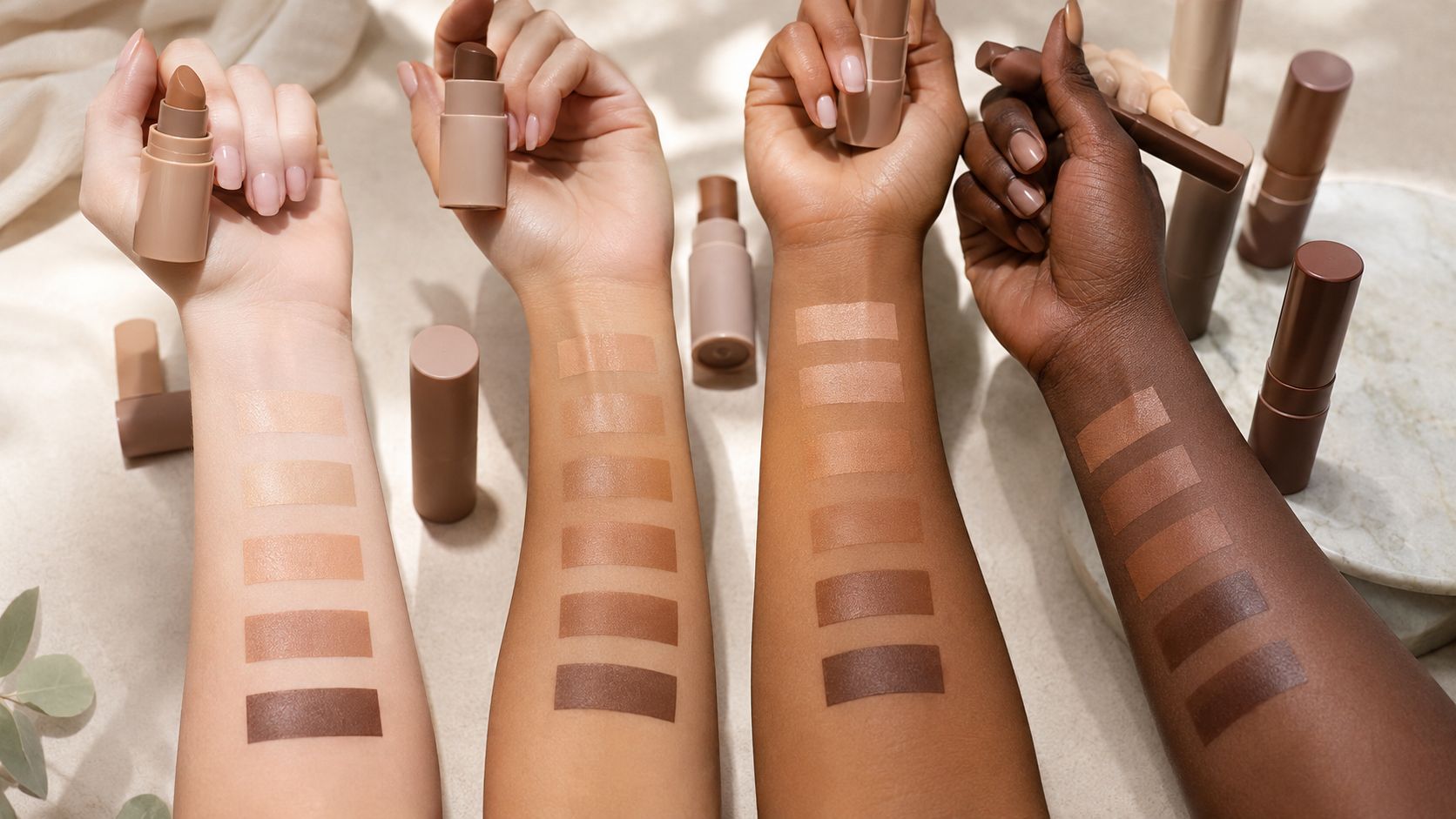
A contour shade isn't just “darker than my skin.” It needs the right cast. Cool undertones mimic shadow. Warm undertones mimic sun.
If you're not sure what your undertone is, this quick guide on how to identify your undertone helps simplify the decision before you buy anything.
Here's the easiest way to understand it:
- Cool skin tones usually suit taupe-brown or gray-brown contours best
- Neutral skin tones can often wear balanced brown shades that aren't too red or too gray
- Warm skin tones still need contour to lean cooler than bronzer, even if the rest of the complexion products are golden
A stick can be flattering overall and still be a bad contour. That's why so many products work beautifully around the perimeter of the face but look off under the cheekbone.
Deep skin needs a different filter
This is the part too many budget guides skip. A lot of drugstore options run warm, and on deep skin that can turn muddy fast.
A major issue in the affordable category is shade range. Many drugstore contour sticks lean warm and orange, and they can oxidize poorly on deep skin tones. For Fitzpatrick VI, the better move is to choose a shade 2 to 3 tones cooler than your skin or layer a cream contour with a cool-toned powder to keep the result sculpted instead of muddy, based on this community review thread for affordable cream and stick contours.
That advice matters because a deep contour shade shouldn't just be deeper. It needs enough coolness to read as structure.
If your contour looks reddish or orange on deep skin, it isn't adding shape. It's competing with your complexion.
Choose formula based on your skin type
Not every stick behaves the same way. Some stay creamy longer and give you more play time. Others start to set quickly and feel almost powdery after blending.
A simple match-up helps:
- Dry skin usually does better with creamier sticks that keep some slip
- Oily skin often benefits from cream-to-powder textures that set faster
- Combination skin can go either way, depending on whether you prefer a dewier base or a more locked-in finish
If you're a beginner, avoid formulas that are overly stiff or overly greasy. A too-stiff stick can skip over base makeup. A too-greasy one can smear foundation underneath and make every blend take longer.
Test the finish before you commit
If you can swatch in person, blend the product out and wait a moment. Don't judge it from the initial stripe. Watch what happens after it settles.
You want a finish that still looks like skin, but with definition. Not waxy. Not shiny. Not patchy around pores. That small pause tells you more than the brand's description ever will.
Flawless Application Your Step by Step Guide
Technique decides whether contour looks subtle and expensive or harsh and obvious. The product matters, but placement and blending matter just as much.
Place less product than you think
The cleanest contour starts small. Draw short strokes or dots rather than one heavy line, especially if you're using a more pigmented stick. You can always add more, but pulling back a dark cream contour is much harder once it's blended into foundation.
For a quick beginner breakdown, this tutorial on how to contour for beginners is worth bookmarking.
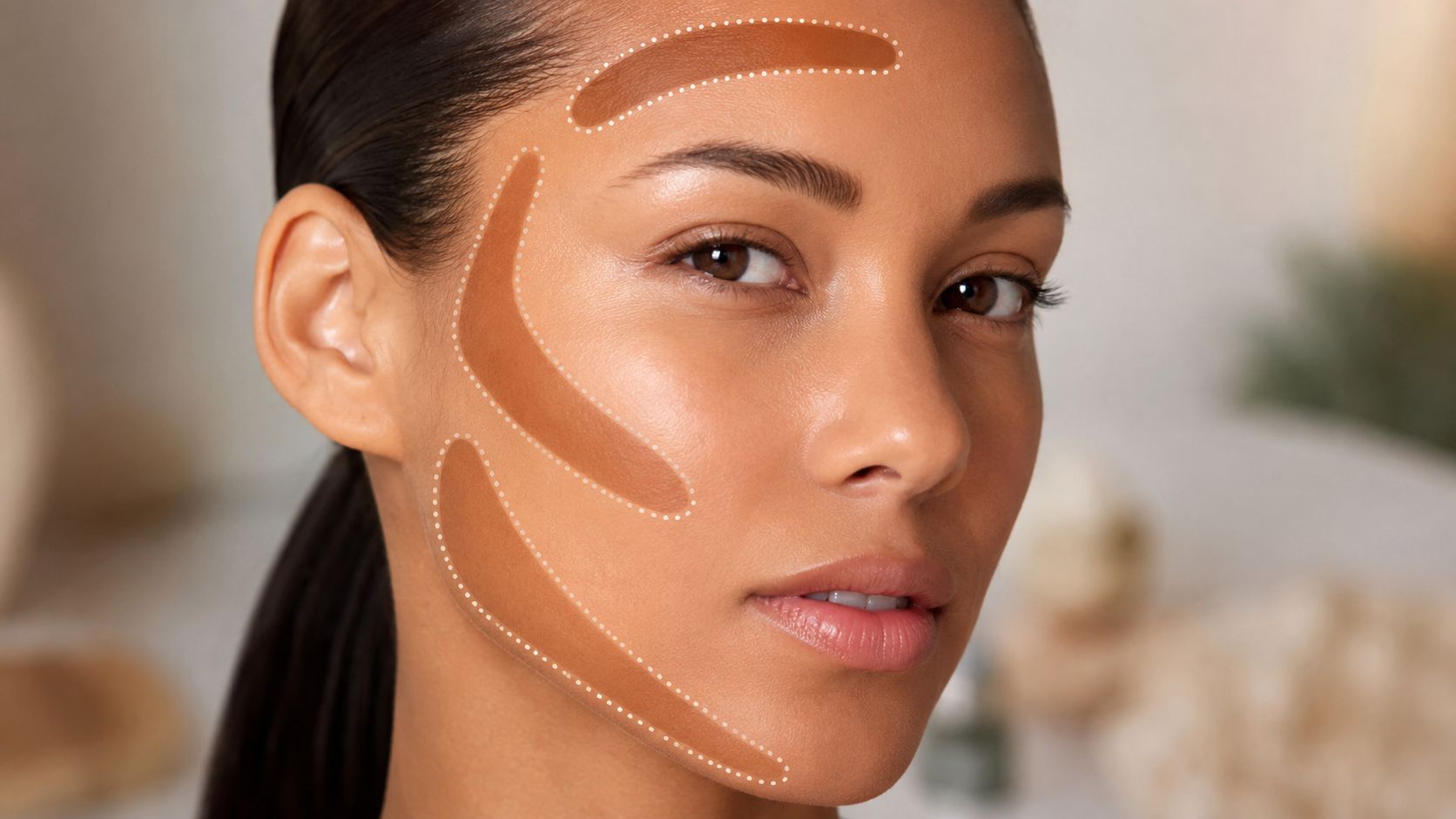
Use this map as your starting point:
Cheekbones
Place the stick slightly above the hollow you think you see, not too low. A low contour drags the face down.Forehead
Add product near the temples or upper perimeter if you want to reduce width or balance a larger forehead.Jawline
Keep it light. This area looks best when softly diffused, not stamped on.Nose
Use the tiniest amount. A small brush or fingertip usually works better than drawing directly from the stick.
Pick the right blending tool
Different tools create different finishes. As a result, many people think a product is bad when it's really the wrong application method.
- Dense brush gives the most definition and keeps color where you place it
- Damp sponge softens everything and is good if you tend to overapply
- Fingers work well for nose contour or quick targeted blending, especially with softer formulas
A brush is usually best for cheek contour because it preserves shape. A sponge is better if your base makeup is already looking full and you want a softer melt.
Editor's note: Blend upward, not straight down. Upward blending lifts the face and keeps the shadow where it belongs.
Work in the right order
Contour behaves best over complexion products that are mostly set but not overly powdered. If your foundation is still very wet, contour can skip or smear. If your face is fully powdered, a cream stick may catch and go patchy.
A simple order typically works well:
- Apply foundation and concealer
- Let the base sit briefly
- Add contour
- Blend
- Then finish with blush, highlight, and setting products
If you want a visual demo, this walkthrough shows the motion and pressure that make the biggest difference:
Keep the finish believable
The best contour isn't the darkest one. It's the one that makes people think your face just looks especially defined that day.
Step back from the mirror when you're done. If the contour looks perfect only from two inches away, it probably needs another quick blend. Real shadow is soft at the edge.
The Best Affordable Contour Sticks and Luxury Dupes
If you want the shortest path to a better contour routine, start here. These are the standout picks that deliver strong value, better tone, and the kind of finish people usually associate with pricier sticks.
The bigger context matters too. The contour stick market was valued at $2.8 billion globally as of 2025 and is projected to reach $5.2 billion by 2034, with a 7.8% CAGR, while the gap between luxury and budget remains striking. Sephora's contour stick at $14 versus Westman Atelier at $48 amounts to a 70% cost reduction, according to Dataintelo's contour stick market report.
Affordable Contour Stick Dupe Finder
| Affordable Dupe | Luxury Counterpart | Price Tier |
|---|---|---|
| e.l.f. Halo Glow Beauty Wand | Westman Atelier Face Trace Cream Contour Stick | Affordable |
| Sephora Collection Cream Contour Stick | Westman Atelier Face Trace Cream Contour Stick | Affordable |
| Maybelline Facestudio Master Contour Stick | Fenty Beauty Match Stix Matte Contour Skinstick | Affordable |
| Colourpop Bronze Stix | Rare Beauty cream bronzer stick | Affordable |
| NYX Wonder Stick | Makeup by Mario SoftSculpt Shaping Stick | Affordable |
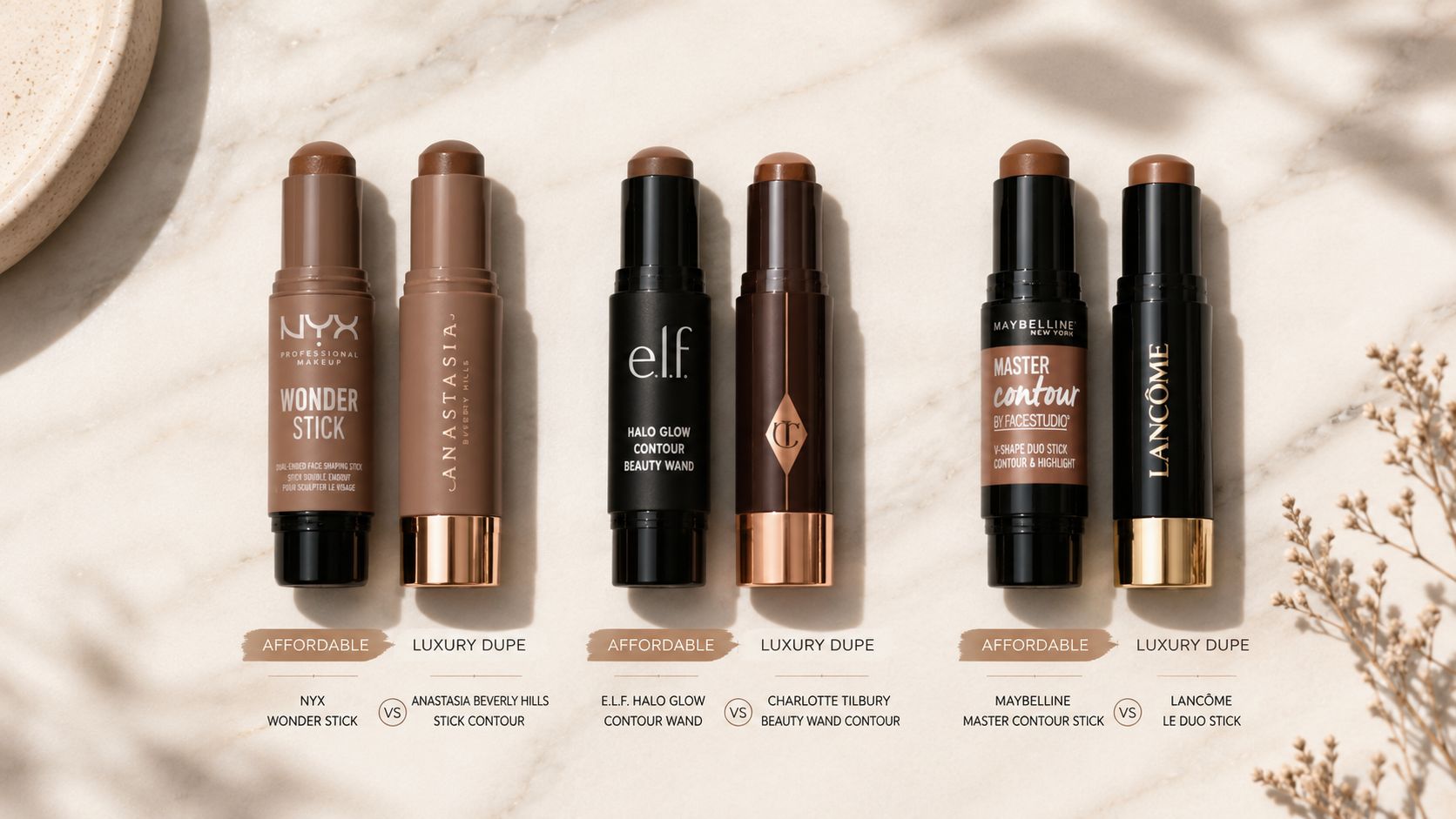
If you also struggle with balancing contour and warmth on lighter skin, this roundup of the best drugstore bronzer for fair skin helps separate true sculpting products from bronzers that just happen to be beige.
1. e.l.f. Halo Glow Beauty Wand
This is one of the most talked-about affordable swaps for a reason. The e.l.f. Halo Glow Beauty Wand is widely recognized as a dupe for the Westman Atelier Face Trace Cream Contour Stick, with a similar cream-to-powder style finish and comparable shade matching, while the e.l.f. option sits at about $14 and the Westman Atelier version costs more than $40, based on this dupe roundup.
What I like about this pick is the easy blend. It suits anyone who wants contour to look diffused fast. The trade-off is that you need to be selective with shade and placement, because softer formulas can lose precision if you overblend.
2. Sephora Collection Cream Contour Stick
If your goal is “luxury look for less” in the most literal sense, this one makes a strong case. The product has become a budget benchmark partly because the $14 price point stands in such obvious contrast to premium sticks that cost much more.
This is the kind of contour stick I'd point a beginner toward when they want a straightforward cream formula with enough payoff to show up, but not so much that one swipe ruins the whole base. It's practical, accessible, and easy to recommend if you prefer shopping in-store.
The best value product isn't always the cheapest one. It's the one that gives you the fewest bad makeup days.
3. Maybelline Facestudio Master Contour Stick
The Maybelline Facestudio Master Contour Stick was cited as the best drugstore contour stick in 2024 editor tests, praised for strong color payoff and blendability similar to Fenty Beauty Match Stix Matte Contour Skinstick, whose premium counterpart is priced at $30+, according to Who What Wear's best contour makeup roundup.
This is a great choice if you like a little more structure. It doesn't feel as whisper-soft as some creamier formulas, which can be a plus when you want the contour to stay visible through blending. For sharper cheek work, that firmer feel helps.
4. Colourpop Bronze Stix
The Colourpop Bronze Stix has been confirmed by community testers as a dupe for the Rare Beauty cream bronzer stick, with similar color intensity and easy application. The Colourpop version is $15 while the Rare Beauty stick sits at $30+, according to this drugstore contour recommendation thread.
This one is best for someone who likes a cream stick that goes on quickly and blends without much effort. The caveat is in the name. Some shades read more bronzy than shadowy, so this is the product on the list where shade selection matters extra.
5. NYX Wonder Stick
The NYX Wonder Stick is a dual-ended bronzer and highlighter contour stick that's widely available in the US for under $20, and it works as a budget alternative to high-end dual-ended options like the Makeup by Mario SoftSculpt Shaping Stick, with comparable performance for adding dimension and defining cheekbones, based on this creator demo on TikTok.
This is the most convenient option in the lineup. It's especially good for travel, quick routines, and anyone who wants both sculpting and a little lift in one product. The trade-off is that dual-ended products can be less targeted than a single dedicated contour stick, so precision lovers may still prefer Maybelline or Sephora.
Which one is best
The Maybelline Facestudio Master Contour Stick is the best all-around buy. It balances payoff, control, and blendability in a way that feels beginner-friendly but still polished enough for someone picky about shape. If you want the softest, easiest luxury-style dupe vibe, e.l.f. is close behind.
Your Contour Stick Questions Answered
Why does my contour look muddy instead of sculpted
Usually it's the shade. If the color is too warm, too red, or too similar to bronzer, it won't create believable depth. Placement can also be the culprit. Contour placed too low on the cheek reads heavy instead of lifted.
A muddier result can also happen when you keep layering cream over unset base makeup. In that case, products blend into each other instead of staying in their intended zone.
Can I use concealer or foundation sticks as contour
Only sometimes. A deeper concealer stick can work if the undertone is cool enough and the finish isn't radiant. Most complexion sticks are designed to match skin or brighten it, not mimic shadow, so they often pull too warm or too skin-like to contour convincingly.
If it looks flattering all over the face, that doesn't automatically mean it will sculpt the cheekbone.
How do I make cream contour last longer on oily skin
Formula matters a lot here. Affordable cream-to-powder contour sticks often rely on Caprylic/Capric Triglyceride for slip, but they need to set within 10 to 15 seconds. If the formula stays tacky, it usually means there isn't enough setting agent, such as silica, and the product can migrate into fine lines or crease, as explained on this Sephora contour stick product page.
For oily skin, a fast-setting stick usually performs better than an extra-emollient one. Blend one area at a time, then lightly set only where you tend to break down first.
If a contour is still sticky after blending, don't keep piling on powder. The formula is telling you it doesn't set cleanly.
Should I apply contour before or after powder
Apply cream contour before powder. If you put a cream stick on top of a heavily powdered base, it can grab and skip. The only exception is when you're using very targeted cream contour with a brush over a softly set base, but that takes a lighter hand.
What's the best way to store contour sticks for quick touch-ups
Keep them upright if you can, and avoid leaving them in a hot bag where the cream can soften too much. If you carry makeup around often, it helps to use a case that protects the cap and keeps the stick from getting messy. If your current makeup bag is chaotic, this guide to find the perfect clear case is useful for organizing products so touch-ups stay fast.
Do I need powder over contour
Not always. Some sticks dry down enough on their own. Others benefit from a light sweep of powder, especially around the cheeks or jaw if you want extra hold. The right answer depends on your skin type and how self-setting the formula feels after blending.
The Final Verdict on Finding Your Perfect Dupe
A great affordable contour stick does three things well. It mimics a real shadow, blends without wrecking your base, and stays believable once the rest of your makeup is on. That means choosing a cool-toned shade, picking a texture that suits your skin, and using less product than your first instinct tells you to.
If I had to name one best overall buy from this list, it's Maybelline Facestudio Master Contour Stick. It gives the strongest mix of payoff, control, and easy blending, and it's the one most likely to please both beginners and people who already know exactly how they like their contour to sit.
The bigger takeaway is that you don't need luxury packaging to get a luxury-looking result. Once you know how to read undertone, finish, and formula, buying a better contour stick gets much easier. And a lot cheaper.
If you love beauty picks that save money without sacrificing performance, Finding Favourites is worth bookmarking. It's packed with practical dupe roundups, shade comparisons, and affordable swaps that make luxury beauty feel a lot more reachable.