
Best Body Lotion While Pregnant: 7 Safe & Affordable Picks
You're probably standing in the skincare aisle, phone in hand, trying to figure out why every normal body lotion suddenly feels suspicious now that you're pregnant. One label says “clean,” another says “stretch mark rescue,” and a third costs way more than it should just because it has “mama” on the bottle. It's annoying. The good news is that finding the best body lotion while pregnant doesn't need to be complicated or expensive.
This post may contain affiliate links, which means I may receive a commission if you purchase through my links, at no extra cost to you. Please read the disclosure policy for more information.
What matters most is simple: a lotion that feels good, hydrates well, and avoids ingredients you'd rather not use during pregnancy. I'd skip the overpriced bump creams unless you love them. Often, a boring, gentle, drugstore moisturizer is the smarter buy.
Your Guide to Pregnancy-Safe Body Lotions
Pregnancy makes you question everything you put on your skin, and that's fair. Your body is changing fast, your skin may suddenly feel drier or more reactive, and products you used for years can start smelling awful or stinging out of nowhere.
The best body lotion while pregnant isn't the fanciest one on the shelf. It's the one you'll use every day without irritation. That usually means a straightforward moisturizer with barrier-supporting ingredients, a comfortable texture, and little to no fragrance.
A good lotion can help with:
- Dryness and tightness as your belly grows
- Itch relief on the belly, hips, and thighs
- Daily comfort when skin feels stretched
- Routine consistency so you're not constantly switching products
My rule: ignore most “miracle stretch mark” marketing and shop for comfort first.
That mindset will save you money and stress. If a lotion is gentle, affordable, and easy to use after every shower, you're already on the right track.
Why Your Skin Needs Extra TLC During Pregnancy
Pregnancy skin can get weird fast. One week you're fine, and the next your stomach feels tight, your thighs are itchy, and your usual scented lotion suddenly smells unbearable. That doesn't mean you need a whole new beauty routine. It means your skin needs more support and less nonsense.
Your skin is stretching and reacting at the same time
As your belly, hips, and breasts change, the skin in those areas often feels dry, taut, and uncomfortable. A body lotion won't stop your body from changing, but it can make those changes feel a lot more manageable day to day.
Pregnancy can also make skin more sensitive. That's why products that seemed fine before can suddenly feel too strong, too perfumed, or just plain irritating. This is also why simple formulas usually win.
Lotion is not extra during pregnancy
Body lotion becomes a basic comfort product, not a bonus step. In a longitudinal study, general hygiene products were the most commonly used and stayed consistently used, while cosmetic product use declined as pregnancy advanced and into the postpartum period (pregnancy and postpartum personal care product use study). That matters because moisturizers fit into the practical, routine category for many people.
So if you're choosing one product to get right, make it this one. You'll likely use it often, and you'll want something that still works for you when your routine gets simpler later in pregnancy.
If you're also dealing with puffiness in your feet, ankles, or hands, this guide on safe ways to ease pregnancy swelling is genuinely useful and pairs well with a comfort-first body care routine.
What a good lotion actually does
A good pregnancy lotion helps your skin hold onto moisture and cuts down that rubbed-raw feeling that can happen when skin is dry and stretched. It's not glamorous. It's practical.
That's why I'd rather see you buy one reliable, affordable bottle you'll use consistently than a tiny “bump butter” that sits in a drawer because it's greasy, overpowering, or overpriced.
Decoding the Ingredient Label A Pregnancy Checklist
Drugstore lotion labels look more complicated than they are. You do not need to decode every ingredient. You need a fast filter that helps you spot a plain, hardworking moisturizer and skip anything trying to act like a treatment.
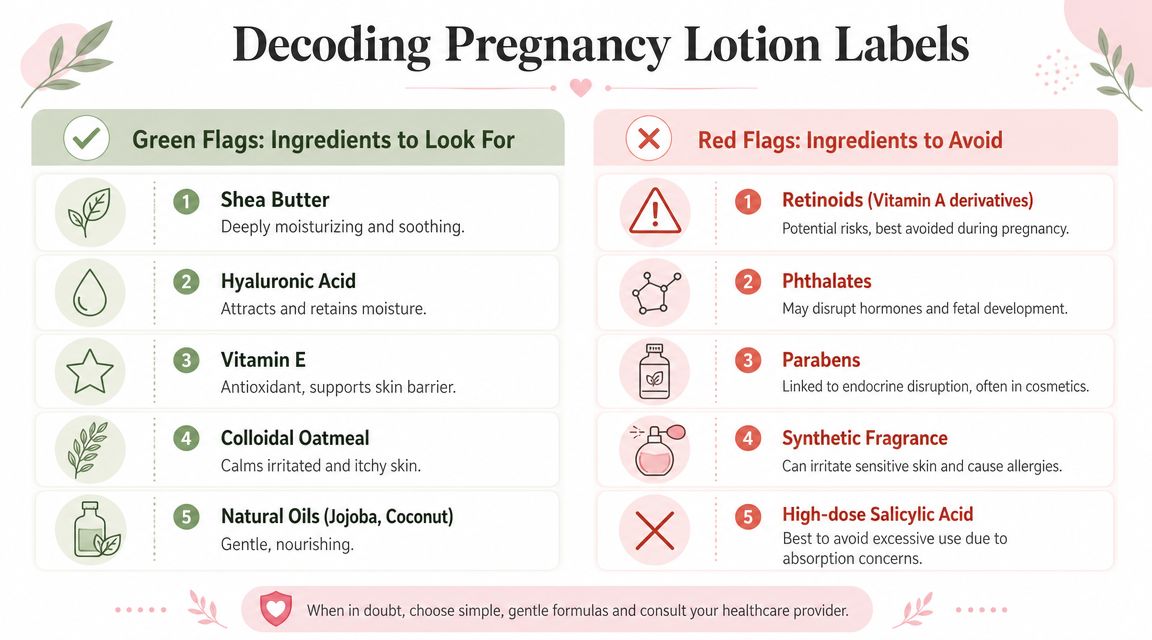
Start with the job you want the lotion to do. A good pregnancy body lotion should moisturize, support the skin barrier, and calm irritation. That usually means simple, familiar ingredients instead of flashy claims about resurfacing, sculpting, or firming.
Green flag ingredients to look for
These ingredients usually signal that a lotion is built for comfort, not marketing:
- Glycerin helps pull water into the skin and is one of the best signs that a lotion is meant to moisturize properly.
- Hyaluronic acid is another moisture-binding ingredient that can help skin feel less tight.
- Shea butter adds richer softness and works well if your belly, hips, or legs are getting dry.
- Colloidal oatmeal is a smart pick for itchy, easily irritated skin.
- Ceramides help support the skin barrier, which matters if your skin feels reactive or stripped.
- Petrolatum, dimethicone, and other bland emollients are often exactly what you want. They help seal moisture in and usually perform better than overpriced “pregnancy” blends.
That last point matters. You do not need a boutique bump cream to get good results. A basic drugstore formula with glycerin, ceramides, or shea butter often does the same job for a fraction of the price.
For more ingredient-specific product reads, this tag page on pregnancy-safe skincare is a useful place to browse.
Red flag ingredients to avoid or minimize
Read more carefully if the bottle sounds like skincare for your face instead of lotion for your body. According to Healthline's pregnancy-safe skincare guide, most OTC body lotions are considered safe, but hydroquinone is typically minimized because it can be absorbed at a relatively high rate, and high-dose salicylic acid products such as peels or oral forms are avoided, while lower-dose topical salicylic acid has been reported safe by ACOG.
Use that as your shopping shortcut:
- Hydroquinone. Skip it in body lotion.
- Retinoids or retinol. Pass on any body product using them.
- High-dose salicylic acid. Not a smart choice for an all-over daily moisturizer.
- Aggressive “active” formulas. If it promises peeling, resurfacing, or strong exfoliation, leave it on the shelf.
- Heavy fragrance. Safety is not the only issue. Strong scent is one of the fastest ways to make a lotion unbearable during pregnancy.
A simple rule works well here. If the front label sounds like a treatment product, do not buy it as your everyday pregnancy lotion.
If you are checking other over-the-counter pregnancy products too, Bummed's pregnancy hemorrhoid guide is another practical resource that takes the same no-panic, ingredient-aware approach.
A quick video can help if you prefer hearing this explained out loud:
Beyond Ingredients Texture Fragrance and Feel
The best lotion on paper is useless if you hate using it. Texture matters. So does scent. If a product pills, sits sticky on your skin, or makes you nauseous, you won't use it consistently.
Lotion versus cream versus butter versus oil
Here's the easiest way to understand it:
| Format | Best for | What it feels like |
|---|---|---|
| Lotion | Everyday all-over use | Light, fast, easiest for daytime |
| Cream | Drier skin or cooler weather | Richer, more cushioning |
| Body butter | Belly, hips, and very dry areas | Thick, slow to absorb, best at night |
| Body oil | Massage and sealing in moisture | Slippy, softening, can feel greasy |
If you run hot, hate residue, or need something for morning use, choose a lotion. If your skin feels uncomfortably tight by bedtime, a cream or body butter usually makes more sense.
A lot of people also like layering. Light lotion first, richer product on top of the bump at night. That's a good move if your belly feels especially dry.
If you're curious how a richer formula compares in real-life use, this Susanne Kaufmann Body Butter review gives a helpful benchmark for what a premium body butter texture feels like, even if you end up buying something cheaper.
Fragrance is where many lotions lose me
Pregnancy can make scent tolerance wildly unpredictable. Even if a lotion is technically safe, a heavy perfume can turn it into an instant no. Fragrance can also be irritating if your skin is feeling more reactive than usual.
That's why I usually recommend one of these three paths:
- Fragrance-free if you're newly sensitive, itchy, or nauseous
- Very lightly scented if you still enjoy a little sensory payoff
- Separate your perfume from your body lotion so your moisturizer can stay boring and dependable
A pregnancy lotion should be easy to live with. If the smell gets on your nerves after one use, it's not the right one.
My strong opinion is that fragrance-free wins for most pregnant people. It gives you fewer variables, less risk of irritation, and a much better chance that you'll keep using it.
The Savvy Shoppers Guide to Finding Your Perfect Lotion
You're standing in the drugstore aisle, staring at a shelf full of lotions that all promise soft, glowing skin. One bottle says “maternity,” another costs three times as much, and half of them smell like a perfume counter. Ignore the fluff. The right pick is the one you'll consistently use every day, without irritation and without overspending.
Start using body lotion when your skin starts feeling dry, tight, itchy, or stretched. For plenty of pregnant people, that shows up as the belly grows, but you do not need to wait for a specific week to begin. Earlier is fine. Consistency matters more than timing.
Application is simple. Put lotion on right after a shower or bath, while your skin is still slightly damp. That helps hold onto moisture better than waiting until your skin is fully dry. Focus first on the areas that usually get the most uncomfortable: belly, hips, thighs, chest, and anywhere that feels itchy.
- Shower or bathe
- Pat skin so it's still slightly damp
- Apply lotion right away
- Repeat daily, especially on belly, hips, and thighs
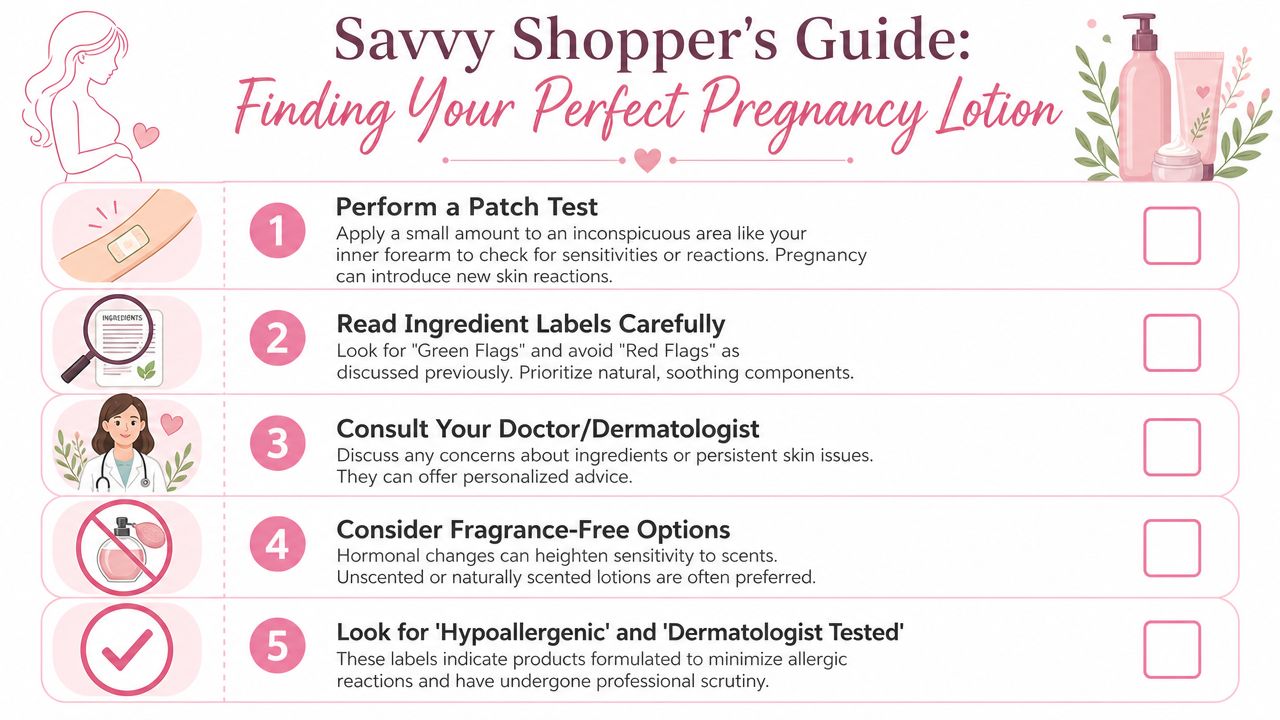
Here's my strong advice. Do not get distracted by “pregnancy” branding. A basic, fragrance-free drugstore lotion with a sensible ingredient list usually does the job just as well as a pricey bump cream. You are buying moisture and comfort, not a fantasy.
Patch test before you commit
Pregnancy can make your skin more reactive than usual, even to products you used before without a problem. Test first. It saves you from slathering something all over your body and regretting it an hour later.
Try this:
- Apply a small amount to your inner forearm or side of your wrist
- Wait and watch for irritation, itch, or redness
- Use it more widely only if your skin stays calm
Read the front label, then the back
The front label is not useless. It helps you narrow the field fast.
I'd start with bottles that say:
- Fragrance-free
- Sensitive skin
- Hypoallergenic
- Dermatologist tested
Then turn the bottle over and make sure the ingredient list supports that promise. If the front says “gentle” but the formula is loaded with perfume or flashy extras, put it back.
A good pregnancy lotion should feel boring in the best way. Easy to buy, easy to wear, easy to replace. That is how savvy shopping works here. You skip the expensive marketing story and go straight for the affordable formula that keeps your skin comfortable.
7 Best Affordable Body Lotions for a Glowing Pregnancy
You do not need a luxury maternity cream. You need a solid moisturizer with a sensible formula and a texture you'll enjoy. These are the kinds of affordable, widely available US options I'd look at first.
Pregnancy-Safe Body Lotion Comparison
| Product Type | Best For | Key Features |
|---|---|---|
| CeraVe Daily Moisturizing Lotion | Everyday use | Lightweight, fragrance-free, barrier-supporting feel |
| CeraVe Moisturizing Cream | Very dry skin | Richer texture, great for belly and hips at night |
| Vanicream Moisturizing Lotion | Reactive skin | Minimalist formula, fragrance-free, dependable |
| Vanicream Moisturizing Cream | Extra-sensitive dry skin | Thick, plain, excellent if everything stings |
| Eucerin Advanced Repair Lotion | Rough, tight skin | Strong everyday hydration, practical pump bottle |
| Aveeno Daily Moisturizing Lotion | Itchy, uncomfortable skin | Oat-based comfort, easy drugstore pick |
| Cetaphil Moisturizing Cream | Budget-friendly richness | Thick but familiar, easy to find almost anywhere |
1. CeraVe Daily Moisturizing Lotion
If you want the safest blind buy, this is one of the first I'd try. It has the light, no-fuss texture that works well when you're moisturizing your whole body every day and don't want to feel coated.
Why it stands out:
- Fragrance-free, which is a huge win in pregnancy
- Light enough for daytime
- Feels practical, not greasy
This is my top pick for someone who wants one bottle for arms, legs, belly, and chest without needing a separate “pregnancy” product.
2. CeraVe Moisturizing Cream
This is the richer sibling. Choose this if your skin feels dry enough that a standard lotion disappears instantly.
I especially like this for nighttime use on the belly, hips, and thighs. It feels more substantial and gives that cushioned, protected feel that stretched skin often wants.
Best for:
- Dry to very dry skin
- Cold weather
- Overnight comfort
3. Vanicream Moisturizing Lotion
Vanicream is what I reach for mentally when someone says, “My skin hates everything right now.” It's plain in the best way.
If fragrance bothers you, if your skin is suddenly reactive, or if you just want the fewest possible drama points, Vanicream is a smart buy. It's not glamorous, but that's exactly why it works for a lot of pregnant people.
This is the kind of lotion that wins by being boring and consistent.
4. Vanicream Moisturizing Cream
This is the heavier-duty version and one of the best choices if your skin barrier feels wrecked. If your belly is itchy, your legs are flaky, and everything scented sounds awful, this is a strong contender.
It won't give you a spa experience. It will give you relief and a very low-risk texture and scent profile. During pregnancy, that's often more valuable.
5. Eucerin Advanced Repair Lotion
Eucerin tends to do one thing well: comfort-first moisture without unnecessary fluff. This is a very practical option if your skin feels rough, dry, or persistently tight.
I like this for people who want:
- A large pump bottle
- A reliable daily body lotion
- Something easy to find at Target, Walmart, CVS, or Walgreens
It feels slightly more utilitarian than some prettier body lotions, but that's part of the appeal.
6. Aveeno Daily Moisturizing Lotion
If itch is one of your main complaints, Aveeno is worth a look. Oat-based body care tends to be a comforting direction when skin feels annoyed.
This is a nice middle ground pick. Not as thin as the lightest lotions, not as dense as a cream. It's the kind of texture many people find easiest to stick with every day.
Good fit for:
- Mild itch and dryness
- Sensitive-feeling skin
- People who want a familiar drugstore classic
7. Cetaphil Moisturizing Cream
Cetaphil's cream is one of those reliable old-school options that still earns its spot. If your budget is tight and you just want a thick moisturizer from a brand almost every store carries, this is a sensible purchase.
I'd use this more like a targeted dry-skin cream than a daytime all-over lotion if you dislike richer textures. But for the belly and other tight areas, it does the job well.
Which one should you buy first
If you want my direct shortlist:
- Best overall: CeraVe Daily Moisturizing Lotion
- Best for very sensitive skin: Vanicream Moisturizing Lotion
- Best for very dry skin: CeraVe Moisturizing Cream
- Best if you want soothing comfort: Aveeno Daily Moisturizing Lotion
The smartest dupe mindset here is simple. Skip the expensive pregnancy-branded cream unless you love the experience. A basic drugstore lotion usually gives you the same benefit you care about, which is hydration and comfort.
Frequently Asked Questions
Can body lotion prevent stretch marks?
Not in any guaranteed way. The more honest answer is that lotion helps with dry, tight, and itchy skin, especially on the belly, hips, and thighs. Guidance on pregnancy-safe body lotions makes it clear that the main benefit is hydration and comfort, not guaranteed stretch mark prevention (pregnancy lotion guidance on stretch mark claims).
So yes, use lotion. Just use it for the right reason. Softer, more comfortable skin is a realistic goal. A miracle cream isn't.
Can I keep using my regular body lotion while pregnant?
Usually, yes, if the formula is simple and doesn't contain ingredients you're trying to avoid. If your current lotion is basic, non-irritating, and not loaded with treatment-style actives, there may be no reason to replace it.
That said, pregnancy can change your tolerance fast. If your usual lotion suddenly stings or smells too strong, take that seriously and switch to something simpler.
Is fragrance-free always better?
For pregnancy, I think fragrance-free is usually the better bet. Not because every scented lotion is unsafe, but because fragrance is one of the first things that can become annoying or irritating when your skin and sense of smell change.
If you still love scent and your skin is happy, you don't need to panic. But if you're shopping from scratch, fragrance-free is the safer starting point.
What's better for pregnancy stretch marks, Mederma or Bio-Oil?
If you're comparing dedicated stretch mark products, this breakdown of Mederma or Bio-Oil can help you sort out texture, use case, and what each one is good at. My general view is still the same: pick the product you'll use consistently, and keep your expectations realistic.
When should I talk to my doctor about pregnancy skin changes?
Talk to your doctor or dermatologist if you develop severe itching, a spreading rash, painful irritation, or anything that feels sudden or unusual. Dryness is common. Relentless symptoms or skin that looks inflamed deserve a proper medical opinion.
The Bottom Line for Your Bump
The best body lotion while pregnant is usually not a luxury bump cream. It's a simple, affordable moisturizer that feels good enough to use every day. If you want my strongest recommendation, go with CeraVe Daily Moisturizing Lotion. It hits the sweet spot of comfort, simplicity, and value. If you're building a baby registry or shopping for a friend too, this guide to best gifts for expecting parents has some thoughtful ideas beyond skincare.
If you love smart beauty shopping and want more practical dupes, budget-friendly skincare picks, and honest product comparisons, check out Finding Favourites. It's a great resource for cutting through hype and finding products that earn their spot in your routine.