
Best Body Lotion While Pregnant: 5 Safe & Affordable Picks
You're probably standing in a drugstore aisle or scrolling through body lotions online, staring at labels that all sound reassuring until you flip the bottle over. “Firming.” “Glow.” “Retinol.” “Botanical renewal.” None of that helps when your skin suddenly feels tighter, itchier, and way more reactive than it did before pregnancy.
The good news is that finding the best body lotion while pregnant is a lot simpler than the marketing makes it seem. Pregnancy skincare guidance has shifted from just “moisturize more” to ingredient-focused screening because body lotion tends to stay in the routine even when other cosmetic use drops, which makes formula choice matter more [personal care product use during pregnancy research].
This post may contain affiliate links, which means I may receive a commission if you purchase through my links, at no extra cost to you. Please read the disclosure policy for more information.
Your Guide to Worry-Free Hydration During Pregnancy
You do not need a fancy “maternity” lotion to get this right. You need a lotion that hydrates well, avoids the obvious problem ingredients, and doesn't turn already-sensitive pregnancy skin into an irritated mess.
I'm strongly on the side of boring body care here. The best formulas are usually the ones that focus on moisture, barrier support, and low irritation risk instead of dramatic claims.
| Top Pick | Best For | Price Point |
|---|---|---|
| CeraVe Moisturizing Cream | Overall value and very dry skin | Budget-friendly |
| Vanicream Moisturizing Cream | Sensitive, reactive skin | Budget-friendly |
| Eucerin Advanced Repair Lotion | Daily full-body hydration | Budget-friendly |
| Aveeno Daily Moisturizing Lotion | Normal to dry itchy skin | Budget-friendly |
| Aquaphor Healing Ointment | Extra-dry patches and belly layering | Budget-friendly |
Bottom line: If a lotion sounds like treatment, I'd put it back. If it sounds like simple hydration, it's probably worth a closer look.
A lot of people still shop by front-label promises, but that's not the smartest move during pregnancy. Skin can get drier, more sensitive, and less tolerant, so the formula matters more than the branding. That's why this guide focuses on both safe picks and the ingredient logic behind them, so you can judge any bottle on the shelf for yourself.
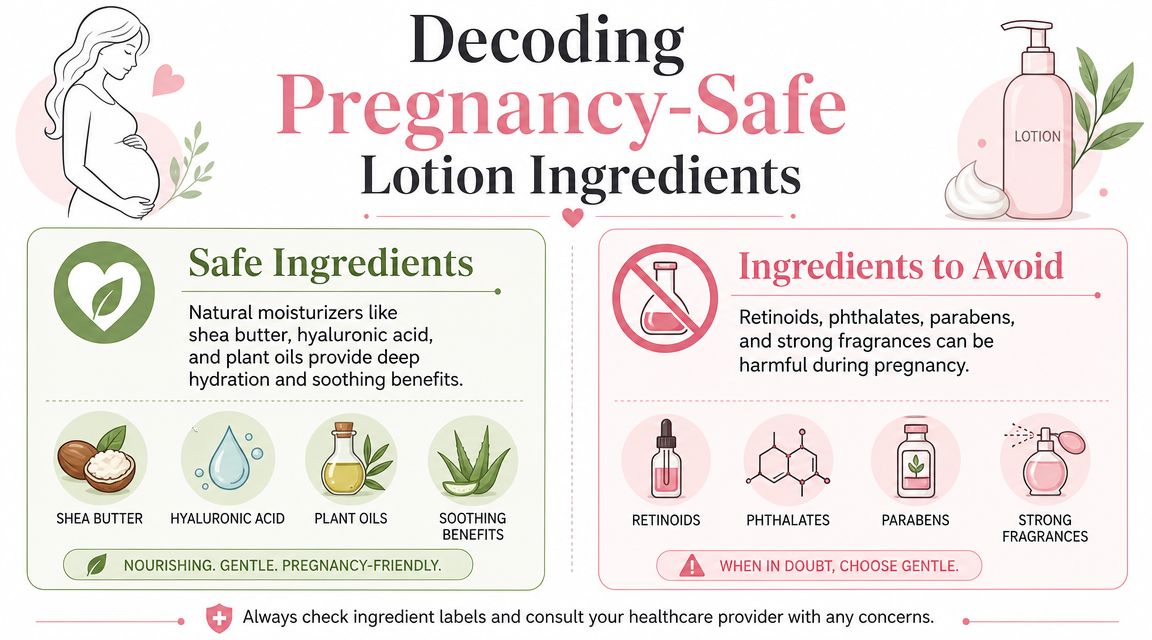
Decoding Pregnancy-Safe Lotion Ingredients
The fastest way to shop smarter is to stop asking, “Is this marketed for pregnancy?” and start asking, “What's in this?” That one shift saves you from a lot of overpriced, heavily fragranced nonsense.
Ingredients worth looking for
Dermatology-style guidance usually puts the focus on ingredient exclusion first, but there are also clear winners on the “yes” list. Ingredients like glycerin, petrolatum, ceramides, shea butter, and squalane are generally preferred because they support the skin barrier and help hold onto moisture without the concerns linked to vitamin A derivatives [dermatology guidance on pregnancy-safe lotion ingredients].
Here's the cheat sheet I'd use in-store:
- Glycerin helps pull water into the skin. If your skin feels tight after showering, this is one of the most useful ingredients to see near the top of the list.
- Ceramides help support the skin barrier. Good if your skin feels rough, sensitive, or weirdly reactive.
- Shea butter adds richer moisture and softness. Great for belly, hips, thighs, and anywhere that feels stretched.
- Squalane is a solid pick if you want something emollient but not heavy.
- Petrolatum is excellent for sealing in moisture, especially on flaky or extra-dry patches.
- Hyaluronic acid can be helpful in simple hydrating formulas, especially when the rest of the ingredient list stays basic.
- Peptides show up in some pregnancy-hydration products and are generally less concerning than harsh treatment actives.
Ingredients I'd avoid or scrutinize hard
You do not need to memorize every risky ingredient category. You need to know the biggest one and the most common red flags.
- Retinoids or retinol are the main class to avoid during pregnancy. This is the first thing I'd scan for on any “renewing,” “smoothing,” or “anti-aging” body product.
- Firming or brightening actives deserve extra caution because those products are more likely to include stronger exfoliants or specialty actives.
- Heavy fragrance isn't automatically unsafe, but pregnancy skin can be more reactive, so it often becomes the thing that ruins an otherwise decent lotion.
- Essential-oil-heavy formulas are another category I'd approach cautiously if your skin is already acting up.
If you want a refresher on how to spot toxic ingredients for skin, that ingredient guide is a useful companion for reading labels without getting overwhelmed.
The simplest shopping rule
A good pregnancy lotion usually combines humectants and emollients or occlusives. In plain English, that means one part draws in water and another part keeps it from escaping.
Plain, unscented, short-ingredient-list moisturizers usually beat trendy body lotions with flashy claims.
That's why a silky “beauty lotion” can feel nice for five minutes and still be a worse choice than a thicker cream. If your skin is dry and stretched, you need real barrier support, not a formula built for perfume and slip.
Understanding Hydration Versus Treatment Lotions
Not all body lotions belong in the same category. The distinctions often lead to confusion.
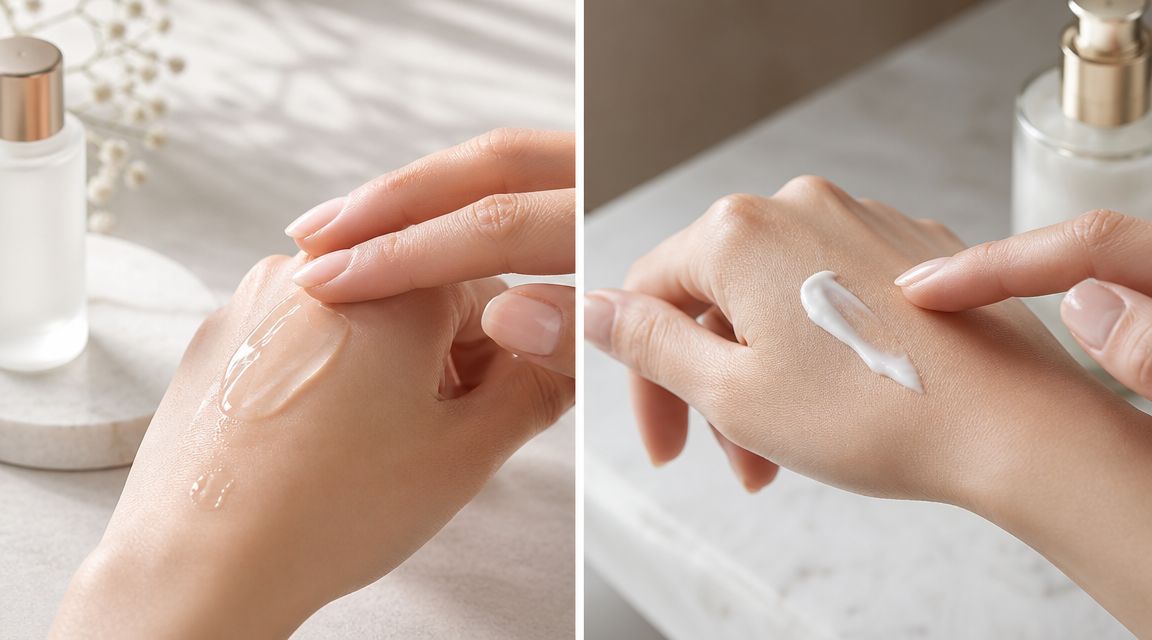
A daily hydrator is there to moisturize, soften, and support the skin barrier. A treatment lotion is trying to do something extra, like firm, brighten, resurface, smooth texture, or fight body acne. During pregnancy, those are very different shopping decisions.
Daily hydrators are the safe default
If your goal is bump comfort, less itch, and softer skin, stick with simple hydration. Guidance aimed at pregnancy-safe body care notes that plain moisturizers are generally the safest bet, while products marketed to firm or brighten need more caution because they may include higher-risk actives. That same guidance also notes that low-dose topical salicylic acid is considered acceptable by ACOG, and small amounts of glycolic acid in over-the-counter products are likely safe, but the broader direction still favors simple hydration over complex treatment formulas [ingredient-level pregnancy lotion guidance].
Treatment lotions need a slower read
The category of “body lotion” is not always as harmless as it sounds. A lotion that says “tone correcting,” “retinol,” “firming,” or “glow renewal” may technically still be a lotion, but it shouldn't be treated like your basic post-shower moisturizer.
If you already compare barrier products the way some people compare face serums, this breakdown of CeraVe vs Aquaphor is useful because it highlights how different “moisturizing” products can function. Some hydrate. Some seal. Some do both better than others.
If a body lotion is trying to solve five problems at once, it usually isn't the best pregnancy pick.
My opinion is simple. During pregnancy, hydration beats ambition. Keep treatment products separate from your everyday body lotion, and if you're unsure, skip the active formula and buy the plain one.
Our 5 Best Budget-Friendly Pregnancy Body Lotions for 2026
These are the five I'd tell a friend to buy first. None of them need a luxury price tag to do their job well. The theme is simple: fragrance-light or fragrance-free where possible, barrier support, reliable hydration, and easy US availability.
1. CeraVe Moisturizing Cream
If you want one versatile product, this is my best overall value pick.
It's rich without feeling absurdly greasy, and it works especially well if your skin has crossed over from “a little dry” into “why is my stomach itchy all the time?” territory. The big win here is the barrier-first profile. It fits the ingredient logic you want during pregnancy: straightforward moisture support rather than treatment-style claims.
Why I recommend it:
- Best for very dry belly, hips, thighs, and arms
- Texture creamier and more substantial than a basic lotion
- Why it works it's built for moisture retention and barrier support, which is exactly what stretched, dry skin needs
- Who should buy it almost anyone who wants one dependable tub and done
2. Vanicream Moisturizing Cream
If your skin is sensitive, itchy, reactive, or suddenly offended by everything, Vanicream is the one I'd reach for.
This is the anti-drama pick. It's famous for being plain in the best way. No fancy glow claims. No unnecessary personality. Just a moisturizer that tends to make life easier when your skin is throwing tantrums.
Why it stands out:
- Best for sensitive skin and fragrance-averse shoppers
- Texture thick, simple, protective
- Why it works it sticks to the boring-moisturizer brief better than most products on the shelf
- Dupe vibe if you've been eyeing pricier “clinical” creams, this is often the more sensible alternative
3. Eucerin Advanced Repair Lotion
This is the lotion I'd recommend if you want something more spreadable for everyday full-body use.
Some creams are excellent but annoyingly dense when you're trying to moisturize your whole body after a shower. Eucerin Advanced Repair Lotion hits a nice middle ground. It feels practical, not precious. You can keep it by the bathroom sink, use it fast, and move on with your day.
Why I like it:
- Best for daily all-over use
- Texture lotion format, easier to spread quickly
- Why it works it suits the hydration-first approach without reading like a treatment product
- Who should buy it anyone who won't consistently use a super-thick cream
If you're building a cheaper dry-skin routine in general, this roundup of the best budget moisturizer for dry skin pairs well with this topic.
Here's a helpful visual if you want another take on body lotion selection before you buy.
4. Aveeno Daily Moisturizing Lotion
Aveeno is a solid middle-of-the-road option if you want comfort without a heavy finish.
It tends to appeal to people who hate sticky body creams but still want skin that stays comfortable longer than five minutes. If your dryness is mild to moderate, this is often enough on its own. If your belly is very dry, you can layer something heavier over the top at night.
Why it earns a place:
- Best for normal to dry skin that gets itchy or seasonally rough
- Texture lighter and more familiar if you usually prefer classic lotion
- Why it works it keeps your routine easy, which matters because the best lotion is still the one you'll use every day
- Best use daytime or warm-weather hydration
5. Aquaphor Healing Ointment
This is not a classic lotion, and that's exactly why it belongs here.
Aquaphor is the patch rescue option. I wouldn't use it as my only all-over body moisturizer unless your skin is extremely dry and you love an occlusive finish. But for stretched spots, flaky patches, nipples, elbows, or nighttime belly sealing, it's excellent.
Why it's here:
- Best for sealing in moisture over dry or irritated areas
- Texture thick, ointment-like, definitely not lightweight
- Why it works it helps trap moisture where cream alone isn't cutting it
- How to use it dab it over lotion, not instead of lotion, if you want maximum comfort
The best dupes by category
If you're trying to shop smart instead of expensive, here's the quick list.
Best dupe for luxury barrier creams
CeraVe Moisturizing Cream gives you the same practical, skin-first feel without paying for aspirational branding.Best dupe for high-end sensitive-skin moisturizers
Vanicream Moisturizing Cream is the no-frills version that often makes more sense.Best dupe for pricey spa-style body lotions
Aveeno Daily Moisturizing Lotion is the affordable everyday option if you care more about comfort than packaging.Best dupe for premium pregnancy belly balms
Aquaphor Healing Ointment is often the smarter buy for targeted sealing and protection.
My strongest recommendation: Buy one all-over moisturizer and one backup occlusive. You do not need a whole “pregnancy body care system.”
Smart Shopping and Application Tips
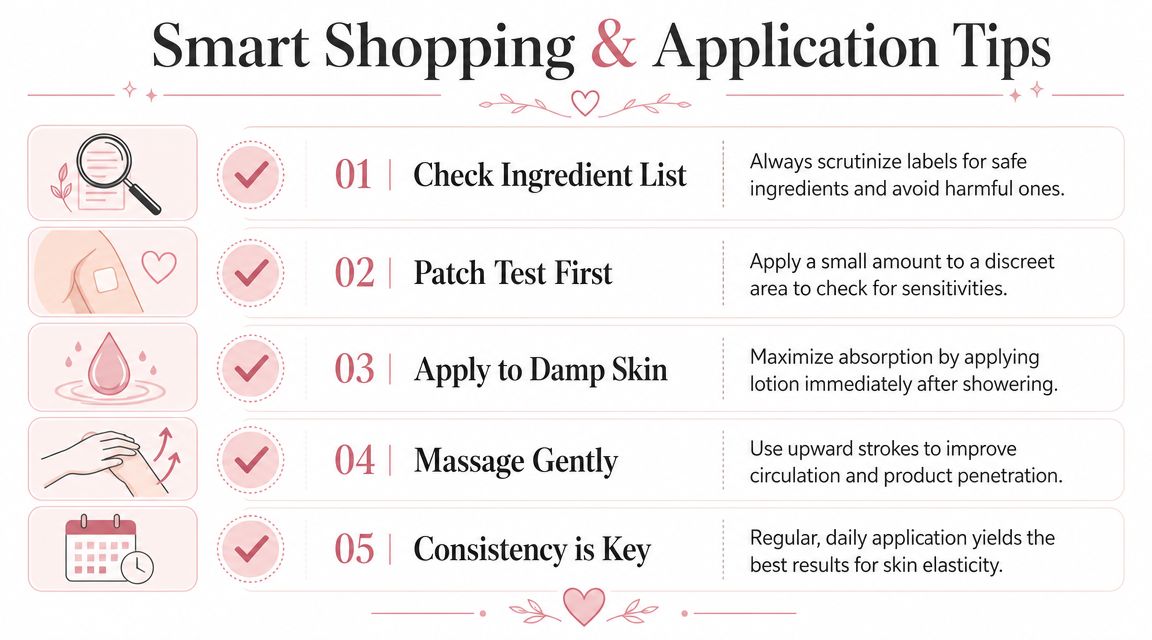
Even a good product can disappoint if you buy the wrong type, skip the patch test, or apply it on bone-dry skin. Pregnancy skin can react differently, and guidance for pregnancy-safe stretch mark creams specifically recommends patch testing first and applying after showering on damp skin to help lock in moisture [Consumer Reports pregnancy-safe stretch mark cream guidance].
Read the label in this order
Many start at the front of the bottle. I'd start at the back.
Look for retinoids first
If you see retinol or another vitamin A derivative, skip it.Check the product claims
“Moisturizing,” “sensitive,” and “barrier” are usually easier categories. “Firming,” “brightening,” and “resurfacing” need more scrutiny.Scan for fragrance and a crowded formula
A shorter, simpler ingredient list is often the better bet when your skin is unpredictable.
If you like comparing classic drugstore moisturizers before buying, this guide to CeraVe vs Aveeno can help narrow down texture and skin-type preferences.
Patch test like you mean it
A patch test isn't overkill. It's practical.
Apply a small amount to a discreet area and give your skin time to react before you use it all over your belly, chest, or legs. Pregnancy can make skin more sensitive than usual, so a lotion you tolerated before may suddenly feel stingy, itchy, or irritating now.
Try a new lotion on a small area first, especially if it contains fragrance or botanical extracts.
Apply lotion when skin is still damp
This one matters more than people think. Putting lotion on slightly damp skin helps trap that moisture more effectively than waiting until your skin is fully dry.
A simple routine works best:
- After showering apply your lotion while skin still feels slightly damp
- On extra-dry spots add a thicker cream or ointment over the top
- At night focus on belly, hips, thighs, and breasts if those areas feel stretched
- Stop using it if you notice burning, rash, worsening itch, or anything that feels off
If itch becomes intense, unusual, or persistent, especially if it doesn't act like simple dryness, check with your OB-GYN or dermatologist instead of trying to fix it with more lotion.
Frequently Asked Questions
Can I keep using my regular body lotion while pregnant?
Yes, if it is a basic moisturizer. Check the label and skip anything built around retinoids, high-strength exfoliating acids, hydroquinone, or aggressive treatment claims.
My rule is simple. If the bottle promises firming, resurfacing, brightening, or anti-aging, put it back. If it focuses on plain hydration and barrier support, it is usually the safer bet.
Are natural or organic body lotions automatically pregnancy-safe?
No.
“Natural” and “organic” are marketing terms, not safety standards. Plenty of these formulas still contain essential oils, heavy fragrance, and plant extracts that can irritate already-sensitive pregnancy skin. A bland, fragrance-free pharmacy lotion often beats a pretty clean-beauty bottle.
At what point in pregnancy should I start using a belly lotion?
Start early, then stay consistent. You do not need to wait until your skin feels tight, itchy, or stretched.
A good routine is to begin once your body starts changing and use it daily on the belly, breasts, hips, and thighs. The goal is comfort and barrier support, not miracle stretch mark prevention. The American Academy of Dermatology notes that stretch marks often appear as skin expands and recommends moisturizer for dryness and itch, while setting realistic expectations about prevention [AAD stretch mark guidance].
Is a stretch mark lotion better than a regular body lotion?
Usually, no. Many stretch mark lotions are standard moisturizers with a higher price tag and better packaging.
Judge the ingredient list, not the front label. If a regular lotion gives you humectants, occlusives, and barrier-supporting ingredients without extra irritants, that is often sufficient. Treatment-style claims matter far less than daily use.
The Bottom Line for Your Bump
The best body lotion while pregnant is usually the least exciting one on the shelf. Skip the firming, brightening, and anti-aging claims. Look for simple hydration, fragrance-minimized formulas, and ingredients that support the skin barrier instead of trying to transform it.
If you want one clear answer, CeraVe Moisturizing Cream is the best pick here for value, safety-minded simplicity, and reliable comfort. Vanicream is the best choice for very reactive skin, and Aquaphor is the smartest add-on for dry patches that need extra sealing.
You do not need a luxury pregnancy lotion. You need a formula that keeps your skin comfortable and doesn't give you another thing to worry about.
If you love beauty shopping with a practical filter, Finding Favourites is worth bookmarking. It's a smart resource for affordable alternatives, straightforward comparisons, and budget-friendly beauty picks that save you from paying luxury prices for basic performance.