
Aquaphor Lip Repair vs Healing Ointment: Find Your Perfect
You're in the drugstore lip-care aisle, holding Aquaphor Lip Repair in one hand and Aquaphor Healing Ointment in the other, and the packaging is not helping. Both promise comfort. Both look practical. Both have that same no-frills, dermatologist-adjacent vibe. So the question turns into the one that truly matters. If you only want to buy one tube, which one does more?
That's where the usual comparison articles stop too early. The decision isn't just about chapped lips. It's about whether you want something for your lips, your cuticles, the corners of your nose, flaky patches, slugging, and even makeup prep. In other words, this is the one-product-for-everything dilemma, and the answer depends less on branding and more on how you'll use it day to day.
This post may contain affiliate links, which means I may receive a commission if you purchase through my links, at no extra cost to you. Please read the disclosure policy for more information.
The Aquaphor Aisle Dilemma
Most shoppers assume these two are basically the same thing with different labels. That's understandable. They both sit in the same family of products, they both target dryness, and they both have the classic ointment look that signals “serious moisture.”
But once you use them side by side, the split becomes clear. Lip Repair is built like a dedicated lip product. It's the one you toss into a bag, reapply after coffee, and reach for when your lips feel tight during the day. Healing Ointment feels more like the house multitasker. It lives on a nightstand, in a bathroom cabinet, or next to your skincare because it can do a lot more than lip duty.
That distinction matters because the “best” option changes based on your habits. If you want a tube you'll use mainly on lips and maybe before bed, Lip Repair makes more sense. If you want something that can handle lips, dry knuckles, flaky patches, and the occasional slugging moment, Healing Ointment usually earns its spot.
Bottom line: These products overlap, but they don't replace each other perfectly. One is more specialized. One is more versatile.
If you've ever bought the wrong one and realized it only after opening it, you're not alone. The good news is that the trade-offs are easy to understand once you stop thinking of them as duplicates.
Lip Repair vs Healing Ointment At a Glance
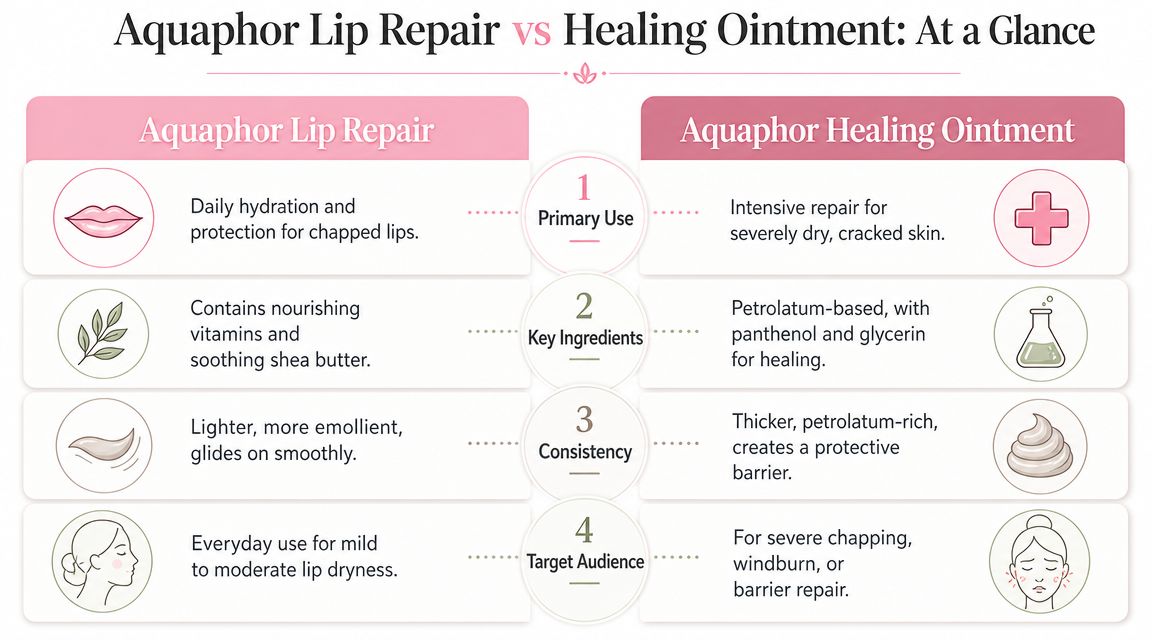
Here's the fast answer if you're comparing Aquaphor Lip Repair vs Healing Ointment and want to know which cart button to hit.
| Feature | Aquaphor Lip Repair | Aquaphor Healing Ointment |
|---|---|---|
| Primary role | Targeted lip care | Multipurpose barrier ointment |
| Best for | Daily lip dryness, on-the-go use | Lips, cuticles, dry patches, barrier support |
| Texture | Usually feels lighter and more lip-product-like | Thicker, more occlusive, more protective |
| Formula focus | Immediate relief and long-lasting moisture for chapped lips | Petrolatum-based skin, lip, and minor wound care support |
| SPF option | Yes, the line includes a Broad Spectrum SPF 30 version | No lip-sunscreen version noted |
| All-rounder score | Good if lips are your main concern | Better if you want one product for multiple jobs |
The core difference
The simplest way to think about it is this. Healing Ointment is the broader product, while Lip Repair is the narrower one. Healthline's comparison of Aquaphor and Vaseline describes Aquaphor Healing Ointment as a broader occlusive moisturizer designed for skin, lips, and minor wound care, while Lip Repair is positioned more specifically for immediate dryness relief and long-lasting moisture on chapped, cracked lips.
That's why Healing Ointment tends to win the versatility contest. It's not pretending to be cute or elegant. It's there to sit on skin, seal things in, and protect compromised areas.
Which one feels more practical day to day
Lip Repair usually makes more sense for bag, pocket, desk, and car life. It's built around lip use, so it feels less like you're repurposing a skin ointment every time you apply it. If you hate the feeling of a heavy, draggy layer on your lips during the day, this is often the easier pick.
Healing Ointment is better for home use and emergency use. It can cover a lot of small beauty problems without needing a separate product for each one. Dry cuticles. Windburned corners of the mouth. Flaky spots around the nose. Rough knuckles. It's the product you buy when you like maximum utility.
Fast recommendation
- Choose Lip Repair if your main goal is comfortable daily lip maintenance.
- Choose Healing Ointment if you want the better one-product-for-everything option.
- Choose Lip Repair SPF 30 if daytime lip sun protection matters to you.
A Deep Dive Into the Ingredients
The reason these products confuse people is that they don't come from totally different worlds. They're related formulas, which is why they can seem interchangeable at first swipe. But they're not identical, and those small differences explain why they perform differently in real life.
SkinSort's ingredient comparison found 3 ingredients in common between Aquaphor Lip Repair and Aquaphor Healing Ointment, and it classifies both as free of harsh alcohols, common allergens, parabens, silicones, and sulfates. That overlap helps explain why both are often considered for very dry or sensitive skin, even though they're aimed at slightly different jobs.
Why Healing Ointment feels more like a barrier product
Healing Ointment is best understood as an occlusive-first product. In plain language, it's made to sit on top of the skin and reduce moisture loss. That's why it tends to feel thicker, denser, and more protective.
It also gets described as including petrolatum plus humectant and soothing ingredients such as glycerin, panthenol, and bisabolol in independent ingredient summaries cited earlier. That mix matters because it doesn't just coat the skin. It also supports a more cushioned, comfort-focused feel than a plain petrolatum product.
For someone with lips that crack easily from wind, indoor heating, tretinoin drift, or over-exfoliation, that richer barrier feel can be exactly what they want at night.
Why Lip Repair feels more targeted
Lip Repair is built with a narrower mission. It isn't trying to be your all-purpose ointment. It's trying to be a daily lip product that gives fast relief without feeling as medicinal or heavy as a broad skin protectant.
That usually translates into a formula that feels more natural on the lips during normal wear. You're less likely to think, “I just put skin ointment on my mouth.” That matters more than people admit, especially if you reapply often.
Products can share a dryness-fighting DNA and still behave differently once they hit the lips. Small formula shifts change slip, comfort, and how willing you are to keep using them.
What the overlap means for sensitive users
The overlap between the two formulas is still useful. If your skin tends to dislike heavily fragranced lip products or flashy plumping balms, both Aquaphor options make sense because they stay in the simple, functional, barrier-support category.
That said, similar is not the same as identical. If one works beautifully for your lips, that doesn't guarantee the other will become your favorite. Formula nuance shows up fast on lips because lips are thin, exposed, and constantly moving.
A practical perspective:
- Healing Ointment leans protective and multipurpose.
- Lip Repair leans lip-specific and easy to reapply.
- If you value one tube for several jobs, ingredient overlap is helpful.
- If you value feel on the lips above everything, the specialized lip formula tends to make more sense.
Performance and Texture Showdown
Texture is where this comparison stops being theoretical. You can read ingredient lists all day, but what decides whether you finish the tube is how it feels at 8 a.m., after lunch, in cold weather, and under lipstick.
How Lip Repair wears
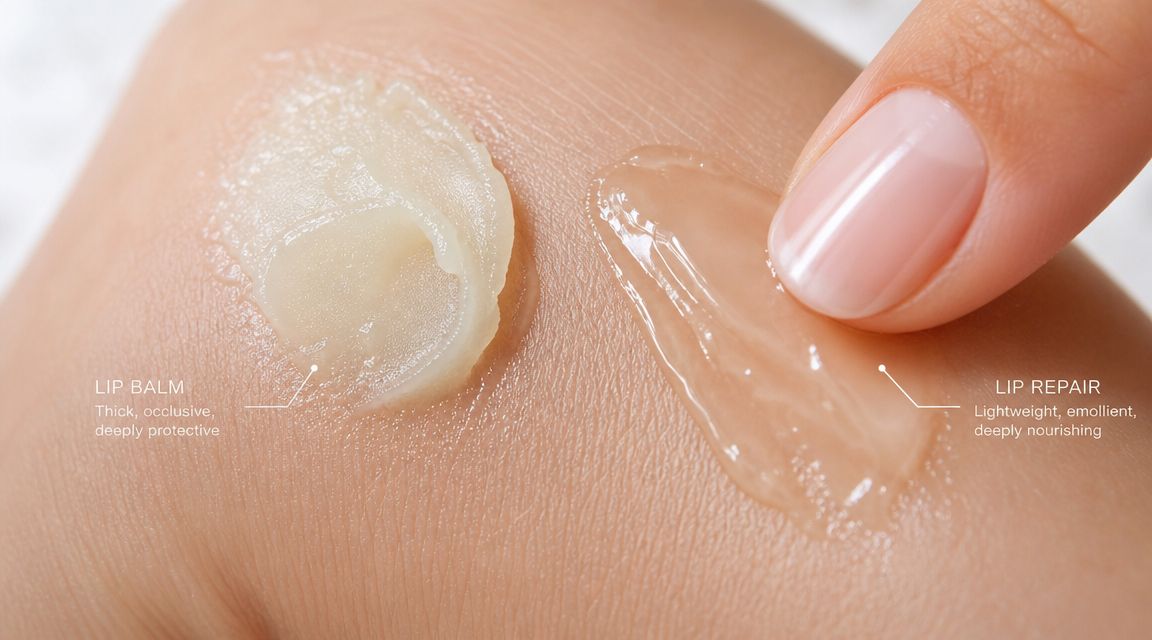
Lip Repair feels more like a dedicated balm treatment. It spreads with less resistance and usually sits on the lips in a way that's easier to tolerate during the day. If you apply lip liner, lipstick, or gloss later, that smoother, less heavy feel is often easier to work with.
It's the better option when you want comfort without a thick shield. That doesn't mean it disappears instantly. It still has staying power, but it tends to feel more wearable for frequent daytime use.
If you usually like balms that give a soft, cushioned finish instead of a dense ointment seal, this is the one that will probably make more sense. If you're also comparing other lip textures, this guide to a Summer Fridays Lip Butter Balm dupe is useful for seeing how balm-style finishes differ from heavier ointments.
How Healing Ointment wears
Healing Ointment feels thicker and more substantial. It's the product you notice on the lips. Some people love that because it feels very protective. Others find it too present for daytime, especially if they're drinking coffee, wearing makeup, or don't want hair sticking to their lips in wind.
At night, though, that thickness becomes a strength. It stays put better, creates more of a seal, and gives that cocooned feeling people want when their lips are rough or overworked.
I'd use Lip Repair when I want to forget I'm wearing something. I'd use Healing Ointment when I want my lips to feel physically protected.
Which texture wins
There isn't a universal winner. There's a use-case winner.
- For daytime comfort: Lip Repair
- For overnight protection: Healing Ointment
- For makeup prep: Lip Repair
- For harsh-weather rescue: Healing Ointment
If texture tends to make or break a product for you, don't ignore that. A technically effective product that feels annoying won't get used consistently.
When to Use Which Aquaphor Product
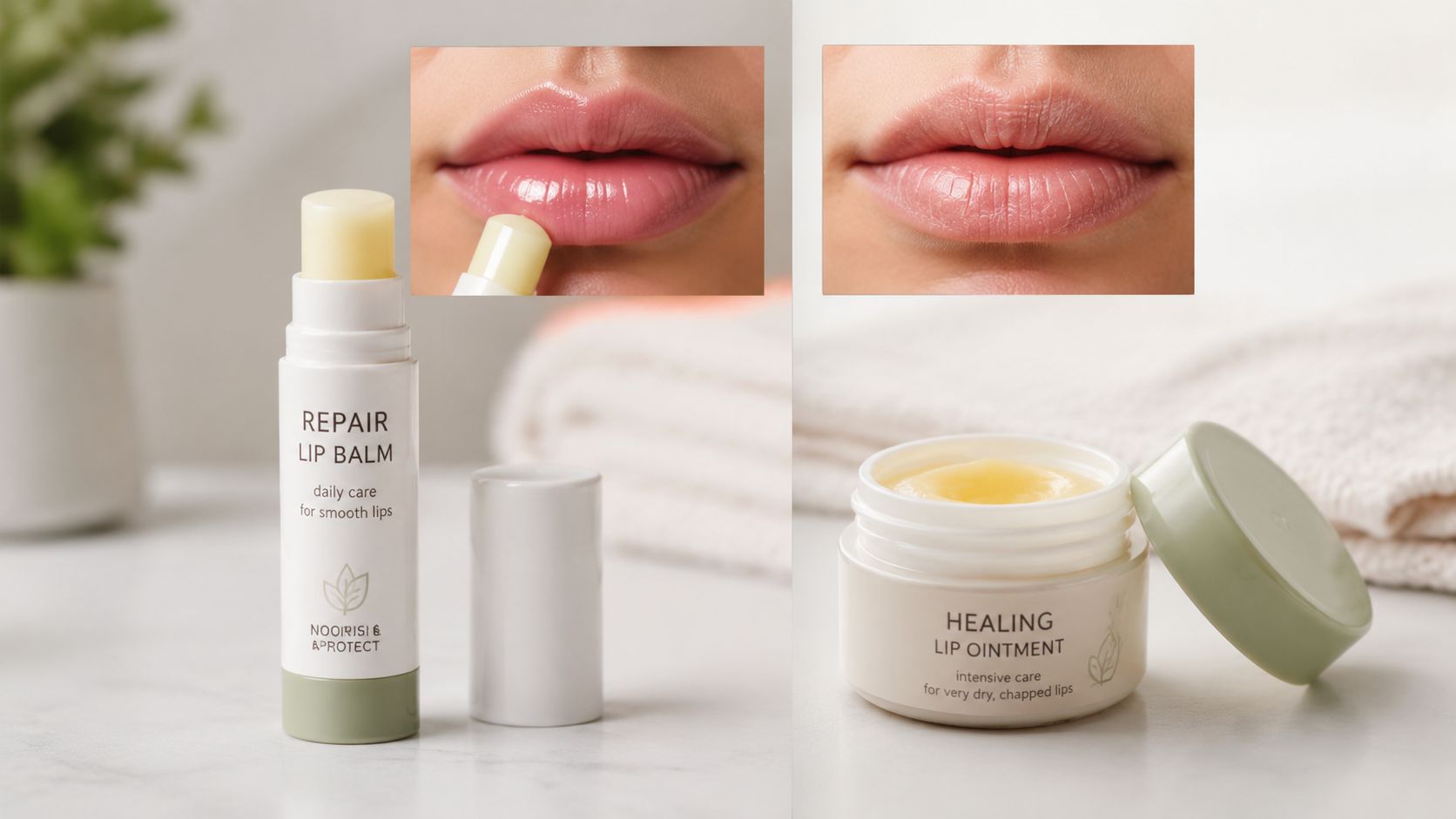
The choice becomes easy. Instead of asking which product is “better,” ask what job you need it to do most often.
Daily lip moisture
Winner: Lip Repair
For standard dry-lip maintenance, Lip Repair is the easier grab. It's built for lips, feels more natural in repeated daytime use, and doesn't make your mouth feel like it's wearing a full skin ointment.
If you reapply a lot, convenience matters. The product that feels less messy usually wins by default.
Severely cracked lips
Winner: Healing Ointment
When lips are beyond “a little dry” and into cracked, angry, windburned, or over-exfoliated, the thicker barrier feel of Healing Ointment makes more sense. This is especially true at bedtime, when comfort and staying power matter more than elegance.
A lot of people own both for this exact reason. Lip Repair for maintenance. Healing Ointment for repair mode.
Overnight lip mask
Winner: Healing Ointment
The thicker texture works in its favor overnight. It clings well, creates a more protective seal, and feels like a true treatment step.
If your lips are flaky from retinoids, cold weather, or licking your lips too much, this is usually the more satisfying night product.
Prepping lips for lipstick
Winner: Lip Repair
You want slip, softness, and less bulk. Healing Ointment can be too dense for this if you apply a generous layer. Lip Repair is more likely to smooth the surface without leaving a heavy coating that interferes with lip color.
Apply a light layer, let it sit, blot if needed, then go in with liner or lipstick.
Slugging and facial dry patches
Winner: Healing Ointment
This is one of the clearest splits. Healing Ointment is the obvious pick if you want the product to do more than lips. GoodRx notes in its Aquaphor vs. Vaseline comparison that both Aquaphor and Vaseline can be used for slugging, while also pointing out an important nuance: 100% petrolatum may reduce water loss more effectively, while Aquaphor's extra humectants and emollients can improve feel and moisturization.
That tells you a lot about where Healing Ointment shines. It's a user-friendly occlusive. It may not be the most stripped-down option in that category, but it often feels nicer for people who want some cushion along with the seal.
If you're deciding between broad barrier products more generally, this comparison of CeraVe vs. Aquaphor is helpful.
Cuticles and rough spots
Winner: Healing Ointment
This is exactly the kind of task Healing Ointment handles well. Dry cuticles, knuckles, elbows, corners of the nose, and small flaky patches don't need a lip-specific formula. They need a dependable barrier.
Lip Repair can technically work in a pinch, but it's not the smartest use of a lip-targeted product.
Daytime lip protection in the sun
Winner: Lip Repair SPF 30
Lip Repair offers a major advantage. The line includes a Broad Spectrum SPF 30 lip protectant, which means it can function as both a moisturizing product and a lip sunscreen, as discussed in the verified product notes from this Lemon8 summary of Aquaphor lip sun protection.
Lips are easy to forget when you're applying sunscreen. If you're outdoors, driving, walking, or sitting near windows often, the SPF option makes Lip Repair much more practical for daytime.
Here's a useful visual explainer if you want to see the products in context:
Minor wound-care overlap
A little restraint is necessary. Healing Ointment is broader and often used beyond lips, but that doesn't mean it's the right answer for every wound situation. The same GoodRx coverage noted above says Vaseline is favored over Aquaphor for wound care because some Aquaphor ingredients should not be used on deep or puncture wounds.
Practical rule: Use Healing Ointment as a multipurpose dryness product. Don't treat it like a universal answer for every wound scenario.
The one-product verdict
If you're buying one product for everything, Healing Ointment is the better all-rounder.
If you're buying one product mostly for lips, Lip Repair is the smarter specialist.
5 Best Budget Friendly Aquaphor Alternatives
If neither Aquaphor option feels perfect, there are plenty of affordable stand-ins that hit a similar comfort zone. Some behave more like Lip Repair. Others act more like Healing Ointment.
| Dupe Product | Best For | Price Point |
|---|---|---|
| CeraVe Healing Ointment | Multipurpose barrier care | Budget friendly |
| Vaseline Lip Therapy Original | Basic lip occlusion | Very budget friendly |
| CeraVe Therapeutic Hand Cream | Cuticles and rough spots | Budget friendly |
| La Roche-Posay Cicaplast Lips | Daily lip repair | Mid-range drugstore |
| Vanicream Ointment | Sensitive skin barrier support | Budget friendly |
If you shop internationally or like comparing options before you buy, these Australian lip balm deals are a useful browse because they show how many mainstream balm formats overlap in function even when the branding looks completely different.
1. CeraVe Healing Ointment
This is the closest match to Aquaphor Healing Ointment in spirit. It's a multipurpose barrier product that makes sense for lips, cuticles, and dry skin zones.
Use it if your main reason for buying Aquaphor was versatility. It's the one I'd point budget shoppers toward first when they want the same “kept in every room” energy.
2. Vaseline Lip Therapy Original
This is the simplest lip dupe in the group. It doesn't try to do anything fancy. It just gives lips that familiar coated, protected feeling.
If your lips like plain, straightforward occlusion and you don't need the broader skin-care flexibility of Healing Ointment, this is a practical low-cost substitute.
3. CeraVe Therapeutic Hand Cream
This one isn't a direct lip-balm dupe, but it solves part of the same one-product-for-everything problem. If your real issue is dry hands, cuticles, and rough patches more than lips alone, this can replace some of the jobs people assign to Healing Ointment.
It won't behave like a true lip ointment. But it's handy if your barrier concerns sit mostly on your hands and skin rather than your mouth.
4. La Roche-Posay Cicaplast Lips
This is the dupe I'd choose for readers who are more interested in the Lip Repair side of the comparison. It's made for lips, it feels purpose-built, and it works well when you want daily comfort instead of a thick all-over ointment.
If you like lip products that feel treatment-oriented but not greasy in a classic ointment way, this is one of the strongest alternatives.
5. Vanicream Ointment
Vanicream products usually appeal to people who want low-fuss, sensitive-skin-friendly formulas. As an alternative to Healing Ointment, this makes sense when your priority is barrier support without extra bells and whistles.
It's a practical pick for minimalists. If your dream product is “boring, reliable, and easy to tolerate,” this is exactly the lane.
If you're specifically building a bedtime lip routine rather than replacing a multipurpose ointment, this roundup of a Laneige Lip Sleeping Mask dupe gives you better overnight-focused alternatives.
Best dupe for each type of shopper
- Closest all-rounder dupe: CeraVe Healing Ointment
- Cheapest basic lip option: Vaseline Lip Therapy Original
- Best lip-specific alternative: La Roche-Posay Cicaplast Lips
- Best for very simple routines: Vanicream Ointment
- Best if your dryness is mostly hands and cuticles: CeraVe Therapeutic Hand Cream
Frequently Asked Questions and Final Verdict
Is Aquaphor better than Vaseline for lips
Not automatically. If you want a more purpose-built lip product, Aquaphor Lip Repair may feel nicer. If you want the simplest basic occlusive feel, Vaseline can be a great fit. For broader wound-related caution, the earlier GoodRx note matters. Vaseline is favored over Aquaphor for deep or puncture wound situations.
Can I use Aquaphor Healing Ointment on my face every day
Many people use it on dry areas or as an occasional slugging step, especially when their barrier feels stressed. But daily all-over facial use won't suit everyone, particularly if you dislike heavy occlusive textures. It tends to work best as a targeted product rather than a universal face cream replacement.
Which Aquaphor is better for daytime
Lip Repair has the stronger daytime case, especially because the line includes a Broad Spectrum SPF 30 lip protectant. That makes it more useful when you want moisture plus lip sun protection in one step.
Which one should I buy if I only want one tube
Buy Healing Ointment if you want the better multi-use option for lips, cuticles, flaky skin, and occasional slugging. Buy Lip Repair if your only real concern is lip comfort and easy daily reapplication.
If I had to give one clean verdict, it's this. Aquaphor Healing Ointment is the better all-rounder, while Aquaphor Lip Repair is the better dedicated lip product. For a budget-friendly alternative, CeraVe Healing Ointment is the best dupe in this lineup because it covers the same multipurpose role most effectively. If your life calls for one tube that can do almost everything, go with the broader ointment. If your lips are the main event, choose the lip formula and don't overcomplicate it.
If you like practical beauty breakdowns that save you money and help you buy the right product the first time, Finding Favourites is worth bookmarking. You'll find affordable dupes, side-by-side comparisons, and no-nonsense picks for makeup, skincare, and fragrance.