
Best Affordable Tinted Sunscreen: 5 Luxury Dupes That Work
Why are you paying luxury prices for tint when protection is printed right on the label? A pretty tube doesn't block more UV than a drugstore tube with the same SPF and broad spectrum claim, and a high shade count doesn't guarantee the color will match your undertone. For the best affordable tinted sunscreen, check the label first, look for iron oxides second, and swatch the shade on your jaw before you trust the word universal.
Best Affordable Tinted Sunscreen Dupes at a Glance
You don't need a luxury budget to get tested UV protection with a tint that evens out your skin. An affordable formula earns its spot when it meets the same basic standards as a premium one, gives you a finish you'll wear daily, and doesn't turn grey or orange by lunchtime. Price matters, but it's the last filter, not the first.
This post may contain affiliate links, which means I may receive a commission if you purchase through my links, at no extra cost to you. Please read the disclosure policy for more information.
| Dupe | Luxury Match | Best For |
|---|---|---|
| CeraVe Hydrating Mineral Sunscreen with Sheer Tint SPF 30 | Colorescience Sunforgettable | Daily wear, normal to oily skin |
| La Roche-Posay Anthelios Mineral Tinted Sunscreen SPF 50 | Premium mineral face tint | Sensitive or pigment prone skin |
| Australian Gold Botanical Tinted Face Mineral SPF 50 | Matte luxury mineral tint | Oily skin, shine control |
| Neutrogena Purescreen+ Mineral UV Tint SPF 30 | Sheer luxury skin tint with SPF | Flexible shade matching, everyday wear |
| Black Girl Sunscreen Tinted SPF 30 | Radiant luxury tint for deeper skin | Medium to deep skin tones, glow finish |
Start with the clear budget leader. CeraVe Hydrating Mineral Sunscreen with Sheer Tint SPF 30, in a 1.7-fluid-ounce size, was listed at $13.27 in 2024, according to Good Morning America's shopping guide. Check the current price before you buy, because drugstore pricing shifts, but it sits firmly in the under $25 bracket rather than luxury territory.
Shop by Budget
- Under $10: Look for sale pricing on smaller drugstore tubes, but don't drop below SPF 30 just to hit this tier.
- Under $25: This is your sweet spot, where CeraVe and several mineral drugstore tints compete directly.
- Under $50: La Roche-Posay fits here. You're paying more for texture and sensitive skin positioning, not for a different category of protection.
We organize lists by those same tiers, under $10, under $25 and under $50, because that's how people shop. Every pick below had to pass four checks before price even entered the conversation, the front label, the inactive list, the shade on real undertones, and how it behaves when you apply enough to get the labeled protection. If a tube fails the label check, a low price doesn't rescue it. If it passes protection but looks ashy on deeper skin, it doesn't belong on a best list either.
Label Checks Worth Reading Before the Price Tag
SPF and broad spectrum status are more meaningful comparison points than price alone. Tint, finish, and shade match are useful extras, but they don't replace tested UV protection. Read the front of the tube first, then flip it over.
SPF measures protection against sunburn, which is caused primarily, but not entirely, by UVB radiation, while a Broad Spectrum claim indicates protection against both UVA and UVB, and in the United States the FDA requires a broad spectrum product to pass an in vitro test and demonstrate a critical wavelength of at least 370 nanometers, per FDA guidance on labeling and effectiveness testing for sunscreen drug products. That same guidance recognizes that broad spectrum sunscreens with SPF 15 or higher can help reduce the risk of skin cancer and premature skin aging when used as directed alongside other protective measures.
Don't stop at SPF 15 for your face. Set SPF 30 as your floor. It's a practical daily standard, it's easy to find at drugstore prices, and it gives you more margin when you apply a little less than perfect, which almost everyone does.
| Label Check | What to Look For | Why It Matters |
|---|---|---|
| Broad Spectrum claim | Printed on the front label | Confirms UVA and UVB coverage |
| SPF value | SPF 30 or higher | Primary sunburn protection, mainly UVB |
| Critical wavelength | At least 370 nm, the FDA test result | Confirms meaningful UVA coverage |
| Active filters | Zinc oxide or titanium dioxide for mineral products | Sets the UV filtering system |
| Iron oxides | Listed in the inactive ingredients | Adds visible light protection |
| Expiration date | Printed on the package | Filters lose strength over time |
Your One Minute Store Check
Run this in order and you'll weed out most weak options fast.
- Front label first: Confirm Broad Spectrum is printed clearly, not buried in marketing copy on the back.
- SPF number second: Skip anything below SPF 30 for daily face use.
- Active filters third: For the mineral picks in this list, look for zinc oxide or titanium dioxide.
- Inactive list fourth: Scan for iron oxides. If they're missing, you're getting color without the visible light benefit that makes tinted sunscreen special.
- Expiration date last: Don't buy a discounted tube that's close to expiring. A bargain you can't finish in time isn't a bargain.
Practical rule: If broad spectrum and SPF 30 aren't on the front, put it back, no matter how pretty the swatch looks on your hand.
That order protects your wallet too. You'll stop paying extra for elegant packaging on a formula that doesn't clear the basics, and you'll spot the drugstore tube that does.
Why Iron Oxides Matter for Dark Spots and Melasma
UV filters handle ultraviolet light. Iron oxides handle a different problem, visible light that can deepen pigmentation even when you're not burning. That's why tinted sunscreen isn't just sunscreen with makeup stirred in. The pigment itself does work.
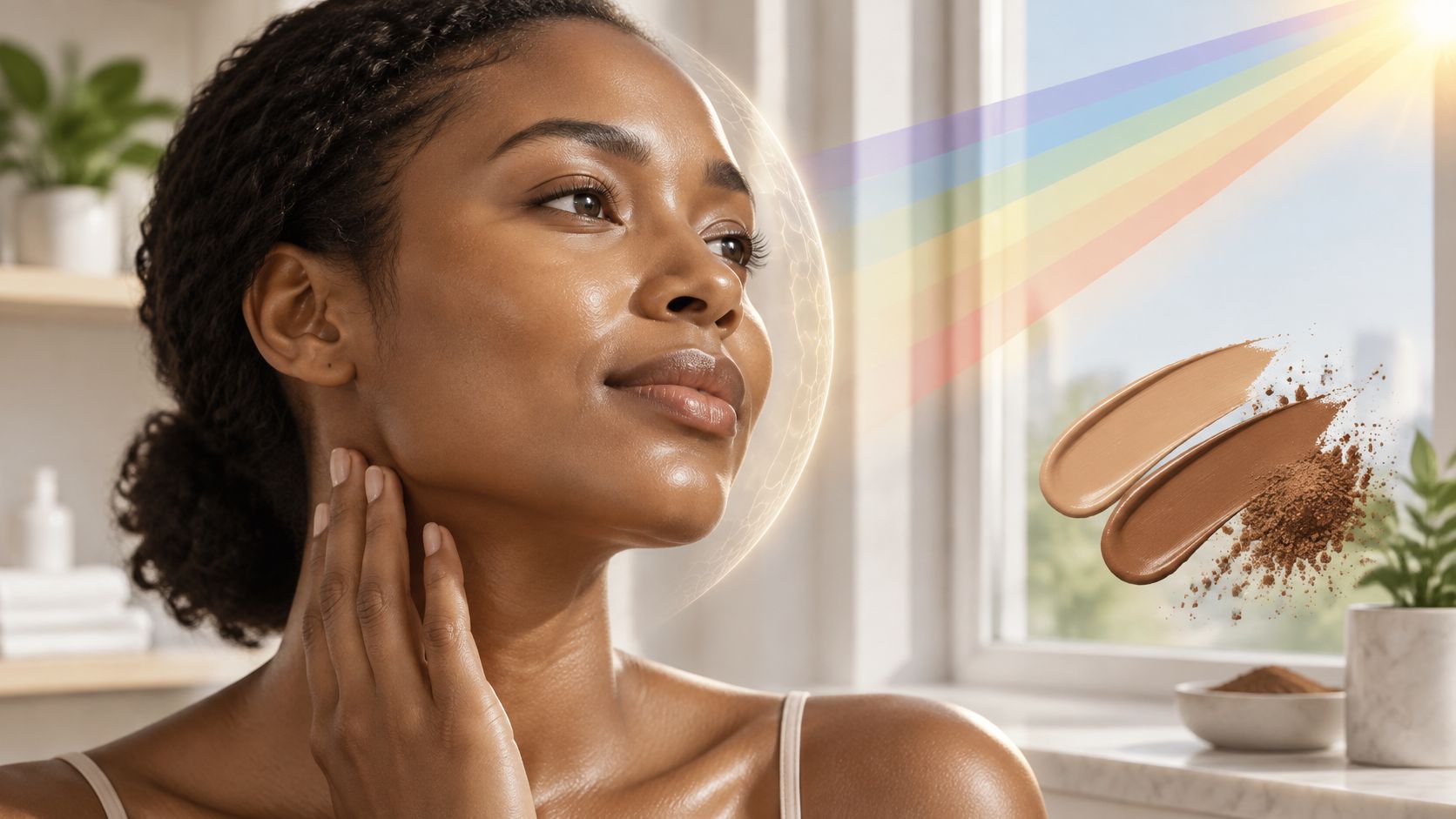
Iron oxide pigments help reduce exposure to visible light, particularly the 400 to 700 nanometer range associated with some hyperpigmentation, and a 2025 review summarized clinical research showing tinted formulations containing iron oxides provided significantly better protection against visible light induced pigmentation than non pigmented sunscreens, especially in people with darker skin tones, according to a 2025 review in Photodermatology, Photoimmunology and Photomedicine. That review reported a study of 20 participants with phototypes III to V assessed immediately and again after 24 hours and 7 days, plus a 60 day study where a broad spectrum tinted sunscreen containing iron oxides significantly reduced melanin index and epidermal pigmentation compared with UV only sunscreens.
The Transparency Problem You Need to Work Around
Here's the catch, and it's a big one for budget shoppers. Most brands don't tell you how much iron oxide you're getting. In that same body of research, a 2026 analysis of 37 tinted sunscreens found 97.3% did not list iron oxide as an active ingredient, while only 9.6% of contacted brands disclosed iron oxide percentages, and disclosed concentrations ranged from less than 1.4% to 10.4%.
That gap changes how you should shop. Don't assume two tinted tubes offer equal visible light protection just because both look beige in the bottle.
- Scan the inactive list: Iron oxides usually appear there, sometimes listed by color names. No listing, no credit.
- Favor disclosure: When a brand states a concentration, that's a point in its favor.
- Judge opacity: A tint that's so sheer it vanishes instantly may carry less pigment than one that forms a visible, even film.
Iron oxides supplement UV protection, they don't replace it. You still need broad spectrum coverage underneath that pigment, and you still need to apply enough product for the film to work.
If you're layering prevention with correction, pair your daily tint with a targeted treatment from our guide to the best budget dark spot corrector, and if melasma is persistent and you're considering in office options, the ProMD Health Easton melasma peel guide explains how professional peels fit into a broader pigment plan. Sunscreen prevents new darkening from undoing that work, so don't treat those steps as substitutes for each other.
Finding a Shade That Will Not Look Ashy or Orange
A tint can look perfect on the back of your hand and wrong everywhere else. It reads grey on golden skin, orange on neutral skin, or pale and chalky on deeper skin. That mismatch is the top reason people abandon tinted sunscreen, and price has nothing to do with it.
Recent dermatology research evaluated seven commercial tinted sunscreens and found shade selection varied substantially across Fitzpatrick skin types III to VI, with a lighter "medium" formula remaining visibly apparent on darker skin, according to recent dermatology research on tinted sunscreens in skin of color. The same research identifies limited shade diversity, tone incompatibility, aesthetic discomfort, higher cost, and application difficulties as persistent barriers for people with skin of color.
Translation, universal tint is often marketing for one narrow beige. Judge a product by actual depth and undertone, golden, olive, neutral, red, not by the number of shades printed on a display.
The 60 Second Swatch Test
- Stripe the jawline: Apply a short stripe where face meets neck, in daylight near a window or outside the store if you can.
- Wait ten minutes: Mineral tints can oxidize and deepen, or settle and turn ashy, after they dry down.
- Check for disappearance: The right shade blends into both face and neck. If you can still see an edge, it's wrong.
| Undertone | Daylight Swatch Test | Warning Sign |
|---|---|---|
| Golden or warm | Swatch along the jawline by a window | Grey or dull finish |
| Olive | Compare against the neck, not the wrist | Ashy or greyish cast |
| Neutral | Check after 10 minutes for oxidation | Orange or pink shift |
| Red or cool | Test near the chin and cheek | Visible white or purple tint |
| Deeper skin tones | Confirm the shade range includes deep options | Light tint reads ashy and visible |
Test on your neck, not your wrist. Your wrist is lighter and redder than your face, so it'll lie to you.
A sheer tint that truly disappears beats a full shade range of tints that all sit on top of your skin.
If you're cross checking against your foundation, our guide to shade matching foundation walks through undertone identification in more detail. Use the same undertone you trust there, then confirm the sunscreen tint doesn't shift it. Buy from retailers with easy returns when you can, keep the receipt, and test on a full face at home in natural light before you commit to a second tube.
The 5 Best Affordable Tinted Sunscreen Dupes
Every pick here is a mineral tinted sunscreen that's widely available in the US, with SPF 30 or higher and iron oxides on the inactive list. Mineral actives, zinc oxide or titanium dioxide, sit on the skin and usually give a sheer to light finish that suits sensitive or pigment prone skin. Chemical filters can feel lighter and more invisible, but they aren't the category we're ranking here.
Coverage stays sheer to light across this list. None of these replaces a full coverage luxury foundation, and pretending otherwise sets you up to underapply. Think evened tone and softened redness, not erased blemishes.
These five tubes cover the main finishes and skin needs without repeating the same formula five times.
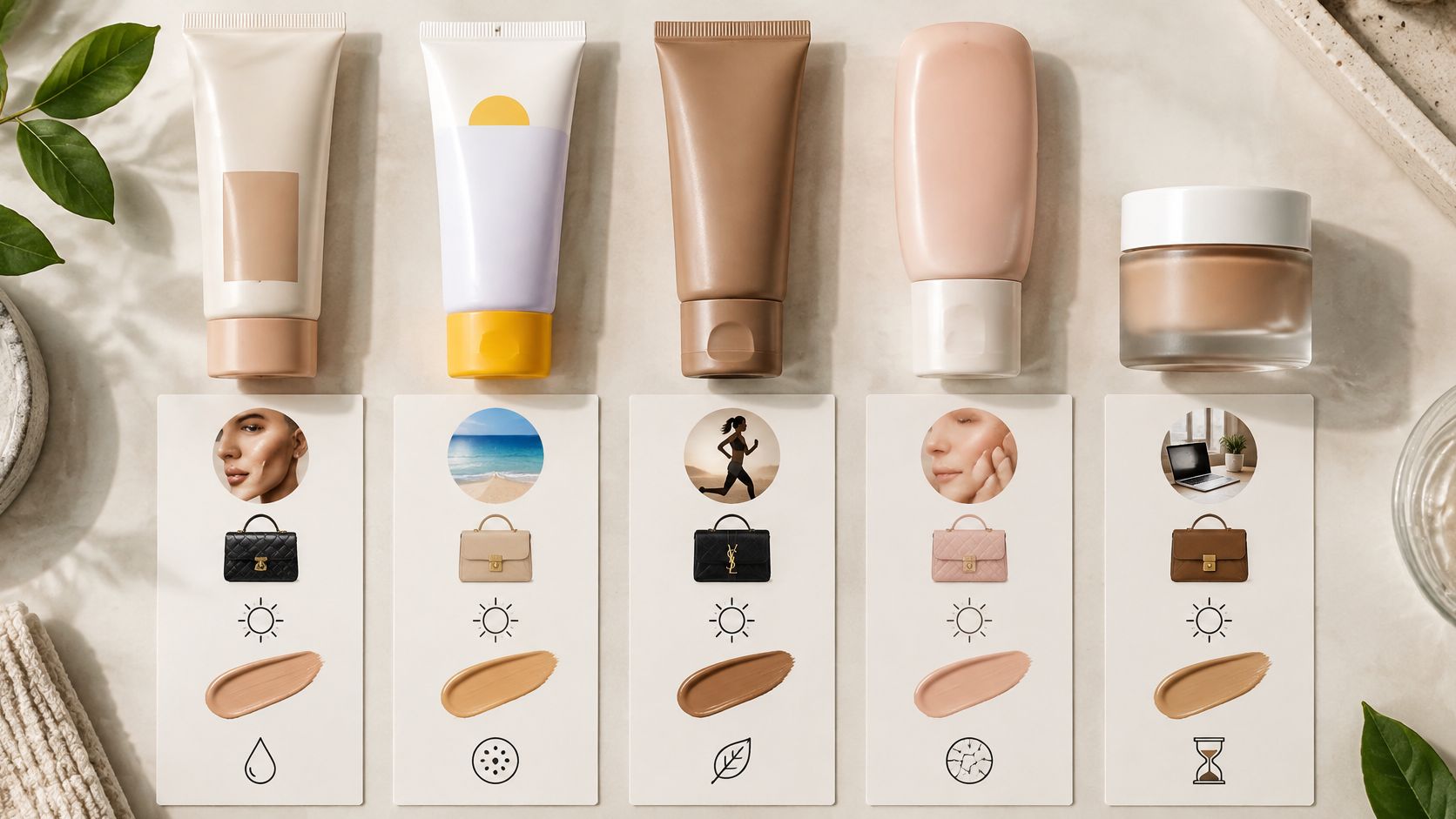
1. CeraVe Hydrating Mineral Sunscreen with Sheer Tint SPF 30
Best for daily wear on normal to oily skin, and the best dupe overall. This is the Colorescience style mineral tint translated to a drugstore budget, sheer coverage, natural finish, and a formula you won't ration because of price. It blends easily, sits well under light makeup, and works as a true everyday default.
The honest drawback is depth. Its sheer tint runs lighter than a full coverage luxury formula, so deeper skin tones should swatch carefully and may prefer picks four or five.
2. La Roche-Posay Anthelios Mineral Tinted Sunscreen SPF 50
Best for sensitive or pigment prone skin. You're stepping up in SPF and in texture refinement, with a fluid mineral finish that feels more polished than most drugstore tints. It's the pick I'd hand to someone whose skin reacts to everything and who wants maximum labeled protection in a tinted mineral format.
The drawback is price tier. This is a mid range purchase, not a budget tube, so buy it for tolerance and finish, not for savings.
3. Australian Gold Botanical Tinted Face Mineral SPF 50
Best for oily skin that hates shine. The finish reads matte, it grips well through a warm commute, and the tint helps cut the white cast mineral filters can leave. Multiple tint depths give you more to work with than a single universal shade.
The drawback is texture. It can feel heavier and drier than the first two picks, so dry skin will want a solid moisturizer underneath or a different formula entirely.
Before the final two picks, this short video shows how a tinted mineral layer should look when you apply a full, even film rather than a cosmetic dab.
4. Neutrogena Purescreen+ Mineral UV Tint SPF 30
Best for flexible shade matching. The finish is natural, not dewy, not flat, and the shade approach is designed to flex across tones better than a single beige tint. That flexibility makes it a smart first try if you've been burned by orange or grey tints before.
The drawback is wear on very oily skin. It doesn't control shine like the matte pick above, so expect to blot or powder by midday.
5. Black Girl Sunscreen Tinted SPF 30
Best for medium to deep skin tones that want a radiant finish. This one was built with deeper skin in mind instead of adding a deep shade as an afterthought, and the dew finish reads healthy rather than ashy. If lighter universal tints have failed you repeatedly, start here.
The drawback is that glow. Oily skin may find it too shiny by afternoon, and very fair skin may find the depth too rich.
Pick by finish and undertone first, then by price. The cheapest tube you won't wear because it looks grey is the most expensive mistake on this list.
How to Apply and Reapply Tinted Sunscreen
The best affordable tinted sunscreen only delivers its labeled SPF at the tested dose. Dabbing on a cosmetic amount gives you cosmetic protection, which is to say, not much. Apply it like sunscreen first and makeup second.
This mirror routine shows the press and blend motion that keeps mineral tint even.
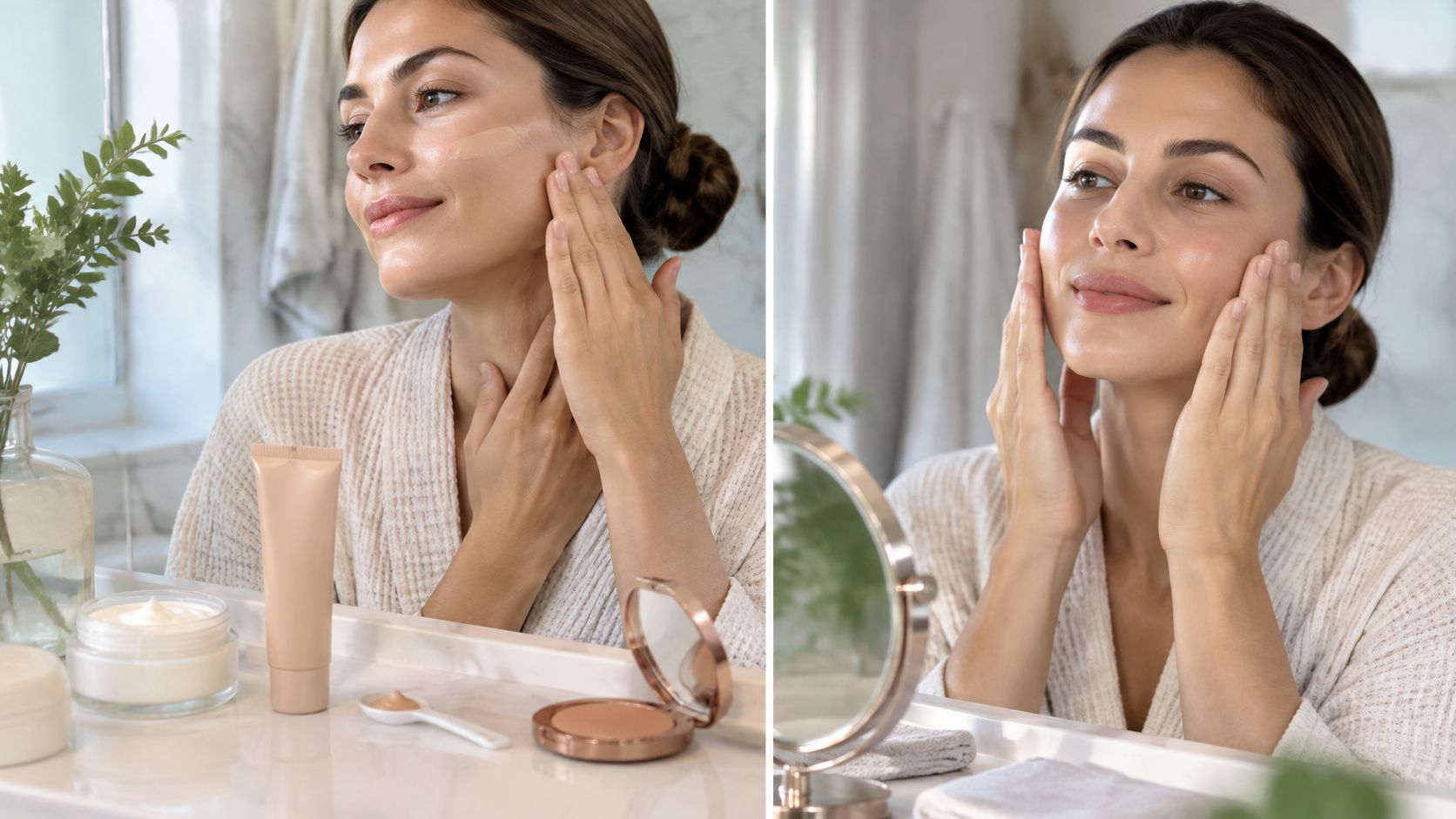
Application in Six Steps
- Apply after moisturizer, before makeup: The film needs to sit directly on skin, not under a barrier you add later.
- Use about a quarter teaspoon for face and neck: That's the amount that matches the labeled SPF, and it is easy to use far less, so measure it once to calibrate your eye.
- Press and blend outward in small sections: Start at the center of the face and work out. Section work prevents streaks and patchy tint around the nose and jaw.
- Let it set for two to three minutes: Give the film time to form before powder or a second product touches it.
- Layer makeup on top gently: Press, don't rub, and avoid dragging a dry towel across your face, which strips the film you just built.
- Reapply every two hours outdoors: Reapply after sweating or swimming too, using a light pat rather than a full re wipe so you don't lift the base layer unevenly.
Wear Time by Skin Type
Oily skin holds matte and mineral finishes longer, but shine will still break through. Blot first, then pat on your reapplication so you don't mix oil into the fresh layer.
Dry skin needs hydration underneath, or mineral tint will cling to flakes and look patchy by noon. A hydrating moisturizer, fully absorbed, makes the same tube look twice as expensive.
Combination skin does best with targeted powder, pressed on the T zone after the film sets, and left off drier cheeks.
If you want an untinted backup for heavy outdoor days, our roundup of the best drugstore sunscreen covers options you can apply generously without worrying about shade. A sheer tint wears thin through talking, eating, and touching your face, so treat the two hour outdoor rule as a ceiling, not a suggestion, and add more on the same schedule you'd use for any sunscreen.
Tinted Sunscreen Questions Answered
Do I Still Need Sunscreen Under a Skin Tint With SPF
Not if the tinted sunscreen itself is labeled broad spectrum SPF 30 and you apply the full face and neck amount, about a quarter teaspoon. A light skin tint dabbed on like foundation doesn't reach that dose, so either apply the tinted sunscreen in full or put a dedicated sunscreen underneath.
Can an Affordable Tinted Sunscreen Replace Foundation for Melasma
It can replace foundation cosmetically for sheer, even coverage, and iron oxides with SPF 30 or higher can help limit visible light darkening. It does not treat melasma. Active treatment belongs with a dermatologist, with sunscreen protecting the progress.
Will Tinted Sunscreen Pill Under Makeup
Usually not, if you let the film set for two to three minutes and then press powder or makeup on. Rubbing with a dry towel or layering a second heavy cream on top is what breaks the tint into flakes.
How Do I Know the Tube Is Still Protective
Use the printed expiration date as your hard stop. Replace a tube that has separated, changed smell, or sat in a hot car, because filters weaken with time even if the tint still looks identical.
Which Affordable Tinted Sunscreen to Buy Today
Buy CeraVe Hydrating Mineral Sunscreen with Sheer Tint SPF 30 first. It leads this list because it clears the protection bar, wears comfortably every day on normal to oily skin, and costs drugstore money, so you'll apply enough of it. A luxury tube you ration protects you less than an affordable tube you use generously.
Your decision really comes down to three checks. Confirm broad spectrum and SPF 30 or higher on the front label. Scan the inactive list for iron oxides so the tint pulls its weight against visible light. Run the 60 second jawline swatch in daylight and wait for oxidation before you trust the shade.
If your skin is sensitive or pigment prone and your budget stretches, choose La Roche-Posay Anthelios Mineral Tinted Sunscreen SPF 50 instead. If you're oily, go matte with Australian Gold. If deeper universal tints have let you down, start with Black Girl Sunscreen or the flexible Neutrogena tint.
Need a non tinted option for beach days or under full foundation? Read our post titled 5 Best Supergoop! Unseen Sunscreen Dupes From The Drugstore, which covers drugstore alternatives without tint, alongside other dupe roundups like 7 Best Charlotte Tilbury Setting Spray Dupes.
The best dupe is CeraVe Hydrating Mineral Sunscreen with Sheer Tint SPF 30, and it earns that title by passing the same three checks you should run on any tube, label, iron oxides, and shade.
Finding the best affordable tinted sunscreen shouldn't mean reading a dozen labels in the aisle, so Finding Favourites does that comparison work for you across drugstore, makeup, skincare, and fragrance dupes. Browse our price tier lists and brand roundups to find your next luxury swap for less, then sign up for the newsletter so new dupes and discount codes land in your inbox before your current tube runs out.