
Alcohol Free Makeup Remover Guide for Sensitive Skin
You've removed the last trace of waterproof mascara, but your eyes are still stinging. The skin around them feels tight, and your eyelids look irritated before your evening skincare has even started. If you wear contact lenses, experience dry-eye symptoms, have lash extensions, or find many removers uncomfortable, an alcohol free makeup remover may be worth considering, but the front label only tells part of the story.
This guide focuses on eye comfort, not just vague “gentle” skincare language. You'll learn what alcohol-free really means, which formula types suit mascara, lash extensions, and dry eyes, how to read the INCI list, and which affordable alternatives are worth comparing for different skin concerns.
This post may contain affiliate links, which means I may receive a commission if you purchase through my links, at no extra cost to you. Please read the disclosure policy for more information.
Introduction to Alcohol Free Makeup Remover
The most useful way to judge a remover is to match it to the problem you're having. Someone with heavy waterproof mascara needs more oil-dissolving power than someone removing a light layer of powder. A contact-lens wearer may care more about low residue and a comfortable rinse, while someone with dry eyelids may prioritize a formula that doesn't leave the skin feeling stripped.
Many people search for alcohol-free products because their eyes sting after cleansing. Others have noticed that frequent use of solvent-heavy removers leaves the delicate eye area tight, flaky, or reactive. Alcohol-free micellar and oil-based systems can offer a more comfortable starting point, but alcohol-free doesn't automatically mean fragrance-free, preservative-free, or universally suitable.
This distinction matters because cosmetic labels can use “alcohol” in a specific regulatory sense. A remover may avoid ethyl alcohol while still containing fatty alcohols used to improve texture. It may also contain other ingredients that bother sensitive eyes, including fragrance or certain preservatives.
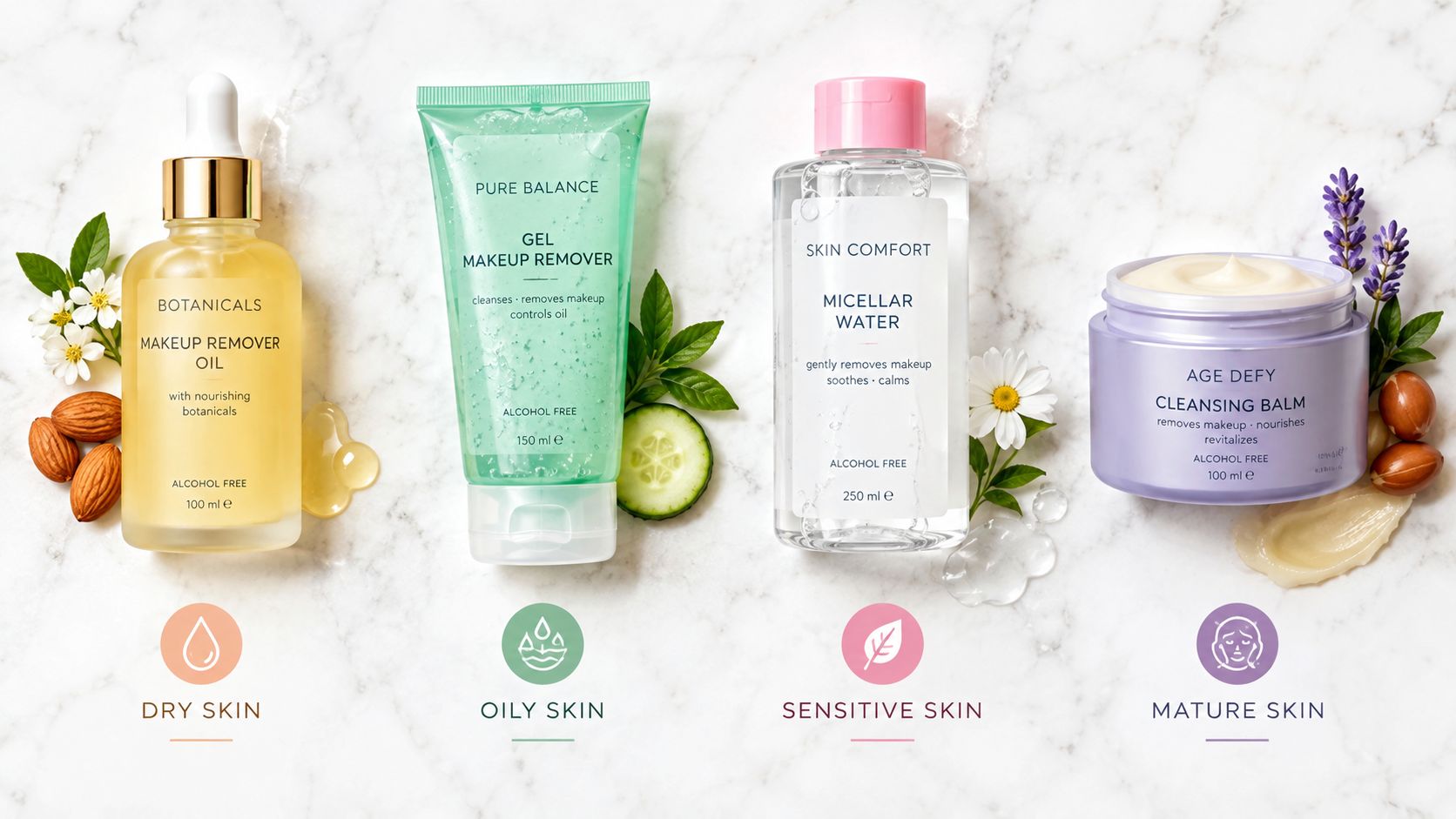
The affordable dupes in this guide are organized around the way you use remover, rather than around a single promise of “gentleness.” You'll find options to investigate for dry, oily, sensitive, and mature skin, with practical notes on texture, removal strength, and eye comfort. Since formulas change, check the current packaging and ingredient list before buying, especially if you're sensitive to a particular ingredient.
What Alcohol Free Really Means on the Label
The phrase alcohol-free sounds absolute, but cosmetic labeling makes it more specific. The U.S. Food and Drug Administration's explanation of alcohol-free cosmetic claims says that the word “alcohol” on cosmetic labels refers to ethyl alcohol, also called ethanol. A product labeled “alcohol free” can still contain fatty alcohols such as cetyl, stearyl, cetearyl, or lanolin alcohol.
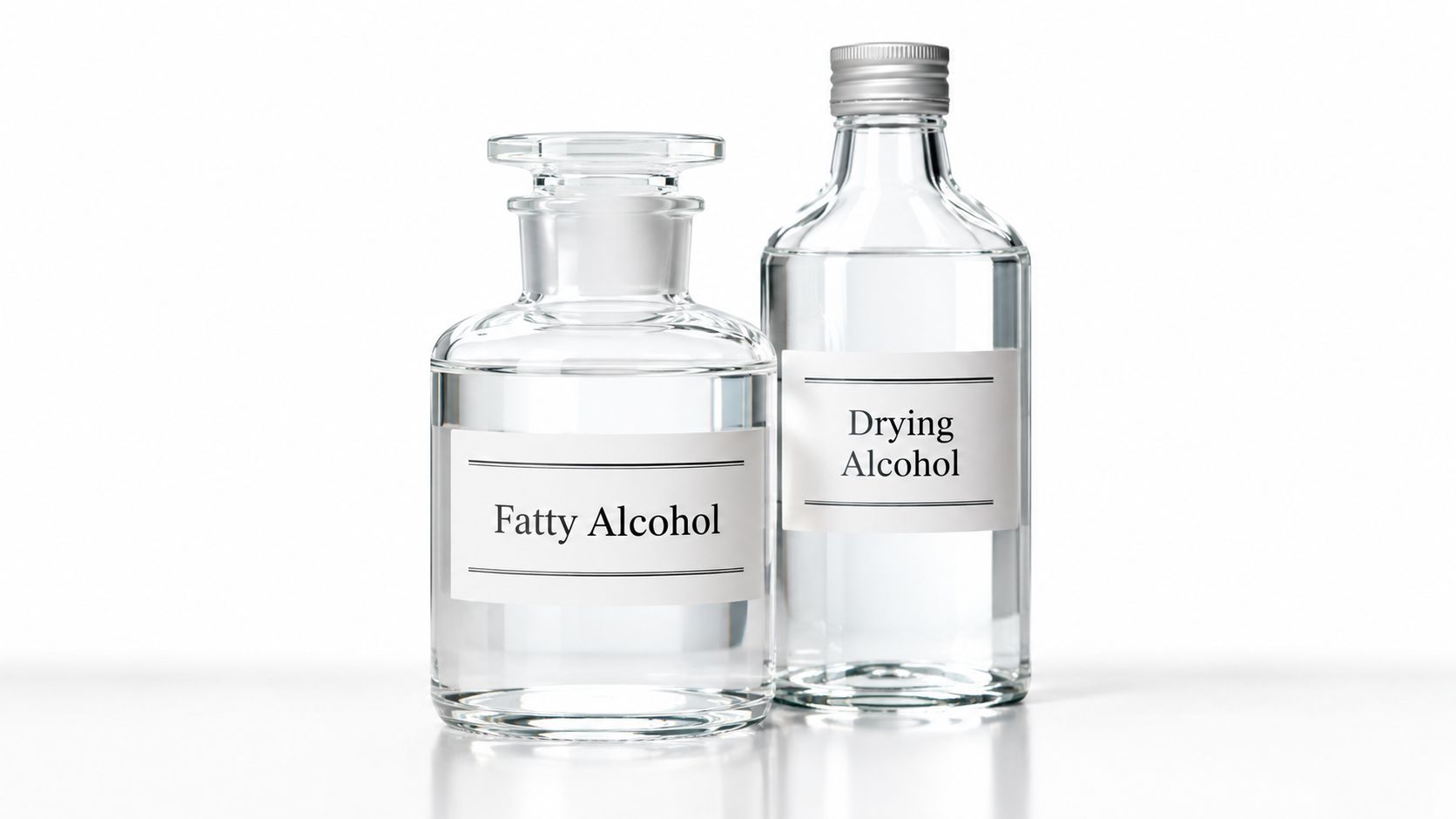
A simple kitchen analogy helps. Ethanol behaves more like a fast-evaporating solvent, while fatty alcohols behave more like waxy texture ingredients. They belong to the same broad chemical family, but they don't create the same experience on the skin. Fatty alcohols can help a product feel creamy, smooth, and emollient, which is why their presence doesn't automatically contradict an alcohol-free claim.
Label distinction: “Alcohol-free” generally means the formula doesn't contain ethyl alcohol. It doesn't mean the ingredient list contains no word ending in “alcohol.”
Why brands use different alcohols
A remover may avoid ethanol because the brand wants to reduce the chance of a drying or sharp sensation around the eyes. At the same time, a formula can use cetyl, stearyl, cetearyl, or lanolin alcohol to support consistency and softness. Those ingredients are non-volatile fatty alcohols, not interchangeable substitutes for ethanol in how they feel on the skin.
You'll also want to distinguish denatured alcohol from fatty alcohols. Denatured alcohol is ethanol made undrinkable by added denaturants. Cosmetic safety reviews have evaluated several denatured alcohol types separately, including SD Alcohol 3-A, 30, 39, 39-B, 39-C, 40, 40-B, and 40-C in the published cosmetic ingredient review. If you're avoiding drying alcohols, search the full INCI list for the exact name rather than relying only on the product's front panel.
The FDA also explains that cosmetics generally don't need premarket approval before sale, apart from certain color additives. That helps explain why “alcohol-free” functions primarily as a marketing claim in the United States, rather than identifying a separately standardized product category. Your best safeguard is to compare the claim with the complete ingredient list and your own eye-area history.
Benefits and Trade Offs of Alcohol vs Alcohol Free Formulas
An alcohol-based remover can feel efficient because volatile solvents help break down certain pigments, oils, and long-wear products quickly. The trade-off is that a fast-drying sensation may come with tightness, particularly when the product is used frequently or applied to already sensitive skin.
Independent skincare guidance describes denatured alcohol as an ingredient that can contribute to excessive dryness and barrier disturbance, with sensitive, dry, or barrier-compromised skin more likely to experience tightness and irritation. The ingredient guide to alcohol denat in skincare also summarizes safety evaluations in which several denatured alcohol types were considered safe in cosmetics at concentrations between 0.05% and 12%, while noting insufficient data for some denaturants, including quassin, brucine, and brucine sulfate.
That isn't a simple “all alcohol is bad” rule. Concentration, denaturant type, the rest of the formula, and your own tolerance all matter. Still, the eye area has little room for aggressive rubbing, and daily discomfort is a strong reason to test a different system.
Solvent power versus comfort
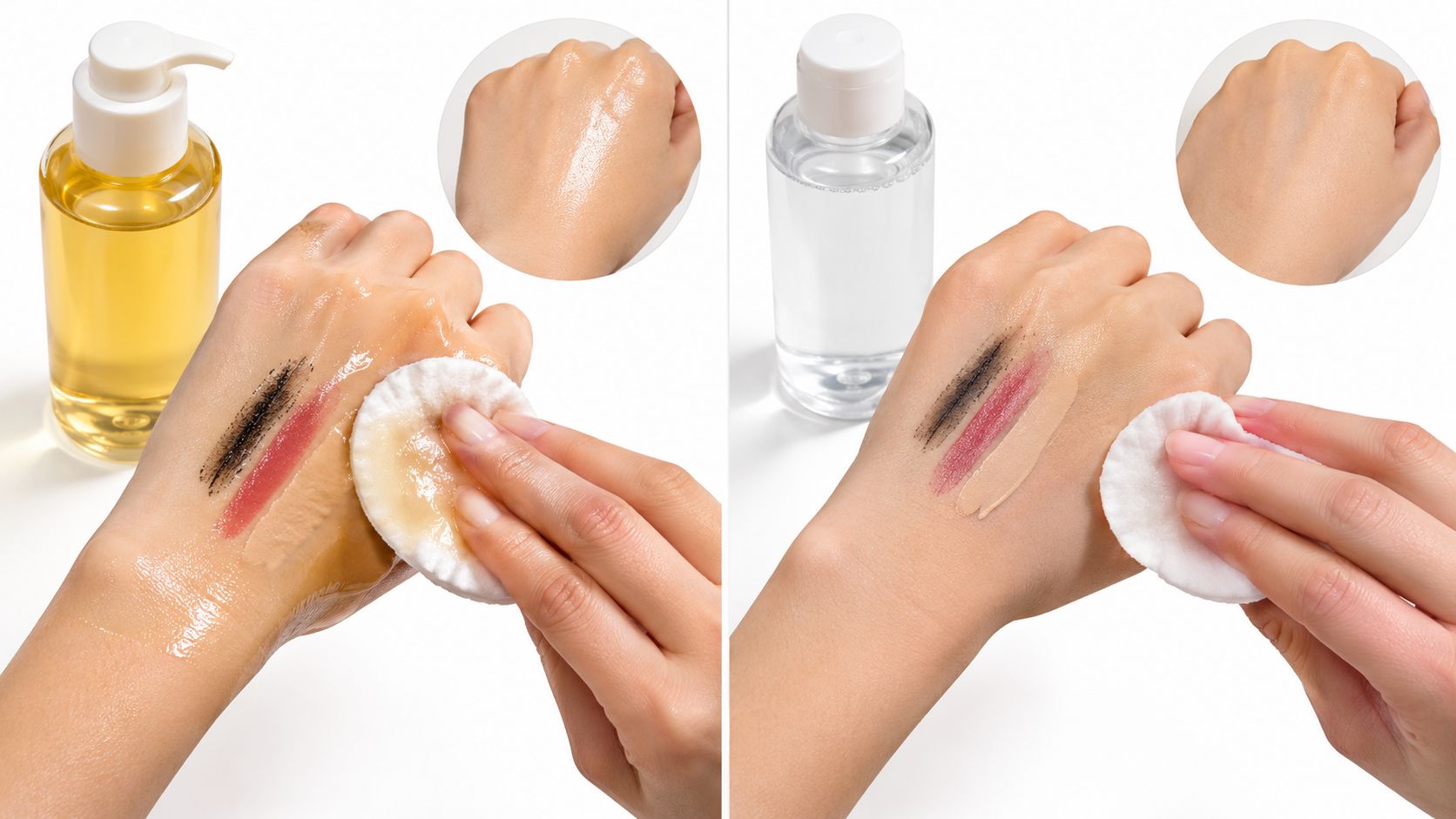
Alcohol-free removers often use micelles, oils, or mild surfactants to surround makeup and lift it from the skin. That can feel less sharp than a solvent-heavy product, especially when you're removing makeup from the eyelids rather than the cheeks.
A strong alcohol-free formula can still remove long-wear pigment, but you may need to hold the soaked cotton pad in place longer. An oil cleanser or balm may dissolve waterproof mascara more readily than a watery micellar product, although oil can leave a film that some contact-lens wearers dislike.
The choice depends on what you're willing to trade. If your priority is speed and you don't experience dryness or stinging, a solvent-containing product may seem convenient. If your priority is barrier comfort, low sting, and frequent eye-area use, an alcohol-free system is often the more sensible place to begin.
For readers who are considering alternatives to astringent products around the face, this guide to an alternative to witch hazel offers useful context about choosing less stripping formulas.
What sensitive users should watch
Eye discomfort can come from more than alcohol. Fragrance, preservatives, surfactants, and residue may all influence how a remover feels. If your eyes regularly burn, water, or feel gritty after removal, stop using the product and consider discussing persistent symptoms with an eye-care professional.
Ingredients to Look For and Avoid for Comfort
Ingredient lists become easier to read when you group ingredients by function instead of trying to memorize every chemical name. In many alcohol-free micellar formulas, poloxamers, PEG-caprylic/capric glycerides, glycerin, and glycols help solubilize makeup, oils, and long-wear pigments.
Micelles are tiny clusters formed by cleansing agents. One side interacts with oily makeup and debris, while the other interacts with water, allowing the product to lift residue onto a cotton pad. This is why a mild micellar system can remove everyday makeup without relying on ethanol as the primary solvent.
Ingredients that can support a comfortable formula
Look for a formula built around mild surfactants or non-ionic micelle-forming ingredients when your main concern is stinging. Glycerin and glycols can support a less dry-feeling finish, while PEG-caprylic/capric glycerides and poloxamers can help dissolve makeup without making the product feel aggressively astringent.
That doesn't mean every formula containing these ingredients will suit every person. The complete blend matters, and your tolerance matters even more. A product can have a well-designed cleansing base and still contain an ingredient your eyelids dislike.
Ingredients that deserve a closer look
Alcohol-free products may still contain fragrance, phenoxyethanol, benzalkonium chloride, or benzyl alcohol. Some of these ingredients serve preservation or formulation purposes, but sensitive users may prefer to limit the number of potential triggers around the eyes. If fragrance is a recurring problem for you, compare labels with this guide to fragrance-free beauty products.
Benzalkonium chloride deserves particular attention for contact-lens wearers and anyone who reacts to eye products. It appears in some eye-area formulas, so “gentle” marketing shouldn't replace a careful ingredient check.
For broader personal-care label reading, this resource on what to avoid in your shampoo can help you build the same habit beyond makeup remover.
A practical label-reading order
Scan for ethanol-related names. Look for ethyl alcohol, alcohol denat, or a named SD Alcohol if you're trying to avoid drying alcohols. Denatured alcohol is still ethanol with denaturants, so the exact INCI name matters.
Check the sensory extras. Fragrance, essential oils, and astringent ingredients may matter more to your eyelids than the alcohol-free claim itself.
Identify the removal system. Poloxamers, PEG-caprylic/capric glycerides, glycerin, glycols, oils, and emulsifiers can tell you whether the product is primarily micellar, oil-based, or balm-like.
Match the formula to the problem. Choose a low-residue micellar product for a rinse-friendly routine, or an oil-based option when waterproof mascara is the main challenge.
Choosing the Right Formula for Your Skin and Eyes
Your best remover depends on what you're taking off and how your eyes respond. Micellar water is convenient and usually leaves less oil behind, while cleansing oils and balms tend to handle stubborn mascara and long-wear liner with less repeated rubbing.
Wipes can be useful when you're traveling, but they often encourage dragging across the eyelid. If you use them, choose a fragrance-free option when possible and follow with a gentle rinse if the instructions allow it. The guide to aloe vera eye makeup remover is another useful reference when soothing ingredients and sensitive-eye comfort are part of your search.
| Formula Type | Best For | Eye Comfort and Removal Power |
|---|---|---|
| Micellar water | Light to medium makeup, contact-lens routines | Low residue, gentle feel, moderate removal power |
| Cleansing oil | Waterproof mascara, dry skin, stubborn liner | High removal power, may leave an oily film |
| Cleansing balm | Heavy makeup, mature or dry skin | High removal power, cushiony feel, requires rinsing |
| Makeup wipes | Travel or quick touch-ups | Convenient, but rubbing and residue can reduce comfort |
Match the texture to your concern
For contact-lens wearers, prioritize a product that rinses clean and doesn't leave a noticeable film. Remove lenses before cleansing whenever possible, then use a small amount of remover and rinse away residue rather than letting it sit along the lash line.
For lash extensions, avoid tugging and check the extension technician's aftercare guidance. Oil-based products may interfere with some extension adhesives, so a compatible water-based remover can be the safer practical choice, even if it requires more patience with mascara.
For dry-eye symptoms or irritated eyelids, start with a fragrance-free, low-residue micellar or mild cleansing formula. Avoid harsh astringents and don't keep using a product that repeatedly causes burning or watering.
For heavy mascara, an oil or balm usually gives you more slip, which can reduce the temptation to scrub. Keep the product on the lashes long enough to soften the makeup, then glide it away rather than pulling downward with force.
How to Use Alcohol Free Makeup Remover Correctly
Even a comfortable formula can sting if you use too little, rub too hard, or leave residue behind. The technique matters most around the lashes, where repeated friction can make an otherwise suitable remover feel irritating.
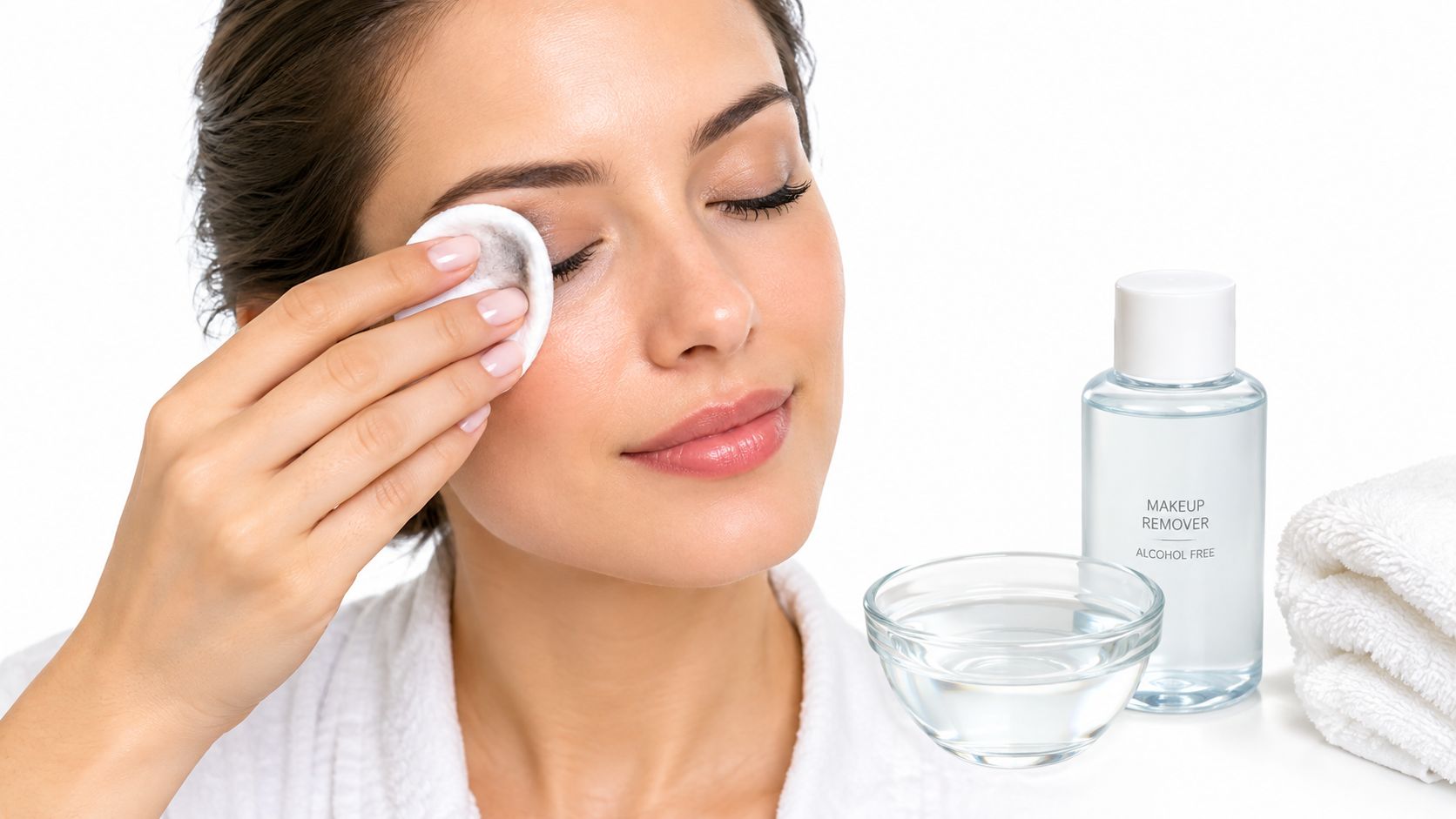
Remove contact lenses first. This keeps remover and loosened pigment away from the lens surface. If your eyes are already irritated, pause rather than forcing the routine.
Use enough product. Saturate a soft cotton pad with micellar water, or warm a small amount of oil or balm between clean fingertips. A nearly dry pad creates friction and encourages rubbing.
Press and hold. Place the soaked pad over closed eyes for a short moment, especially when removing waterproof mascara. This gives the formula time to soften the makeup instead of making your lashes do all the work.
Golden rule: Let the remover dissolve the makeup. Don't make your eyelids scrub for it.
Glide outward. Move the pad gently toward the outer corner, then use a fresh section for remaining liner or shadow. Don't saw back and forth across the lash line.
Rinse when needed. Oil, balm, surfactant residue, and loosened pigment can all cause discomfort if they remain around the eyes. Use lukewarm water or follow the product's directions for a second cleanse.
Finish with simple care. Pat dry, then apply a suitable moisturizer around the orbital area without pushing product directly into the eyes.
For lash extensions, keep the motion especially light and choose a remover approved for your adhesive system. For dry eyes, avoid leaving soaked cotton pads on the skin longer than necessary, and stop if burning continues after rinsing.
The technique is easier to remember when you see the movement rather than just read about it. This demonstration can help you visualize a slower, lower-friction approach:
Affordable Alcohol Free Makeup Remover Dupes by Skin Concern
A dupe should match the use case, not merely look similar on a shelf. The options below are widely available in the United States and are presented as affordable alternatives to consider, but current packaging and ingredient lists should always take priority because cosmetic formulas can change.
| Dupe | Luxury Counterpart | Best For |
|---|---|---|
| Garnier SkinActive Micellar Water | Bioderma Sensibio H2O | Sensitive or combination skin |
| The Ordinary Squalane Cleanser | Farmacy Green Clean | Dry skin and balm-to-milk cleansing |
| CeraVe Hydrating Facial Cleanser | Clinique Take The Day Off | Dry or mature skin |
| Neutrogena Oil-Free Eye Makeup Remover | A high-end bi-phase eye remover | Oily skin and quick eye makeup removal |
1. Garnier SkinActive Micellar Water
This is the most straightforward place to start if you want a watery, low-fuss remover for light to medium makeup. It suits sensitive or combination skin when you prefer a product that doesn't add an oily finish, although waterproof mascara may take more than one pass.
Its practical advantage is flexibility. You can use it for foundation and eyeshadow, then follow with a gentle cleanser if your skin feels coated. Check the specific version, because Garnier sells several micellar formulas with different ingredient profiles.
2. The Ordinary Squalane Cleanser
For dry skin, The Ordinary Squalane Cleanser offers a more cushiony approach. It transforms from a creamier texture into a cleansing emulsion when worked between the hands, making it useful for dissolving face makeup without the drag associated with a dry cotton pad.
It's a better match for someone who values softness and barrier comfort over a weightless finish. Since it's not a dedicated eye remover, use care around the lash line and rinse thoroughly.
3. CeraVe Hydrating Facial Cleanser
CeraVe Hydrating Facial Cleanser is a practical option for dry or mature skin when you want a gentle first cleanse rather than a separate eye product. Its lotion-like texture can remove lighter makeup while leaving the skin less squeaky than a strong foaming cleanser.
For heavy waterproof mascara, pair your routine with a dedicated alcohol-free eye remover rather than repeatedly rubbing with this cleanser. Readers comparing non-stripping options may also find this overview of non-comedogenic makeup removers helpful when clogged pores are part of the concern.
4. Neutrogena Oil-Free Eye Makeup Remover
This bi-phase remover is designed for eye makeup and can appeal to oily-skin users who don't want a traditional cleansing oil. Shake it well, saturate the pad, and give mascara time to loosen before wiping.
There's an important label lesson here. A published listing for a widely sold oil-free eye makeup remover includes benzyl alcohol alongside cyclopentasiloxane, cyclohexasiloxane, poloxamer 182, and benzalkonium chloride, as shown in the EWG Skin Deep ingredient listing. “Oil-free” and “gentle” don't prove that a product contains no alcohol-related ingredient or that every sensitive eye will tolerate it.
FAQ
Does alcohol-free mean preservative-free?
No. An alcohol-free remover can still use preservatives such as phenoxyethanol, benzalkonium chloride, or benzyl alcohol. If you know a preservative bothers you, inspect the full ingredient list instead of treating the alcohol-free claim as a complete safety guarantee.
Can an alcohol-free remover still contain fatty alcohols?
Yes. The FDA specifically distinguishes ethyl alcohol from fatty alcohols such as cetyl, stearyl, cetearyl, and lanolin alcohol. Fatty alcohols are often used to improve texture and emolliency, so their presence doesn't necessarily contradict the label.
Is alcohol-free automatically safe for contact-lens wearers?
No. Contact-lens comfort also depends on residue, fragrance, preservatives, and your individual sensitivity. Remove lenses before cleansing, choose a low-residue formula, rinse when appropriate, and stop using a product that causes repeated irritation.
Which dupe is best overall?
Garnier SkinActive Micellar Water is the best overall starting point for readers who want a widely available, affordable, lightweight option for everyday makeup and sensitive or combination skin. It isn't the strongest choice for every waterproof formula, and dry-skin users may prefer The Ordinary Squalane Cleanser, but Garnier offers the most versatile entry point for a broad range of routines.
The best alcohol-free makeup remover is the one that solves your actual problem without creating a new one. Start with Garnier SkinActive Micellar Water for a lightweight everyday option, choose squalane or balm textures for dry skin and heavy makeup, and read beyond the front label when your eyes are reactive. Comfort, removal strength, residue, and ingredient tolerance all matter more than the words “alcohol-free” alone.
Finding Favourites helps beauty shoppers compare affordable alternatives to luxury makeup, skincare, and fragrance through practical dupe roundups and hands-on product research. Visit Finding Favourites to find budget-friendly beauty swaps and discover more clear, ingredient-aware buying guides.