
How to Wear Peach Blush Makeup for Every Skin Tone
You bought the peach blush everyone recommends, tapped it onto your cheeks, and waited for that soft, fresh flush. Instead, the color either vanished, turned orange, settled into texture, or made your complexion look strangely flat. Peach blush makeup isn't automatically flattering just because the shade is popular. The right result depends on undertone, depth, finish, placement, and how the formula behaves over your base.
This post may contain affiliate links, which means I may receive a commission if you purchase through my links, at no extra cost to you. Please read the disclosure policy for more information.
Why Peach Blush Looks Different on Everyone
The bathroom mirror is unforgiving. One cheek can look warm and lively while the other looks chalky, and the shade that seemed subtle before leaving the house can look aggressively orange by afternoon. That mismatch usually comes from three separate problems, not from peach being a bad color for you.
First, your undertone may be fighting the blush. A pink peach can look fresh against one complexion but strangely grey against another. A yellow or orange peach can bring warmth to golden skin, yet look harsh when the rest of the base leans pink or cool. The word “peach” covers a surprisingly wide range, from pale pastel to vivid coral and earthy terracotta.
The pigment has to meet your skin at the right depth
A blush can also fail because its pigment is too transparent. Sheer formulas often look beautiful in a compact but disappear when placed over foundation, sunscreen, or powder. This is especially frustrating when the product contains a delicate sheen instead of enough color. You see glow, but not blush.
The opposite problem happens when a pale peach sits on a deeper complexion without enough orange or coral pigment. Instead of creating warmth, it can read as a light film on top of the skin. That chalky or ashy effect is a depth mismatch, not proof that peach blush doesn't work for deeper skin.
NARS Orgasm remains the cultural reference point because NARS launched it in 1999 as a pinky-peach blush with gold shimmer. The shade was inspired by the natural flush associated with orgasm, and the product eventually grew into a broader cheek, eye, and lip franchise, including four blush versions and four liquid versions reported by 2026, as detailed in the history of NARS Orgasm. Its staying power is part of the lesson. A peach-pink tone can remain relevant for nearly 30 years, but that doesn't mean the original color or finish will suit every face.
Finish and base chemistry change the result
Micro-flecks of shimmer reflect light differently from a matte pigment. A luminous blush can soften the look of a warm shade, while a flat matte can make the same color look denser and more orange. Foundation oxidation complicates the picture further. If your base deepens or warms as it wears, a peach blush can shift from balanced to muddy beside it.
Placement matters just as much. A peach shade swept high toward the temple looks lifted and polished. The same shade centered on the apples looks youthful and flushed. Before blaming the color, match the undertone, depth, formula, and placement to the finish you want.
Matching Peach Blush to Your Undertone and Depth
Start with four variables, in this order: your undertone, your surface depth, the blush's temperature, and its finish. Undertone means the subtle cast beneath your complexion, such as cool pink, warm golden, neutral, or olive. Surface depth describes how light or deep the skin appears. You can learn more about identifying it in this guide to what undertone means in makeup.
| Undertone | Fair | Light to Medium | Tan to Deep |
|---|---|---|---|
| Cool | Soft pink-peach, satin | Balanced peach with pink | Coral-peach with strong chroma |
| Neutral | Pale apricot, satin | True peach or NARS Orgasm-style peach | Golden apricot or coral |
| Warm | Warm peach, light sheen | Pigment-loaded coral-peach | Orange-leaning terracotta-peach |
| Olive | Muted apricot, avoid chalky pastels | Apricot-peach with controlled warmth | Terracotta or warm coral-peach |
Match temperature before you match the brand
Cool undertones usually need a peach with a visible pink flex. Choose a soft baby peach in a satin finish if your skin is fair, because a completely flat pastel can look lifeless. Medium cool skin can handle a stronger coral-peach, provided the formula blends smoothly rather than sitting as a bright stripe.
Warm undertones are the easiest place to start with peach, but warm doesn't mean every orange shade will work. Light to medium warm complexions generally suit a pigment-loaded coral-peach. Tan and deep complexions need richer orange or terracotta-peach tones so the blush carries enough contrast to remain visible.
Olive undertones need more care. Straight peach can turn muddy when its warmth meets green or muted skin. Apricot is usually the smarter adjustment because it keeps the cheerful peach family while avoiding a dull orange cast.
NARS Orgasm works as an anchor because its pinky-peach base and gold shimmer demonstrate how a balanced peach can stay lively. For a more accessible matte direction, Milani Baked Blush in Luminoso is a useful comparison point. Glossier Cloud Paint in Beam offers a satin-leaning cream-gel approach with a softer, more diffused effect.
Use this in-store shortcut
Hold the blush beside your jaw rather than against your wrist. If it looks grey, choose a warmer or more saturated version. If it looks neon, step toward apricot or terracotta. If you can see the color on the tester but it disappears after one light tap on your cheek, choose a deeper pigment or a cream base that can be layered.
Placement and Blending Techniques That Deliver
Peach blush changes character with placement. Put it on the apples for a round, lively flush. Set it higher on the cheekbone to raise the appearance of the face. Sweep it toward the temple for warm, sun-touched color that looks deliberate rather than doll-like.
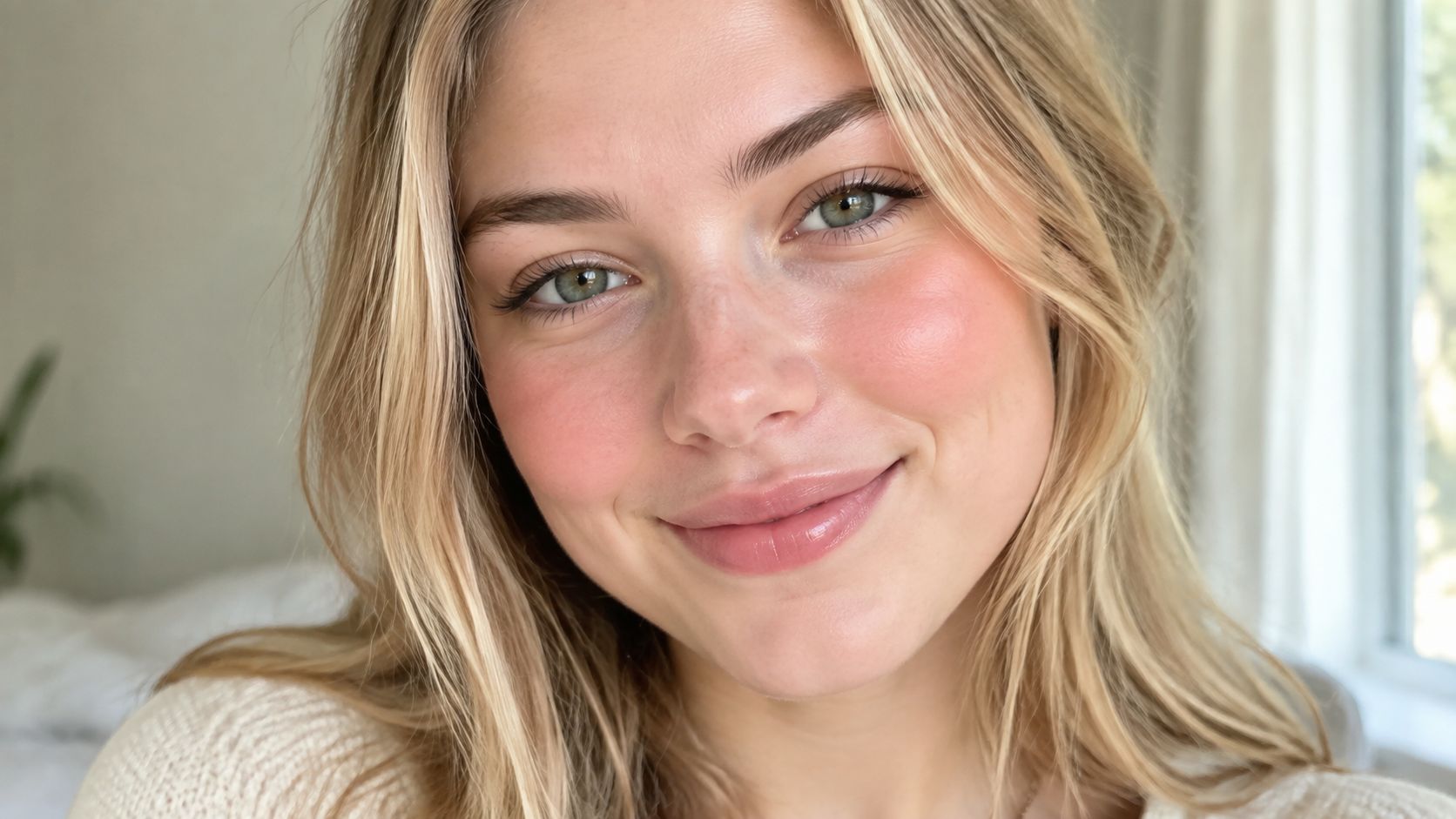
Apples for a fresh flush
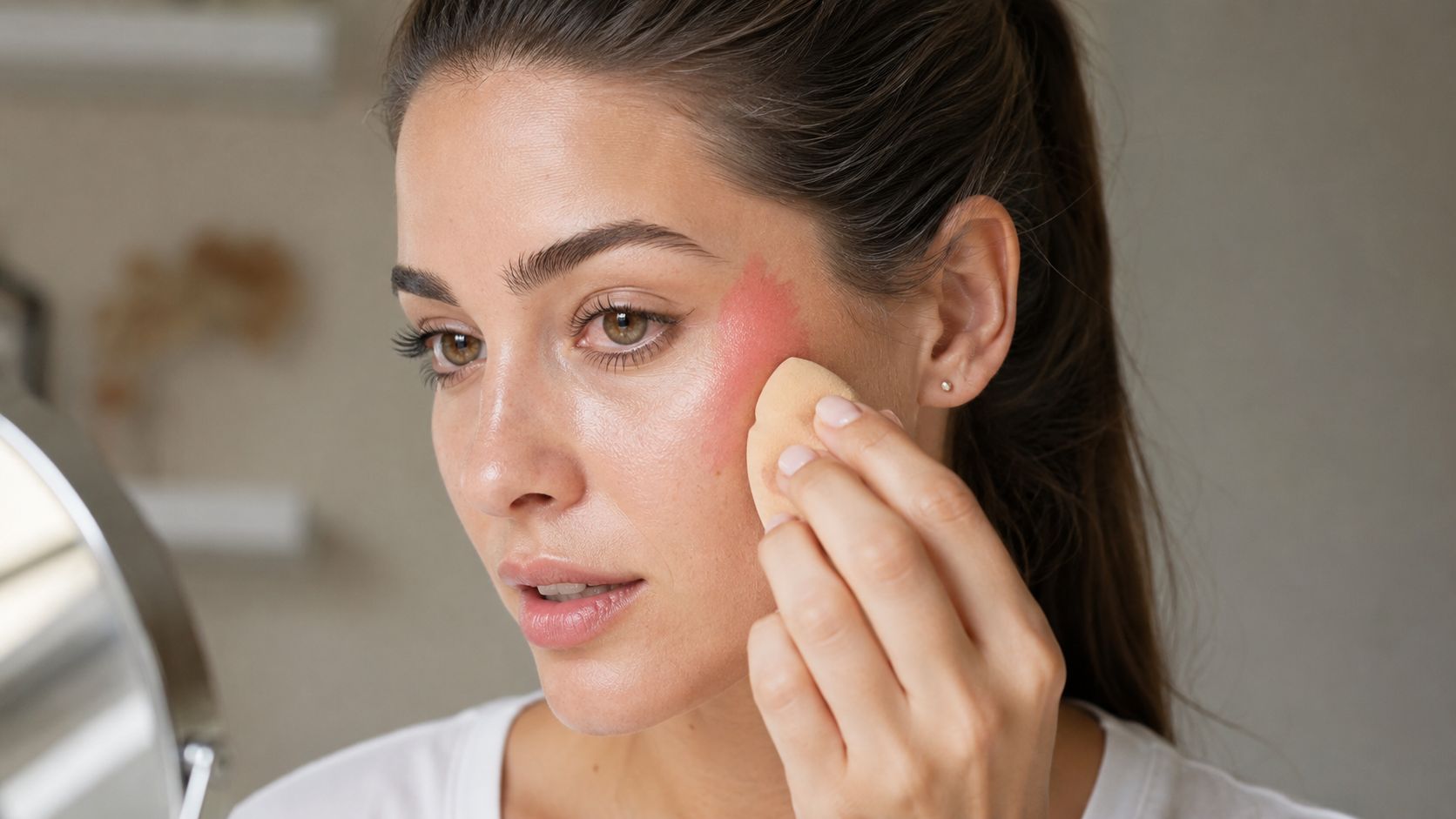
Smile lightly and tap the first layer onto the fullest part of the cheek, keeping it away from the side of the nose. Keep the color within roughly two finger-widths from the nostril, then soften the edges with small circular motions.
A damp beauty sponge works best for cream blush here. Press rather than drag. Pressing melts pigment into the base and keeps the finish skin-like. Choose this placement for a gentle, youthful flush, not defined cheekbone structure.
If peach disappears on your skin, build in thin taps instead of spreading one heavy layer. A cream or liquid formula usually gives you more control than a sheer powder.
High cheekbones for a lifted finish
For a lifted look, start on the upper cheekbone, roughly beneath the outer corner of the eye. Sweep toward the temple while keeping the lower edge above the middle of the cheek. Use a fluffy angled brush for powder blush. It diffuses the border without pushing color downward.
Carry the blend only a few finger-widths toward the temple, then stop before the hairline looks pink. The color should make the cheek appear raised, not painted.
Cream and powder perform differently in this placement. Cream blush melts into the skin and looks natural, though oily areas can wear it away sooner. Powder sits well on a set base and generally holds longer, but it can catch on dry patches. Compare the two textures in this guide to cream blush versus powder blush, then choose cream for a melted finish or powder for stronger staying power.
Temple draping for sun-kissed warmth
Temple draping links the outer cheekbone with the side of the forehead. Begin at the cheekbone, blend toward the temple, and add a small tap near the upper forehead. With liquid blush, use your fingertips. Their warmth helps sheer the formula before it forms a concentrated patch.
For combination skin, apply cream first, then add a powder halo only on the high point. Do not cover the entire cream layer. This keeps the natural melt while reinforcing the area that needs the most hold.
Tap a small amount across the bridge of the nose and the center of the forehead for a monochromatic, just-ran-five-blocks finish. Keep both taps lighter than the cheeks. Connected warmth looks chic. Equal intensity across every facial plane looks messy.
Use the following demonstration as a visual reference for keeping the color diffused rather than concentrated at the starting point.
Pairing Peach Blush With the Rest of Your Makeup
Peach blush looks best when the rest of the face supports its temperature. A satin or natural base usually gives the most accurate color because it has enough softness to keep peach from looking powdery. A matte base makes the pigment appear sharper, while a dewy base makes the shade look more sheer and reflective.
Bronzer should sit one step warmer than your contour, not several steps warmer. A neutral tan bronzer supports peach without competing with it. Golden bronzer creates a sunlit finish. Strong orange bronzer can turn the cheeks muddy, especially when the blush already leans coral.
Match the highlight to the blush texture
With luminous peach blush, skip highlighter directly over the colored zone. The combined shimmer can emphasize pores and make the cheek look wet rather than radiant. Place glow on the upper outer cheekbone instead.
With powder peach blush, a soft champagne highlight works well. Tap it above the blush rather than mixing it through the color. Satin blush needs very little additional shine, so a creamy balm on the high point is enough.
Lip color decides whether peach looks subtle or vivid. Nude peach and soft coral keep the face in one warm family. Terracotta makes peach blush look richer and more editorial. Deep berry creates contrast and can make a pale peach blush recede, which is useful when you want the lip to lead.
Avoid pairing a very orange cheek with a blue-based pink lip unless you want deliberate contrast. The two tones can make the complexion look disconnected.
Four easy combinations
- Natural finish: satin foundation, neutral bronzer, peach blush, and nude peach lip.
- Matte finish: matte base, soft tan bronzer, matte coral-peach blush, and terracotta lip.
- Dewy finish: natural foundation, cream bronzer, luminous peach blush, and sheer coral balm.
- High-impact finish: softly set base, golden bronzer, powder peach blush, champagne highlight, and deep berry lip.
The strongest everyday combination is a natural base, restrained bronzer, satin peach blush, and soft coral lip. It lets the cheek color remain visible without making every product compete for attention.
Affordable Peach Blush Dupes by Price Tier
The table gives you the quick version first. Product availability and pricing can change, so check the current retailer listing before buying. For broader drugstore cream-blush comparisons, see affordable drugstore cream blush dupes.
| Tier | Product & Shade | Format & Finish |
|---|---|---|
| Under $15 | Milani Baked Blush in Luminoso | Powder, luminous shimmer |
| Under $25 | Milani Baked Blush in Coral Glow | Powder, satin glow |
| Under $50 | NARS Blush in Orgasm | Powder, pinky-peach shimmer |
| Under $25 | Glossier Cloud Paint in Beam | Gel-cream, satin |
| Under $15 | e.l.f. Camo Liquid Blush in a peach-coral shade | Liquid, buildable glow |
Under $15 drugstore picks
Milani Baked Blush in Luminoso is the standout beginner option. It gives a warm peach glow rather than a flat matte finish, making it a strong choice for neutral and warm undertones that want a polished cheek with minimal effort. Use a light hand on fair skin, and build it over cream blush if your complexion is tan or deep.
e.l.f. Camo Liquid Blush in a peach-coral shade suits shoppers who prefer liquid texture and layering. Apply a tiny amount under tinted moisturizer or tap it onto the cheek before setting the center of the face. Its main advantage is control. You can sheer it out instead of committing to a dense first layer.
Under $25 mid-range picks
Milani Baked Blush in Coral Glow is the mid-range hero for warm and olive undertones that find pale peach muddy. Its coral direction carries more visual strength than a pastel peach, while the satin glow keeps it from looking too heavy.
Glossier Cloud Paint in Beam is the better choice for a soft, diffused cheek. The gel-cream texture suits normal to dry skin and works beautifully for the apples or a sheer temple drape. It flatters light to medium warm and neutral complexions most naturally, though deeper skin may need a powder layer on top for extra visibility.
Under $50 luxury choice
NARS Blush in Orgasm is the splurge-worthy classic and the reference shade many peach-pink alternatives imitate. Its pinky-peach color with gold shimmer is most straightforward on fair through medium complexions, while tan and deep skin should test the visible pigment rather than rely on the name alone.
No affordable product is identical in every detail. A true dupe depends on whether you want the shade, the shimmer, the finish, or the application experience. Luminoso is the practical answer for a luminous powder look. Cloud Paint in Beam is the closest direction for a diffused cream-gel effect. Coral Glow is the strongest option when peach disappears on warmer or deeper skin.
Formula cheat sheet
Choose powder if your skin is oily or you want sharper placement. Choose cream if your skin is dry or you prefer a melted, natural finish. Choose liquid if you want to layer color beneath tinted moisturizer or build a sheer monochromatic look.
Troubleshooting Peach Blush Mistakes
Peach blush problems are usually diagnostic. Check the shade's depth, undertone, base, and application tool before adding more color.
| Cheek appearance | Likely cause | Direct fix |
|---|---|---|
| Color disappears | The peach is too light or sheer for your skin depth, or the base has faded. | Choose a stronger shade, apply a thin cream layer, then tap powder onto the cheek's highest point. Refresh with setting spray before reapplying. |
| Blush looks muddy beside bronzer | Warm peach overlaps an overly orange bronzer. | Keep bronzer lower and farther back. Soften the meeting point with a clean brush. If the peach still looks dull, choose apricot instead of piling on pigment. |
| Finish looks chalky | Too much powder, dry skin, or pale peach without enough warmth. | Mist lightly and press with a damp beauty sponge. For the next application, use cream or satin peach and keep powder mainly on the center of the face. |
| Edges look harsh | Cream was applied over fully set foundation, or powder was placed without a soft blending brush. | Re-melt cream edges with a damp sponge. Diffuse powder with a clean, fluffy brush, using no extra color. |
Use the symptom to choose the correction, not another random layer. A vanished blush needs pigment or better layering. Muddy color needs separation from bronzer. Chalkiness needs moisture and less powder. Harsh edges need a clean tool.
Before applying, check the undertone, place the first tap away from the nostril, and blend before building intensity. Keep bronzer separate from the blush's brightest point, especially when both shades run warm.
Peach Blush Questions and Final Picks
Can peach blush work with silver jewelry? Yes, especially when the peach has a pink or slightly muted base. Bright orange-peach can clash with the cool shine of silver, while pink-peach keeps the overall look balanced. Match the blush to the rest of the face rather than forcing every detail into the same warm palette.
Does peach blush work with tan foundation? It does, provided the foundation is not several tones warmer than your skin. A peach shade can look lively over a tan base, but an overly orange foundation may make the cheeks appear muddy. Keep the foundation close to your actual undertone, then choose peach with enough clarity to remain visible.
Why does peach blush look right in the mirror but wrong in photos? Warm indoor lighting can soften orange and coral pigment, while flash or cool daylight can make a pale peach look flat. Check the color near a window before buying, and take one photo with the full face visible. The shade should complement your bronzer, lipstick, and foundation instead of appearing as an isolated orange patch.
Can I wear peach blush with red or berry lipstick? Choose a quieter peach and keep its finish satin or matte. A vivid coral blush can compete with a strong lip, while a soft peach adds warmth without creating a second focal point. With nude or brown lipstick, you can use a brighter peach because the rest of the makeup leaves more room for it.
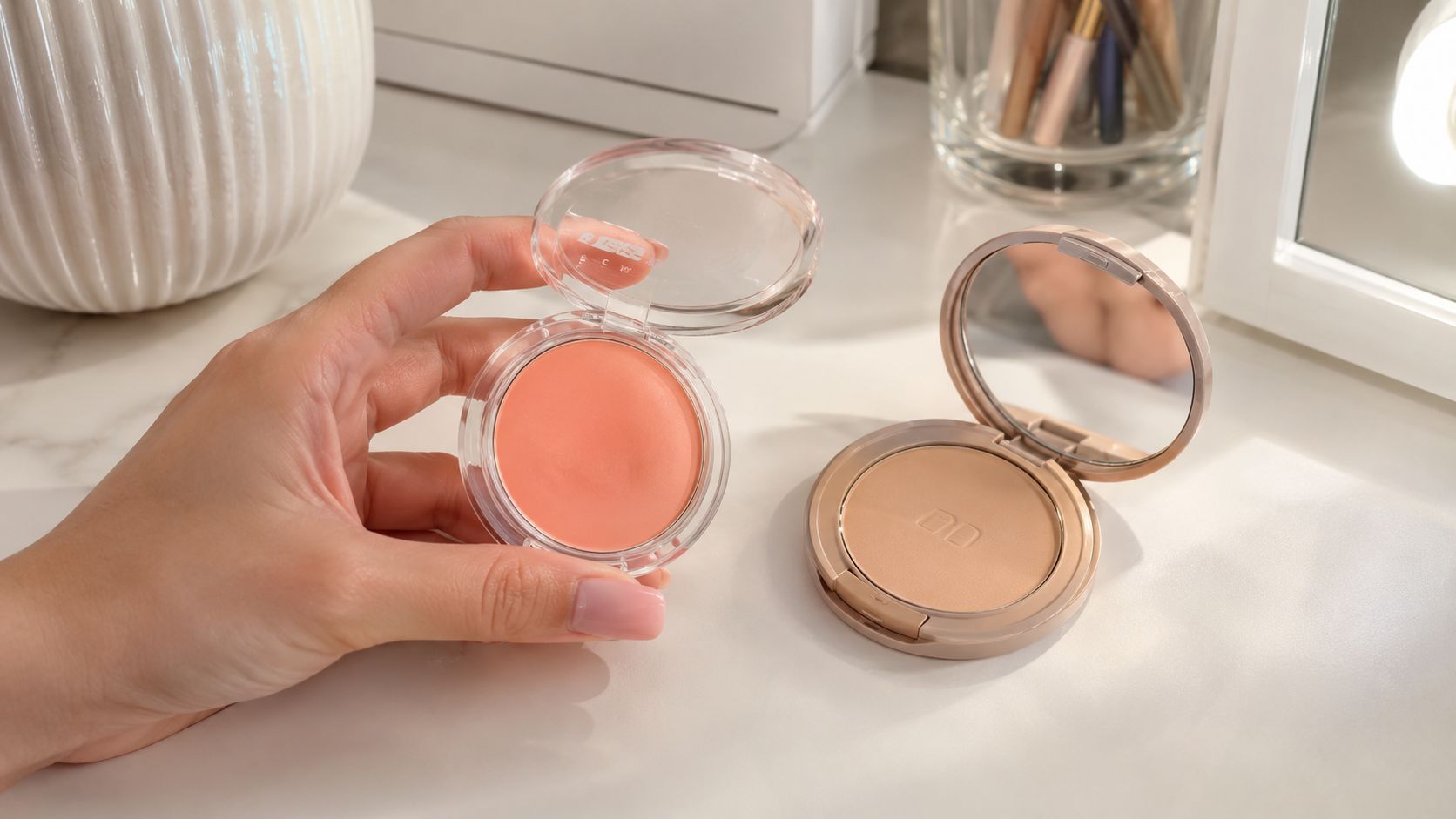
For a first purchase, choose eMediator Soft Matte Peach if you want a simple matte starting point, Milani Baked Coral Glow if your blush often fades into the base, or NARS Orgasm if you specifically want pinky-peach shimmer and are comfortable paying more. The right choice depends on the finish you will wear, not the product's price tier.
Finding Favourites curates affordable alternatives across makeup, skincare, and fragrance, including practical blush comparisons for shoppers who want luxury-inspired results without guesswork. Visit Finding Favourites to compare peach blush formulas, explore current dupe roundups, and find your next budget-friendly beauty match.