
Drugstore Cream Blush: 8 Affordable Dupes Worth Trying
You're standing in front of the mirror with the rest of your makeup done, and your cheeks still look flat. Powder blush sits there like it's arguing with your skin, while drugstore cream blush gives you that soft, alive flush without making your face look overdone. The good news is that the drugstore aisle is no longer the sad backup plan, it's where some of the smartest blush formulas live now.
This post may contain affiliate links, which means I may receive a commission if you purchase through my links, at no extra cost to you. Please read the disclosure policy for more information.
Why Drugstore Cream Blush Quietly Took Over
Cream blush didn't become popular because beauty editors got bored. It took over because people wanted cheeks that looked like skin, not makeup, and the drugstore finally started meeting that demand with easy-to-blend, beginner-friendly formulas that dry down softly instead of sitting on top of the face. The global cream blush market was valued at about USD 892 million in 2024, with projections to reach USD 1.4 billion by 2033 at a 5.1% CAGR from 2025 to 2033 (DataHorizzon Research). That growth lines up with how shoppers buy. They want affordable color, not a complicated ritual.
I keep coming back to the same real-world moment. Foundation is on, mascara is done, and the face still needs warmth. A powder blush can look dusty on top of a base, especially if the skin is dry or the finish is too matte. A cream formula melts in faster, which is why it became the go-to texture for people who want a quicker, more forgiving cheek color.
What changed after 2020
The post-2020 makeup shift made cream blush even more relevant. The NPD Group reported that overall blush sales rose 39% in 2021, and Klarna reported cream blush purchases increased 89% from 2020 to 2022, compared with a 37% increase for powder blush over the same period (The Bubble). That's not a tiny texture trend, that's a real consumer preference moving toward cream.
Practical rule: if you want cheeks that look like they belong to your skin, not your makeup bag, start with a cream format before you reach for powder.
Drugstore cream blush also benefits from the way these formulas are built. Many budget versions lean on emollient-heavy systems that spread easily and leave a dewy finish, which is exactly why they feel so forgiving on a rushed morning. You're not getting luxury packaging. You're getting usable color that works fast.
Cream Blush Formats, Finishes, and Undertone Basics
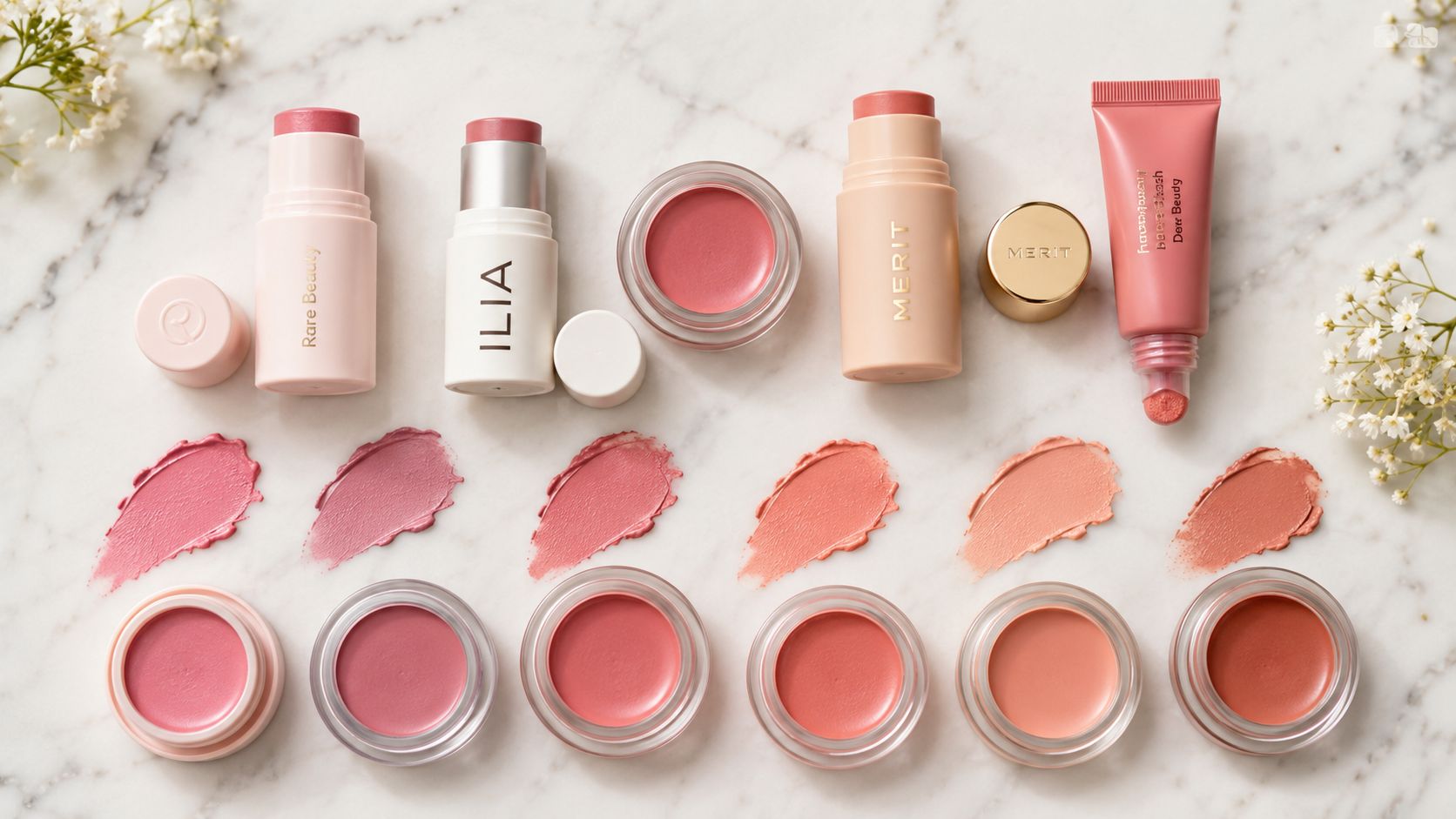
The easiest way to shop drugstore cream blush is to stop thinking in product names and start thinking in texture families. Balm, putty, liquid, and stain all behave differently on the face, and the one that looks amazing on your friend can be a mess on your skin. If you know which family you wear best, you cut the guessing in half.
The three formats that matter
Balms and melting tints are the most forgiving. They usually give you that soft, hydrated flush that can be tapped on with fingers, and they're usually the least intimidating if you're new to cream cheek color.
Putty and cream-to-powder hybrids build more structure. These are the textures that feel a little denser in the pan, then set down with more grip. They're a smart pick if you want something that behaves more like makeup and less like skincare.
High-pigment liquids and stains are the boldest. They're the ones that can double as lip color, and they're usually the most efficient choice if you want color that stays visible instead of disappearing by midday.
Undertone matters more than the shade name
If a blush looks muddy, the problem is often undertone, not formula. Warm undertones usually read best in peach, coral, and warm rose shades. Cool undertones tend to look fresher in pink, berry, and mauve. Neutral undertones can borrow from both camps, but they still need a shade that doesn't go gray on contact.
A quick in-store check helps. Gold jewelry often flatters warmer skin, silver leans cooler, and vein color can give you a rough read, too. Greenish veins often point warm, blue or purple veins often point cool, and if both seem present, you're probably closer to neutral.
Shade rule: if the blush looks alive on the back of your hand but dead on your cheek, the undertone is wrong, not the formula.
For drugstore shopping, I'd narrow it down to two or three families first. If you like a sheer, skin-like finish, look at balms. If you want a more polished, lasting cheek, putty makes sense. If you need strong wear and low fuss, liquid stain is the one to test first.
How to Apply Cream Blush Without Patchiness
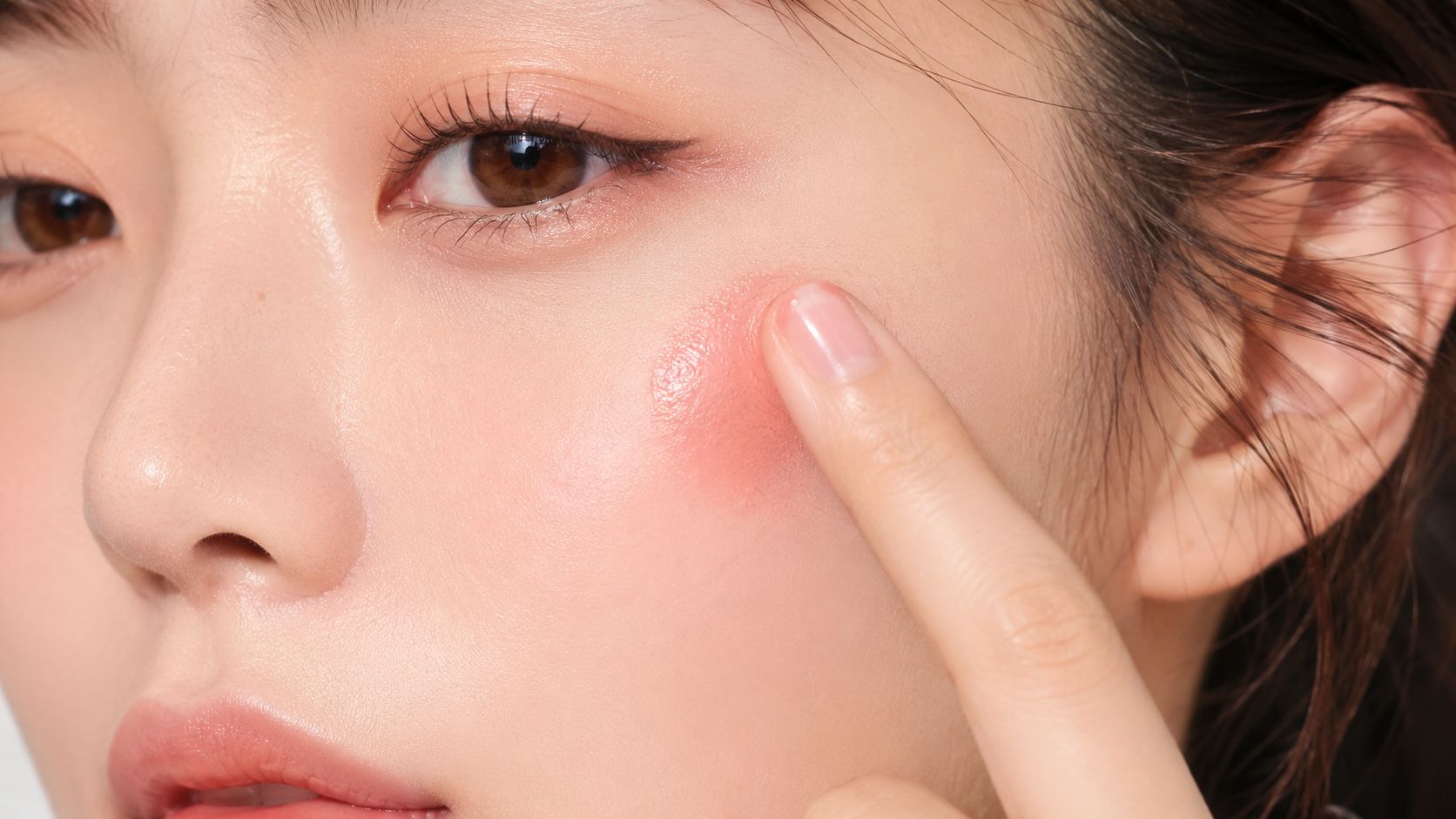
Cream blush goes patchy for one simple reason, too much product hits a dry or already-grabbing base at once. That's why the best application is boring on purpose. Thin prep, controlled placement, gentle blending. If you're pressing hard and hoping for the best, you're setting yourself up to lift the base underneath.
Start with a light layer of hydration or a grippy primer where the blush will sit. The point isn't to make the cheeks slippery. It's to give the formula something even to move across instead of grabbing instantly in dry spots. If your foundation is already set and dry, warm the product on the back of your hand first so the first contact with skin is softer.
The blend sequence that actually works
Place the color high on the cheek for a lifted look, or across the bridge of the nose and cheeks if you want that sun-warmed flush. Then use a stippling and tapping motion, not a sweeping drag. Fingers work best for balms, because warmth softens the texture. A damp sponge can sheer out liquids fast, while a stippling brush gives more controlled payoff on textured skin.
If you overdo it, don't scrub. Tap a clean sponge over the edge of the blush to soften the border, then add a touch of foundation or concealer only if you need to clean up the shape. That's faster than starting over, and it keeps the cheek from turning muddy.
The budget roundup I'd send acne-prone readers to when they're also dealing with skin prep issues is affordable acne solutions from Livaclean, because the same skin-management habits that help acne care, gentle prep, not over-layering, and choosing compatible textures, matter here too.
If your blush keeps lifting foundation, your tool is probably wrong. Fingers are fine for balm formulas, but a brush usually wins for built-up cheeks or anywhere you don't want extra friction. The finish should look like color sitting in the skin, not product sitting on top of it.
Matching Formula to Skin Type and Base
| Skin Type | Best Formula Family | Watch Out For |
|---|---|---|
| Dry skin | Balm or melting tint | Overly matte putty formulas can cling to texture |
| Oily skin | Liquid stain or cream-to-powder | Very emollient balms can slide if the base is slick |
| Combination skin | Putty or hybrid cream | Products that separate on the T-zone |
| Acne-prone skin | Liquid stain or stippled putty | Heavy finger blending that moves concealer |
| Bare skin | Balm or soft tint | Too much pigment can look uneven fast |
| Sunscreen base | Liquid stain or thin balm layer | Pilling from rubbing instead of tapping |
| Primer plus foundation | Putty or cream-to-powder | Silicone-heavy bases that make some creams pill |
The biggest mistake shoppers make is assuming every cream behaves the same. It doesn't. A putty blush can grab a silicone primer and start pilling if you rub it around, while a liquid stain can glide over humid skin and stay put because it's not relying on a thick emollient layer to stay visible.
Dry skin usually gets the easiest win from balms and melting tints. They look alive fast and don't highlight flaking the way powder can. Oily skin often does better with stains or cream-to-powder textures, because they set down more firmly and don't feel as likely to drift.
Combination skin is where people get frustrated, because the cheeks may love one formula while the nose and center face reject it. In that case, a putty or hybrid is a better compromise, since it gives more grip than a balm but usually feels less stark than a stain. For sunscreen-heavy mornings, tap the blush on instead of rubbing, or you'll create pilling even with a good formula.
Decision shortcut: if your base already feels slick, choose the driest-looking formula in the lineup. If your face feels tight, choose the one that melts fastest.
A cheap product can still perform well if the base match is right. That's why I'd rather see someone buy one texture that suits their skin than three random shades that all fight the makeup underneath.
8 Drugstore Cream Blush Dupes Worth Buying
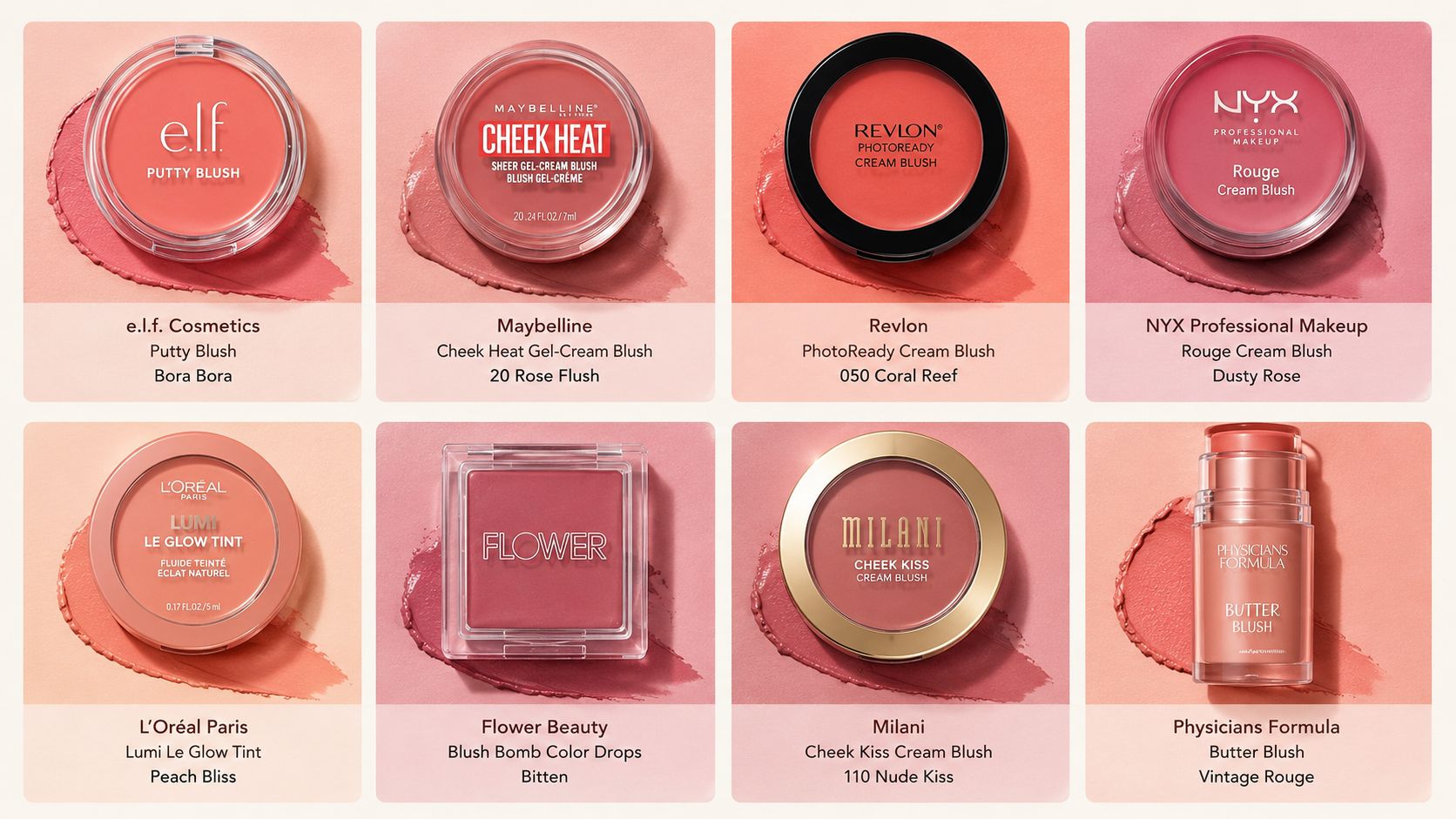
Under ten dollars, soft pinks and warm peaches
e.l.f. Putty Blush. Closest luxury lane, Rare Beauty Soft Pinch Liquid Blush for that bold, modern cheek effect, even though the texture is denser. This is the one I'd hand to someone who wants a creamy, soft-set flush without paying luxury money. It grips better than a balm, which makes it a smart match for normal to combination skin and for base looks that need a little staying power.
Milani Cheek Kiss Cream Blush. Best compared to a more polished glassy lip and cheek balm kind of formula, the type that looks fresh instead of powdery. It's the safer choice if your skin drinks up cream products and you want a natural flush that doesn't scream makeup. I like it for dry skin and bare skin days, especially in softer pink shades.
Wet n Wild MegaGlo Makeup Stick Blush. This sits in the same family as a simple multi-use cream stick, the kind that's meant to be fast, direct, and low-fuss. It's not fancy, but it does the job when you want quick cheek color on top of minimal makeup. Best for beginners who want an easy finger-blend product and don't need maximum longevity.
L.A. Girl Velvet Blush. Think of it as the drugstore answer for a softer cream-to-powder cheek color. The finish is more controlled than dewy, so it's useful if you hate shine but still want cream behavior during application. I'd put this on combination or oilier skin, especially if your biggest complaint is that balms vanish too quickly.
Ten to fifteen dollars, rosy berries and bronzy flushes
NYX Sweet Cheeks Soft Cheek Tint. This is the easiest liquid stain-style dupe in the bunch. It's what I'd reach for if I wanted a cheek product that can survive a humid day better than a balm and still look soft once blended. It's especially strong for oily skin and for anyone who wants buildable color with less product migration.
Revolution Beauty Superdewy Liquid Blush. Closest to a high-gloss, glowing cheek product, the kind that gives a dewy finish without needing a separate highlight. I'd use it when I want a bright flush that still reads glossy in photos. Best on dry or normal skin, because the finish is the whole point.
e.l.f. Camo Liquid Blush. This is the more intense, high-impact cousin in the liquid family, and it behaves like a budget version of a trendy pigment-heavy liquid blush. A tiny amount goes a long way, so it rewards people who like strong color payoff and precise placement. I'd choose it for medium to deeper skin tones that need a blush that won't disappear.
Maybelline Cheek Heat Gel-Cream Blush. This one belongs in the sheer cream-gel category, which is exactly why it works so well for everyday wear. It gives a translucent wash that looks believable over light base makeup and sunscreen when tapped in gently. If you want the most “my cheeks are naturally flushed” effect, this is the one I'd try first.
The category is broad enough that the best dupe depends on the finish you already like, not just the price. If you want the closest thing to a luxury balm feel, start with Milani. If you want a stain that lasts better in heat, go straight to NYX. If you want one clean, low-risk entry point for most skin types, e.l.f. Putty Blush is the most balanced place to begin.
Three Cream Blush Myths That Deserve to Die
The first myth is that cream blush only works on dry skin. No. Oily skin often likes a stain or liquid formula better than a rich balm, because those textures set down instead of sliding around. The main issue isn't skin type, it's choosing a formula that matches how much oil, moisture, and grip your face has at baseline.
The second myth is that powder on top kills the glow. A tiny tap of translucent powder in the center of the cheek can help lock in cream color without flattening the whole finish. If you want to keep the sheen but improve wear, use the lightest possible touch and leave the outer edge alone.
The third myth is that you have to use your fingers. Fingers are fine for balms, but they're not automatically the best tool. On textured or acne-prone skin, a stippling brush often gives a more even result because it deposits color without dragging concealer or base around.
If you're building a routine around affordable complexion products, the logic is the same as choosing other budget skin-first makeup. Texture compatibility matters more than hype, and that's why a cheap blush can out-perform a pricier one when the base is right.
Cream Blush FAQs From Real Shoppers
Can I wear cream blush over SPF without pilling? Yes, if you tap, not rub. Let sunscreen settle first, then use a thin layer of balm, tint, or liquid stain. If your SPF base feels slick, a putty formula is the one most likely to pill, so reach for a lighter texture instead.
Which drugstore cream blush doubles as a lip tint? The liquid-stain styles make the most convincing lip color. NYX Sweet Cheeks Soft Cheek Tint and e.l.f. Camo Liquid Blush are the first two I'd grab because they're easy to sheer out on the mouth without looking chalky.
How do I fix a patchy cheek mid-day? Don't stack more product straight onto the bad spot. Warm a tiny amount between clean fingers or on the back of your hand, tap around the edges, then press a sponge over the area to blend it back into the base. That keeps the correction from looking like a fresh stripe.
Is cream blush transfer-proof? Not fully. A stain or liquid formula usually holds up better than a soft balm, but a cheek will still touch a phone, a mask, or a child's shoulder if you press it enough. If transfer matters, choose the driest-setting formula you own and set only the center of the cheek with a little powder.
The Best Drugstore Cream Blush Dupe and Final Verdict
The best all-around dupe is e.l.f. Putty Blush because it gives the most flexible middle ground, blendable, flattering, and easy to wear on normal to combination skin. If you're brand new to the category, start there, then move to NYX for a stain or Milani for a softer balm once you know which finish you like. The shortcut is simple, pick the formula family first, then the shade.
Finding Favourites does the hard part for you by sorting affordable beauty swaps by finish, wear, and price so you don't waste money on the wrong texture. If you want more practical dupes like this, visit Finding Favourites and use it to narrow down your next cream blush before you buy.