
Cream Blush vs Powder Blush: A Guide + 11 Dupes
You're probably standing in front of two blush options right now, or scrolling through them, wondering whether to buy the cream stick everyone calls “natural” or the powder compact you know will probably last longer. That confusion makes sense. Cream blush looks fresh and modern, powder blush feels reliable, and individuals often prefer to avoid wasting money discovering which one best suits their skin.
This post may contain affiliate links, which means I may receive a commission if you purchase through my links, at no extra cost to you. Please read the disclosure policy for more information.
What matters isn't picking a side. It's knowing what each formula does well, where each one fails, and how to combine them when you want the best finish for your skin, season, and budget. That's where most cream blush vs powder blush guides stop short. This one won't.
The Cream vs Powder Blush Dilemma
Cream blush has earned its place because it gives skin that lived-in, healthy flush people want right now. Powder blush never left because it still solves a very real problem. It stays put better when your skin gets shiny, your cheeks get humid, or your makeup has to survive a full day without babysitting.
That split is why the decision feels harder than it should. One formula promises glow. The other promises control. Neither is universally better.
What usually works is matching the formula to your actual day, not the marketing. If you want something quick, skin-like, and forgiving on dry patches, cream often wins. If you need color that won't disappear by lunch, powder still has a strong case. And if you like a custom finish, layering both is often the smartest move.
You'll also find affordable options here, because blush is one of the easiest places to save money without sacrificing the look.
Formulation Finish and Longevity Explained
The biggest difference in cream blush vs powder blush isn't just texture in the pan. It's how the formula sits on skin.
Cream blush usually has a softer, more emollient feel. It melts in, looks less makeup-y, and tends to mimic the way a natural flush comes through the skin. Powder blush sits more on top of the skin, which is exactly why it can blur, diffuse, and hold up better when oil or sweat enters the picture.
How the finish actually looks
Cream blush usually gives one of three results:
- Skin-like glow: Best when you want cheeks to look fresh instead of obviously “done.”
- Soft satin sheen: Common in cream-to-powder formulas that set down a bit.
- Juicy color: Great for monochromatic makeup, especially when you want cheeks to look lively.
Powder blush tends to offer more finish control:
- Matte payoff: Useful if you want color without extra shine.
- Satin blur: Often the easiest finish for everyday wear.
- Shimmer or luminous glow: Better when you want more visible polish.
Practical rule: If you want blush to disappear into the skin, cream usually does that better. If you want blush to shape the face and stay disciplined, powder usually does that better.
Blendability and product order
Cream blush is easiest to blend on bare skin, over skincare, or over lightweight base products. Fingers work well because body heat softens the formula. A damp sponge can sheer it out fast. The downside is that cream can lift foundation if you rub too hard.
Powder blush behaves better over set makeup. A fluffy brush gives the softest result, while a denser brush makes pigment hit harder. Powder is more forgiving if you build slowly, but it can grab onto dry spots or texture if the skin underneath isn't prepped well.
A lot of application issues come down to order. Cream doesn't love being forced over a fully powdered face. Powder usually likes a smoother, more settled base.
What to expect from wear time
If longevity is your first priority, powder has the cleaner advantage. Powder blush formulas provide 8 to 12 hours of verified wear time with superior resistance to humidity and sweat, making them the benchmark choice for oily skin types, while cream blush typically offers 4 to 6 hours of wear but fades more evenly and naturally without creating patchy residue, according to Smytten's blush wear comparison.
That's the core trade-off.
Powder usually lasts longer. Cream usually fades prettier.
If your skin is dry to normal and you hate that chalky, obvious-blush look, cream can still be worth the shorter wear. If your cheeks eat makeup by midafternoon, powder saves you more frustration.
Choosing the Best Blush for Your Skin and Season
A good blush choice depends less on trends and more on skin behavior. If your cheeks pull moisture from every base product, cream and balm formulas can look far more flattering. If you get shiny fast, powder often makes your whole face easier to manage.
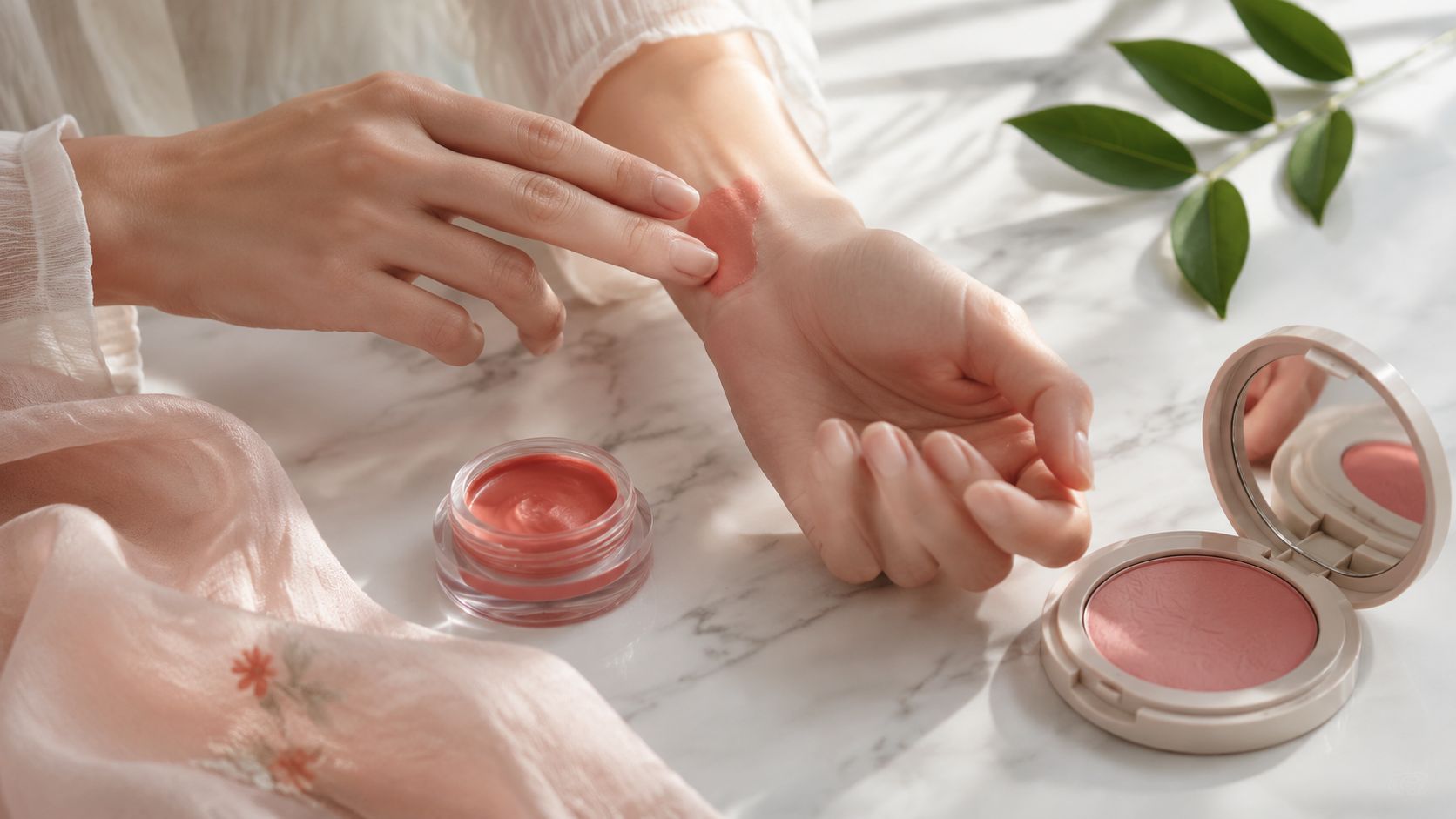
Dry mature and textured skin
Cream blush is usually the easier win here. It doesn't cling the same way many powders do, and it helps cheeks look fresher instead of flatter. If your foundation already leans radiant, a cream blush keeps the finish cohesive.
For mature skin, the key is restraint. A thin layer placed slightly higher on the cheek tends to lift the face better than a heavy swipe across the center. A gel-cream or lightweight stick usually looks more elegant than a dense, greasy balm.
If shade choice is still tripping you up, this guide on how to choose blush for your skin tone helps narrow down what flatters instead of just what looks pretty in packaging.
Oily and combination skin
Powder blush still earns its reputation for a reason. Powder blush remains the dominant global category, accounting for approximately 38% of total blush market revenue in 2025, reflecting its strong hold among shoppers who want matte, long-wearing finishes that control shine, particularly those with oily or combination skin types, according to Deep Market Insights.
That doesn't mean oily skin can't wear cream. It means cream usually needs more strategy. You'll want less product, more tapping, and often a light set around the edges so the blush doesn't drift.
A satin powder is often the easiest daily answer for combination skin because it keeps color where you put it without forcing the face fully matte.
Normal and sensitive skin
Normal skin can wear almost anything, so finish preference matters more than formula loyalty. If you like a bare-skin effect, cream is lovely. If you want a polished cheek that's hard to mess up, powder keeps things simple.
Sensitive skin often does best with straightforward formulas and minimal rubbing. In practice, that means either a very blendable cream applied with fingertips or a soft powder buffed on with a clean, fluffy brush. The wrong tool can irritate skin more than the blush itself.
Seasonal reality check
Weather changes everything.
- Winter and cooler months: Cream blush tends to look better because skin is often drier and duller.
- Hot humid days: Powder is easier to trust when sweat and oil start breaking things down.
- Transitional weather: Layering both formulas is often ideal.
In cold weather, cream can make tired skin look alive again. In summer humidity, powder usually asks less of you.
Mastering Your Blush Application
A great blush formula can still look bad if the tool is wrong. Cream blush needs pressing and melting. Powder blush needs diffusing. Once you treat them that way, application gets much easier.
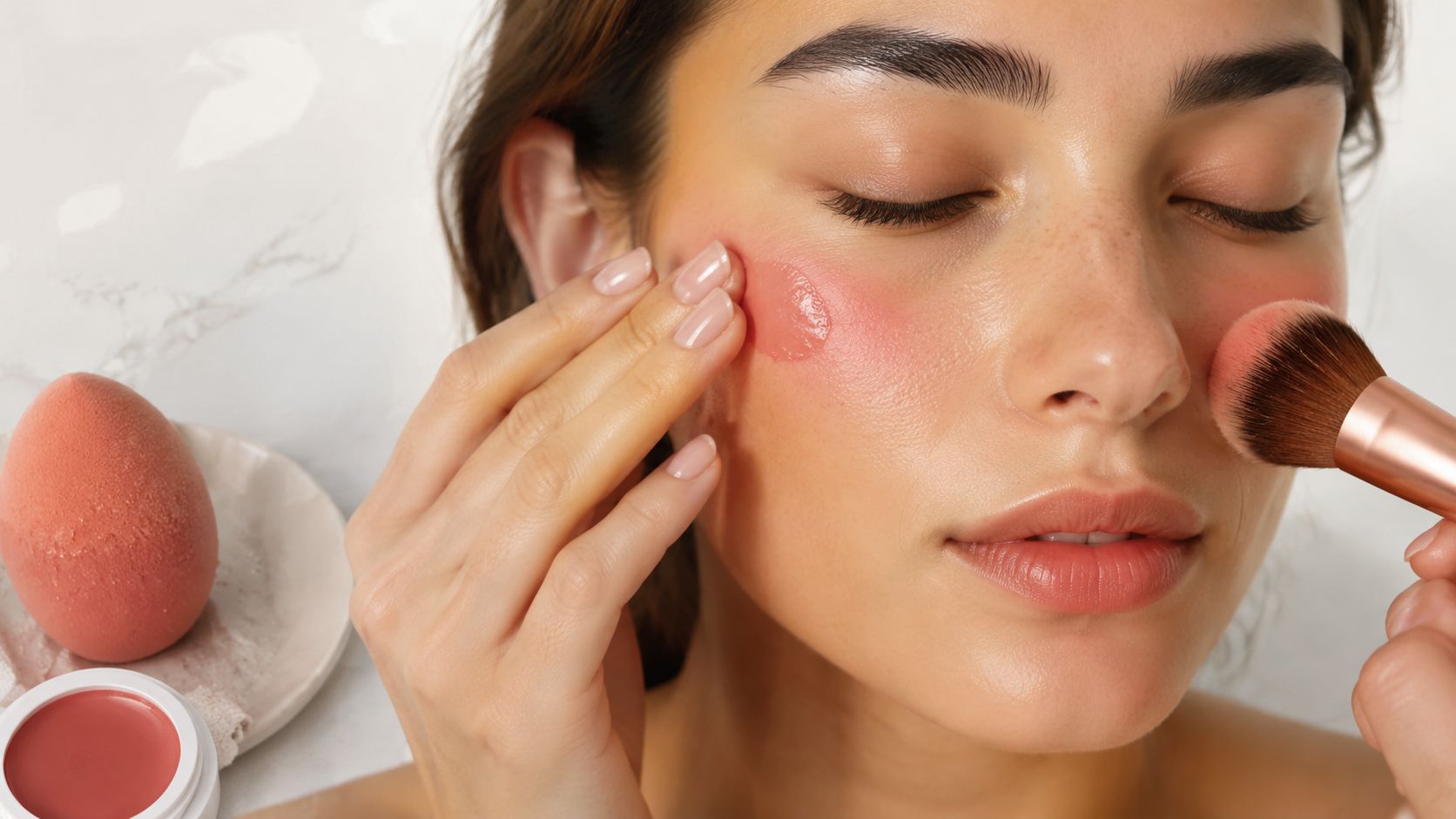
Best tools for each formula
For cream blush, the best tools are usually:
- Fingertips: Best for quick placement and warming the product into skin.
- Damp sponge: Best if you want a sheer, smoothly blended edge.
- Stippling brush: Best for applying over foundation without disturbing it too much.
For powder blush, reach for:
- Fluffy brush: Best for a soft wash of color.
- Angled brush: Best for cheekbone definition.
- Tapered brush: Best for precise placement when the blush is very pigmented.
Cream blush has grown because people want makeup that looks more like skin. That lines up with the market shift too. The cream blush category was valued at approximately $892 million in 2024, with growth driven by the “no-makeup makeup” trend and demand for skin-like finishes, according to Data Horizzon Research.
How to apply cream blush so it looks expensive
Start with less than you think you need. Tap a small amount onto the back of your hand first if the formula is highly pigmented. Then pick it up with fingers, a sponge, or a stippling brush.
Use this order:
- Place first: Tap the color slightly above the apple of the cheek.
- Blend upward: Move toward the temple, not straight across the face.
- Sheer the edges: Use a sponge or clean fingers so the border disappears.
If your base tends to cake, technique matters more than product hype. A lighter hand and thinner layers usually fix more problems than changing blush formulas. This guide on how to make makeup less cakey is useful if blush always seems to sit on top of your foundation.
One of the easiest mistakes is dragging cream across set makeup. Press instead. Dragging creates holes.
How to apply powder blush without going chalky
Powder needs a cleaner pickup. Swirl lightly, tap off excess, then build. Most blush disasters happen in the first swipe because too much product hits one spot at once.
A simple method:
- Start farther back: Place the first touch near the outer cheek.
- Blend inward softly: This keeps the center of the face from getting overloaded.
- Layer in passes: It's easier to add than subtract.
If powder grabs unevenly, check the skin underneath. Overly tacky foundation, dry patches, or too much setting powder can all make blush skip.
This demo is worth watching if you want to see placement and blending in motion.
A clean brush and a light hand fix most powder blush problems before they start.
How to Layer Formulas for the Perfect Finish
The smartest answer to cream blush vs powder blush is often both. Layering gives you the realism of cream and the staying power of powder, as long as you respect the order.
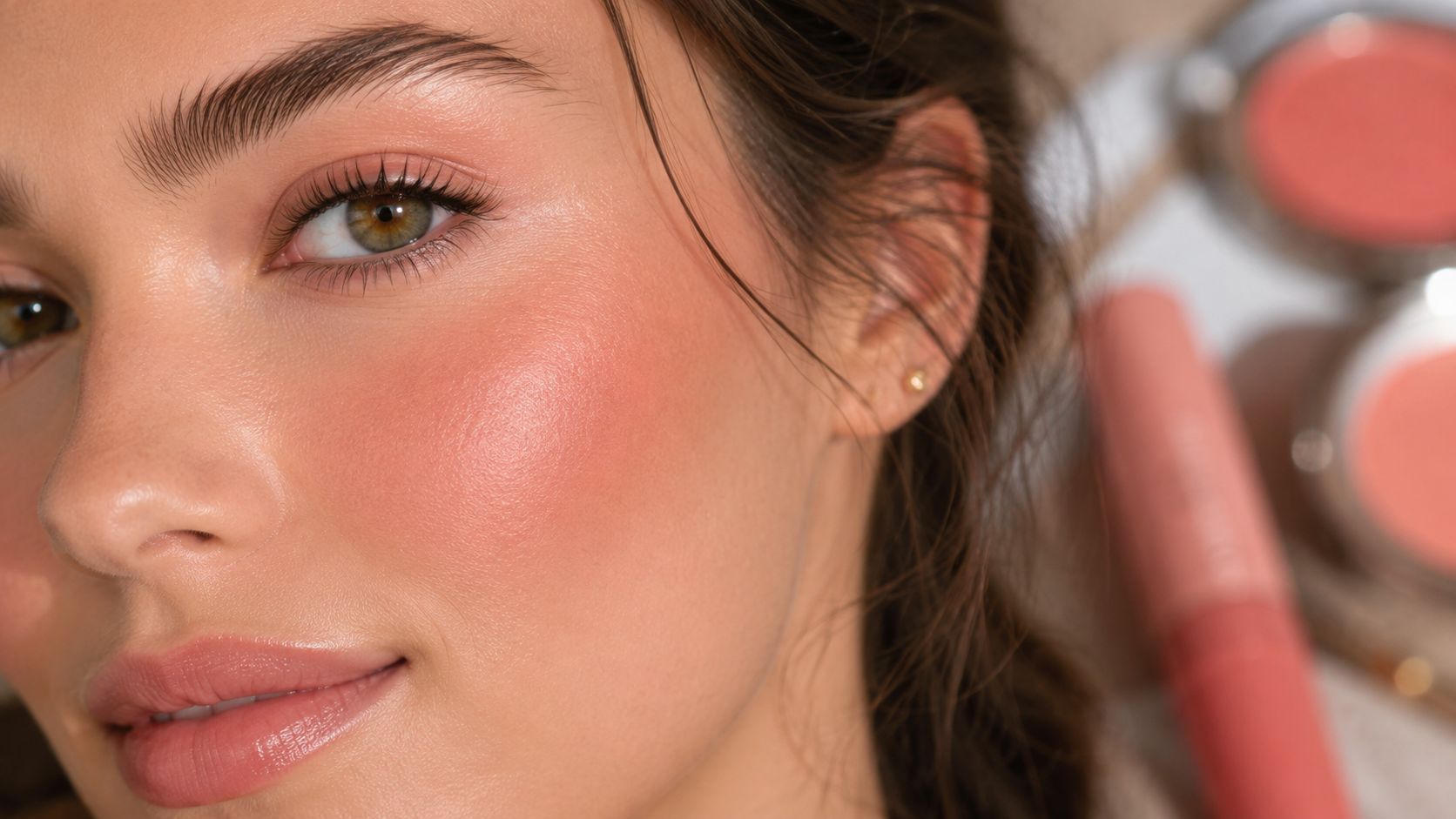
The blush sandwich that actually works
The recommended technique for maximum longevity is specific. Apply powder blush as an anchor layer, then tap cream blush onto the center of each cheekbone and blend for a smooth gradient. A critical rule is to never apply cream blush over heavy powder foundation, because it will pill, as outlined in Patrick Ta's layering guide.
That sounds backward if you've always heard cream must come first. The difference is the base. Cream over a heavy powdered base is where things go wrong. A strategic powder blush layer used lightly as an anchor can work beautifully.
Best pairings by finish
Try these combinations:
- For a polished everyday cheek: Start with a satin powder blush, then add a dab of neutral cream blush at the highest point.
- For a fresh winter flush: Use a muted rose powder low-key, then tap a pink cream in the center.
- For long workdays: Pick a powder shade close to your natural flush, then use cream sparingly so it doesn't slide.
The layered result shouldn't look like two blushes. It should look like one better blush.
What not to do
A few mistakes ruin this technique fast:
- Don't overbuild both layers: You'll lose the soft gradient.
- Don't use a greasy cream on top of a fully set matte base: It can separate.
- Don't ignore shade harmony: If the powder is peach and the cream is cool berry, the blend can look muddy.
If you want one cheek product to do everything, layering may feel fussy. But if your blush usually fades too fast or looks too flat, this is the method worth learning.
11 Best Affordable Blush Dupes for a Luxury Look
You don't need a luxury compact to get a smooth, flattering blush finish. Drugstore and mid-range formulas have become much better at texture, pigmentation, and shade range. The best buys come down to matching formula to lifestyle.
In high-friction settings like mask-heavy workdays, powder tends to be the safer bet. In low-contact, climate-controlled offices, cream can look more believable and radiant, as discussed in Alibaba's workday wear comparison.
If you're also trying to spot products that are getting real traction before they sell out, creator seeding can be surprisingly useful. Brands often find top influencers to show how blush textures wear on different skin types and tones, which can tell you more than a single polished campaign image.
Quick Comparison of Affordable Blush Dupes
| Affordable Dupe | Best For | Price Tier |
|---|---|---|
| e.l.f. Putty Blush | Cream beginners | Under $10 |
| Essence The Blush | Soft powder flush | Under $10 |
| Wet n Wild Color Icon Blush | Budget powder lovers | Under $10 |
| ColourPop Pressed Powder Blush | Shade variety | Under $10 |
| Milani Baked Blush | Luminous powder finish | Under $25 |
| NYX Sweet Cheeks Soft Cheek Tint | Natural cream look | Under $25 |
| Maybelline Cheek Heat | Sheer gel-cream flush | Under $25 |
| L'Oréal True Match Blush | Everyday satin powder | Under $25 |
| Flower Beauty Blush Bomb | Glowy liquid-cream cheeks | Under $25 |
| Physicians Formula Butter Blush | Smooth tropical glow | Under $25 |
| Honest Beauty Crème Cheek + Lip Color | Easy multitasking cream | Under $25 |
For more budget picks across finishes, this roundup of the best drugstore blush is a strong companion read.
Under $10 picks
e.l.f. Putty Blush
This is one of the easiest cream formulas for beginners because it's soft, blendable, and less intimidating than very pigmented liquid blushes. It gives that blurred cream finish that can mimic pricier balm-to-cream products.Essence The Blush
If you want a simple powder blush with a soft-focus effect, this is one of the best value buys. It works well for people who want color they can build without a harsh stripe.Wet n Wild Color Icon Blush
This is the type of budget powder blush that saves money because it just does the job. It's practical, available almost everywhere, and good for everyday looks where you want visible color without overthinking it.ColourPop Pressed Powder Blush
ColourPop consistently does strong shade selection well. This is a good pick if you want to test peach, rose, mauve, or brighter tones without spending prestige money.
Under $25 picks
Milani Baked Blush
This is the affordable answer for anyone who likes a luminous cheek. It gives a polished, slightly glowy finish that can stand in for more expensive baked or marbled blushes.NYX Sweet Cheeks Soft Cheek Tint
A strong option if you want cream blush to look like a stain instead of a layer. It works best in thin amounts and suits people who like their blush subtle and skin-like.Maybelline Cheek Heat
This one is good for blush minimalists. The gel-cream texture is sheer enough that it's hard to overdo, which makes it useful for no-makeup makeup days.L'Oréal True Match Blush
If you want a dependable satin powder blush, this is still a smart buy. It gives a balanced finish that doesn't read too flat or too glowy.Flower Beauty Blush Bomb
This is one of the best picks for that juicy, fresh cheek effect. It behaves more like a liquid-cream, so a tiny amount goes a long way when you want radiance.Physicians Formula Butter Blush
This formula sits between creamy and powdery in feel. If regular powder blushes often look dry on you, this is a good middle-ground choice.
Best multitasker
- Honest Beauty Crème Cheek + Lip Color
This is the easiest all-rounder in the group. It works for cheeks, travels well, and gives a healthy finish without demanding perfect technique. For most shoppers trying to get a luxury-looking cream blush effect on a budget, this is the one I'd start with.
If you want one affordable dupe that covers the most ground, pick a cream formula that blends easily and a satin powder that can set or layer over it. That pairing gives you more flexibility than one expensive blush ever will.
Frequently Asked Questions and Final Thoughts
Can you use cream blush on your eyes or lips
Sometimes, yes, but check the brand's intended use first. Many cream cheek products are marketed for lips and cheeks, which makes them convenient for a monochromatic look. If the product isn't labeled for eye use, I wouldn't assume it's meant for that area.
How do you keep cream blush from looking greasy
Use less product and place it more precisely. A damp sponge helps absorb excess while keeping the glow. If your skin gets shiny fast, apply cream blush in a thin layer and lightly set the perimeter with powder instead of mattifying the whole cheek.
Does powder blush emphasize texture
It can. That usually happens when skin is dry, the base is over-powdered, or the blush is too matte and dense. A smoother satin powder and a fluffier brush usually look better than a dry, stiff matte formula buffed on heavily.
Which lasts better for long workdays
It depends on your environment. Powder is usually better when there's friction, heat, sweat, or mask wear. Cream often looks better in calmer, indoor settings where your face isn't constantly being touched or rubbed.
The best choice in cream blush vs powder blush comes down to finish, skin type, and what your day looks like. If you want easy wear and shine control, powder is still the practical winner. If you want a fresher, more natural cheek, cream is often prettier. If you want both, layer them. Among the affordable dupes here, Honest Beauty Crème Cheek + Lip Color is the best overall pick because it's versatile, flattering, and gives a luxury-looking cream finish without a luxury price tag.
If you want more budget-friendly beauty finds that perform, browse Finding Favourites for practical dupe guides, smart shade comparisons, and affordable swaps that save you money without lowering your standards.