
How to Fix Dry Mascara: 3 Safe & Easy Methods for 2026
You're halfway through your makeup, grab your favorite mascara, and the wand comes out thick, dry, and oddly spiky. Instead of smooth lashes, you get clumps, flakes, and that stubborn tug that tells you the formula has started to dry out. It's annoying, especially when the tube still feels like it should have plenty of product left.
The good news is that dry mascara isn't always doomed. If the tube is still within its usable window and the formula hasn't gone off, there are a few safe ways to loosen it back up without wrecking your lashes or risking your eyes. The trick is knowing what works, what only works temporarily, and what shortcuts aren't worth trying.
This post may contain affiliate links, which means I may receive a commission if you purchase through my links, at no extra cost to you. Please read the disclosure policy for more information.
That Heartbreak Moment Your Favorite Mascara Dries Up
A drying mascara usually doesn't fail all at once. First it starts looking a little thicker on the wand. Then your lashes stop separating cleanly. A few days later, your reliable tube turns into a flaky mess that leaves specks under your eyes by lunch.
That's usually the point where people start searching for how to fix dry mascara and fall into a rabbit hole of random advice. Some of it is useful. Some of it is the beauty equivalent of kitchen-sink problem solving, and it has no business going anywhere near your eyes.
Practical rule: If a mascara is merely thick, it may be revivable. If it smells off, irritates your eyes, or has clearly aged out, it's not a fixer-upper.
I'm very pro getting every bit of value out of a beauty product. Mascara is one of the few categories where I still think you need to be stricter than you want to be. Saving money is great. Saving a tube that's become risky is not.
Still, there's a sweet spot where reviving makes sense. If your tube has dried from normal air exposure, the cap wasn't closed tightly, or the formula just stiffened a little before its time, a simple fix can buy you smoother application and better lash separation again.
Three Safe Ways to Revive Your Dry Mascara
The safest methods are the ones that either gently warm the existing formula or add a very small amount of an eye-appropriate liquid. Anything beyond that gets questionable fast.
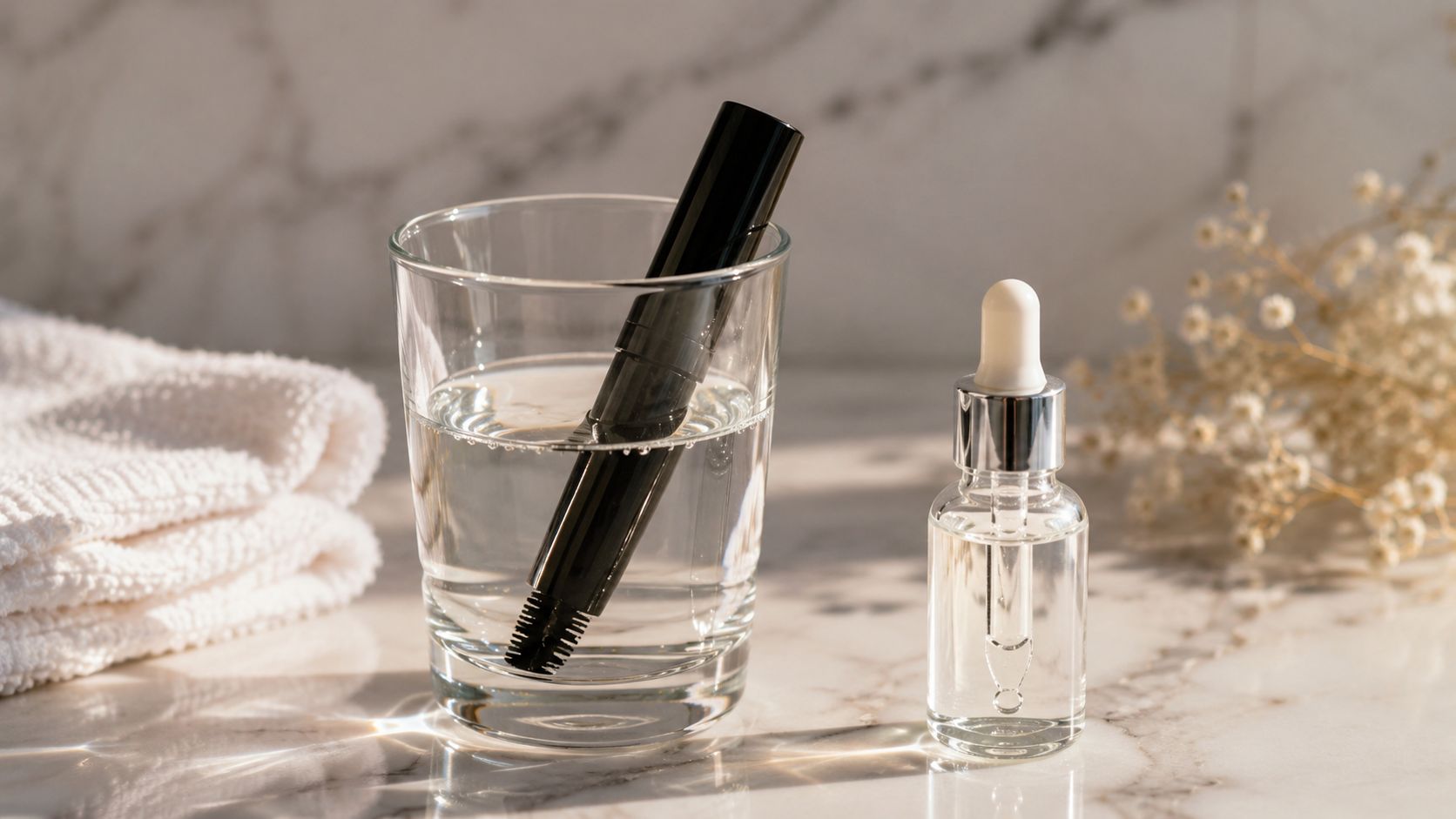
Mascara revival methods at a glance
| Method | Best For | Key Tip |
|---|---|---|
| Warm water bath | Thick, stiff mascara that isn't expired | Keep the tube sealed tightly |
| Saline or contact lens solution | Formula that needs a little moisture back | Use only a few drops |
| Commercial mascara thinner | Frequent mascara users who want a dedicated fix | Follow the product directions exactly |
Warm water bath
This is the easiest place to start because you're not adding anything to the formula. You're just softening what's already in the tube.
Industry guidance says the sealed tube can sit in a coffee mug of hot water for exactly 10 minutes, and that adding two to three drops of saline or contact lens solution is the upper limit before the formula gets too runny, according to L'Oréal Paris's mascara revival guidance.
Here's how I'd do it in real life:
- Tighten the cap fully so no water gets inside.
- Fill a mug with hot, not boiling, water.
- Stand the tube in the mug and leave it alone.
- Roll the tube between your hands afterward to help redistribute the softened product.
This method is best when the mascara feels waxy or stiff rather than fully crusted out. It's also a good first move for waterproof formulas, which often thicken before they dry out.
A warm water bath is the lowest-risk fix because it changes texture without introducing a new ingredient.
Saline or contact lens solution
If the warm water trick helps but the formula is still dragging, a small amount of saline can loosen it further. Small is the important word.
A practical range often cited for dried mascara is 2 to 4 drops. In actual use, I'd stay on the lower end first. You can always add another drop, but once a mascara turns soupy, there's no good way back.
A simple routine looks like this:
- Start with 2 drops if the mascara is only mildly dry.
- Twist the wand inside the tube instead of pumping it.
- Let it sit briefly so the liquid blends into the formula.
- Test it on the wand before adding more.
This is the method typically intended when discussing how to quickly fix dry mascara. It works fast, doesn't require special tools if you already have saline or contact lens solution, and usually restores enough slip for a few more uses.
If your eyes are easily irritated, pairing a safer mascara formula with better handling habits matters just as much as the fix itself. If you're shopping for replacements, this guide to the best drugstore mascara for sensitive eyes is a smart next read.
A quick visual can help if you want to see the texture change in action.
Commercial mascara thinner
If you wear mascara regularly and run into this problem often, a commercial thinner is the most controlled option. These products are made for makeup formulas, so they're generally a better bet than improvising with household liquids.
What I like about a proper thinner is the consistency. You're using a product designed for cosmetic textures, not hoping that a random workaround behaves well near your eyes. You still need restraint, though. More product doesn't mean better results.
Use this option when:
- You've already tried heat and the formula still needs help.
- You want more control than a warm water bath gives you.
- You revive mascara often and want one dedicated tool instead of experimenting.
The trade-off is cost. Saline is usually cheaper, and hot water is basically free. A thinner makes more sense if you use mascara often enough to justify keeping one in your makeup bag.
What You Should Never Add to Your Mascara
This is where a lot of beauty advice goes off the rails. People get desperate to save a tube and start treating mascara like any other dried-up cosmetic. It isn't. It sits right next to one of the most sensitive areas of your body.
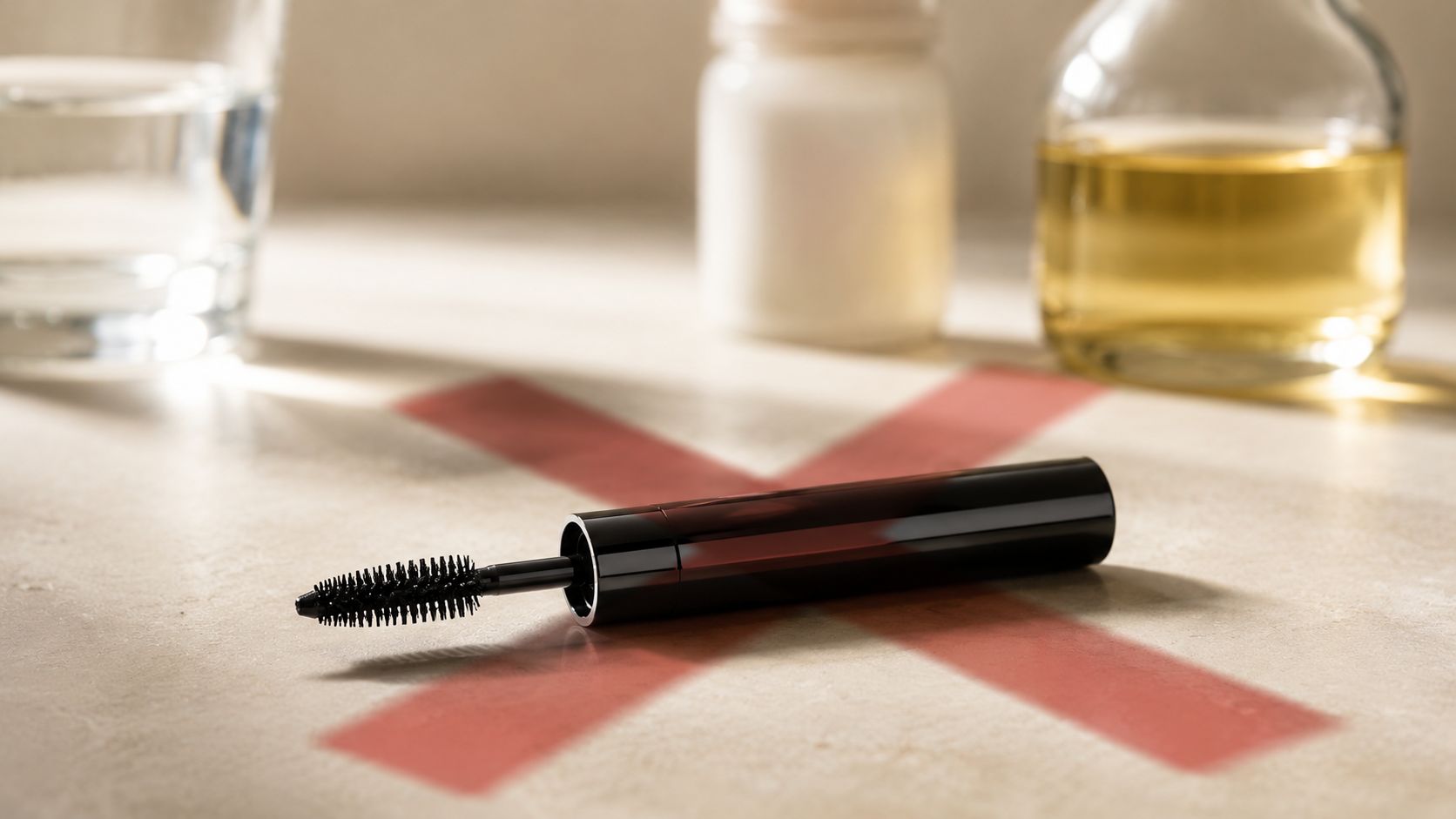
The household hacks to skip
Community discussions show people trying micellar water, olive oil, and even coke, but these non-eye-safe liquids can create bacterial growth, formula breakdown, or severe eye irritation, as reflected in this discussion of mascara fix attempts on Reddit.
That doesn't mean every person who tries one of these will have an immediate disaster. It means the risk isn't worth it.
Avoid these:
- Tap water. It isn't sterile, and mascara tubes aren't where you want to introduce extra contamination.
- Saliva. This one comes up more often than it should. Mouth bacteria and eye-area products should never mix.
- Micellar water. It may seem gentle, but it's not designed to restore mascara inside a tube.
- Household drinks. If a hack sounds chaotic, it probably is.
- Random skincare liquids. Serums, toners, and facial mists aren't mascara thinners.
Oils are the gray area that most guides underplay
Some beauty tips mention natural oils as a backup, and that's exactly why people get overconfident with them. Even when an oil is mentioned as an option, too much can make the formula overly slick and smudgy.
If you're ever tempted, restraint matters more than enthusiasm. A tiny amount is one thing. Turning the inside of the tube into an oily mixture is another.
If you have to guess whether a liquid is eye-safe inside a mascara tube, skip it.
The bigger issue is compatibility. Mascara formulas are balanced blends of waxes, pigments, film-formers, and preservatives. Once you start tossing in liquids that weren't meant to be there, you don't just change texture. You can change wear, performance, and how the product behaves on your lashes.
Why the cheap fix can become the expensive mistake
An eye product gone wrong can cost more than the mascara you were trying to save. Irritation, smudging, flaking, and compromised hygiene are bad enough. The bigger concern is that the formula may no longer behave predictably once you've altered it with the wrong ingredient.
That's why the safe route is boring. Hot water, a few drops of saline, or a proper thinner. None of those are glamorous hacks, but they're the ones most worth trusting.
How to Prevent Your Mascara From Drying Out Early
The easiest mascara to fix is the one that never got dried out in the first place. Most tubes don't dry early because the formula was terrible. They dry early because of how they're handled.
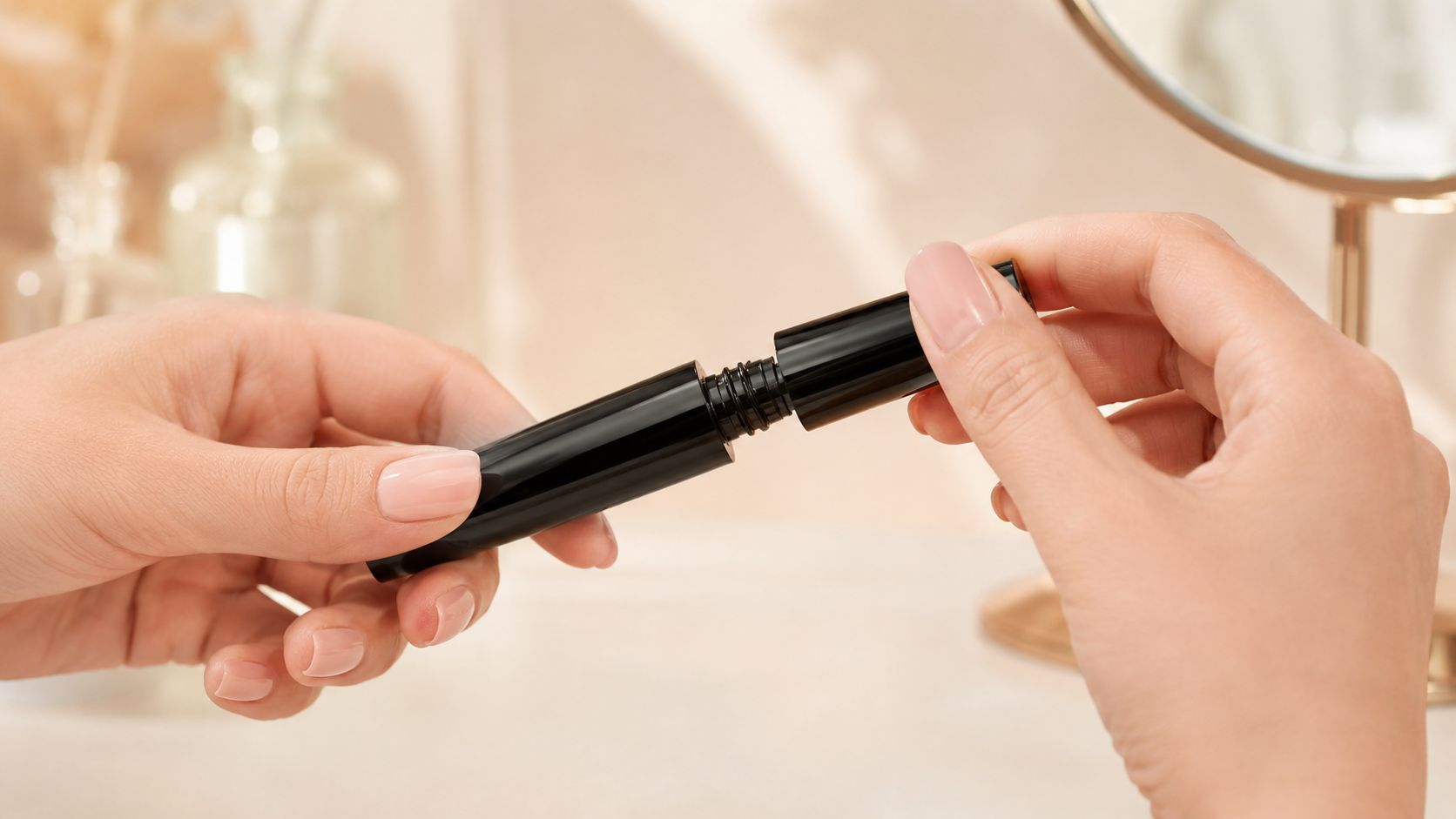
Stop pumping the wand
The biggest habit to break is pumping. Ipsy's guidance on fixing dry mascara recommends twisting the wand inside the tube and swirling it along the sides instead of pumping it up and down, because pumping introduces air that speeds up drying and oxidation.
That one habit changes a lot. Twisting picks up product, helps de-clump the inside walls, and doesn't force extra air into the tube every morning.
Small habits that help
Mascara care is not complicated, but it does reward consistency.
- Close it tightly after every use so air doesn't keep creeping in.
- Don't leave it open while doing the rest of your makeup.
- Store it in a cool, dry spot instead of a humid bathroom ledge if you can help it.
- Wipe off messy buildup at the neck of the tube so the cap seals better.
If you're trying to get longer wear from the rest of your makeup too, this guide on how to make makeup last all day pairs well with better mascara habits.
The best prevention tip is simple. Twist and swirl the wand. Don't pump it.
Watch how the formula behaves
A mascara rarely surprises you. It gives warnings. It starts applying thicker, builds unevenly, or leaves more residue on the tube opening. Those little signs are your cue to tighten up your routine before the formula turns fully dry.
If I notice a tube getting stubborn, I stop being casual with it. Cap on fast. No pumping. Better storage. Those boring habits buy more time than is typically realized.
When to Say Goodbye Signs Your Mascara Is Done
Some mascaras are dry. Some are done. Those are not the same thing.
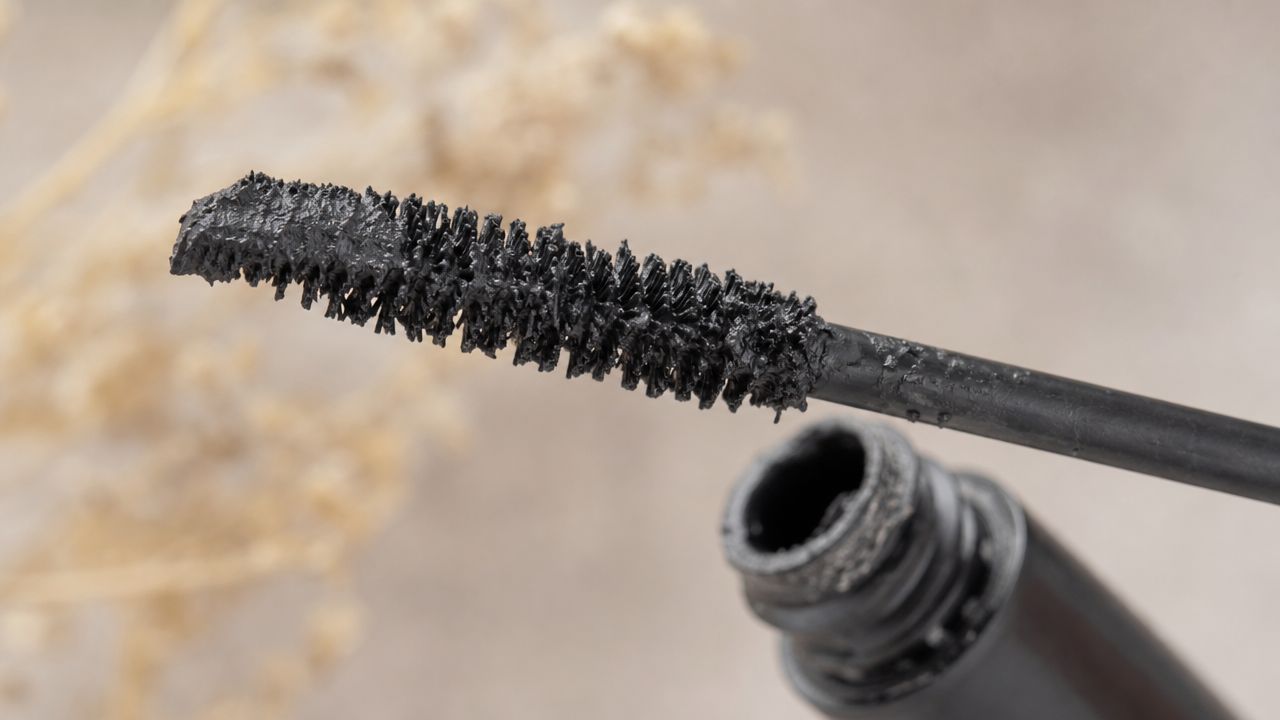
The non-negotiable signs
Mascara has a 3 to 6 month shelf life after opening, and using expired mascara carries a risk of bacterial contamination, including Staphylococcus, once the preservative system breaks down through air exposure and evaporation. That safety guidance appears in the earlier L'Oréal reference cited above.
That's the hard line. Even if a tube technically loosens up, that doesn't automatically mean it's still a smart thing to use.
Toss it if you notice any of these:
- It smells sour or strange
- The texture stays lumpy after a safe fix
- It irritates your eyes
- You recently had an eye infection
- You've had it long enough that you can't confidently place it within that opening window
The revival limit matters
One thing I wish more beauty guides said clearly is this: a mascara shouldn't become a long-term rescue project.
There isn't solid data telling you exactly how much safe life is left after repeated revival attempts. That uncertainty is a good reason to stay conservative. If you've already tried to bring a tube back more than once and it keeps drying out again, I'd stop fighting it.
If you're replacing old eye products, a fresh cleanse helps reset your routine too. This roundup of the best drugstore makeup removers is useful if you're rebuilding your basics.
Frequently Asked Questions About Fixing Mascara
Can I use these methods on waterproof mascara
Yes, but keep expectations realistic. Waterproof mascara often responds well to the warm water bath because heat helps soften a stiffer formula. If you add anything, keep it minimal and make sure it's a safe option.
How many times can I safely revive my mascara
This is the part most articles gloss over. Some guides say you can repeat the process a few times, but there's no clear data on how much the safe lifespan changes after adding liquid, which is exactly why over-reviving gets risky, as noted in this discussion around repeated fixes in a beauty community post about reviving mascara.
My take is simple. If you revived it once and it's back to normal, fine. If you're repeatedly trying to rescue the same tube, it's time to replace it.
My mascara is clumpy but not dry. What should I do
First, change how you use the wand. Twist and swirl instead of pumping. Then wipe excess product from the wand stem before applying. Sometimes the formula isn't dry at all. It's just overloaded on the brush.
Is saline better than oil
For safety, yes. Saline or contact lens solution is generally the cleaner choice. Oil is the kind of workaround that can create new problems fast if the amount is off.
What's the single safest method
The warm water bath is the safest starting point because it doesn't add a new ingredient to the tube. If that isn't enough, a very small amount of saline is the next best option.
The best answer to how to fix dry mascara is usually the least dramatic one. Start with a warm water bath, move to a tiny amount of saline only if needed, and skip the internet dare-version of DIY beauty hacks. If I had to pick one best method, it's the warm water bath because it gives you the lowest-risk reset while keeping the original formula intact. Safe, cheap, and easy beats clever every time.
If you love beauty tips that save money without sacrificing results, Finding Favourites is worth bookmarking. It's packed with practical beauty guides, affordable swaps, and smart product picks for anyone who wants high-end results on a real-world budget.