
Satin vs Matte Lipstick: Which Finish Fits You in 2026?
The most popular advice about satin vs matte lipstick is too simple: matte lasts, satin comforts. A well-formulated satin can resist transfer better than a conventional matte, and a comfortable matte can suit dry lips better than a slippery satin. Choose the formula that stays presentable on your lips, not the promise printed on the tube.
This post may contain affiliate links, which means I may receive a commission if you purchase through my links, at no extra cost to you. Please read the disclosure policy for more information.
Satin and Matte Lipstick at a Glance
Matte usually offers stronger staying power and intense-looking color; satin usually feels softer and is easier to refresh. The better choice comes down to whether your day calls for transfer resistance, comfortable movement, or quick repairs after eating.
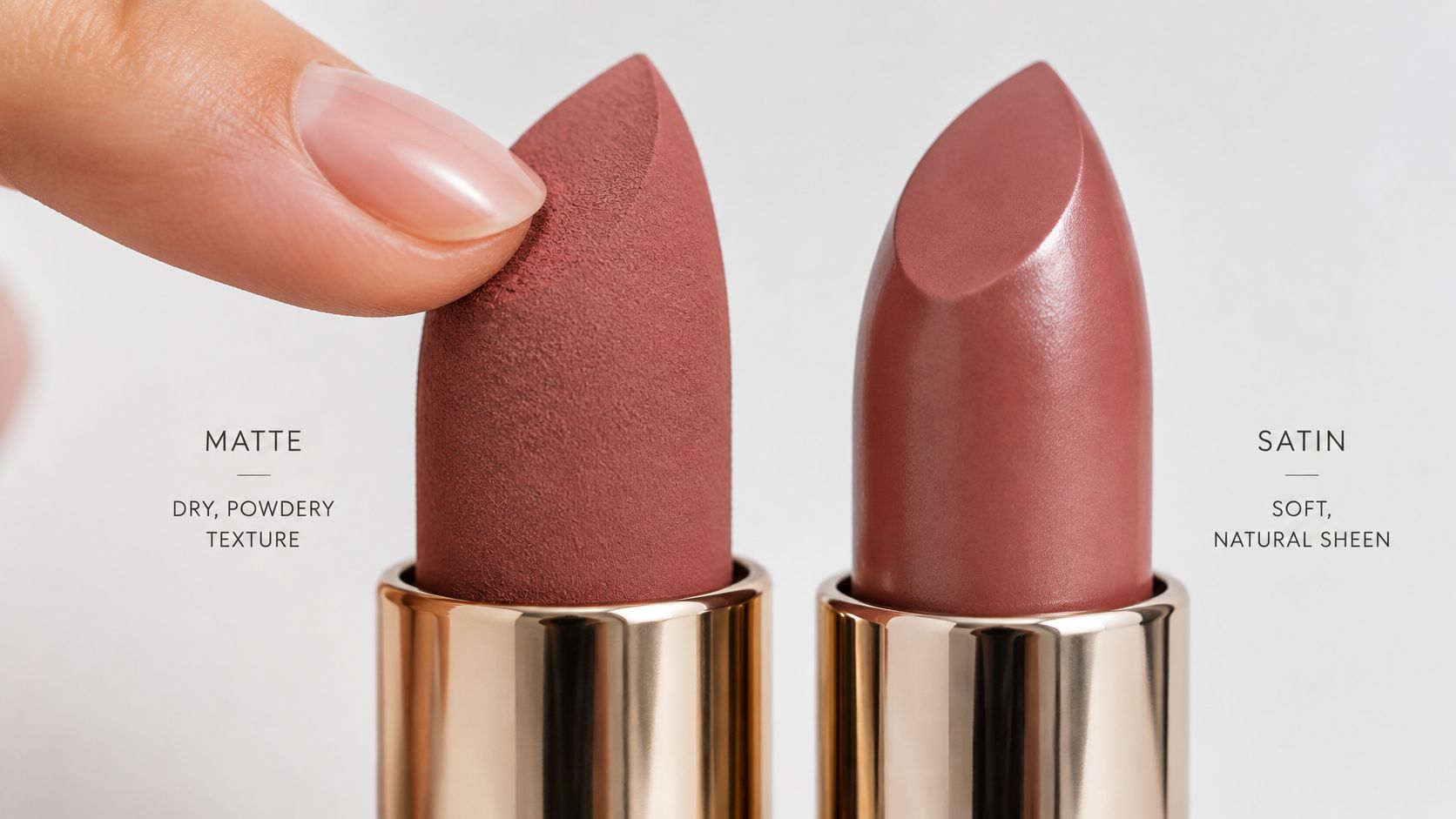
Matte lipstick leaves a flat film with almost no sheen. Satin sits between a flat matte and a creamier, more reflective finish, giving lips a soft glow rather than a glossy shine.
Satin vs matte lipstick at a glance
| Criterion | Matte | Satin |
|---|---|---|
| Finish | Flat, low sheen, dense color | Soft sheen, slightly lighter-looking color |
| Lip feel | Can feel tighter as it sets | Smoother, more cushioned |
| Typical wear | Usually longest-lasting, resists transfer | Usually shorter, can fade unevenly |
| Touch-up effort | Less frequent, harder to blend edges | More frequent, easy to blend and refresh |
| Best use | Long days, photos, bold color | Dry or textured lips, everyday wear |
Treat these comparisons as starting expectations, not product guarantees. A powdery matte bullet and a setting liquid matte can look similar but behave differently when you drink, rub your lips together, or add another layer.
The same distinction matters for satin. A rich bullet that moves easily across your lips may transfer readily, while a satin with better pigment adhesion can leave a more persistent layer of color.
Pick the problem you want to solve
- Color on your cup: Prioritize transfer resistance and a clean set.
- Tightness when you smile: Prioritize flexibility rather than maximum staying power.
- Messy midday repairs: Look for a formula that blends into the remaining color.
- A limited makeup budget: Judge how often you enjoy wearing the lipstick, not just its shelf price.
Scan the table for your main concern, then focus on wear, comfort, or budget. There's little value in buying a lipstick that survives your coffee if you want to remove it before lunch.
What Makes Matte and Satin Feel Different
A finish name is a marketing label. The feel comes from what is inside the tube.
Matte lipsticks generally contain less mobile oil and more powder or structuring material, while satins retain more oils or esters for slip and reflectivity. That balance changes the film left on your lips. Less surface reflection makes matte color look concentrated. A softer, more reflective surface gives satin its glow.
This close-up illustrates the visual difference, although appearance alone won't tell you how either product wears.
Read the formula through three levers
Powder load helps explain flatness. Silica and starch-based absorbents can reduce visible shine, but their presence does not automatically mean a lipstick will feel chalky. On dry lips, a high powder load can tighten the surface even while the color still looks even.
Wax and oil balance affects drag, structure, and glide. Waxes help a bullet keep its shape. Emollient oils and esters help distribute pigment smoothly. A long wax list is not a quality verdict, and an oil-rich formula is not automatically more comfortable. If those oils sit on a stiff wax network, a satin can still tug.
Film-forming polymers help anchor pigment. As RawSource's lipstick-formulation guide explains, a satin with a strong film-forming system can outperform a conventional wax-oil matte on transfer resistance, while matte color without effective anchoring can lift under friction. Wear follows the film, not the word on the cap. A flexible satin film can outlast a matte that cracks, and a cushioned matte can feel better than a satin that never softens on dry lips.
What an ingredient list can't tell you
You can't calculate comfort or wear from a single ingredient. Concentration, interactions between ingredients, pigment loading, and how thick you apply the product all change the result.
Use the list to spot likely behavior, then check the lipstick on your lips. A formula that drags during application but never sets cleanly may give you neither comfortable glide nor useful transfer resistance. On dry or lined lips, that failure shows up as tightness before it shows up as fading.
Soft matte, velvet, satin-matte, and cream can overlap visually, so finish names are not a dependable grading system across brands. Compare the surface after it sets, then notice whether the film stays flexible when you press your lips together.
The key differentiator: Finish reflects formula architecture. Read the formula before trusting the label, then let a wear test settle the decision.
Wear Time and Transfer in Real Situations
Start with a controlled comparison rather than applying each lipstick differently. Avoid exfoliating immediately beforehand, use the same preparation, apply a thin layer, and allow equal setting time before checking water, a tissue blot, and an oily snack.
Compare similar shades if possible. A pale nude can make missing center color harder to spot than a deep berry, so photographs under the same light are more useful than memory.
Wear by situation for matte and satin
| Situation | Matte | Satin |
|---|---|---|
| Oily meal | Often retains edges better, but oil can break down color | Loses color faster, plan a touch-up |
| Sipping from a cup | Little transfer once a transfer-resistant formula sets | Rim marks are more likely |
| Light kissing or cheek contact | Strong resistance is possible, faint marks can remain | Visible transfer is more likely |
| Four-hour day | Often keeps more even color if the film stays flexible | May soften and fade from the center |
| Reapplication | Can cake if overbuilt; soften and blot damaged areas first | Usually blends into existing color easily |
These are test expectations, not measured results for a particular lipstick. The four-hour checkpoint is a useful point in your own routine, not a promised wear claim.
An oily meal challenges both finishes because oil can disturb the colored film. Matte may preserve a defined outline while losing color inside it, so checking only the edges can give a misleading impression of durability.
Cup contact tests surface transfer. Cheek contact adds friction, which is why a lipstick that passes a gentle tissue press might still leave a mark when rubbed.
Count presentable wear, not leftover pigment
A dental-clinic comparison discussed in Cosmetics & Toiletries' traditional-versus-transfer-resistant lipstick article found the lowest staining frequency with matte lipstick. That supports a transfer-resistance advantage, but it doesn't establish how every matte will perform through a meal.
A strongly anchored formula can still look poor if it becomes tight or flaky. Thick application can worsen the problem by creating a film that doesn't move comfortably with your lips.
For repairs, don't paint fresh matte over loose flakes. Soften the damaged area with a little balm, wipe away lifted pigment, blot away excess oil, and apply a thin replacement layer.
If you prefer lingering color without maintaining an opaque lipstick film, our guide to affordable lip stains offers another route to consider.
Record edge feathering, center-patch loss, and comfort at every checkpoint. Add whether you could repair the color neatly, because difficult removal and rebuilding count against a lipstick's practical wear.
Comfort on Dry, Textured or Sensitive Lips
Matte doesn't automatically mean uncomfortable, and satin doesn't automatically mean moisturizing. WebMD's guide to lipstick composition explains why waxes, oils, and setting ingredients matter, while identifying long-lasting and matte products as potential contributors to dryness.
A cushioned application can be helpful, but what matters is how your lips feel after the initial slip disappears. Persistent softness matters more than a pleasant first swipe.
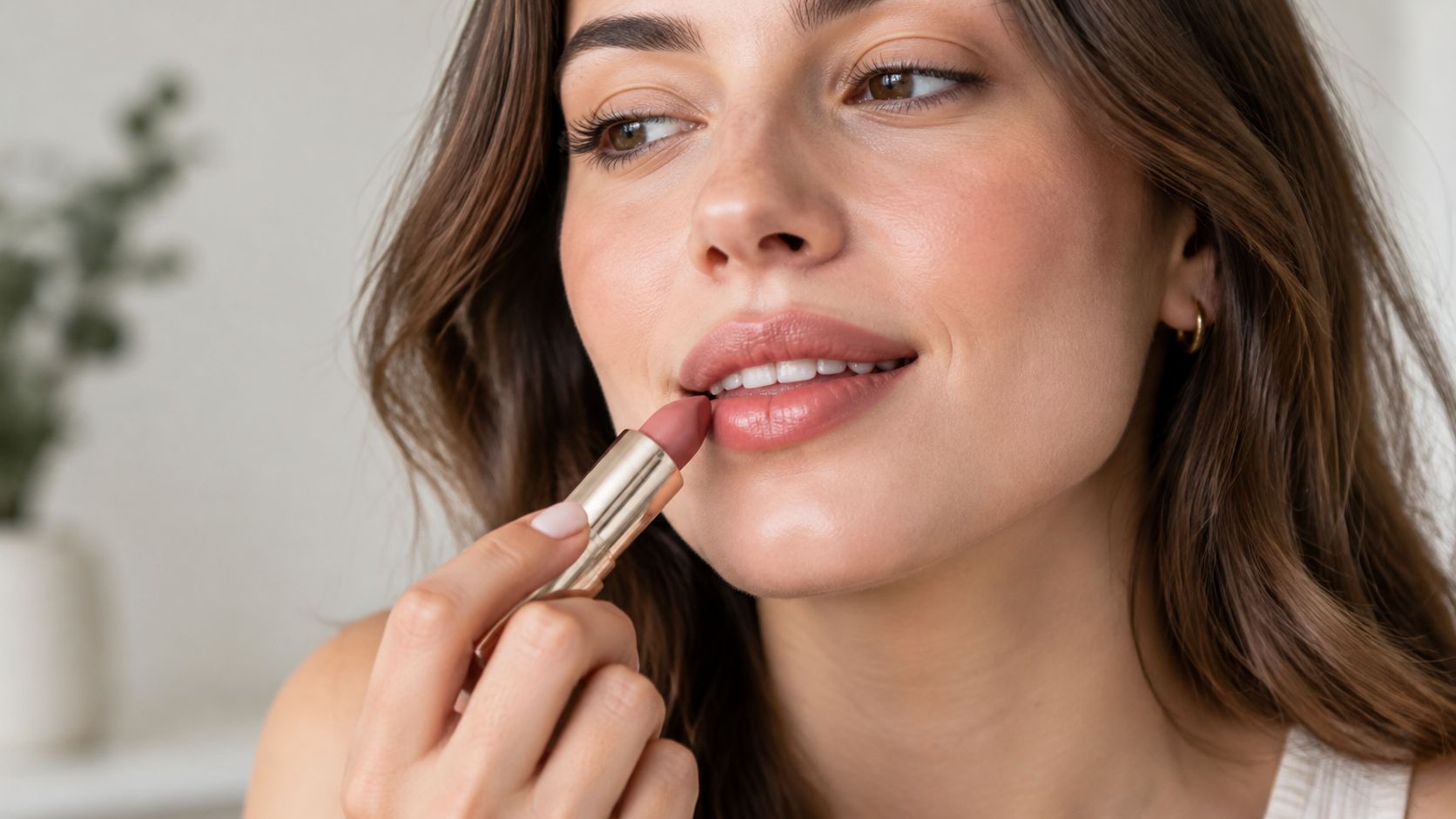
Look for an application that glides without dragging across raised texture.
Scan ingredients, then test movement
- Waxes: Consider whether the lipstick feels structured or pulls during application.
- Silica and clays: Watch for powder accumulation around dry patches.
- Volatile solvents: Check how your lips feel after the formula sets, not just while it's wet.
- Emollients and conditioning agents: Look for sustained flexibility without excessive slipping.
- Personal triggers: Avoid ingredients you've reacted to before, regardless of finish.
For a broader approach to reading product descriptions, ALODERMA's ingredient-conscious lipstick shopping tips can help frame your questions. Ingredient-focused shopping is useful, but a reassuring marketing term isn't a substitute for checking your own sensitivities.
Run a two-hour comfort test
Apply a light layer of a balm you already tolerate, blot the excess, then apply the lipstick. Check tightness after thirty minutes, an hour, and two hours, noting whether smiling or speaking makes the film pull.
Keep preparation consistent between products. Our Aquaphor Lip Repair versus Healing Ointment comparison can help you distinguish lip-prep options without treating every balm or ointment as interchangeable.
Use the application video alongside your test, paying attention to layer thickness rather than trying to cover texture with more product.
An oil-rich satin can feel too mobile, and a sensitive wearer may react to a particular oil, fragrance, or other ingredient. Test cautiously on a small area first, understanding that this can't guarantee you'll avoid a reaction.
Stinging, cracking, or early flaking isn't a finish you need to get used to. Remove the product if it irritates your lips, and avoid testing new color over already inflamed or broken skin.
Budget Dupes and Cost Per Wear
A $30 matte worn over twenty days comes to $1.50 per wearing day before you count touch-ups or extra prep. A $12 satin requiring two daily touch-ups can empty faster than that higher sticker price suggests. Useful cost per wear includes the lipstick, the product used on those repairs, and anything else you need to keep the result presentable.
Price alone does not pick a winner. The satin only looks expensive if those extra applications drain the tube quickly. A matte only looks thrifty if the film stays through the day. On dry lips, a tight matte that cracks and has to be wiped off can lose its wear advantage, while a cushioned satin can need fewer full reapplications than the label implies. Compare the formula inside the tube, not the word "matte" or "satin" on the packaging.
Budget dupes at a glance
| Dupe candidate | Finish | Comparison target |
|---|---|---|
| Maybelline Color Sensational Ultimatte | Matte | A soft, luxury-matte look |
| Revlon Super Lustrous Lipstick, cream shades | Satin-like cream | A cushioned luxury-satin look |
| NYX Professional Makeup Suede Matte Lipstick | Matte | A velvety luxury-matte look |
Compare these candidates before buying
Maybelline Color Sensational Ultimatte
Compare this formula with the soft look of Charlotte Tilbury Matte Revolution. Match the actual shade, opacity, and how flexible the film stays. A matte from this range is not automatically longer-wearing than a satin if it turns tight and you remove it early.Revlon Super Lustrous Lipstick in a cream finish
Use a cream shade when you are comparing against the soft sheen of a luxury satin, such as MAC MACximal Sleek Satin. Check the finish printed on that tube. A range name does not tell you how every shade looks, or whether that cream stays put through a meal.NYX Professional Makeup Suede Matte Lipstick
Treat this as a velvety-matte comparison with a premium matte, not a shade-for-shade substitute. Do not buy from an unfamiliar reseller just to chase an older recommendation. If the film feels dry after an hour, the lower price does not offset the product you spend repairing it.
Check the label, then the spend
The FDA's cosmetics-labeling guide is the reference for readable ingredient declarations. Its summary of labeling requirements also covers responsible-business identification and address information, subject to specified exceptions. Read those details on the package before you treat two tubes as interchangeable.
The affordable lipstick guide is a practical starting point for budget comparisons. Dupe lists are also grouped under $10, $25, and $50, so the search stays inside a set spending limit.
Buy the finish that needs the fewest disruptive repairs for your day, not simply the cheapest tube.
Which Finish Suits You and How to Test It
Start with the day you're dressing for. A lipstick for uninterrupted meetings has a different job from one you can refresh after lunch.
Which finish fits your need
| Your need | Better finish | Why it works |
|---|---|---|
| Dry or textured lips | Satin, or a comfort-formulated matte | Flexible emollients reduce drag and tightness |
| Long meetings, events or photos | Matte | Holds color and resists transfer |
| Frequent meals and drinks | Matte, with a lip liner | Better resistance, with repairs after eating |
| Low-maintenance everyday wear | Satin | Easy to refresh and blend |
| Mature lips where lines show | Satin | Softens the appearance of texture |
| Bold, saturated color | Matte | Dense-looking color with a flatter surface |
For dry lips that still need transfer resistance, try a comfort-formulated matte rather than ruling out the category. For everyday satin, outline with a compatible lip liner before applying color inside the boundary.
Don't let popularity make the decision. In a 2018 survey of 7,734 US women aged eighteen and older, 71% regularly bought or used matte lipstick, while 42% identified matte as their preferred finish, according to The Benchmarking Company's lipstick survey. Habitual use and preference aren't the same measure.
Make the choice on your own lips
- Rank your priority. Choose longest presentable wear, greatest comfort, or lowest cost per wear. Trying to maximize everything makes comparison harder.
- Match that priority to the needs table. Consider your actual schedule, including meals and opportunities to use a mirror.
- Inspect the product. Read the ingredients and check the packaging for an identifiable responsible business and appropriate address information.
- Run the comfort test and wear checkpoints with consistent preparation. Keep notes rather than judging by how much pigment remains at bedtime.
- Keep the formula that passes your priority. Reject a long-wearing lipstick if maintaining it makes your day harder.
Shade familiarity helps isolate finish. If you already wear rose nude, compare rose nudes rather than testing a pale satin against a deep matte red.
Practical rule: Test for the failure you most want to avoid, whether that's cup transfer, tightness, or a messy touch-up.
Choose matte when the look needs stronger resistance through a long day, including eating, and choose satin when comfort and easy refreshes matter more. Seek samples or minis of each in a shade you already wear before committing to full-size tubes.
Frequently Asked Questions
Finish and wear
Is matte always the longest-lasting finish?
No. The complete formula determines adhesion, flexibility, and resistance to transfer, so a satin with an effective film-forming system can outperform a conventional matte. Judge how long the color looks presentable, not merely how long it leaves a trace.
Does satin always feel more comfortable?
No, although its slip often makes application easier on dry lips. An oil-rich satin can feel slippery, and individual ingredients can irritate sensitive wearers. Test cautiously and stop if you notice stinging or irritation.
Can satin work for photos?
Yes. Its soft reflection can look flattering, especially when you want lips to appear less flat. Check the result in the lighting you'll use and refresh the center before shooting rather than adding a heavy all-over coat.
Buying and comparing
How do I check a dupe is safe to buy?
Check the seller, intact packaging, readable ingredients, and responsible-business identification, including address information where required. These checks improve traceability, but they don't prove authenticity or guarantee that a formula will suit your skin. Avoid untraceable listings and suspiciously repackaged products.
Do finish labels mean the same thing across brands?
No, they aren't a reliable universal performance scale. Compare the actual surface, transfer, and feel after setting, then run a comfort test before buying full size. A familiar finish name is a starting description, not proof that you've found a match.
Final Verdict and Best Dupe
There's no verified best dupe to name from these candidates without current retailer, price, and packaging checks. Revlon Super Lustrous in a cream finish is the satin-style candidate I'd compare first for easy everyday refreshes, but that isn't a confirmed luxury-formula match. Matte generally delivers stronger staying power and intense-looking color; satin usually offers softer movement and more forgiving repairs. Neither label can tell you whether a particular lipstick will grip comfortably, flake after lunch, or blend cleanly over the remaining color. The best value is the formula you can wear comfortably and maintain without wasting product. Choose a familiar shade, obtain a sample or mini of each finish where available, and compare them on your own lips before buying full size.
Finding Favourites offers affordable alternatives to luxury makeup, skincare, and fragrance, with comparisons focused on texture, finish, shade, and wear. Visit Finding Favourites to narrow your lipstick shortlist, then use the comfort and transfer tests above to decide which finish earns a place in your makeup bag.