7 Best Drugstore Sulfate Free Shampoo Dupes for 2026
You're standing in the shampoo aisle, flipping bottles over, trying to decode whether “gentle,” “clean,” and “color safe” mean anything at all. The salon formula you liked worked, but the price didn't. The drugstore options are cheaper, but half of them sound the same, and the other half hide the important part in tiny ingredient lists.
That confusion makes sense. Sulfate-free shampoo isn't a niche corner of haircare anymore. The global market was valued at US$4.40 billion in 2023 and is projected to reach US$7.14 billion by 2036, according to Fact.MR's sulfate-free shampoo market analysis. Shoppers aren't just buying into a trend. They're looking for formulas that feel less harsh, especially if they color, heat-style, or naturally run dry.
This post may contain affiliate links, which means I may receive a commission if you purchase through my links, at no extra cost to you. Please read the disclosure policy for more information.
If you've been trying to find a drugstore sulfate free shampoo that behaves like a pricier formula, this is the useful version of that search. Not a random product dump. Not vague “for all hair types” advice. Just a clear guide to what sulfates do, who should skip them, how to read labels fast, and which budget picks make the best stand-ins for higher-end favorites. If you're also comparing softening formulas, this roundup of a Redken All Soft dupe is worth bookmarking too.
Your Guide to Gentle Haircare on a Budget
A good budget shampoo should do three things well. It should cleanse your scalp properly, leave your lengths feeling like hair instead of straw, and not force you to wash twice as often because the formula was too weak or too coating.
That's where drugstore sulfate-free options get interesting. Some are excellent. Others are so milky and underpowered that they leave fine hair flat or oily roots untouched. The trick is knowing what kind of “gentle” your hair needs.
What you're really paying for
With luxury sulfate-free shampoos, part of the price goes to texture, scent, branding, and salon positioning. At the drugstore, you can often get close on cleansing feel and finish if you focus on the formula, not the packaging story.
The sweet spot is a shampoo that feels soft in use but still gives enough grip at the scalp. That matters most if you use dry shampoo, creams, mousse, or silicone-heavy styling products.
Bottom line: You don't need a salon budget to get a gentle shampoo. You do need to match the formula to your scalp behavior, color routine, and hair density.
What this guide helps you avoid
A lot of shopping mistakes happen because people buy based on one claim alone. “Sulfate free” doesn't automatically mean moisturizing. “Natural” doesn't automatically mean mild. “Color safe” doesn't automatically mean it'll suit oily roots.
The best buys are the ones that fit your actual use pattern:
- Frequent washers need a formula that won't leave the scalp feeling tight.
- Color-treated hair usually does better with gentler cleansing.
- Fine hair often needs a sulfate-free shampoo that still rinses very clean.
- Thick, dry, curly, or coily hair usually benefits from a softer wash base and less oil stripping.
The Truth About Sulfates in Your Shampoo
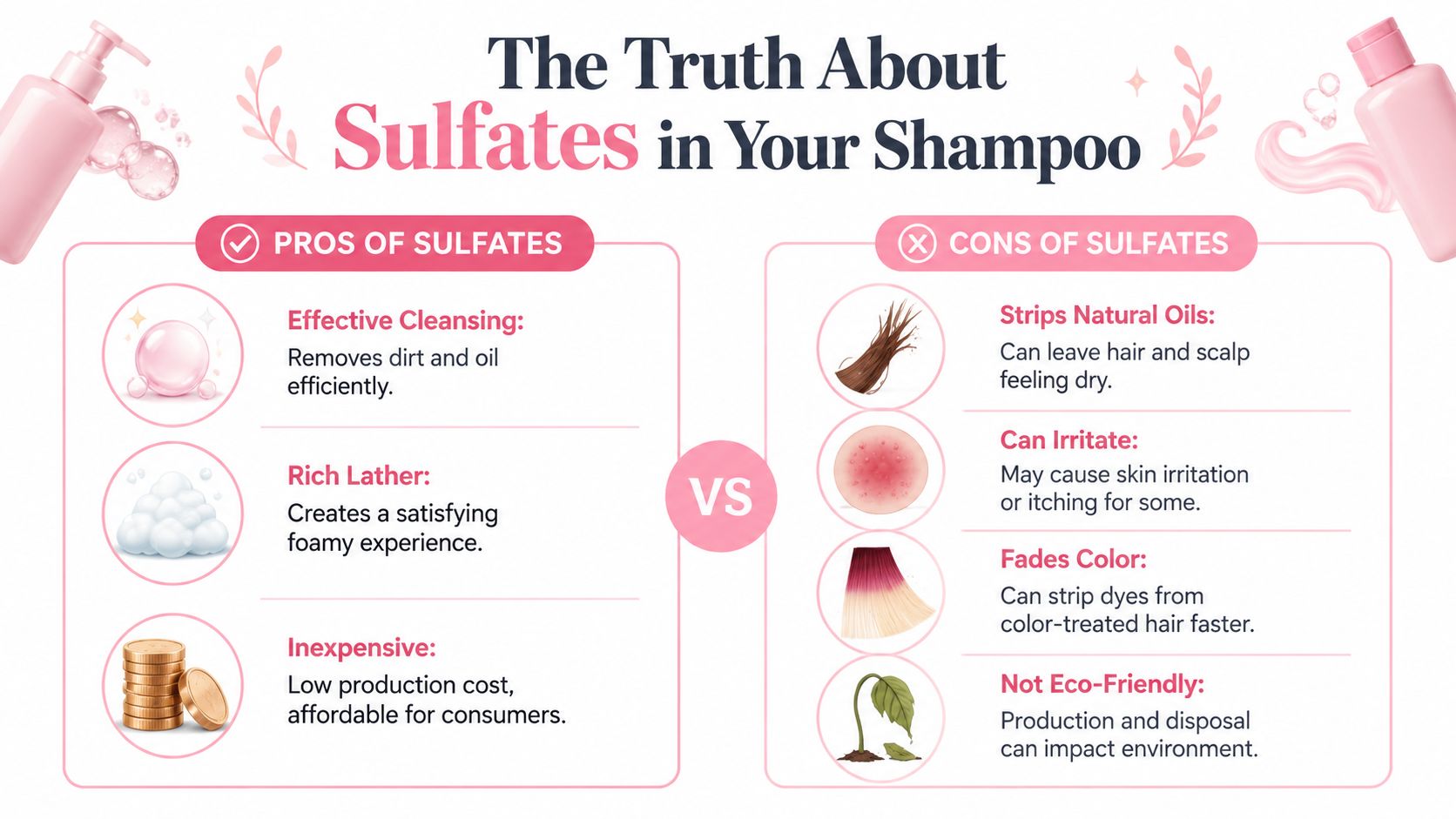
Sulfates are cleansing agents. In shampoo, the common ones people try to avoid are usually sodium lauryl sulfate (SLS) and sodium laureth sulfate (SLES). They're popular because they clean quickly, foam easily, and make shampoo feel strong.
That last part is why people often mistake foam for performance. A big lather feels convincing. But rich foam and gentle cleansing aren't the same thing.
Why people like sulfates
Think of traditional sulfate shampoos like a strong dish soap for your scalp. That sounds harsh, but there's a reason they're everywhere. They cut through oil fast, remove residue well, and give that “super clean” feeling some people love.
For very oily scalps or heavy buildup, that can feel satisfying. If you use a lot of stylers, a sulfate shampoo can reset the hair quickly.
Why people switch away from them
That same strong cleanse can be too much for hair that's dry, processed, curly, bleached, or color-treated. In those cases, a harsher detergent base can leave the scalp feeling squeaky and the lengths feeling rough.
Sulfate-free shampoos use different surfactants. According to Good Housekeeping's guide to sulfate-free shampoos, common alternatives include sodium methyl cocoyl taurate, cocamidopropyl betaine, and sodium lauroyl methyl isethionate. These are designed to be gentler while still lifting oil and residue.
No, less foam doesn't mean your hair isn't getting clean. It usually means the cleansing system is milder and slower-building.
What works and what doesn't
Some practical truth from testing a lot of shampoos over time:
- Works well: Sulfate-free formulas for dry ends, color care, curls, and frequent washing.
- Often disappoints: Ultra-creamy formulas on very fine or very oily hair if they don't have enough cleansing power.
- Helps a lot: Double shampooing. The first wash breaks down oil and residue. The second gives you the proper clean.
- Usually backfires: Using a heavy sulfate-free shampoo and then blaming the whole category when your roots feel coated.
If your hair likes softness but your scalp still needs a real cleanse, look for a balanced formula, not the richest one on the shelf.
Is a Sulfate Free Shampoo Right for You
The short answer is that it depends less on trend and more on what your hair goes through every week. Coloring, heat styling, scalp sensitivity, curl pattern, and how oily your roots get all matter more than the front label.
Yes for color-treated hair
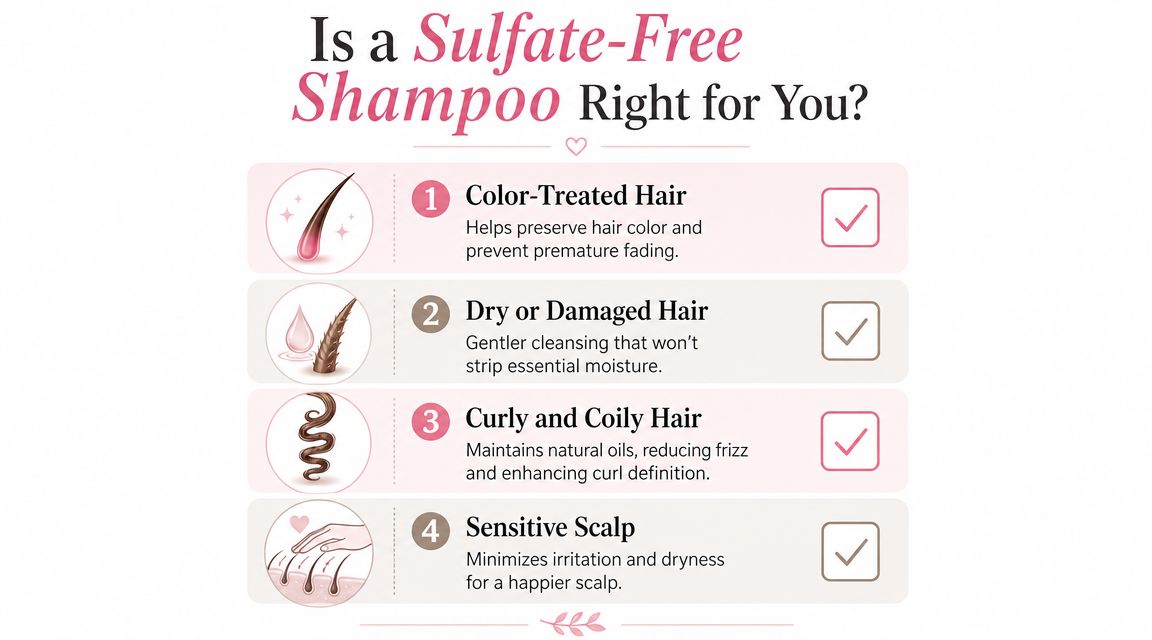
If you color your hair, this is the easiest yes. Color-treated hair is the leading application driver for the sulfate-free shampoo market, according to Straits Research's sulfate-free shampoo market report. That tracks with real-life use. Gentler cleansing usually makes more sense when you're trying to preserve tone and reduce that freshly-colored-to-faded slide.
If your hair is blonde, red, vivid, glossed, or expensive to maintain, sulfate-free is usually the safer default.
Usually yes for dry, damaged, curly, and coily hair
Hair that's already short on moisture doesn't need an aggressive wash base making things harder. If your ends knot easily, your curls puff instead of clump, or your blowouts feel rough by day two, a sulfate-free formula is often a better match.
Curly and coily textures, especially, tend to benefit from shampoos that don't strip natural oils as aggressively. You still need cleansing. You just don't need your wash day starting with a setback.
Quick rule: If your hair feels better after adding masks and leave-ins but worse after shampoo, your cleanser may be the problem.
Maybe for sensitive scalps
This one depends on what your scalp reacts to. Some people do better when they remove harsher detergents from the routine. Others are sensitive to fragrance, essential oils, or certain alternative surfactants instead.
A sulfate-free label can help, but it isn't the whole story. If your scalp gets tight, itchy, or flaky, read beyond the headline claim.
Maybe for fine or oily hair
Nuance matters. Fine hair can love sulfate-free shampoo if the formula rinses clean and doesn't leave a waxy afterfeel. Oily scalps can also use sulfate-free formulas successfully, but the best method is often different.
Try this instead of writing the category off:
- Shampoo twice when you've gone several days between washes.
- Concentrate product at the scalp, not the lengths.
- Use less conditioner and keep it from mid-length to ends.
- Rotate in a stronger cleanser occasionally if you use a lot of stylers or dry shampoo.
Probably not your only shampoo if you use heavy styling products
If your routine includes hairspray, texture spray, root powder, slick sticks, dry shampoo, and oil serums layered all week, a single soft shampoo may not be enough every wash day. That doesn't mean sulfate-free is a bad fit. It means you may want a two-shampoo wardrobe: one gentle daily option and one stronger reset shampoo.
That's usually the most realistic approach.
How to Read a Shampoo Label Like a Pro
The fastest way to shop smarter is to stop relying on the bottle front. Flip it over. The ingredient list tells you more than the marketing ever will.
The sulfates most people want to avoid
If you're trying to buy a drugstore sulfate free shampoo, these are the names worth spotting first:
- Sodium Lauryl Sulfate
- Sodium Laureth Sulfate
- Ammonium Lauryl Sulfate
If one of those shows up high on the ingredient list, the shampoo isn't sulfate-free, no matter how soft the branding sounds.
What to look for instead
Gentler alternatives can still clean well. You may see names like these on the back of better formulas:
- Cocamidopropyl Betaine
- Sodium Methyl Cocoyl Taurate
- Sodium Lauroyl Methyl Isethionate
- Decyl Glucoside
- Sodium Cocoyl Isethionate
These don't all behave exactly the same, but they're the kind of ingredient names that usually signal a milder cleansing system.
Label cheat sheet: Skip bottles with Sodium Lauryl Sulfate, Sodium Laureth Sulfate, or Ammonium Lauryl Sulfate if you want a true sulfate-free wash. Look for Cocamidopropyl Betaine, Sodium Methyl Cocoyl Taurate, or Sodium Lauroyl Methyl Isethionate instead.
Three label-reading habits that save money
Start with the first several ingredients, not the claims printed on the front. If the cleansing agents are harsh, the added oils and botanicals usually won't cancel that out.
Then check for mismatch signals. A shampoo marketed for hydration can still be too strong. A shampoo marketed as lightweight can still be packed with coating ingredients that flatten fine hair.
One more thing. Don't assume your conditioner should match your shampoo. A lot of people do better mixing categories, especially if they have oily roots and dry ends. If breakouts around the hairline are part of your routine problem, this guide to non-comedogenic conditioner options is useful alongside your shampoo search.
Easy shelf test
When you're deciding between two bottles, ask:
- What does my scalp need? Clean, balanced, or very gentle?
- What do my lengths need? Moisture, smoothing, or bounce?
- Do the ingredients support that claim?
That quick check filters out a lot of bad buys fast.
7 Best Drugstore Sulfate-Free Shampoo Dupes
You're standing in the shampoo aisle, trying to decide whether the $9 bottle can really do the job of the $30 one you liked at the salon. Sometimes it can. The key is matching the formula to your hair's actual needs instead of shopping by hype, scent, or packaging.
These picks are performance dupes. They are not exact copies of luxury shampoos, and they do not need to be. What matters is how they cleanse, how they leave the lengths feeling, and whether the result justifies the price.
Drugstore Sulfate-Free Shampoo Dupes at a Glance
| Drugstore Dupe | Best For | Luxury Counterpart |
|---|---|---|
| L'Oréal Paris EverPure Moisture Shampoo | Dry, color-treated hair | Pureology Hydrate Shampoo |
| OGX Bond Protein Repair Sulfate Free Shampoo | Damaged, overstyled hair | Olaplex No. 4 Bond Maintenance Shampoo |
| Maui Moisture Heal & Hydrate + Shea Butter Shampoo | Thick, dry hair | Briogeo Don't Despair, Repair! Super Moisture Shampoo |
| Kristin Ess Hair The One Signature Shampoo | Everyday soft cleansing | Oribe Signature Shampoo |
| Monday Haircare Moisture Shampoo | Smoothness and softness | Amika Hydro Rush Intense Moisture Shampoo |
| Not Your Mother's Curl Talk Shampoo | Curls and waves | Ouidad Advanced Climate Control Defrizzing Shampoo |
| Herbal Essences Honey Moisture Sulfate-Free Shampoo | Dry hair on a tight budget | Moroccanoil Hydrating Shampoo |
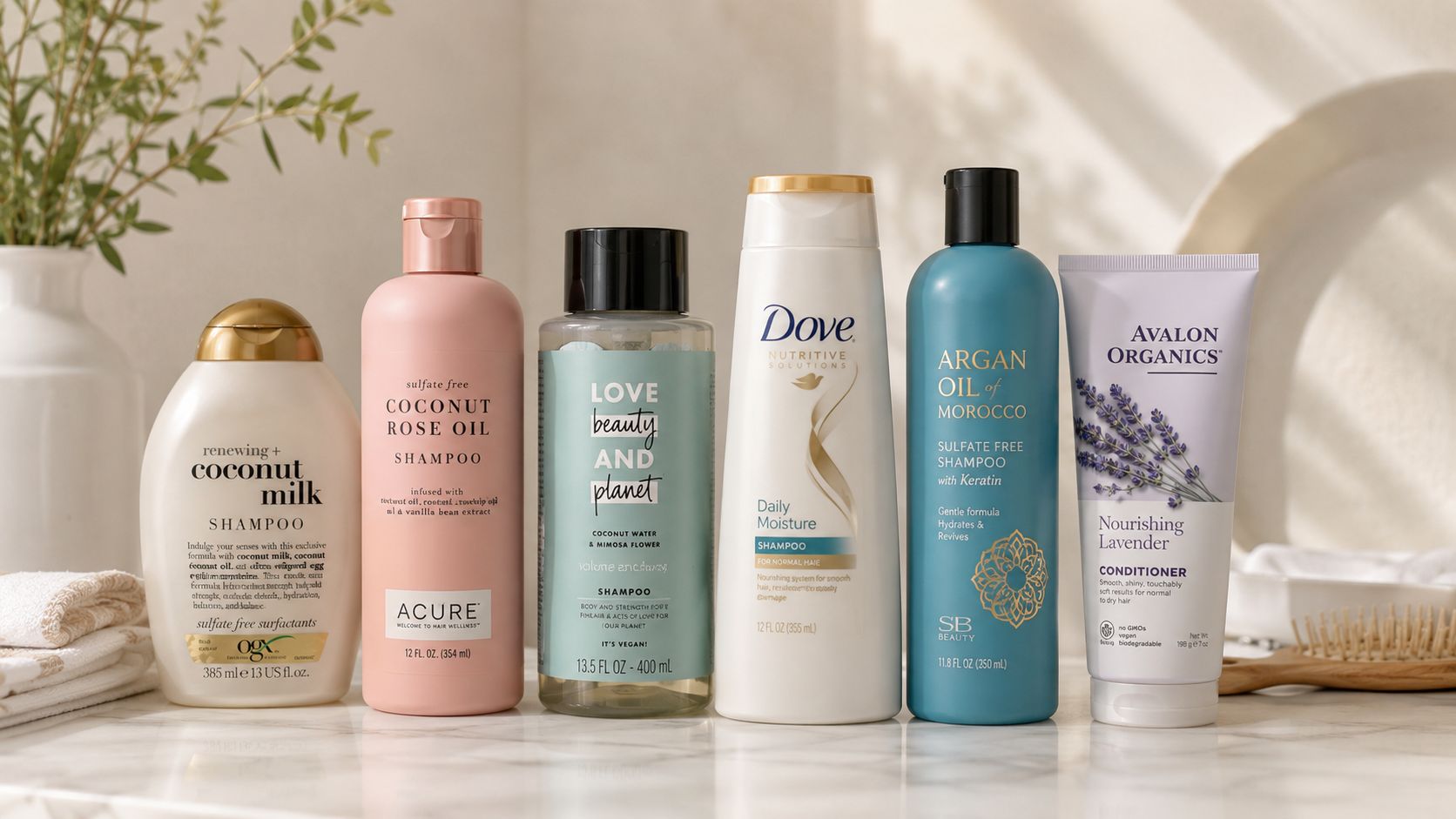
1. L'Oréal Paris EverPure Moisture Shampoo as a dupe for Pureology Hydrate
EverPure Moisture is one of the smartest swaps in the drugstore. It fills the same role as Pureology Hydrate for people who want gentle cleansing plus a softer, less parched finish.
It suits dry, color-treated, or highlighted hair best. The formula usually feels lighter than many salon moisture shampoos, which is good news for fine or medium hair that wants hydration without a coated finish. If your hair gets greasy fast, this is still usable, but keep the shampoo focused on the scalp and go easy on rich styling products afterward.
2. OGX Bond Protein Repair Sulfate Free Shampoo as a dupe for Olaplex No. 4
This one makes sense for hair that is bleached, heat-styled, or generally worn out. It targets the same shopper who wants a shampoo to feel a little more supportive than basic moisture care.
There is a trade-off. Bond-focused shampoos often feel less silky in the shower than shampoos built mainly around softness. That does not mean they are worse. It means they are usually a better fit for fragile, overprocessed hair than for healthy hair that just wants bounce and shine.
3. Maui Moisture Heal & Hydrate + Shea Butter Shampoo as a dupe for Briogeo Don't Despair, Repair! Super Moisture Shampoo
This is the rich option in the group. Thick, coarse, or very dry hair usually handles it well because the formula has enough weight to make wash day feel less rough and more controlled.
Fine hair may find it too much, especially at the roots. Dense hair with dry mids and ends is where it earns its spot. If expensive moisture shampoos tend to leave your hair feeling comfortable and calmer, this is one of the better budget versions of that experience.
The best dupe is the one that matches your scalp and your lengths at the same time.
4. Kristin Ess Hair The One Signature Shampoo as a dupe for Oribe Signature Shampoo
Kristin Ess The One Signature Shampoo is the balanced pick. It sits between light and rich, which is why it works for so many hair types.
That makes it a practical stand-in for a premium everyday shampoo like Oribe Signature. Hair usually feels clean, smoother, and easier to style without tipping too far into squeaky or overly conditioned territory. If you want one sulfate-free shampoo that feels polished but not fussy, this is a strong place to start.
A quick video can also help if you want to see texture and routine context before buying.
5. Monday Haircare Moisture Shampoo as a dupe for Amika Hydro Rush Intense Moisture Shampoo
Monday Moisture is for hair that feels rough, fluffy, or hard to smooth after washing. It goes after softness first, and that makes it appealing if your main complaint is dry lengths rather than buildup.
Scalp type matters here. Dry to normal scalps usually do better with it than very oily ones. If your roots flatten quickly, use a modest amount and pair it with a lighter conditioner. The payoff is smoother hair, but the formula can feel too moisturizing for someone who wants a really fresh, airy finish.
6. Not Your Mother's Curl Talk Shampoo as a dupe for Ouidad Advanced Climate Control Defrizzing Shampoo
Curl Talk is a solid budget pick for waves and curls that frizz easily or lose definition during cleansing. It fits the same general lane as higher-end curl shampoos that try to clean the scalp without making the pattern feel rough before styling even begins.
Use it like a scalp cleanser, not a length scrub. Massage well at the roots, then let the rinse water carry it through the rest of the hair. That simple change usually gives better results than piling more shampoo onto the ends.
7. Herbal Essences Honey Moisture Sulfate-Free Shampoo as a dupe for Moroccanoil Hydrating Shampoo
This is the value buy. If your hair is dry and you want softness from an easy-to-find bottle at a low price, Herbal Essences Honey Moisture is one of the better bets on the shelf.
It does not recreate the full luxury experience. The scent, texture, and finish are not going to match Moroccanoil exactly. What it does offer is a similar general benefit: a more hydrated, less brittle feel after washing without the premium price tag.
How I'd choose between them
If you want the shortest path to the right bottle, use this filter.
- Best overall: L'Oréal Paris EverPure Moisture Shampoo
- Best for damage: OGX Bond Protein Repair Sulfate Free Shampoo
- Best for thick dryness: Maui Moisture Heal & Hydrate + Shea Butter Shampoo
- Best everyday option: Kristin Ess Hair The One Signature Shampoo
- Best for curls: Not Your Mother's Curl Talk Shampoo
- Best ultra-budget moisture pick: Herbal Essences Honey Moisture Sulfate-Free Shampoo
Frequently Asked Questions
Some sulfate-free shampoos sound great in theory, then raise a lot of practical questions once you put one in your cart.
Will sulfate-free shampoo clean my hair if I use lots of styling products
Yes, but technique matters. Focus the shampoo on your scalp, add more water than you think you need, and shampoo twice if you've layered on dry shampoo, mousse, hairspray, or oils. Many people blame the formula when the underlying issue is using too little product on a very coated scalp.
How long does hair take to adjust
Usually, what people call an adjustment period is learning how much shampoo to use and where to use it. Sulfate-free formulas often need more water and more scalp massage. If your roots feel off for the first few washes, try double cleansing before deciding the shampoo doesn't work.
Are all natural shampoos sulfate-free
No. “Natural” and “sulfate-free” are not the same claim. Always check the ingredient list. The front of the bottle might lean botanical, but the back label is what tells you how the hair is being cleansed.
Can fine hair use sulfate-free shampoo
Yes, if the formula isn't too coating. Fine hair tends to do best with lightweight sulfate-free shampoos that rinse very clean. Avoid the heaviest moisture formulas unless your hair is also dry or processed.
Worth remembering: If a sulfate-free shampoo makes your hair feel greasy, the issue may be that specific formula, not the whole category.
Do I still need a clarifying shampoo
Sometimes, yes. If you use a lot of styling products, hard-water areas, or long gaps between wash days can leave residue behind. A gentle sulfate-free shampoo can be your regular cleanser, while a stronger reset shampoo can stay in rotation when your hair starts feeling dull, limp, or coated.
The Best Affordable Sulfate-Free Shampoo
A good drugstore sulfate free shampoo doesn't need to mimic every detail of a salon formula. It needs to do the important things well. Clean the scalp without making the lengths feel stripped. Support your hair type instead of fighting it. And make wash day easier, not fussier.
If you're buying one bottle from this list, L'Oréal Paris EverPure Moisture Shampoo is the best overall pick for a wide range of users. It hits the right balance of gentle cleansing, softness, and everyday usability, especially for dry or color-treated hair. It's also one of the easiest swaps if you've been eyeing a pricier moisture shampoo and want similar payoff without the salon markup.
The bigger takeaway is simple. You don't need to overspend to get a shampoo that feels gentler and more considered. Learn the label basics, be honest about your scalp and hair length needs, and choose the formula that matches your real routine. If heat styling is part of that routine too, this guide to a cheap heat protectant spray pairs well with a gentler shampoo lineup.
If you love finding smart beauty swaps without wasting money on trial and error, browse Finding Favourites for more affordable dupes, practical product comparisons, and budget-friendly beauty picks that make sense.