
4 Non Comedogenic Conditioners That Won’t Sabotage Your Clear Skin Goals
If you’ve painstakingly perfected your skincare routine but still find yourself battling stubborn breakouts along your hairline, shoulders, or back, the real culprit might be hiding in your shower. It’s a frustratingly common problem: your hair conditioner could be secretly sabotaging your skin. But making a simple switch to a non-comedogenic conditioner can be a total game-changer, letting you have clear skin and healthy hair at the same time.
This post may contain affiliate links, which means I may receive a commission if you purchase through my links, at no extra cost to you. Please read the disclosure policy for more information.
| Product | Best For | Key Feature |
|---|---|---|
| SEEN Conditioner | Ultimate Skin Safety | Dermatologist-designed |
| Vanicream Conditioner | Ultra-Sensitive Skin | Free of common irritants |
| Acne-Safe Conditioner | Oily Hair | Lightweight & clarifying |
| Tree to Tub Conditioner | Natural Hydration | Soapberry & Argan Oil |
Unmasking the Hidden Cause of Hairline Breakouts
Ever feel like you're doing everything right for your skin, only to be met with relentless acne? It’s a story I hear all the time. You invest in the best cleansers, serums, and spot treatments, yet those pesky pimples around your face and on your back just refuse to leave. The problem often lies where we least expect it—our hair care.
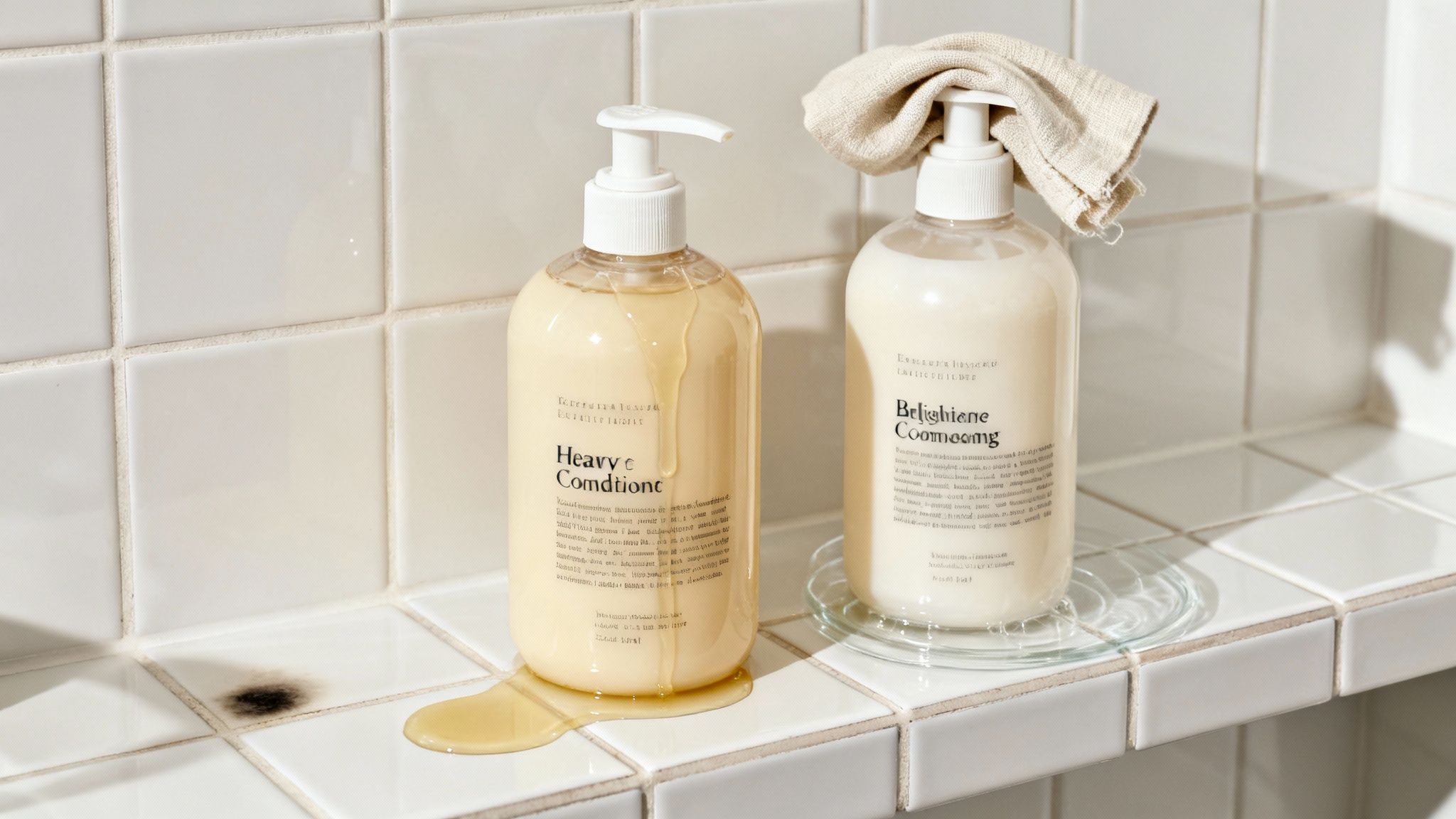
Think of a standard, heavy conditioner like a thick, waterproof raincoat for your hair and skin. Sure, it does a great job locking moisture into your hair strands. But when you rinse, that heavy formula doesn't just disappear; it coats your skin, creating an invisible film that traps oil, sweat, and dead skin cells. It’s the perfect breeding ground for acne, leading to clogged pores (comedones) and those infuriating breakouts.
A non-comedogenic conditioner, on the other hand, is like a lightweight, breathable linen shirt. It conditions your hair beautifully without suffocating your skin. These formulas are specifically designed without pore-clogging ingredients, so they rinse away cleanly and don’t leave behind the residue that causes those frustrating breakouts along your hairline, neck, and back.
Why This Switch Matters So Much
Making this one small change can honestly be the missing piece in your clear-skin puzzle. And you're not alone in connecting the dots between hair care and skin health. The demand for acne-safe products is exploding for a reason.
The global anti-acne cosmetics market, which is packed with non-comedogenic formulas, was valued at a massive USD 6.5 billion in 2025 and is expected to climb towards USD 11 billion by 2035. You can read more about these market trends here. This just goes to show how many people are looking for smarter products that care for both their hair and their skin.
So, what's the real difference? Let's break it down.
The Best Non-Comedogenic Conditioners for Clear Skin
Here are four of the best and most widely available non-comedogenic conditioners that deliver soft, healthy hair without the breakout-inducing ingredients.
1. SEEN Conditioner (Fragrance Free)
This is the holy grail for anyone serious about an acne-safe hair routine. Developed by a Harvard-trained dermatologist, SEEN's entire line is clinically proven to be non-comedogenic and non-irritating. It uses skin-friendly ingredients like Hemisqualane (a plant-sugar-derived silicone alternative) and Bisabolol to soothe skin while providing incredible slip and moisture for your hair.
2. Vanicream Conditioner
Formerly known as Free & Clear, Vanicream is a go-to brand recommended by dermatologists for the most sensitive skin types. This conditioner is free of dyes, fragrance, parabens, sulfates, and—most importantly—common comedogenic ingredients. It's a no-frills, pH-balanced formula that gets the job done, leaving hair soft and manageable without triggering skin issues.
3. Face Reality Skincare Acne-Safe Conditioner
Specifically formulated by an acne-focused skincare brand, this conditioner means business. It’s designed to be lightweight enough for even oily hair types while still providing necessary hydration. The formula is free from all known pore-cloggers and is a fantastic choice if you're already following an acne-treatment plan.
4. Tree to Tub Fragrance Free Conditioner for Sensitive Skin
If you prefer a more natural approach, this conditioner from Tree to Tub is an excellent option. It uses wild soapberry, organic argan oil (a non-comedogenic oil), and shea butter in a formula that is carefully balanced to avoid pore-clogging. It’s pH-balanced, vegan, and great for soothing an irritated scalp while hydrating your strands.
How Your Conditioner Is Secretly Clogging Your Pores and Causing Breakouts
It’s a frustratingly common story: you’ve perfected your skincare routine, but you’re still getting those stubborn pimples along your hairline, neck, and back. What gives? The culprit might just be hiding in your shower caddy.
Here’s something most people don’t realize: the skin on your scalp is just an extension of your face. It has thousands of pores that produce oil and can get just as clogged. When you slather on a thick, creamy conditioner, you're often coating your hair in ingredients that do wonders for softness but are disastrous for your skin.
As you rinse, that conditioner doesn't just vanish. It cascades down your face, neck, and back. Many conventional formulas are packed with heavy silicones, rich butters, and certain oils that are highly comedogenic—a fancy word for pore-clogging. This creates the perfect storm for breakouts you just can't seem to shake.
The Traffic Jam Analogy for Clogged Pores
Think of your pores as tiny, one-way streets. Normally, oil (sebum) and dead skin cells flow out smoothly. Now, imagine a heavy conditioner ingredient comes along and sets up a roadblock right at the exit. It forms a waxy film over the pore, trapping everything inside.
This blockage creates a backup. Sebum and grime have nowhere to go, and when bacteria enter the scene, you’ve got inflammation, redness, and painful pimples. This phenomenon is so common it has its own name: acne cosmetica, which just means breakouts caused directly by beauty products. It’s the reason why, even with a flawless face-washing game, you might still see:
- Hairline Acne: A frustrating crop of little bumps right where your hair meets your forehead.
- "Bacne" (Back Acne): Pimples scattered across your shoulders and back where conditioner residue loves to settle.
- Neck Pimples: Annoying breakouts along the sides and back of your neck.
For anyone already dealing with oily or acne-prone skin, this feels like an unfair fight. But realizing your hair care could be the missing piece of the puzzle is a total game-changer. Your conditioner should make your hair happy without making your skin angry.
It all boils down to this: what goes on your hair almost always ends up on your skin. A formula that feels silky on your strands might be suffocating your pores, trapping oil and bacteria and triggering a breakout cycle.
Why It All Starts With a Healthy Scalp
At the end of the day, healthy hair can't exist without a healthy scalp. If the pores on your scalp are constantly congested, it can cause more than just pimples. You might notice scalp irritation, itchiness, and it can even mess with your hair growth.
Switching to a non-comedogenic conditioner is about treating the root of the problem—literally. It helps create a balanced, breathable environment for both your skin and your hair follicles. You don't have to choose between soft hair and clear skin.
This same skin-friendly logic applies to other hair products, too. If you're looking for lightweight oils that deliver shine without the grease, check out our guide to finding an amazing Olaplex oil dupe that won’t clog pores. Making this one simple swap in your routine could finally be the key to solving that persistent, product-driven acne.
The Ingredient Blacklist for Acne-Prone Skin
Let's be real: trying to read the ingredient list on a conditioner bottle can feel like you need a chemistry degree. But once you know the usual suspects behind breakouts, you can spot potential troublemakers in seconds. Think of it as your new shopping superpower.
Many conditioners get that rich, silky texture from ingredients that are just way too heavy for acne-prone skin. Sure, they make your hair feel incredible for a little while, but they leave behind a film that clogs pores on your scalp, hairline, and back. The point isn't to demonize these ingredients—they're great for some people—but to know which ones to sidestep if your skin is reactive.
This simple visual breaks down exactly how those pore-clogging ingredients lead to breakouts.
As you can see, once a pore gets blocked by heavy oils or butters, it traps sebum and bacteria inside. That creates the perfect storm for an angry, inflamed pimple to show up.
Your Red-Flag Checklist
Here are the main culprits to watch out for. Go ahead and screenshot this list or save it to your phone—it's about to become your best friend in the hair care aisle.
- Heavy Butters and Oils: While they sound luxurious, ingredients like Coconut Oil, Cocoa Butter, and Avocado Oil are highly comedogenic. They create a seal over the skin that can easily trap dirt and oil in your pores.
- Certain Silicones: Not all silicones are bad news, but the heavy-duty ones like Dimethicone can build up on your skin and scalp, leading to congestion. Lighter, water-soluble silicones are generally a safer bet.
- Isopropyl Myristate: This is a synthetic oil often used to make products feel less greasy, but it has a notoriously high comedogenic rating. It’s a well-known troublemaker for acne-prone skin.
- Lanolin: Derived from sheep's wool, lanolin is an amazing moisturizer for super dry hair, but it's famous for clogging pores.
- Sodium Lauryl Sulfate (SLS): You'll see this more often in shampoos, but it sometimes sneaks into conditioners. It's a harsh detergent known for being irritating, which can strip the skin and cause it to produce even more oil in response.
Price Doesn't Equal Performance
One of the biggest myths in the beauty world is that a higher price tag automatically means a better, safer product. That couldn't be further from the truth. In fact, many expensive, high-end conditioners are packed with the very comedogenic ingredients we just talked about because they give the product that rich, premium feel.
The rise of 'clean beauty' has shown that consumers are becoming savvy label-readers, prioritizing skin-safe ingredients over brand names or fancy packaging.
On the flip side, you can find tons of fantastic non-comedogenic conditioners from affordable drugstore brands. They cater to a much wider audience with all kinds of skin and hair needs. It's all part of a bigger shift in the industry; the clean beauty market, which includes these safer options, is expected to hit USD 29.32 billion by 2034, all because shoppers are demanding better alternatives.
For a deep dive into effective, hair-loving ingredients that won't harm your skin, you might be interested in our guide to the Argan Magic Hair Mask. Ultimately, learning to read labels is the key. It empowers you to find a brilliant conditioner that works for you, no matter the price.
The Skin Safe Ingredients to Look For
Okay, so you know which red-flag ingredients to run from. Now for the fun part—let's talk about the good stuff. The world of non-comedogenic conditioners is packed with powerhouse ingredients that give you incredible moisture and shine without suffocating your skin. Spotting these on a label is a total green light.
Think of these ingredients as the A-team for sensitive, acne-prone skin. They’re lightweight, they work, and they rinse away cleanly. Your pores stay clear, and your hair gets the hydration it craves. Learning to recognize them will make you a much more confident shopper.
Lightweight Hydration Heroes
Forget those heavy butters and oils that can cause breakouts. A great non comedogenic conditioner relies on smart, lightweight hydrators that pull moisture into the hair strand without leaving a greasy film behind. These are the ingredients that prove you don't need heavy formulas for silky-soft results.
Here are some of the top performers to look for:
- Glycerin: This is a classic humectant, which basically means it’s a moisture magnet. Glycerin pulls water right out of the air and into your hair shaft, delivering deep hydration without any weight or residue.
- Panthenol (Pro-Vitamin B5): A true multi-tasker, panthenol not only moisturizes but also strengthens the hair cuticle, helps reduce split ends, and adds a gorgeous, healthy shine. It's known for getting deep into the hair shaft for benefits that actually last.
- Hyaluronic Acid: You probably know this one from your skincare routine, and it works just as brilliantly for hair. It can hold up to 1,000 times its weight in water, making it an incredible hydrator that leaves hair feeling soft and plump without ever clogging your pores.
These ingredients are the backbone of so many effective, skin-safe formulas. They provide that slip and softness you want from a conditioner while being completely friendly to your face, neck, and back.
When you see glycerin or panthenol high on an ingredient list, it's a strong signal that the product is designed for effective, lightweight hydration rather than just coating the hair with a heavy film.
Soothing Botanicals for a Calm Scalp
Beyond just moisturizing, the best conditioners often include natural extracts that calm and soothe the skin. If you deal with scalp irritation on top of breakouts, these ingredients are a game-changer. They help dial down redness and inflammation, creating a healthier environment for your hair to grow.
Look for these calming botanicals on the label:
- Aloe Vera: Famous for its soothing powers, aloe vera helps calm an irritated scalp while giving gentle, lightweight moisture to the hair.
- Green Tea Extract: This stuff is packed with antioxidants. Green tea extract helps protect the scalp from environmental stress and has anti-inflammatory properties that can really reduce irritation.
- Chamomile Extract: A super gentle, calming ingredient, chamomile is perfect for sensitive scalps. It helps soothe itchiness and redness, making sure your entire scalp feels as good as your hair looks.
Choosing a conditioner with these ingredients ensures you’re not just avoiding pore-cloggers but actively treating your hair and scalp with things that are actually good for them. It’s this holistic approach that’s key to finally breaking the cycle of product-induced acne.
Choosing and Using Your Conditioner for Clear Skin
Alright, now that you can spot skin-safe ingredients from a mile away, it's time to put that knowledge into practice. Knowing what to look for on the shelf and how to use it in the shower are two sides of the same coin for keeping your skin happy. It’s all about creating a routine that protects your skin while giving your hair everything it needs to thrive.
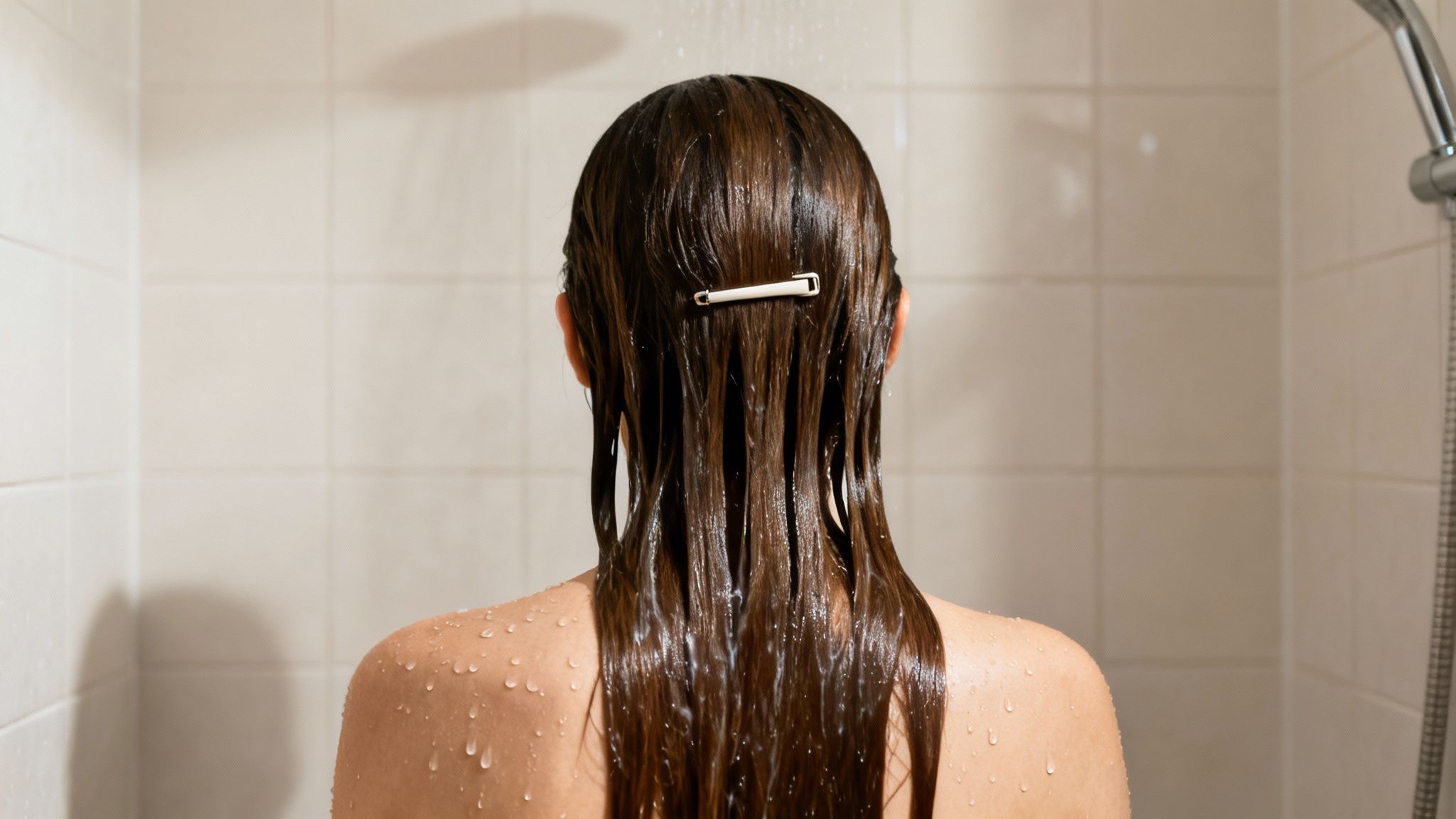
This doesn't have to be some complicated overhaul of your life. Honestly, a simple shopping checklist and a few tiny tweaks to your shower habits can make a massive difference in preventing conditioner-related breakouts.
Your Quick Buyer's Checklist
Shopping for a non comedogenic conditioner feels so much less overwhelming when you have a game plan. Keep this checklist handy on your phone for your next Target run or late-night online shopping session to make a confident, skin-friendly choice.
- Look for Green Flags: Scan the top of the ingredients list for lightweight hydrators like glycerin, panthenol, and hyaluronic acid. These are your friends.
- Spot the Red Flags: Be on high alert for common pore-cloggers. If you see coconut oil, cocoa butter, or isopropyl myristate, it's a hard pass.
- Read the Claims: Check the bottle for phrases like "non-comedogenic," "won't clog pores," or "safe for sensitive skin." Some brands, like SEEN, even have products with a National Psoriasis Foundation Seal of Recognition, which is a great sign they’re gentle enough for super reactive skin.
- Ignore the Hype: Just because it’s expensive doesn’t mean it’s safe for your skin. Some of the best and safest options are hiding in plain sight at the drugstore.
How to Apply Conditioner the Right Way
The "how" you use your conditioner is just as crucial as the "what" you buy. This simple, three-step method makes sure your hair gets all the moisture it craves while your skin stays totally in the clear.
- Apply Mid-Lengths to Ends Only: After shampooing, gently squeeze the excess water out of your hair. Work the conditioner in starting from your ears and focusing on the ends—that's where hair is the oldest and needs the most love. Your scalp makes its own oils, so it rarely needs the extra weight.
- Clip It Up: Once the conditioner is in, twist your hair up and secure it on top of your head with a claw clip. This is a game-changer. It keeps the product from sitting on your neck, shoulders, and back while you wash your body.
- Rinse, Then Cleanse: Let the conditioner do its thing for a few minutes, then rinse your hair out thoroughly. Make washing your face and body the very last step in your shower routine to wash away any sneaky residue that might have trickled down.
Pro Tip: Never skip the patch test! Before you go all-in with a new conditioner, dab a small amount on your jawline or behind your ear for a few days straight. It's the best way to see if your skin will throw a fit before you commit.
It's no surprise that the global skincare market is projected to hit USD 418 billion by 2035. We're all getting smarter about what we put on our bodies, and the demand for clinically-proven, non-comedogenic products is driving that growth. With e-commerce now accounting for 30% of sales, it's easier than ever to find and research the perfect products online. Research Nester has some great insights into how consumers are making skin health a top priority. And if you're curious about how different brands approach hair care, take a look at our deep dive into Olaplex vs. Ouai.
Frequently Asked Questions
Will a non-comedogenic conditioner make my hair feel awful?
Not a chance! This is probably the biggest myth. Non-comedogenic conditioners aren't about sacrificing softness; they're about being smarter with ingredients. They swap pore-clogging culprits for amazing, lightweight hydrators like glycerin and panthenol. You get all the slip, shine, and softness, just with a clean finish that won't wage war on your skin.
Is 'oil-free' the same as 'non-comedogenic'?
No—they aren't the same thing. "Oil-free" means the product doesn't contain traditional oils, but it could still have other pore-clogging synthetic ingredients. "Non-comedogenic" means the entire formula has been designed and tested to not block pores. When you've got acne-prone skin, "non-comedogenic" is the label you want to trust.
How soon will I see a difference in my skin?
If your old conditioner was the main troublemaker, you could start seeing a real improvement in your skin's clarity within 2 to 4 weeks. This timeline lines up with your skin's natural cell turnover cycle. Consistency is key, so make sure you're applying your new conditioner correctly (mid-lengths to ends) and rinsing thoroughly.
Do I really need a non-comedogenic shampoo too?
Yes, you absolutely should! Shampoos can be just as guilty of hiding comedogenic ingredients that cause scalp acne and clog pores along your hairline. Pairing a non-comedogenic conditioner with its matching shampoo is the fastest way to get lasting results and ensure no step in your hair-washing process is accidentally sabotaging your skin goals.
The Final Rinse
Switching to a non-comedogenic conditioner is one of the smartest and simplest changes you can make to finally end the frustrating cycle of hairline and body breakouts. By learning to avoid pore-clogging ingredients and choosing formulas with lightweight hydrators, you no longer have to choose between soft hair and clear skin. While all the options on our list are excellent, the SEEN Conditioner stands out as the best overall choice for its dermatologist-backed, clinically-proven formula that delivers beautiful hair without compromising skin health. Making this one swap could be the missing piece in your clear skin puzzle.