
Best Drugstore Foundation Pale Skin: 5 Dupes That Work
Under buzzing drugstore lights, a bottle labeled “Porcelain” or “Fair” can look right until lunchtime. One glance in the car mirror shows the problem: your jaw turns pink, or takes on a tangerine tint against your neck.
Finding the best drugstore foundation for pale skin rarely fails because a formula is too dark in the bottle. It fails because undertones shift after dry-down, store bulbs exaggerate redness, and luxury lookalikes do not all settle the same way on fair skin. Every pick below was chosen with pale complexions in mind, and the notes that follow flag where shade lineups and prices should be checked before you buy. I rank dupes by how the shade behaves once it dries, then judge undertone in daylight, with SPF claims treated separately.
This post may contain affiliate links, which means I may receive a commission if you purchase through my links, at no extra cost to you. Please read the disclosure policy for more information.
Quick Picks for Pale Skin at a Glance
A pale-skin shortlist needs more than a fair-looking bottle. Intel Market Research values the global drugstore foundations market at USD 1.46 billion in 2024, so the choice is broad. Budget staples also keep closing the gap with department-store formulas: Cosmopolitan kept every pick in its 2025 drugstore foundation roundup under $25, with its least expensive bottle priced below $9.
This side-by-side chart pairs five fair-skin dupes with their closest luxury reference. Prices are included where a current figure is available; for the other picks, US drugstore prices vary by retailer and change with promotions.
| Drugstore Pick | Luxury Reference | Price (USD) |
|---|---|---|
| L'Oréal Paris True Match | Estée Lauder Double Wear | $7.46-$10.95 |
| e.l.f. Halo Glow Liquid Filter | Charlotte Tilbury Airbrush Flawless | $15 |
| Maybelline Fit Me Matte + Poreless | Dior Forever Skin Correct | Varies by retailer |
| NYX Total Control Pro Drop | Hourglass Vanish | Varies by retailer |
| Revlon ColorStay Full Cover | Make Up For Ever HD Skin | Varies by retailer |
Two bottles have clear 2025 benchmarks. Shop TODAY listed L'Oréal Paris True Match Foundation with 47 shades priced between $7.46 and $10.95, giving fair shoppers more room to dial in undertones than many drugstore racks allow. Women's Wear Daily reported that e.l.f. Halo Glow Liquid Filter earned a 4.9/5 editor-testing rating across 15 shades at $15.
Use the table to narrow by finish, budget and the luxury formula you want to approximate. Then judge each shade after dry-down, in daylight, along the jawline. That is where pale skin separates a believable match from a bottle that only looked fair under store lights.
Five Drugstore Dupes Ranked by Shade, Finish and Situation
"Pale" isn't a single standardized shade, and treating it like one causes almost every bad drugstore buy. As Vogue highlights in its reporting on shade inclusivity, bottle counts alone are a weak measure of matching accuracy, and terms like "fair," "porcelain," "ivory," and "light" carry no universal definition across brands. One brand's porcelain reads chalky pink, while another's leans noticeably yellow.
Dermatology draws the same line between sun sensitivity and visible skin tone. According to the American Academy of Ophthalmology's EyeWiki overview of the Fitzpatrick scale, dermatologist Thomas B. Fitzpatrick developed his phototype system in 1975 with four categories and expanded it in 1988 to six types based on burning and tanning responses. Type I describes very fair skin that always burns and never tans, while Type II burns easily and tans only minimally, yet both types span cool, neutral, and warm undertones with varying redness or sallowness. Because Fitzpatrick categories measure ultraviolet response rather than objective reflectance, product formulators rely on spectrophotometry and CIE L*a*b* measurements to quantify lightness and hue continuously.
The practical takeaway: two people who both "always burn" can need completely different bottles.
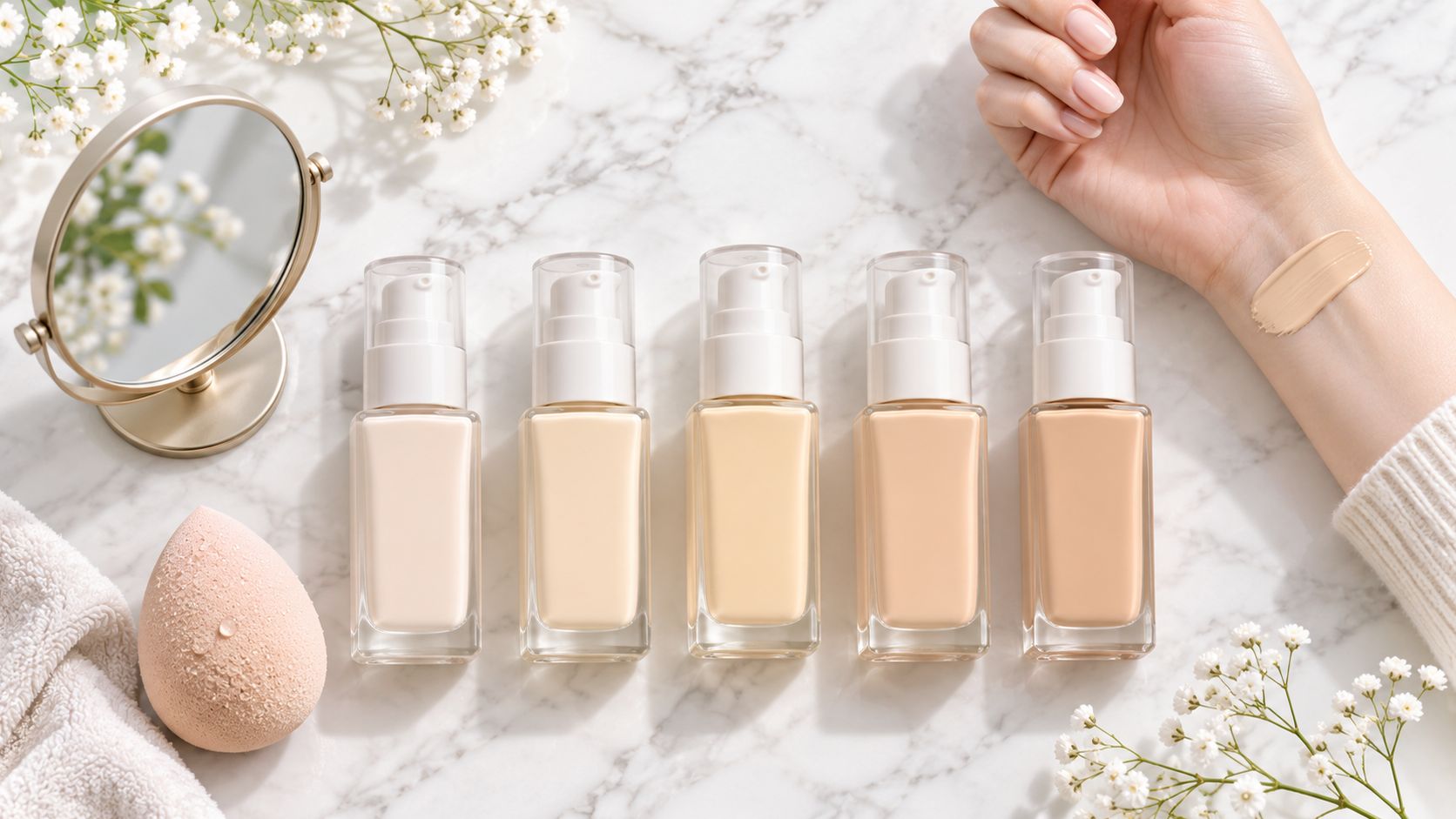
The Five Ranked Dupes
Each dupe below is ranked by how cleanly its lightest shades behave on fair skin after dry-down, paired with its luxury benchmark and best everyday situation.
- L'Oréal Paris True Match (Estée Lauder Double Wear dupe) takes the top spot because its expansive shade architecture separates cool, neutral, and warm undertones at the fairest end of the rack. You get a natural, everyday finish that settles without clinging to dry patches around the nose, at the lowest price point in this lineup. Still, check whether the lightest cool bottle pulls too pink on you before assuming it beats the palest neutral.
- e.l.f. Halo Glow Liquid Filter (Charlotte Tilbury Airbrush Flawless dupe) earns second place for dry or combination pale skin that looks dull in traditional matte bases. Its lightweight, luminous liquid gives a soft-focus sheen rather than heavy pigment, making it ideal for quick morning routines or layering under concealer. Because its shade range is tighter, inspect the lightest warm bottles closely so they don't push peach or orange on fair cheeks. The appetite for that lit-from-within finish is real: brands like Nueva Life radiant cosmetics build entire lines around luminous everyday formulas, and this dupe scratches the same itch at a fraction of the cost.
- Maybelline Fit Me Matte + Poreless (Dior Forever Skin Correct dupe) is the go-to workhorse for oily pale skin that breaks through satin formulas by noon. It blurs texture around the T-zone and keeps shine flat without feeling thick, though you'll want to confirm the current shade lineup and retail price at your local store. Dry-skinned fair shoppers should skip this one unless they prep thoroughly with hydrating moisturizer.
- NYX Total Control Pro Drop (Hourglass Vanish dupe) gives you customizable, buildable medium coverage via a dropper, which makes it practical for fast midday touch-ups or spot-evening redness across pale cheeks. Start with two drops and add a third only over persistent redness so the base stays undetectable. Confirm the current US retail price before buying, as dropper bottles vary by retailer.
- Revlon ColorStay Full Cover (Make Up For Ever HD Skin dupe) rounds out the five for long event days, humid weather, or oily skin that needs full coverage from morning through dinner. It locks down redness and blemishes better than sheer skin tints, though full-coverage pigments make undertone mistakes more noticeable on fair skin. Verify your store's current pricing and swatch the lightest neutral right next to the lightest cool before committing.
Smart browsing shortcut: On Finding Favourites, you can browse dupes by brand under the Browse By heading, including C. Tilbury, M.A.C, Glossier, Nars, Tatcha and Dior, or filter directly by price tier: under $10, under $25 and under $50.
If you want to compare additional high-end bases against drugstore bottles across other brands, the makeup dupe finder maps out side-by-side swaps in one place.
This video demonstration shows how drugstore base formulas blend and settle across light skin tones in real time.
Undertone Pairing and the Neck Rule
Picking the best drugstore foundation pale skin shoppers can wear daily comes down to matching your undertone family to the bottle rather than blindly grabbing shade number one.
- Cool or pink-leaning fair skin: Swatch the neutral-pink shade first instead of the starkest icy pink. Pure cool bottles can look chalky or amplify surface rosacea, whereas a soft neutral-pink balances facial redness.
- Warm or peach-leaning pale skin: Skip the palest warm bottle if it looks golden in the glass. Very light warm pigments are notorious for turning noticeably orange against fair necks once they set.
- Olive-leaning pale skin: Watch for a flat grey or muddy cast along the lower cheek. Muted neutral shades usually bridge green-yellow undertones far better than strongly pink or bright yellow bases.
One final sanity check before you buy: the neck rule. If your neck looks slightly deeper than your face, choose a slightly deeper neutral shade over the palest warm bottle. Matching your neck erases that telltale floating-mask edge far better than chasing the lightest number on the display.
How to Swatch Pale Shades Before You Buy
Your eyes play tricks on you in the cosmetics aisle, especially when you're fair-skinned. Overhead store bulbs flatten subtle yellow and red pigments, and human perception naturally gravitates toward bottles that look brighter than actual skin. A cosmetics color-matching study published by the Society for Imaging Science and Technology compared visual shade picking against spectroradiometer measurements using RMSE, goodness-of-fit coefficients, and mean color difference. Observers matched far more accurately under standardized D65 daylight than under fluorescent lighting, and they consistently selected shades that were lighter and less reddish than the measured skin reference.
That perceptual bias explains why the palest bottle on the shelf is a classic trap. A shade that looks clean and bright on the back of your hand under pharmacy lighting often reveals a stark white cast, unexpected peachiness, or mismatched redness the moment you step outside. Undertones generally sort into pink or cool, neutral, yellow or warm, and olive families, and daylight is the only reliable referee between them.
Six Steps for an Accurate Daylight Test
Follow these six steps before buying any bottle so you stop guessing in the aisle.
- Pull four contenders, not one. Grab the three lightest shades in the range plus one slightly deeper neutral, because brightness alone never guarantees an invisible blend.
- Stripe your jawline, never your wrist. Apply three thin vertical stripes along the jaw where your face meets your neck, since wrist skin has different sun exposure and undertone depth than your lower face.
- Wait two minutes, then walk to a window. Give the liquid time to settle out of its wet sheen, then inspect the stripes in natural window daylight rather than under fluorescent ceiling fixtures.
- Judge depth first, then redness and warmth. Check whether the brightness aligns with your skin before deciding if a stripe leans too rosy or too golden.
- Eliminate obvious cast mistakes immediately. Rule out any stripe that flashes grey, chalky pink, or sharp orange where it touches your neck.
- Confirm your final two at the same time of day. If two shades look close, re-swatch just those finalists in consistent daylight so shifting afternoon sun doesn't skew your verdict.
The shade that looks slightly too dull in the bottle is often the exact neutral that disappears on your skin outside.
What a Real Shade Match Looks Like
A genuine pale match shouldn't announce itself as a stripe at all. When you tilt your chin toward a sunlit window, the winning swatch melts directly into your jawline, transitions smoothly down onto your neck, and leaves no crisp edge where product stops and bare skin starts. For deeper guidance on reading undertones across skin types and avoiding common undertone traps, walk through our foundation shade matching guide.
Finish, Coverage and Oxidation Compared
Even a spot-on morning swatch can fail by noon if the finish clashes with your skin type or the pigment shifts as it dries. Choosing between matte and dewy formulas is always a practical trade-off: matte finishes absorb shine and blur pores on oily fair skin, yet they can look flat, tight, or flaky on dry pale patches. Dewy and satin finishes revive dry skin with healthy bounce, though oily T-zones often push them into unwanted midday glare.
Matte Versus Dewy Trade-Offs
Use this breakdown to match each dupe's finish and coverage strength directly to your skin's daily behavior.
| Drugstore Pick | Finish | Coverage |
|---|---|---|
| L'Oréal Paris True Match | Natural, skin-like | Light to medium |
| e.l.f. Halo Glow Liquid Filter | Dewy, glowing | Sheer to medium |
| Maybelline Fit Me Matte + Poreless | Matte, oil control | Light to medium |
| NYX Total Control Pro Drop | Natural to satin | Medium, buildable |
| Revlon ColorStay Full Cover | Matte to natural | Full |
Skin prep influences how cleanly these finishes sit on pale texture, too. Dry flakes catch matte pigment instantly, while excess oil breaks apart luminous liquid filters. If you want lightweight grip and hydration without heavy silicones, prepping with a natural primer for a flawless base helps smooth dry areas before you blend your foundation.
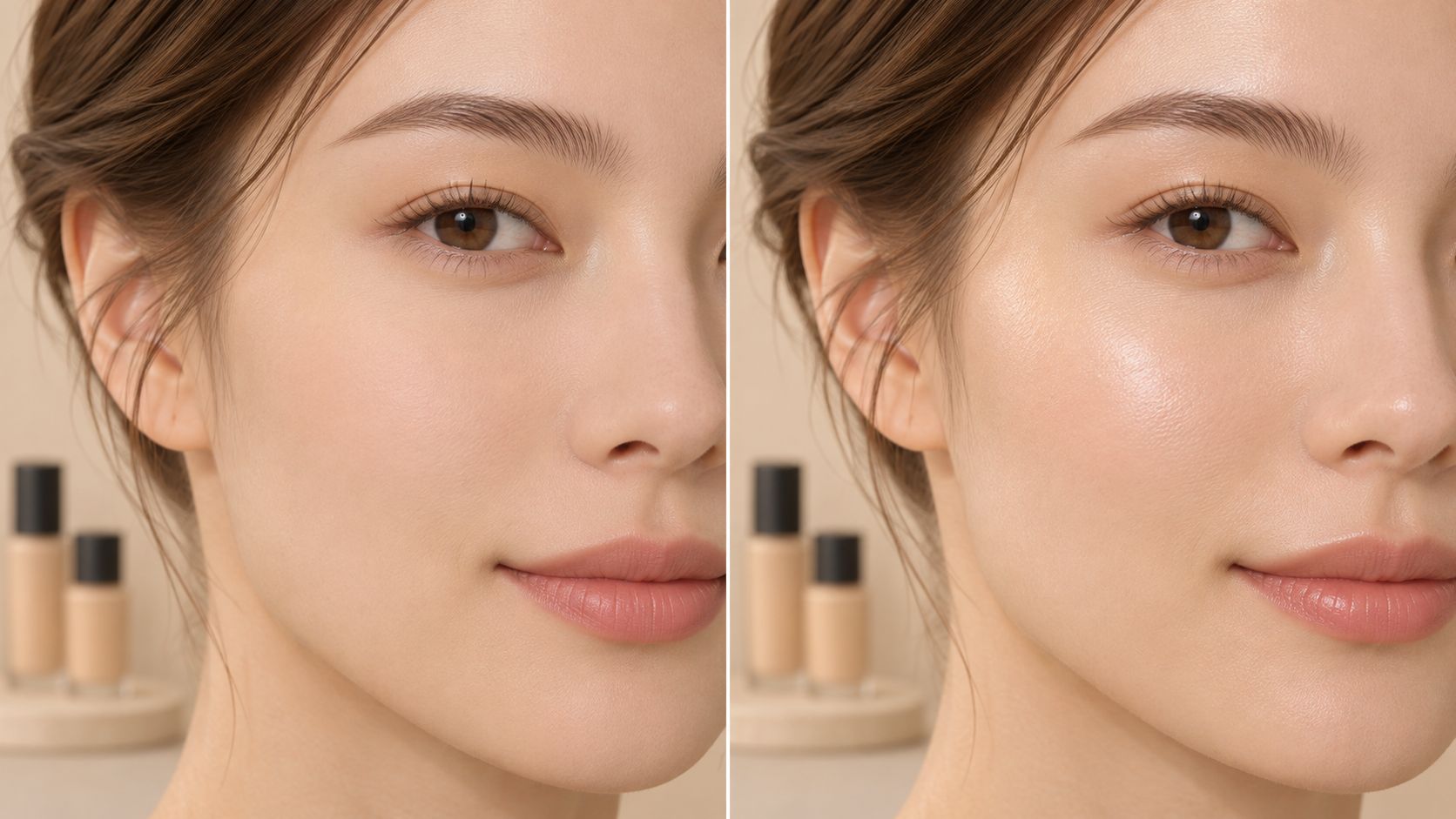
Here's the visual difference a radiant, natural drugstore finish makes when coverage stays thin and balanced instead of heavy.
Why the Two-Hour Dry-Down Check Decides Everything
Shade stability deserves just as much scrutiny as finish, because even tiny shifts in lightness or warmth stand out dramatically on very pale skin. Color-science testing published via PubMed Central measured liquid foundations with a non-contact spectrophotometer in CIE 1976 L*a*b* space and tracked discoloration over time on both opacity charts and human skin, finding positive correlations between changes on test surfaces and real wear. A newer spectrophotometric study in the same research evaluated 32 shades across four global brands, including pale shades, confirming that color drift over wear time is measurable rather than imaginary.
Two-hour oxidation rule: Take the jawline swatch you applied for your daylight check, note how it looks immediately, and re-examine it against your neck after about two hours in natural light.
Prefer whichever formula stays closest in both lightness and hue to its fresh wet look. If a bottle looks flawless wet but creeps darker or warmer two hours later, skip it and buy the neutral shade that holds its color steady, even if that neutral isn't the single palest bottle on the rack.
What SPF in Foundation Can and Cannot Do
A drugstore foundation labeled with SPF shouldn't replace your dedicated facial sunscreen. Too many beauty roundups treat an SPF badge as a built-in skincare shortcut, when it's really a regulated sun-protection claim with strict limits in real-world use.
The U.S. Food and Drug Administration notes that makeup carrying sunscreen claims enters a regulated sunscreen-claim context rather than functioning as an ordinary cosmetic alone. Lab measurements of sun protection in makeup can also differ substantially from the printed label, so makeup SPF should never be relied on as your only defense against UV exposure.
On top of formula variation, labeled SPF numbers assume a thick, standardized layer of product. Almost nobody applies that much liquid foundation across their face, especially with sheer or medium-coverage formulas, meaning your actual UV defense drops well below the number printed on the bottle.
That's a quiet problem for pale skin, which often burns fastest and shows sun damage earliest. Treating a foundation's SPF badge as sufficient is exactly the mistake that leads to a full day outdoors with a fraction of the protection you assumed you had.
Four Steps for Layering Sunscreen Under Foundation
Keep sun protection and shade matching separate by following a clear morning order.
- Inspect the label carefully. Look for both an explicit SPF rating and broad-spectrum wording rather than assuming a tinted bottle blocks UVA and UVB rays evenly.
- Discount the number on thin layers. Expect a light veil of foundation to provide significantly less protection than its printed SPF figure.
- Apply dedicated broad-spectrum sunscreen first. Let a full layer of facial sunscreen settle onto clean, moisturized skin for several minutes before buffing foundation on top. If you're spending time outdoors where bugs are out, knowing which goes first, sunscreen or repellent prevents you from diluting your UV layer.
- Treat SPF makeup as a backup only. Use an SPF-infused foundation for midday touch-ups or low-exposure indoor days, never as your sole outdoor shield.
If you'd rather combine daily UV defense with light, fair-friendly tint on casual days, browse the roundup of affordable tinted sunscreen options for pale skin instead of forcing foundation to pull double duty. For very pale skin, prioritizing shade accuracy over built-in SPF keeps you reaching for a foundation you enjoy wearing over reliable sunscreen every morning.
Foundation Questions Pale Shoppers Ask
How can I tell a US-market foundation is legitimate?
Inspect the packaging for the four core elements required under FDA cosmetic labeling regulations. Both domestically made and imported retail cosmetics sold in the United States must display an identity statement explaining the product's nature or use, an accurate net-quantity statement, the name and place of business of the responsible firm, and a full ingredient declaration listed in descending order of predominance. Missing any of those details is a clear red flag to skip third-party resellers and buy from an authorized US retailer.
Does a missing expiration date mean a foundation is discontinued?
No, an unprinted expiration date doesn't mean a bottle is unsafe or pulled from shelves. According to FDA cosmetic labeling guidance, US cosmetic labels generally aren't required to include expiration dates, though all labeling must remain truthful and not misleading. To verify whether a pale shade is still active, check current stock directly on the brand's website or a major US retailer's listing.
Which pick suits olive-leaning pale skin?
Test the lightest neutral bottles in daylight first, because none of the five drugstore picks above is calibrated exclusively for olive undertones. Olive fair skin sits in a subtle green-yellow space where pink shades turn muddy and warm shades flash orange. Reject any swatch that looks distinctly grey along your neck once it dries.
Can I buy from an online shade finder without swatching?
Use online shade finders as a shortcut to narrow down two or three contenders, not as your final decision. Phone screen brightness, blue-light filters, and unstandardized brand names distort pale undertones heavily, so confirming your top picks along your jaw in daylight saves you from return trips.
Pick Your Shade and Buy with Confidence
L'Oréal Paris True Match is the strongest starting point for most pale skin thanks to its broad undertone variety and everyday natural finish, while e.l.f. Halo Glow Liquid Filter is the standout dupe if your fair skin leans dry and craves a soft glow. To nail your match without wasted bottles, follow one simple sequence: scan the summary table, swatch the three lightest shades plus a slightly deeper neutral along your jaw in daylight, match the finish to your skin type, recheck after two hours for oxidation, and layer dedicated sunscreen underneath instead of relying on foundation SPF.
Your one move today is straightforward: pick your top two shades from the five picks above, run the daylight jaw test on both, and buy the bottle that melts into your neck and stays true after dry-down. Every dupe on this list was chosen for fair complexions, remains widely available at US stores, and isn't discontinued, though you should always confirm current shade counts and retail prices at checkout. Before you order online, check our Discount Codes page on Finding Favourites to see if a current promo trims a few extra dollars off your cart.
Looking for more budget-friendly swaps that rival department-store staples without the luxury markup? Finding Favourites pairs real-world wear notes, shade guidance, and price-tier dupe guides across makeup, skincare, and fragrance so you can shop smarter every time you restock your bag. Head over to Finding Favourites to explore our latest drugstore dupes and save on your next beauty run.