
Makeup Dupe Finder: 5 Affordable Dupes That Really Match
If a dupe looks identical to the original in a swatch photo, why does it turn ashy, slide off, or crease on your face by lunchtime? That gap is where most dupe lists fail you. A makeup dupe finder earns its keep only when it judges two things together: whether the shade and finish survive a full day on your skin, and whether the cheap listing you're about to click is a genuine product at all.
This post may contain affiliate links, which means I may receive a commission if you purchase through my links, at no extra cost to you. Please read the disclosure policy for more information.
Five Affordable Dupes at a Glance
Why does a five-dollar primer sometimes sit better under foundation than a forty-dollar one? Because price buys packaging, marketing and texture engineering, not a guarantee that the formula suits your skin. Once a favourite crosses the thirty-dollar mark, replacing it stops being a novelty and starts being arithmetic. NielsenIQ's 2023 State of the Beauty Industry report found that 82% of U.S. beauty shoppers said they had noticed price increases during the previous year, which explains why so many people now mix a prestige serum with a mass-market concealer in the same basket.
A dupe is only useful if it delivers the specific thing you're buying: the blur, the volume, the satin flush, the soft-focus set. A cheaper product that matches the colour but flakes at hour four isn't a saving, it's a second purchase waiting to happen.
How to read this table
The dupe in each row is the closest match for that one use, not a guaranteed twin across every skin tone and every climate.
| Original | Dupe | Best For |
|---|---|---|
| Hourglass Veil Mineral Primer | e.l.f. Poreless Putty Primer | Smoothing skin before foundation |
| Hourglass Ambient Lighting Powder (Diffused Light) | Inglot HD Pressed Powder (Round 403) | Soft-focus setting on all skin types |
| Too Faced Better Than Sex Mascara | L'Oréal Voluminous Lash Paradise Mascara | Volume and lift for less |
| Hourglass Ambient Lighting Powder (Radiant Light) | Essence Pure Nude Highlighter | Soft glow on dry or mature skin |
| Hourglass Ambient Lighting Blush (Mood Exposure) | Max Factor Creme Puff Blush (Nude Mauve) | Soft satin flush on all skin types |
Every entry below breaks down what matches, what differs and what to check before you pay. Treat the "best for" column as a filter: if you don't need that effect, the pairing isn't for you.
Availability is a comparison field, not a footnote. Google's product structured-data documentation treats price and availability as distinct product information that can surface in search results, which is exactly why each pairing here needs a live U.S. retailer listing, a current price and an in-stock check on the day you read it. Anything discontinued gets dropped rather than left in the list.
How to Test a Dupe Match Before You Buy
The most common mistake is trusting a shade name. "Natural Beige" in one brand can be two depths and one undertone away from "Natural Beige" in another, and a swatch photo shot through a phone filter has already been colour-corrected before you see it. Shade match sits at the top of most shoppers' buying priorities, so that's where testing starts.
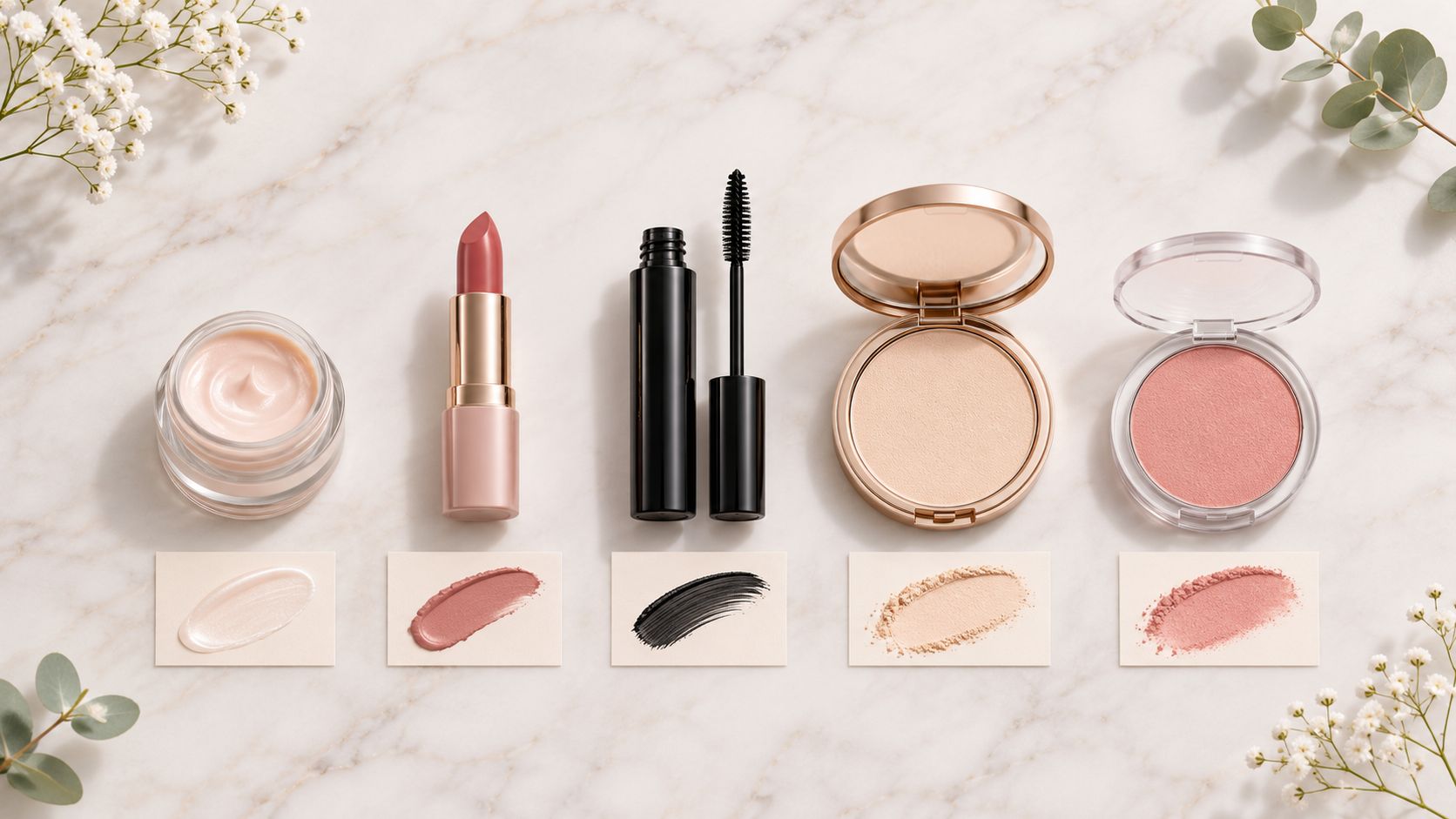
The four-step test, in order
- Shoot a clean reference photo. Bare skin, indirect neutral light near a window, beauty filters off, no mixed lamp-and-daylight spill. Photograph the original and the candidate in that same frame so the white balance can't flatter one and punish the other.
- Swatch on the jawline, not the hand. The back of your hand is a different depth and undertone from your face. Draw two parallel stripes, blend the edges, then walk to a window and back to a bathroom mirror. If the stripes only agree in one light, you don't have a match yet.
- Wait 30 to 60 minutes and look again. Plenty of formulas warm up or deepen as they interact with skin oils and air. A pair that looks identical at minute one can separate noticeably by minute forty.
- Wear a patch for a full day. Same primer, same amount, same tool, one product on each side. Check at hour one, mid-afternoon and end of day for fading, creasing, transfer onto a collar or phone screen, and any stinging.
Lighting isn't a minor variable here. In a beauty-recommendation study published on arXiv, the illumination-quality classifier reached 79.4% accuracy, while a comparison model managed only 58.5% accuracy and failed badly on darker skin tones. That's the technical version of what goes wrong in your bathroom: bad light produces confident, wrong answers.
Practical rule: if the light is mixed or dim, retake the photo instead of guessing, and treat any single "perfect dupe" claim as a shortlist entry rather than a verdict.
Before you test anything, screen the candidate: match its shade code and finish label to the original, confirm the U.S. retailer listing is live and in stock, and drop it if it's discontinued. After each test, write down four things: the shade you saw in daylight, any shift after 30 minutes, the time the patch first creased, and a 1 to 5 transfer rating. Those notes turn a vague "it's close" into something you can compare against next month's candidate, and they're the backbone of a sensible foundation shade-matching routine.
Buy a single shade or a sample first. A ranked shortlist of two or three candidates beats one declared winner, because your skin, your primer and your climate are part of the equation.
Five Makeup Dupes Ranked by How Close They Get
These are ordered from the swap I'd hand to almost anyone, down to the one that needs a caveat before it earns a place in your bag. Nothing here is a perfect match on every face, and the differences matter as much as the similarities.
1. e.l.f. Poreless Putty Primer
Original: Hourglass Veil Mineral Primer. Dupe: e.l.f. Poreless Putty Primer.
What matches: the smoothing, blurring effect across the nose and inner cheeks, and the way foundation glides instead of catching on texture. Applied with fingertips, warmed and pressed rather than dragged, the putty gives that same soft-focus canvas.
What differs: it can feel less hydrating than the original on dry or dehydrated skin, and it's heavier if you over-apply. A rice-grain amount per zone is plenty. Compare the ingredient lists side by side if dryness is your issue, and layer your moisturiser properly before either product.
Buy check: it's a drugstore staple, so confirm the exact variant (the original putty, not a mattifying or glow spin-off) and check the tub seal on arrival.
2. Inglot HD Pressed Powder, Round 403
Original: Hourglass Ambient Lighting Powder in Diffused Light.
The appeal of the Hourglass powder is that it sets without flattening, and the Inglot HD pressed format gets surprisingly close to that soft-focus finish on normal, combination and oily skin. It's a genuine all-skin-types setting option rather than a chalky mattifier.
The catch is depth. Inglot's shade range in this line is narrower, so what reads as a translucent veil on light-to-medium skin can look pale or grey on deeper tones. Test the depth on your jaw in daylight before committing, and use a fluffy brush with a light hand rather than a puff.
Buy check: Inglot sells through its own U.S. site and counters, so verify the round number on the listing photos matches 403 and that the refill pan is in stock.
3. L'Oréal Voluminous Lash Paradise
This is the swap I recommend most often. The brush design is close to Too Faced Better Than Sex, with that dense, hourglass-shaped bristle head that loads product at the root and combs it out to the tips. The formula is slightly less thick, and the conditioning blend includes rose oil and cornflower extract, which shows up as a softer, less crunchy feel on the lashes.
Volume and lift are the strong points. If you loved Better Than Sex for dramatic density, Lash Paradise delivers a comparable silhouette with a lighter finish, and it's easier to build a second coat without clumping. Where it differs: very humid days and very oily lids can bring on smudging sooner, so a lash primer or a light dusting of powder under the eye earns its place.
Buy check: it's stocked widely across U.S. drugstores and mass retailers. Pick the shade you want (Blackest Black and Waterproof behave differently) and check the tube isn't dried out on the shelf.
4. Essence Pure Nude Highlighter
Original: Hourglass Ambient Lighting Powder in Radiant Light.
For dry or mature skin, this is the friendlier texture. It reads as a lit-from-within sheen rather than a stripe of shimmer, and it doesn't cling to dry patches the way a firmer baked powder can. Finish intensity is lower than the original, so if you want a visible glow in photos, you'll need an extra pass.
Placement does the work here: tap it high on the cheekbone with a fingertip and stop before the area where fine lines show. Buy check: essence is widely distributed in the U.S., but shades rotate, so confirm the specific Pure Nude shade is listed and in stock rather than assuming the range is complete.
5. Max Factor Creme Puff Blush, Nude Mauve
Original: Hourglass Ambient Lighting Blush in Mood Exposure.
The satin flush is the closest part of this pairing: a soft, blurred mauve that looks like skin rather than powder sitting on top of it. It builds gradually, which suits fair through medium-deep skin, though on very deep tones the pigment payoff can be too quiet to read as a blush at all.
This is the most situational pick on the list because of distribution. Confirm a U.S. retailer still stocks it and that it hasn't been discontinued before you plan around it. If you can't find a domestic listing, skip it rather than importing from an unfamiliar marketplace seller.
A dupe you can't buy safely isn't a dupe, it's a risk with a good swatch.
Check the live U.S. price and stock status for each of these on the day you order. Prices move, retailers run promotions and reformulations happen without a announcement on the front of the box.
Spotting Fakes Before You Click Buy
The cheapest listing on a marketplace lowers your price and raises your odds of receiving something that isn't the product pictured. That trade-off is the part dupe hunting rarely talks about. A legitimate dupe is a different formula from a different brand that happens to give a similar look. A counterfeit pretends to be the original, usually with a copied box and an unknown filling.
The scale isn't trivial. A 2025 regulatory analysis from Skadden reported that beauty and personal-care products represented 31% of counterfeit goods intercepted by U.S. Customs and Border Protection in fiscal 2023, and third-party marketplaces host seller volumes that are difficult to police.
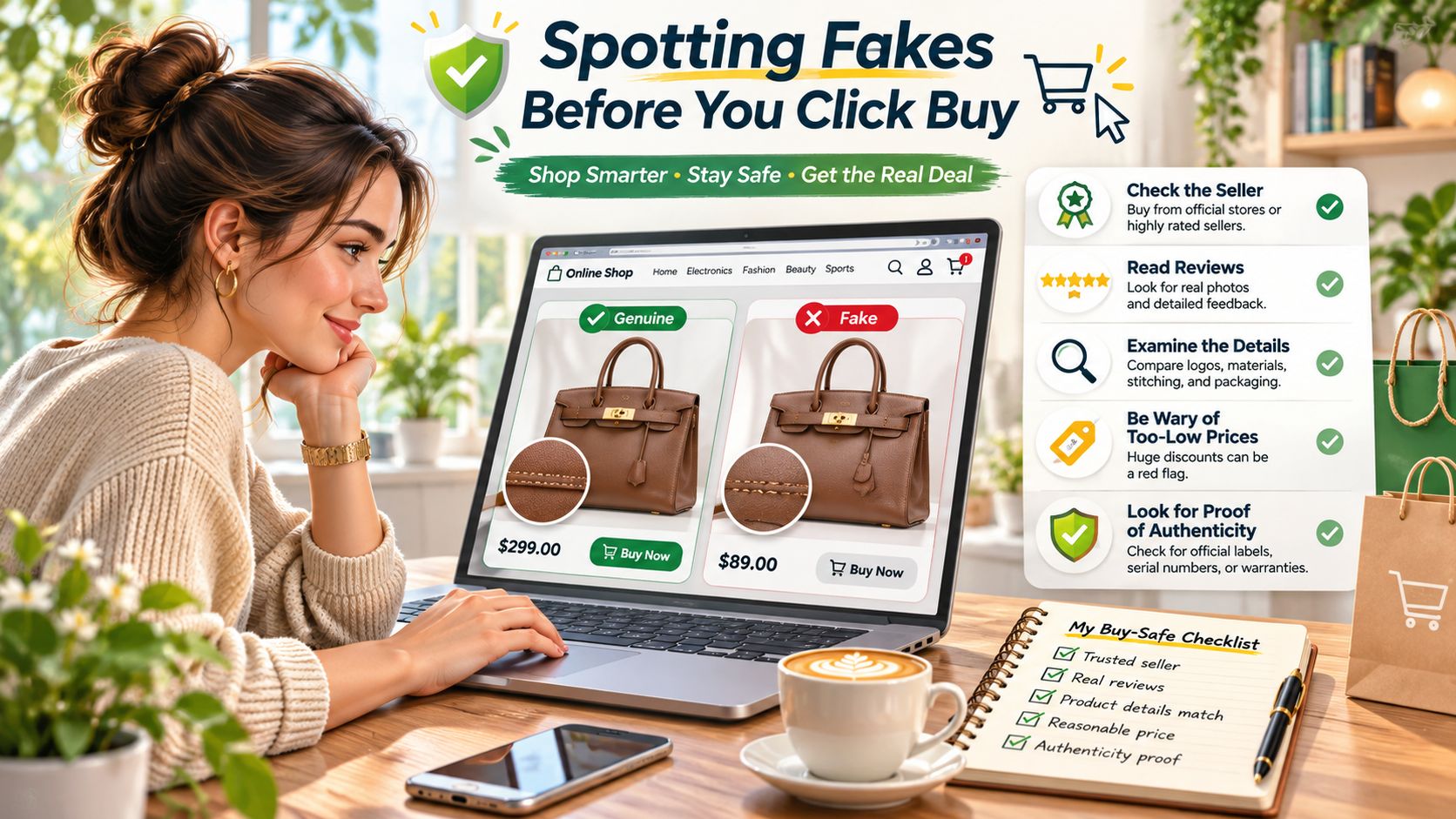
Six checks before you pay
- Buy from the brand or an authorised retailer. The brand's own site, a national drugstore chain or a department store removes most of the guesswork in one step.
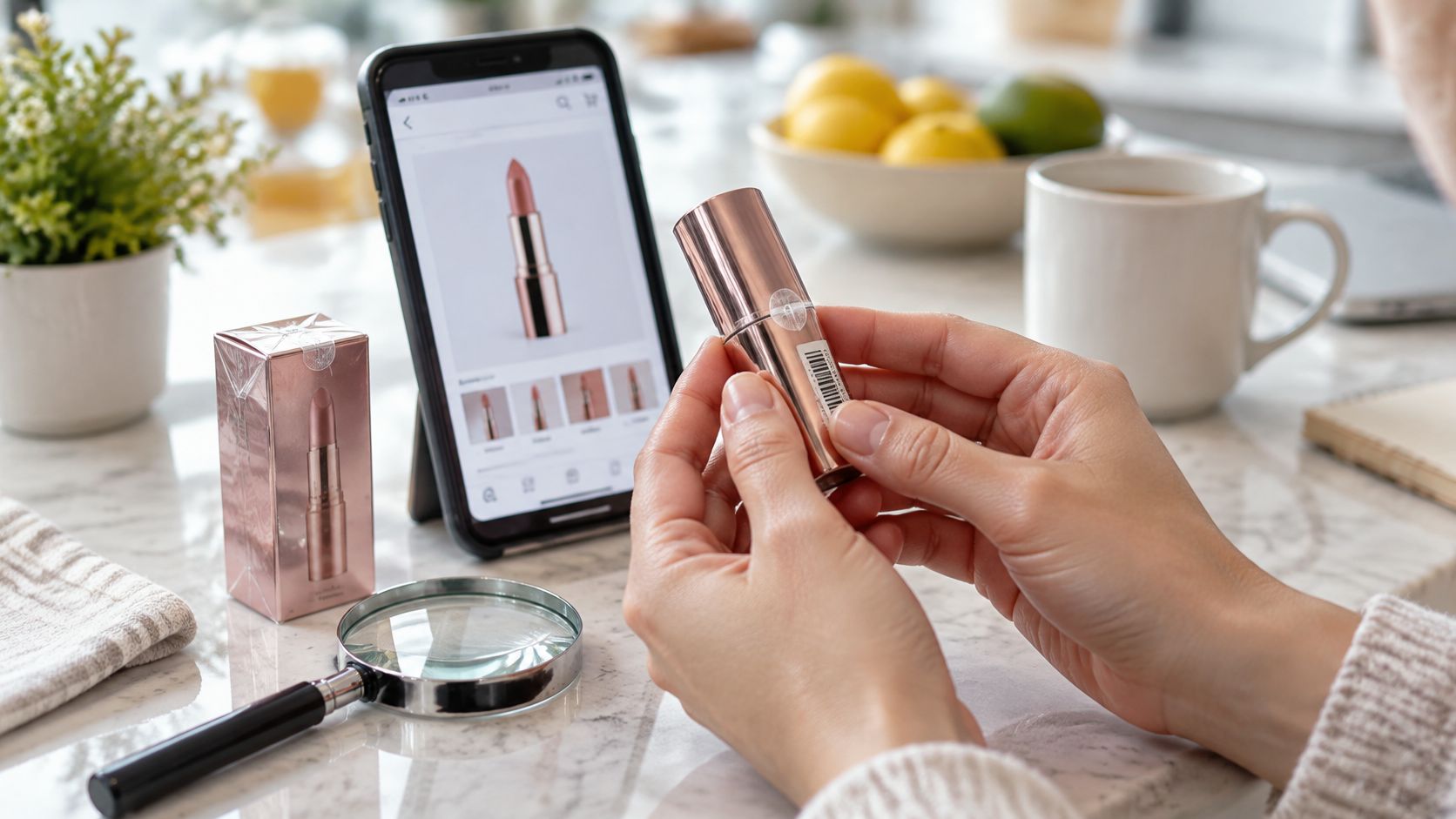
- Look for lot or batch information. Genuine stock carries a readable batch code on the base or crimp. A missing, stickered-over or smudged code is a reason to return, not to shrug.
- Inspect the packaging closely. Misspellings, uneven printing, loose seals, flimsy plastic and misaligned logos are the tells that show up before you ever open the product.
- Distrust implausible pricing. If a widely stocked item is listed far below its usual range, ask why a seller would sell at a loss when the product moves at full price everywhere else.
- Read the seller, not just the stars. Check seller history, how long the account has existed, review patterns and the return policy. A generous return window from an established retailer is worth more than a five-star average from a new storefront.
- Verify the ingredient list. Compare the box against the brand's published list. Differences in order, missing entries or a shortened list mean you're not holding what you think you are.
Counterfeit cosmetics may contain undeclared heavy metals, toxic chemicals or bacteria, with consequences ranging from allergic reactions and infections to eye damage. If you have sensitive eyes, reactive skin or wear contact lenses, buy mascara and liner only from verified sources, full stop.
Keep your receipt and order confirmation, photograph the packaging when it arrives, and report a suspicious listing to the marketplace and the brand. That's how the next shopper avoids the same tube.
Where Dupes Fall Short on Skin Tone and Finish
Most dupe roundups are written, swatched and photographed on light-to-medium skin, then presented as universal. They aren't. A powder that vanishes into a fair complexion can sit grey on a deep one, and an olive undertone can turn a "neutral" blush straight orange.
Shade is the highest-stakes variable in this whole exercise. In Cosmetics & Toiletries' coverage of color-cosmetics consumer research, shade match was identified as the most important purchase consideration by 93% of surveyed consumers, ahead of finish and texture at 88%.
The failure points repeat across categories:
- Oxidation drift: a match at application that turns ashy or orange once it settles, most visible on deeper and olive skin.
- Texture on mature skin: finely milled doesn't mean line-friendly, and a powder that looks smooth at 20 can settle into fine lines at 50.
- Flash behaviour: a highlighter that reads as a sheen in daylight can photograph as scattered glitter under direct flash.
Rank matches without forcing a winner. Three tiers cover reality: an exact visual match (same depth, undertone and finish in daylight and indoor light), a close undertone match (right family, slightly different depth or intensity), and a similar effect (you get the blur or the glow, not the same colour). Anything below that isn't a dupe, it's a different product you might also like.
A cheaper product stops being a bargain the moment you buy three shades to find one, mix two formulas to fix the undertone, or pay return shipping. "No reliable dupe exists for this shade" is a valid answer, and I'd rather give it than pad a list.
Shade tools have improved, and the good ones use your photos plus preference data to narrow the field. They still need a real swatch on your jaw to confirm the result, the same way choosing a lip color that suits your undertone needs a look in natural light before you commit.
Makeup Dupe Questions Readers Still Ask
Do dupes contain the same ingredients as the originals?
Usually not, and they don't need to. A dupe matches the look and the wear, not the formula, so two products can produce the same finish through completely different emollients and film formers. If your skin is reactive, read both ingredient lists for fragrance, drying alcohols and the key emollients near the top, then patch test on your inner arm before putting anything near your eyes.
What if a dupe is discontinued or reformulated?
Check the batch or lot information against the retailer listing, because a reformulation often shows up as a texture or shade change before any label announcement. Then move to the next closest match in the same price tier rather than grabbing whatever is cheapest and still listed.
Buying the last cheap option left is how people end up with three products they don't use.
Can you trust dupe reviews on a blog?
Judge the evidence, not the enthusiasm. Look for:
- Swatches on several skin tones, ideally including deep and olive, not one arm shot in one light.
- Repeated wear tests with times recorded, rather than a first-impression photo.
- A clear affiliate disclosure placed where you can see it before the recommendations start.
Be wary of any review that shows a single shade on a single skin tone and calls it a universal twin. If a post won't tell you where the match breaks down, it hasn't tested far enough to know.
Wrap Up and Your First Dupe Test
The best dupe here is L'Oréal Voluminous Lash Paradise standing in for Too Faced Better Than Sex: it's widely stocked across the U.S., it delivers comparable volume and lift from a similar brush shape, and it's cheap enough to test against your current tube in a single day. Everything else on this list follows the same logic. Shade and wear decide whether a swap works, not the name on the label or the price on the shelf, and a five-dollar product that oxidises on your jaw or creases by hour three costs you more than the original would have. Counterfeit risk climbs as a price drops far below the usual range, so authenticity and matching belong in the same decision, and no dupe is right for every skin tone, which makes a shade-tested match the only honest recommendation anyone can give you. Start with the product you already love: swatch it and the candidate side by side on your jaw, wear both for a full day, then check the current U.S. price and stock status before you order. If you're building a wider swap list, our roundups are sorted into dupes under $10, under $25 and under $50, and there's more practical guidance on how to save money on makeup without downgrading the finish you want.
Finding Favourites curates affordable alternatives to luxury makeup, skincare and fragrance, with each pairing judged on shade, texture, finish and wear time rather than price alone, and you can browse the lists under $10, under $25 and under $50 or by brand to find a swap for the exact product in your bag. Sign up under "Don't Ever Miss A Dupe" to get new finds by email, and start your next comparison at Finding Favourites.