
AHA vs BHA: Which Exfoliating Acid Is Right for You
You're standing in front of two exfoliating serums. One says AHA, the other says BHA, and both promise smoother, clearer skin. Your face has a little of everything, perhaps blackheads around the nose, dry cheeks, leftover blemish marks, and sensitivity that appears whenever you add one more “glow” product. Which bottle deserves a place in your routine?
The useful answer isn't just “AHA for dry skin and BHA for oily skin.” AHA vs BHA is really a question about the concern you want to treat, how reactive your skin is, and how much exfoliation your routine already contains.
This post may contain affiliate links, which means I may receive a commission if you purchase through my links, at no extra cost to you. Please read the disclosure policy for more information.
Why the AHA vs BHA Question Matters
Choosing an exfoliating acid can feel like choosing between two nearly identical tools. Both remove dead skin cells, both appear in cleansers, toners, serums, and peels, and both can make skin look smoother. The difference is where they work and which problem they address most directly.
AHA, or alpha hydroxy acid, generally works at the surface. BHA, or beta hydroxy acid, is oil-soluble and can move into the pore environment. That distinction matters if your main complaint is rough, dull skin rather than congestion, or if you're trying to manage blackheads alongside dark marks.
The wrong choice may not cause a dramatic reaction immediately. More often, you spend weeks using an ingredient that doesn't match your priority, then add another product because the first one hasn't delivered. Meanwhile, repeated exfoliation can leave your skin tight, stingy, flaky, or more reactive.
The practical takeaway: choose the acid for the concern at the top of your list, not for a broad label such as “dry” or “oily.”
Why skin type isn't enough
Skin doesn't always fit one category. Combination skin may have an oily forehead and dry cheeks. Acne-prone skin can also be dehydrated. Someone with post-breakout pigmentation may need pore care and surface smoothing at the same time.
That overlap changes the decision:
- Blackheads and clogged pores usually point toward BHA.
- Dullness and uneven surface texture usually point toward AHA.
- Acne plus post-inflammatory marks may call for alternating products rather than choosing one acid forever.
- Sensitivity may make a gentler option more sensible than either a strong glycolic or frequent salicylic acid treatment.
AHAs have been used in dermatology and cosmetics for decades. Their cosmetic popularity expanded after the anti-aging benefits of AHAs gained mainstream industry attention in the mid-1990s, while ingredient-registration data show glycolic acid formulations rising from 42 in 1998 to 337 in 2013, and lactic acid formulations increasing from 342 to 1,042 over the same period, as documented in the clinical review of hydroxy acids. The category is established, but established doesn't mean every acid suits every face.
What Each Acid Family Actually Does
AHAs are water-soluble acids that mainly work on the outer surface of the skin. Common examples include glycolic acid, lactic acid, and mandelic acid. They loosen the bonds holding dead cells together, helping those cells shed more evenly instead of building up and making the complexion look rough or flat.
Think of the skin surface as a tiled floor. Dead cells are like tiles stuck together with too much adhesive. An AHA helps loosen that adhesive so the old layer can lift away and the surface looks more even. Glycolic acid tends to feel more active, lactic acid is often chosen for a softer approach, and mandelic acid is a useful option when slower exfoliation is preferable.
BHAs are oil-soluble, and salicylic acid is the BHA most commonly used in cosmetics, according to the FDA's overview of beta hydroxy acids. Because oil dissolves in oil, salicylic acid can travel through the sebum-rich environment inside a pore. It helps loosen the mixture of oil, keratin, and debris associated with blackheads and congestion, while its comedolytic and anti-inflammatory activity supports blemish-prone skin.
Surface work versus pore work
AHA is the better mental picture for surface renewal. It's useful when dead-cell buildup contributes to dullness, rough patches, uneven tone, or pigmentation that sits visibly at the surface.
BHA is the better picture for pore decongestion. It's useful when oil and debris inside pores create blackheads, whiteheads, or recurring congestion. That doesn't make BHA a universal acne solution, and it doesn't mean AHAs are irrelevant to blemish-prone skin. AHAs can improve rough texture and the appearance of post-breakout marks, while BHA focuses more directly on the pore.
The difference also explains why professional treatment choices vary. If you're considering an in-office option rather than experimenting at home, information about rejuvenating chemical peel services can help you understand how treatment strength and supervision differ from an over-the-counter serum.
If you're comparing glycolic acid with the broader AHA family, this guide to glycolic acid versus AHA clarifies why glycolic is one member of the family rather than a separate alternative to all AHAs.
Side-by-Side Comparison of Key Differences
The core difference is simple, but a useful comparison needs more than one line. Solubility affects depth, depth affects the type of buildup an ingredient can reach, and formulation determines how comfortable the finished product feels.
| Criteria | AHA | BHA |
|---|---|---|
| Solubility | Water-soluble | Oil-soluble |
| Depth of action | Mainly the surface | Surface plus pore environment |
| Primary target concerns | Dullness, rough texture, uneven tone, pigmentation | Blackheads, congestion, excess oil, blemish-prone pores |
| Relative potency | Can produce a more noticeable surface-shedding effect | Often feels more targeted and gradual inside pores |
| Sensitive-skin tolerance | May sting or feel drying, especially in stronger formulas | Often better tolerated, though sensitivity is still possible |
AHAs are usually the more obvious choice when the mirror shows flatness, roughness, or uneven color. Glycolic acid can provide a stronger resurfacing sensation, while lactic and mandelic acids may feel more manageable for people who want surface exfoliation without as much intensity.
BHA is usually the more logical choice when the concern is what's happening inside the pore. Salicylic acid can move through oil and reach the pore lining, which is why it's commonly used for blackheads and congestion. Its anti-inflammatory activity can also make it a useful option when blemishes look red or swollen.
These are tendencies, not rules
A product's behavior depends on more than the name on the label. Concentration, pH, contact time, and the rest of the formula all influence how strong or irritating an exfoliant feels. A short-contact cleanser may behave differently from a leave-on serum, even when both contain a familiar acid.
Sensitive skin also needs nuance. BHA is often described as gentler, but a person can still react to salicylic acid. Likewise, an AHA isn't automatically too harsh if it uses a modest concentration, a supportive formula, and a sensible schedule.
Think in terms of location: AHA mainly addresses the surface, while BHA is better suited to oil-filled pores. Your concern tells you which location matters most.
Concentrations and pH Levels to Know
The percentage on a bottle tells you how much acid is present, but it doesn't tell the whole story. A stronger percentage isn't automatically a better product, and the formula's pH affects how much free acid is available to work on the skin.
The FDA cites a consumer-skin-care safety threshold for glycolic and lactic acid products at 10% or less, with a final product pH of 3.5 or higher, alongside directions for daily sun protection because AHAs can increase sun sensitivity, as explained in the FDA guidance on alpha hydroxy acids. Those figures describe a safety framework, not a recommendation that every beginner should start at the upper limit.
| Acid | Beginner % | Maximum OTC % | Effective pH range | Notes |
|---|---|---|---|---|
| Glycolic acid | Not specified in verified guidance | 10% safety threshold for consumer products | Around 3.5 to 4.0 | More noticeable surface exfoliation |
| Lactic acid | Not specified in verified guidance | 10% safety threshold for consumer products | Around 3.5 to 4.0 | Often selected for a gentler AHA approach |
| Mandelic acid | Not specified in verified guidance | No verified OTC maximum listed here | Around 3.5 to 4.0 | A slower AHA option |
| Salicylic acid | 1% to 2% commonly cited for cosmetics | 2% commonly cited for OTC use | Around 3.0 to 4.0 | Oil-soluble BHA for pore congestion |
Clinical literature has described AHA use across concentrations from 2% to 70%, but those figures cover dermatology and cosmetic applications broadly, not a beginner's home routine. Professional peels operate under different conditions from a daily leave-on product, which is why a clinic treatment shouldn't be copied by just buying the highest percentage available.
For a first product, look for a lower concentration, a less aggressive formula, and a schedule of twice weekly. The goal is to learn how your skin responds. If you notice no irritation after repeated use, you can consider increasing frequency gradually rather than jumping to a stronger acid.
pH is useful as context, but it's not a shopping score. A product with a low pH may feel more active, yet a well-formulated product at a slightly higher pH can be easier to tolerate. Read the directions, avoid stacking multiple exfoliants, and treat sunscreen as part of any AHA routine.
Matching the Right Acid to Your Skin Concern
Start with the problem you want to change, not the label you've been assigned. A person can have oily skin and dehydration, dry cheeks and blackheads, or acne and uneven pigmentation at the same time.
If blackheads and congestion lead
Suppose your nose and chin develop recurring blackheads, your T-zone becomes shiny, and small bumps return even after cleansing. BHA is the more direct match because salicylic acid is oil-soluble and can move through the pore's lipid-rich environment.
Use it as a targeted leave-on product if congestion is concentrated in one area. Applying it everywhere may create unnecessary dryness, particularly if your cheeks don't share the same problem.
If dullness and texture are the frustration
If your skin looks lackluster, makeup catches on rough patches, or uneven tone is more noticeable than active breakouts, AHA may make more sense. Glycolic acid provides a stronger resurfacing direction, while lactic acid can be a more comfortable starting point for someone who wants brightness and softness without as much sting.
AHAs have also been used for concerns including acne, keratoses, psoriasis, warts, and photoaged skin in clinical and cosmetic contexts, but the right product and strength depend on the condition being treated. A home serum isn't a substitute for diagnosis when irritation, persistent acne, or unusual lesions are involved.
If you have combination skin
Combination skin often benefits from zonal thinking. A BHA can be applied to the T-zone, while an AHA is reserved for rougher cheek areas, but using different products on different zones still requires caution.
Mandelic acid can act as a bridge when you have mild breakouts and mild dullness. Its slower surface action may be easier to tolerate than a stronger glycolic formula, although “gentler” doesn't mean irritation is impossible. A closer comparison of mandelic acid and lactic acid can help you choose between two softer AHA approaches.
If acne and pigmentation overlap
The usual AHA-versus-BHA rule becomes too narrow here. BHA may help with pore congestion, while a carefully selected AHA can address roughness and the look of post-breakout marks. Alternating them often makes more sense than applying both in one routine.
A recent review cited a split-side trial in which 10% lactic acid reduced keratosis pilaris lesions by 66%, compared with 52% for 5% salicylic acid after 12 weeks, showing that BHA isn't automatically the answer for every bump-related concern, as discussed in the clinical review of hydroxy acids and keratosis pilaris.
For reactive skin, consider stepping away from classic exfoliating acids altogether. Polyhydroxy acids such as gluconolactone, or azelaic acid for blemish-related discoloration, may provide a more comfortable starting point.
How Often to Use Them and Avoiding Over-Exfoliation
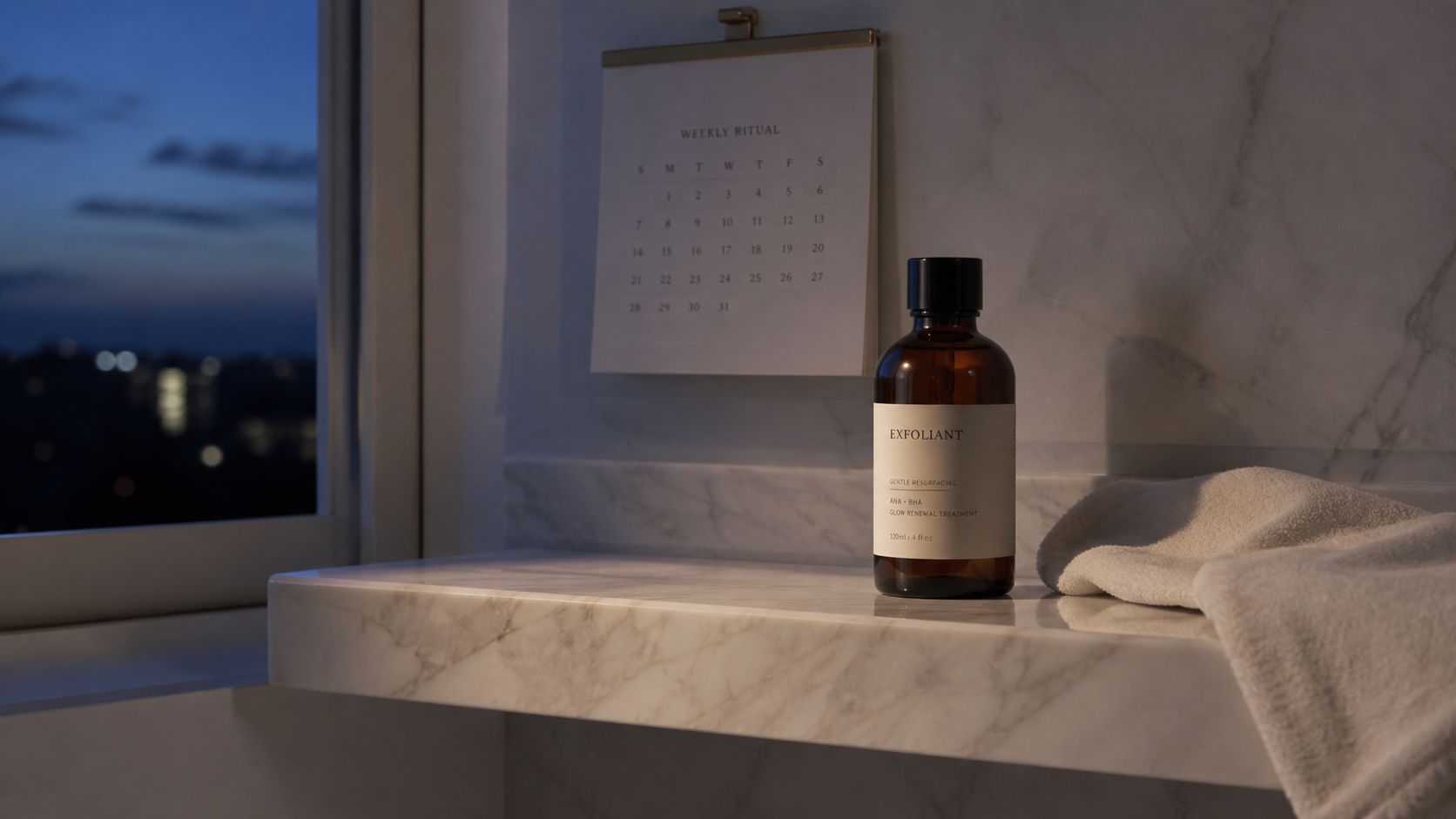
A good routine should leave your skin clearer without making it feel fragile. New users can begin with an exfoliating acid two or three nights per week, then try every other night only if the skin remains calm. Nightly use may suit experienced users, but it isn't a starter target, especially with a strong glycolic or salicylic formula.
A more conservative recommendation is to apply an exfoliant once weekly at first and increase to two or three times weekly only when there's no irritation, as outlined in this guide to chemical exfoliation frequency. Frequency should follow tolerance, not impatience.
Signs your routine is doing too much
Over-exfoliation can look like the original problem getting worse. Watch for:
- Persistent tightness: Your skin feels stretched even after moisturizer.
- Stinging: Products that used to feel comfortable suddenly burn.
- Polished-looking shine: A shiny, tight surface can signal irritation rather than health.
- Increasing redness: Redness remains or intensifies hours after application.
- Worsening flakes: Flaking spreads instead of settling.
- New sensitivity: Familiar cleanser, moisturizer, or sunscreen becomes uncomfortable.
When the barrier is compromised, water loss increases and the skin can become reactive. That may trigger more visible redness, dryness, and blemish-like bumps, which tempts you to exfoliate again. Pause the cycle by stopping acids, simplifying your routine, and allowing comfort to return.
Layering versus alternating
Using AHA and BHA in the same routine is possible for some people, but it adds irritation risk without guaranteeing better results. If you combine them, BHA can go first for pore congestion and AHA second for surface texture, but many people can achieve a similar division of labor by using them on different nights.
Keep retinoids out of the same routine while you're establishing acid tolerance. Alternating nights is usually easier to control than placing several cell-renewing ingredients together. For more information about what irritation can look like after stronger exfoliation, review these safe chemical peel recovery tips.
How to Choose, Layer, or Alternate in Your Routine
Use this decision rule before applying anything:
- Choose AHA when dullness, uneven tone, rough texture, or surface pigmentation is the main concern.
- Choose BHA when blackheads, recurring congestion, visible pore debris, or oily blemishes dominate.
- Alternate when acne and pigmentation coexist, or when the T-zone needs different care from the cheeks.
- Choose a gentler alternative when both classic acids leave you uncomfortable.
For a mixed concern routine, you might use BHA on one evening, moisturizer only on the next, and AHA on a later evening. That spacing gives you a clearer read on which ingredient your skin likes and reduces the temptation to blame one formula for irritation caused by several actives.
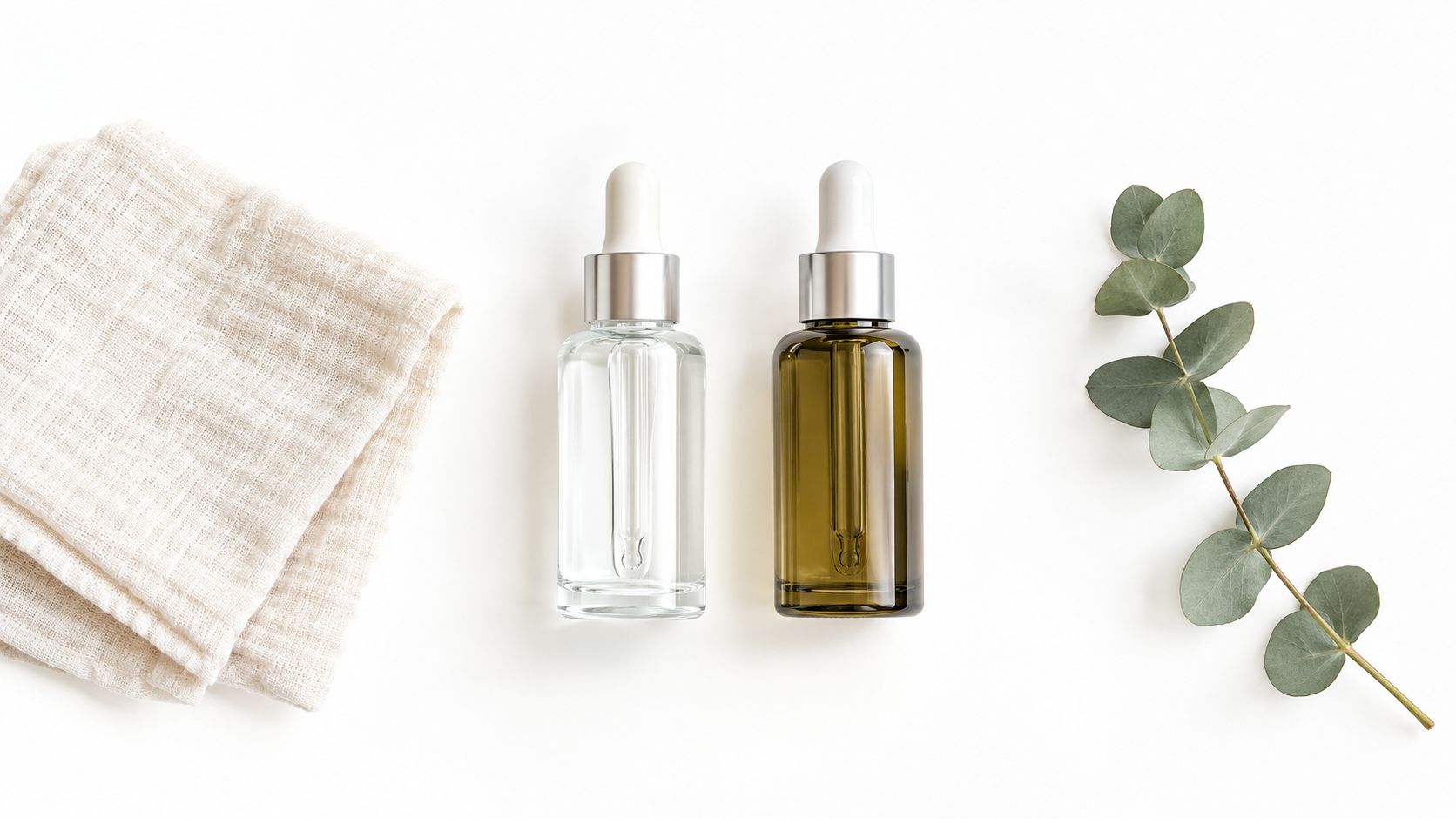
Apply the acid after cleansing, then follow with moisturizer. Keep retinoids and vitamin C in separate routines at first, since combining multiple potentially irritating actives makes it harder to identify the cause of stinging or peeling.
If mandelic acid feels more manageable, use it as a slower AHA choice. If post-blemish marks are the priority and exfoliating acids keep causing discomfort, azelaic acid may fit better because it can target discoloration without the same classic acid tingle.
Finding Favourites also publishes ingredient comparisons and affordable skincare roundups, including practical coverage of AHA and BHA products for shoppers comparing formulas and price points.
A short video can help visual learners connect the ingredient labels with routine decisions:
Common Questions About AHA and BHA
Can you use salicylic acid during pregnancy?
Salicylic acid is generally considered safe during pregnancy when used appropriately, but pregnancy skincare should always be confirmed with your healthcare provider. High-strength glycolic treatments and retinoid alternatives may not be suitable for everyone.
Can AHA or BHA be used with retinoids?
They can be part of the same overall routine, but start on separate nights. Both can increase exfoliation and cell turnover, so using them together may cause peeling, redness, or persistent sensitivity before your skin has adapted.
How long do results take?
BHA may make pores look clearer within two to four weeks, while AHA-related tone and texture changes generally take six to eight weeks of consistent use, according to the practical guidance provided in the medical overview of AHA and BHA exfoliation. Results vary with the product, frequency, and the concern being treated.
What should you do if your skin keeps stinging?
Stop the acid and simplify your routine to cleanser, moisturizer, and sunscreen. If redness lasts for hours, flaking gathers around the nose, or familiar products suddenly sting, wait until the barrier feels settled before trying again at a lower frequency.
Finding Favourites helps beauty shoppers compare affordable skincare alternatives, ingredient formulas, textures, and practical routine options without relying only on luxury packaging. Visit Finding Favourites to explore ingredient-focused guides and budget-conscious beauty comparisons before choosing your next AHA or BHA product.
The best dupe depends on what you mean by “dupe.” For AHA vs BHA skincare, the closest affordable swap is the product that matches the active ingredient, concentration, texture, and intended concern, not one with a similar bottle alone. Start with BHA for clogged pores, AHA for surface dullness, alternate when concerns overlap, and choose a gentler acid when your barrier needs more care than exfoliation.