
Non Comedogenic Products for Oily Skin: Clear Skin
If your forehead is shiny by lunch, your pores clog if you even look at a rich cream, and every “hydrating” product seems to turn into a breakout experiment, you're not imagining it. Oily skin is hard to shop for because the wrong texture can feel fine on day one and then show up as congestion a few days later. That's why non comedogenic products for oily skin matter so much. They're designed with pore-clogging risk in mind, which is a much more useful filter than buzzwords like “lightweight” or “oil-free” alone.
This post may contain affiliate links, which means I may receive a commission if you purchase through my links, at no extra cost to you. Please read the disclosure policy for more information.
The right routine doesn't need to be expensive or complicated. It needs to be consistent, lightweight, and built around formulas that hydrate without sitting heavily on the skin. Below, you'll find what non-comedogenic means, which ingredients deserve a spot in your routine, which ones I'd be cautious with, and how to build a full budget-friendly lineup by step.
Your Guide to a Clearer, Less Shiny Complexion
Oily skin usually pushes people into one of two bad routines. They either over-cleanse and strip their skin until it feels tight, or they avoid moisturizer altogether because they're afraid of making things worse. Both approaches backfire. Skin still needs hydration, and oily skin usually does better with formulas that feel breathable rather than heavy.
The smarter move is to choose products that lower the odds of pore blockage at every step. That means a cleanser that rinses clean, a treatment serum that targets oil or breakouts without overwhelming the barrier, a moisturizer that hydrates without grease, and sunscreen that doesn't feel like a mask by noon.
Bottom line: Oily skin usually needs less richness, not less skincare.
A good routine for oily, acne-prone skin should do four things well:
- Keep pores clearer: Use formulas made to reduce buildup on the skin.
- Control shine: Favor gel, lotion, and fluid textures over dense creams.
- Support the barrier: Hydration still matters, especially if you use actives.
- Stay affordable: You shouldn't need a luxury routine to get balanced skin.
What Does Non-Comedogenic Actually Mean
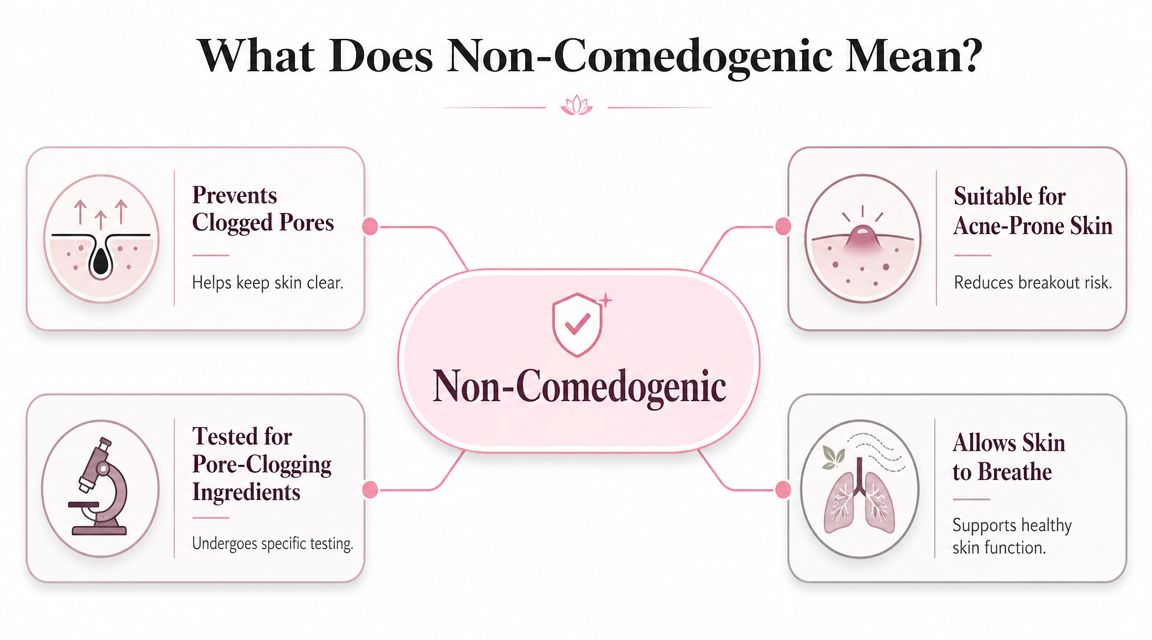
Non-comedogenic means a product is designed to be less likely to clog pores. This is the practical definition commonly understood. It functions as a low-traffic route for your pores. Skin oil, dead cells, sunscreen, makeup, and sweat can already create enough congestion. A non-comedogenic formula tries not to add to that traffic jam.
That label became more meaningful once researchers began measuring pore blockage rather than just describing products loosely. In a 4-week occlusive microcomedone study, investigators evaluated 12 subjects and considered products non-comedogenic when they caused less than a 50% increase in microcomedones. The four tested formulations stayed under that threshold, with average changes ranging from +13.8% ± 11.1% to -25.6% ± 9.9%, while octyl palmitate stood out because it caused more than a 50% increase in comedone formation in every analyzed subject.
What the label does and doesn't promise
Many people misunderstand this point. Non-comedogenic doesn't mean breakout-proof. It means the formula is intended to lower pore-clogging risk. Your skin can still react to fragrance, certain actives, sunscreen filters, or just the overall formula.
It also doesn't mean the same thing as oil-free. Some oils are lighter and often work well in oily-skin formulas, while some oil-free products can still feel film-forming or irritating. If you like digging into ingredient patterns, these skincare comedogenic scales can help you understand why some ingredients get flagged more often than others.
A non-comedogenic label is useful. It just shouldn't be your only screening tool.
If you're choosing between toners, for example, texture and ingredient list still matter. A watery toner with humectants is very different from one loaded with heavy emollients. If you want a practical starting point, this guide to non-comedogenic toner options is a helpful next read.
Why patch testing still matters
Dermatology guidance is cautious here. Healthline's overview of non-comedogenic skincare notes that comedogenicity labels aren't standardized, there's no universally accepted regulatory list of the “best” non-comedogenic products, and patch testing still matters because individual reactions vary.
So yes, use the label. Just treat it as a filter, not a guarantee.
Why Oily and Acne-Prone Skin Needs This Approach
Oily skin has one main challenge. It produces excess sebum, and that oil doesn't sit on the skin by itself. It mixes with dead skin cells, leftover product, and daily grime. Once that mixture settles into the pore, you get the skin equivalent of a kitchen sink drain clogging up slowly over time.
That's why product texture matters so much for this skin type. A formula can be soothing, expensive, and full of trendy ingredients, but if it sits too heavily on your face, it may still feel suffocating. For oily skin, “nourishing” and “rich” are not always compliments.
What oily skin actually needs
According to SpecialChem's guide to non-comedogenic ingredients, non-comedogenic products are designed to reduce pore blockage, which matters for oily skin because excess sebum can mix with dead skin cells to form comedones. These products are typically lightweight and water-based to reduce the risk of trapping impurities.
That tells you something useful right away. Oily skin usually responds better to:
- Gel cleansers: They rinse away residue without the coated feeling some cream cleansers leave behind.
- Thin serums: Water-based formulas are easier to layer and less likely to feel greasy.
- Gel-cream moisturizers: They hydrate while keeping surface shine lower than a rich cream often does.
- Fluid sunscreens: The finish matters as much as the protection because daily wear has to be realistic.
What doesn't work well for most oily skin
The biggest mistake I see is trying to “dry out” oil. Harsh cleansing and skipping moisturizer can leave skin irritated and unbalanced, which often makes routines harder to stick with. The second mistake is choosing products based only on marketing words like mattifying, poreless, or clear skin.
Practical rule: If a product feels heavy, slick, or filmy an hour after application, it's probably not the best everyday choice for oily skin.
Some readers also need extra caution during life stages when ingredient safety matters more broadly. If that applies to you, this expert guide for expectant mothers offers useful context for acne-safe product shopping during pregnancy.
The Ingredient Cheat Sheet for Oily Skin
Ingredient lists get easier once you know what each product in your routine is supposed to do. For oily, acne-prone skin, I sort formulas by job first. Cleanse without stripping. Treat congestion without irritating. Moisturize without leaving a film. Protect with sunscreen you will wear every day.
That step-by-step mindset saves money too. It keeps you from buying three trendy serums when what you really need is one solid cleanser, one light moisturizer, and a sunscreen with a finish you can tolerate.
Ingredients worth looking for
The most useful ingredients for oily skin are the ones that solve common problems without making the whole routine feel heavier.
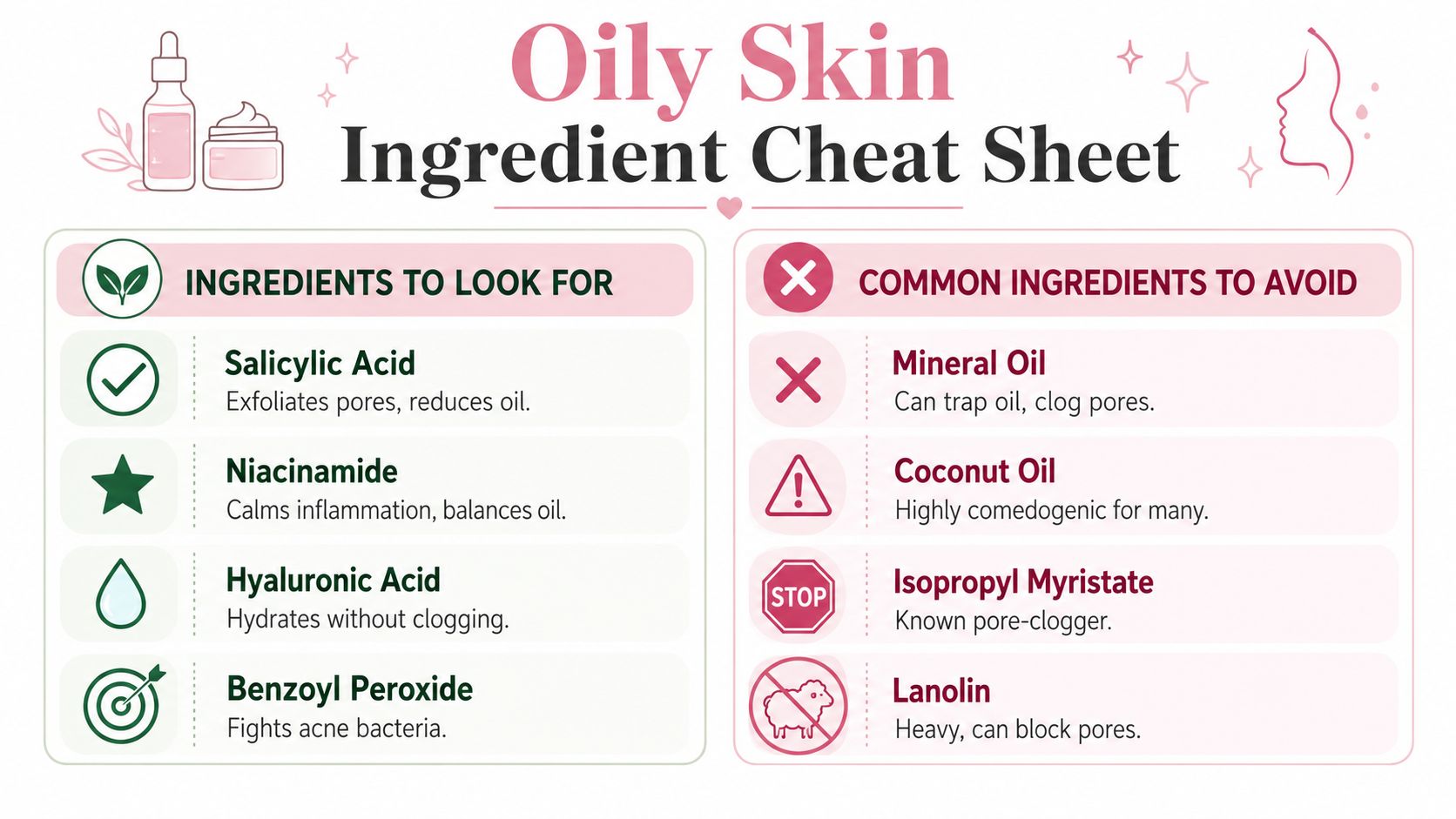
- Salicylic acid: Best for clogged pores, blackheads, and that bumpy texture around the nose or chin. I usually recommend this first in a cleanser or leave-on exfoliant if congestion is the main issue.
- Niacinamide: Helpful for balancing visible oiliness and supporting the skin barrier. It works well in budget serums and moisturizers, which makes it easy to build an affordable routine around.
- Hyaluronic acid: Good for oily skin that still feels tight after washing. It adds water, not grease.
- Glycerin: One of the most reliable humectants in skincare. It shows up in plenty of drugstore formulas and often performs just as well as pricier options.
- Benzoyl peroxide: Better for red, inflamed breakouts than for blackheads alone. The trade-off is dryness, so it needs a lighter hand.
- Zinc oxide: A smart ingredient to look for in mineral sunscreen if chemical filters sting your skin or make you look shiny by noon. If you want to find ideal non-comedogenic sunscreen, focus on texture and finish as much as the filter type.
- Sulfur or resorcinol: Useful for spot treatments and oilier complexions that do not respond well to richer acne creams.
Ingredients I'd watch carefully
No single ingredient guarantees a breakout. Formula, concentration, and your own skin history matter just as much. Still, some ingredients show up often enough in products that feel too rich for oily skin that they deserve a closer look.
A review of comedogenicity data in DermNet notes that the old pore-clogging ratings are imperfect and often based on outdated testing. That matches what I see in practice. Texture usually tells you as much as the label.
Here are the ingredients and formula styles I check more closely in leave-on products:
- Isopropyl myristate: Often used to create slip. Skin that clogs easily does not always tolerate that silky finish well.
- Octyl stearate: Common in richer creams and makeup. Fine for some people, but worth flagging if you break out from heavier textures.
- Coconut oil: Popular, familiar, and often too much for acne-prone facial skin.
- Lanolin derivatives: Protective and comforting on dry patches, but they can feel suffocating on oily areas.
- Heavy occlusive blends: Shea butter, waxes, rich oils, and buttery textures are not automatically bad. They are just less forgiving if your skin gets shiny and congested fast.
How to read a label fast
Skip the full ingredient-by-ingredient analysis unless your skin is very reactive. For everyday shopping, three quick checks usually tell you enough.
- Match the product to the step. A cleanser can be a bit more active. A moisturizer should feel light and easy to reapply. If you need help comparing textures, this guide to the best drugstore moisturizer for oily skin is a useful shortcut.
- Look for one or two proven helpers. Niacinamide, salicylic acid, glycerin, and hyaluronic acid are all easy wins.
- Read the texture language with some skepticism. Words like rich, nourishing, balm, or creamy often signal a formula oily skin may only like at night, if at all.
The goal is not a perfect ingredient list. The goal is a routine you can afford, stick with, and wear comfortably from cleanser through sunscreen.
Building Your Routine Best Product Picks and Dupes
A good oily-skin routine should feel light from start to finish. The easiest way to keep it affordable is to build around one principle. Spend where texture is hard to dupe, save where the basics are already strong. Drugstore cleansers, moisturizers, and sunscreens have gotten very good.
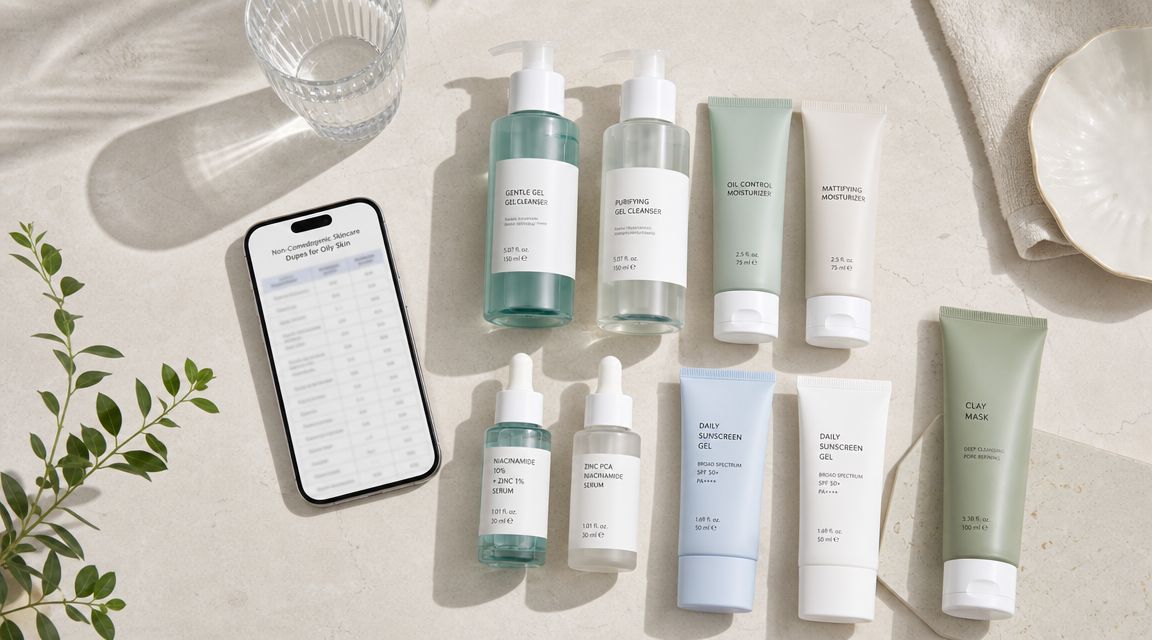
Here's a quick snapshot of the dupe lineup before we break it down by step.
| Splurge Product | Best Dupe | Price Tier |
|---|---|---|
| Tatcha The Deep Cleanse | CeraVe Foaming Facial Cleanser | Budget |
| Paula's Choice Skin Perfecting 2% BHA Liquid | The Ordinary Salicylic Acid 2% Solution | Budget |
| SkinCeuticals Blemish + Age Defense | The Ordinary Niacinamide 10% + Zinc 1% | Budget |
| Tatcha The Water Cream | Neutrogena Hydro Boost Water Gel | Budget |
| EltaMD UV Clear SPF 46 | La Roche-Posay Anthelios Clear Skin Dry Touch SPF 60 | Mid-range |
| NARS Soft Matte Complete Foundation | Maybelline Fit Me Matte + Poreless Foundation | Budget |
| NARS Soft Matte Complete Concealer | e.l.f. 16HR Camo Concealer | Budget |
Cleanser picks
Splurge: Tatcha The Deep Cleanse
This is the kind of cleanser oily skin tends to enjoy because it feels fresh and rinses clean without leaving that stripped, squeaky sensation some foaming cleansers create.
Best dupe: CeraVe Foaming Facial Cleanser
This is one of the easiest swaps to recommend. It's widely available in the US, dependable, and fits oily skin well because it cleans thoroughly without feeling overly aggressive. If your routine includes actives, this kind of cleanser is usually a better pairing than an intensely stripping face wash.
Another save option: La Roche-Posay Effaclar Purifying Foaming Gel
A great option if you want something that feels a little more targeted for oilier skin types.
Toner and exfoliant picks
Splurge: Paula's Choice Skin Perfecting 2% BHA Liquid
This remains popular for a reason. Oily, congestion-prone skin often likes a leave-on salicylic acid step, especially around the nose and T-zone.
Best dupe: The Ordinary Salicylic Acid 2% Solution
This isn't a texture dupe in the literal sense, but it's a smart budget alternative if your main goal is getting salicylic acid into your routine. It's especially useful if clogged pores are your top concern and you'd rather save your money for sunscreen or foundation.
If your skin is both oily and easily irritated, use your exfoliating step fewer nights than you think you need. Overdoing it is one of the fastest ways to make skin look shinier and angrier.
Serum picks
Splurge: SkinCeuticals Blemish + Age Defense
This kind of serum appeals to oily skin because it targets congestion and uneven texture while staying lightweight.
Best dupe: The Ordinary Niacinamide 10% + Zinc 1%
For budget routines, this is one of the strongest value plays. It layers easily, doesn't add heaviness, and fits neatly into routines built around managing shine and visible pores.
Alternative save: The Inkey List Niacinamide Serum
A solid choice if you prefer a straightforward niacinamide serum and want to keep your routine simple.
For moisturizers specifically, I'm especially picky about texture. Oily skin usually does best with lightweight hydration that still supports the barrier. If you want more options in that category, this roundup of the best drugstore moisturizer for oily skin is worth bookmarking.
Moisturizer picks
According to Jil Goorman Beauty's guide to non-comedogenic moisturizers, effective formulas for oily skin often use glycerin, hyaluronic acid, and niacinamide in lightweight gel or lotion textures to support the skin barrier without heavy, occlusive oils. That's exactly the profile I'd shop for.
Splurge: Tatcha The Water Cream
Beautiful texture. It feels elegant, lightweight, and fresh on oily skin.
Best dupe: Neutrogena Hydro Boost Water Gel
This is the classic save choice for a reason. It gives that bouncy, water-gel feel many oily skin types love. It's easy to find, easy to layer under sunscreen, and usually much kinder to a budget.
Another save option: Versed Dew Point Moisturizing Gel-Cream
A great middle-ground pick if you want something light but a little more substantial than a true gel.
Sunscreen picks
Splurge: EltaMD UV Clear SPF 46
This is a favorite in oily and acne-prone circles because it tends to sit well under makeup and doesn't feel as suffocating as many facial sunscreens do.
Best dupe: La Roche-Posay Anthelios Clear Skin Dry Touch SPF 60
This is my practical save choice for people who want a more matte feel through the day. It's easy to find in the US and often works well when shine control is just as important as daily SPF use.
If sunscreen is where you get stuck, this guide can help you find ideal non-comedogenic sunscreen based on finish and skin type rather than hype.
Here's a quick walkthrough that shows how oily-skin routines are often balanced in real life:
Makeup picks
A skincare routine can be perfectly lightweight, then get undone by a base product that sits heavily over it. For oily skin, complexion products matter.
Foundation splurge: NARS Soft Matte Complete Foundation
This suits people who want coverage with a more polished, controlled finish.
Best dupe: Maybelline Fit Me Matte + Poreless Foundation
This is one of the easiest drugstore recommendations for oily skin because the finish is familiar, the wear is reliable, and it doesn't usually feel thick or mask-like.
Concealer splurge: NARS Soft Matte Complete Concealer
Great for spot concealing and areas where you want more hold.
Best dupe: e.l.f. 16HR Camo Concealer
This is the affordable pick if you want strong coverage and a more locked-in finish. Use a small amount. Too much can look dry around active breakouts.
The best budget routine from scratch
If I were building a full affordable routine for oily skin today, I'd keep it simple:
- Cleanser: CeraVe Foaming Facial Cleanser
- Treatment step: The Ordinary Salicylic Acid 2% Solution a few nights a week
- Daily serum: The Ordinary Niacinamide 10% + Zinc 1%
- Moisturizer: Neutrogena Hydro Boost Water Gel
- Sunscreen: La Roche-Posay Anthelios Clear Skin Dry Touch SPF 60
- Foundation: Maybelline Fit Me Matte + Poreless
That lineup gives you cleansing, targeted treatment, hydration, and shine control without drifting into luxury-price territory.
How to Build Your Routine and Patch Test Properly
The most effective routine is the one you can use consistently without irritating your skin. For oily skin, that usually means keeping the number of steps reasonable and layering from lighter formulas to heavier ones.
A simple morning and evening template
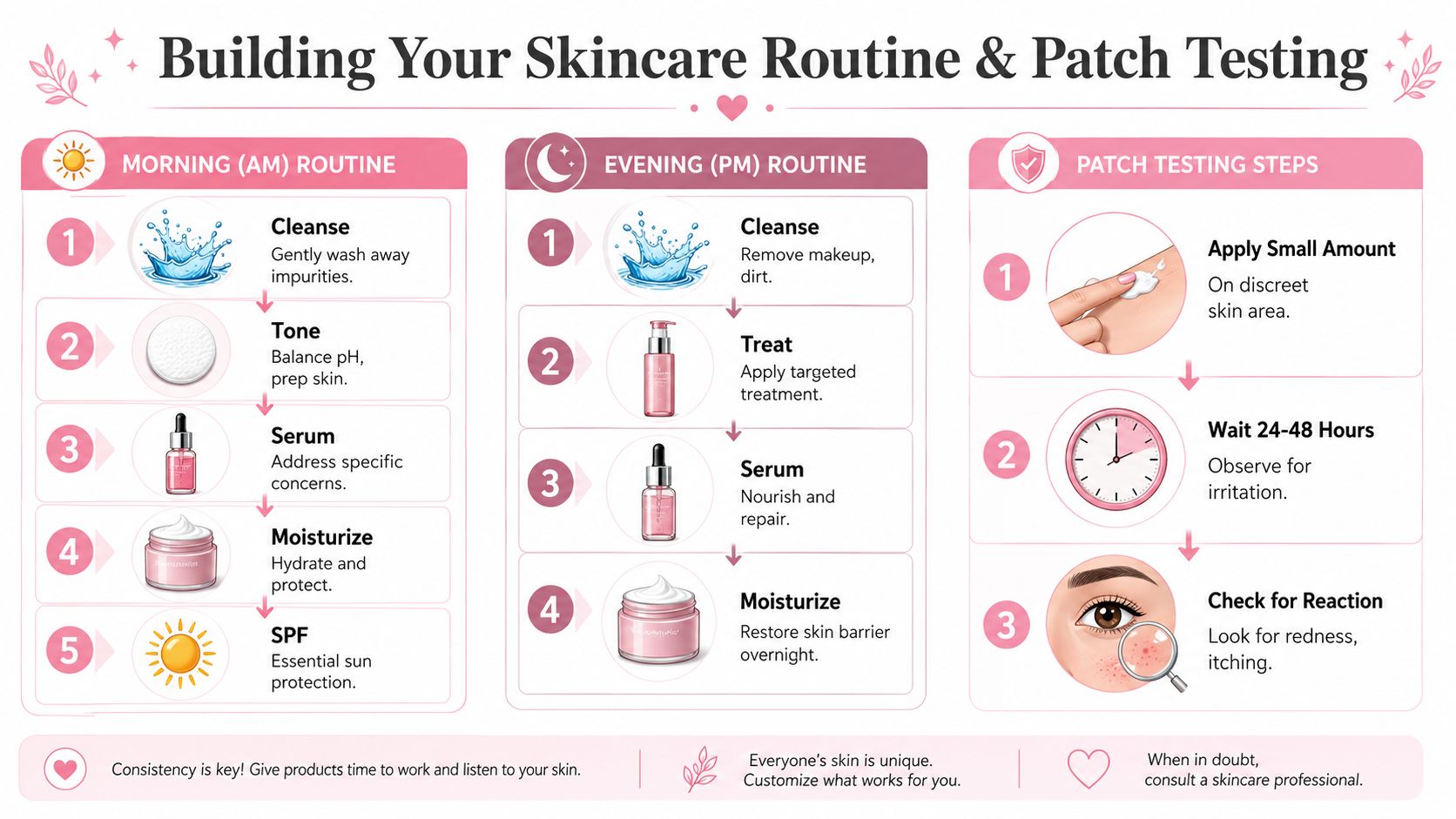
A workable routine can look like this:
Morning
- Cleanse: Use a gentle gel or foaming cleanser.
- Serum: Apply niacinamide or another lightweight serum.
- Moisturize: Use a gel-cream if your skin needs it.
- SPF: Finish with a non-comedogenic sunscreen.
Evening
- Cleanse: Remove sunscreen, makeup, and oil buildup.
- Treat: Use salicylic acid or another targeted treatment on the nights you need it.
- Moisturize: Seal in hydration with a light moisturizer.
If you want a fuller step-by-step framework for layering and choosing categories, this guide on how to build a skincare routine is useful.
How to patch test without overcomplicating it
Patch testing sounds fussy, but it's one of the best ways to avoid a full-face problem.
- Choose a small area: Behind the ear, along the jawline, or on the inner arm works well.
- Apply a small amount: Use the product the way you plan to use it on your face.
- Wait and watch: Give it 24 to 48 hours to see if redness, itching, bumps, or irritation appear.
- Add one new product at a time: If you start three products together, you won't know which one caused the issue.
New products should earn their place in your routine. Don't give every launch a full-face trial on day one.
Frequently Asked Questions
Can I use facial oil if I have oily skin
You can, but it is rarely the step I start with for oily, acne-prone skin.
If your budget is tight and you are building a routine from scratch, put your money into a good cleanser, a light moisturizer, and sunscreen first. Facial oil is more of an add-on. Some lightweight oils can sit well on oily skin, but if you clog easily or break out along the cheeks and jaw, a simple gel-cream is usually the safer buy.
How long does it take to tell if a product is working
You can judge the texture fast. If a product feels greasy, pills under sunscreen, or leaves your face looking slick by noon, that is useful information right away.
Breakouts and clogged pores take longer to judge. I usually give a new product a few weeks of steady use before calling it a fail, unless it causes obvious irritation, stinging, or a cluster of new bumps within days. The biggest mistake is changing three products at once, then trying to guess which one caused the problem.
Are non-comedogenic products always expensive
No. Plenty of the dependable options are affordable.
This category is no longer limited to niche or luxury brands, so you can build a full routine at the drugstore without sacrificing wearability. In my testing, oily skin often does better with straightforward formulas anyway. Light cleansers, basic gel moisturizers, and sunscreen with a comfortable finish often outperform pricier products loaded with extras.
Is oil-free the same as non-comedogenic
They are different labels.
Oil-free means the product does not contain oils. Non-comedogenic means the formula is designed to be less likely to clog pores. An oil-free moisturizer can still feel filmy or trigger congestion on acne-prone skin. A product with a small amount of carefully chosen oil can still work well if the overall formula is light and balanced.
One practical rule helps here. Shop by routine step, then by texture, then by price. That approach keeps you from overspending on a trendy product that does not fit the rest of your lineup.
If you want one budget-friendly standout from this guide, Neutrogena Hydro Boost Water Gel earns that spot. It has the light, breathable feel many oily skin types prefer, layers easily with treatment products and sunscreen, and makes it easier to build a non-comedogenic routine that stays affordable.
If you love finding beauty products that perform well without the luxury markup, Finding Favourites is worth a look. It's packed with practical dupe guides, affordable skincare picks, and budget-friendly makeup swaps that make building a smart routine much easier.