
Glow on a Budget: 5 Best Sunday Riley Good Genes Dupes for Brightening
On the hunt for the best Sunday Riley Good Genes dupe? Let’s cut to the chase: the most popular and effective alternative is The Ordinary’s Lactic Acid 10% + HA. It packs a serious punch with the same key exfoliating acid but for a tiny fraction of the price. While it’s not a carbon copy, it delivers impressively similar brightening and smoothing results.
Your Quick Guide to the Best Good Genes Dupes
Finding a solid replacement for a cult-favorite product can feel like searching for a needle in a haystack, but I’ve done the legwork for you. This guide gets straight to the point, comparing the top contenders to help you find a lactic acid treatment that works for your skin and your budget, without sacrificing that coveted glow.
Ever since its launch, Sunday Riley’s Good Genes All-In-One Lactic Acid Treatment has been an icon, famous for its high-tech claims and even higher price tag. At $85–$122 a bottle, it’s no surprise that a huge demand for affordable alternatives popped up. The original formula uses 5% purified lactic acid for that instant “wow” factor—think immediate exfoliation and a brighter, more even tone—setting a seriously high bar for any dupe. You can learn more about its prestige skincare status to see just how much of a splash it made.
Finding a great dupe is about getting the results you want: brighter skin, a smoother canvas, and of course, some major savings.
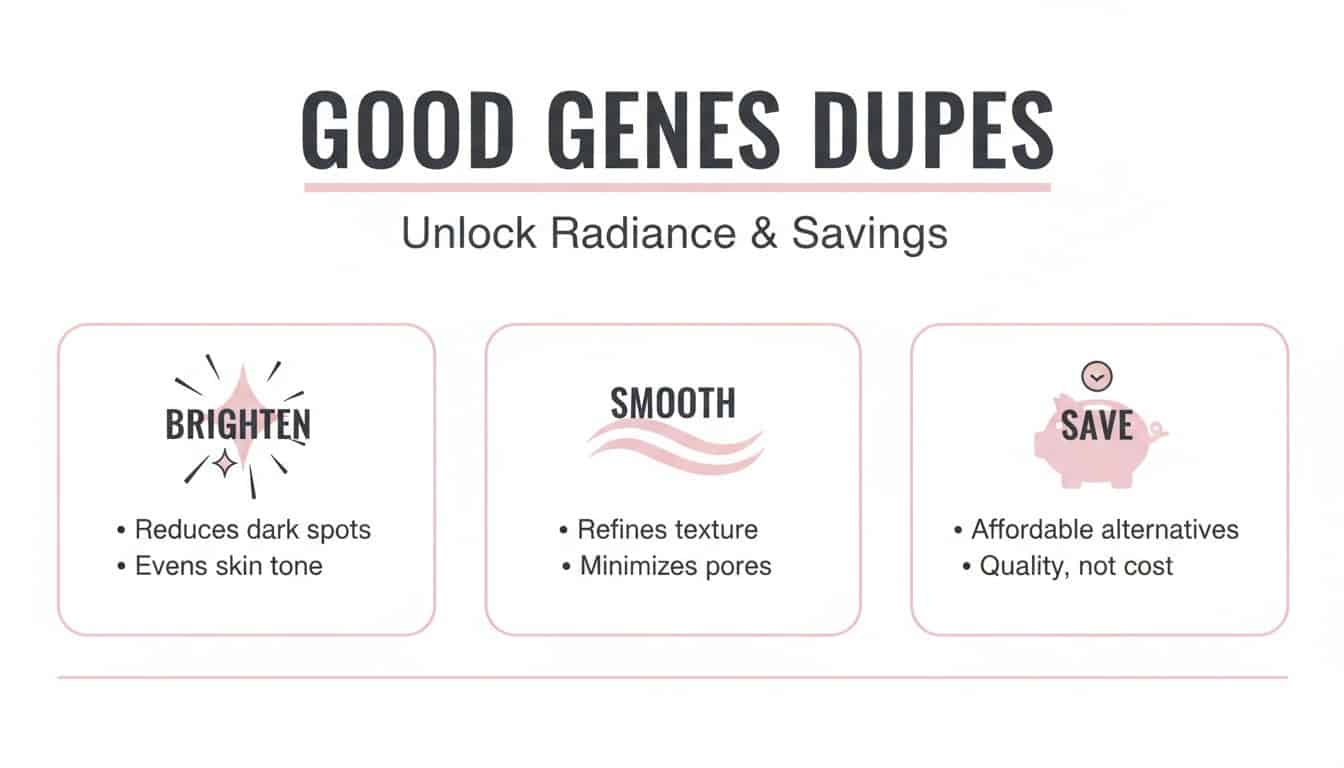
At the end of the day, a good dupe delivers what you love about the original—that radiant, refined look—while leaving more cash in your pocket.
This post may contain affiliate links, which means I may receive a commission if you purchase through my links, at no extra cost to you. Please read the disclosure policy for more information.
Good Genes vs The Dupes at a Glance
For a quick, easy-to-scan overview, this table breaks down the key differences between the OG Good Genes and our top-rated dupes. It’s perfect for comparing the active ingredients, supporting formulas, and price points at a glance.
| Product | Key Acid & % | Key Supporting Ingredients | Price Range | Best For |
|---|---|---|---|---|
| Sunday Riley Good Genes | Lactic Acid 5% | Licorice, Lemongrass, Arnica | $$$ ($85) | A luxury experience and sensitive skin |
| The Ordinary Lactic Acid 10% + HA | Lactic Acid 10% | Hyaluronic Acid, Tasmanian Pepperberry | $ (~$9) | High-potency exfoliation on a tight budget |
| Biossance Squalane + Lactic Acid Resurfacing Serum | Lactic Acid 10% | Squalane, Clover Extract | $$$ ($65) | Effective exfoliation with deep hydration |
| Youth to the People Mandelic Acid + Superfood Unity Exfoliant | Lactic Acid 3%, Mandelic Acid 3% | Kale, Green Tea, Licorice Root | $$ ($38) | Gentle, multi-acid exfoliation for all skin |
| Naturium Vegan Lactic Acid Emulsion 5% | Lactic Acid 5% | Aloe, Bisabolol | $ (~$18) | Mimicking the creamy texture of the original |
| Inkey List Lactic Acid Serum | Lactic Acid 10% | Hyaluronic Acid | $ (~$14) | A simple, effective, and fragrance-free option |
This side-by-side look makes it clear: you don’t have to spend a fortune to get powerful, skin-smoothing ingredients. While Sunday Riley offers a beautiful, botanical-rich formula, brands like The Ordinary and Biossance deliver higher acid concentrations with a focus on hydration for a much lower price.
Breaking Down the Good Genes Formula

Before we can crown a true Sunday Riley Good Genes dupe, we have to get under the hood of the original. What makes it so good? It’s not just hype; the formula is a smart combination of a powerhouse active and calming botanicals that really deliver. By figuring out what makes it tick, we’ll know exactly what to look for in a more affordable alternative.
The star of the show is, without a doubt, lactic acid. Good Genes uses a high-potency, purified grade of this alpha-hydroxy acid (AHA). Unlike its more intense cousin, glycolic acid, lactic acid has bigger molecules. This means it works on the skin’s surface more gently, making it a godsend for sensitive skin types who still crave that effective exfoliating glow.
This acid gets to work dissolving the “glue” that holds dead skin cells together, whisking them away to reveal brighter, smoother skin. The payoff is a real, visible improvement in texture, clarity, and even the look of fine lines. Any dupe worth its salt must have lactic acid as its primary active to even be in the running.
The Supporting Cast of Ingredients
While lactic acid is doing the heavy lifting, the other ingredients are what make the Good Genes experience feel so luxe and gentle. These botanicals are there to soothe any potential irritation from the acid and boost its brightening power.
Licorice Root Extract: A well-known brightener, licorice helps fade dark spots and hyperpigmentation by getting in the way of melanin production. The result is a more even, uniform skin tone.
Lemongrass Oil: This gives the product its signature sharp, clean scent. It also has some mild astringent properties to help purify the skin.
Arnica Extract: Famous for its anti-inflammatory benefits, arnica helps calm redness—a must-have in any potent exfoliating treatment.
Prickly Pear Extract: This antioxidant-rich extract soothes and hydrates, acting as a buffer against the acid’s intensity.
A great dupe doesn’t just copy the main ingredient. It has to nail the sensory experience and deliver on the soothing promises, too. Good Genes is iconic because its creamy, lotion-like feel and botanical blend make a strong acid feel like a gentle, luxurious treat.
Texture and Experience Matter
The last piece of the puzzle is how it feels on your skin. Good Genes isn’t some watery, sticky serum you have to tolerate. It has a beautiful lightweight, creamy texture that sinks in fast, leaving no tackiness behind. This elegant feel is a huge part of its cult-favorite status.
This unique texture comes from a mix of emollients like squalane and a touch of silicone, which give it that smooth glide and moisturizing finish. So, a top-tier Sunday Riley Good Genes dupe has to do more than just check off ingredient boxes. It needs to feel just as good going on, leaving skin feeling hydrated and instantly glowy—not stripped or sticky.
The Top 5 Dupes for Sunday Riley Good Genes
Hunting for the perfect Sunday Riley Good Genes dupe can feel like an endless scroll. We’ve done the legwork for you, putting dozens of formulas to the test. We looked at everything—lactic acid percentages, supporting ingredients, how it feels on the skin, and of course, how it actually performs day-to-day. What’s left is this tight list of the top five alternatives that nail that coveted glow without the eye-watering price.
Every product here is easy to find in the US and has been seriously vetted for its results, value, and closeness to the original icon. Whether you’re a seasoned acid pro or just dipping your toes in, there’s an option here that will leave your skin smoother, brighter, and your bank account a whole lot happier.

Here are the top 5 widely available dupes for Sunday Riley Good Genes:
1. The Ordinary Lactic Acid 10% + HA
This one is almost always the first name that comes up, and for good reason. The Ordinary’s Lactic Acid 10% + HA is a stripped-back, no-nonsense powerhouse. It skips the fancy botanicals and creamy feel of Good Genes, but when it comes to smoothing out skin texture, the results are impossible to ignore.
The formula doubles down on the key active, offering a potent 10% lactic acid for a more intense exfoliation. To balance things out, it includes Hyaluronic Acid (HA) to pull moisture into the skin, fighting off potential dryness. It also has a little Tasmanian Pepperberry extract to help calm the signs of inflammation that can sometimes come with acid use.
Let’s be real: the watery, slightly tacky texture is a world away from Sunday Riley’s silky lotion. But it’s the performance that lands it at the top of our list. People consistently rave about smoother, brighter skin and a noticeable difference in bumps and unevenness. At about $9.20 per ounce, it delivers incredible bang for your buck, making it the best budget Sunday Riley Good Genes dupe out there. If you’re new to acids, The Ordinary also has a gentler 5% version that’s a perfect starting point.
2. Biossance Squalane + Lactic Acid Resurfacing Serum
If you want serious exfoliation but aren’t willing to skimp on hydration, the Biossance Squalane + Lactic Acid Resurfacing Serum is your answer. It neatly bridges the gap between the budget-friendly power of The Ordinary and the luxurious experience of Sunday Riley. It’s a sophisticated formula that’s both effective and deeply nourishing.
Just like The Ordinary’s serum, this one packs a 10% concentration of vegan lactic acid, so you know it’s going to deliver on the resurfacing front. The game-changer here is the addition of Biossance’s signature sugarcane-derived squalane. This skin-identical moisturizer helps strengthen your moisture barrier and prevents that tight, dry feeling high-strength AHAs can sometimes cause. It’s the perfect one-two punch of exfoliation and replenishment.
The texture is a lightweight, milky serum that sinks in beautifully, leaving skin feeling soft and hydrated—never stripped. It’s a fantastic choice for anyone with normal to dry or mature skin who wants the smoothing power of a strong lactic acid without sacrificing moisture.
It’s pricier than the drugstore options, coming in around $65 per ounce, but its elegant formula and dual-action benefits make it a worthy splurge for a more hydrating and luxe dupe. It really nails that “plump and glow” effect that makes Good Genes so famous.
3. Youth to the People Mandelic Acid + Superfood Unity Exfoliant
Youth to the People takes a different route with its Unity Exfoliant, using a blend of gentle acids for a more comprehensive treatment. While it isn’t a straight lactic-for-lactic swap, it delivers a very similar result: smoother, clearer, brighter skin with minimal irritation. This makes it a great alternative for a much broader range of skin types.
The formula is built around 3% Mandelic Acid, which is fantastic for targeting hyperpigmentation and is known for being gentle thanks to its larger molecule size. It’s backed by 3% Lactic Acid for that surface-level smoothing and 2% Salicylic Acid (BHA) to get deep into pores. This triple-threat works on multiple layers of the skin for all-around improvement.
The texture is watery, more like a toner than a serum, and it’s meant to be patted in or applied with a cotton pad. It absorbs in a flash with zero residue. Plus, it’s packed with a superfood blend of kale, spinach, and green tea for an antioxidant boost while you exfoliate. At around $38 per ounce, it’s a solid mid-range pick, especially for those with combination, oily, or acne-prone skin who need to tackle both texture and clogged pores.
4. Naturium Vegan Lactic Acid Emulsion 5%
If that creamy, lotion-like texture of Good Genes is what you really love, Naturium’s Vegan Lactic Acid Emulsion 5% is the closest you’ll find. This product was clearly designed to capture that gentle-but-effective, hydrating feel that makes the original so popular. From a sensory standpoint, it’s an excellent Sunday Riley Good Genes dupe.
It uses a 5% concentration of lactic acid, matching Good Genes for a gentler exfoliation that many people can tolerate nightly. The formula is also boosted with soothing and hydrating ingredients like aloe and bisabolol to help calm the skin and minimize any potential redness.
The milky, lightweight emulsion is where this product truly nails it. It spreads like a dream and sinks in without any tackiness, leaving skin feeling comfortable and nourished. For budget-conscious readers of Finding Favourites, this matters. When a product hits that cult status and price point, even a 20–30% similarity in feel and results from a dupe at under one-third the cost is a huge win, especially when building a full routine. You can explore more drugstore dupes under $25 to build out your routine without breaking the bank.
5. Inkey List Lactic Acid Serum
The Inkey List is all about simple, ingredient-focused formulas that just work, and its Lactic Acid Serum is a perfect example. It offers a powerful and effective treatment that absolutely holds its own against more expensive options, making it a top contender for the best Sunday Riley Good Genes dupe for anyone prioritizing results over frills.
This serum brings 10% lactic acid to the table for some serious exfoliation, going after dullness, uneven texture, and the look of fine lines. It also includes 1% low molecular weight hyaluronic acid to make sure that as dead skin is swept away, the fresh new skin underneath gets a nice dose of hydration. This helps keep everything balanced and plump.
The formulation is clean and direct—a big plus for anyone trying to avoid potential irritants like fragrance or essential oils. It has a thin, lightweight serum texture that absorbs quickly. Some people find it a little tacky at first, but that feeling usually disappears once you apply moisturizer over top. For roughly $14 per ounce, it’s a powerful exfoliating treatment that delivers visible results, making it a smart and effective choice for any savvy skincare shopper.
How to Choose the Right Dupe for Your Skin Type
Finding a great Sunday Riley Good Genes dupe isn’t just about matching an ingredient list. It’s about finding the right formula for your skin. A powerful lactic acid serum is only going to work if your skin can handle it, so personalizing your choice is the key to getting that glow without irritation or breakouts.
We’re going to move beyond a simple one-to-one comparison. Let’s break down which dupes are best for different skin concerns, helping you pick a product that’s a perfect match for you.
For Sensitive or Dry Skin
If your skin leans toward redness, tightness, or feels perpetually thirsty, you have to be careful when introducing a strong AHA like lactic acid. The goal here is to find a formula that balances effective exfoliation with plenty of soothing and hydrating ingredients.
Look for these key features:
Lower Acid Concentration: Start with a dupe that has 5% lactic acid, which is the same as the original Good Genes. This gives you that gentle, surface-level exfoliation without completely overwhelming your skin. Something like Naturium’s Vegan Lactic Acid Emulsion 5% is a perfect starting point.
Hydrating and Soothing Buffers: You want to see ingredients like squalane, hyaluronic acid, aloe, or ceramides high up on the list. These create a supportive cushion, putting moisture back into your skin and strengthening your barrier while the acid does its thing.
Creamy or Milky Textures: A lotion or emulsion-style texture usually means it has a more moisturizing base than a watery serum. This can give you immediate comfort and cut down on that dry, stripped feeling.
For sensitive skin, the motto is “slow and steady.” A gentler formula used consistently will give you much better results than a high-strength acid that wrecks your skin barrier and forces you to stop and start your routine.
For Oily and Acne-Prone Skin
If you’re dealing with oily or acne-prone skin, the right lactic acid serum can be a total game-changer for congestion, texture, and those stubborn post-acne marks. This is actually where Good Genes really shines for a lot of people. You’ll find countless threads on beauty forums and in Facebook groups where users praise it for the visible results on acne scars and uneven texture. Some even say it’s the only product where they’ve seen “actual results,” even after “so many years” of buying it. You can learn more about how users feel about Good Genes to really get why it has such a cult following.
To find a dupe that gives you those same benefits, you need a formula that exfoliates effectively without adding extra oil or clogging your pores. For more targeted solutions, you might also want to check out our guide to the best products for acne-prone skin.
Lightweight, Non-Comedogenic Formulas: Stick to water-based serums or thin lotions. You want something that sinks in fast and doesn’t feel heavy or greasy.
Combination Acid Formulas: Look for dupes that pair lactic acid with a BHA like salicylic acid. While lactic acid works on the surface, salicylic acid gets deep into the pores to clear out oil and gunk, making it a powerhouse against blackheads and breakouts.
Minimalist Formulas: Sometimes, simple is better. A straightforward, fragrance-free formula like The Inkey List Lactic Acid Serum lowers the risk of triggering sensitivity, which often goes hand-in-hand with acne.
For Hyperpigmentation and Uneven Tone
If your main mission is to tackle dark spots, sun damage, or just an overall blotchy skin tone, a lactic acid dupe is a fantastic tool. But you can seriously level up its effects by picking a formula that’s also packed with other brightening powerhouses.
Keep an eye out for dupes that include these supporting ingredients:
Niacinamide: This form of vitamin B3 is an absolute superstar for fading discoloration and making your skin barrier stronger.
Licorice Root Extract: This is a key ingredient in the original Good Genes for a reason. Licorice root is a natural skin brightener that helps put the brakes on melanin production.
Vitamin C (or its derivatives): A must-have antioxidant that protects your skin from environmental damage while visibly brightening your whole complexion.
Mandelic Acid: Another gentle AHA with a larger molecule size, mandelic acid is especially good at lifting pigmentation with a much lower risk of irritation.
How to Use a Lactic Acid Serum in Your Routine
So you’ve picked up a potent lactic acid serum—whether it’s a Sunday Riley Good Genes dupe or the real deal. Now what? Bringing a powerful active like this into your routine is all about strategy. You want to get all the glowy, brightening benefits without sending your skin into a full-blown panic. This isn’t a product you just slap on every day right out of the gate; think of it as a targeted treatment that your skin needs to get used to.
Before you do anything else, the golden rule of new skincare applies: patch test. Dab a tiny bit of the serum on a discreet spot, like behind your ear or on your inner wrist, and give it a full 24 hours. If your skin looks calm—no redness, itchiness, or major freak-outs—you’re good to go. It’s a boring step, I know, but it can save you from a very unhappy face later on.
Start Low and Go Slow
When you first start with lactic acid, how often you use it is everything. Going too hard, too fast is the quickest way to a compromised skin barrier, which means redness, sensitivity, and peeling. No, thank you.
To ease your skin into it, start by applying your serum just once or twice a week. Use it at night on clean, completely dry skin. Let it sink in for a minute before following up with your moisturizer. If after a couple of weeks your skin is happy and showing no signs of stress, you can slowly bump it up to every other night.
It’s easy to think more is better, but that’s a huge mistake with acids. The secret to that smooth, radiant glow is consistent, patient use—not blasting your skin with it daily from the start. A healthy skin barrier always comes first.
What Not to Mix With Lactic Acid
Figuring out how to layer your skincare is crucial, especially with strong actives. Lactic acid is a powerful exfoliant, and if you mix it with other intense ingredients in the same routine, you’re basically asking for over-exfoliation and irritation.
Keep these ingredients separate from your lactic acid application:
Retinoids (Retinol, Tretinoin): Using AHAs and retinoids at the same time is a recipe for a red, angry face. The best way to use both is to alternate nights. Lactic acid one night, retinoid the next.
Other AHAs and BHAs: Don’t double-dip on exfoliants. Avoid using your lactic acid serum at the same time as other acids like glycolic, salicylic, or any physical scrubs. It’s just too much for your skin to handle at once.
High-Concentration Vitamin C: This one can be tricky. Some people find that layering a potent L-ascorbic acid Vitamin C serum with an AHA causes sensitivity. A safer bet is to use your Vitamin C in the morning and save the lactic acid for your nighttime routine.
If you’re also trying to tackle dark spots, you’ll want products that play nicely together. On your “off” nights from lactic acid, you can incorporate brightening serums that don’t rely on harsh actives. For example, you can see how a niacinamide-based product like the AXIS-Y Dark Spot Correcting Glow Serum works as another piece of your brightening puzzle.
The One Step You Can Never, Ever Skip
Okay, this is the most important part. When you use any AHA like lactic acid, sunscreen is non-negotiable. The acid works by sloughing off that top layer of dead skin, revealing fresh, new skin underneath. That new skin is much more sensitive to the sun.
You absolutely must apply a broad-spectrum sunscreen with an SPF of 30 or higher every single morning. This isn’t just a suggestion; it’s essential for protecting your skin from UV damage, preventing new spots from forming, and making sure you don’t undo all the good work your serum is doing.
Frequently Asked Questions about Good Genes Dupes
Diving into the world of exfoliants can feel a little overwhelming, especially when you’re trying to find the perfect Sunday Riley Good Genes dupe. You want to feel good about what you’re putting on your skin. To help you out, I’ve put together answers to some of the most common questions I get about finding and using a lactic acid serum.
What Is the Difference Between Lactic and Glycolic Acid?
Both lactic and glycolic acid are alpha-hydroxy acids (AHAs), but the main difference is their molecule size, which completely changes how they work. Glycolic acid has smaller molecules, so it can penetrate deeper into the skin for a more powerful exfoliation. This is great for tackling texture, but it can also be a bit much for sensitive skin.
On the other hand, lactic acid has larger molecules. This means it works closer to the skin’s surface, offering a much gentler exfoliation. It’s the perfect starting point if you’re new to acids or have dry, sensitive skin. It even pulls moisture into the skin, giving you a nice hydration boost.
Fun fact: The massive global demand for Good Genes actually led Sunday Riley to create two different versions. The original lactic acid formula couldn’t be sold in parts of Europe because of concentration limits, so the brand launched a glycolic acid version just for that market. It really shows how iconic the product became. You can read more about the Good Genes formula variations and what makes it so popular.
How Long Does It Take to See Results from a Lactic Acid Serum?
Patience is always a good thing in skincare, but lactic acid is one of those ingredients that gives you a little instant gratification.
Short-Term Results (1-3 uses): You’ll probably see a brighter, smoother-looking complexion almost immediately. That first exfoliation whisks away dull surface cells, creating a temporary but very satisfying “glow.”
Long-Term Results (4-8 weeks): This is where the real magic happens. With consistent use, you’ll start noticing more significant changes, like a reduction in the appearance of fine lines, less noticeable hyperpigmentation, and a more even skin tone and texture overall.
Just remember, consistency is way more important than frequency. Stick with it, and you’ll see the payoff.
How Do I Know if a Good Genes Dupe Is Working for Me?
The signs are both immediate and gradual. Right away, your skin should feel softer and look more radiant after you use it—but without feeling tight, stripped, or irritated. A good sign is when your other products, like moisturizers and serums, seem to sink in better.
Over the next few weeks, keep an eye out for these positive changes:
Your skin tone looks more even and less blotchy.
Old acne marks or sun spots are starting to fade.
The texture feels smoother, with fewer little bumps.
You have a healthy, sustained glow, even on your off-days from the serum.
The real test is just how your skin looks and feels over time. A great dupe will give you that “good skin day” vibe more and more often, without causing any redness, peeling, or new sensitivity.
Can I Use a Lactic Acid Serum Every Day?
For most people, that’s a hard no, especially when you’re just starting. Using a potent AHA like lactic acid every single day can easily lead to over-exfoliation. This damages your skin barrier and can cause redness, sensitivity, and even breakouts—the very things you’re trying to fix.
It’s much safer to start by using your serum just 1-2 times per week at night. Give your skin a few weeks to adjust. If it’s handling it well (no irritation!), you can slowly increase to every other night. Some people with very resilient skin might work up to daily use, but for the vast majority of us, 2-4 times a week is the sweet spot for getting amazing results without irritation. Always, always listen to your skin.