
How to Apply Mascara Properly
You're probably here because mascara keeps doing one of two rude things. It either gives you three decent lashes and no drama, or it gives you all the drama in the worst way: clumps, flakes, smudges, and that lovely surprise streak on your brow bone five minutes after you leave the house.
Simple. Learning how to apply mascara properly has less to do with buying the fanciest tube and more to do with placement, patience, and hygiene. Modern mascara was built around the tube-and-brush system we still use now, with milestones that shaped how we apply it today: cake mascara sold with a brush in 1923, Helena Rubinstein's lotion-based cream formula in 1957, Maybelline's first spiral brush in 1959, and its mass-market tubed mascara Ultra Lash in 1964, as outlined by Premium Beauty News on mascara's product evolution.
This post may contain affiliate links, which means I may receive a commission if you purchase through my links, at no extra cost to you. Please read the disclosure policy for more information.
Prep Your Lashes and Workspace
Most mascara problems start before the wand touches your lashes. If your lashes are oily, your curler is dirty, and the wand comes out loaded with product, you're already headed for clumps.
Start with clean, dry lashes. Curl first, always. If you curl after mascara, especially while it's still damp, you're asking for sticking, pulling, and weird bent lashes that never quite recover. I like a regular curler or a heated one used lightly, but the rule stays the same: curl before product.
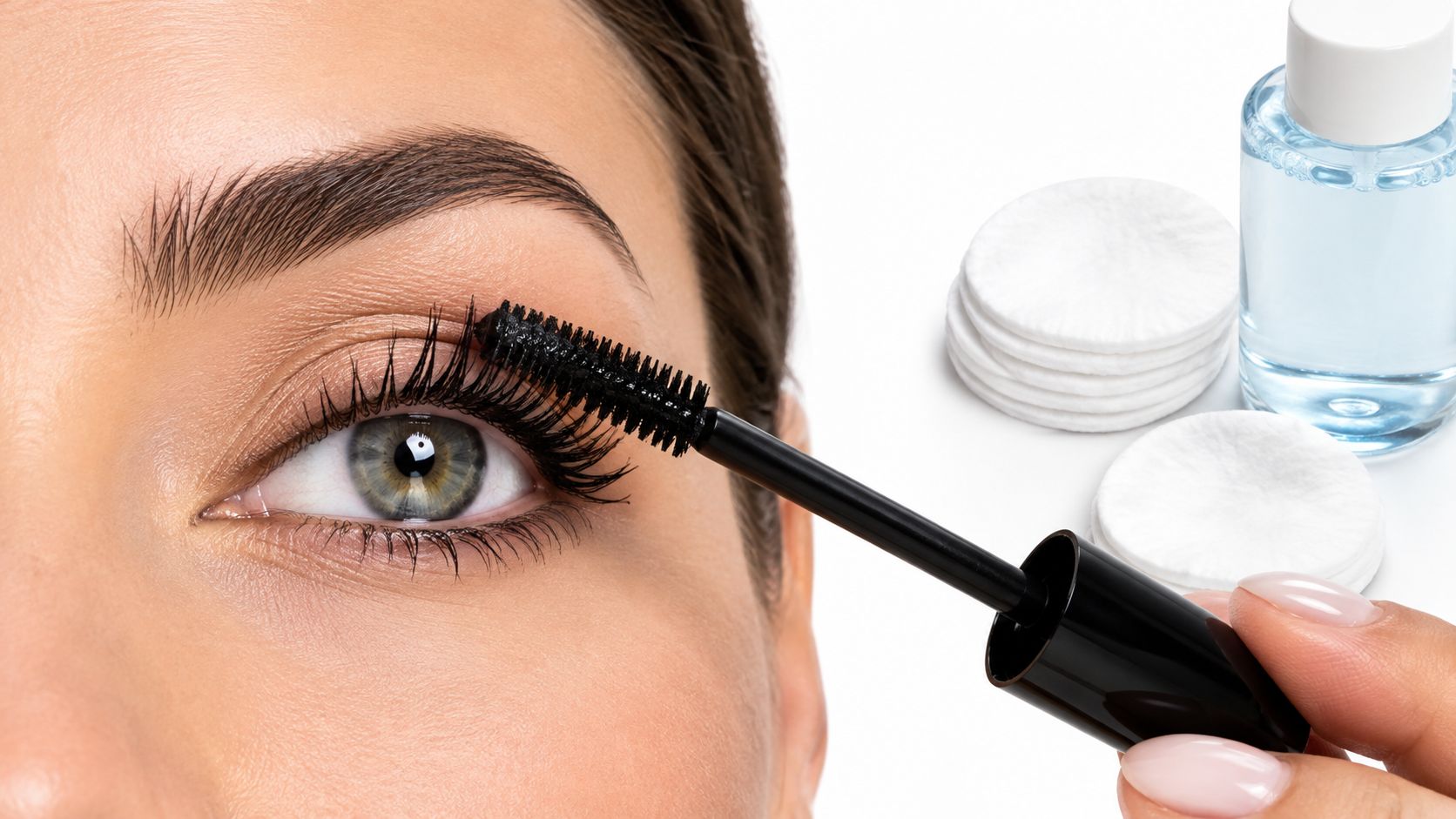
Get your setup right
A good mascara application station is boring, which is exactly why it works.
- Use a downward-angled mirror: Looking slightly down keeps your lids relaxed and makes it easier to coat upper lashes without tattooing your eyelid.
- Blot excess oil first: If your under-eyes or lids get slick fast, press blotting paper over the area before makeup.
- Keep cleanup nearby: A cotton swab and remover save time. If you need one, this guide to alcohol-free makeup remover is useful for the eye area.
Practical rule: The first clump usually comes from the first pull of the wand.
Pick the right wand for your lash type
Not every mascara fails you. Sometimes you're just using the wrong brush.
- Short lashes: Go for a slimmer wand, especially plastic bristles that separate well.
- Sparse lashes: A fuller or curved brush usually builds the most visible volume.
- Straight lashes: Waterproof or more hold-focused formulas usually keep curl better than soft, creamy ones.
- Sensitive eyes: Skip fiber-heavy formulas if they tend to flake into your eyes.
Before you apply, wipe excess mascara off the wand. Not all of it. Just the blob sitting near the tip and neck of the brush. That one overloaded spot is what creates spider lashes on the first pass.
Master the Upper, Lower, and Corner Strokes
Mascara goes wrong when people treat every lash the same. Upper lashes need one motion. Lower lashes need another. Inner and outer corners need patience, not brute force.
The safest, cleanest method is also the prettiest one. Ophthalmology guidance recommends applying mascara to the outer edge of the upper lashes and avoiding the mucocutaneous junction, because product placed too close to the eye can block oil glands and worsen dryness or irritation. The same guidance also warns against pumping the wand and applying in motion. You can read that directly in the American Academy of Ophthalmology eye makeup guidance.
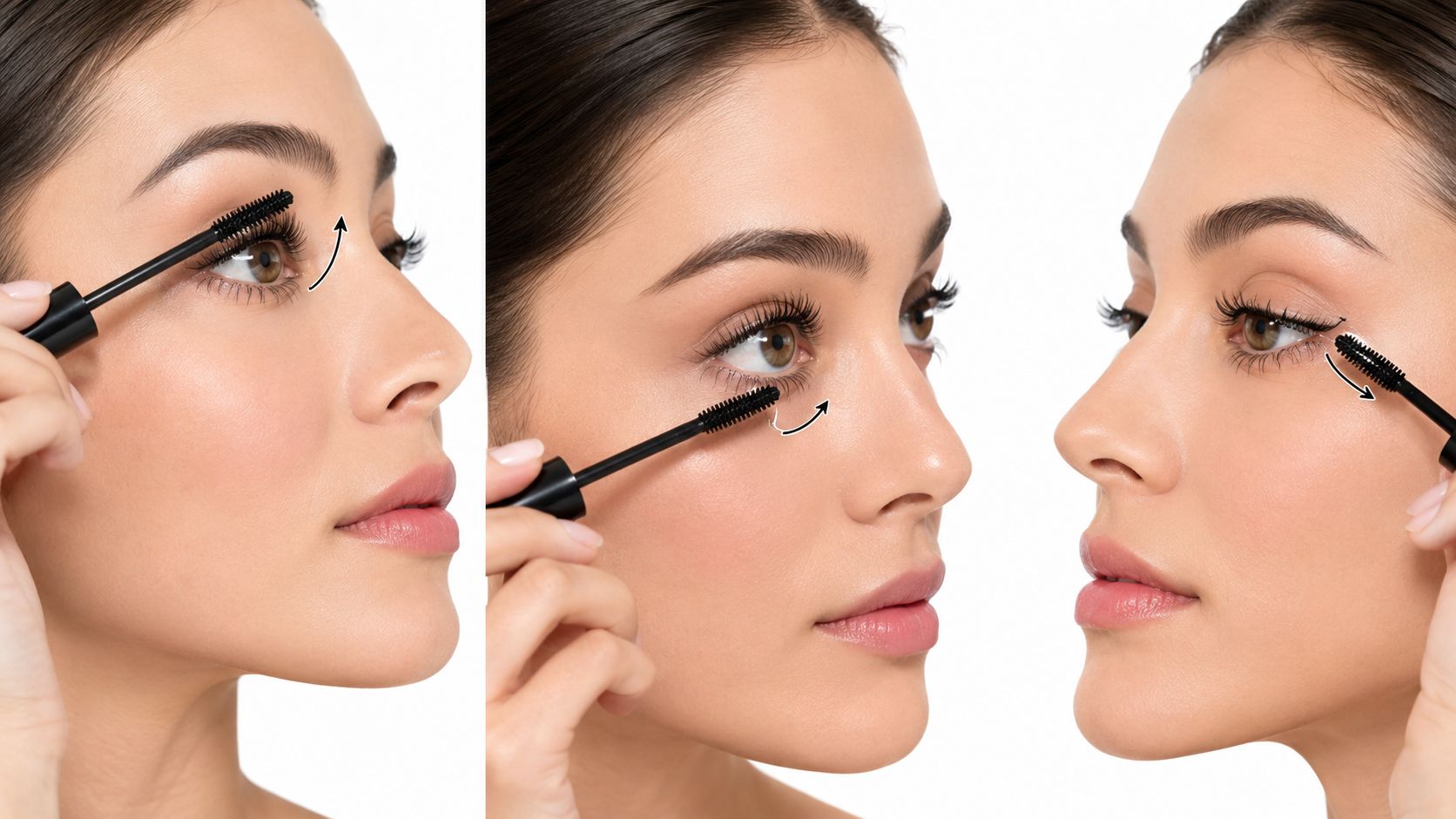
Upper lashes
For upper lashes, I want lift at the base and separation through the ends.
- Set the wand at the base of the upper lashes
- Wiggle slightly side to side
- Sweep upward through the lengths
That small wiggle helps coat the lashes evenly without dumping too much product at the tips. Keep the brush just off the inner lash line instead of grinding it into the root.
Lower lashes
Lower lashes need restraint. Many use way too much product here, then spend the rest of the day cleaning up.
- Hold the wand vertically
- Use only the tip
- Touch the lashes lightly and stroke downward
One light pass usually looks better than repeated swipes. If your lower lashes are tiny, use whatever product is left on the brush after the upper lashes instead of re-dipping.
Keep product off the waterline and away from the lid margin. That's where irritation starts fast.
Inner and outer corners
Corners are where pokes and smears happen. Tilt your head back a little, look down into your mirror, and use the very tip of the wand vertically. Dab and pull. Don't sweep wildly across the corner.
If you want cleaner separation, run a clean spoolie through lashes while the mascara is still tacky. This is one of the few extra steps that always pays off.
A few habits to cut immediately:
- Don't pump the wand: Twist it out gently instead.
- Don't overload the first coat: Two thin coats beat one thick one every time.
- Don't blink hard right away: Give the product a moment before opening your eyes fully.
Best Drugstore Mascara Dupes for Every Lash Type
Luxury mascara is one of the easiest categories to dupe. The packaging gets fancier. The result usually doesn't. If your goal is better lashes for less, spend based on brush shape and formula type, not branding.
Here's the quick comparison first.
Drugstore Mascara Dupes vs. Luxury Formulas by Lash Type
| Lash Type | Drugstore Dupe | Luxury Equivalent | Why It Works |
|---|---|---|---|
| Sparse lashes | Maybelline Lash Sensational | YSL Lash Clash | Curved brush helps build volume and separation |
| Straight lashes | CoverGirl Lash Blast Volume Waterproof | Benefit They're Real | Better hold for curl-prone lashes |
| Sensitive eyes | Blinc Original Tubing Mascara | Thrive Causemetics Liquid Lash Extensions | Tubing style removes more cleanly with less rubbing |
| Short lashes | e.l.f. Lash It Loud | Too Faced Better Than Sex | Slimmer feel and more control on shorter lashes |
The dupes I'd actually tell you to buy
Maybelline Lash Sensational
This is the one I'd hand to anyone with sparse lashes who wants fullness without a heavy, gloopy finish. The curved brush grabs more lashes than a basic straight wand.CoverGirl Lash Blast Volume Waterproof
If your lashes drop the second humidity hits, this is the practical pick. Straight lashes usually need hold more than they need extra bulk.Blinc Original Tubing Mascara
For sensitive eyes, this category makes more sense than dramatic fiber mascaras. It tends to come off in tubes with warm water, which means less rubbing and fewer black shadows the next morning.e.l.f. Lash It Loud
Good for short lashes because it gives definition without feeling too wet. Heavy formulas can drag small lashes down fast.
If you want more budget options specifically for long-wear formulas, this roundup of cheap waterproof mascaras is worth a look.
Expensive mascara rarely fixes bad technique. A better wand match usually does.
Hygiene Habits That Protect Your Eyes
Mascara hygiene is where most tutorials fail. They'll teach you how to fake a fuller lash line, then skip the part where old product, dirty hands, and sloppy placement can leave you with irritation you can't cover with concealer.
The FDA's guidance is blunt. Discard mascara after three months, don't revive dried-out mascara with water or saliva, and don't apply eye makeup in a moving vehicle because an applicator slip can scratch the cornea. That guidance appears in the FDA's eye cosmetic safety recommendations.
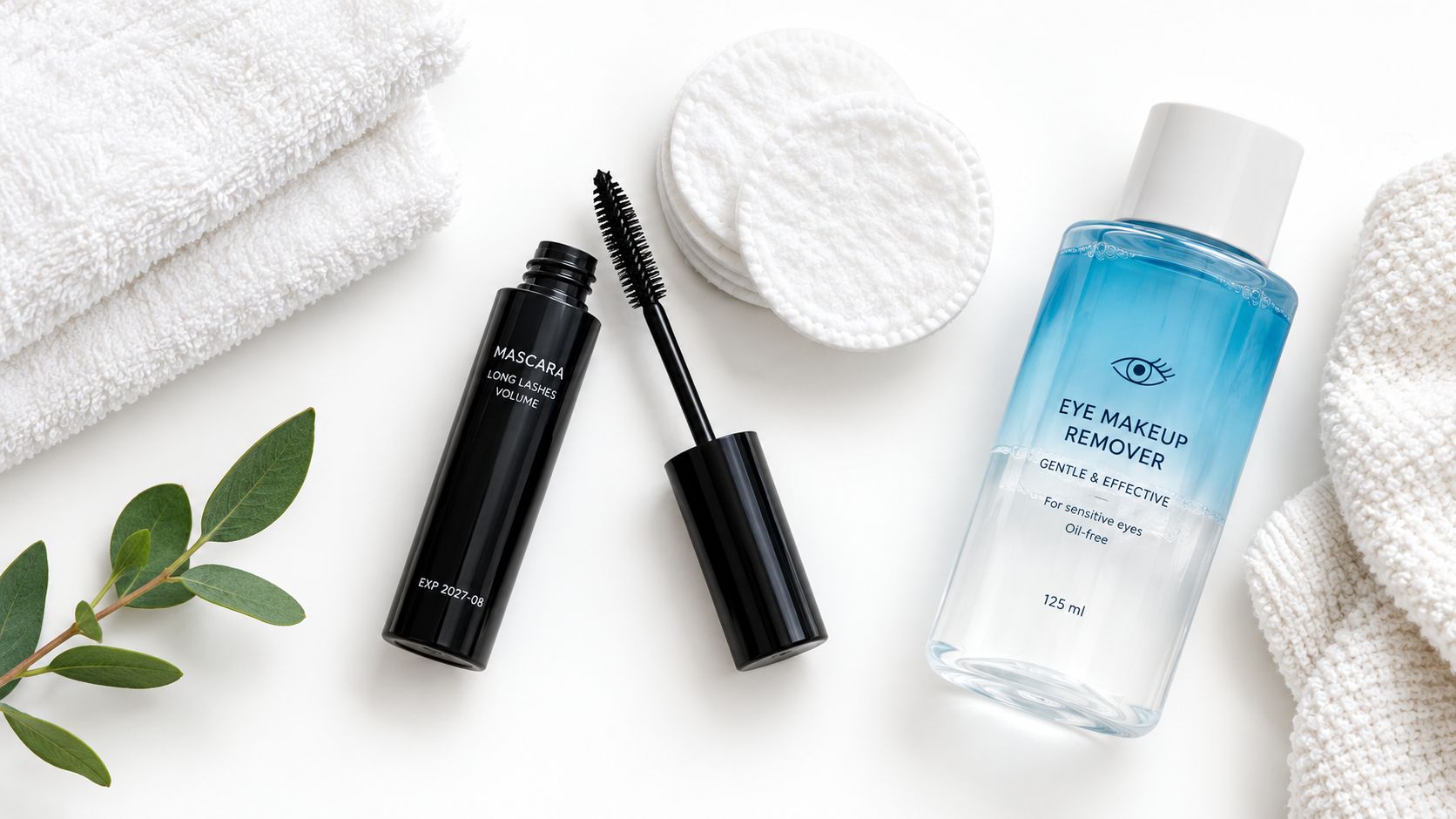
The non-negotiables
- Wash your hands first: Especially if you wear contacts or touch your eyes during application.
- Use a clean wand: Don't reuse old applicators in a fresh tube.
- Never share mascara: This is how you trade microbes for no reason.
- Stop pumping the wand: It pushes air into the tube and speeds up contamination and drying.
Placement matters more than people admit
A lot of eye irritation comes from putting mascara too close to the eye itself. Product migrates. Blinking moves particles. If you already deal with dryness, that migration matters even more.
For contact lens wearers, there's specific ophthalmic advice worth following. Insert lenses first, then apply makeup. If mascara sticks to a daily disposable soft contact lens, discard and replace the lens. A peer-reviewed study also advises letting mascara dry fully before handling lenses and concentrating application on the lash tips rather than near the base. That research is covered in this study on mascara adhesion in contact lens wearers.
What spoilage looks like
Don't overthink this. If the mascara smells off, gets flaky in a new way, turns oddly dry, or changes texture, toss it. A tube is not precious.
Quick Fixes for Smudges, Flakes, and Midday Meltdowns
Mascara mistakes don't need a full eye redo. Most of them need better timing and the right tool.
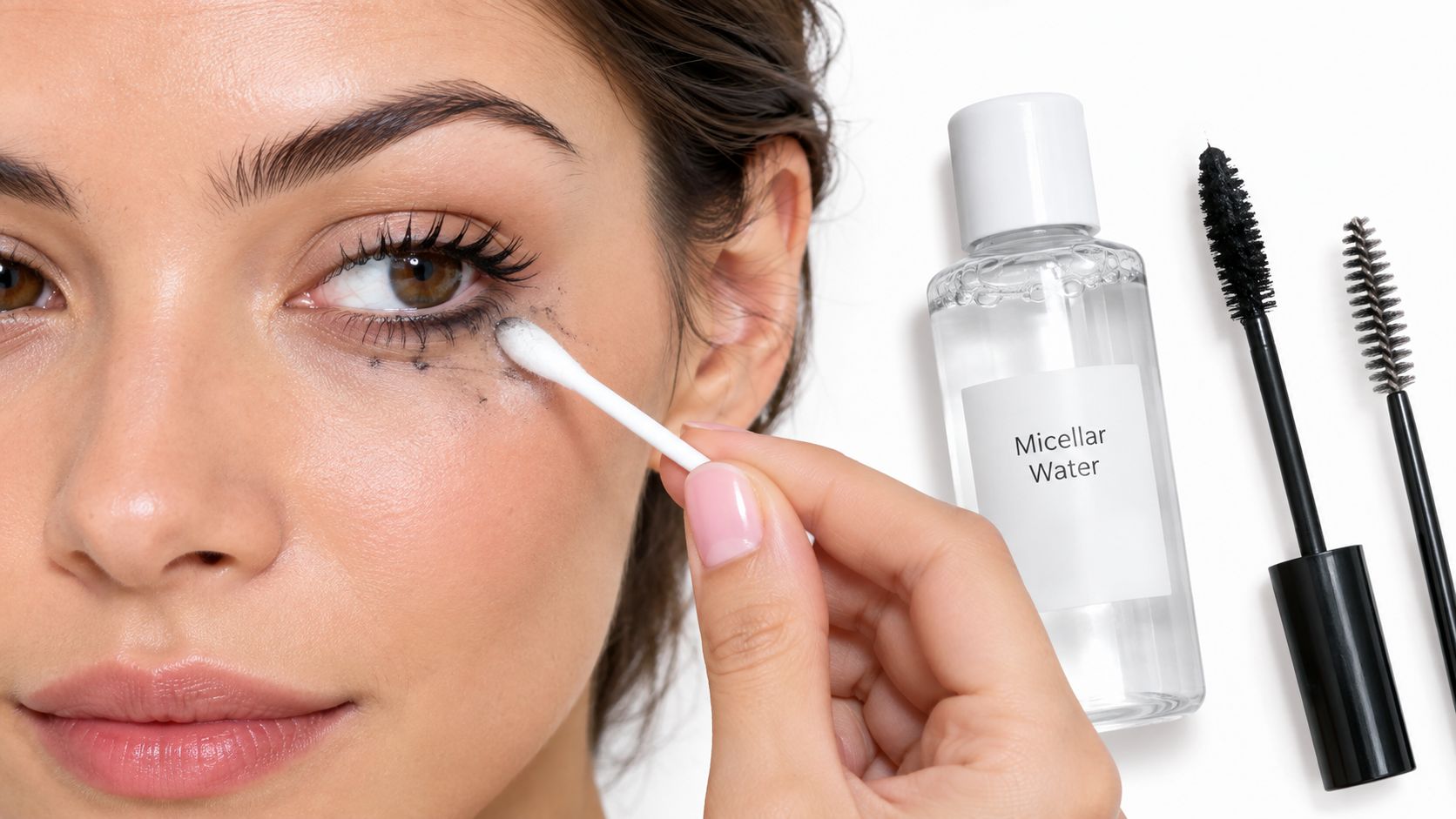
Fix under-eye smudges fast
If the smudge is still fresh, use a cotton swab with micellar water and roll it gently under the mark instead of dragging sideways. If it's already dried, a clean spoolie can often flick it away without disturbing concealer.
For dried-out product issues, skip the bad habit of adding water back into the tube. If your mascara is getting weird, this guide on how to fix dry mascara covers the safer call, which is often replacing it rather than trying to rescue it.
Deal with flakes and transfer
Flakes are usually either old product or too much product.
- For flakes: Comb through with a clean, dry spoolie.
- For brow-bone transfer: Use a flat brush with a touch of powder to lift and soften the mark.
- For oily breakdown: Press a tissue-wrapped fingertip under the eyes, then do one careful touch-up stroke only if needed.
Here's a quick visual if you want to see cleanup and application moves in action.
Keep a tiny rescue kit
A purse-friendly mascara fix kit doesn't need to be deep.
- Clean spoolie
- Cotton swabs
- Mini micellar water or remover pen
- Folded tissue
That's enough to handle most mascara disasters without turning your bag into a makeup drawer.
Common Questions About Mascara Application
Does waterproof mascara damage lashes
Not automatically. The bigger issue is removal. If you rub too hard, lashes pay for it. Use a remover that breaks down stubborn formulas easily and press it on gently instead of scrubbing.
Can you wear mascara with lash extensions
You can, but I'd keep it minimal and avoid getting product near the bonds. Heavy mascara and rough removal shorten the life of extensions fast. If you wear them mainly for fullness, you probably don't need mascara on the top lashes anyway.
What about contact lenses and sensitive eyes
Be picky. A mini-review on eye makeup notes that fiber mascaras can irritate the ocular surface, and broader evidence recommends avoiding product on the inner eyelash line to reduce migration over the lid margin. That's the useful takeaway from this review of eye makeup and ocular surface tradeoffs.
Should you curl after mascara
No, not if the product is wet. Curl first on bare lashes. If you use heat, keep it brief and use common sense. Damp mascara and pressure are a bad mix.
Is layering two mascaras worth it
Sometimes. I like a lighter defining coat first, then a more volumizing formula on the outer lashes if you want extra lift. Two heavy mascaras stacked together usually just create expensive clumps.
Final Thoughts on Better Lashes for Less
If you want one mascara dupe to start with, go with Maybelline Lash Sensational. It's the most reliable pick here for sparse lashes because the brush does a lot of the work for you, and that matters more than a prestige logo printed on the tube.
Three habits beat a fancy mascara every single time. Curl bare lashes first. Replace your tube every three months. Use a clean spoolie while the mascara is still tacky if you see clumps starting. That's the difference between polished lashes and the kind that look messy by lunchtime.
A lot of mascara frustration comes from trying to fix technique with shopping. Don't start there. Start with one change tomorrow morning, probably wiping the wand before the first coat, and your lashes will already look better.
Common Questions About Mascara Application
How often should you replace mascara
The FDA says to discard mascara after three months in its eye cosmetic safety guidance. If the texture, smell, or performance changes earlier, throw it out sooner.
Is it okay to apply mascara at the lash root
For looks, many people do. For eye comfort, cleaner placement is smarter. Keep product on the outer portion of the upper lashes and avoid pushing it into the inner lash line.
Should contact lens wearers put in lenses before or after mascara
Put lenses in first, then apply makeup. Also let the mascara dry fully before handling lenses again.
What's the biggest mascara mistake
Pumping the wand. It introduces air, dries the product faster, and raises contamination risk.
What's the best dupe from this list
Maybelline Lash Sensational is the standout. It gives sparse lashes the most payoff with the least fuss, and it proves the main point of this whole article: technique and brush design matter more than prestige packaging.
If you only remember one thing, make it this: Maybelline Lash Sensational was the strongest dupe in this roundup, but clean application habits matter even more than the tube you buy. Learn how to apply mascara properly, keep it off the inner lash line, replace it on time, and your lashes will look better with fewer smudges, flakes, and eye problems.
If you like beauty advice that cuts through hype and helps you spend smarter, Finding Favourites is full of affordable makeup swaps, mascara roundups, and practical how-to guides like this one. It's a useful stop when you want luxury-looking results without paying luxury prices, especially if you're comparing formulas, wand styles, and wearability.