How Long Does Perfume Last? Real Wear Times Explained
Eau de parfum usually lasts about 6-8 hours on skin, eau de toilette about 3-6 hours, and parfum can reach 8-12 or more hours, with the concentration on the label as your first clue. But if a perfume stops filling the room while you can still smell it on your wrist, has it stopped lasting?
This post may contain affiliate links, which means I may receive a commission if you purchase through my links, at no extra cost to you. Please read the disclosure policy for more information.
Typical Wear Time by Concentration and How to Pick One
Most perfume lasts a few hours on skin, but concentration is a starting point, not a stopwatch. The label helps you narrow your choices before you consider the scent's ingredients, your skin, and the conditions you'll wear it in.
The following typical fragrance-oil shares and wear times come from Ajmal's perfume concentration guide. Treat every row as an approximate range rather than a promise.
| Concentration | Fragrance oil | Typical wear time |
|---|---|---|
| Parfum or extrait | 20-30% | 8-12+ hours |
| Eau de parfum | 15-20% | 6-8 hours |
| Eau de toilette | 5-15% | 3-6 hours |
| Eau de cologne | 2-5% | 2-4 hours |
| Eau fraiche | 1-3% | 1-2 hours |
An eau de parfum often outlasts the eau de toilette version of a similar fragrance. However, the versions may also have different compositions, so don't assume you're buying precisely the same scent with extra staying power.
Choose for your day, not just the label
For a full workday or an evening out, eau de parfum or parfum is a sensible starting point. For a short outing, an eau de toilette may give you all the wear you need without committing you to a persistent base scent.
In hot climates, consider a higher concentration, but don't assume stronger automatically means more comfortable. A restrained application and a travel spray for a later top-up can be more useful than a heavy application before leaving home.
Format also deserves attention. Aroma Warehouse's guide to choosing between oils and sprays is useful when you're deciding how you prefer to apply fragrance, rather than judging every product by its concentration name alone.
Shopping rule: Compare an affordable eau de parfum with a luxury eau de parfum. Don't judge an eau de toilette alternative against a parfum and attribute the entire difference to price.
Dupe options to put through a wear test
For shoppers exploring the sweet, airy fragrance style associated with Baccarat Rouge 540, these are practical US-market options to investigate. This is a sampling shortlist, not a verified longevity ranking.
| Dupe or alternative | Comparison target | Buying approach |
|---|---|---|
| Dossier Ambery Saffron | Baccarat Rouge 540 | Sample for scent similarity |
| Ariana Grande Cloud | Baccarat Rouge 540-style alternative | Sample for a related effect |
- Dossier Ambery Saffron. Start with this option if your priority is a deliberately inspired alternative. Check its current product description and concentration, then compare its later development with the fragrance you're trying to replace.
- Ariana Grande Cloud. Treat this as a related alternative rather than an exact replica. Choose it only if you enjoy its own development, not because you expect every stage to match another perfume.
Our dupe sections cover drugstore, makeup, skincare and fragrance products, plus Charlotte Tilbury products. For fragrance shopping, the same principle applies across budgets: a similar opening isn't enough if you dislike what remains later.
Before buying a full bottle, check the concentration, match it to the hours you need, and test it on your skin. Those steps tell you more than an impressive first spray.
Why Perfume Fades in Stages
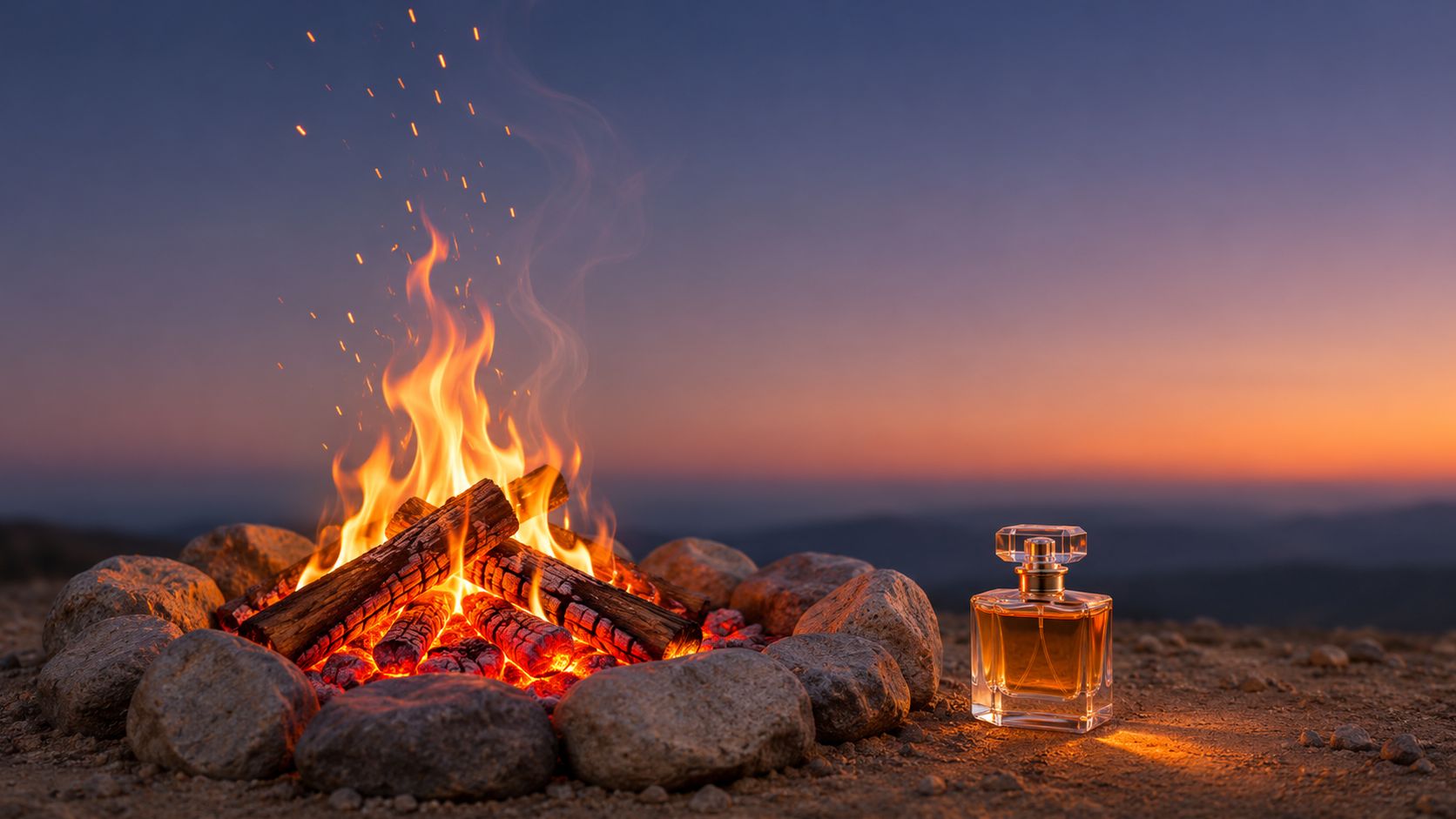
Think of perfume like a campfire: the sparks disappear first, while the embers keep glowing. Top notes give the initial impression, heart notes shape the middle, and base notes provide the lingering finish.
The image captures that difference between a bright opening and a persistent remainder.
In a peer-reviewed fragrance evaporation study indexed by PubMed, radiolabeled testing found losses within the first 40 minutes of up to 39% for geraniol, 26% for citronellol, and 14% for diethyl phthalate. Separate non-radiolabeled experiments recorded losses after 24 hours of 8.9%, 27.0%, and 14.5%, respectively.
Those are different experimental methods, not successive readings from one continuous evaporation curve. They describe individual materials under test conditions, not the number of hours a finished perfume will last.
Formula design changes the progression
A controlled formulation study published by Wiley found that adding 5% polymer-based fixative increased retention of selected top notes by 94.46% and delayed heart-note release by 59.97%; increasing the fixative to 10% performed worse. More of a retention ingredient wasn't automatically better.
That helps explain why concentration alone can't rank every bottle. Perfumers also influence how materials are released, so equally labeled fragrances can develop differently.
For another way to think about perfume development, watch the accompanying video.
Projection describes how far the fragrance radiates; longevity describes how long it remains detectable. Our guide to perfume sillage also explains the trail a fragrance leaves behind.
A perfume can stop announcing itself across a room yet retain a faint base scent on your wrist. Whether that counts as lasting depends on whether you want noticeable presence or a private, close-to-skin finish.
How Skin, Heat and Application Change Wear Time
Your friend's glowing longevity review isn't a guarantee for your skin. Moisture, natural oils, temperature, pH and microbial interactions can influence how a fragrance develops, as described in this skin and fragrance science document.
Dry skin tends to absorb fragrance molecules more readily, while moisturized or oilier skin can slow their evaporation. Warm skin encourages faster release, which can make an opening seem lively before it fades.
| Factor | Effect on wear time | Practical adjustment |
|---|---|---|
| Dry skin | Absorbs fragrance faster; scent may fade sooner | Apply unscented lotion first |
| Oily or moisturized skin | Can slow evaporation | Apply to already-prepped skin |
| Hot weather or warm skin | Speeds evaporation and opening-note loss | Try a higher concentration or top up somewhere cool |
| Cold, still air | Slower release but softer projection | Assess nearby before adding more |
| Extra sprays | Increase the dose and often initial projection | Start lightly; adjust to the formula |
| Fixative-rich formula | May retain volatile materials longer | Test the finished scent, not ingredient claims |
Adjust the surface before increasing the dose
Apply a fragrance-free moisturizer, let it settle, then apply your perfume. This lets you assess the perfume without a scented lotion changing the result; our fragrance layering tips offer ways to combine products more deliberately.
Extra sprays don't provide a predictable extension of wear time. They can make the initial application overwhelming without giving you the particular late-day scent you wanted.
Don't try to solve every longevity problem by spraying more. First decide whether you're missing the opening, the projection, or the entire fragrance.
For tropical conditions, Dubai Fragrance Shop PH's discussion of perfumes that survive Philippine humidity offers a climate-specific perspective. Use it to build a sampling shortlist, not to substitute someone else's conditions for your own.
A paper blotter can reveal more than the opening if you revisit it, but it still isn't skin. Use it to screen scents, then wear your favourites before deciding which deserves a bottle.
Storage Habits That Protect Longevity
A bathroom shelf is convenient, but steam, light and temperature changes make it a poor permanent home for perfume. Oxidation occurs when fragrance compounds react with oxygen, forming compounds that can change the smell; heat, light and repeated air exposure accelerate deterioration, as explained in Rook Perfumes' storage guide.
Temperature deserves particular attention. The Oud Library perfume storage guide describes the chemical rule of thumb that many reaction rates approximately double with each 10°C increase, meaning storage around 30°C could age a perfume roughly twice as quickly as storage around 20°C; it also reports oxidation beginning around 40°C and loss of chemical stability above 50°C.
Give the bottle a stable home
Those temperatures aren't a formula for calculating an expiration date. They're a reason to avoid prolonged heat rather than a reason to monitor every brief temperature change.
- Close it securely. Replace the cap and avoid leaving an opened bottle exposed unnecessarily.
- Keep the original box. It provides a simple barrier against light.
- Choose a closet or drawer. A cool, dark, dry space is preferable to a display beside a window.
- Avoid heat traps. Don't leave fragrance in a hot car, near a radiator or on a sunny windowsill.
Good storage protects the perfume you have. It can't restore the original composition of a bottle that has already deteriorated.
Does Perfume Expire and When to Replace It
The U.S. Food and Drug Administration's cosmetics shelf-life guidance states that cosmetics aren't legally required to carry a specific shelf life or expiration date. Manufacturers are responsible for determining how long their products remain safe and perform as expected.
A general guideline isn't the same as a deadline. An Avelisse buying guide citing Cosmetics Batch in 2026 reports that most fragrances last 3-5 years from manufacture, but that doesn't establish an individual bottle's condition.
Check changes, not just dates
Opening and handling a bottle can increase its exposure to air, although a spray bottle isn't fully opened every time you remove its decorative cap. Formula and storage history still matter.
- Changed colour. Notice substantial darkening, especially alongside a changed smell. Colour alone isn't a definitive verdict.
- Changed scent. Compare with your memory of the fragrance or a fresh sample. Sour, flat or unfamiliar development deserves attention.
- Changed performance. An unusual decline can be a clue, but first rule out a different application or environment.
Gotham Fragrances' perfume expiration timeline explained provides additional context for distinguishing bottle age from deterioration.
Replacement cue: Replace a perfume when it no longer smells like the fragrance you bought, rather than waiting for an arbitrary birthday.
Stop using it if it causes irritation, regardless of its age.
How to Test Wear Time on Your Own Skin
A controlled comparison gives you a more useful answer than wearing different perfumes on unrelated days. A peer-reviewed skin-evaporation study identifies surface temperature, fragrance concentration and airflow as relevant drivers; its 2025 volunteer testing also found different evaporation profiles across individuals and supports checking around 15 minutes, 2 hours, 4 hours and 8 hours.
Use a notebook or your phone's notes app. Record observations in plain language, such as noticeable nearby, clear at the wrist, or only a faint base remains.
A consistent application area makes comparisons easier.
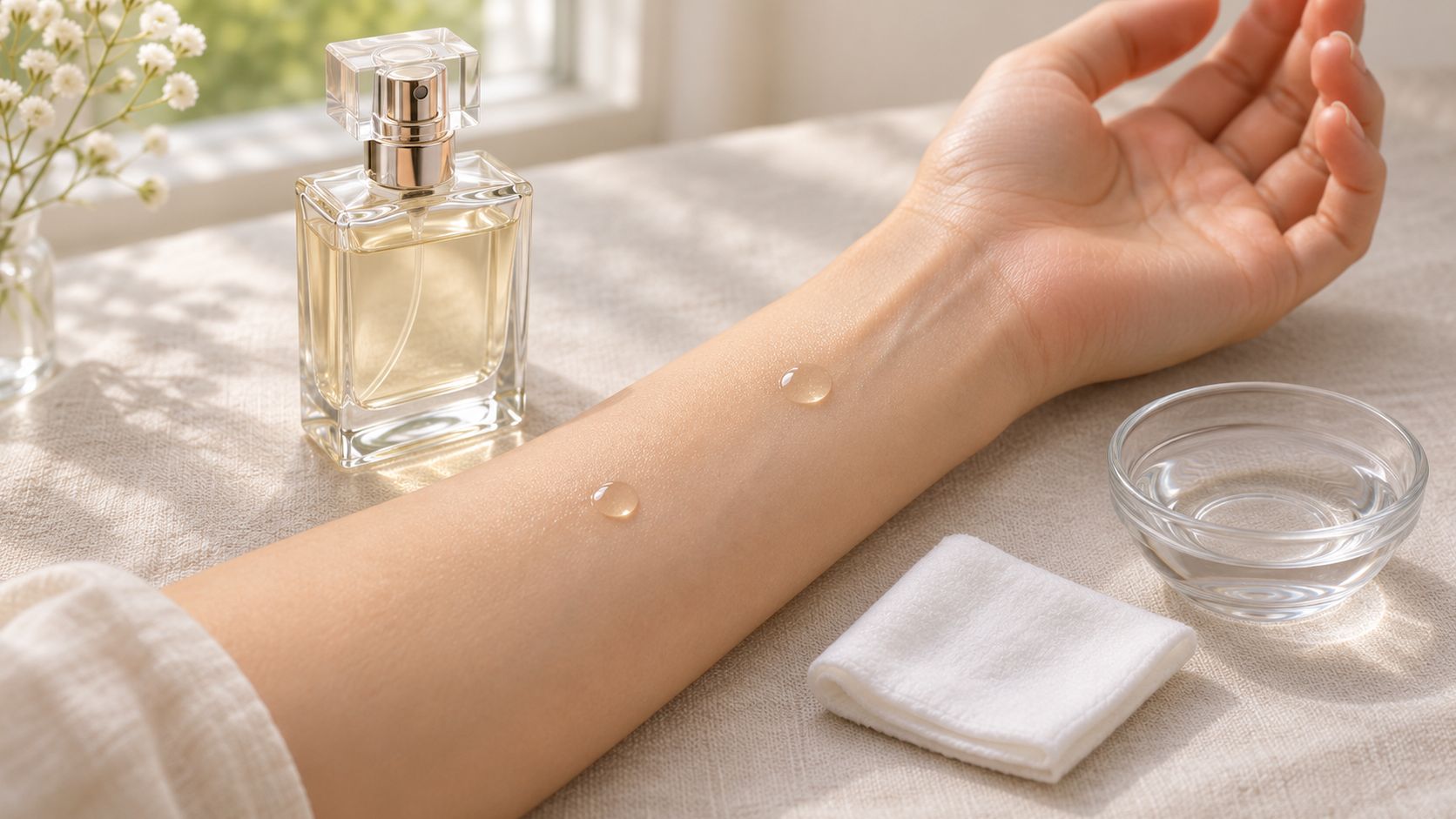
A repeatable wear-test routine
Choose comparable skin areas. Clean your inner forearms and avoid residual fragrance from soap or body products. Don't compare bare skin on one side with freshly lotioned skin on the other.
Apply the same number of sprays from a similar distance. Atomizers deliver different amounts, so this is a practical approximation, not a laboratory measurement. Note any obvious difference in spray size.
Record the conditions. Write down application time, weather, moisturizer use and whether you'll be indoors or outdoors. Include washing or clothing contact if either interrupts the test.
Use the checkpoints above rather than smelling continuously. Set phone reminders so your observations don't depend on remembering when you applied the perfume.
Separate presence from projection. Assess from farther away before bringing your wrist close. If someone is willing to help, ask whether they can detect the scent nearby without prompting them with a particular answer.
Pay attention to the later heart and base. Note whether the perfume still resembles the scent you wanted, rather than giving a high score to any lingering residue.
Repeat on another day. Swap which forearm receives each perfume and keep the preparation consistent. Repeated results are more useful than an unusually good or disappointing outing.
A reliable result shows a reasonably consistent pattern, not an identical minute of disappearance. You should be able to say which fragrance remains recognizable, which projects longer, and which finish you prefer.
Use those observations alongside our guide to finding your signature scent. Longevity is valuable only if you enjoy the fragrance during those later hours.
Perfume Wear Time Questions Answered
Does spraying more make perfume last longer?
More perfume increases the amount applied and often the initial intensity, but it doesn't guarantee a proportionate increase in duration. Start with a restrained application and assess the particular formula before adding more.
Can layering help?
A fragrance-free moisturizer can prepare the skin without changing the scent you're testing. Matching scented body care may reinforce the overall impression, but then you're judging the combination rather than the perfume alone.
Does perfume last longer on clothes or hair?
Fabric can retain scent differently from skin, but the result depends on the material and fragrance. Test an inconspicuous area for marks, and avoid spraying delicate fabrics; for hair, choose a purpose-made hair mist rather than repeatedly applying an alcohol-based skin perfume.
Which dupe is the best starting point?
Dossier Ambery Saffron is the more direct sampling choice from this shortlist if your goal is a Baccarat Rouge 540-inspired alternative. That isn't a verified wear-time win: choose Cloud instead if you prefer its own scent, and let your timed comparison decide which offers better value.
Concentration sets the typical range, base materials influence the lingering finish, and skin, weather and storage shift the result. The best dupe is the one whose later hours you enjoy, not merely the one with the strongest opening.
Finding Favourites offers affordable beauty alternatives across fragrance, makeup and skincare, with comparisons that help you weigh more than the initial impression. Visit Finding Favourites, choose a fragrance shortlist, and run a timed skin test before committing to your next full bottle.