
7 Best Drugstore Primer for Oily Skin Dupes That Actually
You've done your makeup carefully, checked your foundation in good light, and left the house looking polished. By lunchtime, your T-zone is shining, your foundation has separated around your nose, and the expensive-looking base you wanted has turned slippery and uneven. If that sounds familiar, your foundation may not be the core issue. The wrong drugstore primer for oily skin can fail long before your base gets a chance to perform.
This post may contain affiliate links, which means I may receive a commission if you purchase through my links, at no extra cost to you. Please read the disclosure policy for more information.
Why Your Current Primer Might Be Failing You
The most frustrating oily-skin makeup problem usually starts. Your forehead looks smooth when you apply foundation, your cheeks seem fine, and the primer feels velvety under your fingers. A few hours later, the nose looks glossy, the chin has lost coverage, and your foundation moves whenever you touch your face.
That doesn't automatically mean you need a heavier foundation. Sebum can weaken makeup's grip, and a primer labeled “oil-control” may not contain the right combination of absorbent powders, silicones, or film-forming polymers to manage that slip. “Mattifying” is a marketing category, not a guarantee of texture, durability, or compatibility with your base.
Oily skin is common enough that shine-control primer is a mainstream concern, not a niche fix. A PubMed study of Chinese women recorded self-reported oily skin at 25.6%, while dermatology literature has cited oily-skin rates as high as 38.7% in large mixed-age samples and 53.5% in Korean men using Baumann skin-type classification. The broader beauty market generated about $430 billion in revenue in 2022, placing affordable face primers inside a commercially important category, as documented by the PubMed research on oily skin prevalence.
The label isn't enough
Two primers can both promise a matte finish and behave completely differently. One may be a dense cream that feels smooth but becomes slick as oil rises. Another may use silica, dimethicone, and flexible polymers to create a thinner, more controlled surface.
Your cleanser and skincare prep matter, too. If you're still trying to balance the routine underneath makeup, this guide to find the right oily skin cleanser can help you assess that first step without treating primer as a cure-all.
My editorial rule: choose the formula texture first, then judge the finish. “Mattifying” alone tells you very little.
The Science of Shine Control Ingredients
A good oily-skin primer has two jobs. It needs to manage surface oil and create a stable layer that helps foundation sit evenly. The strongest drugstore options generally do this through a combination of absorbent minerals and smoothing, film-forming ingredients.
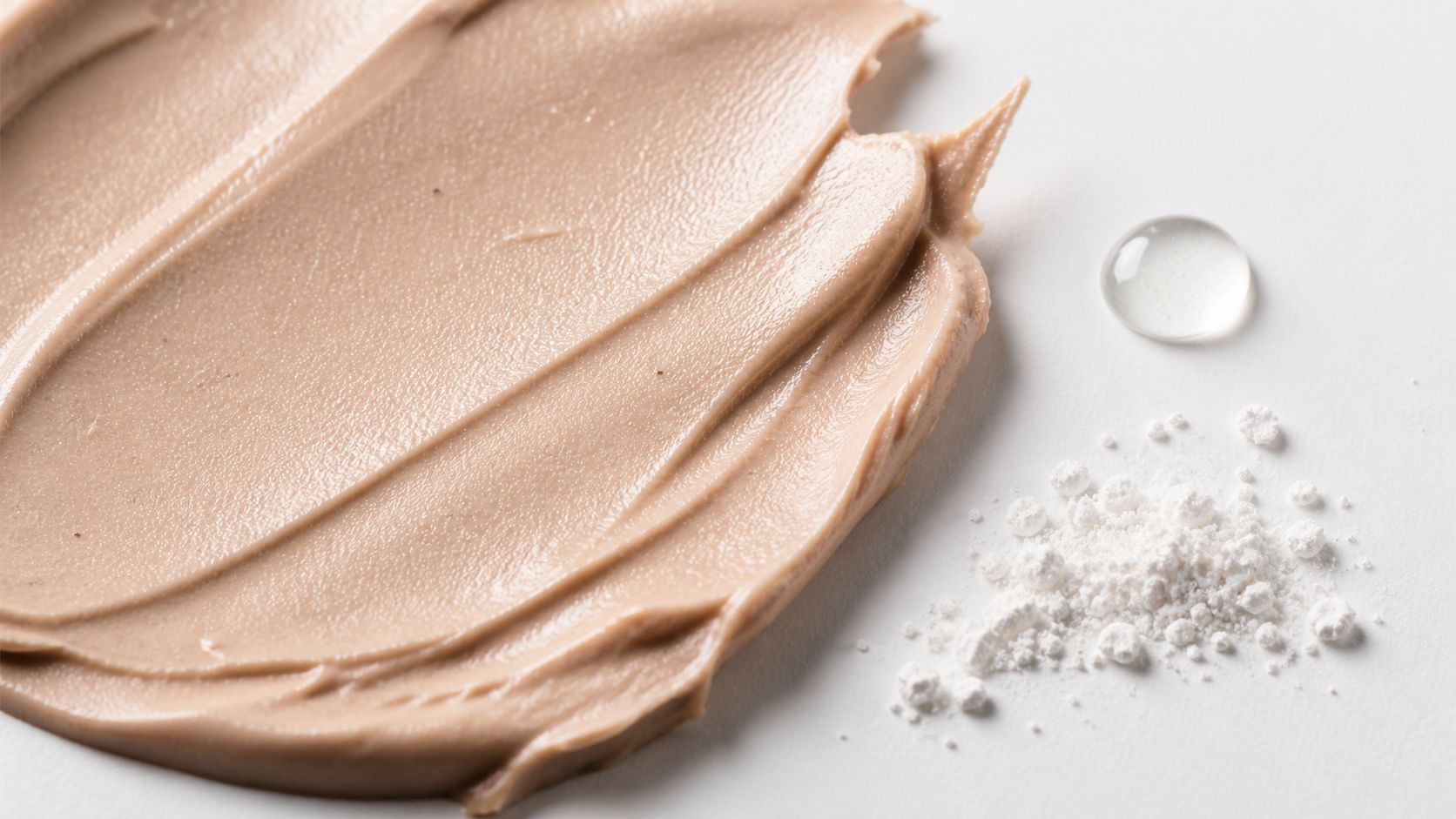
Silica and kaolin absorb excess shine
Silica and kaolin are useful because their structure gives them considerable surface area and porosity. They work like tiny cosmetic sponges, binding sebum before it can break down the makeup film, according to the formulation discussion in the Journal of Technology and Regulation primer research.
Silica is especially valuable in a primer designed for a slick T-zone. It can reduce the wet-looking quality of oil without requiring a thick, dry-feeling layer. Kaolin offers a similar absorbent role, although the overall finish depends on how much the formula uses and what it combines with.
A primer with these ingredients won't stop your skin from producing oil. It gives the oil somewhere to go before it visibly disrupts foundation. That distinction matters. You're managing shine and improving makeup stability, not changing your skin type.
Silicones create slip control
Dimethicone and related silicones form a smooth surface over the skin. They can soften the appearance of pores, reduce friction, and help foundation spread without immediately sinking into uneven texture. A silicone-based primer also creates a thin barrier that can improve foundation adhesion while keeping the finish more matte than a rich cream formula.
That's why silicone-based and polymer-forward primers generally outperform cream-heavy formulas for very oily skin. Independent beauty coverage notes that matte, blurring primers are used to keep excess oiliness under control, while a university study reported that silicone primers were more durable and matte than cream primers on oily skin, as summarized by this independent primer comparison.
Match the primer to the foundation
Texture compatibility decides whether the layers cooperate. A silicone-forward primer usually sits most smoothly beneath a silicone-compatible foundation, while a water-gel primer is often the safer pairing for a water-based complexion product.
Look for dimethicone, cyclopentasiloxane, or similar silicones near the top of the ingredient list when you want smoothing and grip. For absorption, silica and kaolin are the useful clues. If blemishes are part of the problem, salicylic acid may be worth considering, but it shouldn't replace a proper acne routine.
How to Apply Primer for Maximum Longevity
The best formula can still fail if you apply it over wet skincare or rub it into a thick film. Oily-skin primer needs a controlled, thin application. More product usually means more movement, not more protection.
Start with a clean, balanced base
Apply your usual lightweight skincare, then give it 30 to 60 seconds to settle before primer. This pause helps reduce pilling and keeps the primer from mixing with a still-wet moisturizer or serum. Rich creams and facial oils are the most common reasons a mattifying primer starts sliding before foundation is applied.
Use less moisturizer on the T-zone if that area becomes greasy quickly, but don't strip the cheeks of hydration just to make your forehead matte. Oily skin can still need lightweight moisture, and controlled hydration often creates a more even surface than aggressive drying.
Use zone-priming instead of one formula everywhere
Apply the mattifying primer only to the places that break down first:
- Press a small amount onto the sides of the nose, center forehead, and chin.
- Tap rather than rub, especially over pores and textured areas.
- Leave the cheeks alone if they don't become shiny, or use a light water-gel primer there.
- Wait briefly again before applying foundation so the film can settle.
A pressing motion keeps you from disturbing the skincare underneath. It also prevents you from dragging primer away from the areas where you need it most.
Build coverage with control
If your nose needs more help, add a pinpoint amount only after the first layer has settled. Don't cover your entire face in a thick matte coating because your T-zone is oily. That can make the cheeks look flat and increase the chance of pilling.
Use a compatible foundation, then set only the areas that need extra insurance. For a fuller routine focused on keeping complexion makeup intact, this guide to how to make makeup last all day offers useful setting and layering techniques.
7 Best Drugstore Primers for Oily Skin
The strongest choices below are widely available in the US and remain practical alternatives to prestige formulas. I'm prioritizing texture, ingredient logic, and application flexibility, not just a matte label.
| Product Name | Best For | Finish |
|---|---|---|
| e.l.f. Power Grip Primer | Grip with lighter hydration | Natural |
| e.l.f. Matte Putty Primer | Budget pore smoothing | Matte |
| Neutrogena Shine Control Matte Primer & Serum | Shine absorption | Matte |
| e.l.f. Blemish Control Face Primer | Breakout-prone oily skin | Soft matte |
| Maybelline Baby Skin Instant Pore Eraser | Silky smoothing | Matte |
| NYX Professional Makeup Shine Killer | T-zone shine control | Matte |
| Milani No Pore Zone Mattifying Face Primer | Pores and shine | Soft matte |
1. e.l.f. Power Grip Primer
This is the best overall pick when your makeup needs adhesion without a heavy, dry finish. Its gel texture feels more flexible than a traditional putty or thick silicone balm, making it especially useful if your cheeks are normal or slightly dehydrated while your T-zone is oily.
It's also the most convincing choice for readers looking for a lower-cost alternative to the gripping feel associated with Milk Makeup Hydro Grip. Use a very small amount, let it settle, and press foundation over it rather than rubbing. It won't give the flattest matte effect on its own, but it provides a versatile base for zone-priming.
2. e.l.f. Matte Putty Primer
This is the obvious affordable alternative to a smoothing prestige primer such as Hourglass Veil Mineral Primer, particularly if your priority is a blurred, soft-focus surface. The putty texture is thicker, so you'll need restraint. Warm a small amount between your fingers, then press it into the T-zone.
It's a decent choice for moderate oiliness and visible pores, but very oily skin may prefer a thinner, more polymer-forward formula. The result is smoother and more matte than a basic moisturizer, yet it can feel overloaded if you spread it across the entire face.
3. Neutrogena Shine Control Matte Primer & Serum
This formula is the most ingredient-focused option in the list for visible shine. It uses glycerin, silica, and rice seed protein, combining lightweight moisture with an absorbent component, as described in this drugstore primer ingredient roundup.
The finish is matte without necessarily feeling as dense as a putty primer. I'd choose it for a shiny forehead and nose when you want a controlled surface but don't want the cheeks to look overly powdered. Apply it selectively, because the silica is most useful where oil appears.
4. e.l.f. Blemish Control Face Primer
This is the practical choice for oily, breakout-prone skin because it contains salicylic acid. It offers more than cosmetic smoothing, although a primer with an acne-focused ingredient shouldn't be treated as a complete treatment plan.
The texture makes sense for targeted use around the nose, chin, or areas where congestion tends to show through makeup. If your skin is sensitive or you already use several exfoliating products, introduce it carefully and avoid assuming that more active ingredients will automatically improve wear.
5. Maybelline Baby Skin Instant Pore Eraser
This is a classic budget pick for a silky, silicone-style blur. It's best when your main complaint is that foundation catches around pores and looks uneven, rather than when you need the strongest possible oil absorption.
Think of it as a smoothing layer, not a complete solution for heavy shine. Press a tiny amount over the center of the face and pair it with a compatible foundation. If your makeup tends to slide within hours, choose a more absorbent primer or combine this with strategic powdering instead of applying more Baby Skin.
6. NYX Professional Makeup Shine Killer
This one is designed for readers who want a straightforward matte base with minimal fuss. The texture is lighter than a dense putty, which makes it easier to use in the T-zone without creating a thick boundary between primed and unprimed areas.
It's a sensible option for daily makeup when you want to reduce surface shine before foundation. The best results come from pressing it into the nose and forehead, then leaving the cheeks with a lighter prep product if they don't need oil control.
7. Milani No Pore Zone Mattifying Face Primer
Milani's option suits combination-to-oily skin that wants pore smoothing with a softer matte finish. It's more balanced than an aggressively flat primer, so it can work well when your skin looks greasy in some areas but dull or tight in others.
Use it as a zone-primer rather than a full-face mask. For more comparisons across textures, price points, and pore-blurring formulas, see this guide to the best drugstore primers for large pores.
Common Pitfalls That Ruin Your Base
The biggest mistake is assuming that oily skin needs every layer to be aggressively matte. A rich moisturizer under a heavy primer can create slip, but stripping the skin with harsh, drying products can also make the base uncomfortable and uneven. The solution is not maximum dryness. It's controlled hydration paired with targeted absorption.
Too much product creates the problem
Primer should form a thin, even film. A thick layer can roll under foundation, especially when the skincare underneath hasn't settled. Start with a small amount for the T-zone, press it in, and add only where the first layer leaves a visible problem.
Pilling usually points to incompatibility or excess product. Check whether your moisturizer, sunscreen, primer, and foundation all have similar textures. A water-gel primer beneath a water-based foundation often behaves more predictably than forcing a silicone-heavy layer under a formula that doesn't sit well over it.
Hydrating doesn't always mean greasy
A lightweight water-gel primer can be useful for oily skin, particularly on the cheeks. It provides enough slip for foundation to spread without requiring a rich emollient layer, and it can prevent the tight, over-matte appearance that makes makeup look older as the day progresses.
The distinction is between light hydration and oily richness. Glycerin, water, and gel textures can support a comfortable base. Heavy oils, thick balms, and rich creams are more likely to increase movement when your skin already produces substantial surface oil.
Don't use primer as your only setting step
Primer improves the starting surface, but it can't absorb every trace of oil throughout the day. A light setting powder in the areas that shine first gives you another layer of control without forcing you to pile on primer. This comparison of the best drugstore setting powders for oily skin is useful if your base looks good initially but needs reinforcement later.
Correction that works: reduce the amount of skincare and primer before changing your foundation. Many “bad foundation days” begin with too much underneath.
Frequently Asked Questions About Oily Skin Primers
Is dimethicone safe for daily use?
Dimethicone is widely used in cosmetics and is generally considered safe at concentrations found in over-the-counter products. A safety summary notes that most OTC products contain less than 15% dimethicone, and the Cosmetic Ingredient Review Expert Panel concluded that dimethicone in cosmetic products is safe, as explained by this dimethicone safety overview.
Can salicylic acid primer help acne-prone oily skin?
It can support an oily, blemish-prone routine, especially when the formula contains salicylic acid, but primer remains a makeup product. Don't rely on it as your only acne treatment, and be cautious if you're already using exfoliating acids or other potentially irritating products.
How should silicone-based primer be removed?
Break down makeup with a cleansing balm, oil cleanser, or appropriate first cleanse, then follow with a gentle water-based cleanser. Pay attention to the sides of the nose, hairline, and chin, where primer and foundation can collect. Research on cyclic silicones found minimal skin absorption and no meaningful irritation or sensitization concern under present use conditions, as reported in the published safety review of cyclic silicones.
Should very oily skin use primer everywhere?
Usually not. Apply the most absorbent formula only to the T-zone and use a lighter water-gel option, or no primer, on areas that don't become shiny. Zone-specific application gives you better control than covering the whole face in one heavy matte layer.
Final Thoughts on Finding Your Perfect Match
e.l.f. Power Grip Primer is my top overall drugstore dupe because it offers reliable grip, a flexible gel texture, and enough versatility for zone-priming. Very oily skin may prefer Neutrogena Shine Control or NYX Professional Makeup Shine Killer for a more direct matte effect, while e.l.f. Matte Putty is the better budget blur. Prioritize silica, kaolin, dimethicone, and compatible textures over vague oil-control promises, then explore practical skincare and wellness articles for broader routine support. Sign up for the Finding Favourites newsletter for more budget-friendly beauty discoveries and exclusive discount codes.
Finding Favourites compares affordable alternatives to luxury makeup, skincare, and fragrance, including practical primer guides for oily skin and large pores. Visit Finding Favourites to find clear dupe roundups, texture comparisons, and budget-conscious beauty recommendations before you spend on another primer that fails by noon.