
Drugstore Foundation for Sensitive Skin: Top Picks 2026
You try a new foundation in the morning, and it looks promising for about an hour. By lunch, your cheeks sting, the sides of your nose are red, and the formula has somehow made dry patches, clogged pores, and shine show up at the same time. If that sounds familiar, you're not bad at picking makeup. Sensitive skin just punishes the wrong formula fast, and drugstore aisles don't make it easier with labels that all seem to say the same thing.
This post may contain affiliate links, which means I may receive a commission if you purchase through my links, at no extra cost to you. Please read the disclosure policy for more information.
Here's the good news. A good drugstore foundation for sensitive skin absolutely exists, and you don't need to spend luxury money to find one. The trick is knowing which formulas are likely to calm your skin, which ones only sound gentle on the packaging, and how to match the finish and texture to the kind of sensitivity you have.
| Pick | Best for | Why it stands out |
|---|---|---|
| Almay Smart Shade Foundation | Redness-prone, reactive skin | Known for adaptive color technology and a gentle, luminous feel |
| L'Oréal True Match Hyaluronic Tinted Serum | Dry, sensitive skin | Serum texture with hyaluronic acid and a lighter feel |
| BareMinerals Original Loose Powder Foundation | Oily or acne-prone sensitivity | Minimal-feeling mineral powder option |
| Neutrogena Healthy Skin Liquid Makeup | Everyday natural coverage | Classic liquid texture for simple daily wear |
| Wet n Wild Bare Focus Tinted Hydrator | Budget-friendly light coverage | Sheer, easy, lower-commitment base |
Introduction
You put on foundation before work, check it in natural light, and within an hour your cheeks look hotter, drier, or more textured than they did bare. That pattern is common with sensitive skin, especially when the formula sounds gentle on the label but the ingredient list tells a different story.
A good drugstore foundation for sensitive skin is less about price and more about chemistry. I look past front-label claims like "fragrance-free" or "for sensitive skin" and check for the ingredients that often cause trouble in real life, including denatured alcohol high on the list, heavy essential-oil fragrance components, or film-formers that can feel tight on a damaged barrier. The right pick also depends on how your skin behaves. Redness-prone skin, flaky dehydrated skin, and acne-prone reactive skin rarely tolerate the same base formula equally well.
That is why this guide focuses on how to spot overlooked irritants, compare textures and finishes with your specific triggers, and avoid wasting money on foundations that only look skin-friendly in the bottle.
If your skin is already running dry, stingy, or overworked, start with basic tips to repair skin barrier. Then choose makeup that supports that work instead of fighting it.
Understanding Why Your Skin Hates Some Foundations
You smooth on foundation, and within minutes your cheeks start to sting or look tighter than they did bare. That reaction usually starts before the makeup is even fully set. Sensitive skin tends to reject foundations when the formula, your barrier condition, and your specific trigger do not match.
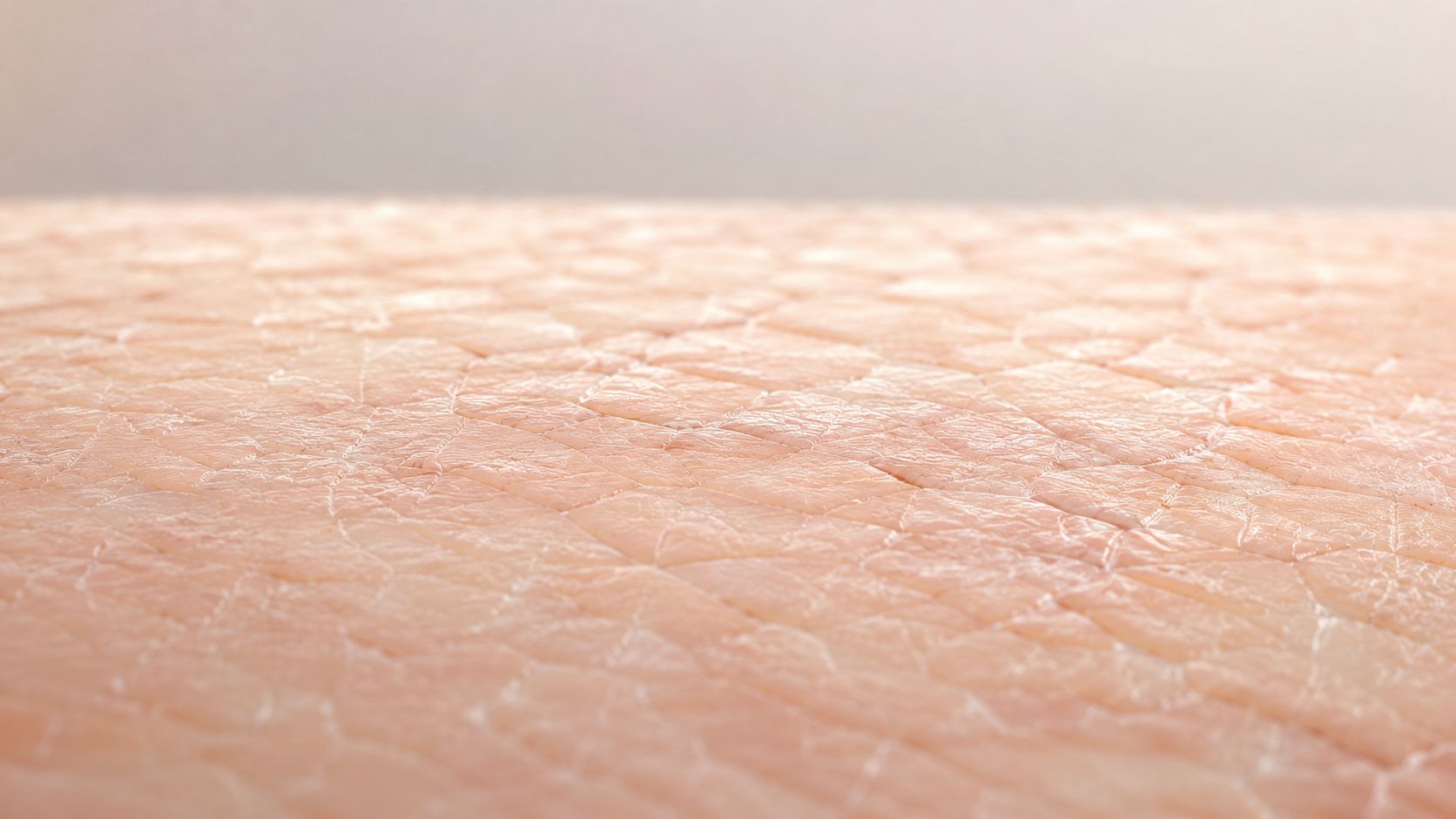
A lot of people blame “sensitive skin” as one broad category, but the pattern matters. Redness-prone skin often reacts to fragrance components, essential oils, or a formula that increases heat and flushing. Dry, stingy skin usually struggles more with high amounts of denatured alcohol, strong mattifying systems, or long-wear bases that grip too hard to rough patches. Acne-prone reactive skin can dislike rich occlusive textures, heavy waxes, or certain silicone-heavy films that trap sweat and feel congested, even if another sensitive-skin type tolerates them well.
What irritation usually feels like
Reactions are not always dramatic.
Sometimes it is visible redness across the cheeks or around the nose. Sometimes it is a hot, prickly feeling that starts as soon as you blend. Sometimes the warning sign is cosmetic first. The foundation turns patchy, clings to flakes, or makes your skin look shriveled by midafternoon.
Three problems cause most of these bad foundation days:
- A stressed barrier: Skin that is over-exfoliated, dry, or irritated from actives often burns even with formulas that are fairly mild.
- A specific ingredient trigger: Common culprits include denatured alcohol, fragrance, fragrant plant extracts, and some film-formers that create a tight, sealed feeling.
- The wrong formula chemistry: Very matte liquid foundations can worsen dehydration and flaking. Thick creamy formulas can feel heavy and aggravating on breakout-prone skin.
One practical rule has saved me a lot of trial and error. If a foundation stings on top of your usual moisturizer, stop using it. Sensitive skin rarely rewards stubbornness.
Why some affordable formulas still fail
Drugstore foundations have improved. Brands now offer more fragrance-free options, more serum-style textures, and more shade ranges than they did a few years ago. The catch is that “gentle” on the front label still does not tell you whether the formula is drying, occlusive, heavily preserved, or packed with extracts your skin dislikes.
That is why ingredient reading matters more than marketing language. Two foundations can both claim to suit sensitive skin, while one is loaded with volatile alcohol and the other relies on a softer mix of silicones, humectants, and mineral pigments. On the face, those differences are obvious fast.
If your skin already feels irritated before makeup, foundation may only be exposing a barrier problem that is already there. Neutralyze has a useful breakdown with tips to repair skin barrier, especially if your foundation issues started after over-cleansing, exfoliating acids, or retinoids.
How to Read Drugstore Foundation Labels Like a Pro
You are standing in the drugstore aisle, your skin is already a little warm from the last foundation mistake, and three bottles are all promising “gentle” results. The fastest way to avoid another bad buy is to ignore the front label for a minute and read the ingredient list like a filter.
The useful question is not whether a foundation sounds soothing. It is whether the formula chemistry fits your kind of sensitivity. Redness-prone skin often reacts to fragrance, fragrant extracts, and higher-irritation solvents. Dry, sting-prone skin usually struggles more with drying alcohols and long-wear mattifying systems. Acne-prone sensitive skin may do better with lighter silicone-based formulas than with richer creams that sit heavily on the skin.
Which claims deserve your attention
Some label claims help, but only when they line up with the ingredient list:
- Fragrance-free: A strong starting point. Still check for essential oils and fragrant plant extracts.
- Non-comedogenic: More relevant if your sensitivity comes with clogged pores or breakouts.
- Dermatologist-tested: Mildly helpful, but it does not tell you what ingredients were used or what skin types were tested.
- Hypoallergenic: Marketing shorthand, not a guarantee.
Claims like “clean,” “natural,” and “skin-loving” are weak shortcuts. Natural formulas can still be rough on reactive skin if they use lavender oil, citrus peel oil, peppermint, eucalyptus, or a long list of botanical extracts.
What to scan first on the ingredient list
Start with the first 8 to 10 ingredients. They make up most of the formula and usually tell you whether the base is likely to feel dry, slick, heavy, or calming.
Here is the quick read I use in the aisle:
- Check for added fragrance fast. Look for “fragrance,” “parfum,” or essential oils near the middle of the list.
- Spot drying alcohols. Alcohol denat., SD alcohol, and isopropyl alcohol high on the list can be a problem for dry or barrier-damaged skin.
- Separate slippery silicones from suffocating heaviness. Dimethicone and cyclopentasiloxane are often well tolerated and can reduce friction on sensitive skin. A dense mix of heavier emollients and waxes may feel better for very dry skin but can be too much for acne-prone skin.
- Watch the extras. Peppermint, menthol, strong acids, and heavily promoted “botanical” blends can be trouble even in a fragrance-free formula.
- Match the formula to the reaction you usually get. Sting and heat call for fewer potential irritants. Flaking calls for humectants and a less aggressive finish. Breakouts call for lighter textures and fewer rich occlusives.
A side-by-side example
These ingredient lists are simplified, but they show what matters.
Formula A
Water, Cyclopentasiloxane, Dimethicone, Glycerin, Titanium Dioxide, Iron Oxides, Niacinamide, Phenoxyethanol
Formula B
Water, Alcohol Denat., Isododecane, Talc, Fragrance, Lavender Oil, Silica, Iron Oxides
Both might claim to be lightweight. They are not likely to wear the same on sensitive skin.
Formula A gives more slip and cushion. Dimethicone and cyclopentasiloxane often help foundation glide over reactive skin with less rubbing. Glycerin adds water-binding support. Niacinamide will not work for everyone, but many people tolerate it well.
Formula B raises more flags for dry or redness-prone skin. Alcohol denat. is near the top. Fragrance and lavender oil add more exposure points. Silica and talc can suit oilier skin, but combined with that solvent-heavy base, the formula may feel tight by midday.
That does not mean silicones are always “good” and alcohol is always “bad.” It means ingredient position and formula balance matter more than one trendy claim.
One practical rule for real shopping
If your skin gets red, prioritize short lists with fewer sensory extras. If your skin flakes, look for glycerin, squalane, hyaluronic acid, or dimethicone before you get excited about coverage claims. If your skin breaks out easily, do not fear all silicones by default. Many sensitive, acne-prone people wear them better than rich balm-like foundations.
For readers trying to better understand advanced skincare, the same principle applies here. Ingredient categories matter more than comforting buzzwords.
A good drugstore foundation label does not need to look perfect. It needs to tell you, clearly, what kind of day your skin is about to have.
The Ultimate Ingredient Checklist for Sensitive Skin
Frequently, foundation advice doesn't go deep enough. “Fragrance-free” is useful, but it doesn't answer the question that matters most. Why does one gentle-looking foundation feel calming and another one feels terrible by hour three?
Ingredient heroes
Effective formulations for sensitive skin often use titanium dioxide and zinc oxide, which have anti-inflammatory properties. Foundations can also benefit from allantoin, aloe vera, glycerin, niacinamide, hyaluronic acid, green tea extract, and chamomile extract.
Here's what those ingredients tend to do well:
- Zinc oxide and titanium dioxide: Useful when your skin gets visibly red or irritated easily.
- Allantoin and aloe vera: Good signs in formulas meant to feel calming rather than aggressively perfecting.
- Glycerin and hyaluronic acid: Better for dryness-prone sensitivity because they help reduce that tight, papery makeup look.
- Niacinamide: Helpful when you want a base that does more than cover. It supports hydration and can feel more balanced over time.
- Green tea and chamomile: Often welcome in formulas aimed at reducing visible reactivity.
If you like learning how active ingredients behave across makeup and skincare, ProMD Health Easton has a helpful overview to understand advanced skincare in a more ingredient-focused way.
Ingredient villains
A sensitive-skin-friendly foundation should be free of denatured alcohol and synthetic fragrances, which are primary triggers for contact dermatitis and can disrupt the skin barrier. Expert guidance in the verified material also flags parabens and propylene glycol as frequent concerns for vulnerable skin.
The biggest watch-outs:
- Denatured alcohol or alcohol denat.: Can create that fast-drying, smooth-at-first finish that later turns patchy or stingy.
- Synthetic fragrance: One of the most common avoid categories for reactive skin.
- Heavy reliance on synthetic dyes: Verified dermatological trial data notes that natural colorants may lower allergic contact dermatitis risk compared with synthetic dyes.
- Essential oils in “natural” formulas: Not always listed as fragrance, but they can still bother reactive skin.
Sensitive skin doesn't only react to what's irritating. It also reacts to what's missing, especially hydration and barrier support.
The less obvious texture triggers
Not all triggers come from classic irritants. Sometimes the issue is the feel of the formula.
Technical analysis shows that silicones like dimethicone can be helpful for slip and barrier protection, but if the formula doesn't balance them with humectants, they can contribute to a dry-down effect over time. Silica can also be useful for oil control, but it tends to behave better when paired with glycerin so the finish doesn't go chalky.
That's why two foundations with nearly identical marketing can wear completely differently. One feels silky and calm. The other starts pulling moisture out of your face by midafternoon.
A fast ingredient screening routine
Use this before you buy:
| Look for more of | Be cautious with |
|---|---|
| Glycerin, hyaluronic acid, niacinamide | Alcohol denat., ethanol |
| Allantoin, aloe vera, chamomile | Synthetic fragrance |
| Zinc oxide, titanium dioxide | Overly matte film-formers |
| Balanced silicone + hydrators | Powder-heavy, drying systems |
If your skin is very reactive, shorter ingredient lists often feel safer because there are fewer variables.
Choosing Your Perfect Formula and Finish
You buy a foundation that sounds gentle, apply it carefully, and two hours later your cheeks look tighter, redder, or rougher than they did bare. That usually comes down to formula match. Sensitive skin reacts to the chemistry of the base, the finish, and the way the product sits on your particular skin issue.
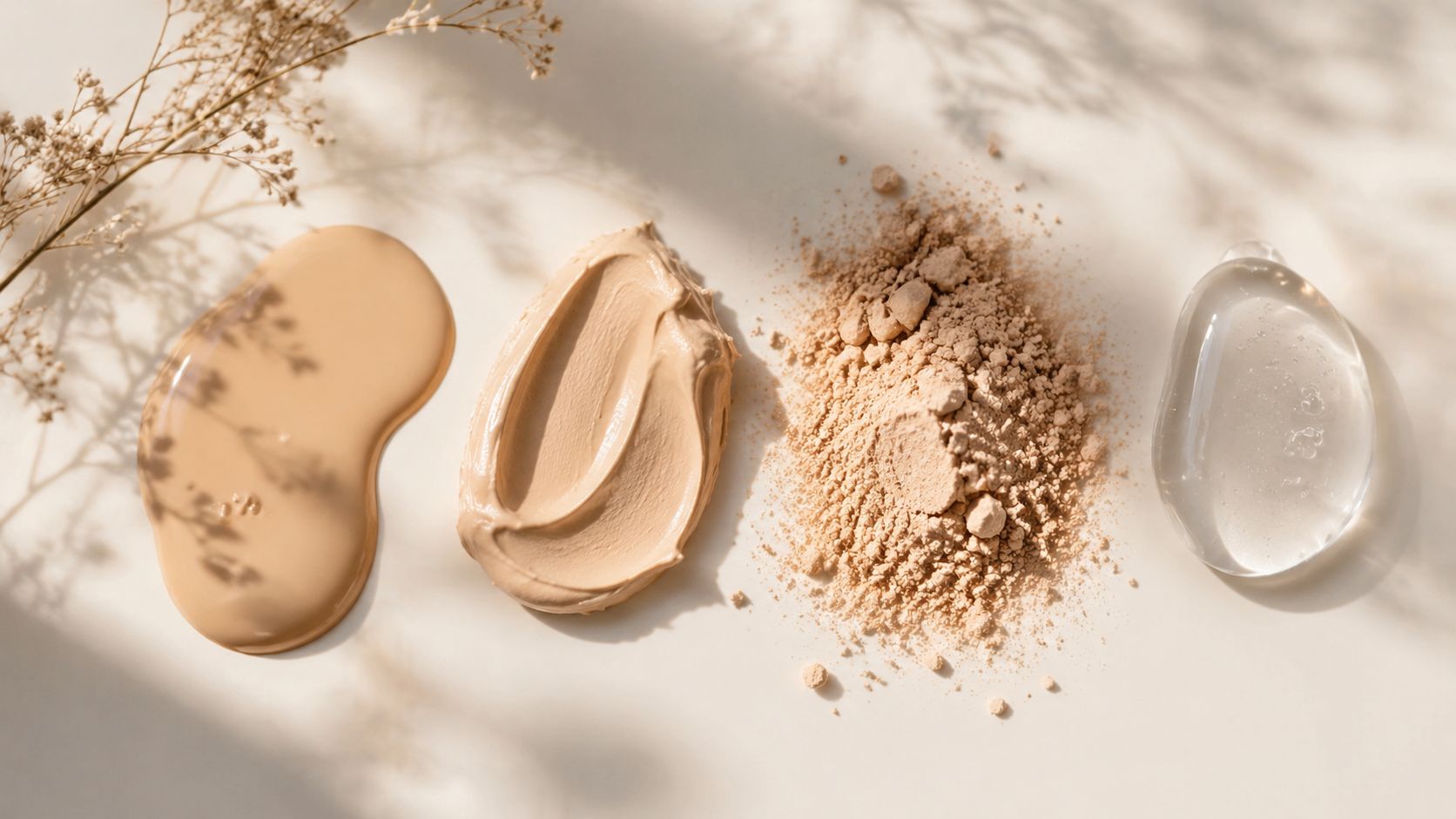
If your sensitivity leans dry or flaky
Serum foundations and hydrating tints tend to be the easiest place to start. They spread quickly, need less rubbing, and usually sit better over patches that are already a little compromised. L'Oréal True Match Hyaluronic Tinted Serum fits this category well because it wears more like light makeup with skincare slip than a traditional full-face base.
Finish matters here as much as ingredients. A soft natural or dewy finish usually keeps flakes less visible, while very matte long-wear formulas can catch on dry edges around the nose, chin, and between the brows. If your skin feels tight by midday, creamier liquids often wear better than powders.
If your sensitivity leans oily, acne-prone, or easily congested
Go lighter in texture, but do not assume every oil-control formula will behave. Some matte drugstore foundations rely on a heavy powder system that controls shine at first and then leaves skin hot-looking or chalky by afternoon.
Loose mineral powders and thin liquids are often the safer bet here. BareMinerals Original Loose Powder Foundation can work well if you want coverage that feels lighter over breakouts, while a fluid liquid with a satin finish is usually more forgiving than a thick cream-to-powder compact. Acne-prone sensitive skin often does best with formulas that set without feeling sealed over.
If redness is the main issue
Look for a formula that evens tone without forcing full coverage. Redness-prone skin usually looks better in light to medium coverage with a natural finish because the product can move with the skin instead of sitting on top of every irritated area.
This is also the group that benefits from ingredient decoding. If a foundation contains a lot of alcohol denat. high on the list, the finish may look clean at first but start stinging or amplifying flush later. If dimethicone is high on the list and the formula also includes glycerin or niacinamide, that combination often feels smoother and less tight.
How to match finish to your trigger
Dryness usually prefers radiant or natural.
Redness usually prefers natural or soft satin.
Oilier reactive skin usually prefers satin or softly matte, not flat matte.
That distinction sounds small, but it changes how the foundation wears. Flat matte finishes can exaggerate scale and texture. Very glowy formulas can slide on oilier skin or cling around inflamed blemishes if the base is too rich.
A good finish match also starts with shade, because the wrong undertone can make redness look stronger. If you still struggle with that part, this guide on how to choose the right foundation shade is very useful.
Budget-friendly picks worth trying
- For dry, reactive skin: Try L'Oréal True Match Hyaluronic Tinted Serum
- For a simple classic liquid: Try Almay Smart Shade Foundation
- For oily or breakout-prone sensitivity: Try BareMinerals Original Loose Powder Foundation
- For an inexpensive everyday tint: Try Wet n Wild Bare Focus Tinted Hydrator
- For a natural-finish liquid: Try Neutrogena Healthy Skin Liquid Makeup
These work best as category matches, not universal winners. Sensitive skin is rarely picky at random. It usually responds to the wrong finish, the wrong base system, or a formula built for a different kind of reactivity than your own.
Flawless Application Without the Flare-Up
Application can make a decent formula look awful, or make a good one feel irritating. Sensitive skin usually does best when you reduce friction, keep layers thin, and stop trying to force coverage where the skin is already stressed.
Patch test first
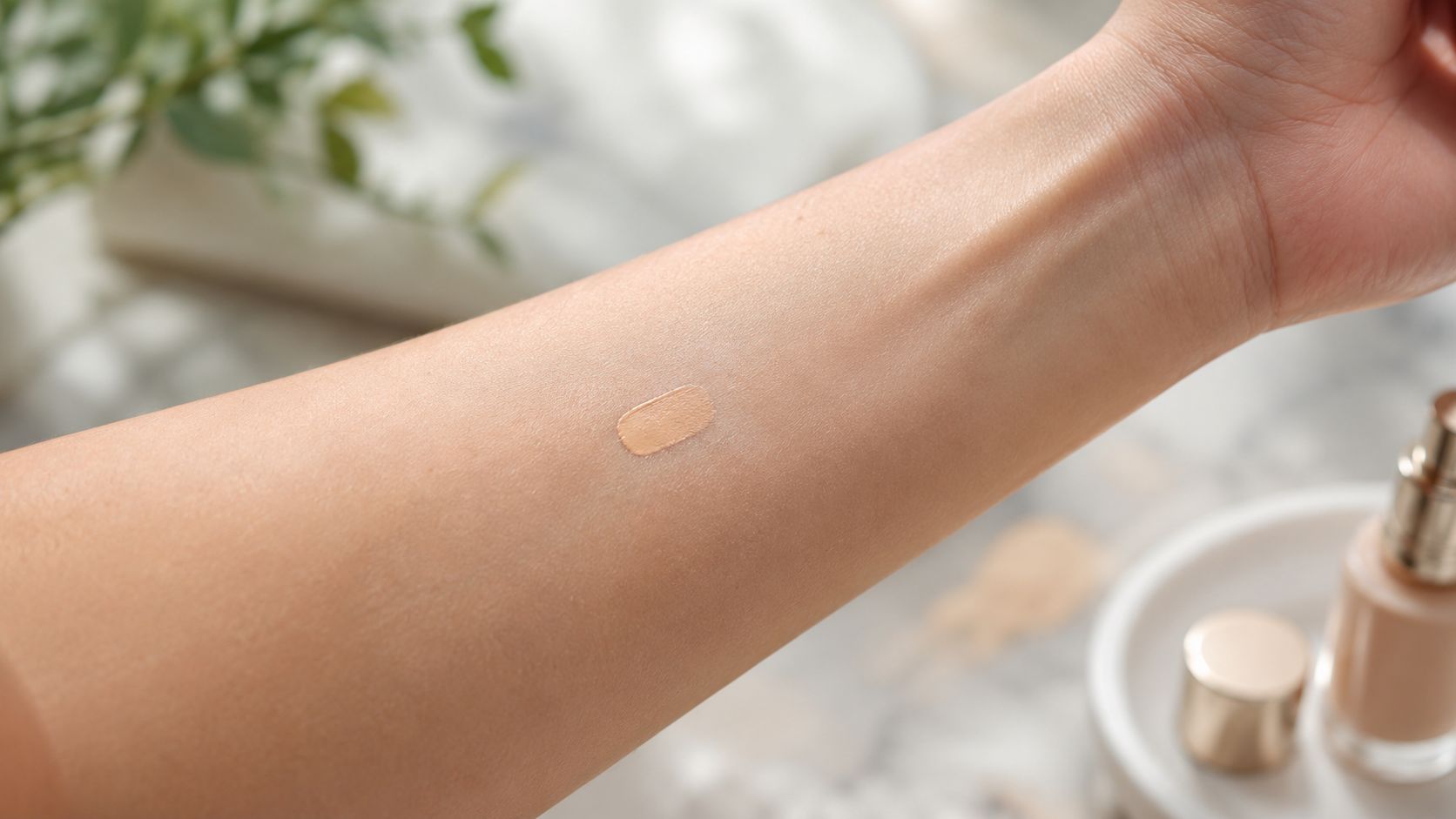
This is not optional. Swatch a small amount on the inner jaw, side of neck, or inner forearm and leave it long enough to catch stinging, warmth, itching, or delayed redness. A wrist swatch alone won't tell you much about how your face will react, but it can still help catch obvious irritation.
If you're trying multiple products, test one at a time. Otherwise you won't know which formula caused the problem.
Prep the skin so foundation has a chance
Use a simple moisturizer your skin already trusts. Let it settle before you apply foundation. If your skin is actively burning, peeling, or hot, skip foundation that day and use spot concealer only if needed.
Clean fingers are often gentler than a dense brush on reactive skin. A very soft damp sponge also works well, especially around the nose where flaking tends to show.
Application note: Press and roll. Don't scrub, buff aggressively, or overblend the same area.
A visual walkthrough can help if you're changing your technique:
Keep the finish stable
Use thin layers and stop once your skin looks even enough. Overapplying is one of the fastest ways to make sensitive skin look textured.
If you need extra longevity, use a setting product carefully and mainly where makeup tends to move. For shine-prone areas, this roundup of the best drugstore setting spray for oily skin can help you choose something lighter than piling on powder.
Troubleshooting Redness Flaking and Breakouts
A foundation can be technically gentle and still not work for your face. That's where most frustration starts. The major gap in beauty coverage isn't just whether a product is fragrance-free. It's dealing with issues like dryness from high-coverage formulas or stinging from certain textures, which are common complaints even in products marketed for sensitive skin, as noted in this discussion of sensitive-skin makeup concerns.
If your skin turns red by the end of the day
Look at the dry-down. Fast-setting formulas often feel fine at first and then start creating heat, tightness, or patchiness later. Try a lighter layer, more moisturizer underneath, or a more hydrating finish.
If the redness keeps happening with the same product, retire it. Repeated irritation usually gets worse, not better.
If foundation clings to flakes
The problem may be coverage level, not just hydration. Very full-coverage formulas can catch on uneven texture even when the skin is moisturized.
Try this instead:
- Use less product: Apply only where you need evening out.
- Switch textures: A serum tint or lighter liquid usually sits better than a thick matte base.
- Press with a sponge: This helps melt product over dry areas instead of dragging it.
If you keep breaking out
That doesn't always mean the foundation is “bad.” It may just be too rich, too occlusive for your skin, or not being removed thoroughly enough at night.
A simpler removal routine matters as much as the foundation itself. If you suspect your cleanser or wipes are leaving residue behind, this guide to non-comedogenic makeup removers is a useful next step.
If the formula stings but doesn't look bad
Trust the sensation. A foundation that looks smooth but feels sharp, itchy, or warm is still a poor match. That kind of mismatch often comes from alcohol-heavy formulas, a texture your skin dislikes, or applying over an already stressed barrier.
Sometimes the best fix is boring. Less coverage, fewer steps, and a calmer formula.
Frequently Asked Questions
Can powder foundation work for dry sensitive skin
It can, but it's usually not the easiest choice. If your skin is flaky or tight, powder often catches on texture. A serum or hydrating liquid tends to look smoother and feel more comfortable.
What's the difference between hypoallergenic and non-comedogenic
They answer different questions. Hypoallergenic is about reducing the chance of irritation or allergic response. Non-comedogenic is about reducing the chance of clogged pores. A product can be one, both, or neither.
Do I need primer under foundation if I have sensitive skin
Not always. Many sensitive skin routines are better without an extra layer unless you know your primer helps. A simple moisturizer often does enough prep on its own.
How can I tell if an old foundation is causing irritation
If a product suddenly smells off, separates oddly, changes texture, or starts stinging when it never used to, stop using it. Old makeup can become more irritating even if the shade and finish still look familiar.
What's the safest coverage level for reactive skin
Usually light to medium, built only where needed. Heavy coverage can increase friction, dryness, and discomfort, especially if your skin is already inflamed.
If you want more budget-friendly makeup finds without wasting money on trial and error, take a look at Finding Favourites. It's a smart resource for affordable alternatives, practical comparisons, and beauty picks that help you get the look you want for less.
For most readers, the best overall pick is L'Oréal True Match Hyaluronic Tinted Serum if dryness and sensitivity are your main issues, while Almay Smart Shade Foundation remains one of the safest classic drugstore options for reactive skin. The main takeaway is simple: the best drugstore foundation for sensitive skin isn't the one with the nicest marketing. It's the one whose ingredients, texture, and finish match your specific triggers.