
Cleansing Balm vs Oil Cleanser: Which Is Right for You
The most repeated rule in cleansing advice is that balms suit dry skin and oils suit oily skin. It sounds tidy, and it collapses the moment you read an ingredient list. A balm and an oil do the same job in the same order, because an oil phase dissolves sunscreen, sebum and pigment, and then an emulsifier lets water carry the mixture off your face.
What separates the two is physical form, and form tells you about texture, dosing and packaging. It tells you almost nothing about how clean your skin ends up. The useful question isn't balm or oil. It's whether the specific product you're holding emulsifies fast, rinses without a film, and leaves your face comfortable. You can answer that at your own sink in about a minute with a tissue, and the test works the same on a $10 jar and a $60 one.
Cleansing Balm and Oil Cleanser Side by Side
The balm-or-oil label predicts less about cleansing than a formula's emulsifier and how it rinses. Both formats use oils to loosen sunscreen, makeup and sebum, then rely on an emulsifier to help water carry the mixture away. A balm is a semi-solid blend that melts on skin; an oil cleanser is liquid and spreads more readily. MDedge's overview of cleansing balm formulations describes balms as oil-based products that emulsify when water is added.
This post may contain affiliate links, which means I may receive a commission if you purchase through my links, at no extra cost to you. Please read the disclosure policy for more information.
The FTC's endorsement guides explain that commission-based links create a connection between an endorser and a seller that readers should know about.
| Factor | Cleansing balm | Cleansing oil |
|---|---|---|
| Physical form | Semi-solid and scoopable; melts on contact with skin | Liquid; pours and spreads quickly |
| Dosing | Scoop a small amount, with little risk of splashing | Pump or pour a small amount; spreads quickly |
| Rinse behavior | Melts, then emulsifies when water is added; may need an extra rinse | Designed to emulsify when water is added |
| Texture after rinsing | May feel richer, especially if not fully rinsed | May feel lighter when fully emulsified, though rich formulas can leave a film |
| Packaging | Often a jar or tin, sometimes with a spatula | Often a bottle or pump |
The meaningful differences are texture, handling and rinse behavior. The formats share an oil-dissolving step, but that alone does not establish that every balm or oil performs equally well. Product-specific formulation matters more than the category name.
What the structurant actually does
A balm is an anhydrous oil system thickened with waxes, butters, fatty alcohols or other structuring agents. A representative framework contains 30–55% carrier oils, 10–30% butters, 5–20% waxes and 10–20% emulsifier, with percentages varying by formula and climate, according to MDedge's cleansing balm formulation overview.
Structurants determine melting behavior and scoopability, which affect how much pressure it takes to spread a balm. A firm balm that stays hard in a cool room can take more effort to work across the face than a softer one.
Dosing also affects use. A scoop makes it easy to take a measured amount, while a pump dispenses a stream that spreads quickly. Too little product can drag on skin and make application less comfortable.
Why a bigger market doesn't mean a better formula
Data Bridge Market Research valued the global facial cleansing balm market at USD 682.93 million in 2024, with oil-based cleansing balms accounting for 43% of market revenue, according to its facial cleansing balm market report. Those figures describe market size and sales, not how well an individual formula rinses.
Rinseability and irritation potential depend on the formula. A 2012 review discussed in MDedge's dermatology coverage of cleansing balms reported that surfactants can extract components from the stratum corneum and remain on skin after rinsing. It also noted that combining surfactants can reduce their aggressiveness and help preserve barrier integrity.
When comparing products, look at the emulsifier system and any fragrance or essential oils, then consider whether the formula rinses without a lingering slippery feel. At home, rinse thoroughly and gently press a clean tissue against the skin. A noticeable oily film suggests the product may need more rinsing; the result reflects that formula and how it was used, not a universal difference between balms and oils.
The format changes how a product feels; the emulsifier helps determine how it rinses.
How Well Each Removes Sunscreen and Makeup
Head-to-head trials comparing cleansing balms and oils are scarce, so the available evidence comes from individual-product studies. One small study of 20 people compared an oil cleanser with a foaming cleanser on water-resistant sunscreen. The oil cleanser left less measured residue, but the study did not test a balm or establish that all oil cleansers perform alike.
That result supports a limited conclusion: a particular oil cleanser removed that sunscreen more effectively than the foaming cleanser used in the study. It does not show that oils outperform balms, prevent breakouts or suit every skin type.
Where the evidence stops
Oil-based ingredients can dissolve makeup and sunscreen, but the label alone does not predict how completely a product will rinse away. The emulsifier system and the way the formula behaves when water is added matter too. A product that stays slippery or leaves pigment behind may need more thorough rinsing, regardless of whether it started as a balm or a liquid oil.
Claims such as “removes waterproof makeup” or “won't irritate sensitive skin” also depend on the specific formula and how it is used. Acne outcomes are not established by the evidence discussed here. A short, gentle trial can show whether a cleanser leaves residue or causes irritation, but it cannot prove that the format is universally better.
Three removal scenarios
- Waterproof mascara: Massage oil or melted balm along the lashes with light pressure, then rinse. If pigment remains at the lash line, use a dedicated eye remover rather than scrubbing harder.
- Long-wear foundation: Work the cleanser over the skin until the makeup loosens, then add water and rinse. If foundation smears or pills, adjust the amount or emulsify more thoroughly.
- Water-resistant sunscreen: Apply the cleanser evenly and massage it over the skin before adding water. Rinse once the product turns milky or otherwise disperses, following the cleanser's directions.
Check the result rather than relying on the format name.
Residue test: After rinsing, pat your face dry with a clean tissue and check it in daylight. A visible smear of pigment or tint suggests that makeup remains. Rinse the area again gently or choose a cleanser that emulsifies more cleanly.
For leftover eye makeup, a targeted remover may be more practical than repeating a full-face cleanse. Finding Favourites' guide to drugstore makeup removers covers options to consider. The balm-or-oil label predicts less than how the formula emulsifies and rinses on your skin.
Matching the Format to Your Skin Type and Label
| Skin type | Starting format | Watch for |
|---|---|---|
| Dry or mature | Balm or richer oil with butters | Leftover film that feels heavy if not fully rinsed |
| Oily or combination | Light liquid oil with a fast-emulsifying system | Fragrance and essential oils that irritate |
| Acne-prone | Fragrance-free oil or balm, patch tested first | No evidence that oil prevents breakouts |
| Sensitive or reactive | Mild emulsifier with short contact time | Repeated rubbing and hot water |
| Oily skin with heavy long-wear makeup | Oil as first cleanse, then water cleanser | A second cleanse is needed |
That table is a starting point, not a rule, because performance tracks the emulsifier and the contact conditions more than the state of the product at room temperature. An emulsifier carries an oil-compatible end and a water-compatible end; add water and it organizes at the oil-water interface, dispersing loosened makeup, sunscreen and sebum into droplets that rinse away, as this explanation of what the science says about a first cleanse describes.
What a balm buys you is controlled dosing, low splash risk and a little more cushion during massage, because it melts into an oil on contact. A liquid oil spreads faster over a larger area. Neither format is safer for the barrier by default. Disruption depends on surfactant activity, exposure time, rubbing, pH and formula additives, and published cleanser research notes that amphoteric surfactants, polymers and humectants can reduce barrier deterioration.
The label checklist to run in the aisle
- A named emulsifier: look for polysorbate 20, PEG-20 glyceryl triisostearate, or a cetearyl alcohol and PEG-100 stearate pair. If nothing in the list is water-dispersible, you're buying a massage oil.
- Fragrance and essential oils: these drive most avoidable reactions. A short ingredient list with no parfum and no citrus or lavender oils is easier to troubleshoot.
- Rinsing instructions: a product that tells you to remove it with a cloth is telling you it doesn't emulsify well.
- Contact time: under a minute is plenty for makeup and sunscreen. Longer doesn't clean deeper.
Sensitive skin usually needs a mild second cleanse more than a stronger first one, and choosing a gentle bio cleanser from ProMD Health Columbia is a useful reference for what a low-irritation follow-up looks like. If you prefer a wipe or a liquid remover for the eye area, this guide to an alcohol-free makeup remover covers how to spot formulas that won't sting.
Try one format for a week before judging it. Tightness an hour after cleansing, or a film that reappears by evening, tells you more than any skin-type chart.
How to Use Each Format Step by Step
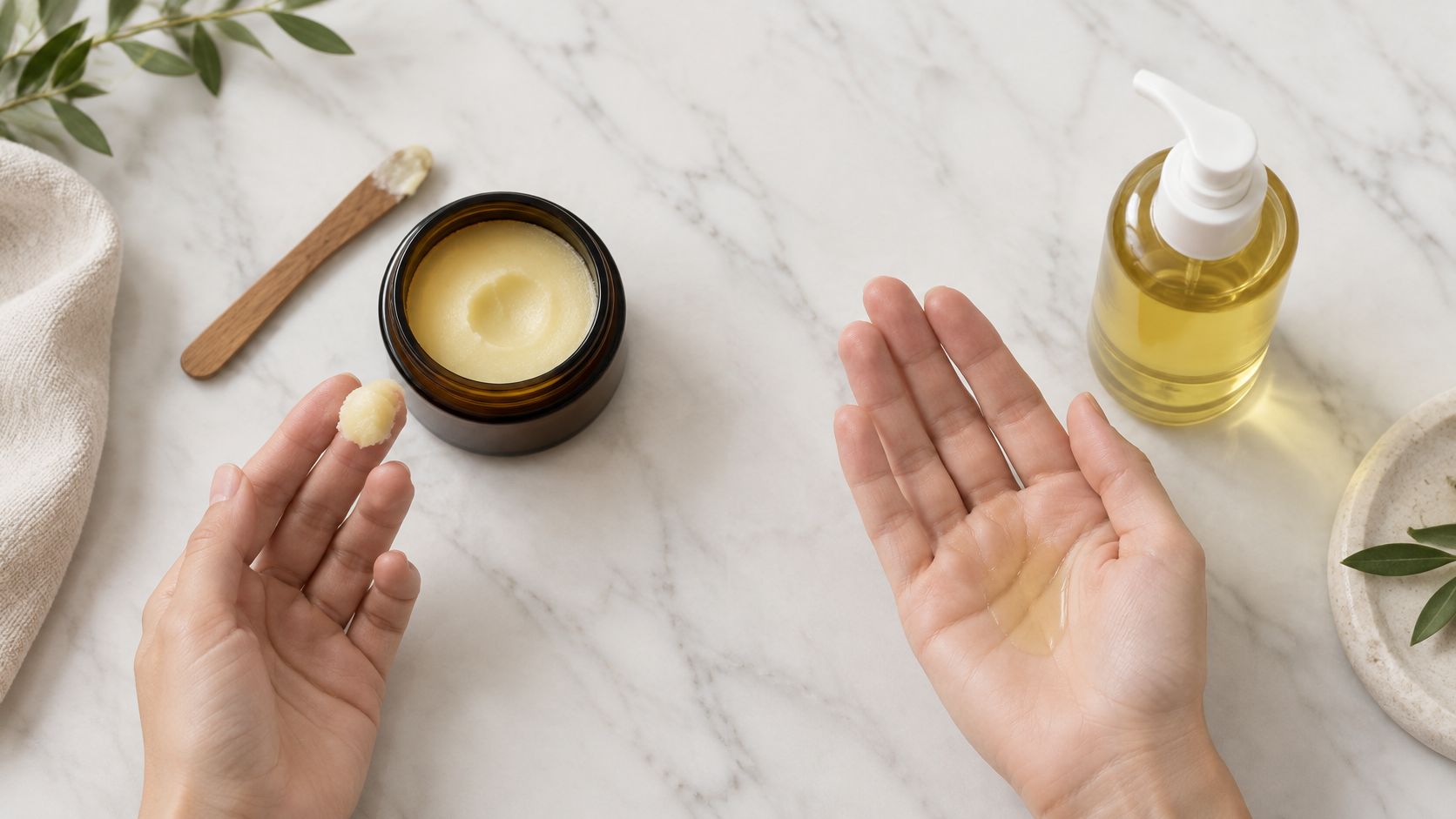
Technique moves residue numbers more than shoppers expect. Both routines below start with dry skin, because water dilutes the oil phase before it has done its job.
The balm routine
- Start with dry hands and a dry face. Water on the skin makes a balm seize up and drag instead of gliding.
- Scoop a small amount with dry fingers. A nickel-sized amount covers a full face; a wet scoop introduces water into the jar and can degrade the formula over months.
- Massage for about a minute, spending extra time on the eyes, lips and brow line where makeup sits thickest. Light circles, no pressure.
- Add a splash of lukewarm water and keep massaging. The balm should turn milky white within seconds. That color change is the emulsifier working.
- Rinse thoroughly, working from the hairline down so product doesn't pool at the jaw.
- Follow with a water-based cleanser only if makeup or sunscreen was heavy. Otherwise a clean rinse is enough.
The emulsifying step at number four is the one people skip, and it's the one that decides whether you get a clean rinse or a film.
The oil routine
- Dry face, dry palms, a few pumps. A cleansing oil spread over wet skin dilutes before it can dissolve pigment.
- Massage until makeup loosens, which usually takes 30 to 60 seconds. You'll feel the product go from slick to slightly thinner as it takes up sebum and sunscreen.
- Add water to emulsify. The oil should shift to a milky texture across your whole face, including the hairline and the sides of the nose.
- Rinse until no film remains, checking the jaw and temples where product collects.
- Follow with a gentle water cleanser if you wore long-wear base, and skip it on light days.
The slips that cause most problems
Hot water strips lipids and leaves skin tight, so lukewarm is the target. Skipping the emulsifying splash leaves an oil film that no amount of rinsing will shift. Rinsing for two seconds instead of twenty leaves product in the eyebrows and along the jaw.
Finish with the tissue check from earlier in this article. Skin should feel clean and slightly soft, not tight, not slippery. If the tissue picks up shine, repeat the cleanse rather than reaching for a stronger second wash.
Travel, Packaging and Affordable Picks
Packing convenience depends on the container and airline rules, not just the cleanser's format. Many cleansing oils count as liquids, while many balms are screened as solids. Check current TSA and airline guidance before packing; a travel-size oil may still fall under liquid limits.
Packaging claims also need context. Estimates of packaging reductions often omit the baseline, life-cycle boundaries, refill rates, shipping and disposal, as described in this market analysis of oil-based cleansers. A jar, spatula and carton can add packaging, so compare the full package rather than judging by the product's concentrated texture.
Compare grams per use, not solid versus liquid
Compare how much packaging a product uses over the number of applications you get, then consider a bottle or refill pouch on the same basis. A refillable pump used over time may create less packaging per use than a small jar with a carton, though the result depends on how long each container lasts.
| Archetype | Relative cost | Check before buying |
|---|---|---|
| Drugstore cleansing balm in a jar | Usually lower cost per ounce than mid-range butter-and-wax balms | Named emulsifier in the ingredient list |
| Drugstore liquid cleansing oil | Usually lower cost per ounce than mid-range butter-and-wax balms | Fragrance and essential oil content |
| Travel-size balm or oil, 1–2 oz | Compare cost per ounce with the full-size product | Carry-on liquid rule if it's an oil |
| Refillable oil in a pump bottle | Compare refill cost per ounce with the original bottle | Price per ounce of refill |
| Mid-range balm with butters and waxes | Usually higher cost per ounce than drugstore balms and oils | Whether it rinses clean in one pass |
Affordable swaps worth checking
- e.l.f. Holy Hydration! Off Duty Cleansing Balm: check where the emulsifier appears in the ingredient list relative to the waxes.
- The Inkey List Oat Cleansing Balm: check the fragrance line if your skin reacts easily.
- Palmer's Cocoa Butter Formula Skin Therapy Cleansing Oil: review the scent and essential oil ingredients.
- Neutrogena Ultra Light Cleansing Oil: check whether it emulsifies readily and rinses without lingering.
- Banila Co Clean It Zero Cleansing Balm Original: compare the price per ounce with the amount you expect to use.
The FDA's guidance on cosmetic ingredient lists explains how ingredients are listed. For a tight budget, drugstore balms and oils generally cost less per ounce than mid-range balms built around butters and waxes. In either price bracket, check the emulsifier and fragrance ingredients, then judge the product by how it rinses. Finding Favourites also publishes dupe lists under $10, under $25 and under $50.
Which Format to Buy for Your Routine
Five situations cover most shoppers, and each has one sensible pick.
- Heavy waterproof makeup or long-wear sunscreen: a liquid oil with a fast-emulsifying system, followed by a water cleanser. Speed of emulsification is what stops you scrubbing your lashes.
- Dry or mature skin in cold weather: a balm with butters in the formula, rinsed until the film is gone. The extra cushion helps when skin is already tight.
- Travel and minimal packaging: a small balm if you're carry-on only, or a travel-size oil that fits the liquid allowance.
- Sensitive or reactive skin: whichever format lists the mildest emulsifier and keeps contact time shortest. That's usually a fragrance-free oil.
- Tight budget: ignore the label and judge by ingredient list plus the tissue test. A cheap oil that rinses clean beats an expensive balm that doesn't.
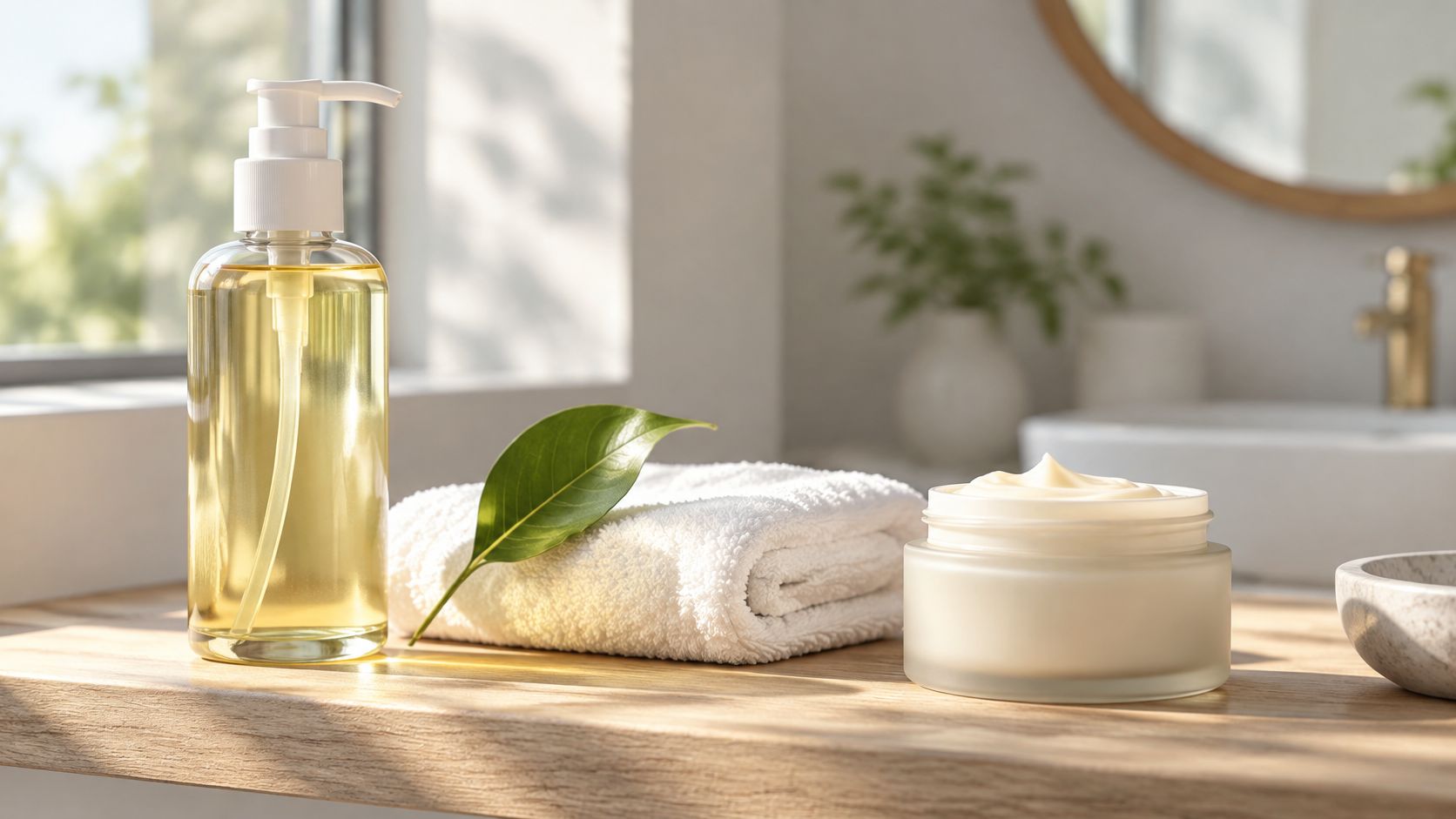
Apply the label checklist from the skin-type section and the residue test from the removal section to any product on the shelf, and you can reach a verdict without reading another comparison. If you're building the rest of the routine around your first cleanse, this guide to how to build a skincare routine shows where the first cleanse fits and what belongs after it.
Buy the formula you can rinse off completely, not the format a chart told you to like.
Common Questions About Balm and Oil Cleansers
Can I use a balm with waterproof mascara?
Yes, with care. Massage gently along the lash line, let the product sit for a few seconds, then rinse thoroughly. If pigment still lingers, a dedicated eye remover is gentler than repeated rubbing.
Do I need to double cleanse after either one?
Only when makeup or sunscreen was heavy. A water-based second cleanse removes residual film and any loosened pigment. On light days, a thorough rinse is enough.
Can an oil cleanser cause breakouts?
The evidence is insufficient to say oils cause or prevent acne. Patch test a small area, then watch your skin for a week before committing to a full bottle.
Is a balm better for dry skin?
Not automatically. A balm with a mild emulsifier and a thorough rinse suits dry skin well, while one that leaves film can feel heavier than the oil you replaced.
The residue test settles more of these questions than any category rule does.
Wrap Up and Final Verdict
The cleansing balm vs oil cleanser decision comes down to two things you can check yourself: the emulsifier and the rinse. For heavy makeup and resistant sunscreen, the reliable pick is a liquid oil with a fast-emulsifying system, followed by a water cleanser. For dry or reactive skin in cold weather, a balm built on a mild emulsifier earns its place when it rinses clean in one pass. The best-value dupe on a tight budget is the fragrance-free drugstore liquid oil with a named emulsifier, since it does the same job as a premium balm at a lower price per ounce.
Both formats dissolve oil-soluble makeup, sunscreen and sebum, then emulsify with water. No clinical trial has shown one format beating the other, which means removal depends on the individual product rather than the name on the jar. Skin type and the label checklist narrow the field, the step-by-step routines and travel rules shape daily use, and the tissue residue test is the simplest way to judge anything you buy.
Finding Favourites exists for the part of shopping that happens after you've read the label and still aren't sure what's worth the money. Stef's dupe roundups cover skincare, makeup and fragrance by brand, including Charlotte Tilbury, NARS, Glow Recipe and Supergoop!, with lists sorted under $10, $25 and $50 so a first cleanse doesn't have to cost a fortune. Head to Finding Favourites to browse by category or brand, and sign up for the newsletter if you want new dupes and discount codes as they land.