
5 Cheap Eye Cream Alternatives That Work for Dry Skin
Why does a plain, fragrance-free ceramide cream from the drugstore so often beat a luxury eye cream at the one job under-eye skin needs done?
Because eye creams are sold on the promise in the name and the weight of the jar, not the formula inside. Shoppers compare packaging, texture, and the word "clinical" on the carton. The comparison that predicts results is duller: which active is in the tube, whether your skin tolerates it, whether the packaging keeps it clean after opening, and how many weeks of usable use you get per dollar spent. Judge cheap eye cream alternatives on those four things and the pricey options stop looking like the safer bet. Most of them never were.
Five Cheap Eye Cream Alternatives at a Glance
A higher price buys nicer packaging and a heavier cream, and the case that it buys better under-eye skin is thin. Most tightness, flaking and dehydration lines around the eyes respond to the same barrier ingredients sitting in any decent $12 facial moisturizer. What separates a worthwhile cheap eye cream alternative from a waste of money is tolerability, packaging hygiene and usable weeks per tube, not the brand on the box.
This post may contain affiliate links, which means I may receive a commission if you purchase through my links, at no extra cost to you. Please read the disclosure policy for more information.
| Dupe | Replaces | Best For |
|---|---|---|
| CeraVe Eye Repair Cream | Ceramide eye cream | Dry, sensitive under-eyes |
| Neutrogena Hydro Boost Eye Gel-Cream | Gel-texture eye cream | Oily or combination skin |
| Vaseline Pure Petroleum Jelly | Occlusive night balm | Overnight dryness on the orbital bone |
| Neutrogena Rapid Wrinkle Repair Retinol | Retinol eye serum | Fine lines on the face, not lids |
| Eucerin Advanced Repair Lotion | Urea repair cream | Very dry, rough skin |
The price spread you're shopping inside is enormous. In 2024, eye creams ran from under $20 to more than $100 per 0.5 ounce, and the dermatologist-reviewed Everyday Health guide to eye creams puts the conclusion plainly: price does not necessarily correlate with effectiveness around the eyes. The category was valued at $12.2 billion globally in 2024, according to Credence Research's eye-cream market report, which tells you how much margin sits in the jar rather than the formula. If you'd rather shop by texture and price, shop affordable J-beauty at Buy Me Japan for plain ceramide and hyaluronic formulas under $20.
Read the Best For column against your own skin, not against the product name. A gel-cream that suits oily lids will sit badly on a dry one, and the petrolatum occlusive that rescues a flaky orbital bone overnight will feel suffocating on combination skin. Pick the single row that matches your main complaint and skip stacking two products that do the same job.
What to Look For by Skin Type
Three ingredient families do nearly all the work in a cheap formula, and none of them are expensive to manufacture.
Ceramides rebuild the lipids that hold the skin barrier together. A clinical review reports that a ceramide-containing eyelid cream increased eyelid skin water content and showed generally low irritancy potential for sensitive or barrier-impaired skin, and a controlled study found one application of a ceramide-based cream raised hydration and cut transepidermal water loss over 24 hours with no irritation or sensitization involving the eyes or periocular area (review of ceramide eyelid cream data). Humectants such as glycerin and hyaluronic acid pull water into the surface, which is what fixes the tight, crinkled look dehydration gives you. Occlusives like petrolatum sit on top and stop that water leaving overnight, which is great on dry lids and miserable on oily ones.
Read the back, not the front
The front label is marketing. The ingredient list is the product. The FDA points out that ingredient declarations are required for eye cosmetics sold at retail in the United States, which is the only reliable way to compare two formulas side by side (FDA cosmetics safety Q&A). Look for the words "fragrance-free" rather than "unscented", because unscented can mean a masking fragrance was added. Skip anything listing fragrance, essential oils, or a strong acid high on the list.
| Skin Type | Look For | Avoid Near the Eyes |
|---|---|---|
| Dry or mature | Ceramides, glycerin, urea in a rich cream | Heavy fragrance and strong actives on the lid |
| Oily or combination | Hyaluronic acid, glycerin, gel texture | Thick occlusives and heavy oils |
| Sensitive or eczema-prone | Ceramides, fragrance-free formula, simple ingredient list | Fragrance, essential oils and new retinoids until skin is calm |
| Fine lines | Low-strength retinol on the face, plus a barrier moisturizer | Retinol on the lash line or lids |
| Puffiness | Cooling gel texture and light humectants | Products promising fast results with no evidence |
Give any new product two full weeks of morning and night use before you form an opinion. Barrier repair is slow and cumulative, and a cream that feels unremarkable on day three can be the one you rebuy. If you want to compare formulas before you spend, this plain-language guide to budget moisturizers for dry skin walks through the ceramide options at drugstore prices.
DIY Options and What to Skip
Homemade eye products carry more risk than anything on a shelf, because nothing in a kitchen has been tested for use near the eye and nothing in a homemade mix contains a preservative. Ranked from safest to worst:
- Plain petrolatum from a sealed pharmacy tube. One ingredient, no fragrance, no water for bacteria to grow in. Scoop it with a clean spatula rather than a finger and press a thin film onto the orbital bone at night.
- A fragrance-free moisturizer straight from its own tube. Don't stretch it with oils, honey or water. Every addition introduces something that can spoil or sting.
- Nothing made with lemon juice, baking soda, vinegar, essential oils or raw fruit. Acids and fragrance compounds have no business on eyelid skin, and there's no formula to check them against.
Anything mixed at home spoils fast, so the cost-per-month calculation doesn't apply the way it does to a sealed product. Make one small batch, write the date on it, and bin it after three days. A DIY cream suits readers with no eczema, no recent eye infection and no reactive skin. The moment it stings, it's finished.
The Five Dupes, One by One
Each pick does well in some areas and falls short in others. Judge them on tolerability, hygiene once opened and what a month of usable use costs, not on how much the tube resembles the original.
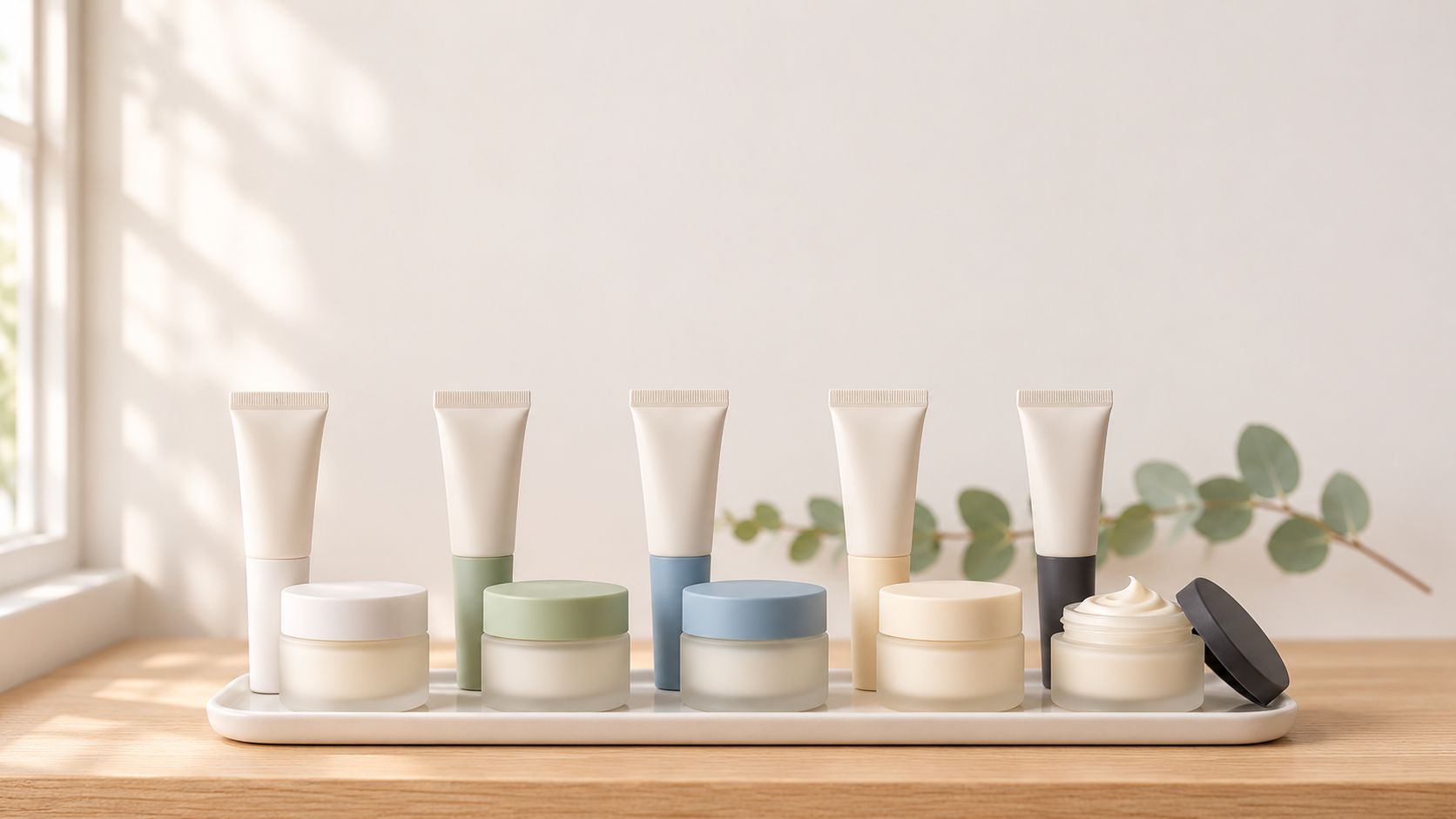
CeraVe Eye Repair Cream. Replaces a ceramide eye cream at four times the price.
Works for: dry, sensitive under-eyes, especially skin that stings under fragranced products. Ceramides plus hyaluronic acid in a texture that sinks in without a film, and a squeeze tube that keeps the formula closed between uses.
Falls short: pigmentation and structural puffiness. It's barrier support, full stop. It will not lighten dark circles.
Skip if: your main complaint is discoloration. You'll waste three months and blame the price point.
Cost per month: divide the shelf price by the months you get. A $15 tube used twice daily typically runs about three months, which lands near $5 a month.Neutrogena Hydro Boost Eye Gel-Cream. Replaces a gel-texture eye cream from a department store counter.
Works for: oily and combination skin, and anyone who hates the feeling of product sitting under makeup. Hyaluronic acid in a water-light base.
Falls short: very dry lids. It hydrates and then disappears, with no occlusive to hold the water in. The open pot also means washing hands before every dip.
Skip if: your under-eyes feel tight by mid-afternoon. Layer a cream over it or use something richer.
Cost per month: a small pot lasts roughly two months at twice daily, so halve the sticker price for the monthly figure.Vaseline Pure Petroleum Jelly. Replaces an occlusive night balm.
Works for: overnight sealing on the orbital bone when the skin is flaky and nothing else holds. Apply it last, over your moisturizer, in a very thin layer.
Falls short: no actives, no humectants, no results beyond preventing water loss.
Skip if: greasy lids bother you or you're prone to blocked glands along the lash line. Keep it off the lash line entirely.
Cost per month: a large tub lasts the better part of a year, so the monthly cost is trivial. Buy the plain version, not a scented one.Neutrogena Rapid Wrinkle Repair Retinol. Replaces a retinol eye serum.
Works for: fine lines on the face, including crow's feet at the outer edge of the orbital bone where the product naturally migrates.
Falls short: it's a face product, and it should stay one. Randomized split-face work supports a well-formulated retinoid for fine lines and texture in facial photoaging, and those trials were run on the face, not on eyelids or the immediate eye margin. That distinction matters when a label says "eye" and the evidence says "face".
Skip if: you're pregnant or breastfeeding without talking to a clinician first, or your skin is currently reactive, eczema-prone or sensitive around the eyes.
Cost per month: the tube covers the whole face, not just the eye area, and stretches to about two months. Divide accordingly.Eucerin Advanced Repair Lotion. Replaces a urea repair cream.
Works for: very dry, rough, thickened skin, including the orbital bone on a dehydrated face. Urea is a humectant at low percentages and a keratolytic at higher ones, so it smooths as it hydrates.
Falls short: the texture is a body lotion, and it can tingle on broken or freshly exfoliated skin.
Skip if: your skin stings at all. Use a plain ceramide cream instead.
Cost per month: a large bottle lasts three months or more when you're only taking a small amount for the eye area.
Run the same math on your shelf price before you buy, since prices move.
How to Apply and Layer a Budget Eye Routine
Application decides whether a $10 product behaves like a $60 one. Follow the path that matches what you bought.
- Patch-test first. Put a little on the inner forearm or behind the ear for several days. Irritation often takes a few days to show, and eyelid skin reacts faster than anywhere else on the face.
- Cleanse and pat dry. Products absorb predictably on bare skin and unpredictably over residue.
- Retinol path, two nights a week to start. Use a pea-sized amount for the entire face, not a separate blob under each eye. Keep it on the orbital bone and away from the lash line and the ocular surface.
- Let it dry, then buffer. Wait a few minutes, then follow with a fragrance-free moisturizer. Buffering cuts irritation without cancelling the active.
- Moisturizer path. Skip the retinol, take a rice-grain-sized amount, and press it along the orbital bone rather than on the lid itself.
- Morning sunscreen. Retinoids increase sun sensitivity, so broad-spectrum protection every morning is part of the routine, not an optional extra.
If you're layering hydrating products, this guide to how to use hyaluronic acid properly explains the order that holds water in the skin rather than evaporating it.
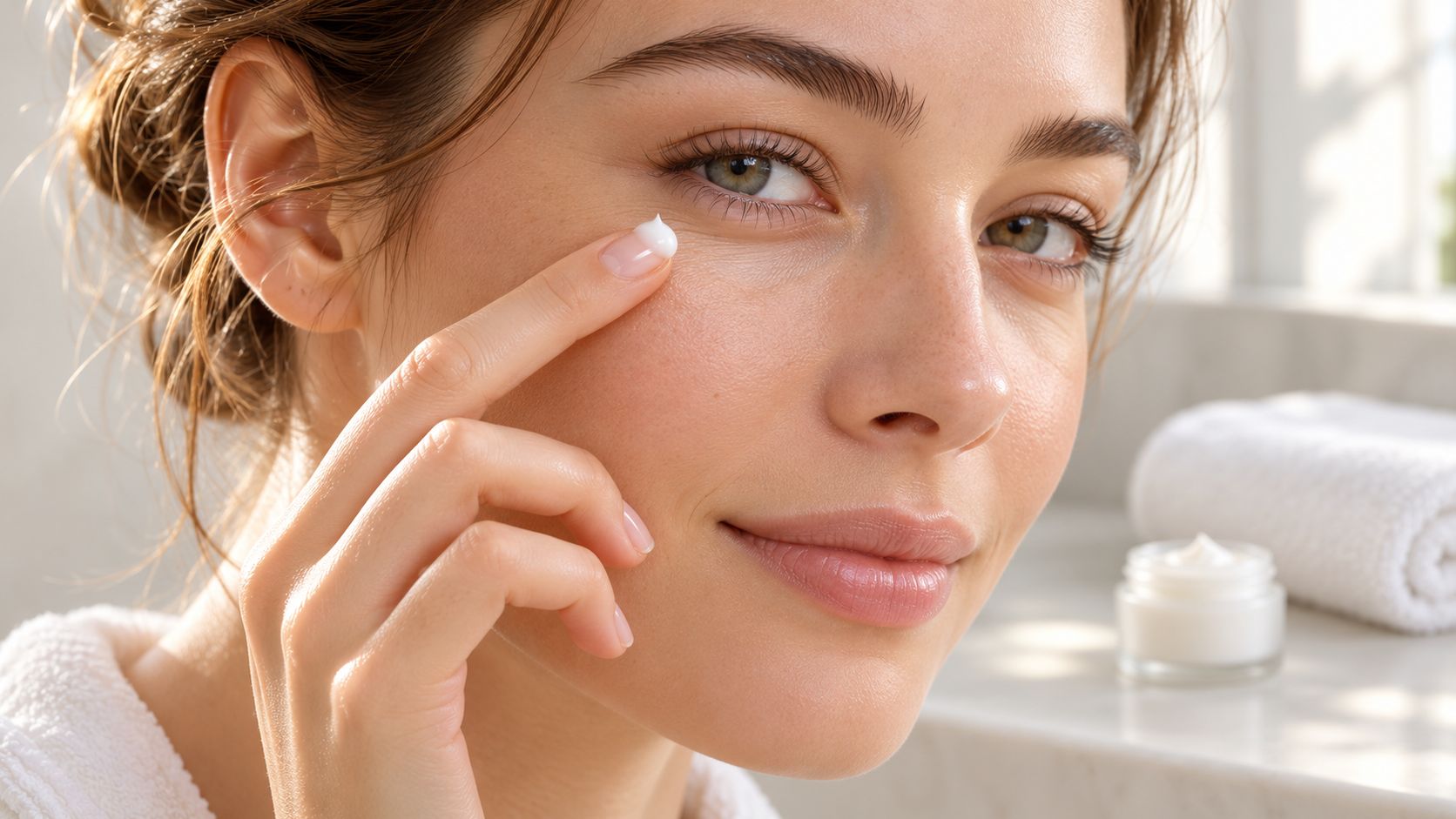
Stop signs: persistent burning, scaling, swelling or any eye symptom means the product comes off and a clinician gets a call. Mild tingling for the first week is normal. Anything that lasts longer isn't.
This routine serves texture and fine-line goals. It isn't a fix for pigmentation, structural laxity or fluid retention, and it isn't for every reader.
Shelf Life and Hygiene Rules for Budget Eye Products
A budget eye product stays cheap only while it stays clean. The FDA warns that adding water or saliva to a product can introduce bacteria (FDA guidance on shelf life and expiration dating). That rules out thinning a drying cream with tap water, wetting a finger to pick up product, or topping up an old tube so it smells fresh again.
Stop using anything that irritates the area, keep cosmetics away from an inflamed eye or broken surrounding skin, and discard whatever was used during an eye infection. Treat those as hygiene rules, not fine print.
Packaging decides how much of the tube you get to use. Choose a pump or squeeze tube when the formula allows it: less air, fewer fingers, easier wiping at the nozzle. An open jar invites contamination every time you dip into it, and it is harder to keep clean between uses. If a jar is the only option, use a clean spatula and close it fast.
- Never share eye products, even with a partner or a sibling. Cross-contamination is the fastest way to turn a cheap product into an expensive problem.
- Mark the opened date and check the label for a period-after-opening symbol.
- Discard after an infection even if the tube is nearly full. Reinfection from a contaminated product is avoidable.
- Replace when it changes. A new smell, separated texture or shifted colour means it is finished regardless of the date.
The money rule: a $12 tube that lasts two months costs $6 per month. A $9 jar that spoils after one month costs $9 per month of usable use.
The cheapest product on the shelf is only the cheapest if you get through it.
When to Stick With a Dedicated Eye Cream
A cheap moisturizer handles dryness, tightness and mild fine lines. It doesn't handle everything, and pretending otherwise is how budget advice loses trust. The FDA warns that ingredients safe for hair or nails may be unsafe on skin or near the eyes, and cosmetics aren't generally required to prove the safety of each individual product before sale (FDA prohibited and restricted ingredients in cosmetics). So check the label yourself rather than assuming an "eye cream" label guarantees suitability.
| Situation | Choose | Why |
|---|---|---|
| Mild dryness or tightness | Ceramide or humectant moisturizer | Barrier support is the main need |
| Fine lines on the face | Low-strength retinol on the face only | Retinoids suit texture goals, not lids |
| Persistent pigmentation or dark circles | Dedicated product plus a dermatologist | Barrier creams do not treat pigment |
| Persistent swelling | See a clinician | Swelling can have medical causes |
| Active eczema or dermatitis near the eyes | Fragrance-free moisturizer with clinician advice | Retinoids can irritate reactive skin |
| Pregnant or breastfeeding | Skip retinol, ask a clinician first | Retinoid safety needs professional guidance |
Ordinary dryness and a medical condition look similar for the first week and diverge after that. If the area is inflamed, weeping, itchy in a way that wakes you up, or unchanged after three or four weeks of consistent barrier care, that's a clinical question, not a shopping one. If you're choosing a dedicated cream for a barrier issue, this breakdown of drugstore barrier repair creams covers which formulas are worth the shelf space.
Frequently Asked Questions About Cheap Eye Cream Alternatives
How long before a cheap product shows results?
Give a retinol-type product about twelve weeks of consistent use before you judge it, because that's the timeframe retinoid trials run on. A moisturizer is faster on dryness and tightness, with users seeing a difference in about two weeks. Judging a retinol at week three tells you nothing except that you were impatient.
Can I use my regular face moisturizer under my eyes?
Yes, if it's fragrance-free, patch-tested, and applied in a small amount along the orbital bone rather than on the lid. The eye area tolerates fewer ingredients than the cheek, so a simple formula beats a complex one here.
Does a more expensive eye cream work better?
Price doesn't reliably predict results. Compare the active ingredient, the strength, the irritation profile and the monthly cost instead. Plenty of expensive jars contain nothing that a basic ceramide cream doesn't.
Can I use a budget eye product while wearing contact lenses?
Take the lenses out before applying and keep the product on the orbital bone, away from the lash line. Wait until it has settled and the area feels calm before reinserting, and skip it entirely on days when your eyes feel dry or irritated.
Pick Your Budget Eye Cream Alternative Today
Start with CeraVe Eye Repair Cream. Ceramides and humectants address dryness and barrier support, it suits sensitive skin, and it does the job at a price that doesn't demand loyalty.
The logic behind the whole list fits in a few lines. Choose by ingredient and skin type, not packaging or the word "eye" on the carton. Apply in small amounts on the orbital bone. Keep retinol off the lids and start it slowly. Watch the opened date and replace anything that changes. Know when a swap stops being appropriate and a clinician gets involved instead.
That's what the table at the top is for, and it's worth returning to when you're standing in an aisle with two products in your hands. Test one for two weeks, note how the skin feels, then work out the cost per month before you buy a second.
If you'd rather not check back manually, Don't Ever Miss A Dupe is where Finding Favourites readers sign up to be notified by email when new dupes go live.
Finding Favourites exists to take the guesswork out of buying beauty on a budget, with dupe roundups across skincare, makeup, drugstore and fragrance that are judged on performance rather than price. If this guide helped you settle on an eye product, the rest of the site applies the same ingredient-first test to the products you're already paying too much for. Head to Finding Favourites to browse by brand or by price tier under $10, under $25 and under $50.