
Bronzer for Olive Skin: 8 Dupes That Actually Work
You've found a bronzer that looks perfect in the compact, but on your skin it turns orange, chalky, or muddy as soon as you blend it out. That doesn't mean olive skin can't wear bronzer. It means “olive” doesn't tell you enough by itself: you need a shade that suits both your skin depth and your undertone.
This post may contain affiliate links, which means I may receive a commission if you purchase through my links, at no extra cost to you. Please read the disclosure policy for more information.
Why Olive Skin Makes Bronzer So Tricky
Most bronzer advice treats olive skin as one warm category and sends everyone toward golden or terracotta shades. That shortcut misses the difference between a muted green cast, a golden-olive undertone, a more neutral base, and surface redness. One person's soft bronze can look peachy on another, while a shade with too much gray can make olive skin seem dull.
Olive is a color-matching challenge, not a single depth category. It can appear across light-to-deep complexions, so two people with similar olive undertones may need very different bronzer depths. Research using spectrophotometer measurements and CIELAB color values identified six distinct skin-color clusters among 2,770 women across four continents, illustrating why depth alone doesn't fully describe complexion matching (research on skin-color classification).
The useful approach is to separate two questions: How deep is your complexion? And what undertone do you want the bronzer to complement? Start with depth, then look for a muted neutral-brown, olive-brown, or softly golden shade that adds warmth without laying an orange cast over your skin.
Forget the hunt for one universal “best” bronzer. A good match should blend into your complexion in daylight, stay natural after it settles, and do the job you want, whether that's a sun-warmed look or subtle definition.
Figuring Out Your Olive Undertone and Depth
Think of undertone as the background color of a photograph and depth as its brightness setting. Your skin can be light, medium, tan, or deep while still having a green, gray-green, golden, or neutral-olive cast. Identify those separately before picking a bronzer.
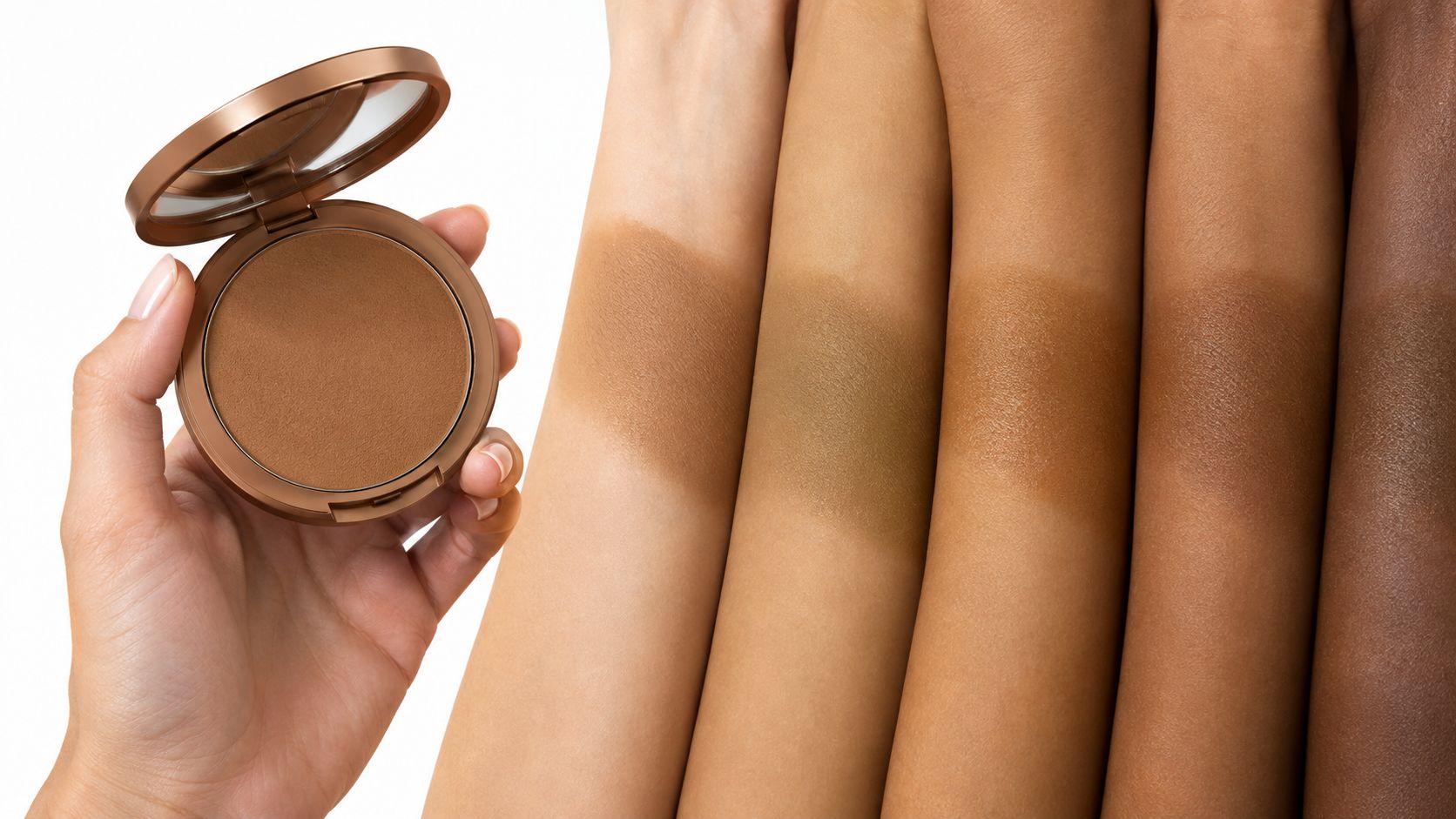
Try these checks in daylight:
- Vein check: Green-looking veins can be a clue, but olive undertones may also make veins look blue-green or mixed. Don't treat this as a verdict.
- White-T-shirt test: Hold a clean white shirt near your face. Notice whether your skin reads muted or greenish, more golden, or comparatively neutral. Check by a window, not under warm bathroom bulbs.
- Jaw-versus-wrist comparison: Look at your jaw and neck beside your wrist. The wrist may be lighter, redder, or otherwise unlike your face, so don't choose a bronzer from a wrist swatch alone.
If your skin reads muted green or gray-green, favor restrained shades that won't overpower that subdued cast. Golden-olive skin can take more subdued warmth; neutral-olive often works well with balanced brown, while surface redness is a reason to be wary of bronzers that are too red or peachy.
For another practical way to sort out the difference between surface color and undertone, see this guide to identifying your undertone. Then compare bronzers at your own depth. A light olive complexion may need a light muted tan, while a deep olive complexion needs a deeper brown, even if both suit a similar neutral-olive family.
A good swatch should look like warmth, not a separate stripe. This video offers another look at undertone cues:
How to Test a Bronzer Before You Buy
A hand swatch is a poor final test. The color on your hand may not match the depth or undertone of your face, and store lighting can make an orange or gray cast hard to spot. Test on the jaw or upper cheek, where you can judge how the shade relates to your complexion.
- Swatch where you'll wear it. Apply a small amount along the jaw or upper cheek, then blend the edge. Don't choose based on how vivid the pan looks.
- Give it time to settle. Check again after 5–10 minutes. If it shifts toward orange, red, or gray, that change matters more than the first swipe.
- Check in daylight. Stand near a window or step into a shaded outdoor spot. Warm indoor bulbs and harsh direct sun can both distort what you see.
- Judge the blend, not just the center. The edges should fade into your skin. If you're left with a stripe, the shade may be too saturated or too deep, or the formula may be applying unevenly.
This isn't just personal fussiness. In a cosmetics color-matching experiment, human observers performed about three times worse than an instrument when judging differences between skin and Pantone Skin Tone Guide samples. They also tended to choose shades that were lighter and less reddish than the participants' actual skin (cosmetics color-matching research).
The useful test: If a bronzer looks flattering only under store lights, it hasn't passed.
If you're shopping online, look for clear swatches and a current retailer listing, but don't assume a shade name like “golden” or “warm” guarantees a match. Your jawline and daylight are better judges.
Powder vs Cream vs Stick on Olive Skin
Formula changes how a bronzer behaves, but it can't rescue a bad color match. Powder is like setting the mood: it adds a soft layer of warmth over the skin. Cream is more like mixing paint directly on the canvas, so it can look especially natural when the undertone is right.
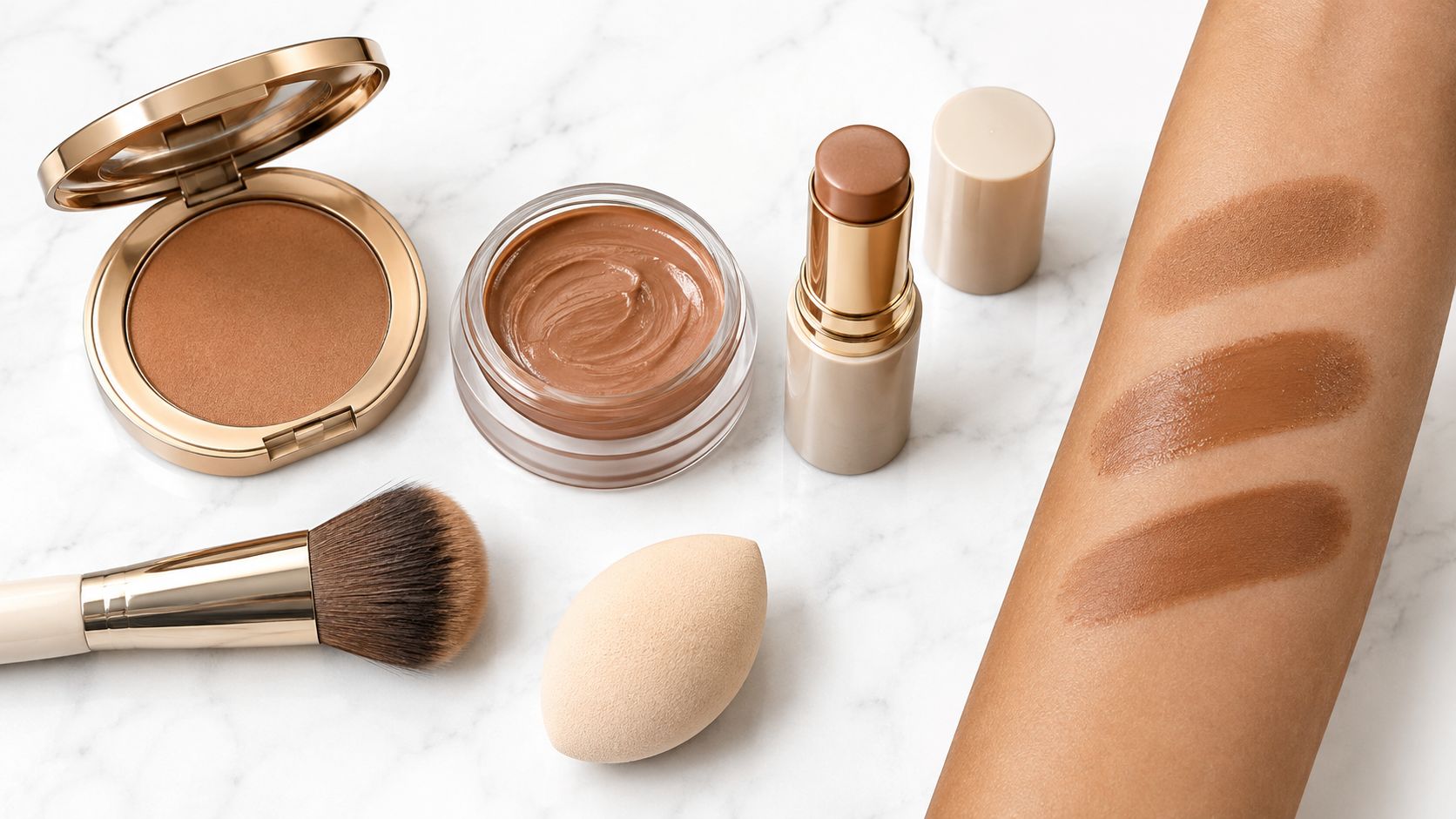
Powder is the easiest choice if you want a buildable, low-fuss finish or your skin tends to get oily. Apply it with a fluffy brush and add color gradually. Skip powders that look pale or chalky as you blend; a whitish base can make olive skin appear ashy.
Cream and liquid bronzers suit dry or normal skin and often give a skin-like finish. They're easy to sheer out, but use a small amount first. A heavily pigmented cream can leave a distinct patch before you've had a chance to blend it.
Sticks are convenient for targeted placement and can work for bronzing or contouring, depending on their shade. Their dense format makes a light hand essential: swipe less than you think you need, then blend with a brush or sponge.
Pigment quality matters, too. Bronzer color is commonly made with blends of iron oxides, including red CI 77491, yellow CI 77492, and black CI 77499. Poorly dispersed pigments can contribute to visible speckling, streaks, and a brick-like appearance instead of an even blend (iron oxides in cosmetics).
My practical pick: Choose powder if you want easy control, cream if you want a melted-in finish, and a stick if you value quick, targeted application. Whichever you choose, check that it builds evenly rather than turning patchy.
Bronzing vs Contouring on Olive Skin
Bronzer and contour aren't interchangeable. Bronzer adds warmth where the sun might naturally hit; contour creates the look of shadow to shape the face. Treating a cool contour shade as bronzer can leave olive skin looking gray, while using a warm bronzer in the hollows can look muddy.
For a sun-warmed effect, use a muted neutral-brown or softly golden shade around the forehead, cheek perimeter, nose, and chin. Keep the layer sheer, then build only where you want more warmth. A balanced shade is usually more useful than a strongly orange-gold one.
For sculpting, choose a cooler taupe-brown that looks like a natural shadow. Sweep it under the cheekbones, along the jaw, or beside the nose, then soften the edges. The shade should define rather than warm.
Expert guidance favors earthy, bronzed, subtly red, or coppery-brown tones for olive skin and warns that highly peachy or orange formulas can stand out against its muted appearance (guidance on undertones and flattering shades). That doesn't mean every olive complexion needs the same brown; depth still matters.
For a clearer placement walkthrough, use this beginner's guide to contouring. Keep the jobs distinct: warmth around the perimeter, shadow in the hollows. If the result looks muddy, remove some product and blend the edges before adding more.
8 Budget-Friendly Bronzer Dupes for Olive Skin
A dupe should resemble the benchmark in tone, finish, and ease of use, not just in the color of its packaging. The table gives a quick starting point, but check the current shade range and retailer listing before purchasing. FDA labeling rules require cosmetics sold in the United States to display product identity, net quantity, marketer information, and an ingredient declaration, making the package and an established U.S. retailer listing useful ways to confirm product details and availability (FDA cosmetics labeling guide).
| Luxury Bronzer | Best Drugstore Dupe | Best For |
|---|---|---|
| Benefit Hoola | e.l.f. Primer-Infused Bronzer | Matte, softly blended warmth |
| NARS Laguna Bronzing Powder | Milani Silky Matte Bronzing Powder | Buildable powder finish |
| Charlotte Tilbury Airbrush Bronzer | Physicians Formula Butter Bronzer | Smooth, diffused look |
| Fenty Beauty Sun Stalk'r | NYX Matte Bronzer | Matte definition |
| Saie Sun Melt | e.l.f. Putty Bronzer | Creamy, natural-looking warmth |
| Makeup by Mario SoftSculpt Bronzer | Milani Cheek Kiss Cream Bronzer | Cream formula |
| Rare Beauty Warm Wishes Effortless Bronzer Stick | NYX Wonder Stick | Stick format and targeted placement |
| Gucci Poudre de Beauté Éclat Soleil | Maybelline City Bronzer | Everyday powder bronzing |
The powder picks
Benefit Hoola and e.l.f. Primer-Infused Bronzer: Try e.l.f. if you want a matte powder that's easy to build. Pick a shade that deepens your complexion without looking orange; the best match depends on your skin depth, not the familiar “Hoola” name.
NARS Laguna and Milani Silky Matte Bronzing Powder: Milani is a practical option if you like powder bronzer but want a softer, buildable application. Check the swatch on your jaw, particularly if golden powders often turn peachy on you.
Charlotte Tilbury Airbrush Bronzer and Physicians Formula Butter Bronzer: Consider Physicians Formula for a diffused powder effect rather than a sharp stripe. It's a better fit for someone who likes a blended finish than for someone seeking a precise contour.
Fenty Beauty Sun Stalk'r and NYX Matte Bronzer: NYX gives matte-bronzer fans another accessible format to compare. Avoid treating it as contour by default; choose a shade that adds believable warmth on your skin.
The cream and stick picks
Saie Sun Melt and e.l.f. Putty Bronzer: Both offer a cream-style route to a less powdery finish. Apply a small amount and blend thoroughly, especially if your undertone is muted.
Makeup by Mario SoftSculpt Bronzer and Milani Cheek Kiss Cream Bronzer: Milani is worth considering if you prefer cream and want a blendable, skin-like look. It won't make a mismatched undertone disappear, so test the finished blend in daylight.
Rare Beauty Warm Wishes and NYX Wonder Stick: Reach for the NYX stick when you want a portable option for targeted placement. Use it as bronzer only if the shade reads warm and natural on your complexion, not gray like a contour.
Gucci Poudre de Beauté Éclat Soleil and Maybelline City Bronzer: Maybelline offers a powder alternative for everyday use. Pick a shade that blends away at the edges; if it leaves a visible band, it's not your match.
These are dupe comparisons, not guaranteed exact shade matches. Retailer stock and shade availability can change, so verify the current listing before you buy. I'm not assigning dollar savings because prices vary by retailer and weren't verified here.
Common Olive Skin Bronzer Mistakes and Quick Fixes
A bronzer that looks wrong isn't always too dark. It may be the wrong undertone, too saturated, applied too heavily, or used for contour when you wanted warmth.
- Choosing by the pan: A vivid peachy shade can look appealing in the compact and too orange on your face. Swatch it on your jaw and check it in daylight.
- Skipping the settling check: A shade that looks fine at first can shift as it wears. Recheck it after the settling time described earlier, then decide.
- Using a dense brush with a heavy hand: You can deposit too much product before it has a chance to blend. Start with a fluffy brush and build in light layers.
- Using bronzer as contour: Warmth belongs on the face perimeter; a cooler, muted brown is generally better for creating shadow in the cheek hollows.
- Assuming all olive skin is golden: A shade can match your depth but still look too yellow, red, or orange. Separate the two decisions.
Complexion cosmetics have a history of limited shade assumptions, which can make matching harder when your undertone doesn't fit conventional pink or yellow categories. That's why a shade name isn't enough: compare the color on your skin, not just the label.
Before you head out, check the blend at the jaw, look in daylight, and ask whether the color reads as warmth or a stripe. If it's muddy, remove excess and soften the edges instead of adding more product. For a simple application walkthrough, follow this guide to applying bronzer for beginners.
FAQ and Final Verdict on the Best Dupe
Can olive skin wear a cool bronzer?
It can, but ask whether you want bronzing or contouring. A cool taupe-brown can create shadow, while a neutral-brown bronzer is a safer pick for adding natural warmth. If a cool shade turns gray on your cheeks, save it for sculpting rather than bronzing.
Is cream or powder better for oily olive skin?
Powder is usually the simpler starting point if your skin gets oily or you want a finish that's easy to build gradually. Cream can still work, but keep the application light and check that it doesn't become patchy as you blend.
How can I tell if my bronzer has oxidized?
Compare the shade after it has settled with how it looked just after application. If it becomes noticeably more orange, red, or gray, or stops blending naturally into your jaw, it's not wearing the way you want. Check in daylight rather than judging under indoor bulbs.
Which dupe is the closest all-around swap?
For a broadly wearable powder bronzer, e.l.f. Primer-Infused Bronzer is my first pick in this roundup. It suits shoppers looking for a buildable matte option, provided the shade matches their complexion depth and doesn't pull orange. No powder can be the best match for every olive undertone.
Shade names alone aren't a reliable shortcut. A widely cited survey found that 73% of women considered finding foundation challenging, with shade selection the leading difficulty for 54% (survey context on shade-matching challenges). The same mindset helps with bronzer: choose depth and undertone separately, then look for warmth that doesn't push your skin toward higher saturation.
My all-around pick from this list is e.l.f. Primer-Infused Bronzer, especially if you want an approachable powder to test in your own shade range. The right bronzer for olive skin should add warmth, blend away at the edges, and still look like your complexion in daylight.
Finding Favourites curates affordable alternatives to luxury makeup, skincare, and fragrance, with practical comparisons of shade, texture, finish, and wear. If you're comparing bronzers and other beauty swaps, visit Finding Favourites to browse its dupe roundups and makeup guides.