Best Powder for Dry Skin: 5 Affordable Dupes That Work
Dry skin affects more than 50% of adults and older people worldwide, according to a 2024 dermatology review. That's why the best powder for dry skin isn't necessarily the one marketed as hydrating or the one with the strongest blur. It's the one that still looks comfortable after several hours, without catching on flakes, tightening the skin or settling into lines.
This post may contain affiliate links, which means I may receive a commission if you purchase through my links, at no extra cost to you. Please read the disclosure policy for more information.
Quick Picks and Best Matches for Dry Skin
A powder that looks polished at minute one can turn patchy by hour six on dry, barrier-impaired skin. The three picks below hold their finish through a long day, and the match guide under the table covers a drugstore matte option for tighter budgets and oilier zones.
| Powder | Finish and Best Use | US Price |
|---|---|---|
| Tower 28 Getset Blur + Set Talc-Free Pressed Setting Powder | Soft blur, talc-free pressed; best budget pick for combination dry skin | $28 |
| Haus Labs Bio-Blurring Talc-Free Loose Setting Powder | Loose blur, talc-free; good for T-zone and light all-over use | $38 |
| Hourglass Veil Translucent Setting Powder | Translucent, skin-like finish; luxury benchmark | $52 |
Those prices come from Who What Wear's dry-skin powder recommendations, which in 2025 listed Tower 28 Getset Blur + Set at $28, Haus Labs Bio-Blurring at $38 and Hourglass Veil at $52. Treat them as reference points rather than a checkout guarantee, since sale pricing and shade availability shift between retailers.
Tower 28 is the price-first pick for combination skin that needs a soft blur without powdering every area. I treat Hourglass Veil as the finish-first pick when a sheer, skin-like look matters more than spending less, and Haus Labs sits between them as a loose option that presses well into the T-zone. None of the three should go on as a full-face default on dry skin. Start with a small amount where makeup tends to move or shine, then stop.
Talc-free appears twice in this table, and the label alone is no guarantee of comfort. The formula still has to go on thin and stay smooth on flakes to earn its place.
Match the powder to the dry-skin pattern
- Combination skin with dry cheeks: Try Tower 28 on the T-zone only, and leave the cheeks unpowdered if they already look smooth.
- Oily T-zone with dry cheeks: Use Maybelline Fit Me Matte + Poreless only where oil breaks through. Carrying its matte finish onto dry cheeks just to make the face look uniform will emphasize every flake.
- Mature skin with fine lines: If the budget allows, apply Hourglass Veil sheerly and check it in natural light before adding more.
- Sensitive or barrier-impaired skin: Consider a talc-free pressed powder, patch test it first and avoid fragranced formulas if fragrance tends to bother your skin.
- Long events or photos: Use Haus Labs Bio-Blurring on the T-zone, then touch up that area rather than adding another coat over flaky spots.
If powder keeps making dry skin look worse, a stronger matte finish rarely fixes it. Move to a finer, lower-absorbency formula and apply less of it. For seasonal prep, find lightweight hydration for dry summer skin before deciding whether your base needs a powder at all.
What Dry Skin Needs From a Setting Powder
A 2024 dermatology review connects dry skin with impaired barrier function, which can increase sensitivity, flaking, tightness and visible texture. It reports that dry skin affects more than 50% of adults and older people worldwide. Xerosis and the itching that comes with it also become more common with age, which is part of why a powder that looks polished on an oily complexion can emphasize dryness on mature or barrier-impaired skin.
| Criterion | Look For | Red Flag |
|---|---|---|
| Oil absorption | Moderate absorbency with conditioning components | Heavily absorbent formula dominated by kaolin, starch or silica |
| Particle size | Finely milled, smooth texture | Gritty or coarse texture that drags on dry patches |
| Application weight | Thin layer applied to the T-zone | Full-face layers needed to reach the desired coverage |
| Conditioning ingredients | Magnesium stearate or emollient-treated pigments | No conditioning ingredients listed |
| Finish after 4 to 8 hours | Smooth, with no settling into lines | Tightness, patchiness or flake emphasis |
On dry skin, the practical rule is to prioritize lightweight, finely milled powders and apply them selectively instead of building a heavy, absorbent layer across the whole face. A fine particle size blends over flaky areas rather than catching on them, and moderate absorbency sets your base without stripping the moisture your barrier already struggles to hold. Low visible cakiness, minimal settling into lines and compatibility with moisturizer underneath matter more than a product's finish name. If you're unsure whether tightness comes from dryness or dehydration, The Happy Bump Co skin guide offers a useful explanation of the difference.
A simple at-home wear test
Apply moisturizer, let it settle, then put a thin layer of powder on one area of the face. Notice whether the brush or puff drags during blending, and check immediately for flakes that look more pronounced. Reassess after 4 to 8 hours for tightness, patchiness and settling into lines.
That wear window is the true test. Many powders look acceptable at hour one and turn chalky or patchy by hour six as they keep absorbing what little surface moisture is left. “Hydrating” on a label isn't a performance test on its own. Score what you can see and feel on your skin, then compare the result with your usual routine. If you're building a comfortable base, this guide to a budget moisturizer for dry skin can help you consider the skincare underneath the powder, too.
Ingredients and Talc-Free Claims on Dry Skin
| Ingredient | Typical Role | Dry-Skin Verdict |
|---|---|---|
| Talc | Slip, blending, oil absorption and opacity | Acceptable when finely milled; not automatically worse |
| Mica | Light reflection and luminous finish | Good for glow on dry skin |
| Synthetic fluorphlogopite | Smoothing and reflective finish | Good alternative to mica |
| Kaolin | Strong oil absorption | Avoid as a leading ingredient |
| Starch, such as cornstarch or rice flour | Absorbency and soft feel | Use with care |
| Silica | Strong absorbency and mattifying | Avoid as a leading ingredient; check the grade |
| Boron nitride | Slip and smoothness | Good for glide |
| Mesoporous magnesium carbonate | Absorbs oil and water, with a long mattifying effect | A trade-off to test before committing |
Talc-free isn't automatically better for dry skin. Talc can improve slip, blending, opacity and the silky feel of a powder; it also absorbs moisture. Those traits can help a formula look smooth and less patchy on some dry complexions. The finished formula matters more than the single ingredient name: a finely milled talc powder from a transparent manufacturer may look more comfortable than a talc-free formula that relies heavily on absorbent powders.
There's also a separate question of ingredient-supply-chain transparency. The FDA's talc information explains that in December 2024 the agency proposed standardized asbestos-testing methods for talc-containing cosmetics. The proposed framework used polarized-light microscopy and transmission-electron-microscopy-based methods, with batch or lot testing. That proposal is a reason for safety-conscious shoppers to consider manufacturer transparency, not a reason to assume every talc product is unsuitable for skin.
The practical distinction: Talc-free is not the same as irritation-free. A talc-free powder can still feel drying or emphasize flakes if its other ingredients absorb too much oil.
Choose by three separate questions: comfort, meaning whether the formula leaves skin feeling tight; finish, meaning whether it looks smooth or highlights texture; and supply-chain transparency, meaning whether you're comfortable with the manufacturer's information about ingredients and testing. If you're reviewing the rest of your routine alongside powder, explore everyday skincare essentials for a wider look at common skincare product categories.
Five Affordable Dupes for Luxury Setting Powders
Hourglass Veil Translucent Setting Powder is the luxury benchmark here, with a 2025 listed price of $52. A lower-cost alternative doesn't need to copy every ingredient or behave exactly the same way to be useful. Judge each option by the finish you want and the areas you plan to set, then weigh how it wears on dry, barrier-impaired skin over four to eight hours rather than trusting a hydrating label.
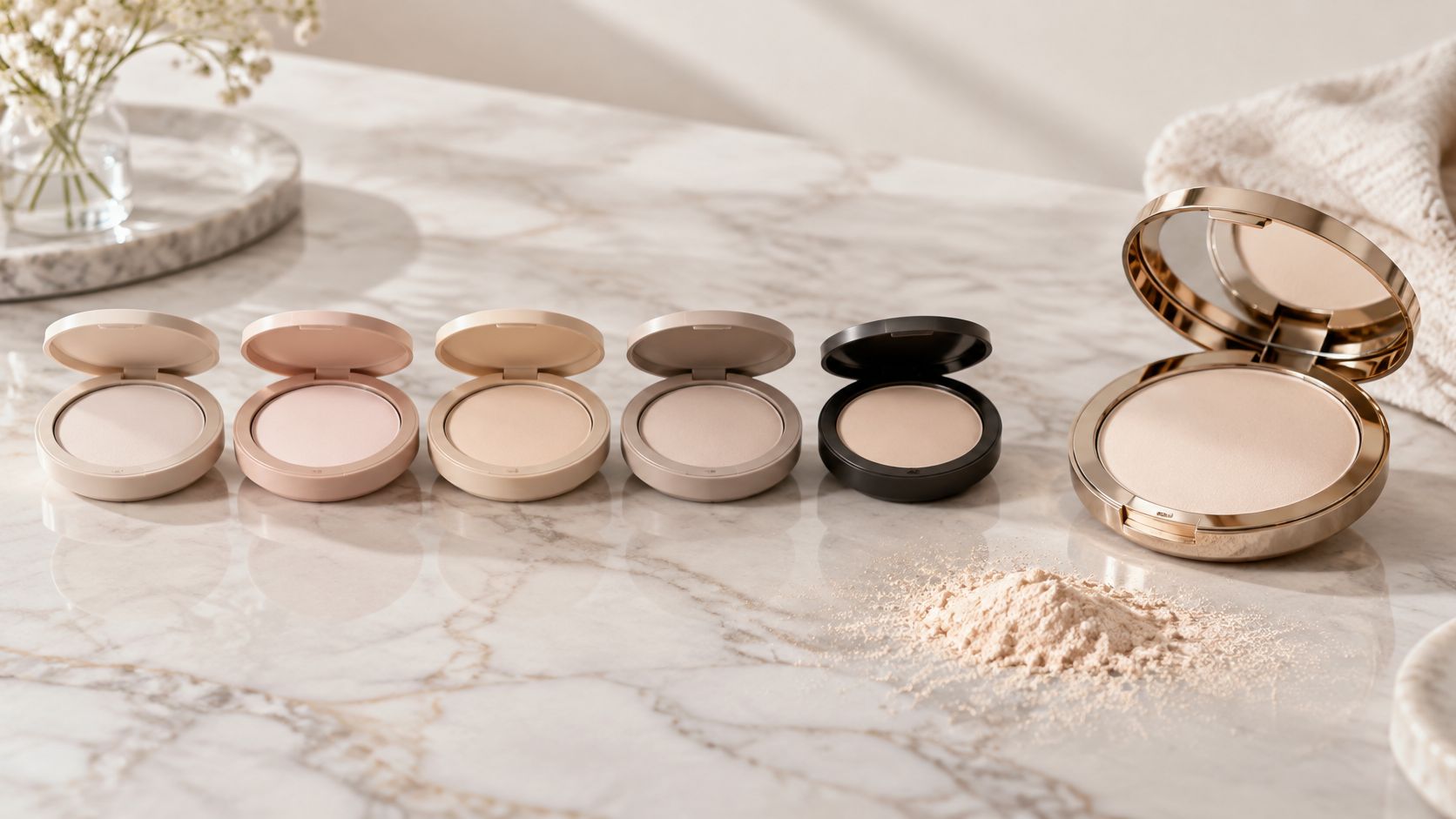
Tower 28 Getset Blur + Set Talc-Free Pressed Setting Powder, $28. This is the best overall dupe in this group for combination dry skin. Its pressed format makes it straightforward to place on the T-zone without loading up the cheeks. Works for: a soft blur with targeted application. Skip if: you want a strong, full-face matte or prefer loose powder. Who What Wear listed it among its dry-skin recommendations at $28 in 2025.
Haus Labs Bio-Blurring Talc-Free Loose Setting Powder, $38. This loose option suits a light, sheer layer where makeup needs setting. Works for: a soft blur on the T-zone or careful all-over use. Skip if: you tend to apply loose powder heavily or have visible flakes that powder might catch on. Who What Wear listed it at $38 in 2025.
bareMinerals Original Mineral Veil. A sheer mineral veil works when you want a light finish rather than a dense layer of coverage. Works for: normal-to-dry skin and careful, sparing application. Skip if: a matte finish tends to make your cheeks look tight.
Kosas Cloud Set Baked Setting & Smoothing Talc-Free Vegan Powder. A talc-free baked powder gives a soft-focus finish, but use it selectively if your skin doesn't tolerate a heavier feel. Works for: a soft, more finished look with a light hand. Skip if: your base is already textured or your cheeks are flaky.
Maybelline Fit Me Matte + Poreless Powder. This is the drugstore matte option in the lineup, best reserved for oilier zones rather than dry areas. Works for: taking down shine on the forehead, nose or chin. Skip if: you want a luminous finish or need powder on dry cheeks.
Three of the five here carry a talc-free label, and that tells you little about how they'll feel by mid-afternoon. What decides comfort on dry skin is the size and placement of the layer: a heavy coat of any loose or baked powder reads dry within a few hours, while a thin pressed layer over the T-zone holds without tightening. If you're prone to flaking, skip baking altogether and choose a lighter application instead.
Prices and stock change often, so confirm the current US price and availability at the retailer before you buy. For more lower-cost alternatives, browse Finding Favourites' Hourglass drugstore dupes roundup.
How to Apply Setting Powder Without Drying Out
More powder means more coverage and mattification, but it also means less flexibility, and on a compromised barrier that trade-off shows up as tightness within a few hours. Prioritize lightness, adherence and even dispersion over aggressive oil absorption. Porous ingredients such as kaolin, starch, chalk and some silica grades can accentuate flaking, while conditioning components like magnesium stearate or emollient-treated pigments tend to sit more comfortably on dry patches. Judge any formula by how the finish looks and feels four to eight hours later, not by a "hydrating" claim on the packaging.
Apply only where makeup needs it
- Moisturize and let the layer settle. Wait two to three minutes before makeup so powder doesn't catch on tacky skincare and form clumps.
- Keep foundation or concealer thin. A heavy base makes powder look thicker, especially over flaky patches, so build coverage only where you need it.
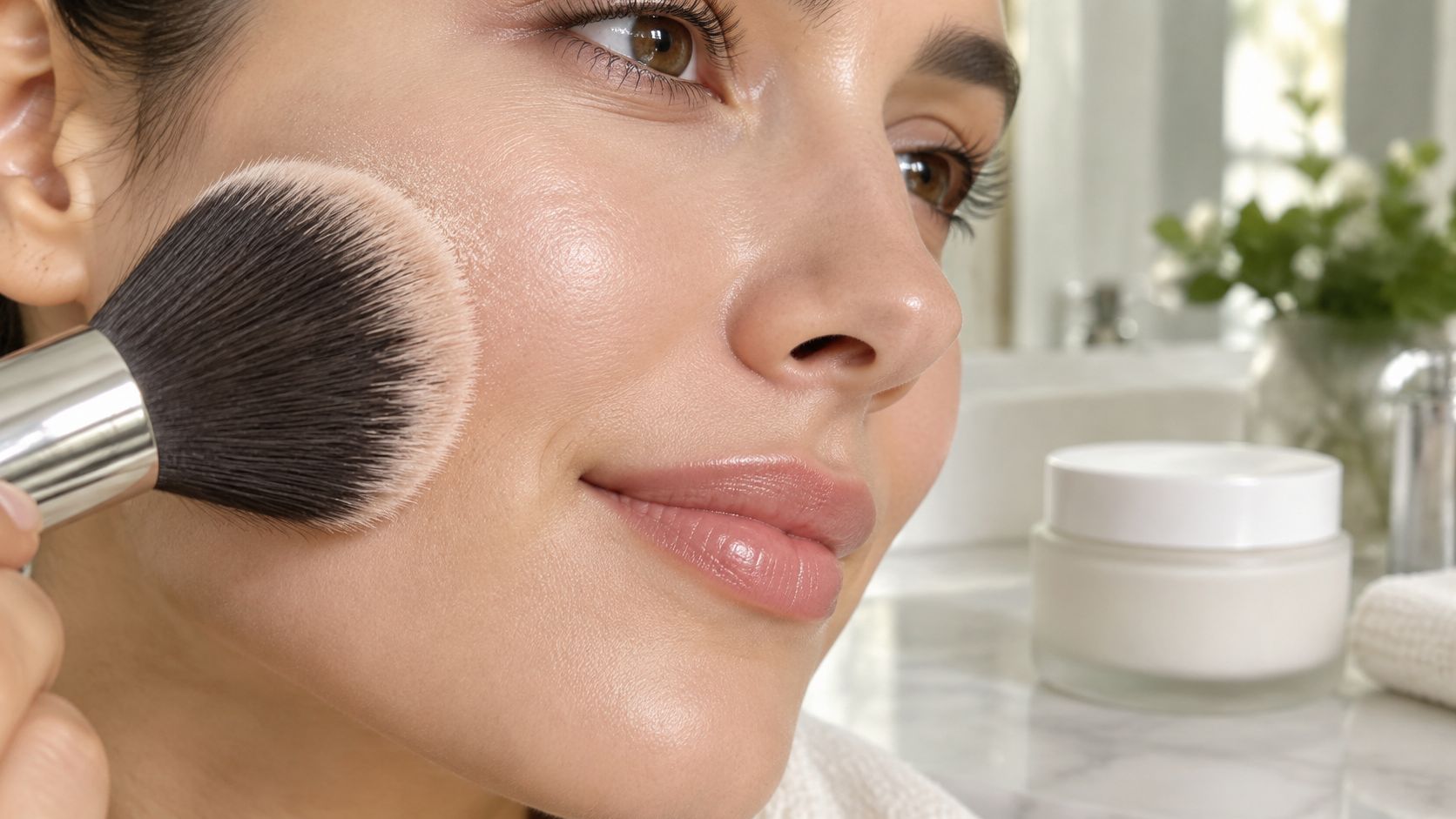
- Load a small fluffy brush lightly. Tap off excess before the brush touches your face; a smaller deposit is easier to keep flexible.
- Place powder on the T-zone. Press a little onto the forehead, nose and chin, and leave cheeks bare if they're dry or textured.
- Press rather than sweep. A puff can place powder without dragging across dry patches. Keep the pressure light near textured areas.
- Set under the eyes only if they stay smooth. If powder emphasizes lines or dryness there, skip it rather than adding more to chase a smoother finish.
- Touch up only where shine returns. At midday, use a dry brush on the T-zone instead of layering powder across the whole face again.
Particle size and lubrication control how much a powder drags during application. Finer, well-lubricated powders glide over textured skin with less friction and catch less on flakes, which is why I treat blend feel on moisturized skin as a better test than any label claim. Fine milling buys you slip, but it won't save a heavy hand: even a silky powder looks flat by midafternoon if you deposit too much of it.
If you're unsure whether a loose formula is too heavy for your skin, this guide to applying loose powder shows how to build a sheer layer. If a light set still looks dusty an hour in, mist a hydrating setting spray over the finished face to relax the powder back into the base instead of adding more product.
Then troubleshoot by what you see. Cakiness at the nose usually means too much product, so tap off more before the next pass. Flaking under the eyes calls for skipping powder there and using a hydrating concealer. Settling into lines is a cue to switch to a finer, sheerer powder and apply less of it.
For a quick visual guide to placement, watch the video below.
Frequently Asked Questions About Dry Skin Powder
Can setting powder make dry skin worse? Yes, especially when it's highly absorbent and applied heavily across the full face. Use a small amount only where makeup needs setting, and check how the finish feels later.
Is talc-free always safer or better for dry skin? No, talc-free doesn't mean irritation-free or low-absorbency. Consider the whole formula and whether the manufacturer provides the ingredient and testing information you're looking for.
Should very dry skin skip powder altogether? Not necessarily; a sheer layer on the T-zone may help while cheeks and under-eyes stay bare. If powder makes those areas look rougher, leaving them unset is a sound choice.
Why does fine milling matter? Finer particles can glide more smoothly and are less likely to feel draggy during application. Test the texture on moisturized skin instead of choosing by a “hydrating” claim alone.
Is pressed or loose powder better for dry skin? Pressed powder suits touch-ups and combination dry skin on the T-zone, while loose powder can give a sheer all-over finish when applied lightly. Choose according to how much coverage your skin can tolerate, and keep either format off areas where it emphasizes flakes.
For more technique, see this practical guide on how to use loose powder.
Choosing Your Dry Skin Powder Today
Tower 28 Getset Blur + Set Talc-Free Pressed Setting Powder at $28 is the best dupe in this roundup for combination dry skin: used on the T-zone, it offers a softer, lower-cost alternative to the luxury finish associated with Hourglass Veil. Choose any powder by checking its oil absorption, particle size, application weight, conditioning ingredients and finish after several hours; scan the ingredient list for kaolin, starch and silica, and treat talc-free as a formula and transparency question, not a guarantee. Apply a thin layer selectively, then test one candidate over moisturized skin and patch test first if you're sensitive. Before buying, verify the current US price and availability, and browse the Hourglass drugstore dupes roundup for more budget options.
Finding Favourites curates affordable alternatives to luxury makeup, skincare and fragrance, including powder guides that compare finish, texture and value. Visit Finding Favourites to explore more budget-conscious beauty swaps and find a powder that fits your routine.