
7 Best Budget Beauty Blender Dupes for Flawless Blending
You don't need a luxury sponge to get a polished, even foundation finish. The surprising part is that the cheapest option can be the smarter long-term buy, but only when its material, shape, washability, and replacement needs work with your routine.
Introduction
A makeup sponge can look like a simple wedge of foam, yet small differences in density and shape change how much product reaches your skin, how quickly the tool dries, and how evenly it blends around the nose and eyes. Beautyblender helped define the modern category after makeup artist Rea Ann Silva created the brand in 2002, incorporated it in 2003, and launched the product with Victoria's Secret in 2005. Its wider retail success by the late 2000s showed how a budget-friendly alternative to brush-only foundation application could reshape everyday makeup routines, as documented in this history of Beautyblender.
This post may contain affiliate links, which means I may receive a commission if you purchase through my links, at no extra cost to you. Please read the disclosure policy for more information.
The best budget beauty blender isn't necessarily the softest sponge in the store. It's the one that gives you controlled absorption, useful springback, a shape that fits your technique, and enough durability to survive regular cleaning. If you're still building your kit, these drugstore makeup tips for beginners can help you pair a sponge with the rest of your routine.
This guide compares seven widely available US options, then looks at the true cost of ownership. A sponge that costs less at checkout can become expensive if it tears quickly, stays damp, or needs frequent replacement.
Understanding Key Criteria for Budget Sponges
A low price tells you very little about how a makeup sponge will behave. The useful question is whether the tool supports your application style without wasting foundation or creating extra maintenance.
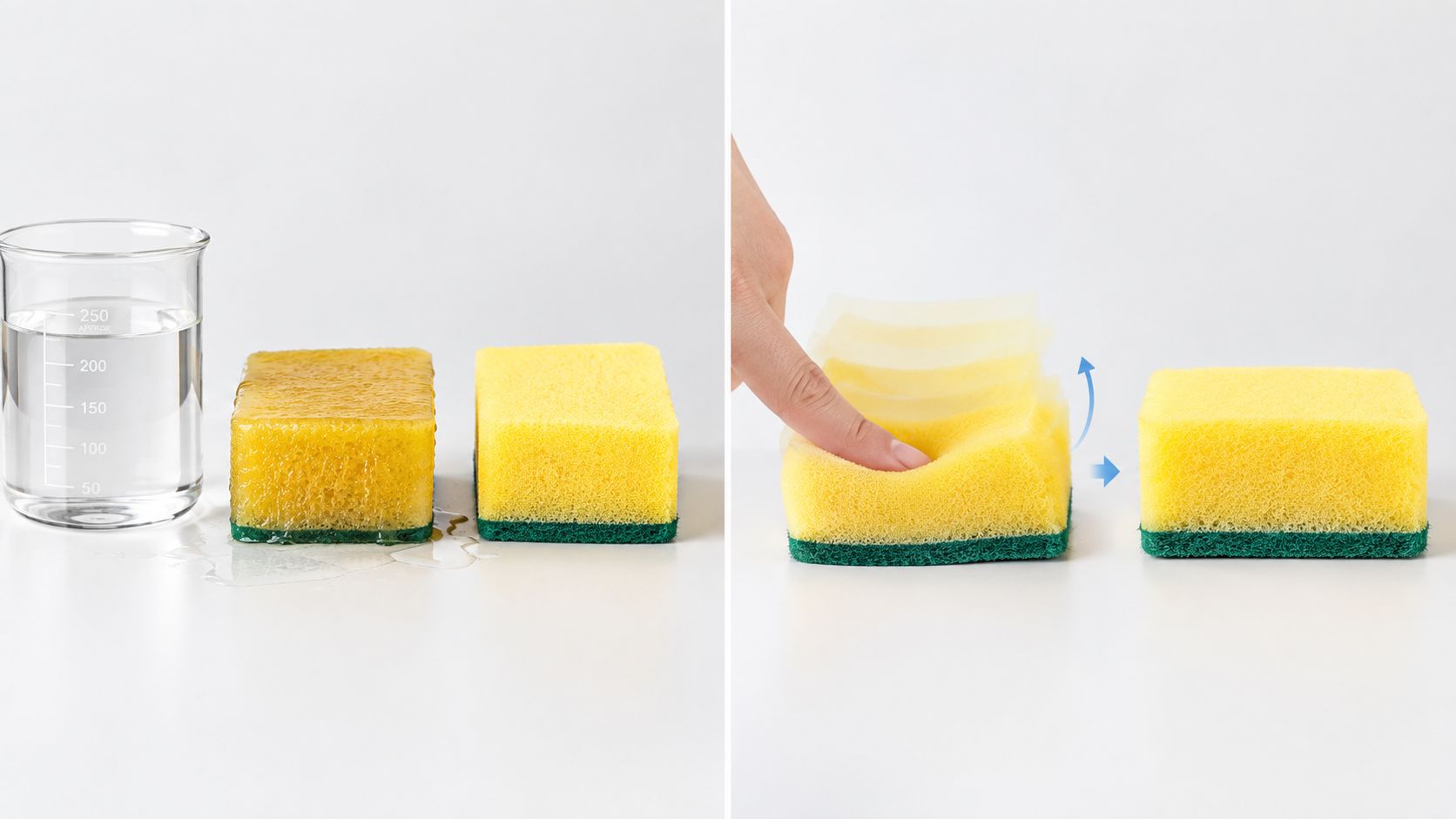
Material and pore structure
The foam controls the first impression. A softer, more open texture usually feels cushy and makes tapping comfortable, while a denser material gives more resistance and can move thicker foundation with greater control. A microfiber-coated sponge adds another variable. Its surface can pick up and diffuse product differently from plain foam, which may suit anyone who prefers a luminous finish.
Avoid judging material only by how soft it feels dry. A sponge can feel pleasant in your hand but absorb more base than you want once damp. For daily foundation, usable release matters more than a luxurious first squeeze.
Springback and control
Springback describes how quickly a sponge returns to its shape after compression. Good springback makes stippling feel responsive. The sponge bounces against the skin rather than dragging, so you can build coverage without pressing hard.
A very soft sponge can be forgiving around the under-eye area, but it may feel imprecise with thicker formulas. A firmer sponge often gives sharper control around the sides of the nose and along a contour line. The best choice depends on whether you bounce, roll, or press your base into place.
Absorption and finish
Absorption affects both finish and product use. A sponge that takes in too much liquid foundation can leave less coverage on the face and encourage you to keep adding product. A modest amount of absorption can soften edges and prevent a heavy-looking layer.
Finish follows texture. A plush, flexible sponge tends to diffuse foundation into a natural skin-like result, while a denser one may leave a more perfected, velvety appearance. Neither is universally better. Dry skin often benefits from a less aggressive tapping motion, while oilier skin may prefer a controlled, even layer that can be set without excess movement.
The sponge also has to survive cleaning. Tears, permanent discoloration, a sour smell, or weak springback all signal that the tool has reached the end of its useful life. A slightly cheaper sponge isn't a saving if you replace it repeatedly.
A quick visual guide to wetting and compressing makeup sponges can be helpful before you test different textures:
Comparing Performance Across Budget Sponges
Budget sponges don't perform identically, and absorbency testing makes that clear. In one independent comparison, Beauty Blender lost 85% of its weight after saturation and squeezing, compared with 79% for Precision Beauty, 77% for Real Techniques, and 65 to 66% for Revive and The Crème Shop. The test linked easier water release with faster drying, while stronger water retention could slow drying and feel less efficient for daily use. See the independent makeup sponge comparison for the full test details.
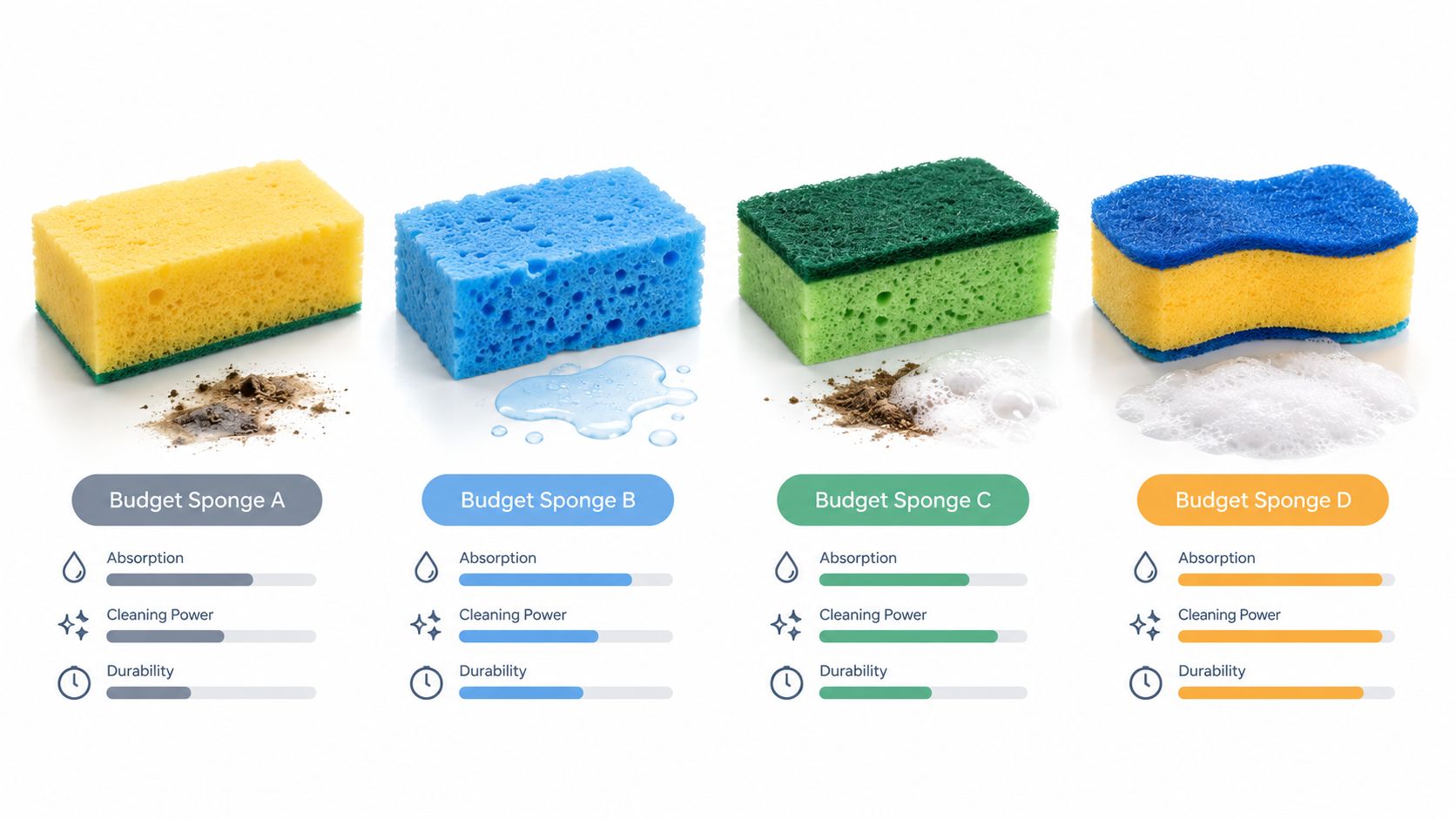
The figures don't identify one perfect sponge for every face. They do show why drying deserves attention. A tool that stays saturated for longer can be inconvenient in a small bathroom, particularly when you apply makeup frequently and need the sponge ready again soon.
The practical read: absorption isn't only about foundation waste. It also affects how quickly you can clean, dry, and reuse the sponge.
How shape changes application
A pointed tip reaches the inner corner of the eye, the crease beside the nose, and small blemishes. A rounded base covers cheeks and forehead efficiently. Flat edges help press foundation along the jaw or carve a cream contour, but they can leave a visible boundary if you use too much pressure.
The Real Techniques hourglass form is comfortable for broad application because it offers several contact points. L.A. Girl's petite teardrop is more nimble. Juno & Co's microfiber surface changes the feel again, with a finish that can look more radiant when used lightly.
Your finish also depends on pressure. Dense sponges can make heavier formulas look smoother when you bounce them repeatedly over thin layers. Softer sponges can create a diffused result, but rolling or dragging them may disturb skincare and primer underneath. If foundation is beginning to look cakey, this guide to making makeup less cakey offers useful technique adjustments.
Top Dupes for the Best Budget Beauty Blender
The seven options below cover different shapes, textures, and application preferences. Prices are the listed price tiers for this comparison, not a claim that every retailer will charge the same amount.
Budget Beauty Blender Comparison
| Dupe | Price | Best For |
|---|---|---|
| L.A. Girl Beauty Sponge | $5 | Tight areas and daily blending |
| Real Techniques Miracle Makeup Sponge | $6 | Full-face application |
| Juno & Co Microfiber Velvet Sponge | $8 | Dewy finishes |
| E.L.F. Blending Sponge | $4 | Sheer coverage |
| NYX Professional Makeup Sponge | $5 | Heavier formulas |
| Skone Makeup Sponge | $7 | Contour and base work |
| Beauty Pro Premium Sponge | $9 | Multiple washes |
For readers comparing the classic pink shape with affordable alternatives, this pink blending sponge for makeup is a useful reference point for the familiar design.
L.A. Girl Beauty Sponge
Best overall budget pick. The L.A. Girl sponge has a petite teardrop shape that makes it easy to switch between broad blending and precise placement. Its springback is moderate rather than exceptionally bouncy, which gives beginners a little more control when working around the nose and under-eyes.
A 2024 testing roundup named it the best budget option, while noting that it feels less plush than premium sponges. The same evaluation highlighted its practical size, shape, and material for everyday use, supporting the idea that geometry and usable performance matter more than luxury softness. Read the 2024 budget sponge testing roundup for that assessment.
Use the rounded end on the cheeks and forehead, then turn to the point for concealer edges and tight corners. It's the strongest choice here for shoppers who want one inexpensive sponge that can handle a complete routine.
Real Techniques Miracle Makeup Sponge
The classic hourglass shape makes this a dependable full-face tool. The wider sides cover larger areas quickly, while the narrower middle gives you a comfortable grip. It has a cushy feel, though it may not feel as plush as a premium sponge.
This option suits liquid foundation, skin tint, and concealer when you prefer a soft, diffused finish. The main trade-off is that the shape can feel less precise than a petite teardrop around very small areas. Keep the pointed end clean and reserve it for detail work rather than using the whole sponge interchangeably.
Juno & Co Microfiber Velvet Sponge
Juno & Co offers a dual-texture approach, with a microfiber cover over the sponge. That surface can help create a more luminous, dewy result when you use light pressure and a damp tool.
It's especially appealing for sheer to medium base products and for dry or dehydrated-looking skin that doesn't want a flat finish. The microfiber texture requires a slightly different technique. Bounce rather than swipe, and use less foundation at first because the surface can distribute product quickly across the skin.
E.L.F. Blending Sponge
The E.L.F. sponge is lightweight and quick-drying, making it a practical option for occasional users, travel kits, or anyone who dislikes a heavy, saturated tool. It works best with sheer coverage and thin formulas.
Its lower weight can also mean less resistance during application. That's useful for soft blending, but it may not provide enough firmness for thick foundation or deliberate contour placement. Treat it as a simple everyday sponge rather than a precision-heavy tool.
NYX Professional Makeup Sponge
The NYX sponge has a denser core and high springback. That combination makes it better suited to heavier formulas that need repeated pressing to look smooth.
The firmer feel can be helpful on combination or oily skin, particularly when you want an even layer that won't shift as easily under powder. It's less forgiving if you press too hard around the eyes. Use the point gently and let the sponge's resistance do the work.
Skone Makeup Sponge
Skone combines a flat edge for contouring with a rounded body for base application. That makes it a sensible choice for anyone who uses cream bronzer, blush, or contour alongside foundation.
The flat side is most effective when you tap product into place instead of drawing a stripe and blending aggressively. The round body handles cheeks and forehead, while the edge can press along the jaw. Its strength is versatility, not a single specialized finish.
Beauty Pro Premium Sponge
Beauty Pro's sponge is vegan and latex-free, with durability suited to repeated washing. The higher price tier within this group may make sense for users who care more about keeping one tool in rotation than buying the lowest-cost replacement.
It's a good fit for regular makeup wearers who clean their sponge consistently. The long-term value depends on how well you maintain it, since even a durable sponge won't stay fresh if it remains damp or develops tears.
Price Tiers and Ideal Use Cases
The checkout price is only the beginning. A useful cost comparison includes how often you wash the sponge, whether it keeps its shape, and how quickly you're comfortable replacing it. A low-cost tool that lasts through regular care can beat a slightly cheaper one that becomes unpleasant after limited use.
The wider category remains substantial. Independent market research places the global makeup sponges market at USD 842 million in 2024, with a projection of USD 1,268 million by 2034 at a 6.2% CAGR, according to this makeup sponges market analysis. That growth suggests shoppers still value affordable application tools, but it doesn't tell you which sponge offers the best personal value.
Under $10
This tier includes all seven picks in the comparison, from the $4 E.L.F. Blending Sponge to the $9 Beauty Pro Premium Sponge. These are sensible choices for beginners, minimalists, or anyone who wants to test a shape before committing to a more specialized material.
Choose L.A. Girl when you want the most balanced all-purpose design. Pick E.L.F. if quick drying and sheer coverage matter more than firm control. NYX makes more sense for thicker formulas, while Skone earns its place when contouring is part of your routine.
Under $25
This tier is useful when you compare packs, replacement options, or enhanced textures rather than focusing on one individual sponge. Microfiber surfaces and firmer constructions may offer a more distinctive application experience, but the extra value depends on whether you'll use those features regularly.
Daily users should calculate replacement frequency and cleaning effort before buying several different styles. A multi-pack can be convenient, but it's only economical if the sponges remain usable and you rotate them responsibly.
Under $50
This range can include premium materials, antimicrobial positioning, or artist-oriented tools, but a higher price doesn't automatically guarantee a better result. Recent beauty coverage has emphasized washable, reusable, and antimicrobial sponge concepts, while market estimates place the global category at approximately USD 1.21 billion in 2025 and project USD 1.79 billion by 2033. Those figures and trend themes appear in this beauty sponge market and trend overview.
For most everyday users, the under-$10 group is enough. Spend more only when a specific material, shape, or durability feature solves a real problem in your routine.
Buying and Care Tips
A budget sponge saves money only when you use it correctly and retire it at the right time. Start with the shape that matches your technique. Choose a pointed tip for concealer and inner-corner work, a rounded base for broad foundation application, or a flat edge if cream contouring matters to you.
A simple cleaning routine
- Rinse thoroughly: Hold the sponge under lukewarm water until the foam is fully saturated.
- Lather gently: Apply mild soap or sponge cleanser, working it into the surface with your fingers.
- Squeeze instead of twisting: Press repeatedly to release foundation without stretching the material.
- Rinse until clear: Continue until the water runs clean and no cleanser remains.
- Air-dry upright: Place the sponge somewhere open and well ventilated, away from enclosed makeup bags.
Drying is as important as washing. A damp sponge trapped in a closed container can develop an unpleasant smell and may break down faster. A fan can improve airflow, but don't use intense heat, which can damage the foam.
Replace the sponge when you see tears, permanent discoloration, a lingering odor, or a noticeable loss of springback. There isn't one universal replacement schedule because usage and care vary. A person who applies makeup frequently and washes the sponge often may reach that point sooner than an occasional user.
For more affordable ways to build the rest of your kit, browse these drugstore makeup dupes and compare products by finish, texture, and everyday practicality.
FAQ
How often should I replace a budget beauty blender for optimal hygiene?
Replace it when it develops tears, a persistent odor, discoloration that doesn't wash out, or weakened springback. Wash it regularly and let it dry completely between uses. Replacement frequency depends on how often you apply makeup, how thoroughly you clean the sponge, and whether the material remains intact.
Can I use budget sponges with cream and powder formulas interchangeably?
You can, but use a clean, dry sponge for powder and a damp sponge for most liquid or cream products. Residue from liquid foundation can make powder application uneven. If you switch formulas often, rotating sponges keeps textures from mixing and makes cleaning easier.
What's the best way to sanitize a sponge beyond regular washing?
Regular washing and complete air-drying should be your foundation. For a deeper clean, follow the cleanser manufacturer's directions and avoid harsh solvents, boiling water, or aggressive twisting. Those methods can damage the foam, leaving cracks that trap product and shorten the sponge's useful life.
Are knockoff sponges safe for sensitive skin or allergy-prone faces?
Choose a clearly labeled product from an established US retailer and check the material information before use. Latex-free options may be preferable if latex is a known concern, but product labels can't replace medical advice. Stop using the sponge if it causes irritation, itching, or redness.
Final Recommendation
The L.A. Girl Beauty Sponge is my top pick for the best budget beauty blender because it balances a useful teardrop shape, manageable springback, and everyday versatility without relying on a luxury feel. Real Techniques is better for broad full-face work, Juno & Co suits dewy finishes, NYX handles denser formulas, and Beauty Pro makes sense for repeated washing. Start with L.A. Girl, clean it carefully, and judge its value by how long it stays responsive and hygienic, not just by its initial price.
Finding Favourites helps budget-conscious shoppers compare affordable alternatives across makeup, skincare, and fragrance, with practical attention to texture, finish, and price tiers. Visit Finding Favourites to find more drugstore swaps and build a beauty kit that performs well without unnecessary spending.