
Best Hydrating Setting Spray Dupes: 7 Picks Under $20
A $35 mist can feel lovely at the counter, then seem to disappear by lunch. Finding a less expensive spray that gives a similar finish sounds simple, but a setting spray has two separate jobs: adding a more comfortable, fresh-looking finish and helping makeup stay in place. A glow alone doesn't prove skin hydration, and a makeup-gripping film doesn't automatically mean a formula is moisturizing.
This post may contain affiliate links, which means I may receive a commission if you purchase through my links, at no extra cost to you. Please read the disclosure policy for more information.
Hydrating Setting Sprays at a Glance
Two sprays can both leave skin looking dewy and still perform differently: one may make the surface feel more comfortable, while another may help makeup wear longer. Compare those jobs separately, rather than treating glow as proof of hydration or wear time as proof of moisture.
The table offers potential budget alternatives to consider, not ingredient-matched formulas. Start with the dry-skin rows if you want a dewier finish; oily skin may prefer the matte option. For humid conditions or longer wear, compare the wear-focused choices, then check the current US ingredient list and retailer page, since formulas and listings can change.
| Dupe | Luxury Counterpart | Best For |
|---|---|---|
| e.l.f. Dewy setting spray | Milk Makeup Hydro Grip Setting Spray | Dry and combination skin, dewy finish |
| NYX Professional Makeup Matte setting spray | Urban Decay All Nighter Setting Spray | Oily skin, long-wear matte finish |
| NYX Professional Makeup dewy-style setting spray | NARS Light Reflecting Setting Spray | Glowy finish, mature skin |
| Maybelline setting spray | Laura Mercier Matte Radiance Setting Spray | Normal skin, soft-focus finish |
| L.A. Girl setting spray | Charlotte Tilbury Airbrush Flawless Setting Spray | Humid weather, all-day wear |
| Essence fixing spray | Laura Mercier Setting Spray | Sensitive skin, fragrance-free routines |
| Wet n Wild setting mist | Milk Makeup Hydro Grip Setting Spray | Budget hydrating mist for layering |
“Best for” is a starting point, not a promise: skin response and finish can vary. Check the label for fragrance if that matters to you, and choose two or three candidates to compare. A dry-skin shopper might begin with the dewy options, while someone with oily skin could start with the matte spray and assess both surface comfort and makeup wear in a home test.
What Makes a Setting Spray Genuinely Hydrating
A hydrating setting spray works like a sponge and a raincoat together. The sponge is a humectant, an ingredient that attracts and holds water in the outer skin layers. The raincoat is a film former, a material that leaves a thin layer over skin or makeup and can help slow moisture loss while improving makeup adhesion.
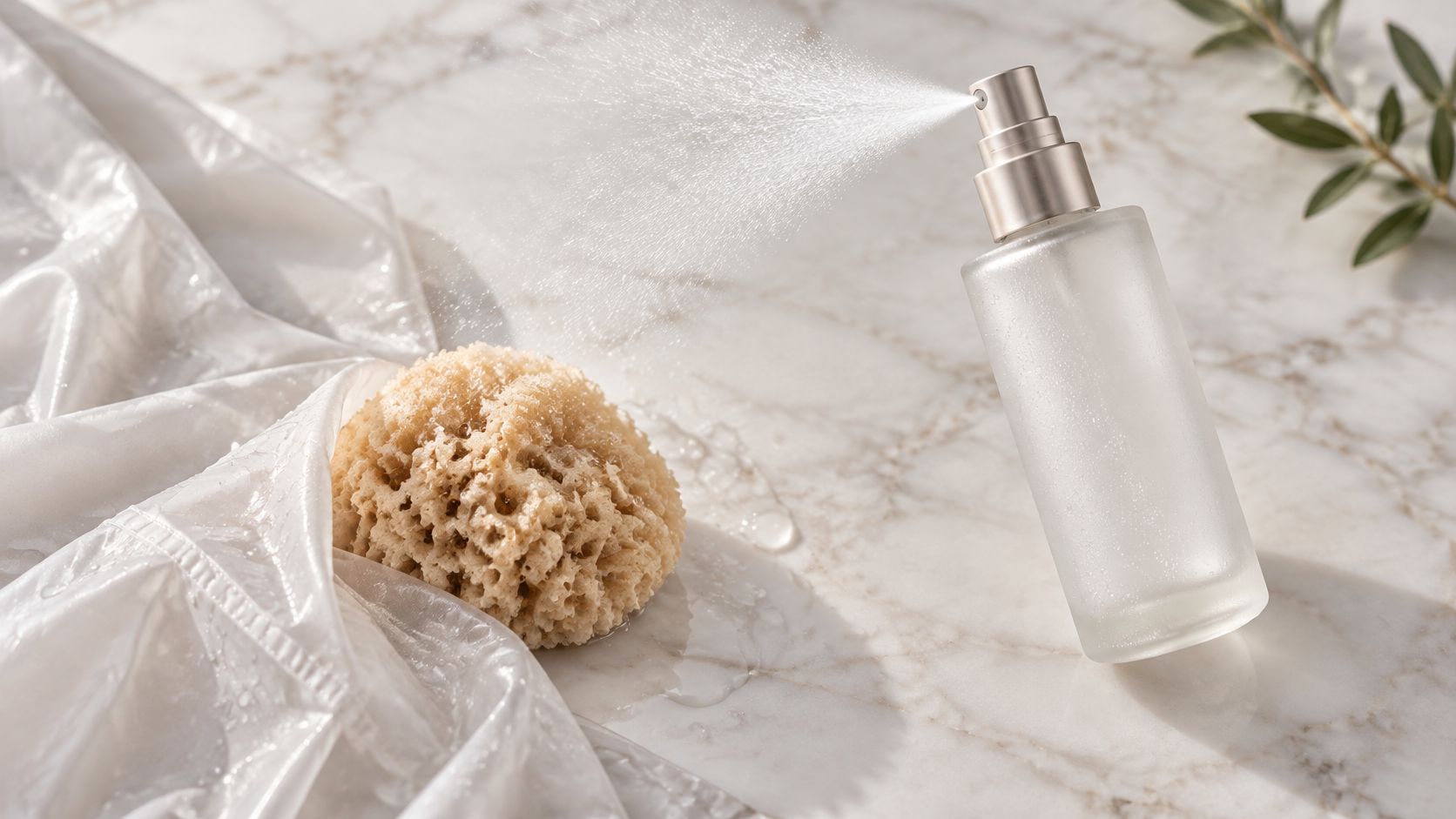
Look for humectants such as glycerin, panthenol, sodium PCA, or hyaluronic-acid derivatives near the top or middle of the ingredient list. Then look for a compatible film former, such as a cellulose derivative, chitosan, or a cosmetic polymer. Cosmetic formulation literature describes humectants, occlusives, and hydrophilic film-forming matrices as approaches to rehydrating the stratum corneum, the outermost skin layer (formulation research on skin moisturization).
A spray that's mostly water can feel refreshing, but the droplets evaporate. Without ingredients that bind water or form a supportive layer, that brief cool, damp sensation doesn't necessarily last. For more on how one commonly discussed humectant works, see this guide to using hyaluronic acid.
Occlusives are the third part of the picture. They're typically lipid-based materials that help seal moisture in, but they're rarely the main ingredient in a setting spray because a rich or oily layer can add shine or weigh down makeup.
Alcohol can help a spray dry faster, but a fast-drying feel isn't the same as comfortable wear. Depending on the formula and the person, alcohol-heavy products may feel drying or irritating. Instead of judging a spray by its “dewy” claim, check the ingredient architecture and how your skin feels once the mist has settled.
Finish check: After 10 to 15 minutes, your skin should feel comfortable rather than tight. If a spray leaves you feeling dry after it evaporates, a glossy first impression isn't enough reason to call it hydrating.
How to Read Hydration Claims on the Label
A dewy finish is visible, but appearance alone can't reliably measure skin hydration. Researchers use electrical methods such as a Corneometer to estimate water-related changes in the stratum corneum. Transepidermal water loss, or TEWL, measures water escaping through the skin and is used to assess barrier function. The measures are related, but they don't answer the same question (comparative measurement study).
A 2025 meta-analysis of plant-based topical products included three hydration studies involving 238 participants from three countries. The trials lasted 8 to 12 weeks and used a Corneometer. The pooled hydration result was statistically significant, with a standardized mean difference of 0.57, a 95% confidence interval of 0.06 to 1.09, and p = 0.03. The same analysis did not find significant evidence of reduced TEWL compared with placebo: standardized mean difference 0.05, 95% confidence interval from -0.43 to 0.54, and p = 0.83 (the 2025 meta-analysis).
Those findings concern plant-based topical preparations, not the seven sprays in the comparison table. They show why a surface-hydration result shouldn't be presented as proof of better barrier function. Many setting-spray claims instead rely on consumer impressions or short wear trials.
| Label Claim | What It Can Show | What to Check |
|---|---|---|
| Hydrating or moisturizing | Surface comfort and short-term skin feel | Humectants in the first half of the ingredient list |
| Deep hydration | A vague claim, usually without a stated depth measure | Corneometer data and a reported confidence interval |
| All-day hydration | Consumer perception after a stated period | Wear-test duration and participant count |
| Barrier repair or barrier support | Requires evidence about barrier function | Whether TEWL was measured and against what control |
| Dewy finish | A glow or light-reflecting appearance | Whether hydration data exists, since shine isn't moisture |
| Clinically tested | Only what the study design actually measured | Participant count, conditions, methods, and published results |
Read the test details, not just the headline. Look for participant numbers, how much product was applied, the test duration, and the measurement method. Without those details, “deep” and “all-day” can describe the marketing message more clearly than the evidence.
Choosing a Setting Spray by Skin Type and Finish
A humectant-heavy spray can feel comfortable on dry skin but sticky in humidity. A polymer-heavy spray may hold makeup in place yet leave dry skin feeling tight if the film is poorly balanced. A shopper wearing a dewy mist to a humid outdoor wedding might see her foundation separate by noon. That doesn't prove the spray caused the problem, but it's a useful reminder that climate and skin prep can change how a formula wears.
For dry skin, look for humectants alongside a flexible film former, and apply the spray over moisturizer rather than repeatedly misting bare skin in dry air. Oily skin may prefer a matte or natural finish with a makeup-holding polymer. Combination skin often needs a compromise: a light finish that doesn't make the T-zone feel tacky. If powder also contributes to your finish, compare your spray choices with these setting powders for combination skin.
| Situation | Look For | Avoid |
|---|---|---|
| Dry skin | Glycerin, panthenol, or sodium PCA with a soft film former | Heavy alcohol near the top of the ingredient list |
| Oily skin | A film former with a matte or natural finish | Heavy oils or occlusives that add shine |
| Combination skin | A balanced humectant and polymer with a light finish | Very dewy formulas on the T-zone |
| Sensitive or reactive skin | Fragrance-free, low-alcohol formulas; patch test first | Essential oils and high alcohol |
| Dewy finish | Light-reflecting particles with humectants | Shine treated as the only sign of hydration |
| Matte or long-wear finish | A substantive polymer film former | Humectant-only sprays that may offer less makeup grip |
| Dry indoor heating | Humectant-rich spray over moisturized skin | Misting bare skin without moisturizer |
| Hot, humid weather | A water-resistant, film-forming formula | Tacky, humectant-heavy sprays |
For sensitive skin, alcohol may speed drying but can sting or reduce comfort for some people. Fragrance-free and alcohol-free don't guarantee that a formula won't irritate you. Patch test on the jawline for three days, and stop using a product if it causes a reaction. A dewy finish can also come from light-reflecting particles, so judge the formula and your comfort, not just the shine.
Climate can tip the decision. Dry indoor heat favors a humectant-rich spray layered over moisturized skin; hot, humid weather favors a water-resistant, film-forming formula. Pick the table row that best matches the conditions you experience most often, rather than expecting one spray to suit every season and setting.
How to Wear-Test a Setting Spray at Home
A fair comparison keeps the routine consistent. Use the same foundation, skin prep, room, spray distance, and check schedule for each product; otherwise, a change in humidity or makeup can make a spray seem better or worse than it is.
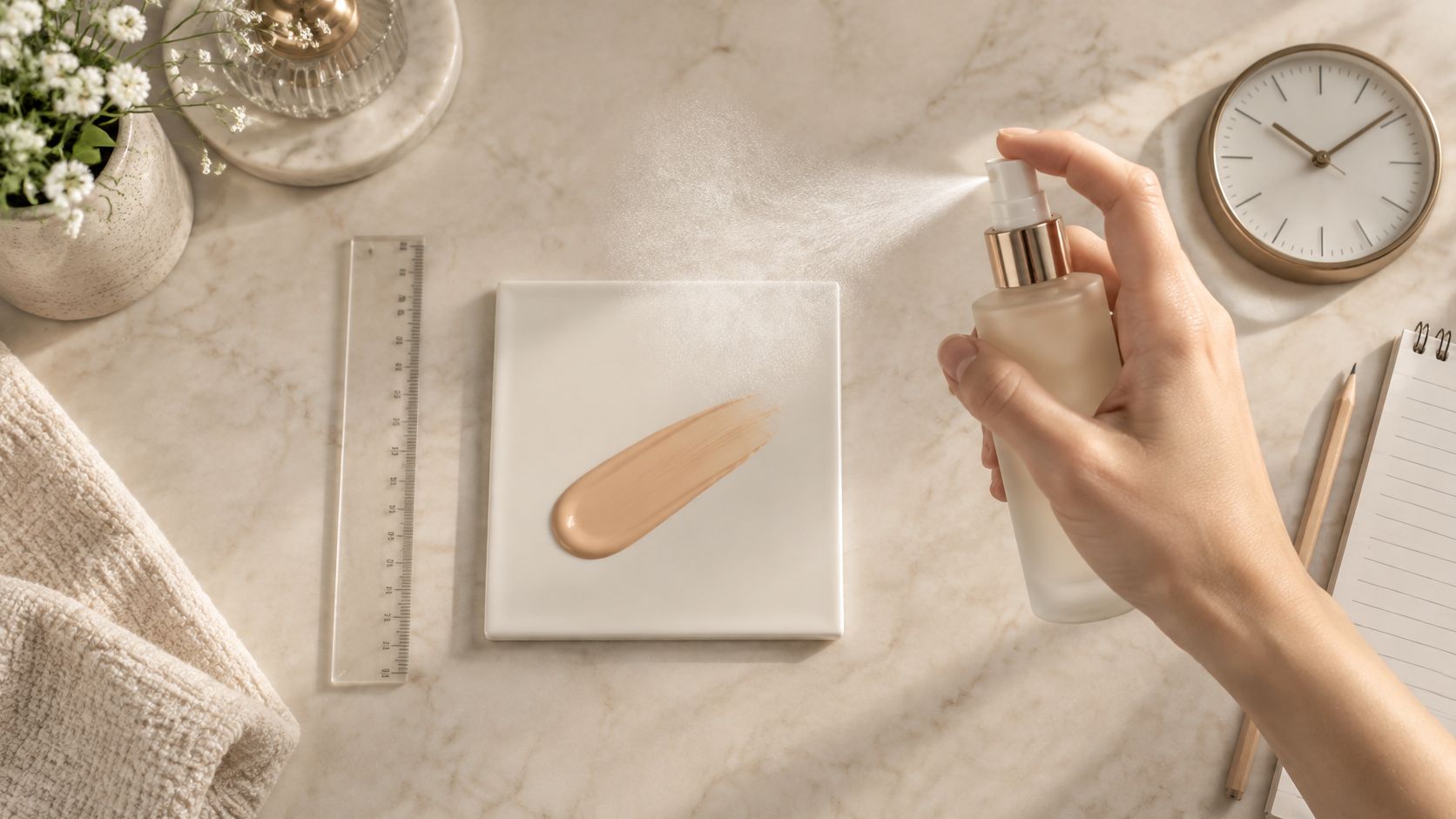
Follow the same routine for the budget option and its luxury counterpart:
- Prep consistently. Apply the same moisturizer and wait five minutes so you're not comparing different skin-prep conditions.
- Apply your base. Use the same foundation and concealer. At 15 minutes, take a baseline selfie in consistent lighting, before applying spray.
- Mist evenly. Hold the bottle about 20 to 25 cm away and apply two light passes. Let the spray settle for 10 to 15 minutes.
- Check the finish. Note tightness, shine, or patchiness once the mist has dried.
- Check wear later. Take another photo at 2 hours and 6 hours. Look for powder migration under the nose, across the forehead, and on the chin.
- Rate comfort. At the 6-hour check, record whether your skin still feels comfortable or has become dry. That's a personal wear observation, not a measured hydration result.
- Repeat in different conditions. Test in a dry indoor room and on a humid day, because the same formula can behave differently across climates.
For a closer look at application technique, follow this guide to applying setting spray. You can also watch a short application demonstration before trying the method:
Keep a simple scorecard after each test. Rate transfer resistance, comfort, finish, and cost per week of use using the same scale for both products. One pass or one mirror check proves little, so compare the sprays on the same day with the same base makeup whenever practical.
These observations are self-reported. They can help you compare makeup wear and how your skin feels, but they can't confirm barrier function. That requires instrument data such as TEWL measurements, not a selfie or a subjective comfort score.
Seven Budget Dupes and Their Luxury Counterparts
The pairings below are shopping comparisons, not claims that the formulas are identical. Each spray can differ in surface feel and makeup wear, so treat the order as a shortlist of comparisons to consider, not a measured performance leaderboard. Names alone don't confirm which humectants or film formers a formula contains. Check the current ingredient list for the exact product, and use the differences below to guide what you compare. The FDA's Cosmetics Direct system lets responsible persons mark cosmetic products as discontinued, so older reviews may not reflect current availability (FDA Cosmetics Direct discontinuation guidance).
e.l.f. Dewy Setting Spray and Milk Makeup Hydro Grip Setting Spray
Start with this pairing if you prefer a dewy finish and want to compare a lower-cost option with Milk Makeup's spray. Look for a humectant and a film former on both labels, then assess two separate outcomes: whether the dried mist feels comfortable on the surface, and whether your makeup stays in place. A dewy look describes the finish, not a confirmed hydration effect. If your T-zone gets oily, pay particular attention to how much shine each formula leaves behind.
L.A. Girl Setting Spray and Charlotte Tilbury Airbrush Flawless Setting Spray
This pairing suits shoppers who care more about makeup staying put in humid conditions than about a very dewy finish. Film formers can help makeup resist movement, but a product name alone doesn't establish water resistance or all-day wear. Compare how tacky the sprays feel once dry, and check whether powder shifts or the finish feels tight. In dry weather, also notice whether either formula makes dry patches more visible. That gives you a practical sense of comfort as well as wear.
NYX Professional Makeup Matte Setting Spray and Urban Decay All Nighter Setting Spray
For a matte finish, compare these sprays on the same foundation and focus on wear performance separately from surface comfort. Check the labels for humectants and film formers; the balance can help explain why one feels more comfortable while the other better suits your preferred finish. If your skin tends to feel dry, pay attention to tightness after application. A matte result may be useful in humid conditions, while a less drying feel may matter more in a dry indoor room.
NYX Professional Makeup Dewy-Style Setting Spray and NARS Light Reflecting Setting Spray
This is a glow-focused comparison. The specific NYX product matters, since “dewy-style” describes the finish direction rather than confirming a formula match with NARS. Compare how much reflected light each leaves on your skin and whether the dried surface feels comfortable. In humid weather, note whether the added luminosity works with your natural shine or makes oily areas look too glossy. Those observations help separate a preferred appearance from how the formula feels.
Maybelline Setting Spray and Laura Mercier Matte Radiance Setting Spray
Maybelline's broad product name makes the exact spray an important starting point. Identify the specific formula and read its current label before comparing it with Laura Mercier's Matte Radiance Setting Spray. Then look at how each softens the appearance of makeup and whether the finish remains comfortable after drying. If your base includes powder, notice whether either spray leaves a smoother-looking result or changes the texture of the makeup. A soft-focus effect and surface comfort are separate things to assess.
Essence Fixing Spray and Laura Mercier Setting Spray
This pairing may suit shoppers considering a lower-cost fixing spray. Check the Essence package for fragrance and alcohol information rather than assuming anything about sensitivity from the product name. Compare its scent and dried-down feel with Laura Mercier's, since fragrance can be a meaningful difference between formulas. If you have sensitive skin, patch test before applying it across your face. “Fixing” signals a makeup use, not how your skin will tolerate the formula.
Wet n Wild Setting Mist and Milk Makeup Hydro Grip Setting Spray
Compare this Wet n Wild mist with Milk Makeup's spray if you're curious whether a lighter-feeling option fits your routine. The labels can help you assess whether each contains humectants or film formers, but the more useful difference to test is how the layers interact with your usual base. Does the mist sit comfortably over your makeup, or does it leave a tacky feel? In a dry climate, comfort may be your priority; in humid weather, you may care more about how well the finish holds up.
A luxury spray may appeal if you prefer its particular texture, fragrance, packaging, or finish. A budget option can still be the better first buy when it suits your skin and climate: start with the pairing that matches your preferred finish, then compare surface comfort and makeup wear as separate outcomes.
Common Questions About Hydrating Setting Sprays
Do budget dupes wear as long as luxury sprays?
Often, they can provide similar transfer resistance, but there's no guarantee. Compare each option over the same foundation on the same day, because finish and fragrance differences can become more noticeable during longer wear.
Can I spray over sunscreen or mineral powder?
Yes, use a light, even mist and let sunscreen dry fully first. A thin application is less likely to disturb the layers beneath it than soaking the face.
How often should I reapply?
Once midday is enough for many people. Spray lightly rather than saturating your face, since repeated passes can leave a tacky feel or contribute to pilling.
Why does powder still collect under my nose by lunch?
Oil, heat, or a dry base may be contributing, not just the spray. Use your wear-test notes to see whether the same area changes in different conditions before blaming the product.
Which Dupe to Buy and Why
Start with e.l.f. Dewy Setting Spray paired against Milk Makeup Hydro Grip Setting Spray. It is my first buy for shoppers who want a dewy finish because the pairing offers a practical way to compare feel and wear side by side. Check both ingredient lists for a humectant and a film former, then note transfer resistance, comfort, finish, and cost per week of use.
If your skin gets oily quickly or you live in a humid climate, skip the e.l.f. pick if its dewy finish feels too slick; a lighter-feeling option may suit you better. Dry skin or a drier climate may make that added dew more comfortable. A setting spray can affect surface feel and makeup wear, but it does not replace moisturizer.
Buy one budget option and compare it with the luxury spray you already own. Try both on a dry day and a humid day, and record how each wears. Today, choose one pairing from the table and check its current ingredient list before you add it to your cart.
Finding Favourites curates affordable alternatives to luxury makeup, skincare, and fragrance, with practical comparisons of finish, texture, and wear. Visit Finding Favourites to explore more budget-conscious beauty swaps and guides.