
7 Fragrance Layering Tips and Budget Dupes
You don't need a $300 niche perfume to smell complex. In fact, buying one expensive bottle can be the less flexible choice. The smarter fragrance layering tips start with a moisturized base, an affordable scent you already enjoy, and a second fragrance that adds contrast without turning your skin into a department-store cloud.
This post may contain affiliate links, which means I may receive a commission if you purchase through my links, at no extra cost to you. Please read the disclosure policy for more information.
Why Layering is the Ultimate Budget Beauty Hack
Fragrance layering has deep roots, including traditions in the Middle East and practices associated with ancient Egyptians before the method spread through Greek and Roman culture and later worldwide. It wasn't created as a modern excuse to collect matching body products. It began as a way to create a personal signature scent, which makes it especially useful for shoppers who don't want to pay luxury markups for a complicated perfume profile. Vogue's guide to fragrance layering also describes the modern method as a structured combination of base scents, complementary fragrances, and scented extras.
The industry often presents complexity as something that arrives in one glossy bottle. I disagree. A simple vanilla lotion, a clean musk body mist, and an affordable woody perfume can create more flexibility than a single costly fragrance because you can change the balance for work, evenings, or warm weather.
My budget rule: buy one versatile anchor first, then add one supporting layer only if you can name the job it performs.
That job might be softening a sharp citrus scent, warming a clean floral, or giving a thin body mist more depth. It shouldn't be adding noise. Hydrated skin also gives fragrance a better surface to cling to, so a basic unscented lotion can be more useful than another spray.
Layering can extend beyond perfume. Body wash, lotion, oil, hair mist, and even laundry scent can form a coordinated routine, but more products don't automatically mean better value. If a scented lotion already gives your perfume enough warmth, skip the extra mist. Your cost per wear matters more than the number of bottles on your shelf.
For a low-cost self-care ritual, pair this approach with a DIY spa gift. A relaxing shower and moisturized skin create the right starting point, whether you're gifting the routine or building it for yourself.
The Exact Order for Shower to Skin Scent Stacking
Random spraying wastes product and makes affordable fragrances smell muddled. Build from clean skin to richer formulas, using texture and concentration to control the blend.
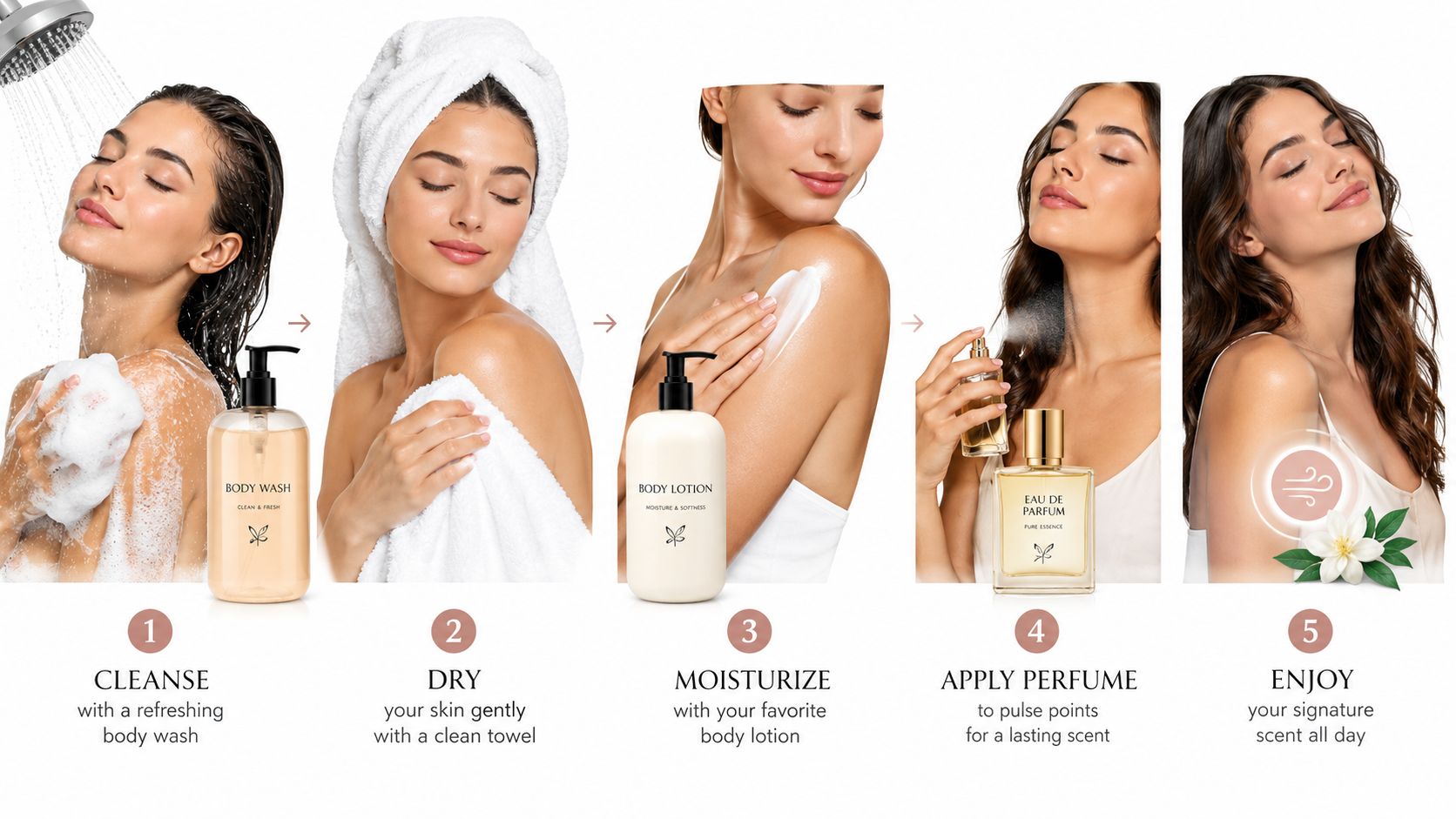
Start clean and hydrated
Wash with your usual body cleanser, scented or unscented. A strongly scented wash contributes to the final composition, so account for it before adding perfume. Pat dry, then apply lotion or oil while your skin remains supple. Hydration gives fragrance a better surface to cling to, making a simple routine work harder.
Unscented lotion gives you the most control. Choose a scented lotion only when its notes support the rest of the stack. Vanilla can soften berries, coconut can round out fresh aquatic notes, and musk can give a floral more body. This approach turns inexpensive products into deliberate scent layers instead of a pile of competing smells.
Apply the lighter scent before the anchor
Put citrus, green, floral, or aquatic notes on first, followed by a richer woody, musky, amber, or gourmand fragrance. The lighter layer supplies lift, while the anchor adds depth and staying power. For two perfumes, some guidance reverses that order and places the stronger fragrance first. Set the anchor yourself, then treat the other scent as its supporting layer. Ulta's fragrance layering guide outlines a similar sequence: lotion or oil, lighter fragrance, heavier fragrance, then an optional mist.
Wait before judging
Let the first perfume settle for about 2 to 3 minutes before adding the next, giving the alcohol time to evaporate, as explained in this beginner's fragrance layering guide. For an accent scent from the same source, about 30 seconds can be enough. Judge the dry blend, not the sharp opening on freshly sprayed skin.
Make the final mist optional. If the perfume already projects well, another hair or body mist can make the result cloying. Use less than you expect, wait for the layers to settle, and add only if the blend needs more presence.
7 Best Fragrance Dupes for Layering
A good dupe for layering should have a clear role. It might supply vanilla, brighten with citrus, add clean musk, or anchor the routine with woods. Availability changes, so check the retailer listing before buying, but the following options are widely sold in the US and are currently available rather than discontinued.
Quick Dupe Comparison
| Luxury Inspiration | Budget Dupe | Best Layering Partner |
|---|---|---|
| Baccarat Rouge 540 | Ariana Grande Cloud | Clean musk or vanilla |
| Lost Cherry | Fine'ry Not Another Cherry | Vanilla or amber |
| Santal 33 | Maison Louis Marie No.04 Bois de Balincourt | Musk or soft floral |
| Black Opium | Mix:Bar Vanilla Bourbon | Coffee, amber, or floral |
| Delina | Zara Rose Gourmand | Vanilla or fruity musk |
| Le Labo Another 13 | Dossier Musky Oakmoss | Citrus or woody amber |
| Tobacco Vanille | Mix:Bar Bourbon Vanilla | Spice or dry woods |
For more options across popular luxury scents, use this broader fragrance dupes list as a comparison starting point.
Ariana Grande Cloud for Baccarat Rouge 540: Cloud brings an airy, sweet, musky effect that works well as a beginner's anchor. Pair it with a clean lotion or a restrained woody scent when you want the sweetness to feel less sugary. It also suits soft florals that need a creamy base.
Fine'ry Not Another Cherry for Lost Cherry: This is the choice for a juicy cherry profile without making the whole routine heavy. Layer it over unscented lotion, then add a vanilla or amber perfume sparingly. The fruit gives the opening energy while the warmer layer keeps it from disappearing into a flat candy note.
Maison Louis Marie No.04 Bois de Balincourt for Santal 33: Use this when you want woods without a dense, smoky effect. Its sandalwood direction pairs naturally with clean musk, sheer florals, and lightly scented body oils. It gives bright or fruity perfumes a drier finish.
Mix:Bar Vanilla Bourbon for Black Opium: This is a practical gourmand building block. Wear it under a coffee, amber, or white floral fragrance, but don't combine it with another very sweet body product unless you want a dessert-like result. A plain lotion keeps the blend more polished.
Zara Rose Gourmand for Delina: Rose Gourmand works as a plush floral layer beneath vanilla, fruity musk, or a soft powdery scent. Use a small amount, especially in close settings, because rose and sweetness can quickly dominate lighter partners.
Dossier Musky Oakmoss for Le Labo Another 13: This is the clean, skin-like option in the lineup. It can smooth a sharp citrus scent, add a quiet base beneath florals, or make a woody fragrance feel more modern. It's particularly useful when you want complexity without obvious sweetness.
Mix:Bar Bourbon Vanilla for Tobacco Vanille: Bourbon Vanilla gives spice, tobacco, and dry woods a softer edge. Pair it with a restrained amber or woody perfume, not another loud gourmand. The result should feel warm and dimensional rather than syrupy.
The best starting point is Ariana Grande Cloud because it can sit beneath several fragrance families without demanding that every other product match it exactly. Start with one layer, test it on skin, and only then add a partner.
Pulse Points and the 60-30-10 Blending Ratio
Affordable dupes rarely need more product to smell expensive. They need better proportion. Give one fragrance the lead, use a second to add shape, and keep the accent barely noticeable. That structure creates complexity without turning layering into an excuse to buy a matching luxury set.
Use the 60-30-10 rule as a practical guide: 60% of the blend comes from the dominant scent, 30% from the secondary scent, and 10% from the accent note. It is a commonly cited blending framework, not a laboratory measurement. If Cloud leads, keep the vanilla lotion subtle and make the final mist barely detectable.
Put the anchor where it can develop
Apply fragrance across several pulse points instead of concentrating the full routine on one wrist. The neck, wrists, inner elbows, shoulders, and behind the knees all work well. Warmth helps the scent develop, while movement spreads it gradually.
Skip the wrist-rubbing habit. Friction can disrupt the fragrance's development on skin. Press your wrists together lightly only if you need to distribute excess product, then leave the blend alone.
Use skin prep strategically
Lotion or oil gives fragrance a moisturized surface and can help you use less perfume because the base contributes to the scent trail. If wear feels weak, improve skin preparation before spending on a stronger bottle. This guide to making perfume last longer covers moisturization and placement together.
The format also determines which product should lead. Eau de cologne and eau de toilette are lighter than eau de parfum, parfum, and perfume oil, so a stronger format usually makes the better anchor. Pairing a powerful perfume oil with a strong parfum calls for smaller amounts of both. Let the fragrance develop in stages, rather than creating one dense wall of scent.
Common Layering Mistakes and Quick Fixes
The most common mistake is over-application. People add more because the first spray seems to vanish, but the opening can be deceptive. Wait for the blend to settle before deciding that it needs another layer.
When the office is the destination
Keep the routine quiet and close to the skin. Use unscented lotion, one lighter fragrance, and a restrained anchor on the neck or inner elbows. Skip the hair mist and strongly scented laundry products on days when you'll share a small room.
Two or three scented products are a sensible limit for most beginners. That could mean lotion, perfume, and a small mist, or just lotion and perfume. More components make troubleshooting harder, and the guidance collected by NewBeauty's fragrance benchmark emphasizes starting with small amounts and building gradually.
When the blend smells sour
Don't immediately add sweetness. First, wash the area or wait through the dry-down, then test each product separately on a clean patch of skin. Skin chemistry can change how citrus, woods, musk, and gourmand materials develop, so a combination that smells smooth on paper may turn sharp or sour on you.
Change one variable at a time:
- Reduce quantity: Remove the accent mist before replacing the main perfume.
- Simplify the base: Swap scented lotion for unscented lotion to identify whether body care is causing the clash.
- Change the contrast: Pair a bright citrus with clean musk instead of another fruity fragrance.
- Respect concentration: Sequence lighter eau de toilette products and stronger eau de parfum, parfum, or oil formats deliberately.
When the fragrance feels flat
Add contrast, not volume. A dry woody layer can sharpen a creamy vanilla, while a fresh citrus can lift a sweet berry scent. If the result still feels muddy, return to one perfume and one neutral lotion. Layering should make an affordable fragrance more adaptable, not force you to rescue a bad match.
Building Your Signature Scent on a Budget
Fragrance layering is most useful when it gives you control over your existing collection. Moisturize first, choose one anchor, add a lighter or contrasting partner, and use pulse points strategically. Ariana Grande Cloud is the best beginner dupe in this guide because its sweet, airy profile works with musk, vanilla, woods, and soft florals without requiring a perfectly matched routine. For a more personal method, use this guide to find your signature scent before buying another bottle.
Finding Favourites helps beauty shoppers compare affordable alternatives to luxury makeup, skincare, and fragrance, including practical dupe roundups and guides organized by budget. Visit Finding Favourites to find a lower-cost fragrance starting point, then build your layering routine one purposeful product at a time.