
Dupe Skincare Products That Save You Money Fast
You finally find a luxury serum that makes your skin look smoother, calmer, and more hydrated. Then you check the price, do the mental math for using it every morning, and start searching for a cheaper bottle with a suspiciously similar ingredient list. That search is exactly where dupe skincare products can either save you money or leave you with a product that only copies the packaging and promise.
Introduction to Dupe Skincare Products That Work
This post may contain affiliate links, which means I may receive a commission if you purchase through my links, at no extra cost to you. Please read the disclosure policy for more information.
Dupe shopping has moved well beyond bargain-hunting corners of beauty culture. Circana reports that 51% of beauty buyers have purchased a beauty dupe, while skincare and makeup are tied as leading dupe categories at 27% each, ahead of hair at 18% and fragrance at 15%. The numbers show that shoppers aren't treating dupes as an unusual experiment. They're comparing formulas, finishes, and expected results as part of ordinary beauty shopping.
I approach a dupe the same way I approach any skincare test. I look at how the product spreads, whether it pills under moisturizer or sunscreen, how it feels after application, and what the finish looks like once it settles. A serum that has the right headline ingredient but leaves a sticky film isn't a practical replacement for a lightweight luxury formula, especially if you stop using it.
This guide uses a four-part dupe test: active ingredient, disclosed concentration, delivery vehicle, and use conditions. You'll get a category comparison table first, followed by a list of accessible US options across cleanser, moisturizer, serum, and sunscreen categories. The final sections focus on sensitive skin, patch testing, seller authenticity, and the cases where keeping the original may make more sense.
A true dupe doesn't need to copy a brand's bottle or scent. It needs to come close enough in formula function, skin feel, and real-world use to deserve the word “dupe.” That distinction lets you save confidently on simple, forgiving products without assuming every cheaper alternative performs like its premium reference.
What Makes a True Skincare Dupe
A similar front label isn't proof of equivalence. Think of skincare formulas as recipes. Two dishes can both contain tomatoes, but the type of tomato, cooking temperature, liquid, seasoning, and cooking time determine whether they taste alike. Skincare works in much the same way. The ingredient list is important, but it isn't the entire recipe.
A technical dupe requires more than the same headline active. It needs the same active ingredient, the same disclosed concentration, a comparable delivery vehicle, and similar use conditions, including contact time and pH. If one product is a leave-on serum and the other is a rinse-off cleanser, they aren't functionally interchangeable even if both mention the same ingredient.
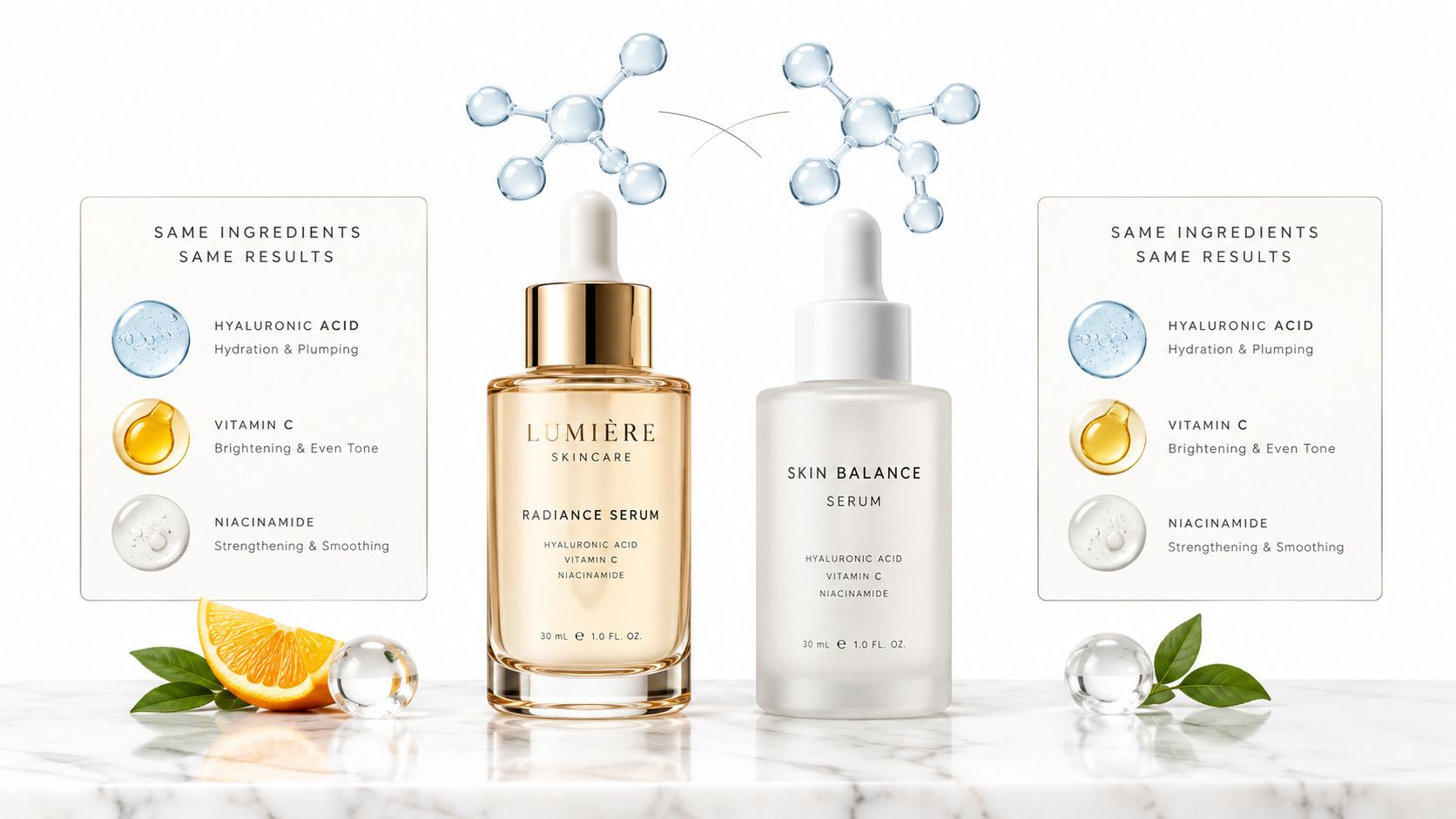
The four-part test
1. Match the active molecule. “Vitamin C” can refer to different forms, just as “retinoid” can describe several distinct ingredients. Compare the exact INCI name rather than relying on the product name or a creator's shorthand.
2. Match the disclosed concentration. A product that lists the same ingredient without stating its strength hasn't given you enough information to call it equivalent. A lower or undisclosed concentration may still be useful, but it's better described as an alternative.
3. Compare the delivery vehicle. A water-based serum, silicone suspension, oil serum, and encapsulated formula can create very different application and absorption experiences. The base controls spread, tackiness, layering, stability, and how consistently the active reaches the skin.
4. Check use conditions. pH and contact time matter. Acids and other active-led products can behave differently when their pH changes, while a wash-off product can't make the same promise as a leave-on treatment.
Why ingredient matching can mislead
The same INCI name may represent different raw-material variants or be used in different manufacturing systems. Those differences can affect texture, stability, and finished-product performance. A serum may therefore match a luxury reference on the label yet diverge once you apply it, layer it, or use it consistently.
Practical rule: Call a product a close alternative when it shares a category or benefit. Reserve “true dupe” for a product that matches the formula details and the in-use experience closely enough to support that claim.
This framework also explains why a plain niacinamide or hyaluronic acid serum can be easier to replace than a highly engineered vitamin C, retinoid, or sunscreen formula. The more a product depends on stability, delivery, or a refined finish, the more carefully you need to compare the full formulation.
How to Identify Safe and Effective Dupes
Start with the label, but don't stop at the label. A dupe can contain the same named active and still feel harsher, pill more readily, or deliver a less reliable experience because the surrounding formula is different.
Read the formula in context
First, find the exact active percentage. If the premium reference discloses a concentration and the budget product doesn't, you can't make a confident performance comparison. Then inspect the INCI order, looking for the active's position and the ingredients that support texture, preservation, and delivery.
For an active serum, ask whether the formula uses a sensible solvent system and whether the product gives any information about pH. A well-balanced formula may feel fluid and spread evenly, while a weaker vehicle may feel gritty, drag across the skin, or sit on top without layering well.
The final effect depends on the whole formula, not just the named ingredient. Two serums with the same actives can behave differently when one has weaker solvent choice, poor pH control, or a less effective penetration system. The Eco Well explains this formulation context in its discussion of skincare claims.
Packaging is part of the formula conversation too. Light, air, and repeated exposure can affect fragile ingredients, so opaque or air-restrictive packaging may matter more for one product category than another. Look for brands that share meaningful quality information, such as stability data, challenge-test results, assay purity, or Certificates of Analysis. The absence of public data doesn't automatically make a product unsafe, but vague claims should lower your confidence.
Use a simple buying checklist
- Confirm the molecule: Compare the exact INCI name, not just “brightening,” “vitamin C,” or “retinoid.”
- Verify the strength: Prefer products that disclose active percentages clearly.
- Check the vehicle: Notice whether the base is water, oil, silicone, gel, or an encapsulated system.
- Look for pH information: This matters especially for acid and active-led formulas.
- Assess fragrance: Added fragrance can be a poor fit if your skin reacts easily.
- Review the claims: Realistic language is a stronger signal than promises of instant transformation.
- Test the texture: A dupe that pills under your routine won't replace the original in daily use.
For hydration-focused routines, application technique can change the result. A humectant serum, for example, generally feels more comfortable when applied to slightly damp skin and followed with a moisturizer. The guide to using hyaluronic acid covers that routine detail without turning a basic hydrator into a complicated treatment.
A practical test period should include several ordinary uses rather than one dramatic first impression. Note whether the formula stings, flakes, pills, leaves shine, or makes sunscreen sit unevenly. Performance means more than the first ten minutes after application. It also means whether you'll happily reach for the bottle again.
Where Dupes Deliver and Where They Fall Short
Some categories are easier to duplicate because their performance depends on straightforward cleansing, barrier support, hydration, or protection. Others rely more heavily on stability, delivery technology, filter systems, or an elegant finish.
| Category | Dupe Parity | Check Before You Swap |
|---|---|---|
| Cleansers, ceramide moisturizers, SPF, hyaluronic acid | Often plausible | Surfactants, ceramides, UV filters, texture, and wear |
| High-percentage vitamin C and clinical retinoids | More difficult | Exact molecule, concentration, pH, stability, and packaging |
| Finish-sensitive products | Variable | White cast, pilling, residue, shine, and makeup compatibility |
Industry guidance on skincare dupes makes the distinction clearly. A real dupe should match the active-ingredient profile, concentration, sensory experience, and in-use result. Many products satisfy only one or two of those tests.
Where budget formulas make sense
Gentle cleansers have a strong case for substitution because their main job is to remove oil, sunscreen, and debris without leaving the skin tight. If the cheaper cleanser rinses cleanly and doesn't disrupt your comfort, a luxury cleanser may offer a nicer ritual rather than a necessary performance advantage.
Ceramide moisturizers and simple hydrators can also be sensible swaps. The key question is whether the product supports your barrier and feels comfortable enough for repeated use. Hyaluronic acid is another category where the texture and supporting ingredients matter, but a less expensive formula can still be a practical choice when it hydrates without stickiness or pilling.
Daily SPF is more complicated. A budget sunscreen may protect well, but its finish, white cast, eye comfort, and makeup compatibility can differ sharply from a premium formula. The best product is the one you'll apply generously and reapply as needed, not automatically the one with the most expensive packaging.
Where prestige may earn its place
High-percentage vitamin C and clinical retinoids are more delivery-sensitive. Compare the precise form, concentration, pH, stabilizing system, and packaging before calling a budget option equivalent. A product can be cheaper because it uses a different active form or a simpler vehicle, which creates a genuine formulation tradeoff rather than an unfair markup.
Finish-sensitive products deserve the same caution. If your sunscreen needs to disappear under makeup, or your serum must layer without rolling, a more elegant base can be worth paying for even when the active profile looks similar.
Best Dupe Skincare Products by Category and Price Tier
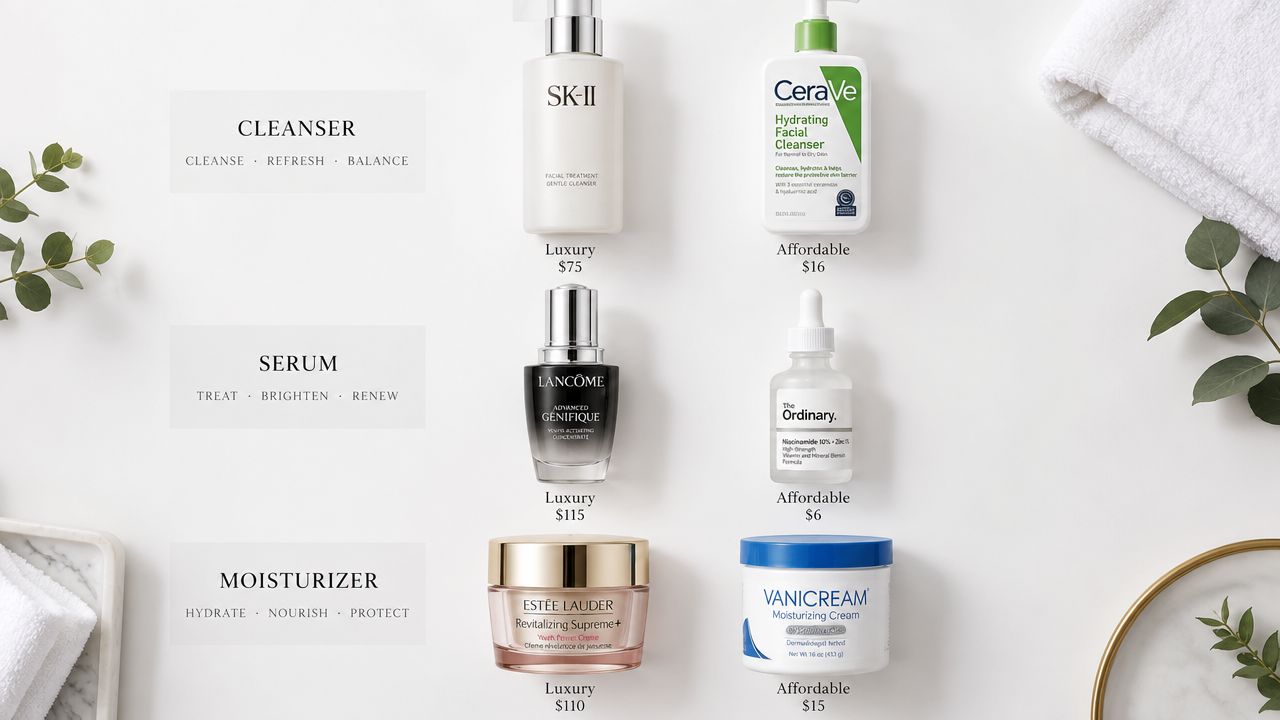
Price tiers matter because a swap that works at $10 may not hold at $50, where delivery systems, stabilizers, and finish can differ more sharply. I sort these options by category and price tier, then test four points: ingredient and formula parity, texture and spread, finish and layering, and real-world skin-type fit. A lower price can match the everyday job in one category while falling short in another. Availability can change, so check the retailer listing before checkout.
Under $10
The Ordinary Hyaluronic Acid 2% + B5 provides a useful reference for low-cost hydration. The serum feels tacky when overapplied, while a small amount under moisturizer leaves dry or dehydrated skin feeling cushioned. Compare alternatives by their disclosed humectants, hyaluronic acid content, and ability to sit under the next layer without pilling. The category can offer genuine parity when hydration and comfort are the main goals.
A cleanser swap can work for the same reason. CeraVe Hydrating Facial Cleanser suits shoppers comparing it with a gentle, non-foaming luxury formula. It spreads like lotion, rinses without a squeaky finish, and avoids a strong scent. The ritual may feel less polished, yet the daily cleansing function is comparable when skin remains comfortable afterward.
Under $25
Good Molecules Niacinamide Serum suits shoppers who want a lightweight, fragrance-free treatment rather than a rich texture. It layers readily under moisturizer and leaves less residue for combination skin. A prestige reference may have more slip or extra soothing ingredients, so compare the finish as well as the headline active. Similar category purpose does not guarantee identical application.
CeraVe Moisturizing Cream is a ceramide-focused option for a richer prestige moisturizer. Its dense, protective texture fits dry skin and barrier-focused routines, while people who prefer a quick-drying gel may find it heavy. Use a thinner morning layer if sunscreen slides over rich creams. Here, the formula can cover the same basic moisturizing role without reproducing the luxury sensory experience.
For a glow-focused comparison, e.l.f. Skin Suntouchable Whoa Glow can serve as a luminous primer and sunscreen hybrid. Its visible sheen makes it a better fit for shoppers who enjoy radiance than for anyone seeking an invisible luxury SPF replacement. Test it under makeup because foundation texture affects both shine and layering.
A broader set of product-type comparisons appears in Finding Favourites' best skincare dupes. The roundup can help shoppers compare alternatives by use case rather than by packaging alone. Readers tracking new launches can also browse what's new in skincare before choosing whether an emerging formula deserves a place beside an older favorite.
The video below shows a visual comparison of affordable and premium skincare products.
Under $50
The Ordinary Azelaic Acid Suspension 10% offers a value-oriented option for routines focused on uneven-looking tone and blemish-prone skin. Its silicone-heavy suspension feels distinctive, and products layered underneath may pill. Start with a small amount and keep the rest of the routine simple. The formula may match the active category, but its application experience remains part of the comparison.
Retinoid comparisons need closer checking. Examine the exact retinoid form, concentration, stability information, and directions before calling a lower-cost product equivalent. A premium retinal or retinol formula may spread more evenly, feel smoother, or use a more advanced delivery system. For reactive skin, lower irritation can matter more than a close label match.
Vitamin C follows the same four-part test. “Vitamin C” alone does not show whether two products use the same molecule or formulation conditions. Compare the INCI, pH, packaging, texture, and expected finish before assuming identical performance. Drugstore formulas can match simple, supportive categories more reliably than delivery-sensitive actives, where prestige may still justify its place.
Smart Shopping and Safety Tips for Sensitive Skin
Sensitive skin changes the definition of value. A product isn't a bargain if it causes redness, stinging, or a damaged barrier that forces you to replace half your routine. The safest dupe may be the less exciting option with a short ingredient list, low fragrance, and transparent labeling.
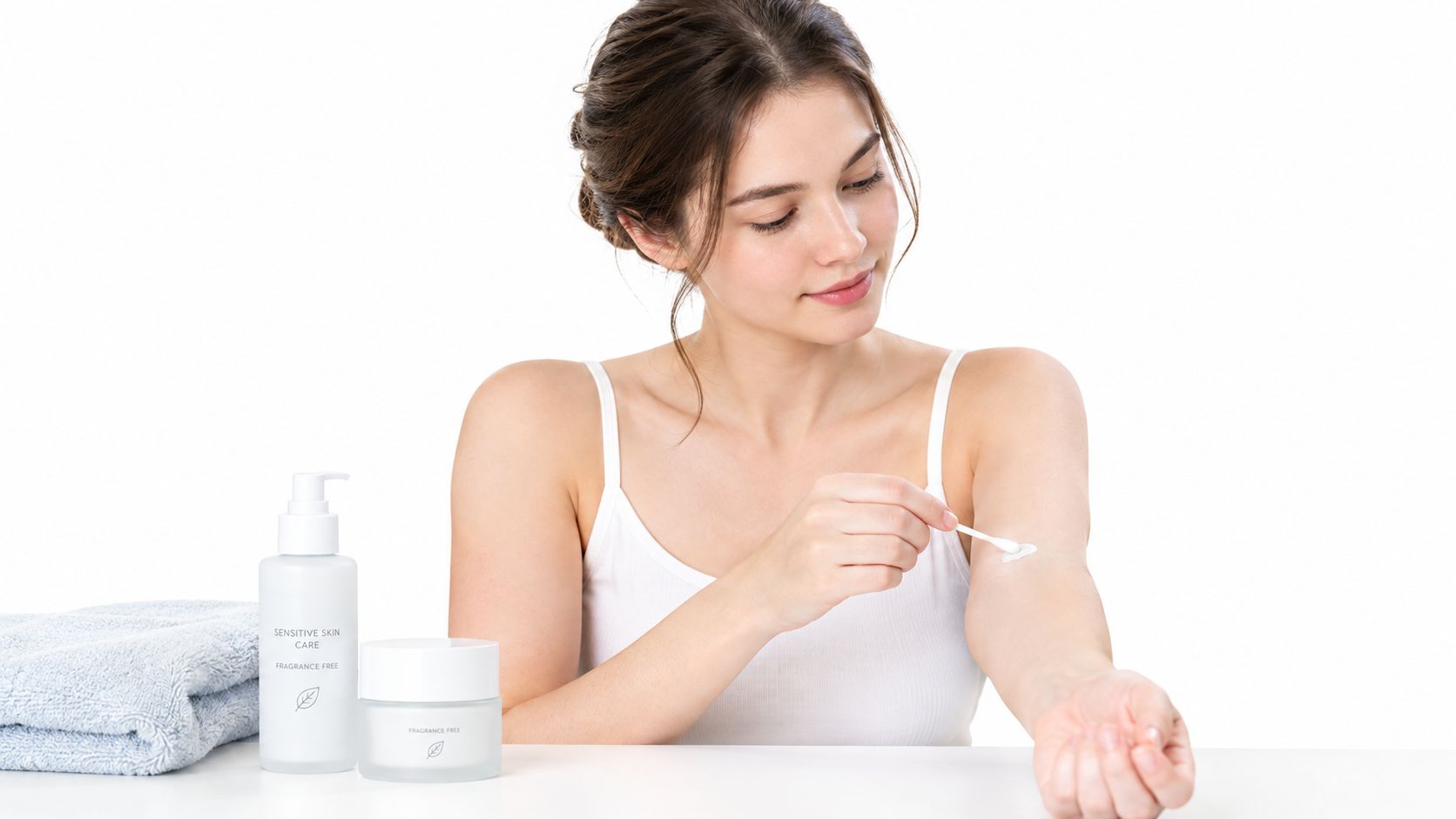
Independent 2026 guidance on skincare dupes recommends transparent ingredient lists, realistic claims, and patch testing, with extra caution around added fragrance and products that don't provide clear safety information.
Make the swap gradually
Patch test a new product on a small area before applying it across your face. If the formula contains a strong active, don't introduce another new exfoliant or retinoid at the same time. Otherwise, you won't know which product caused a reaction.
Check the scent before you commit to full-face use. Fragrance isn't automatically a problem, but added fragrance can be an avoidable trigger for reactive skin. A simple moisturizer with fewer actives may be a smarter substitute than a highly marketed dupe that tries to recreate a luxury scent and sensory experience.
Verify the seller
Look for an authorized retailer or a brand-operated storefront. Counterfeit beauty products create a separate risk from legal dupes. US Customs and Border Protection seizure data and reporting on counterfeit beauty show why shoppers should be cautious, particularly with cosmetics, skincare, soap, and toothpaste sold through third-party marketplaces. Counterfeits aren't the same as legal dupes, but the overlap in lookalike shopping language makes seller verification important.
Use this checkout checklist:
- Read the full INCI: Don't rely on the front label.
- Confirm the active: Match the actual molecule where equivalence matters.
- Check concentration: Avoid treating vague strength claims as proof.
- Look for fragrance: Choose simpler options when your skin reacts easily.
- Review packaging: Consider air and light exposure for fragile actives.
- Buy from a trusted seller: Check seals, batch information, and return policies.
- Patch test first: Give your skin a controlled introduction.
Affiliate recommendations should also be transparent. The FTC endorsement guidance says a material connection should be disclosed clearly and conspicuously when readers may not expect it and the connection could affect how they evaluate an endorsement. That includes commission-based product links, which should be easy to notice and understand rather than hidden in fine print.
For a gentler routine, affordable skincare for sensitive skin can help you compare lower-cost products without treating every viral alternative as suitable for reactive skin.
Frequently Asked Questions and Final Verdict on Dupes
Do dupes last as long as luxury skincare?
Shelf life depends on the formula, packaging, preservation, and storage conditions, not on price. Keep active products away from excessive heat and light, close the cap promptly, and follow the brand's period-after-opening guidance.
Can I mix dupe products with luxury products?
Yes, provided each product suits your skin and the routine doesn't overload you with competing actives. Pairing a budget cleanser or moisturizer with a premium treatment is often more practical than replacing every step at once.
When should I keep buying the original?
Keep the original when its finish, eye comfort, packaging, or delivery system makes a meaningful difference to your routine. Sunscreen is a common example. If the premium formula is the only one you apply comfortably and consistently, the extra cost may support better daily use.
Is the cheapest product automatically the best dupe?
No. The strongest substitute balances formula similarity, tolerance, texture, and availability. For sensitive skin, a simpler product with fewer actives may be a better choice than the closest-looking copy.
The best overall dupe category is gentle cleanser and barrier moisturizer, because these formulas can often match the practical job of a premium product without needing an elaborate delivery system. Among active products, choose carefully. Match the molecule and concentration, inspect the vehicle, and treat vitamin C, retinoids, and finish-sensitive sunscreen as categories where prestige may still provide meaningful formulation value. The smart approach isn't “cheap is always better” or “luxury is always better.” It's knowing which part of the formula you're paying for.
Finding Favourites helps budget-conscious beauty shoppers compare luxury references with affordable skincare alternatives by texture, finish, wear, and skin-type fit. Visit Finding Favourites to browse current dupe roundups and sign up for the latest discoveries and discount codes.