
Fragrance Free Beauty Products: A Smart Shopper Guide
You're standing in the skincare aisle with two nearly identical bottles in your hands. One says fragrance free. The other says unscented. Your skin is already irritated, your moisturizer still stings, and the packaging offers no useful explanation. That's not a shopping failure. The beauty industry has made these claims confusing.
Fragrance free beauty products can be a smarter default for sensitive routines, but the front label is only the starting point. You also need to understand botanical extracts, essential oils, masking ingredients, vague “clean” language, and the difference between allergy and irritation. This guide breaks down the label terminology, explains why fragrance exposure matters, and compares affordable swaps across cleanser, moisturizer, sunscreen, and makeup categories.
This post may contain affiliate links, which means I may receive a commission if you purchase through my links, at no extra cost to you. Please read the disclosure policy for more information.
The Confusion at the Beauty Counter
The shopper with the two bottles usually assumes unscented is the safer choice. It sounds gentler, quieter, and less likely to bother reactive skin. But “unscented” can mean a product contains masking fragrance to cover the natural smell of its ingredients. A product can smell like nothing and still contain scent materials.
“Fragrance free” is more useful, but it still deserves an ingredient-list check. Brands may use essential oils, fragrant plant extracts, or individual aroma chemicals without making the front of the package look perfumed. “Sensitive skin,” “hypoallergenic,” and “naturally scented” create another layer of noise because they sound reassuring without giving shoppers a complete formulation standard.
California public health guidance explains why this matters in daily life. The average person uses between 6 and 12 personal care products daily, and a large majority of cosmetics and personal care products contain fragrance ingredients, according to the California fragrance-free skin care market background. One fragranced product may seem harmless, but cleanser, toner, moisturizer, sunscreen, shampoo, and makeup can create repeated exposure across a routine.
The practical shift: Stop asking whether a product sounds gentle. Ask whether the formula contains fragrance materials, fragrance allergens, or scent-bearing botanicals.
That mindset applies beyond facial skincare. Anyone shopping for intimate products should also scrutinize scent claims, essential oils, and “freshening” language. A resource on ethical vulvovaginal care products can help you evaluate personal care choices with the same ingredient-first approach.
You're about to get a cleaner definition of each label, a practical ingredient decoder, and a category-by-category list of affordable swaps. The goal isn't to fear every unfamiliar ingredient. It's to stop paying luxury prices for a bottle that gives you less transparency.
What Fragrance Free Means on a Label
US shoppers face a basic problem: no federal standard defines “fragrance free,” “unscented,” or “hypoallergenic” for cosmetics. The FDA's cosmetics allergen guidance explains that fragrance ingredients may appear generically as “Fragrance,” while cosmetic allergen labeling does not follow the same requirements used for food.
Use this shelf-side decoder before trusting the front label.
Beauty Label Claims Decoded
| Label Claim | What It Means | Regulated? |
|---|---|---|
| Fragrance free | Usually means no added perfume or fragrance blend | No federal cosmetic definition |
| Unscented | May contain masking fragrance to neutralize product odors | No federal cosmetic definition |
| Hypoallergenic | Suggests lower allergy potential | No standard legal definition |
| Sensitive skin | Marketing language for a target user | No standard definition |
| Natural | May refer to plant-derived ingredients or brand positioning | No universal cosmetic standard |
| Clean | Brand-defined marketing language | No standard legal definition |
| Dye-free | No added colorants, but says nothing about fragrance | Claim varies by formula and brand |
Clean and natural are not proof of a fragrance-free formula. Lavender oil, citrus oil, and rose extract are plant-derived, yet each can add scent and may be a poor fit for shoppers avoiding fragrance triggers.
“Dye-free” only addresses colorants. It does not confirm that a moisturizer excludes parfum, masking fragrance, essential oils, or fragrant botanicals. “Hypoallergenic” deserves the same scrutiny. Treat it as a marketing signal, not a formulation guarantee.
Read the complete ingredient list. Look for a formula without “fragrance,” “parfum,” essential oils, or obvious aroma allergens. Also check the product's scent in person when possible. A strong botanical smell is a label red flag, even when the front panel promises “clean” ingredients.
For moisturizer comparisons, this paraben-free moisturiser guide reinforces a useful shopping rule: avoiding one ingredient category does not make a product suitable for every sensitive routine. The smarter dupe is the one that combines a scent-free formula with dependable performance and a price that leaves room for the rest of your routine.
Why Fragrance Matters More Than You Think
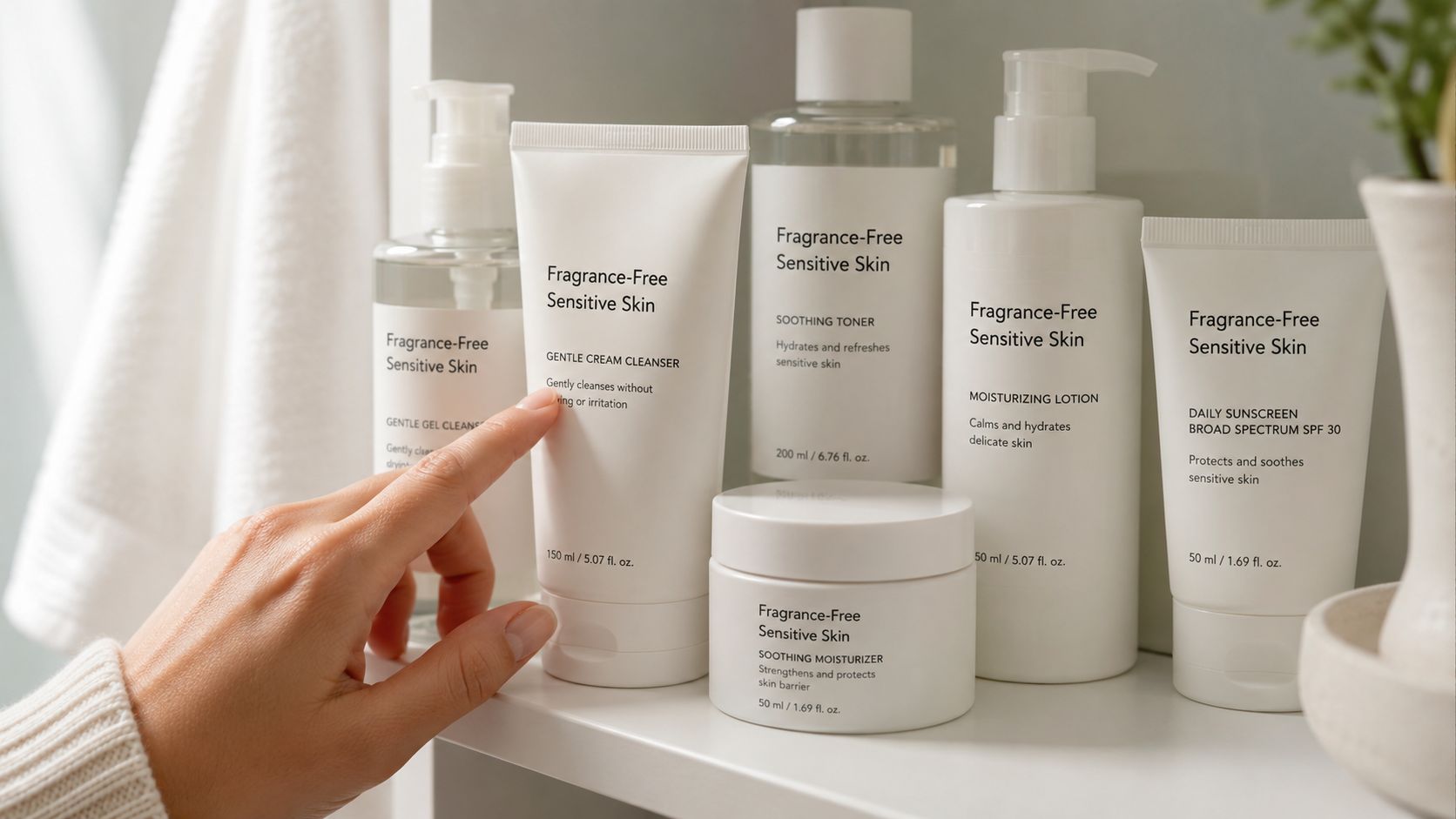
You can use a cleanser that feels gentle, then apply moisturizer, sunscreen, and makeup that keep fragrance against your skin all day. That layered exposure explains why fragrance deserves more attention than a pleasant bathroom scent.
Fragrance is the cosmetic ingredient group most associated with allergic contact dermatitis, accounting for 30% to 45% of allergic reactions in cosmetics, according to Vanicream's fragrance allergy explanation. A public health overview reports that about one-third of people report negative health effects from fragranced products, at least 20% of the general population have contact allergies, and fragrance is described as the second most common environmental allergen. These figures cover more than confirmed allergy. Irritation, headaches, respiratory discomfort, personal preference, and allergic contact dermatitis can all lead shoppers to choose fragrance-free products.
The exposure adds up
A fragranced cleanser may rinse away quickly. Moisturizer, sunscreen, foundation, body lotion, shampoo, and hair products can stay on the skin or nearby throughout the day. If your neck, hairline, or hands react, “I only use scented shampoo” remains a realistic suspect.
A shampoo survey cited by Vanicream found fragrance in 170 of 179 shampoos. Some products without declared fragrance still contained fragrance-related allergens, including botanical extracts and benzyl alcohol. Check the products that contact your face, neck, scalp, and hands, not only the one causing an obvious reaction.
Europe introduced a more specific labeling framework. In 1999, the European Commission identified 26 fragrance allergens with a well-recognized potential to cause allergy. The Cosmetics Directive required disclosure above 0.001% in leave-on products and 0.01% in rinse-off products, as described in this fragrance allergy regulatory overview. The framework later expanded to 54 individual fragrance substances and 28 natural extracts identified as established contact allergens in humans.
Performance isn't the only consideration
Fragrance can hide the natural odor of raw materials, making formula changes harder to notice. It can also make a product feel more luxurious without improving cleansing, hydration, protection, or coverage.
Choose ingredient simplicity over bathroom aesthetics. Use this affordable skincare guide for sensitive skin to compare categories and protect your budget. The best dupe is scent-free, performs reliably, and leaves enough money for the rest of a complete routine under $50.
Ingredients and Label Red Flags to Watch For
A fragrance-conscious shopper reads the INCI list in families. Don't stop at the word “parfum.” A product can avoid that exact term and still contain scent-bearing materials.
Four families deserve scrutiny
Synthetic fragrance is the obvious category. Look for Fragrance, Parfum, or a fragrance blend. Those words can represent many materials without naming every component on a US cosmetic label.
Essential oils are the natural-looking trap. Lavender, tea tree, peppermint, lemon, orange, bergamot, eucalyptus, and other citrus or aromatic oils can contribute scent and may bother fragrance-sensitive users. A helpful essential oils for skincare reference can explain their common cosmetic uses, but “plant-based” doesn't mean universally gentle.
Botanical extracts can be marketed as skin conditioning while contributing a noticeable aroma. Rose, jasmine, chamomile, ylang-ylang, and similar extracts deserve attention when your goal is strict fragrance avoidance.
Masking agents are especially easy to miss. Watch for hydroxyisohexyl 3-cyclohexene carboxaldehyde, also called HICC, along with atranol, chloroatranol, geraniol, citronellol, cinnamal, and eugenol.
| Ingredient Family | Examples on INCI List | What It Signals |
|---|---|---|
| Synthetic fragrance | Fragrance, parfum | Added scent blend or perfume |
| Essential oils | Lavender, peppermint, tea tree, citrus oils | Aromatic plant oils |
| Fragrant botanicals | Rose, jasmine, ylang-ylang | Scent-bearing plant extracts |
| Individual allergens | Geraniol, citronellol, cinnamal, eugenol | Declared fragrance-related aroma compounds |
| Masking agents | HICC, atranol, chloroatranol | Odor-covering or fragrance-related material |
Packaging phrases such as “lightly scented,” “natural aroma,” “pH balanced with a soft scent,” and “smells like nothing added” are red flags, not reassurance. “Derived from” also doesn't make a fragrant ingredient irrelevant.
Quick rule: If a product has a noticeable smell when wet, assume scent materials are present until the ingredient list proves otherwise.
The final words of an INCI list can be revealing. A single “fragrance” entry near the end still counts. Ingredient position can indicate relative amount, but it doesn't turn an unwanted fragrance allergen into a safe choice for your personal trigger profile.
Fragrance Free Dupes by Category
Luxury packaging often sells the sensory experience, not better skin results. These swaps focus on widely available US options that can cover a complete routine without making fragrance the centerpiece.
| Category | Luxury Reference | Fragrance Free Dupe |
|---|---|---|
| Cleanser | La Mer Cleansing Lotion | Vanicream Gentle Wash |
| Moisturizer | Drunk Elephant Protini | Vanicream Daily Facial Moisturizer |
| Sunscreen | Supergoop Unseen | Beauty of Joseon Relief Sun |
| Makeup | Prestige tinted complexion product | Tower 28 SOS Daily Rescue Spray and compatible fragrance-free complexion options |
1. Cleanser swap
Vanicream Gentle Wash is the sensible dupe for La Mer Cleansing Lotion when your priority is a simple, low-drama cleanse. It won't recreate La Mer's prestige ritual, but the budget advantage is the point. CeraVe Hydrating Cleanser and La Roche-Posay Toleriane are useful mid-tier alternatives when you want a familiar sensitive-skin positioning and a more substantial pharmacy-style routine.
My pick is Vanicream for shoppers who want to spend less and reserve money for sunscreen. Cleansers have limited contact time, so I wouldn't overspend here.
2. Moisturizer swap
Vanicream Daily Facial Moisturizer is the strongest overall value replacement for Drunk Elephant Protini. CeraVe Moisturizing Cream is the better choice if you want a richer texture for face and body, while Eucerin Daily Hydration works as a drugstore anchor for straightforward body hydration.
For the Tatcha Water Cream comparison, CeraVe offers less of the lightweight luxury feel, but it gives you a more practical everyday option. The smartest move is choosing texture by skin needs, not paying extra for a scented jar.
3. Sunscreen swap
Beauty of Joseon Relief Sun is the most appealing alternative to Supergoop Unseen when you prefer a comfortable, cosmetically elegant sunscreen texture. Australian Gold Botanical untinted is a practical backup, particularly for shoppers who prefer a more traditional mineral sunscreen feel. La Roche-Posay Anthelios mineral tinted gives you another option when a tinted finish matters.
Check the current ingredient list before buying, especially if you have a confirmed fragrance allergy. Formulas can change, and sunscreen performance depends on correct application and reapplication.
4. Makeup swap
For redness-prone days, Tower 28 SOS Daily Rescue Spray can replace the impulse to pile on a heavily scented complexion product. Pair it with a fragrance-conscious powder, such as a suitable hypoallergenic setting powder, rather than treating makeup as a reason to abandon your entire routine.
Physicians Formula Healthy Skin Foundation and e.l.f. Suntouchable Whoa Glow are useful budget alternatives to popular tinted complexion products, but verify the current label before purchase. “Glow” doesn't require perfume, and a lower price doesn't automatically mean lower usability.
Amazon Subscribe and Save, Target Circle offers, brand-direct sales, and TJ Maxx treasure hunting can make these swaps easier to afford. Check the full routine before checkout, because sunscreen and makeup can consume the budget quickly. With careful substitutions, a basic cleanser, moisturizer, sunscreen, and complexion routine can stay around the $50 mark, depending on current prices and promotions.
Patch Testing and Transitioning Your Routine
Don't replace every product on the same morning. That creates waste and makes it impossible to identify the culprit if your skin reacts.
Start with a pea-sized amount on the inner forearm twice daily for three to five days. Watch for stinging, itching, redness, or bumps. If the area stays calm, move to the jawline behind the ear for another three days before using the product across your face.
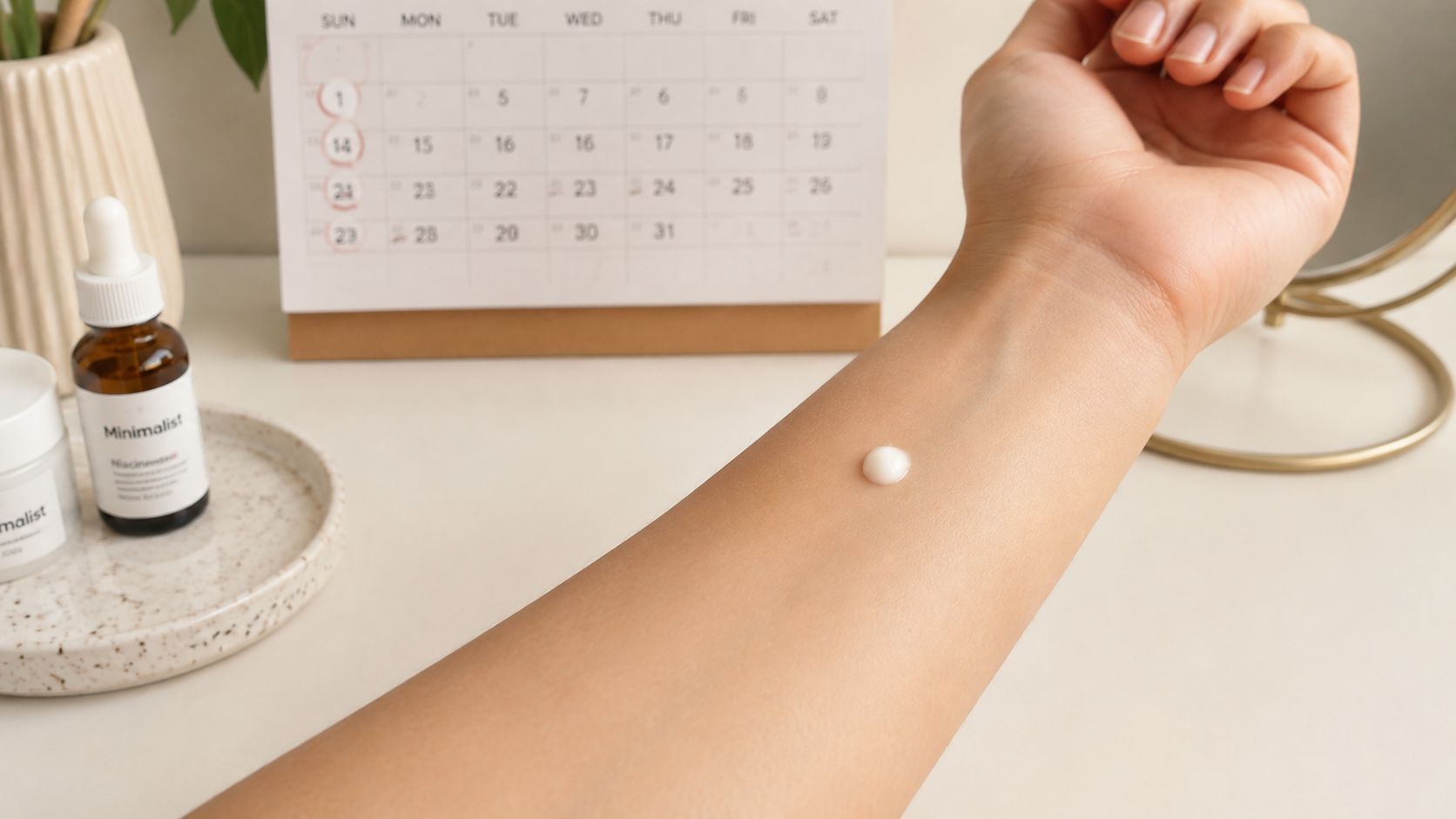
A low-waste transition order
Introduce one new fragrance-free product per week. Start with the product that stays on your skin longest, usually moisturizer. Then add sunscreen, cleanser, and makeup. If moisturizer causes trouble, you'll catch the issue before adding several more variables.
A simple schedule looks like this:
- Monday to Sunday: Test the moisturizer while keeping the rest of the routine unchanged.
- Following week: Add sunscreen after the moisturizer remains comfortable.
- Next week: Replace the cleanser.
- Final week: Introduce one makeup product.
If irritation appears, stop the newest product first. Use plain petrolatum or zinc oxide as a barrier while the skin settles, and consult a dermatologist if symptoms persist. Don't restart multiple products at once because the desire to “get back to normal” can prolong the investigation.
For broader routine planning, use this guide to build a skincare routine without turning every product change into a full cabinet overhaul.
Here's the visual walkthrough to keep nearby while you test:
Frequently Asked Questions
Do limonene or linalool automatically disqualify a product?
If you're trying to follow a strict fragrance-free routine, treat disclosed aroma allergens such as limonene or linalool as reasons to keep checking. Their presence indicates a fragrant material somewhere in the formula, often from fragrance, essential oils, or botanicals. They don't prove you'll react, but they do make the product a poor match for strict avoidance. Action step: scan the full INCI list before buying.
Can botanical extracts mask fragrance?
Yes. Rose, jasmine, ylang-ylang, chamomile, and other botanicals can be included for a skin-conditioning story while also contributing aroma. “Natural fragrance” remains fragrance from a practical sensitivity perspective. Action step: treat a strong botanical scent as a reason to investigate, not as proof of gentleness.
Are fragrance-free formulas safe for children and babies?
Fragrance-free can reduce one avoidable exposure, but it isn't a universal safety guarantee. Children and babies can still react to preservatives, plant extracts, or other ingredients, and their routine should stay simple. Choose products designed for the relevant age group and ask a pediatrician or dermatologist about persistent symptoms. Action step: use a minimal formula and patch test before regular use.
How do medical-grade fragrance-free options differ from drugstore picks?
“Medical-grade” often signals a clinical positioning, professional distribution, or narrower product range, but the phrase alone doesn't guarantee a superior formula. A drugstore product can be an excellent choice if its ingredient list fits your needs and the texture encourages consistent use. Action step: compare the actual INCI list rather than the prestige label.
The Quick Checklist and Final Verdict
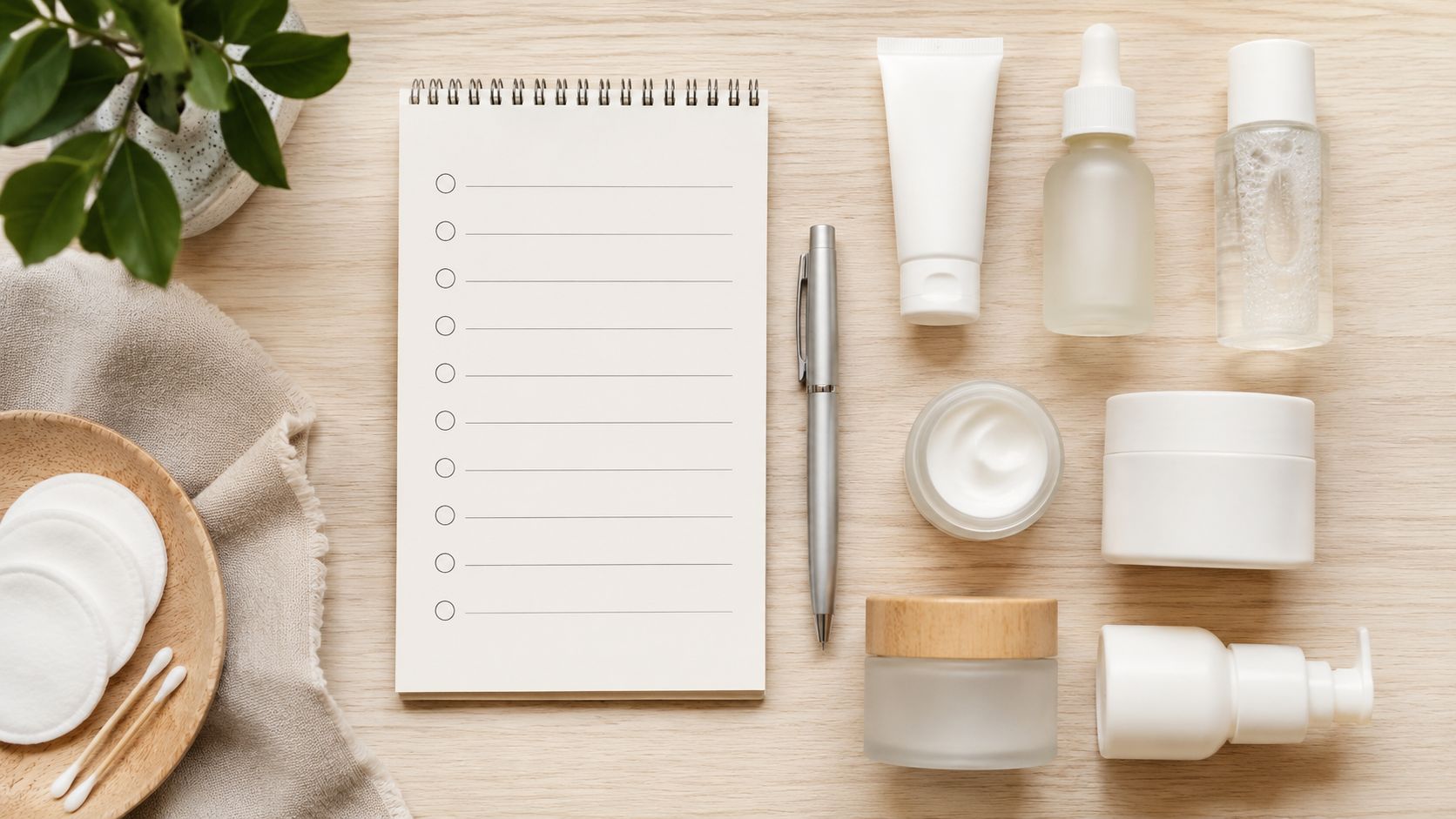
Use this 10-point audit before adding any product to your basket:
- Read the INCI list: Don't rely on the front label.
- Reject parfum and fragrance: Treat both as added scent signals.
- Scan essential oils: Lavender, peppermint, tea tree, and citrus deserve scrutiny.
- Question botanicals: Rose and jasmine can be aromatic, even when marketed as conditioning.
- Watch masking agents: Look for HICC, atranol, chloroatranol, and related aroma allergens.
- Ignore vague comfort words: “Clean,” “natural,” and “hypoallergenic” aren't proof.
- Separate unscented from fragrance free: Unscented may contain masking fragrance.
- Patch test gradually: Use the forearm, then the jawline or behind the ear.
- Replace one product at a time: Don't create a formula-detective nightmare.
- Protect the budget: Build around a cleanser, moisturizer, sunscreen, and only then makeup.
The best overall dupe is Vanicream Daily Facial Moisturizer. It's the swap I'd choose over a prestige moisturizer when I want transparent, practical skincare and a texture that works for an everyday routine. It also keeps the budget focused on categories where finish and wear matter more, especially sunscreen and makeup.
Fragrance-free isn't a punishment for sensitive skin. It's a way to remove an unnecessary variable while keeping performance, comfort, and price in view. Build the routine one product at a time, read beyond the marketing, and aim for a complete setup around $50 using the swaps above.
Finding Favourites helps budget-conscious beauty shoppers compare affordable alternatives to luxury makeup, skincare, and fragrance without losing sight of texture, finish, wear, or value. Visit Finding Favourites to find more practical dupe roundups and build a fragrance-free routine that fits your skin and your budget.