
Review Cetaphil Moisturizing Lotion and 5 Best Dupes
You bought Cetaphil because it's the safe, dermatologist-associated choice. Then you applied it in a humid bathroom, waited for the “lightweight” lotion to disappear, and found your skin still felt slick under clothing or sunscreen. That reaction doesn't mean the product failed. It means texture, climate, skin type, and application amount matter more than the gentle branding suggests.
This review of Cetaphil Moisturizing Lotion looks past the fragrance-free reputation. I'm assessing the formula, barrier support, absorption, face and body use, and its performance on dry, combination, and oily skin. I'm also comparing it with five widely available US alternatives, using ingredient overlap rather than vague “similar product” claims.
Is Cetaphil Moisturizing Lotion Worth the Hype
This post may contain affiliate links, which means I may receive a commission if you purchase through my links, at no extra cost to you. Please read the disclosure policy for more information.
You buy Cetaphil for its dependable reputation, apply it to your face or arms, and expect the lotion to disappear quickly. In a warm, humid bathroom, the result can be different. Skin may feel polished, slightly tacky, or too coated for sunscreen and clothing.
Cetaphil's history supports its familiar drugstore status. The brand began in 1947, when a Texas pharmacist created the original formula. Galderma later marked the brand's 70th anniversary in 2017 and 75 years of sensitive-skin leadership in 2022 in its brand history reported by Practical Dermatology. Cetaphil Moisturizing Lotion has been described as part of the range for about four decades, with a cited launch year of 1986. Its staying power comes from practical performance, not a short-lived skincare trend.
My short verdict
For dry skin, normal skin, hands, arms, and everyday body care, this is a reliable, no-frills moisturizer. Its hydration and barrier-support structure suits skin that feels dry or easily irritated. Independent clinical evidence reports beneficial effects from Cetaphil moisturizer formulations in atopic dermatitis, although the evidence quality ranges from very low to moderate DermApproved's review of the clinical evidence.
Oily and combination skin require more judgment, particularly in warm, humid conditions. Users commonly describe the finish as oily, slick, or sticky, while review patterns show a clear split between strong approval and complaints about residue independent texture analysis from My Dad the Chemist.
Choose it for dependable moisture and a comfortable body lotion. Skip it for a lightweight facial finish if you dislike any film. For a side-by-side look at texture and barrier ingredients, read this Cetaphil versus CeraVe comparison.
Ingredient Breakdown and Barrier Support
Cetaphil Moisturizing Lotion earns its reputation through a humectant, emollient, and occlusive system, not one attention-grabbing ingredient. Cetaphil positions it as a lightweight, fast-absorbing lotion for dry-to-normal skin. The published formula lists glycerin second, followed by dimethicone, panthenol, and niacinamide Cetaphil's official product page.
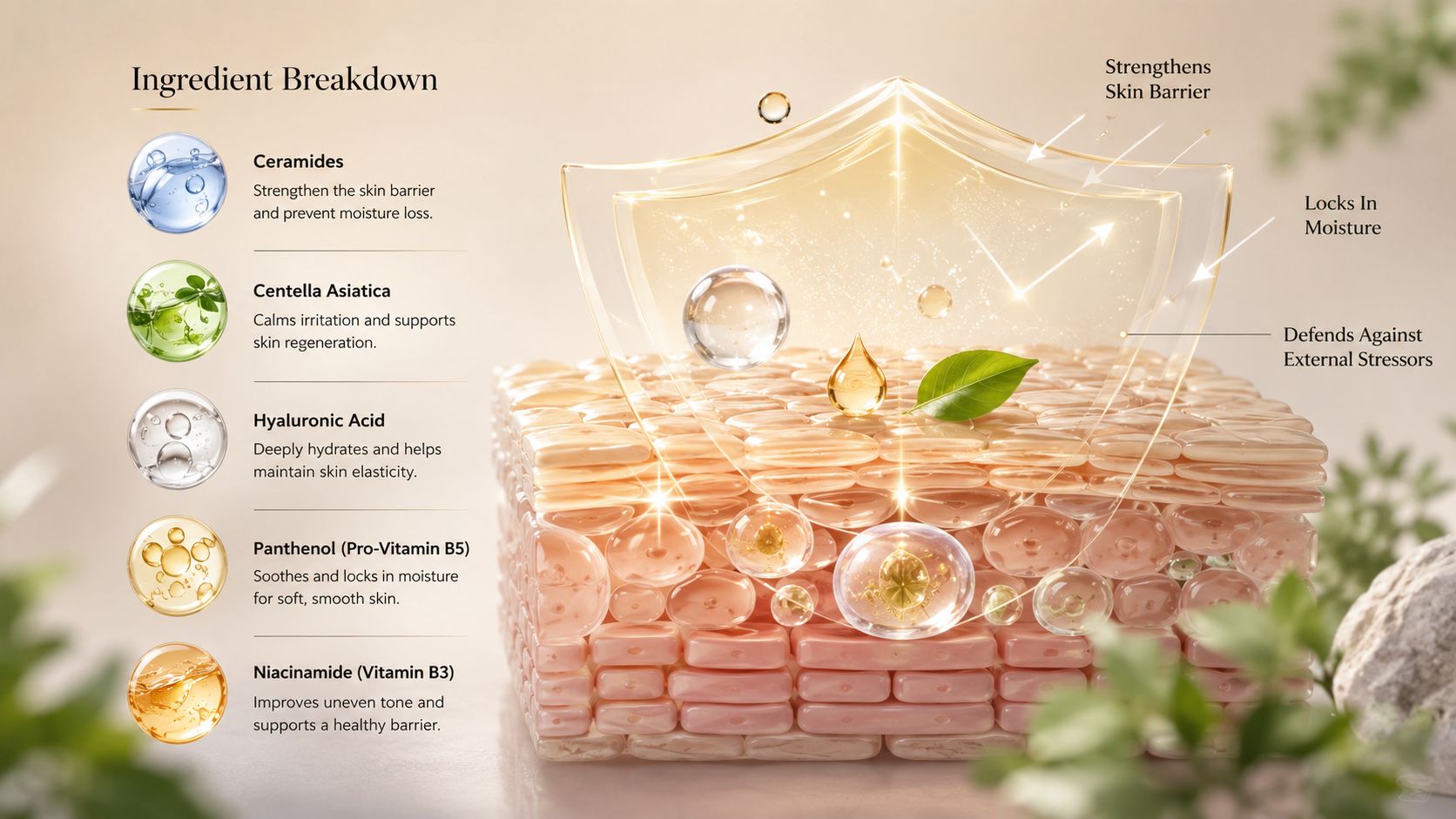
What the main ingredients contribute
Glycerin drives the initial hydration. This humectant attracts water to the outer skin layer, creating the lotion's immediate softening effect. Apply too much in hot, humid weather, and it can leave a slight tacky feel.
Dimethicone helps slow water loss by forming a smooth, breathable-feeling film over the skin. It also creates the formula's characteristic slip. That finish works well on dry elbows and hands. On an oily forehead, the same film may feel heavy or look shiny.
Panthenol contributes soothing and conditioning support. Niacinamide helps reinforce the skin barrier and can improve rough, dehydrated texture with consistent use. Neither ingredient makes this a treatment serum, but both give the lotion more purpose than a basic oil-and-water body moisturizer.
An independent ingredient analysis by SkinSort identifies the lotion as a 16-ingredient moisturizer, highlighting glycerin, cetearyl alcohol, ceteareth-20, avocado oil, dimethicone, panthenol, niacinamide, and tocopheryl acetate as functional components SkinSort's ingredient comparison. Cetearyl alcohol softens skin and supports texture. Avocado oil and tocopheryl acetate add emollient support, while the emulsifiers keep the lotion spreadable.
Formula takeaway: Cetaphil is not strictly minimalist. It is a practical blend that hydrates, softens, and reduces moisture loss without added fragrance.
That makes it a sensible baseline for sensitive or barrier-compromised skin, but ingredient-sensitive shoppers should read the full list. Independent formula analysis flags isopropyl palmitate, benzyl alcohol, ceteareth-20, and citric acid as possible concerns for some users Glow Simplified's formula analysis. For broader context on moisturising ingredients and plant-derived options, CBD moisturising benefits explained provides an ingredient-focused resource. If your barrier needs more targeted care, compare this lotion with a skin barrier repair serum instead of expecting one body lotion to address every concern.
Real-World Performance on Different Skin Types
The label says dry-to-normal skin, and that positioning is accurate. Cetaphil Moisturizing Lotion spreads easily, gives skin a softened finish, and works particularly well when dryness is the main problem. It's the kind of product you can apply after a shower without needing to think about a complicated routine.
The experience changes on combination and oily skin. A thin layer may work on dry cheeks, neck, hands, or body areas, but the same amount across an oily face can leave noticeable shine. In humid climates, the lotion's humectant and dimethicone combination can remain perceptible instead of settling into a dry-touch finish.
Skin-type performance at a glance
| Skin type | My assessment | Best use |
|---|---|---|
| Dry | Strong choice | Face, hands, and body |
| Normal | Reliable | Daily body care |
| Combination | Selective | Dry zones, preferably at night |
| Oily | Often too slick | Body or targeted dry areas |
| Sensitive | Promising, but patch test | Barrier support |
Dry skin will appreciate the cushion. If your legs feel tight after cleansing, or your hands crack easily, Cetaphil's richer slip is an advantage rather than a flaw. The lotion also makes sense for people who want one familiar product for both face and body and don't react to its ingredient profile.
Combination skin needs a more strategic approach. Apply it only where the skin feels dry, then use a lighter moisturizer on the central face. Rubbing a thick layer over an already hydrated forehead is the fastest route to shine.
Oily skin should be more skeptical. The product may be comfortable at night or during a dry season, but it isn't my first choice for daytime wear under sunscreen or makeup. Some users also report pilling when layers compete, particularly if they apply too much lotion and immediately follow with a film-forming sunscreen.
Climate rule: A lotion that feels balanced in dry indoor air can feel heavy in humid weather. Adjust the quantity before you dismiss the formula entirely.
Cetaphil's fragrance-free positioning remains a practical benefit for people who want to reduce avoidable irritation. Still, “gentle” doesn't mean universally compatible. Acne-prone users may react to specific ingredients, and the lotion's finish can be uncomfortable if you're already managing excess oil. For more low-cost options with a sensitivity-first focus, browse this guide to affordable skincare for sensitive skin.
Application Tips for Best Results
Most complaints about this lotion come from using too much, applying it to completely dry skin, or layering products before the previous layer settles. The formula doesn't need a heavy coat to work.
Use less than your first instinct
Apply Cetaphil to slightly damp skin, ideally after bathing or cleansing. Water on the surface gives the humectant system something to work with, while dimethicone helps slow moisture loss afterward. Spread a thin layer over one area, massage until the visible white cast disappears, then decide whether you need more.
For the body, divide the application into sections. Use a modest amount on each arm or leg rather than dispensing a large blob and trying to distribute it everywhere. This reduces the slick finish and makes the lotion feel lighter without changing the formula.
Separate face and body routines
On the face, start with a small amount on the cheeks and around the mouth. Keep the layer thinner over the nose, forehead, and chin if those areas become shiny. If you're acne-prone, patch test first because the ingredient list includes components that some independent analysts identify as potential concerns.
If you use retinoids, apply your active to clean, dry skin if that's how your routine is designed, then use Cetaphil afterward to cushion dryness. Readers building a retinoid routine can use retin a routine from Lila for additional layering context. With vitamin C, let the serum settle before applying lotion so you don't create unnecessary slip.
Prevent sunscreen pilling
Wait until the lotion feels absorbed before applying sunscreen. Use a thinner moisturizer layer in the morning, press rather than aggressively rub the sunscreen over it, and avoid stacking several silicone-heavy products. If pilling continues, reserve Cetaphil for nighttime and choose a lighter daytime moisturizer.
5 Affordable Cetaphil Moisturizing Lotion Dupes
A useful dupe matches Cetaphil in function, not merely in packaging or fragrance-free marketing. The five options below are widely available in the US, but each changes the balance of humectants, emollients, occlusives, or barrier-support ingredients. That matters in humid climates, especially if you have oily or combination skin and dislike a lotion that stays slick.
| Product | Best For | Price |
|---|---|---|
| CeraVe Moisturizing Cream | Dry, sensitive skin | Varies by retailer |
| Lubriderm Daily Moisture Lotion | Lightweight body hydration | Varies by retailer |
| Vanicream Moisturizing Cream | Very dry or reactive skin | Varies by retailer |
| Aveeno Daily Moisturizing Lotion | Normal-to-dry body skin | Varies by retailer |
| Equate Advanced Skin Care Lotion | Budget body care | Varies by retailer |
1. CeraVe Moisturizing Cream
CeraVe is the closest functional alternative when your priority is barrier support with a familiar drugstore formula. Like Cetaphil, it combines humectant and emollient support, but its cream texture is denser and its barrier approach centers on ceramides. That makes it the stronger choice for dry skin that needs a more protective finish.
Independent testing describes CeraVe Moisturizing Cream as fragrance-free, smooth, and nongreasy after absorption, although testers reported different absorption times based on skin and application Wirecutter's body-lotion testing. Choose CeraVe for dry cheeks, hands, legs, or rough patches. On oily or combination skin in humid weather, apply a small amount only where dryness demands it. A full layer can feel heavier than Cetaphil.
2. Lubriderm Daily Moisture Lotion
Lubriderm Daily Moisture Lotion is the practical choice for normal skin, mild dryness, and daytime body use. It spreads quickly across large areas and gives a more straightforward lotion finish than Cetaphil. Its ingredient overlap is less exact, but it serves the same affordable, everyday hydration role.
I would choose Lubriderm when Cetaphil leaves too much slip, particularly on arms, legs, or the torso in warm, humid conditions. It is less convincing for severely dry patches, where the thinner texture may require repeated application or a richer product over it.
3. Vanicream Moisturizing Cream
Vanicream is the better switch for very dry, reactive, or eczema-prone skin when you accept a heavier texture. Its fragrance-free formula is built to hold hydration in place, so it offers more protection than Cetaphil on rough, flaky areas.
The trade-off is clear. Vanicream behaves like a cream rather than a light lotion, and spreading it takes more work. It makes sense for elbows, hands, legs, and compromised skin, especially when Cetaphil does not provide enough lasting comfort. I would not use it as a daytime moisturizer on an oily face or across combination skin in humid weather. The finish is too occlusive for that job.
4. Aveeno Daily Moisturizing Lotion
Aveeno Daily Moisturizing Lotion fills the same uncomplicated daily-use role as Cetaphil and works best for normal-to-dry body skin. It is easy to find, spreads in a conventional lotion layer, and suits shoppers who want routine moisture without a distinctly rich cream.
Its weakness appears when dryness is pronounced. Independent testing found that Aveeno did not fully resolve very dry skin for some testers, so reserve it for regular body moisturizing rather than intensive repair. It is a sensible swap if Cetaphil's slippery finish bothers you, but oily or combination users should still keep the layer thin in humid weather.
5. Equate Advanced Skin Care Lotion
Equate Advanced Skin Care Lotion is the value-first option for consistent body care. Store-brand formulas can follow the same basic lotion structure as Cetaphil, with humectants to attract water, emollients to soften skin, and occlusive ingredients to reduce moisture loss, without charging for a heritage brand.
Check the current package before buying because ingredient lists can change. Look for familiar support ingredients such as glycerin, dimethicone, fatty alcohols, or petrolatum. Equate makes the most sense when you want an affordable bottle for arms, legs, and hands. It is not my pick for matching Cetaphil's exact feel or managing a known sensitivity, and it offers no special advantage for an oily face.
Pros and Cons and Final Verdict
Cetaphil Moisturizing Lotion is a reliable staple, not an automatic choice for every skin type. It suits dry and normal skin better than oily or combination skin in humid weather, where its protective film can feel slick.
What works
- Accessible: It is widely available and easy to replace when you finish a bottle.
- Barrier-focused: Glycerin, dimethicone, panthenol, niacinamide, fatty alcohols, and emollients create a clear hydration and barrier-support structure.
- Fragrance-free positioning: This appeals to shoppers who avoid added fragrance.
- Versatile: It works on the body and hands, and on selected facial areas when your skin tolerates the formula.
- Useful for dryness: Research on Cetaphil moisturizers supports benefits for atopic dermatitis, especially alongside topical therapy, although the evidence quality is mixed.
What doesn't
- Sticky for some users: Humid conditions and heavy application can leave an oily, slippery finish.
- Not ideal for every acne-prone face: Certain ingredients may conflict with individual congestion or sensitivity concerns.
- Basic rather than specialized: It moisturizes and supports the barrier, but it does not replace an acne treatment or targeted serum.
- Can pill: Thick layers may roll under sunscreen or makeup.
My verdict is straightforward. Buy it if you have dry or normal skin, need an uncomplicated body lotion, or prefer a cushioned finish over a dry-touch feel. It also makes sense if you already know your skin handles it well and you value predictable performance over novelty.
Skip it if you have oily skin in a humid climate, dislike residual slip, or routinely develop clogged pores from richer lotions. Apply less on combination areas, and reserve the richer layer for dry zones.
For alternatives, choose CeraVe Moisturizing Cream when barrier support matters more than a light finish, Lubriderm or Aveeno for a lighter body lotion, and Vanicream when sensitivity and severe dryness take priority over texture. These five options overlap with Cetaphil's basic humectant, emollient, and occlusive approach, but their finishes and tolerance profiles differ.
Frequently Asked Questions
Is the new formula different from the old one?
Cetaphil's official product page identifies a new formula, and some users report less irritation with the updated version. Formula details can differ by market and packaging update, so read the current ingredient list instead of relying on an older review or remembered texture. For humid weather, that check matters because small formula changes can affect slip and finish.
Can I use Cetaphil Moisturizing Lotion on acne-prone skin?
Patch test first. I would not label it acne-safe for every face, particularly if you react to richer emollients. Isopropyl palmitate may bother some ingredient-sensitive users, so apply a thin layer and keep it off already oily areas. If congestion or irritation appears, stop using it rather than trying to push through.
Does it contain parabens?
Read the current packaging and official ingredient list for your market. Retail formulas and labeling can change, while an old blog post or incomplete retailer listing may no longer match the bottle. If parabens are a personal concern, verify the product in hand before buying.
Is it safe for eczema-prone skin?
Cetaphil moisturizer formulations may support atopic dermatitis care, including use alongside topical therapy, although the available evidence ranges from very low to moderate DermApproved's review. That makes the lotion a reasonable support option, not a treatment for an active flare. Patch test before wider use, and ask a clinician for guidance if your skin is cracked, inflamed, or repeatedly reactive.
Wrap Up and Best Budget Alternative
Cetaphil Moisturizing Lotion remains a solid workhorse for dry-to-normal skin, body care, and anyone who values a familiar fragrance-free formula. Its glycerin, dimethicone, panthenol, niacinamide, and emollient system makes sense, but the same protective slip that comforts dry skin can feel sticky on oily or combination skin in humid weather.
CeraVe Moisturizing Cream is my best overall dupe because it offers a comparable drugstore barrier-care role with ceramides and a more substantial cream texture. Choose Lubriderm or Aveeno if you want something lighter, Vanicream if your skin is highly reactive or very dry, and Equate if keeping costs low is the priority. Smart shopping means matching the finish to your skin, not automatically choosing the most familiar label.
Finding Favourites curates affordable skincare comparisons and dupe roundups, including practical alternatives for shoppers who want to spend less without abandoning performance. Visit Finding Favourites to explore more budget-friendly beauty discoveries, ingredient comparisons, and product swaps.