
How to Use Hair Serum: 5 Best Dupes and Application Tips
You wake up, smooth your hair once, and it puffs back out by the time you've made coffee. The serum sits in your drawer, but the results never look quite like the bottle promises. Usually, the problem isn't the formula, it's the way it's being used.
This post may contain affiliate links, which means I may receive a commission if you purchase through my links, at no extra cost to you. Please read the disclosure policy for more information.
Hair serum can be a fix for frizz, dullness, and rough ends, but it can also flatten a style fast if you overdo it. The best results come from matching the formula to your hair type, then applying just enough in the right place. If you're also comparing scalp-focused growth formulas, a useful place to start is this guide to find the best serum for hair loss, because not every serum is meant to do the same job.
What Hair Serum Does and Why Technique Matters
Hair serum is one of those products that looks simple until you use too much and spend the rest of the day trying to revive your roots. On the right hair, it smooths the cuticle, cuts down visible frizz, adds shine, and helps protect the surface of the hair during heat styling. On the wrong hair, or with the wrong hand, it can turn soft movement into grease.
The difference usually comes down to technique, not price. A tiny amount spread well can make a drugstore formula behave like a luxury one, while a heavy hand can ruin even a beautifully made serum. That's why the most reliable results start with clean, damp hair, then move from the mid-lengths to the ends, where dryness and friction show up first. For people who want a scalp-focused treatment rather than a styling serum, the category shifts again, and the application pattern changes with it.
Practical rule: if your hair looks limp after serum, the product may be fine. The dose and placement are usually the real problem.
When you're choosing between shine, frizz control, and scalp care, it helps to treat serum like a tool, not a one-size-fits-all miracle. If your hair loss concern is the priority, start with a dedicated growth formula before you layer on styling products. For a softer self-care approach that pairs well with wash day, this simple spa routine at home can make the whole process feel more intentional without changing the product logic.
How to Apply Hair Serum by Hair Type and Length
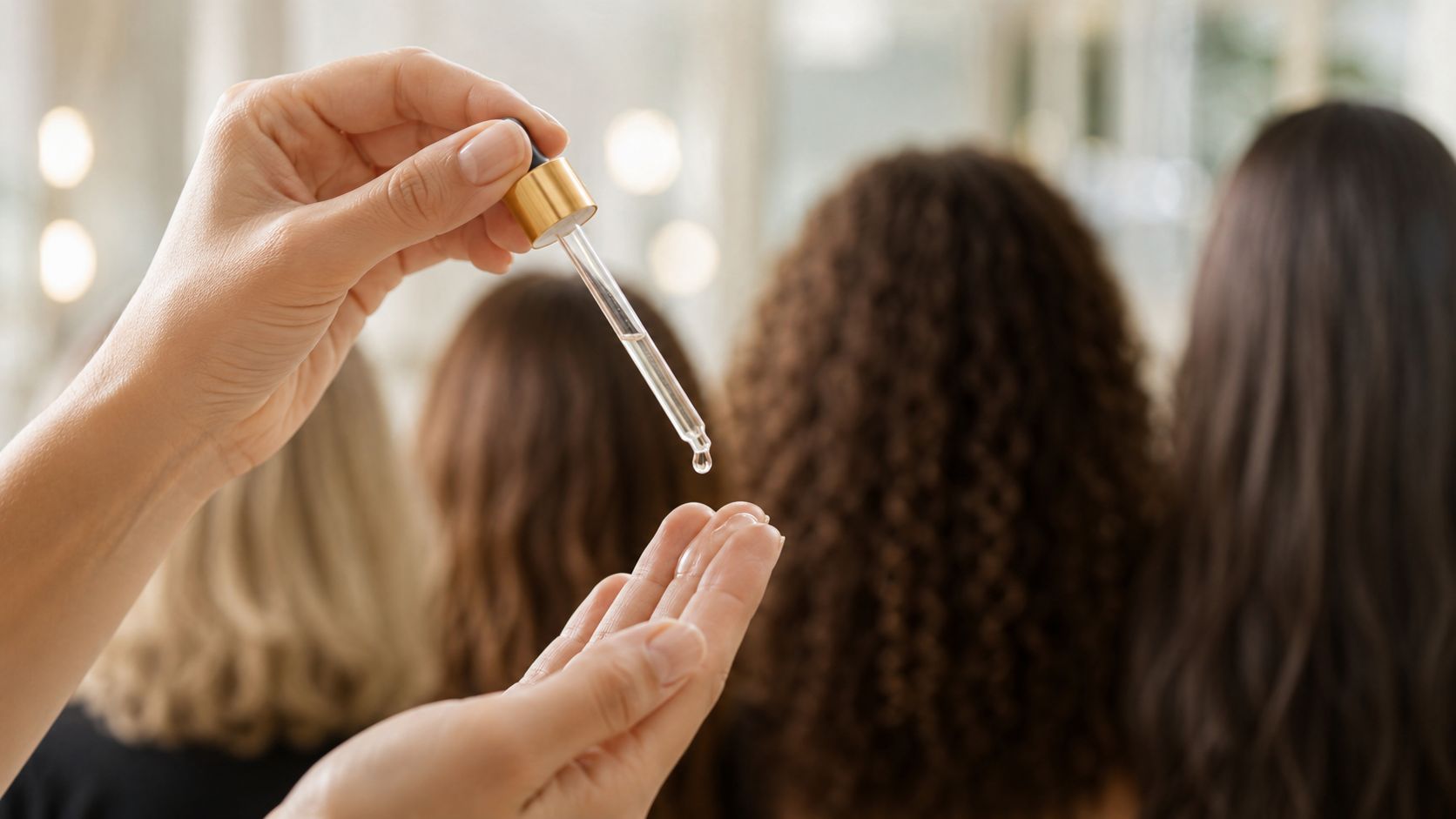
For most styling serums, start with 2 to 3 drops on clean, damp hair. Rub the product between your palms for about 5 to 6 seconds before you touch your hair, then press it through the mid-lengths to the ends instead of dragging it straight at the roots. That small pause in your hands helps the serum spread more evenly, which matters more than people think.
Fine, medium, and thick hair
Fine hair usually needs the lightest hand. A less than pea-sized amount is often enough, especially if your strands collapse easily or your cut takes volume at the crown. Medium hair can usually handle the baseline dose, while thicker hair may tolerate about a quarter-sized amount without looking coated.
If your hair already feels slippery before you've finished applying, stop there. Extra serum won't improve the finish, it'll just make the ends look stringy.
Longer hair needs better distribution, not necessarily more product. Work from the bottom half upward in a thin veil, then use whatever is left on your palms for the surface frizz near the crown. Short hair needs a stricter edit, because the margin between polished and greasy is tiny.
Scalp serums and sectioning
Scalp-focused serums follow a different rhythm. Divide the hair into four sections, then apply the serum drop by drop along the scalp and massage it in circular motions for 1 to 2 minutes. That method keeps the formula on the scalp where it belongs instead of coating the lengths that don't need it. Some scalp treatments are also meant to stay on for at least 4 hours, or even overnight, so the timing matters as much as the amount.
If you want a visual reference for the movement and hand placement, this video is worth a look before you test a new formula:
A scalp serum can work well on part lines, temples, and crown areas that need targeted attention, but it doesn't replace a styling serum for frizz. Keep those jobs separate and you'll waste less product.
5 Affordable Hair Serum Dupes That Actually Work
| Product | Price | Best For |
|---|---|---|
| Garnier Fructis Sleek & Shine Anti-Frizz Serum | Budget-friendly drugstore | Everyday frizz control and shine |
| John Frieda Frizz Ease Extra Strength Serum | Affordable drugstore | Thick, frizz-prone hair and heat styling |
| OGX Renewing + Argan Oil of Morocco Penetrating Oil | Affordable drugstore | Softening dry lengths and adding gloss |
| HASK Argan Oil Repairing Shine Oil | Budget-friendly drugstore | Lightweight smoothing for finer hair |
| The Ordinary Multi-Peptide Serum for Hair Density | Moderate price, widely available in the US | Scalp-focused care and routine consistency |
A good dupe doesn't need to copy every feature of a luxury serum. It needs to solve the same hair problem without making the finish worse, and that means texture, slip, and weight matter more than hype. These five formulas are easy to find in the US and cover the most common use cases without wandering into novelty territory.
Garnier Fructis Sleek & Shine Anti-Frizz Serum
This is the easy pick for straight-up frizz control. It gives hair a sleeker surface and a glossy finish without needing a complicated routine, which makes it a smart stand-in for pricier smoothing serums. Use it sparingly on damp ends, because the formula does its best work when it's spread thin.
John Frieda Frizz Ease Extra Strength Serum
For thicker or more stubborn hair, this one has the right kind of staying power. It behaves more like a serious styling product than a lightweight oil, so it's a stronger dupe candidate when you want a polished blowout look. If your hair expands in humidity, this is the bottle I'd reach for first.
OGX Renewing + Argan Oil of Morocco Penetrating Oil
This is the closest match for people who like a soft, silky finish on dry lengths. It leans richer than some other drugstore options, which helps if your ends feel rough or porous. It's best used with restraint, since the shine can turn heavy if you stack it onto already moisturized hair.
HASK Argan Oil Repairing Shine Oil
If fine hair gets weighed down easily, this is the more forgiving choice. It gives a cleaner, lighter finish than some thicker smoothing serums, so it's useful for quick touch-ups and low-maintenance styling. It won't do everything a heavy salon serum can do, but it's easy to wear.
The Ordinary Multi-Peptide Serum for Hair Density
This belongs in the list because scalp serums solve a different problem than styling serums. It's for people who want a simple, targeted routine rather than a glossy finish on the lengths. For density-focused care, the win is consistency and clean application, not immediate cosmetic slip.
Common Hair Serum Mistakes and Quick Fixes
The most common mistake is using too much. Heavy application makes hair sticky, kills volume, and can leave the ends looking coated instead of smooth. If that already happened, add a tiny amount of shampoo to the wet areas at the sink, rinse lightly, and restart with a smaller dose once the hair is towel-blot dry.
Another common slip is putting serum on soaking wet hair. Water dilutes the product and makes it harder to control, so the finish can turn uneven. Towel-damp hair gives you better placement and less runoff.
Root placement and formula mismatch
Serum at the roots is usually a bad idea unless it's a scalp formula made for that exact area. Styling serum on the scalp can flatten the crown fast, especially on fine hair. Keep the smoothing formulas away from the roots and use a scalp serum only when the product is designed for that job.
A serum that feels perfect on someone with coarse hair can be a mistake on fine hair. The texture of the bottle matters as much as the texture of your strands.
The last issue is using the wrong formula for the job. A shine serum won't replace a heat protectant if your hair is about to meet a blow-dryer or hot tool, and a scalp treatment won't tame frizz on its own. Match the product to the goal, then keep the dose small enough that the hair still moves.
Heat Styling, Layering, and Frequency Guidelines
For styling, serum usually goes on after washing and before heat styling, but the amount should stay small. It can act as a protective barrier before blow-drying or hot-tool use, which is one reason it belongs in so many wash-day routines. If your hair is already dry, reapply only a small amount later in the day rather than starting over with a fresh, heavy layer.
Layering works best when you separate the roles. Use one product for heat protection, one for smoothing, and one for scalp care only if you need scalp support. That keeps buildup under control and makes it easier to tell which product is doing what.
Scalp serums are the exception. Some guidance recommends 1 to 2 full droppers or 1 to 2 pipettes daily for coverage, then a 5-minute wait before other products or heat styling, with absorption windows that can last at least 4 hours or overnight. That longer leave-in time is what makes scalp serums feel more like treatment products than styling aids.
Frequently Asked Questions About Hair Serum
Can hair serum be used on color-treated hair?
Yes, as long as the formula is gentle and you keep it off the scalp unless it's a scalp treatment. Color-treated hair often benefits from the smoothing and shine, but the application still needs to stay light.
How do I know if a serum is too heavy for my hair?
If your hair loses lift, looks piecey, or feels slick before it's fully styled, the product is too rich or the amount is too high. Fine hair usually shows that problem first.
Can I mix two serums together?
You can, but it's rarely necessary. Mixing makes it harder to control the finish, so it's smarter to layer tiny amounts only when each product has a separate job.
Will hair serum cause buildup over time?
It can if you keep applying too much or don't cleanse your scalp and lengths properly. Keeping the dose small and putting it only where it's needed helps prevent that heavy, coated feel.
Final Thoughts and Best Dupe Recommendation
If you want the best all-around value, Garnier Fructis Sleek & Shine Anti-Frizz Serum is the standout dupe for everyday smoothing. Use 2 to 3 drops, keep it on the mid-lengths to ends, and let the product do its job without crowding the roots.
Finding the right hair serum is mostly about precision, not price. If you want more budget-friendly beauty swaps, practical product breakdowns, and clear comparisons that cut through the noise, visit Finding Favourites for more dupe roundups and smart shopping guides.