Paraben Free Moisturiser: Safety, Labels & Budget
You're standing in the aisle, or maybe scrolling past another skincare ad, and paraben free is on every other moisturiser bottle. The label sounds reassuring, but it also leaves you with the exact same question a lot of shoppers have: does this matter, or is it just cleaner marketing on the same old cream?
This post may contain affiliate links, which means I may receive a commission if you purchase through my links, at no extra cost to you. Please read the disclosure policy for more information.
The short answer is that paraben free moisturiser claims can be useful, but only if you know what's replacing the parabens, how the formula is preserved, and whether the product suits your skin. That's where the confusion starts, because the label says one thing while the ingredient list tells the story.
Why Paraben Free Moisturisers Are Everywhere Now
A lot of shoppers first meet the phrase paraben free moisturiser at the shelf edge, not in a science article. The bottle looks gentle, the copy sounds modern, and the label seems to promise a safer or cleaner choice. That reaction is exactly why the phrase has spread so widely.
The category is also backed by a large market. The global paraben-free skin care market was valued at USD 9.7 billion in 2023 and is projected to reach USD 18.9 billion by 2032, with a 7.8% CAGR from 2024 to 2032 according to Acumen Research and Consulting. That growth reflects consumer preference and retail positioning more than any universal regulatory ban.
The most useful way to read the trend is simple. People are not just buying a preservative system, they're buying reassurance. In moisturisers, that reassurance often gets attached to sensitive-skin language, minimalist packaging, and the idea that fewer “controversial” ingredients must be better.
Practical rule: if a moisturiser leans heavily on the paraben free claim, treat it as a starting point, not a verdict. The formula still needs to hydrate, stay stable, and feel good on skin.
That is why this topic keeps showing up in beauty aisles and budget roundups. The label is easy to spot. The trade-offs are not.
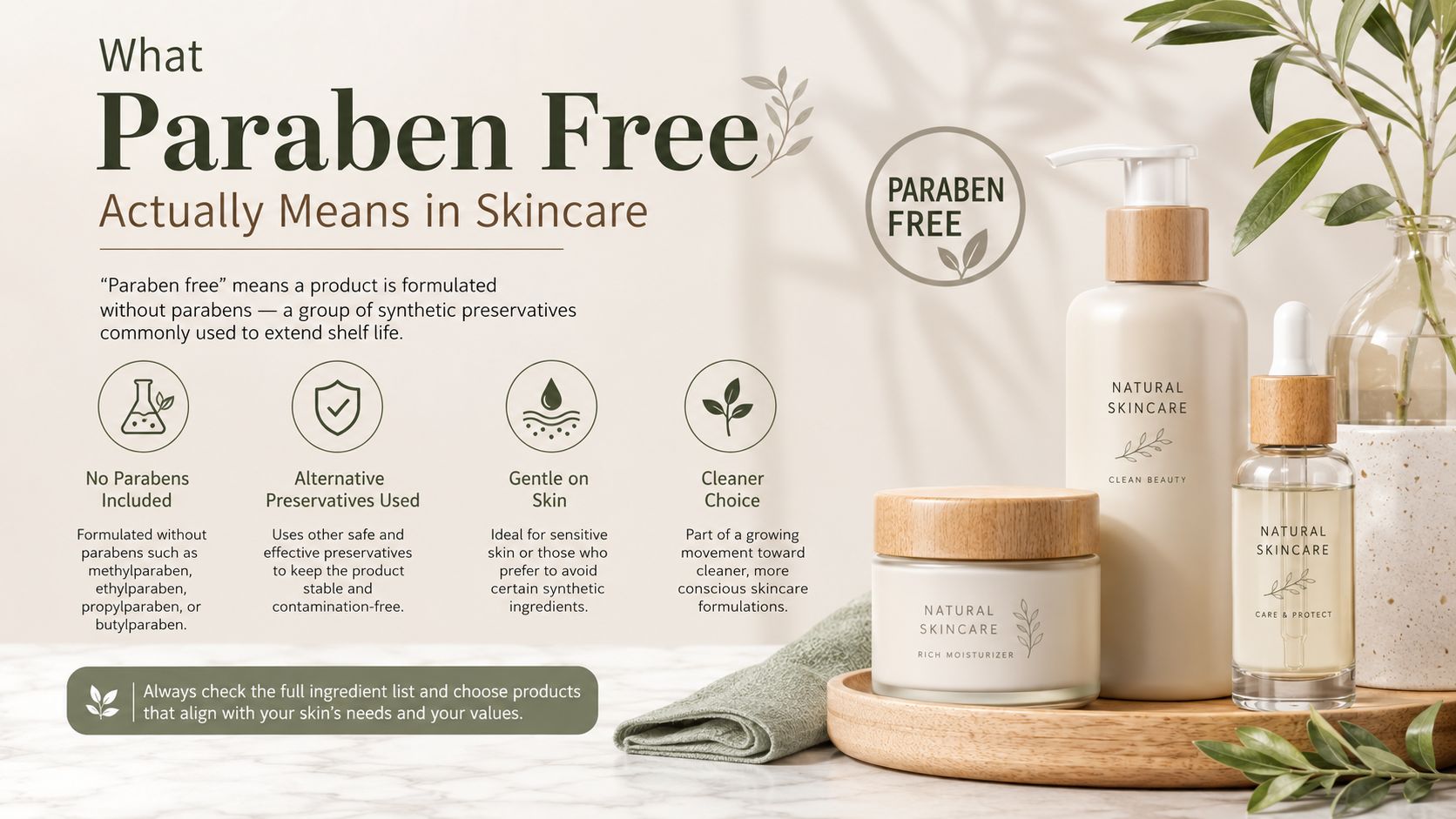
What Paraben Free Actually Means in Skincare
Parabens are a family of preservatives used in cosmetics, including moisturizers, and the most common ones are methylparaben, propylparaben, butylparaben, and ethylparaben. The U.S. FDA explains that preservatives help prevent the growth of harmful bacteria and mold, which protects both the product and the consumer, and also notes that cosmetic ingredients generally do not need FDA approval before products go on the market. Read directly from the FDA's overview of parabens in cosmetics.
That matters because paraben free does not mean preservative free. It usually means the formula uses a different preservation system instead of parabens. In other words, the brand has swapped one protective strategy for another.
A security system for a jar of cream. The goal is not to eliminate security, it's to keep bacteria and mold out while the product sits in your bathroom or travels in your bag. If a moisturiser removes parabens, it still needs something else doing the preservation work.
The FDA also says it does not have information showing that parabens as they are used in cosmetics have an effect on human health. That's a very specific statement, and it's one reason the market for paraben-free products looks more like a consumer-preference shift than a response to a blanket safety ban. The growth of the category fits that pattern.
For shoppers, the practical takeaway is that a paraben free moisturiser is not automatically safer, better, or lighter. It just tells you one part of the formulation story. The question is what preserves the product, what supports the skin barrier, and whether the texture matches your needs.
The Safety Research and Regulatory Landscape
Regulation is where the debate gets less emotional and more specific. In the European Union, methylparaben and ethylparaben are allowed at 0.4% for one ester and 0.8% when used together, while propylparaben and butylparaben are allowed only up to 0.14% total, as summarized in this review of cosmetic-use parabens. The same review also notes that the EU has banned isopropyl- and isobutylparaben in all personal care products since 2015.
That gives you a concrete contrast with the U.S. position. The FDA says cosmetic ingredients generally do not need premarket approval, and parabens remain permitted in cosmetics within the U.S. framework. That difference is one reason shoppers can see very different messaging across brands and regions.
The review also cites safety margin data from Cosmetic Ingredient Review showing margins of safety of about 1,690 for adults using single-paraben products and about 840 for adults using multiple parabens, with infant margins around 6,000 to 3,000 depending on formulation. A separate Dutch RIVM assessment found estimated systemic doses of methylparaben, ethylparaben, and propylparaben were far below the corresponding NOAELs for adults and children. Those are technical benchmarks, but they matter because they show why regulators in major markets still permit parabens within limits.
If you want a broader sensitive-skin context, this is also a good place to look at a practical resource such as Finding Favourites' affordable skincare for sensitive skin, especially if you're sorting out whether your skin reacts to preservatives, fragrance, or something else entirely.
The regulatory picture is mixed, not mysterious. Different markets draw different lines, but the presence of a paraben free label does not automatically mean the original ingredient was illegal or proven harmful.
Pros and Cons of Choosing Paraben Free Moisturisers
The upside of going paraben free is easy to understand. Many sensitive-skin shoppers prefer the label because it signals a shorter list of ingredients they want to avoid, and brands often pair that claim with barrier-supportive ingredients like ceramides and hyaluronic acid. A formula built that way can feel lighter, more modern, and better aligned with people who want to avoid certain preservative classes.
That said, removing parabens means the brand has to preserve the formula another way. Some alternative systems work well, but some ingredients used in those systems may be more likely to bother certain users, especially if a product also includes fragrance or a long list of plant extracts. The trade-off is rarely “parabens versus nothing.” It's usually “parabens versus a different preservation strategy.”
What the label can't tell you
- Shelf life can change. A paraben-free formula still needs protection from contamination, and that protection depends on the full system, not the marketing line.
- Texture can shift. Budget moisturisers sometimes have to work harder to keep a stable feel after reformulating without parabens.
- Sensitivity is personal. A product can be paraben free and still irritate skin because of other ingredients.
Ulta currently lists 815 paraben-free moisturisers on its site, which shows how broad the category has become, but it doesn't tell you which ones hydrate well or suit reactive skin, as shown in Ulta's paraben-free moisturiser assortment. That's why the label should sit beside the rest of the ingredient list, not replace it.
If you're comparing formulas for dry skin, Finding Favourites' budget moisturiser guide for dry skin is a useful companion read.
How to Read Labels and Identify Paraben Alternatives
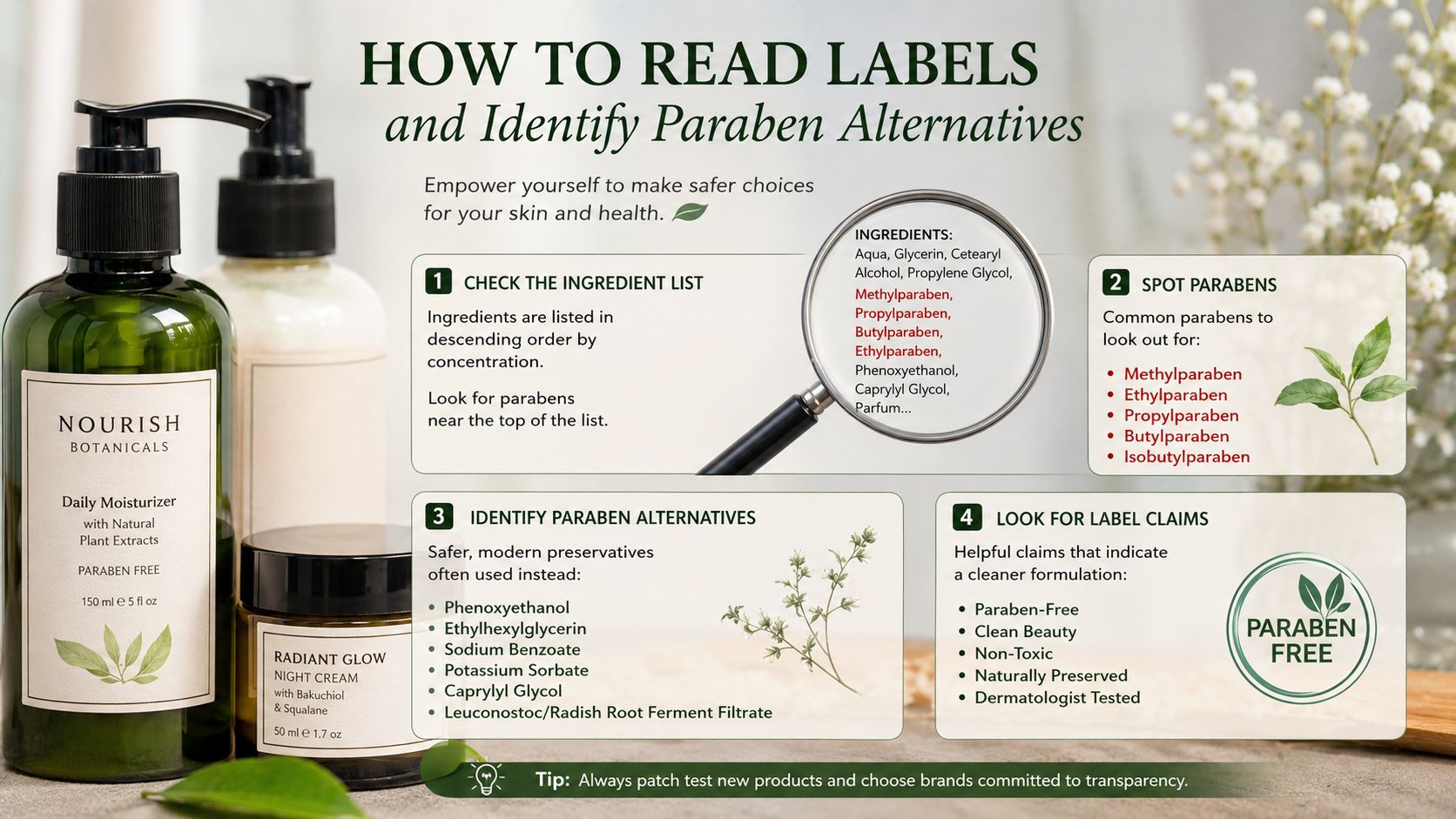
The easiest way to verify a paraben free moisturiser is to scan the ingredient list, not the front label. Healthline notes that brands may say “free from parabens” or “0% parabens,” but you should still check the back of the package instead of trusting the marketing wording alone in its article on paraben-free labels. That habit saves you from vague front-of-pack claims.
Start by looking for the common parabens by name: methylparaben, propylparaben, butylparaben, and ethylparaben. If you see them, the formula is not paraben free. If you do not see them, then the claim is more likely accurate, though some brands phrase it as “whenever possible,” which is not the same thing as a permanent product-wide promise.
A few alternative preservatives show up often in moisturisers:
- Phenoxyethanol helps protect water-based formulas from microbes.
- Sodium benzoate is common in formulas that need acidic conditions to work well.
- Potassium sorbate is another preservative used in combination systems.
These ingredients are not automatically better or worse than parabens. They just do a different job in the preservation system.
Best practice: if you have sensitive or allergy-prone skin, patch test every new moisturiser. Irritation can come from many ingredients besides parabens, so the label alone won't predict how your skin will respond.
For a broader ingredient-screening lens, Sphagnum Botanicals' clean ingredient list is a helpful reference point for understanding how brands frame “clean” choices. For a practical comparison with a well-known moisturiser formula, this Cerave PM ingredient breakdown can help you see how preservation and barrier-support ingredients sit together in a real product.
Best Paraben Free Moisturiser Dupes for Every Budget
The smartest dupe shopping starts with the formula, not the buzzword. A strong paraben free moisturiser dupe should still feel comfortable, support the barrier, and suit your skin type without making the preservative system the star of the show. For post-procedure routines, such as when you're thinking about barrier recovery after exfoliation, caring for skin post-chemical peel is a useful reminder that gentle, well-built moisturisers matter more than trend language.
| Dupe Product | Price Tier | Best For |
|---|---|---|
| Cetaphil Moisturizing Lotion | Under $25 | Sensitive, dry, barrier-focused skin |
| Skin + Me Soothe + Smooth Light Moisturiser | Under $25 | Combination, oily, and skin that wants lighter hydration |
| Acure Seriously Soothing 24hr Moisture Lotion | Under $20 | Budget shoppers, very dry skin, body use |
| Nécessaire The Body Lotion | Under $50 | Fragrance-free routines, sensitive skin |
| OSEA Undaria Algae Body Butter | Under $50 | Rich hydration, dry skin, body care fans |
Cetaphil Moisturizing Lotion is the most straightforward pick if you want a clinically positioned daily lotion that doesn't rely on a fancy texture story. It's stated to hydrate for 48 hours and defend against 5 signs of skin sensitivity, which makes it a strong benchmark for readers who care about barrier support first. If your skin gets tight, rough, or irritated easily, this is the kind of formula that earns its place by being reliable.
Skin + Me Soothe + Smooth Light Moisturiser is the lighter option. It combines ceramides and hyaluronic acid while avoiding parabens, oils, silicones, and sulfates, so it suits people who want a cleaner-feeling finish without losing the barrier-support angle. If heavy creams clog your routine, this one makes more sense than a richer, occlusive formula.
Acure Seriously Soothing 24hr Moisture Lotion fits the budget slot. It's a practical choice when you want something simple for body or very dry skin without spending much. The formula is a good example of why budget and paraben free can work together when the brand keeps the ingredient list focused.
Nécessaire The Body Lotion is the fragrance-free pick for people who want a polished texture and a sensitive-skin-friendly finish. OSEA Undaria Algae Body Butter is richer and better for readers who prefer a creamier, more decadent body moisturiser. Both are widely known in the U.S. market and give you a useful comparison point if you're deciding whether you need a lotion or a butter.
Frequently Asked Questions About Paraben Free Moisturisers
Are paraben free moisturisers better for eczema or rosacea?
Sometimes, but not automatically. A paraben free formula can suit reactive skin if it also avoids fragrance and other common triggers, but eczema and rosacea often respond to the full formula, not one ingredient class. Patch testing still matters.
How long do paraben free moisturisers last once opened?
That depends on the full preservation system, packaging, and how often you dip your fingers into the jar or pump. The label alone won't tell you everything, so look for the period-after-opening symbol and avoid products that smell, separate, or change texture.
Does paraben free mean fragrance free?
No. A moisturiser can be paraben free and still contain fragrance, essential oils, or aromatic extracts. If your skin is sensitive, check for those separately.
How do I switch from a paraben-containing moisturiser without upsetting my skin barrier?
Swap one product at a time and keep the rest of your routine steady. Use the new moisturiser on a small area first, then move to full-face use if your skin stays calm for several days. If you already tolerate your current routine, there's no need to overhaul everything at once.
Final Thoughts on Finding Your Perfect Paraben Free Moisturiser
The best dupe in this list is Cetaphil Moisturizing Lotion because it balances barrier support, long-wear hydration, and sensitive-skin credibility without turning the ingredient list into a marketing stunt. That said, the right paraben free moisturiser still depends on your skin type, texture preference, and how your skin handles alternative preservatives.
Read the ingredient list, not just the front label. If you want lighter hydration, reach for barrier helpers like ceramides and humectants. If your skin is reactive, patch test first and treat “paraben free” as one clue, not the whole answer.
If you like shopping smarter and saving money on skincare, browse more ingredient-aware dupes and budget beauty edits at Finding Favourites. You'll find practical comparisons, affordable swaps, and new picks that make it easier to choose products your skin can live with.