
Affordable Skincare for Sensitive Skin: Your 2026 Guide
You bought the “gentle” cleanser, then the calming serum, then the moisturizer everyone swore was perfect for reactive skin. A week later, your cheeks sting, your skin looks blotchy, and your bathroom shelf is full of half-used products you don't trust. Sensitive skin can get expensive fast, especially when marketing keeps pushing longer routines and prettier packaging instead of what works.
Affordable skincare for sensitive skin doesn't need to be complicated, and it definitely doesn't need to feel like a gamble. The smartest routine is usually the simplest one: protect your skin barrier, avoid common triggers, and learn how to spot products that perform like pricier favorites without the luxury markup.
This post may contain affiliate links, which means I may receive a commission if you purchase through my links, at no extra cost to you. Please read the disclosure policy for more information.
Your Guide to Calm Skin on a Budget
The most frustrating part of sensitive skin isn't just the irritation. It's the waste. You pay for products labeled “soothing,” “clean,” or “dermatologist loved,” and then your skin reacts anyway.
That cycle makes people think they need a more expensive answer. Usually, they don't. They need a tighter routine and a better filter for ingredients.
Practical rule: If your skin is reactive, spend less on variety and more on consistency.
Budget skincare works best when you stop chasing novelty. A basic cleanser, a barrier-supporting moisturizer, and a sunscreen you'll consistently wear every day can do far more than a shelf full of trendy add-ons.
A lot of people also confuse “cheap” with “low quality.” That's not how sensitive skin care works. Some of the most reliable options are simple drugstore staples with short ingredient lists, no added fragrance, and textures that don't leave skin feeling stripped or overloaded.
What doesn't work as well is the constant product hopping. If every breakout, flush, or dry patch sends you into another shopping spiral, your skin never gets a calm baseline. That's when routines start feeling expensive even if every product was affordable on its own.
This guide takes a minimalist, evidence-based route. The goal isn't to hand you the longest shopping list. It's to help you build a routine that makes sense, avoid common irritation traps, and identify smart dupes that are worth your money.
Understanding Your Sensitive Skin
Sensitive skin often behaves less like a fixed skin type and more like a warning signal. Skin starts reacting because its protective barrier isn't doing its job well enough.
Think of your skin barrier like a brick wall. The skin cells are the bricks. The lipids holding everything together are the mortar. When that mortar gets worn down, water escapes more easily and irritants get in faster. That's when cleansing feels tight, moisturizers sting, and even products labeled gentle can suddenly feel like too much.

What sensitive skin usually looks like
It doesn't always show up the same way. Some people get redness. Others feel burning, itching, or tightness after washing. Some notice that their skin looks fine one day and flares the next when they try a new product, over-exfoliate, or combine too many actives.
Sensitive skin is also common, not unusual. Approximately 50% to 70% of the global population reports having some degree of sensitive skin, and the market for these products is projected to reach USD 57.91 billion by 2035 according to research on sensitive skin prevalence and market growth.
That scale matters because it reframes the problem. If your skin reacts easily, you're not failing skincare. You're dealing with a very common barrier issue.
Why barrier health matters more than hype
When the barrier is compromised, skin becomes less tolerant. Products that might feel fine on resilient skin can start to burn, itch, or trigger redness. This is why stripped-down routines usually outperform overloaded ones for reactive skin.
A useful next read if you're curious about how inflammation, skin reactivity, and the microbiome can overlap is understanding psoriasis and gut health. It gives broader context for why chronic skin conditions often need a gentler, barrier-first approach.
If you're comparing classic gentle cleansers, this breakdown of Cetaphil vs. Vanicream is a practical place to start.
Sensitive skin usually improves when you remove friction, not when you add more treatment steps.
The big shift is this: stop asking which product promises the most. Start asking which product gives your skin the least reason to panic.
Key Ingredients for Sensitive Skin
Shopping for skincare with reactive skin gets easier when you stop reading the front label first. “Clean,” “natural,” and “gentle” sound reassuring, but the ingredient list tells you much more.
The most useful approach is simple. Know which ingredients tend to support the barrier, and know which ones commonly create problems.
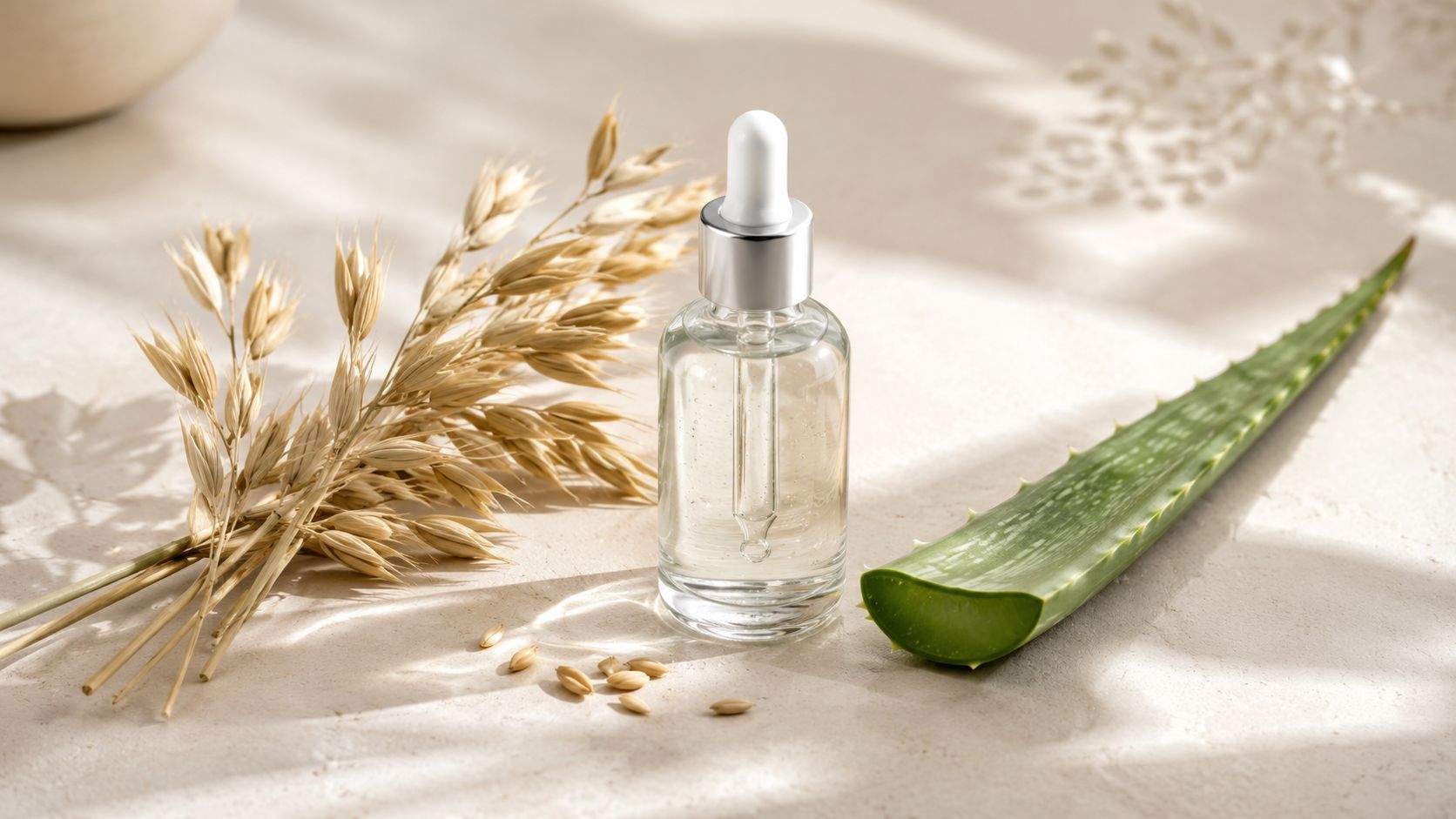
Ingredients to favor
These are the categories I look for first when building affordable skincare for sensitive skin.
- Ceramides help reinforce the barrier. They're especially useful when skin feels tight, flaky, or irritated after cleansing.
- Hyaluronic acid helps attract water to the skin. In a good formula, it adds hydration without heaviness.
- Niacinamide can be helpful for balancing, brightening, and supporting barrier function, though very reactive skin may still prefer lower-key formulas.
- Colloidal oatmeal is one of the best soothing ingredients for itchy, uncomfortable, stressed-out skin.
- Aloe vera can feel calming in straightforward formulas without a lot of added fragrance or botanical extras.
- Glycerin is a quiet workhorse. It doesn't get the same hype as trend ingredients, but it's excellent for hydration.
- Petrolatum and richer occlusives can be useful at night when the barrier is struggling and needs help holding onto moisture.
If ingredient categories still feel confusing, this explainer on understanding skincare ingredients is helpful for learning the difference between humectants, emollients, and occlusives.
Ingredients to approach with caution
Sensitive skin doesn't need fear-based shopping. It does need a little skepticism.
- Synthetic fragrance is a frequent trigger and often adds no skin benefit.
- Essential oils can be a problem even when brands position them as calming.
- Drying alcohols may leave skin feeling squeaky clean at first, then tight and angry later.
- Harsh sulfates can over-strip already fragile skin.
- Aggressive exfoliating blends can push a shaky barrier over the edge, especially when used too often.
- Botanical-heavy formulas aren't automatically safer just because they sound natural.
That last point matters. Many guides recommend “fragrance-free” but miss the difference between natural and synthetic fragrance, which leads to unintended irritation for up to 30% of sensitive skin users. A 2025 study also found that 12% of eczema patients reported flare-ups from botanical extracts like lavender oil in products marketed as gentle, as noted in this discussion of affordable sensitive skin care and irritation triggers.
The natural myth that costs people money
A lot of readers get tripped up here. They avoid obvious perfume but buy products with lavender oil, citrus oils, tea tree oil, or “botanical essence” because the packaging signals calm and purity.
That's often where routines start going sideways.
“Natural” doesn't mean low-risk. For sensitive skin, it can mean the opposite.
This doesn't mean every plant-derived ingredient is bad. It means you shouldn't assume a botanical formula is automatically the safer pick. For reactive skin, boring is often better. Fragrance-free cream with ceramides beats a beautifully branded essential-oil blend almost every time.
How to Build a Simple 3-Step Routine
The routine that usually works best for sensitive skin is not the most elaborate one. It's the one you can repeat every day without setting off irritation.
Simple 3-step routines matter. Recent dermatological data shows that cleanse, moisturize, protect routines reduce irritation by 40% compared to routines with 5 or more steps, and over 60% of patients with sensitive skin had fewer reactions when limiting products to those three core steps according to the American Academy of Dermatology guidance on skin care on a budget.
Step one: cleanse gently
Your cleanser should remove sunscreen, sweat, and daily grime without making your face feel squeaky. For sensitive skin, that stripped feeling is usually a bad sign.
Look for:
- Non-foaming or low-foam textures that don't leave skin tight
- Fragrance-free formulas with short ingredient lists
- Cream, lotion, or soft gel cleansers instead of aggressive scrubby washes
Well-known affordable examples include Vanicream Gentle Facial Cleanser and The Ordinary Squalane Cleanser, both cited as accessible options in the sensitive skin market overview discussed earlier.
Use cleanser once daily if your skin runs very dry or reactive, and after sweating when needed. In the morning, some people do better with a water rinse only.
Step two: moisturize like you mean it
Moisturizer is not the boring step. For sensitive skin, it's often the step that determines whether the rest of your routine feels stable.
Look for formulas centered on barrier support, not perfume or flashy claims. Creams and lotions with ceramides, humectants, oatmeal, or simple occlusives tend to be the safest bets. Aveeno Daily Moisturizing Face Lotion is one of the drugstore examples often mentioned for this category.
A practical rule is to apply moisturizer onto slightly damp skin. It helps trap water in the skin instead of just coating the surface.
Best habit to keep: When your skin is flaring, add fewer products and apply moisturizer more consistently.
If you want a broader blueprint for product order and routine editing, this guide on how to build a skincare routine is useful.
Step three: protect every morning
Sunscreen is where many sensitive skin routines fall apart. The formula may be effective, but if it pills, stings, smells strong, or feels greasy, people stop using it.
For reactive skin, prioritize:
- Broad-spectrum protection
- A texture you'll tolerate daily
- Minimal fragrance
- Mineral or gentle-feeling formulas if chemical filters tend to sting your eyes or skin
This walkthrough gives a helpful visual overview of keeping a routine simple and consistent:
A low-stress way to introduce anything new
Don't overhaul everything at once. Add one product, wait, and watch. If your skin starts burning, itching, flushing, or feeling rougher, stop there.
A patch test is essential for sensitive skin:
- Apply a small amount behind the ear or along the jaw.
- Repeat for several days before using it all over.
- Pause other new products so you can tell what caused a reaction.
- Start every active slowly even if the product says it's gentle.
That pace saves money as much as it saves skin.
Smart Dupes for Luxury Sensitive Skincare
A good skincare dupe isn't just a cheaper product in the same category. It should come close in feel and results. That's the standard that matters, especially for sensitive skin, where texture, finish, and tolerance can make or break a routine. As this guide to skincare dupes that actually work notes, a strong dupe has to match both sensory attributes and efficacy.
Luxury Skincare vs. Affordable Dupes Comparison
| Luxury Product | Affordable Dupe | Why It's a Match |
|---|---|---|
| Tatcha The Rice Wash | Vanicream Gentle Facial Cleanser | Both aim for a soft, non-stripping cleanse that leaves skin comfortable rather than tight |
| Drunk Elephant Beste No. 9 Jelly Cleanser | The Ordinary Squalane Cleanser | Both appeal to shoppers who want a simple cleanser without a heavy fragrance profile |
| First Aid Beauty Ultra Repair Cream | Aveeno Daily Moisturizing Face Lotion | Both focus on soothing dry, reactive skin with a comfort-first texture |
| Tower 28 SOS Daily Rescue Facial Spray | Hypochlorous acid sprays from budget retailers | Both target the same calming, minimal-ingredient spray category |
The dupes worth knowing
Tatcha The Rice Wash vs. Vanicream Gentle Facial Cleanser
This is the classic luxury-to-practical swap for sensitive skin. If your main goal is a cleanser that doesn't leave skin stripped, Vanicream is often the smarter buy. It skips the prestige presentation and focuses on tolerance.Drunk Elephant Beste No. 9 Jelly Cleanser vs. The Ordinary Squalane Cleanser
These aren't identical in texture, but they serve a similar purpose for shoppers who want a cleanser that feels simple and direct. The Ordinary version is especially appealing if your skin dislikes that over-cleansed finish.First Aid Beauty Ultra Repair Cream vs. Aveeno Daily Moisturizing Face Lotion
This is a good example of function beating branding. If you need daily comfort and barrier support, Aveeno gives many people that calm-skin effect without pushing the budget up.Tower 28 SOS Daily Rescue Facial Spray vs. budget hypochlorous sprays
The match here is less about luxury texture and more about ingredient simplicity. If you like the idea of a calming facial spray, compare the ingredient list closely and avoid paying only for packaging. For more options in this category, see this roundup of a Tower 28 spray dupe.
A dupe is worth it when your skin can't tell the difference in comfort, and your wallet definitely can.
Frequently Asked Questions
How do I know if my skin is purging or reacting badly?
Purging usually shows up when you start an active that speeds up skin turnover, and it tends to happen in areas where you already break out. Irritation looks different. Skin may sting, burn, itch, turn red, or feel hot and tight. If the product makes your face feel uncomfortable right away, treat that as a warning sign.
Can sensitive skin use retinoids or vitamin C?
Sometimes, yes. The issue is usually pace and formula, not the category itself. Start with one active, use it sparingly, and don't combine it with several other new products. If your skin is already inflamed, focus on your cleanser, moisturizer, and sunscreen first before trying to add a treatment step.
What does “hypoallergenic” really mean?
It can be a helpful clue, but it's not a guarantee. A label can still sit on a formula that doesn't suit your skin. Ingredient list, texture, and your own response matter more than one marketing word on the front of the bottle.
What's the easiest patch test method?
Use a small amount of the new product on a discreet area like behind the ear or along the jawline. Repeat that for several days before applying it everywhere. Don't start multiple new products during that window. If you react, you want the answer to be obvious.
Do I need expensive products to get a good routine?
No. Some of the best-known gentle staples are sold at drugstore prices. Vanicream Gentle Facial Cleanser and Aveeno Daily Moisturizing Face Lotion are both cited as dermatologist-favorite sensitive skin products available well under typical prestige pricing in this sensitive skin market overview.
Your Path to Calm and Happy Skin
Calm skin usually comes from restraint. Not from a ten-step routine, not from chasing every ingredient trend, and not from assuming the most expensive product must be the safest one.
The strongest affordable skincare for sensitive skin routine is usually the least dramatic one. Cleanse without stripping. Moisturize with purpose. Protect every morning. Then give your skin enough consistency to show you what's helping and what isn't.
If you remember only a few things, make them these:
- Protect the barrier first when your skin is reactive
- Treat “natural” claims carefully because essential oils and botanicals can still irritate
- Patch test every new product
- Choose dupes based on feel and function, not branding alone
- Keep your routine short enough to repeat
For most readers, the best dupe in this guide is Vanicream Gentle Facial Cleanser. It captures what sensitive skin usually needs most: a no-drama formula, wide availability in the US, and a price that doesn't make basic skincare feel like a luxury. Build around that kind of product and your routine becomes easier to trust, easier to maintain, and much easier to afford.
If you like practical beauty advice that helps you spend less without settling, explore Finding Favourites for researched dupes, budget-friendly swaps, and straightforward comparisons that make shopping a lot easier.