
Drugstore Skincare Dupes Ultimate Guide to Luxe for Less
You're standing in the skincare aisle with a prestige product open on your phone, wondering whether that elegant serum or rich moisturizer is worth the price. The drugstore shelf offers familiar ingredients, similar claims, and packaging that looks remarkably close. The difficult part isn't finding a cheaper product. It's deciding whether you're getting a functional alternative or only a convincing lookalike.
This guide to drugstore skincare dupes focuses on ingredient-level matching, formula behavior, skin-type fit, real-world wear, and retailer safety. You'll find practical comparisons for cleansers, moisturizers, serums, exfoliants, and sunscreen, along with clear guidance on when a lower-cost product makes sense and when the premium formula still earns its place.
Introduction
A tight budget doesn't mean you need to abandon an effective routine. It means each product has to justify its place. A gentle cleanser, barrier-supporting moisturizer, or daily sunscreen often depends on a relatively clear set of functional ingredients, making those categories easier for mass brands to reproduce. A sensitive vitamin C or retinoid formula can be much harder to match because stability, delivery, and irritation control matter as much as the headline active.
The scale of the market explains why these alternatives are so widely available. McKinsey reported that global beauty retail sales reached $446 billion in 2023, while drugstore and pharmacy beauty sales grew 9% that year, according to market distribution data summarized by Grand View Research. That growth gives mass brands room to develop affordable versions of familiar cleansers, moisturizers, sunscreens, and serums.
This post may contain affiliate links, which means I may receive a commission if you purchase through my links, at no extra cost to you. Please read the disclosure policy for more information.
Understanding what makes a skincare dupe
A skincare dupe needs more than a similar bottle or a shared ingredient name. If two products both contain niacinamide, for example, that tells you very little about whether they'll feel or perform alike. The formulas may use different concentrations, different molecular forms, different solvents, or entirely different delivery systems.
Clinical experts cited in this explanation of what counts as a skincare dupe note that ingredient lists don't disclose everything that controls performance. Concentration, molecular weight, pH, emulsion structure, vehicle, and manufacturing effects can all change how a formula behaves on skin.
Functional matches versus visual lookalikes
A useful comparison starts with four questions:
- Does the product contain the same key active? Look for the actual INCI name, not just front-label language such as “brightening” or “renewing.”
- Is the concentration disclosed or plausibly comparable? A shared active at an unknown or very different level may produce a different result.
- Does the base support similar delivery? A watery serum, silicone gel, oil-in-water lotion, and rich cream won't move ingredients through skin in the same way.
- Will you use both products under similar conditions? Leave-on and rinse-off products cannot be compared as though contact time were identical.
A product can still be a good affordable alternative without being chemically identical. The honest label might be functional substitute, category alternative, or similar sensory option rather than exact dupe.
Why skincare categories behave differently
Drugstore skincare tends to match prestige most convincingly in gentle cleansing, ceramide moisturizers, hyaluronic acid hydration, and daily sunscreen. These categories use widely understood functional ingredients and don't always depend on a proprietary texture or highly delicate active system.
The comparison becomes less reliable with high-performance vitamin C, advanced retinoids, and finish-sensitive products. Stability, packaging, encapsulation, and irritation management can determine whether the product works consistently. A formula that looks similar on a shelf may not deliver the same experience after weeks of exposure to air, light, or repeated application.
Practical rule: Call a product a true dupe only when its ingredients, delivery system, use conditions, and real-world result line up. Otherwise, describe it as an alternative.
For readers who also compare complexion products, the same distinction appears in this guide to incredible makeup dupes. A similar shade or finish may be useful, but similarity doesn't automatically mean identical performance.
How to match formulations and active ingredients
A lower-priced product earns comparison through its formula, not its packaging or marketing promise. Begin with the ingredient lists for both products, then compare the opening ingredients and identify those responsible for the main function. Hydration may rely on glycerin, hyaluronic acid, or other humectants. Barrier support often combines ceramides, cholesterol, fatty acids, occlusives, and niacinamide. For exfoliation, check the acid, its form, and whether the product stays on the skin or is rinsed away.
A practical label-scanning method
Use this sequence to assess two candidates:
- Name the primary function. Decide whether the product mainly cleanses, hydrates, smooths, brightens, protects, or repairs.
- Find the lead actives. Match the actual INCI names instead of relying on marketing claims.
- Check the supporting system. Look for soothing, moisturizing, stabilizing, and barrier-supporting ingredients around the active.
- Compare the vehicle. A cream and a gel may contain similar actives but spread, absorb, and layer differently.
- Consider packaging. Airless pumps, opaque tubes, jars, and droppers expose formulas to different amounts of air, light, and handling.
- Test the routine context. A sunscreen that pills under makeup may be a poor substitute even when its UV filters appear comparable.
The vehicle affects more than the first impression. It can change spreadability, residence time, irritation, and how evenly an active sits across the skin. Two products with similar INCI lists may therefore produce different results in regular use. For budget-conscious shoppers, ingredient matching and real-world wear testing work together, rather than treating a label match as proof of interchangeability.
Why barrier formulas are easier to match
Barrier-care products often provide clearer dupe opportunities. Ceramides and niacinamide have established roles in supporting the skin barrier, reducing water loss, and improving the feel of dry or irritated skin when the surrounding formula is well designed.
Research on a ceramide-and-niacinamide moisturizer used alongside acne treatment reported improvements in acne lesions and barrier-related measures after 8 weeks, without serious side effects. The practical takeaway is narrower than claiming identical performance from every product with these ingredients. An affordable moisturizer can be a sensible substitute when it matches the functional actives and supports barrier repair.
For application guidance when pairing a hydrating serum with moisturizer, follow this guide to hyaluronic acid. Appropriate application and sealing still affect comfort, even when the formula match looks convincing.
Why vitamin C and retinoids are harder
Vitamin C and retinoids require closer scrutiny. L-ascorbic acid is sensitive to oxidation and needs a controlled environment, while retinoids may irritate skin when the delivery system and supporting ingredients are poorly balanced. A drugstore product can contain a related active yet differ in strength, stability, or tolerability.
Compare the active form, packaging, stability information, and irritation experience before calling a lower-cost product interchangeable. A premium formula is not automatically better, but delicate actives make dupe a narrower claim.
Testing criteria and wear assessments
A dupe should survive more than a quick hand swatch. Start with a small amount on clean skin and note how it spreads, whether it leaves a film, and how quickly the finish changes. A moisturizer that feels luxurious for the first minute but becomes sticky under sunscreen may not be a practical replacement for daily use.
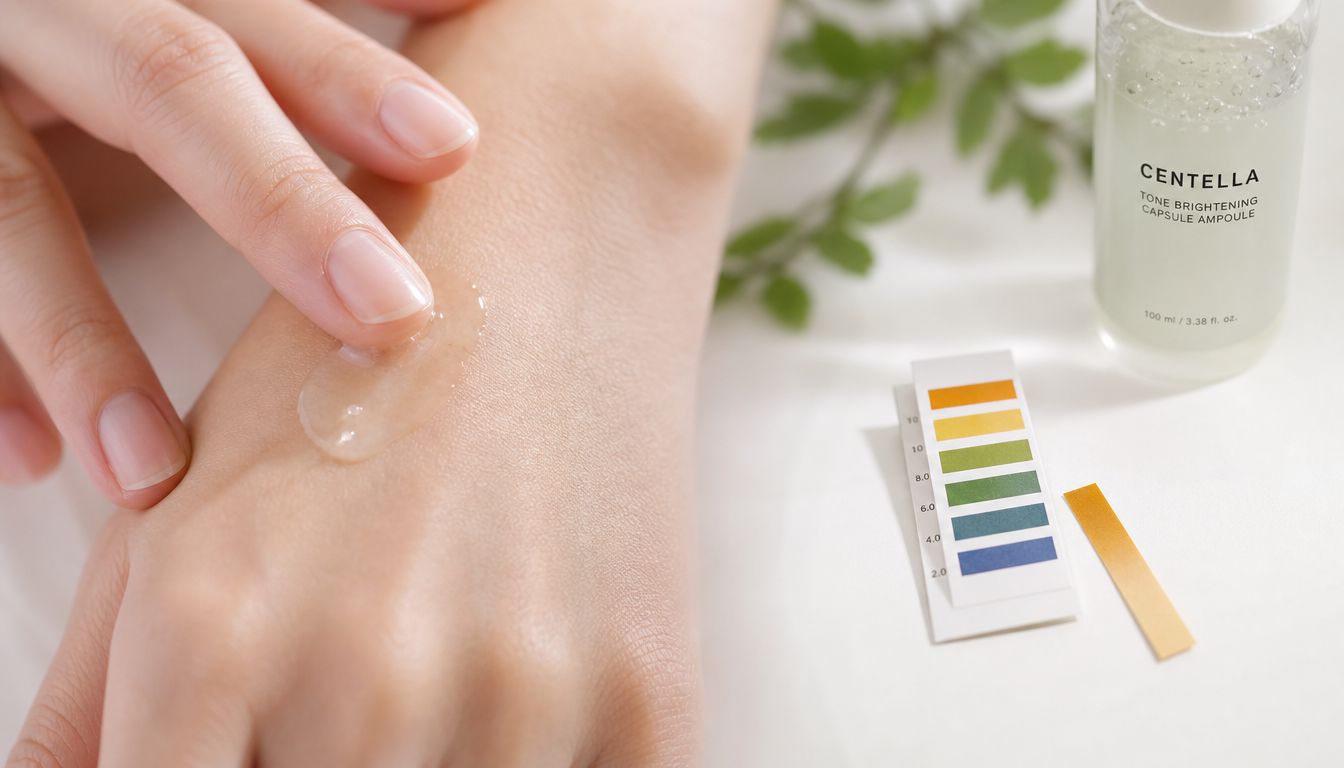
A simple in-use test
Assess the formula across several applications rather than judging it once:
- Texture: Is it watery, gel-like, lotion-based, or balm-like? Does that match the product you're replacing?
- Spread: Does a small amount cover the intended area evenly, or do you need significantly more?
- Absorption: Does the product settle, remain tacky, or leave a noticeable coating?
- Layering: Apply your usual moisturizer, sunscreen, or makeup over it. Watch for pilling, rolling, or patchiness.
- Comfort: Check for stinging, tightness, itching, or flushing, especially with acids, vitamin C, and retinoids.
- End-of-day feel: Note dryness, excess shine, transfer, and whether the product still feels comfortable.
A pH strip can provide a rough screening signal for some water-based products, but it isn't a full stability or efficacy test. Home testing can't reveal the complete emulsion structure, preservation performance, or active concentration. Treat it as a way to spot obvious differences, not as laboratory validation.
Use the following demonstration as a visual reference for assessing application and basic testing considerations.
Safety belongs in the comparison
Buy from established US retailers, brand-direct stores, pharmacies, or clearly authorized sellers. Check the seal, batch information, ingredient list, expiration details where provided, and packaging consistency. Don't use a product if the scent, color, texture, or labeling seems markedly different from the normal version.
Counterfeit exposure is a particular concern on unverified marketplace and fast-ecommerce channels. A report cited by ShopBack's comparison of drugstore and prestige beauty says that over 80% of products tested from Temu failed EU safety standards, and recent reporting found that 96% of French shoppers who bought a beauty dupe didn't know such products could carry serious health risks. Those findings don't mean every low-cost product is unsafe. They do show why sourcing and labeling matter as much as price.
If you're comparing a retinoid, this review of Neutrogena Rapid Wrinkle Repair can help you think about active-focused evaluation rather than packaging similarity.
Category-by-category dupe recommendations
A useful dupe has to match more than a product's marketing category. Compare the active ingredients, delivery format, texture, finish, tolerance, and how consistently you can use it. The table below focuses on products broadly available in the US and still relevant to their categories. These are practical alternatives, not claims that every formula is identical.
| Category | Luxury product | Drugstore dupe |
|---|---|---|
| Barrier moisturizer | Dr. Jart+ Ceramidin Cream | CeraVe Moisturizing Cream |
| Hydrating serum | Dr. Barbara Sturm Hyaluronic Serum | Neutrogena Hydro Boost Serum |
| Vitamin C | SkinCeuticals C E Ferulic | La Roche-Posay Pure Vitamin C10 |
| Retinol | Sunday Riley A+ | RoC Retinol Correxion |
| Daily mineral SPF | EltaMD UV Clear | La Roche-Posay Anthelios Mineral |
| Chemical SPF | Supergoop! Unseen Sunscreen | Neutrogena Ultra Sheer |
| BHA exfoliant | Paula's Choice 2% BHA | CeraVe SA Cleanser |
| Glow complexion product | Charlotte Tilbury Flawless Filter | e.l.f. Halo Glow Liquid Filter |
Moisturizers and barrier care
Dr. Jart+ Ceramidin Cream to CeraVe Moisturizing Cream
Best for: dry, dehydrated, and barrier-stressed skin.
Why it works: Both belong to the ceramide-centered moisturizer category, although their textures and supporting ingredients differ. CeraVe is the more utilitarian choice, with a denser finish that suits dry skin and can feel heavy on an oily complexion.Trade-off: Dr. Jart+ provides a more polished sensory experience. CeraVe prioritizes straightforward barrier care and makes generous application easier. Choose CeraVe when function, coverage, and repeat use matter more than a refined finish.
Kiehl's Ultra Facial Cream to La Roche-Posay Toleriane Double Repair
Best for: normal, combination, and sensitive skin.
Why it works: La Roche-Posay focuses on moisturization and barrier support rather than a luxury texture. Its lighter feel can layer more comfortably beneath sunscreen, especially when your routine already includes several products.Trade-off: The drugstore option may feel less plush on application. That lighter finish can suit combination skin and reduce the risk of an overloaded morning routine.
Hydrating serums
Dr. Barbara Sturm Hyaluronic Serum to Neutrogena Hydro Boost Serum
Best for: dehydrated skin that prefers a light layer.
Why it works: Both center the routine around humectant hydration in a fluid serum format. Neutrogena gives shoppers a more accessible way to add a simple hydration step without paying for prestige positioning.Trade-off: The formulas may differ in slip, finish, and supporting ingredients, so the products should not be treated as interchangeable in every routine. Apply a hydrating serum to slightly damp skin, then follow with moisturizer, as explained earlier.
Vitamin C and retinoids
SkinCeuticals C E Ferulic to La Roche-Posay Pure Vitamin C10
Best for: shoppers seeking a vitamin C option at a lower price point.
Why it works: La Roche-Posay offers a recognizable alternative within the vitamin C category. Its performance should not be presented as an exact replacement for the premium formula because vitamin C results depend on the form used, stability, packaging, and your skin's tolerance.Trade-off: This is a category substitute, not the clearest example of a true dupe. If your skin reacts easily, or the premium product has worked reliably, changing formulas may create more irritation than savings.
Sunday Riley A+ to RoC Retinol Correxion
Best for: experienced retinol users who want an over-the-counter option.
Why it works: Both sit within the retinol treatment category, but their delivery systems and supporting ingredients may differ. Introduce the product gradually, avoid combining several irritating actives at first, and use sunscreen consistently.Trade-off: A prestige retinoid may offer a more controlled sensory experience or better irritation management. If you repeatedly stop drugstore retinol because of discomfort, a lower price does not automatically make it better value.
Sunscreen and exfoliation
EltaMD UV Clear to La Roche-Posay Anthelios Mineral
Best for: shoppers seeking daily mineral sun protection.
Why it works: Both are positioned for everyday facial use, but finish, cast, and makeup compatibility can vary significantly. Test the product on your own skin tone and beneath the base products you normally wear.Trade-off: A sunscreen that leaves a visible cast or pills will not function as a dependable daily choice for you, even when the ingredient category matches. Wear testing matters more than a similar label.
Supergoop! Unseen Sunscreen to Neutrogena Ultra Sheer
Best for: daily chemical sunscreen users who prioritize broad availability.
Why it works: Neutrogena provides a practical drugstore route to everyday UV protection. Supergoop! generally has the more elegant texture and makeup-friendly feel, while Neutrogena emphasizes accessible routine use.Trade-off: Finish is the main point of comparison. Test the amount required, how the sunscreen layers with moisturizer and makeup, and whether the texture makes regular reapplication realistic.
Paula's Choice 2% BHA to CeraVe SA Cleanser
Best for: oily or congested skin that tolerates salicylic acid.
Why it works: Both use salicylic acid as the central exfoliating concept, but one is leave-on and the other is a cleanser. Their contact time differs, making them non-equivalent despite belonging to the same broad category.Trade-off: Choose the cleanser for a gentler introduction or a rinse-off format. Choose a leave-on product only when your skin tolerates greater exposure and your routine benefits from longer contact.
Glow and finish
Charlotte Tilbury Flawless Filter to e.l.f. Halo Glow Liquid Filter
Best for: normal, dry, and combination skin seeking a luminous complexion effect.
Why it works: e.l.f. Halo Glow delivers the same broad category benefit, a blurred and radiant appearance that can be worn alone, under foundation, or on the high points of the face.Trade-off: Charlotte Tilbury feels richer and can appear more luminous, while e.l.f. often blends more easily beneath heavier makeup. For everyday wear, e.l.f. is the strongest drugstore complexion alternative in this guide, though its texture is not identical.
Price tiers and skin-type checklists
Price changes by retailer, promotion, size, and availability, so treat tiers as shopping guides rather than fixed promises. The most useful approach is to match the product to your skin first, then look for the lowest trustworthy source.
A practical price map
- Under $10: Look for basic cleansers, petrolatum-based repair products, simple lip care, and straightforward moisturizers. These are often the safest places to prioritize function over a luxury sensory experience.
- Under $25: This is the most useful range for drugstore serums, retinoids, daily sunscreens, and barrier creams. Neutrogena, CeraVe, RoC, e.l.f., and La Roche-Posay offer several relevant options.
- Under $50: Use this tier for more specialized drugstore-adjacent formulas, larger sizes, or products where packaging and delivery justify a moderate step up.
The pharmacy and drugstore channel itself is substantial. Grand View Research valued the global pharmacy and drugstore skincare market at $17.5 billion in 2025, with a projection of $23.4 billion by 2033, as reported in this market overview. That scale supports continued mass-market development, but it doesn't make every launch equally suitable for every skin type.
Skin-type filters
- Dry skin: Favor creams, ceramides, glycerin, and occlusive support. CeraVe Moisturizing Cream is a stronger starting point than a lightweight gel.
- Oily skin: Look for lighter gels, non-greasy lotions, and rinse-off exfoliating formats. Avoid assuming that “hydrating” means heavy.
- Sensitive skin: Keep the routine short and introduce one new active at a time. Fragrance, acids, retinoids, and vitamin C deserve extra caution.
- Mature skin: Prioritize sunscreen, moisturizer, and tolerable retinoid use over a long list of aggressive actives.
Five quick questions
- Does the product match your skin's main need? If not, a cheaper price won't make it useful.
- Is the key active clearly identified? If the label only makes broad claims, treat the dupe cautiously.
- Will the texture work with your routine? Test layering before replacing a product you use under makeup.
- Is the seller trustworthy? Choose regulated retailers or brand-direct sources over unverified listings.
- Would you still buy it if the packaging looked plain? If the answer is no, you may be paying for appearance rather than performance.
FAQ
How can I verify that a drugstore dupe is authentic?
Buy from the brand, a pharmacy, a major US retailer, or an authorized seller. Compare the packaging and INCI list with the brand's official product information, then check the seal, batch details, scent, color, and texture. Don't apply a product that arrives leaking, unsealed, unusually fragrant, or visibly different from the expected formula.
When should I stop chasing a dupe?
Skip the search when the product relies on a delicate active or specialized delivery system and you already know your skin responds well to the original. High-performance vitamin C and retinoids can differ substantially in stability and irritation control, even when both products use familiar active names.
You should also avoid switching based on price alone if you're managing rosacea, eczema, severe acne, or another diagnosed skin condition. A dermatologist or pharmacist can help you choose a formulation that fits the condition rather than selecting the closest-looking bottle.
Which categories duplicate most reliably?
Gentle cleansers, ceramide moisturizers, hyaluronic acid products, and daily sunscreens usually offer the clearest alternatives. The strongest choices still depend on texture, packaging, application, and whether the product suits your routine.
Where should I shop?
Use brand-direct stores, pharmacies, Target, Walmart, CVS, Walgreens, Ulta, or other established retailers with clear return and sourcing policies. Marketplace listings can be legitimate, but seller identity and product history deserve careful checking. A low price isn't a bargain if you can't verify what's inside the package.
Conclusion
The best overall drugstore skincare dupe in this guide is e.l.f. Halo Glow Liquid Filter as an alternative to Charlotte Tilbury Flawless Filter. It matches the luxury product's core complexion purpose, offers flexible application, and makes a convincing everyday substitute for many users, even though its texture and richness aren't identical.
For skincare itself, the most dependable savings usually come from barrier moisturizers, gentle cleansers, hydration serums, and daily sunscreen. CeraVe, La Roche-Posay, Neutrogena, RoC, and e.l.f. offer practical options, but the right choice depends on your skin type and how the formula behaves in your routine. Compare the active, concentration when disclosed, vehicle, packaging, finish, and seller before calling anything a true dupe.
Finding Favourites brings together researched and hands-on-tested beauty alternatives, including drugstore skincare roundups, barrier-repair comparisons, and luxury-to-budget swaps. Visit Finding Favourites to compare affordable options by product category, skin concern, and price tier before your next purchase.