
Affordable Niche Perfumes That Smell Like a Splurge
You're standing under the department store's unforgiving white lights, holding a tester strip beneath your nose while the price of a 50 ml bottle climbs past what you wanted to spend on groceries. The scent smells beautiful, but the math feels reckless. Then you remember that “niche” has started to mean everything from a tiny indie extrait to a widely available dupe, and the label no longer tells you whether you're getting genuine value.
Affordable niche perfumes make more sense when you stop judging them by bottle price alone. Concentration, bottle size, frequency of wear, and cost per application tell you far more than a glossy box or a prestigious name. This guide takes the practical route, including indie bottles, decants, discovery sets, and widely available dupes that can deliver a distinctive fragrance experience without turning every purchase into a financial event.
This post may contain affiliate links, which means I may receive a commission if you purchase through my links, at no extra cost to you. Please read the disclosure policy for more information.
The Affordable Niche Perfume Hunt
A few years ago, niche fragrance often felt like a special-occasion purchase. You admired the bottle in a boutique, tried to decode the note list, and decided that a luxury extrait belonged in someone else's wardrobe. That assumption is outdated. Indie perfumers, smaller-batch houses, Middle Eastern brands, and decant services have created a much wider path into unusual fragrance.
The market has expanded well beyond a tiny luxury corner. One estimate places the global niche perfume market at USD 3.74 billion in 2026, with a projection of USD 7.55 billion by 2035, while another estimates the luxury niche segment at USD 3.15 billion in 2026 and projects USD 9.3 billion by 2035. The definitions differ, but both market estimates point to a large, growing category rather than a specialist hobby.
That expansion helps shoppers. More brands mean more bottle sizes, more online discovery, and more competition between houses that once had little reason to court budget-conscious buyers. The same market source reports that 54% of consumers prefer independent brands and 51% rely on online fragrance platforms globally, which makes sampling and comparison easier than the old boutique-only model.
My rule: A perfume is affordable when its cost per enjoyable wear makes sense, not when its sticker price looks low.
Consider a 30 ml extrait worn twice a week. It may outlast a 100 ml eau de toilette that needs repeated spraying throughout the day. The larger bottle can look cheaper per milliliter, yet the concentrated fragrance may deliver better value because you need less product and enjoy the scent for longer.
That's the mindset behind this affordable perfume guide for women. Don't build a shelf around prestige. Build it around scents you'll wear, formats you can test, and formulas that perform well on your skin.
What Counts as Niche and Why It Still Costs Less Than You Think
Niche fragrance usually refers to a house with a focused creative identity, limited or selective distribution, and less dependence on the broad designer market. A designer fragrance is typically created for a large fashion or beauty brand and distributed widely. An indie perfume house may produce smaller batches, work from a distinct artistic brief, and sell directly to customers. A clone or dupe house focuses more explicitly on interpreting an existing scent profile.
Those categories overlap. A Middle Eastern value house can have broad online distribution while still offering scent profiles that feel more adventurous than mainstream designer releases. An indie brand can produce a highly original composition without charging luxury-house prices. The useful question isn't “Does this brand qualify as niche?” It's “What am I paying for, and how much will I use?”
Concentration is the first label to inspect. Industry guidance generally places eau de toilette around 5 to 15% fragrance oil, eau de parfum around 10 to 20% or 15 to 20%, and parfum or extrait around 20 to 30% or higher. Higher concentration often supports longer wear, but it doesn't guarantee stronger projection or a better scent match. The perfume concentration guide also places typical wear around 3 to 6 hours for EDT, 4 to 8 hours for EDP, and 8 to 12 or more hours for parfum, depending on the formula and wearer.
Fragrance Concentration Tiers at a Glance
| Format | Typical Oil % | Expected Longevity | Budget Implication |
|---|---|---|---|
| Eau de cologne | Lower, often lighter | Brief and fresh | Useful for liberal refreshing, not always best value |
| Eau de toilette | 5 to 15% | About 3 to 6 hours | Lower entry price, but may require reapplication |
| Eau de parfum | 10 to 20% or 15 to 20% | About 4 to 8 hours | Strong all-round value for regular wear |
| Extrait or parfum | 20 to 30% or higher | About 8 to 12 or more hours | Higher upfront cost can work well with light application |
| Attar or oil | Varies by formula | Often intimate and persistent | Small formats can be efficient, but projection differs |
An attar or perfume oil may sit close to the skin rather than filling a room. That's not a flaw if you want a discreet signature. It becomes poor value only when you buy it expecting the projection of an alcohol-based spray.
A $90 extrait worn sparingly can beat a $60 eau de toilette reapplied hourly. The label still needs scrutiny, though. Vintage, discontinued, and reformulated bottles can smell different from current releases, so learning to read format, batch information, and seller descriptions is a more useful money skill than memorizing prestige names. If you're still figuring out which notes suit you, this guide to finding your signature scent will help you spend with more direction.
Budget Tiers That Actually Make Sense
“Affordable” means something different to every fragrance buyer, so I prefer practical buying tiers rather than one arbitrary price ceiling. The following structure separates low-risk testing from full-bottle ownership and keeps cost per wear in view.
Tier one for testing before commitment
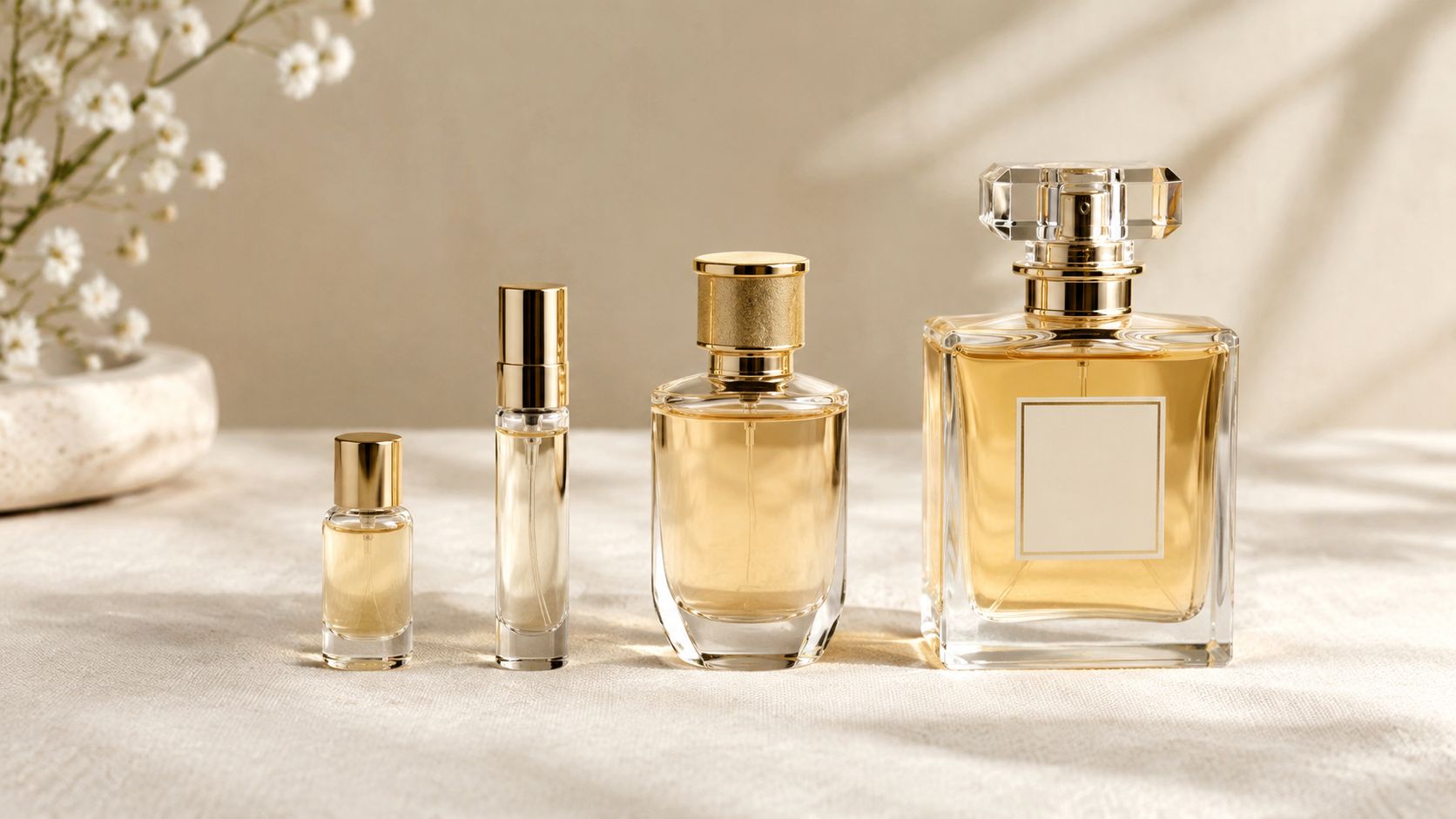
Discovery decants and travel sprays are the smartest first move for expensive or unfamiliar scents. A 1 to 5 ml sample generally sits around $3 to $15, depending on the fragrance and seller. This tier suits anyone tempted by a prestige bottle but unsure whether the opening, dry-down, or performance will work on their skin.
The mistake is treating samples as a collection. Buy a small group with a purpose, then track which ones you wear repeatedly. Five decants of scents you dislike cost more than one carefully chosen sample of a composition you want to understand.
Tier two for everyday indie value
Indie and small-batch houses often place a 50 ml bottle around $40 to $90. I see the strongest balance between originality, accessible ownership, and manageable risk. You're paying for a smaller operation and a focused scent concept without automatically paying for a large luxury retail network.
Expect variation. One indie perfume may last beautifully while another feels softer and more intimate. That inconsistency isn't automatically bad, but it makes sampling important.
Tier three for value-focused niche houses
The $90 to $150 range includes emerging European and Middle Eastern houses that often undercut legacy niche brands while offering richer compositions than basic mass-market releases. This tier makes sense once you know which scent families work on you and you want a full bottle with more character.
Don't confuse complexity with loudness. A syrupy amber can project dramatically while remaining simple. A quieter woody musk may unfold more gradually and feel more expensive because its texture changes over time.
Tier four for considered splurges
Bottles above $150 belong in the splurge category, but that doesn't make them irrational purchases. An extrait or specialty format can still offer good cost per wear if you apply lightly and reach for it often. It's a poor buy when the purchase is driven by scarcity, packaging, or the hope that price will fix an untested scent profile.
For a visual change of pace, this fragrance video offers another way to think about perfume presentation and discovery.
Buy tier one to learn your skin. Move into tier two for rotation. Explore tier three when you have a clear preference. Save tier four for bottles you've worn enough to miss.
Indie Brands, Decants, and Discovery Sets Compared
There are three realistic entry points into affordable niche perfumery, and each solves a different problem. Indie bottles give you ownership, decants reduce risk, and discovery sets teach you how to compare. Choosing the wrong route is how fragrance shoppers end up with a shelf full of expensive guesses.
The practical comparison
| Path | Typical Cost | Best For | Main Trade-off |
|---|---|---|---|
| Indie brands | Often under $80 for 30 ml | Original daily rotation | Longevity and batch consistency can vary |
| Decant services | A small fraction of a full bottle | Testing aspirational scents | No full-bottle manufacturer warranty |
| Discovery sets | Varies by house and set | Learning a scent family | Curated sets may include safer, less challenging options |
Indie brands work best when you value creativity over name recognition. A small house may produce an unusual green floral, smoky wood, or salty musk that doesn't resemble anything in a department store. You're accepting a little uncertainty in exchange for a direct relationship with the perfumer and a more distinctive wardrobe.
Decants are essential for expensive fragrances. A tiny spray vial lets you test how a scent behaves across workdays, evenings, heat, and cold without committing to a full bottle. It's particularly useful for dense oud, animalic musk, or unusual resinous compositions that can smell thrilling in a boutique and overwhelming at home.
Discovery sets are more structured. A set built around gourmand scents can show you whether you prefer dry vanilla, caramel sweetness, toasted facets, or milky woods. A fresh set can help separate citrus, aromatic, marine, and green profiles. The best sets teach you a preference. The weak ones fill a box with variations that all feel safe.
Buy indie for a daily wardrobe, decants for ambition, and discovery sets for education.
The same principle applies to product presentation. If you photograph or catalog your collection, a workflow such as MerchLoom beauty photography workflow can help you document bottles consistently without letting packaging dominate your buying decisions.
How to Test and Spot a Good Dupe
A dupe should earn its place on your skin, not on a comparison chart. Paper strips reveal the opening, but they don't show how your body heat, skin chemistry, or natural oils reshape the heart and base.
Start with one spray on a clean inner wrist or forearm. Wait 30 seconds for the sharpest opening to settle, then make notes at the first 15 minutes, the 2-hour mark, and the 6-hour mark. The perfume dupe guide is useful for finding comparison ideas, but your own wear test should decide whether a bottle works.
A simple skin-test routine
- Apply cleanly. Don't put moisturizer underneath, because an occlusive product can alter the way the fragrance develops.
- Record the opening. Note whether the first impression is bright, peppery, creamy, smoky, or harsh.
- Check the heart. At the 15-minute point, ask whether the scent has developed or merely become quieter.
- Evaluate the dry-down. At two and six hours, look for the base structure, not just whether the perfume remains detectable.
- Compare side by side. Test the original and dupe on different arms when possible, rather than relying on memory across different days.
A strong dupe often shares most of the original's structure while opening brighter or slightly more synthetic. The heart and base should remain recognizably related, even if the texture is less nuanced. Don't demand identical development. Demand a convincing relationship between the two fragrances.
Red flags are easy to spot after you know what to watch for. A chemical opening that never softens is a problem. So is a perfume that loses every trace of its base after four hours, or one whose sweetness turns plasticky as it dries. Projection and longevity also need separate judgments. A scent can last for hours without leaving a large trail, and that may be exactly what you want.
Smart Shopping, Storage, and Safety Habits
The safest place to buy a new release is the official brand site. Authorized retailers are useful when you want samples or established customer service. Decant communities can make costly fragrances accessible, while resale platforms should offer clear authentication policies before you trust the listing.
Sale timing can help, especially for indie houses that discount around late January, midsummer, and Black Friday. Mainstream discounters may clear older niche stock on a recurring basis, but older inventory deserves closer inspection. Packaging, batch information, seller history, and return terms matter more than a dramatic discount.
Patch-test every new perfume on the inner elbow 24 hours before a full wear, especially when trying a concentrated extrait or oil. Stop if you develop irritation, burning, swelling, or a persistent rash, and seek medical advice for a serious reaction. A lower price never makes a skin reaction acceptable.
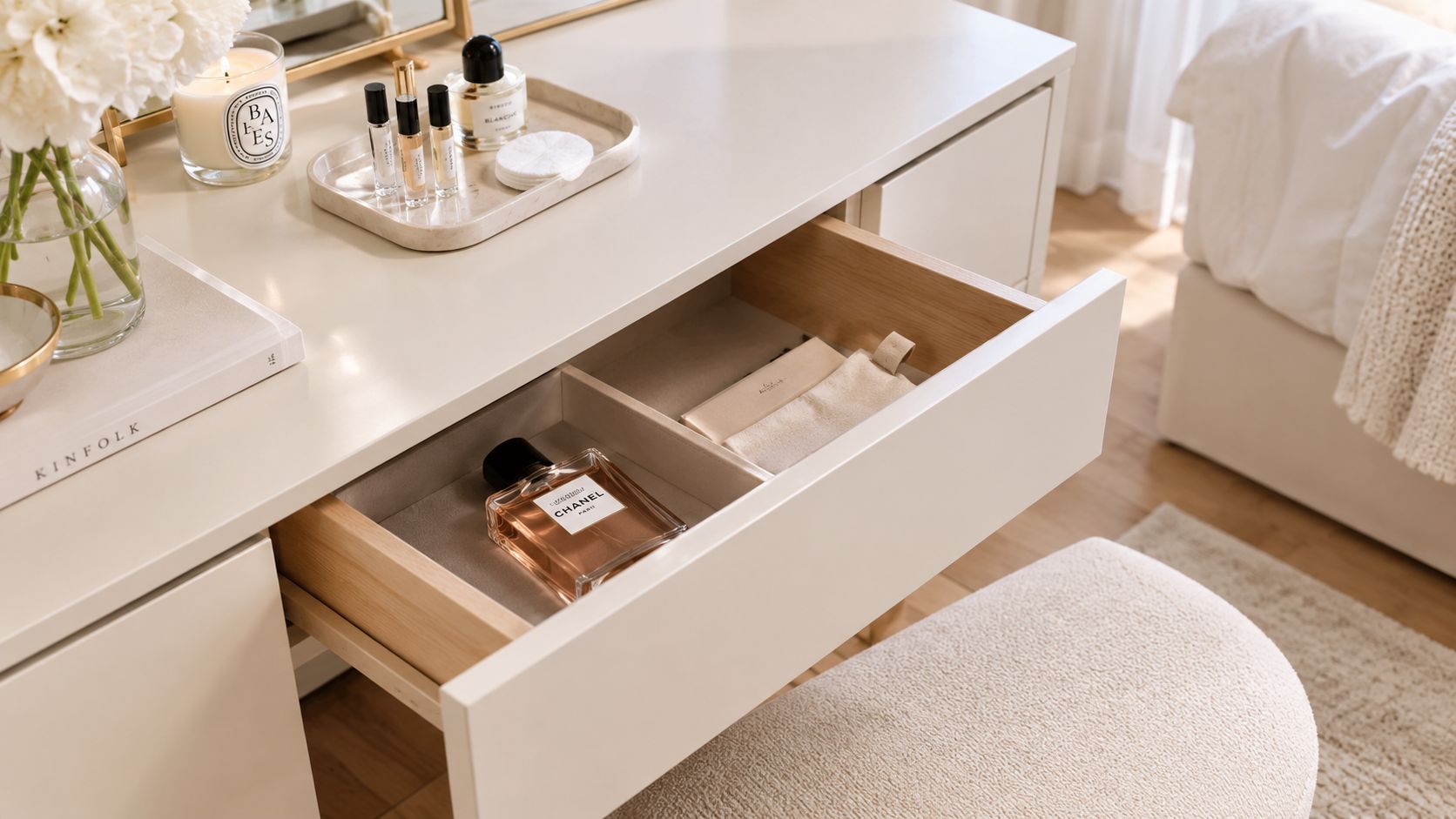
Store bottles upright in a closed drawer or box, away from bathroom humidity and direct sunlight. Keep the cap tight after each use. Refrigeration usually isn't necessary, except perhaps for fresh citrus-heavy fragrances in a very hot climate.
Storage rule: Cool, dark, dry, and tightly capped beats decorative bathroom shelving every time.
Watch for dramatic color changes or an off smell. A bottle that smells wrong within three years of opening deserves replacement rather than optimistic layering. Heat, air, light, and repeated exposure can all shorten the life of a fragrance.
Common Questions and the Best Affordable Niche Pick
How much fragrance should I wear?
Start with one spray on skin and add only when you understand the formula. Extraits and dense ambers often need less than airy citrus or a soft eau de toilette. More sprays don't make an unsuitable fragrance more wearable, and overspraying a light concentration can erase the cost advantage.
Do affordable niche perfumes cause more headaches?
Price doesn't determine headache risk. Specific notes, concentration, projection, personal sensitivity, and application amount matter more. Test on skin in a calm setting, avoid spraying near your face, and stop wearing a fragrance that consistently makes you feel unwell.
Are indie perfumes cruelty-free?
You can't assume that every indie house follows the same policy. Check the brand's current animal-testing and supplier statements, especially if cruelty-free purchasing is important to you. A vague label isn't enough evidence.
Why do some bottles go bad quickly?
Heat, sunlight, humidity, loose caps, and repeated air exposure can damage a fragrance. Store it in a drawer or box, keep it upright, and don't treat the bathroom as a perfume cabinet.
How can I gift niche fragrance without guessing?
Choose a discovery set, travel spray, or decant rather than a full bottle. A set organized around a known preference, such as vanilla, woods, or fresh scents, gives the recipient room to explore without forcing a blind commitment.
What's the best affordable niche perfume strategy?
My best-overall pick is a 30 ml extrait from an indie house, ordered through a decant service first. You get the concentration advantage, a smaller ownership commitment, and enough testing time to confirm that the scent deserves regular wear. This approach beats many full-size purchases because it prioritizes actual use over bottle volume.
The three habits that matter most are simple: sample before committing, buy concentration rather than a label, and store bottles cool and dark. Those choices do more for value than chasing a famous name or buying the largest bottle on the shelf.
Finding Favourites helps budget-conscious beauty shoppers compare affordable alternatives across makeup, skincare, and fragrance, including practical dupe roundups and price-conscious buying guides. Visit Finding Favourites to explore fragrance comparisons, discover lower-cost options, and make your next perfume purchase with a clearer sense of value.