
How to Use Hyaluronic Acid for Maximum Hydration on a Budget
You're probably standing in front of the bathroom mirror right now, wondering why your “hydrating” serum isn't behaving like one. Maybe your skin feels tight after cleansing, maybe your office heater is chewing through your moisturizer by noon, or maybe a hyaluronic acid product that was supposed to plump your face has somehow made it feel drier. The problem usually isn't the ingredient. It's the way it's used.
This post may contain affiliate links, which means I may receive a commission if you purchase through my links, at no extra cost to you. Please read the disclosure policy for more information.
Hyaluronic acid has earned its reputation because it shows up everywhere, from serums to moisturizers, eye creams, and even sunscreens, and it works best when you treat it like a water-binding step, not a miracle cream. Cleveland Clinic describes it as a naturally occurring substance that helps keep tissues moist and hydrated, and consumer guidance consistently puts the ingredient in the “apply it right and it works” category, not the “buy the priciest bottle” category. That's good news if you're trying to save money, because a smart routine and a cheaper formula can easily beat a luxury serum used badly.
If you already build routines carefully, a refresher like how to build a skincare routine can help you place this ingredient where it belongs. It also makes sense to think beyond at-home products, because professional skin care, including facial treatments at the Leamington Spa clinic, often works best when hydration is layered correctly afterward.
Why Hyaluronic Acid Deserves a Spot in Your Routine
Hyaluronic acid earns its place because it helps skin hold onto water, and that matters in dry climates, winter, and heated rooms where skin loses moisture fast. Whether your skin is dry, oily, sensitive, or somewhere in between, dehydration still shows up the same way, with tightness, dullness, and that uncomfortable pull after cleansing. The ingredient appears in serums, moisturizers, eye creams, and sunscreens for a reason, and it has become a staple because it does a basic job well.
The bottle matters less than the method. A well-formulated drugstore serum used on slightly damp skin and sealed quickly can outdo a luxury product that dries down on its own and never gets covered.
Practical rule: if your skin feels tight, flaky, or heater-blasted, hyaluronic acid works best when a moisturizer sits on top of it.
That is also why the budget angle matters. Good hydration comes from sequence, not prestige, and that logic applies across skincare and makeup purchases. For a clearer way to judge value before spending more, a useful reference point is how to build a skincare routine, because the same discipline helps you place every product where it earns its keep. Professional skin care, including facial treatments at the Leamington Spa clinic, often works best when hydration is layered correctly afterward.
Luxury is not required for hydration. Consistency is. Use the ingredient the right way, and even modest formulas can fit into a routine that feels comfortable, looks polished, and keeps your skin from paying for poor planning.
The Correct Way to Apply Hyaluronic Acid Serum
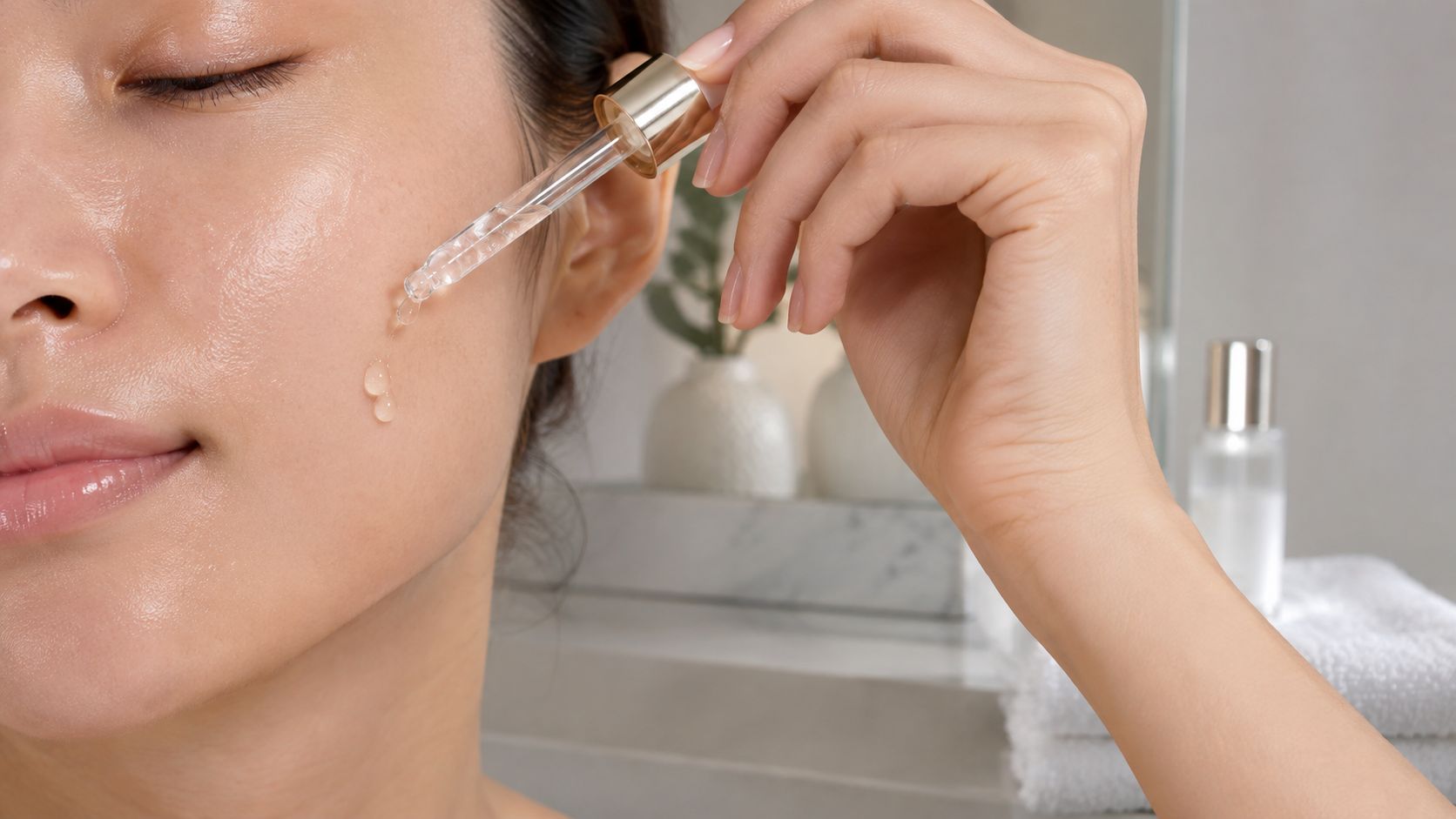
Start with clean skin, then leave it slightly damp, not bone dry. That part matters more than the brand, because consumer guidance recommends pressing serum into skin while it's still damp, then sealing it with moisturizer right away. A thin layer does the job, and a heavy one doesn't suddenly become more effective.
Use 2 to 3 drops for the whole face, or 1 pump / 2 to 4 drops if that's how the bottle dispenses it. Press or pat it in with your fingertips instead of rubbing, then move straight to moisturizer within about 1 to 2 minutes, or even 60 to 90 seconds if your skin dries fast. Healthline notes hyaluronic-acid products can be used morning and night, which makes this easy to fold into a simple routine. Healthline's hyaluronic acid application guide lays out the same basic sequence.
Best move: cleanse, dampen, apply a small amount, seal immediately.
If your face dries before you can finish, re-dampen it with a splash of water or a light mist, then apply the serum again. A moisturizer on top isn't optional, because hyaluronic acid binds water and needs that top layer to help keep hydration in place rather than letting it evaporate.
That simple sequence is the entire game. The more closely you follow it, the less likely your skin is to feel tight, tacky, or oddly parched after a “hydrating” step.
Best Affordable Hyaluronic Acid Serum Dupes
Here's the money-saving truth. You do not need a luxury label to get the basic hydration job done. If you want a few widely available US options that are easy to find, compare them by texture, packaging, and how well they fit your routine, not by hype.
| Product | Price | Best For |
|---|---|---|
| The Ordinary Hyaluronic Acid 2% + B5 | Budget-friendly | Simple, no-frills hydration |
| CeraVe Hydrating Hyaluronic Acid Serum | Budget-friendly | Barrier-focused routines |
| Neutrogena Hydro Boost Hydrating Serum | Budget-friendly | Lightweight daily wear |
The Ordinary Hyaluronic Acid 2% + B5 is the obvious no-nonsense buy if you want a stripped-back serum that disappears fast under moisturizer. It's the kind of formula that rewards correct application, which is exactly why it works well for people who don't want skincare fluff.
CeraVe Hydrating Hyaluronic Acid Serum makes more sense if your skin wants hydration plus a more comfort-first feel. If you already like the brand's texture style, it fits easily into a routine that's built around cleansing, serum, moisturizer, and SPF.
Neutrogena Hydro Boost Hydrating Serum is the easiest pick for readers who want something lightweight and familiar from the drugstore aisle. If you're already comparing that line with richer textures, this Neutrogena Hydro Boost Water Gel review is a useful place to sanity-check whether the texture is the right match for your skin.
The best dupe is the one you'll use consistently. If your skin prefers thin, fast-absorbing hydration, The Ordinary is hard to beat. If you want something more cushiony, CeraVe makes more sense. Either way, the win comes from technique, not luxury pricing.
Common Mistakes That Make Hyaluronic Acid Backfire
Hyaluronic acid gets blamed for dryness because people use it in the wrong setting. The problem is usually simple, too much product, no moisturizer, or a dry room that pulls water away before the serum can do its job.
The biggest mistake is putting it on fully dry skin in winter, in heated rooms, or in dry climates. In those conditions, HA needs help from the next step in your routine, especially a richer moisturizer that traps water in place. The INKEY List specifically points out dry and cold environments, including heated indoor spaces, as times when the moisturizer step matters, and that advice gets ignored far too often.
Overapplying causes its own mess. More drops do not mean more hydration, they usually mean more residue and a less comfortable finish. Keep it to 2 to 3 drops for the whole face and neck, then move straight to moisturizer.
Dry air changes the result. If the room is dry, your routine has to be tighter.
If you are comparing a drugstore serum with a pricier one, look at the full routine first. For a useful frame of reference on whether higher-priced skincare earns its place, professional skincare cost analysis is a helpful read. The smarter move is usually not buying more, it is using less, layering faster, and sealing better.
Winter skin needs a richer cream. Heated offices need quicker sealing. Dry climates need the most disciplined routine, with HA applied to damp skin and covered before it has a chance to pull moisture the wrong way. Once you adjust for the environment, hyaluronic acid becomes one of the cheapest ways to make skin feel more comfortable.
How to Layer Hyaluronic Acid with Other Actives
Hyaluronic acid is not the star that replaces everything else. It's the buffer that makes the rest of your routine more tolerable. That means it fits neatly with vitamin C in the morning, retinol at night, and even after exfoliating products, as long as you keep the sequence sensible.
For morning routines, go cleanser, hyaluronic acid on damp skin, moisturizer, then SPF. For evenings with retinol, use hyaluronic acid before moisturizer to help soften the feel of a stronger routine. It's a good supporting step, not a competing one.
If your moisturizer already contains hyaluronic acid, you may not need a separate serum every day. That's where budget thinking pays off, because redundancy is one of the easiest ways to overspend on skincare. A well-made moisturizer can cover the hydration base on its own, especially if your routine already includes a serum for another active.
If you're trying to separate what belongs in the serum step from what belongs in the cream step, this serum-versus-moisturizer guide is a useful companion read. The short version is simple, serum first, moisturizer second, and don't buy both layers if one already does the job well enough.
HA also pairs well with oilier finishes later in the routine. Just remember that oils and occlusives come after water-based hydration, not before it, if you want the ingredient to do its job.
Frequently Asked Questions About Hyaluronic Acid
How often should I use hyaluronic acid?
You can use it morning and night. If your skin is very dry, that usually makes more sense than using it sporadically. The key is consistency, not piling on extra product.
What concentration should I look for?
A practical range is 0.2% to 1% in cosmetic formulas, and it's smart to avoid products above 2%. The concentration ceiling matters more than marketing language, because more is not automatically better.
Is it good for all skin types?
Yes, it's generally suitable for most skin types, including dry, oily, and sensitive skin. It's also a smart option when your skin feels tight after cleansing but still doesn't want a heavy cream.
Do I need a separate serum if my moisturizer already has HA?
Not always. If your moisturizer keeps your skin comfortable, a separate serum can be redundant. Save the money and use the simpler routine.
For readers who like to compare skincare outcomes with procedures, Juvederm Restylane RHA results offer a different kind of hydration and volume conversation, but topically applied HA still lives or dies by application and sealing.
Final Thoughts on Getting the Most from Hyaluronic Acid
The best budget dupe is The Ordinary Hyaluronic Acid 2% + B5, because it gives you exactly what this ingredient should do, simple hydration without a luxury markup. Use it on damp skin, stick to 2 to 3 drops, and lock it in fast with moisturizer. Adjust the cream you use based on your environment, and stop expecting an expensive bottle to fix a sloppy routine.
Finding Favourites helps readers cut through skincare hype and choose affordable products that earn their place. If you want more smart dupe roundups and practical beauty buying advice like this, visit Finding Favourites and start building a routine that works harder for your budget.