
6 Budget Korean Peptide Serum Dupes for Luxury Skin in 2026
You've probably had this moment, you're standing in the skincare aisle or scrolling late at night, and the luxury peptide serum you want looks amazing until the price makes you pause. Korean formulas make that decision even harder because the packaging, ingredient lists, and glass-skin promises all look persuasive, but you still want results that fit a real budget. The good news is that korean peptide serum shopping doesn't have to be guesswork if you know how to match peptide types, formula style, and support ingredients.
This post may contain affiliate links, which means I may receive a commission if you purchase through my links, at no extra cost to you. Please read the disclosure policy for more information.
Introduction to Korean Peptide Serum Dupes
A good dupe doesn't just copy the vibe of a serum, it tries to solve the same skin problem with a smarter price tag. That matters with peptides, because the ingredient can mean very different things depending on the formula, the concentration, and what it's paired with.
Korean brands have made peptide skincare feel more approachable, more layered, and more routine-friendly than the old idea of one heavy anti-aging serum. In this guide, the focus is on how to spot the formulas that are worth your money, which ingredient profiles behave differently, and where budget picks can stand in for more expensive bottles without pretending to be identical.
Understanding Korean Peptide Serums
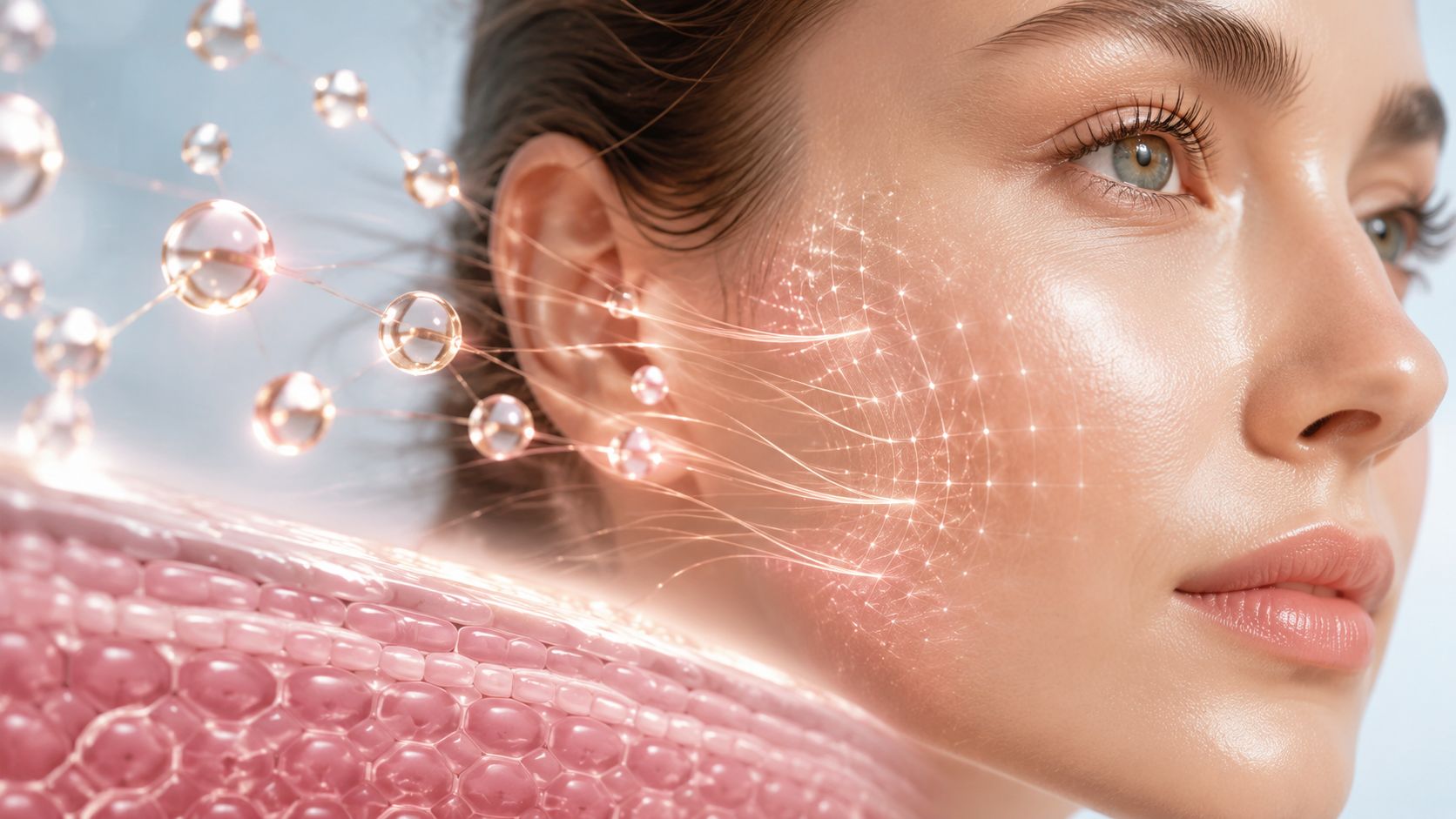
Korean peptide skincare has moved far beyond niche lab formulas. One industry report says Korean brands sold over 12.7 million peptide skincare units in 2023 Peptide Journal report, which helps explain why these serums now sit beside hydrating essences, barrier creams, and brightening treatments on mainstream shelves.
That scale matters because it shows peptides are no longer treated like a specialty ingredient only enthusiasts chase. They've become part of everyday skin routines for people who want visible firmness support without jumping straight to harsher resurfacing products. A useful outside overview of peptide care from natural anti-aging peptide solutions also helps frame why these formulas are so often discussed as long-game products rather than instant fixes.
Why Korean formulas feel different
The core appeal isn't just “peptides” on the label. Korean formulas often package peptides with hydration and barrier-supporting ingredients so the serum feels wearable, layers well, and stays comfortable enough for regular use. That makes the routine easier to maintain, which is the part that usually gets overlooked.
Practical rule: if a serum looks impressive but feels too irritating or too greasy to use consistently, the formula is probably working against the goal.
A second reason these products stand out is cultural and commercial momentum. Korean beauty brands keep experimenting with textures and peptide combinations because shoppers expect elegance, not just efficacy. That's why peptide serums often show up as lightweight layers rather than heavy treatment creams.
For a broader skin-health perspective, elevate skin health with peptides is a helpful read if you want the ingredient story in simpler terms. The big takeaway is straightforward, a well-made peptide serum should feel easy to keep using, because consistency is where the benefit comes from.
Science of Peptides and Skin Benefits
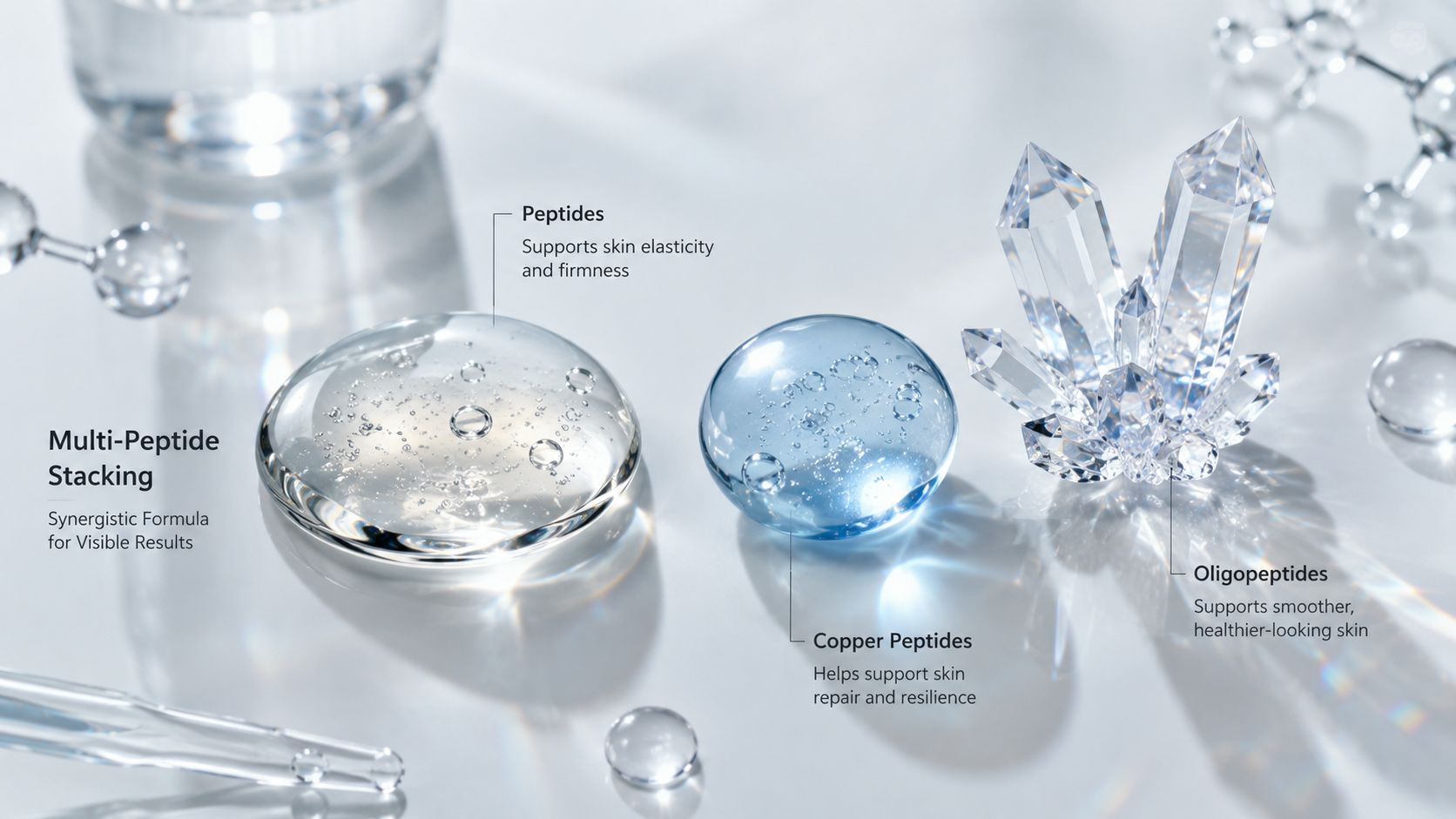
Peptide serums tend to work gradually, not dramatically. Peptides are best understood as biological messengers, not exfoliants. They do not scrape off skin the way acids do. Instead, they help signal skin cells to behave more like they did before visible aging became obvious, which is why they are often discussed alongside firmness, fine lines, and elasticity.
A review of cosmetic peptides describes them as ingredients that can modulate intracellular pathways and help reduce visible signs of aging such as wrinkles, fine lines, loss of firmness, and reduced elasticity. That is the core reason they appear so often in anti-aging routines. They are trying to influence skin biology, not just sit on the surface.
What the clinical research actually shows
A peptide serum usually makes more sense as a steady routine step than as a quick fix. In a randomized, double-blind, placebo-controlled clinical study, a topical peptide serum improved expression lines in 15 minutes and continued to outperform placebo at weeks 4, 8, and 12. By the end of the 12-week trial, board-certified dermatologist grading showed improvement in fine lines for 97% of subjects and wrinkles for 45%, with no adverse reactions reported clinical study.
That pattern matters for shoppers comparing korean peptide serum options on a budget. The study suggests peptides can produce measurable change, but the change builds with regular use. For that reason, the best affordable dupe is usually the one you can tolerate and keep using, not the one with the flashiest promise.
A courier analogy can sound neat, but it often oversimplifies things. A clearer way to frame it is that peptides act like instruction signals inside a larger routine, while exfoliants focus more on surface renewal. That difference helps explain why peptide serums often appeal to people who want a lower-irritation anti-aging step.
A separate systematic review found that oral and topical peptides produced statistically significant improvements in hydration and wrinkle reduction, while elasticity changes were inconsistent and generally modest. That is a useful way to read the category. Peptides can help, but they are not magic.
Bottom line: expect cumulative improvement, not instant resurfacing.
For a broader skin-health perspective, elevate skin health with peptides is a helpful read if you want the ingredient story in simpler terms.
Unique Aspects of Korean Peptide Formulations
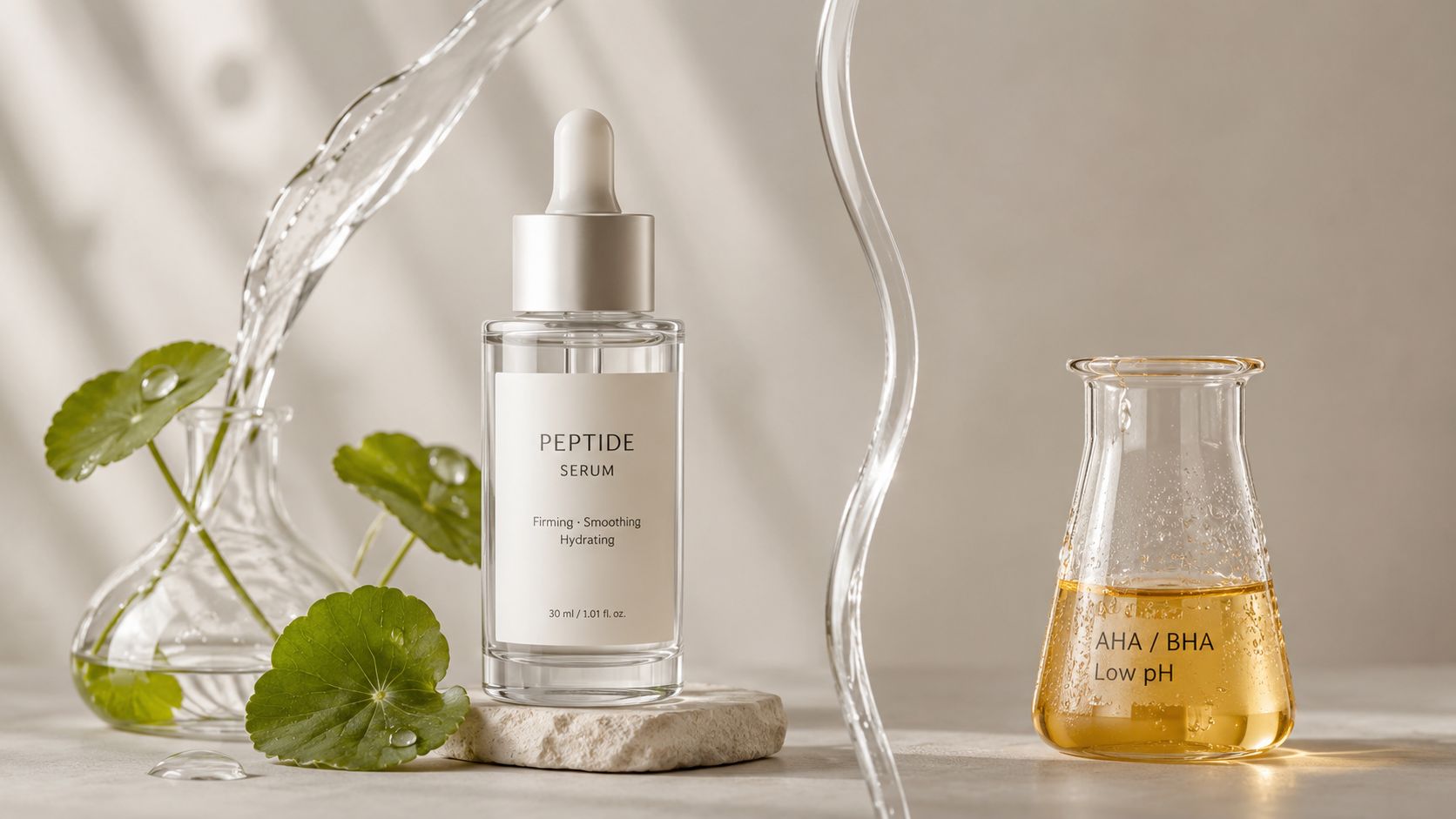
Korean peptide formulas often use multi-peptide stacking, which is a big reason they feel more complete than a single-ingredient serum. Instead of relying on one peptide alone, brands combine signal peptides like Palmitoyl Tripeptide-5 with other classes such as Copper Tripeptide-1, Acetyl Hexapeptide-8, or oligopeptides to target firmness, wrinkle depth, and barrier support together ingredient breakdown.
That matters because each peptide can pull a different weight. One may be better at supporting visible firmness, another may focus more on expression lines, and another may fit into a repair-oriented formula. The result is less like a single loud claim and more like a layered strategy.
A concrete example helps
A good example is medicube PDRN Pink Peptide Serum, which includes 1% Salmon PDRN (10,000 ppm) and peptides for firming and brightening product listing. PDRN is used in Korean skincare as a repair-support ingredient, so the logic is not just “add moisture and hope for glow.” It's more about barrier recovery plus collagen signaling.
That concentration detail matters too. 10,000 ppm is a clear benchmark, which makes product comparison more concrete than vague marketing language. If two formulas both say “peptide serum,” but only one gives you a named concentration and a visible support ingredient, you're comparing real formulation choices rather than slogans.
Korean peptide serums are often built to do several jobs at once. That's part of their appeal, especially for people who want one serum that can fit into a minimalist routine without feeling thin or underpowered.
Ingredient Compatibilities and Red Flags
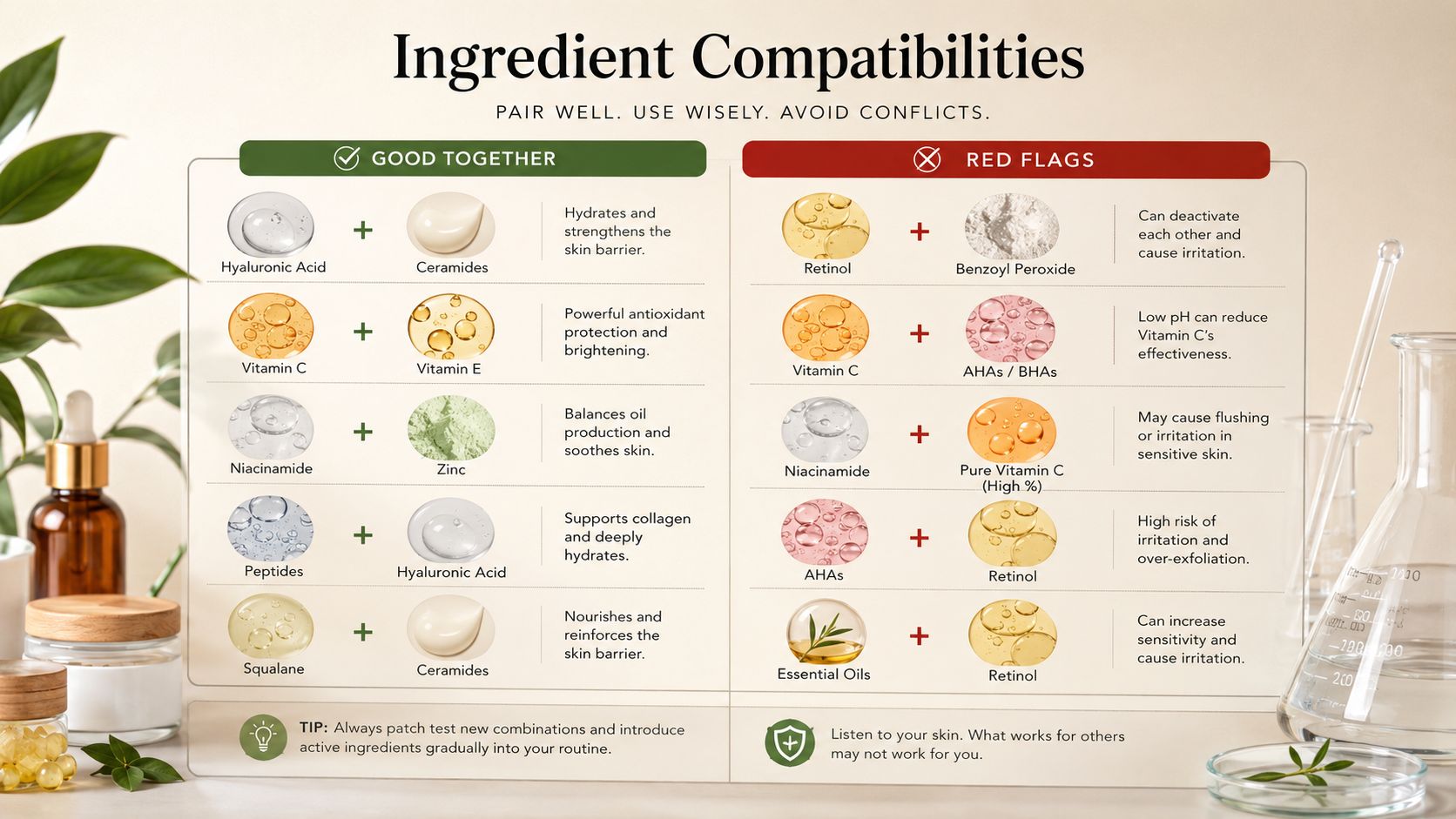
Peptides are usually friendly ingredients, but they're not completely indifferent to the rest of your routine. The safest way to use them is to keep the surrounding formula calm. Hydrating toners, gentle essences, and barrier creams tend to pair well because they support comfort without competing for attention.
The risk comes from overcomplicating the routine. Strong acids, aggressive exfoliants, or unstable combinations can make a peptide serum harder to use well, even if the serum itself is solid. If a product is meant to be soothing and supportive, but your routine is all friction and no recovery, you're not giving it a fair chance.
What to do and what to avoid
A simple structure works best.
- Start with hydration: use a gentle cleanser, then a hydrating toner or essence so the skin isn't stripped before the serum goes on.
- Place peptides after watery support steps: this keeps the routine easy to layer without turning the face into a chemistry experiment.
- Use stronger acids with care: if you already use exfoliating actives, keep the routine simple and watch for irritation.
- Check labels for clarity: undisclosed peptide blends and vague “proprietary complex” language make it harder to know what you're buying.
A good internal reference for routine building is how to use azelaic acid, because azelaic acid is another ingredient people often want to combine carefully with actives. The same practical mindset applies here, keep the routine controlled, especially if your skin gets reactive.
Red flags are usually obvious once you know what to look for. If a serum promises a lot but refuses to tell you anything meaningful about the formula, that's a warning sign. If your skin stings, pills, or gets visibly stressed, the problem may be the routine around the peptide serum, not the serum itself.
Quick check: the best peptide routine feels boring in the best way, steady, low-irritation, and easy to repeat.
Choosing Budget-Friendly Korean Peptide Serum Dupes
Peptide dupes work best when you compare ingredient profile, formula style, and support ingredients, not just brand prestige. That's especially important because most existing guides treat peptides like one big category, which hides the significant shopping differences between signal peptides, copper peptides, and mixed complexes consumer guidance gap. If you want value, you need to know what kind of peptide story the bottle conveys.
A useful rule is to match the original serum's job, not its marketing language. If a luxury formula focuses on plumping and firming, look for a budget dupe that leans on similar peptide families plus hydration support. If the original is more repair-forward, choose a dupe with barrier-friendly extras rather than a bare-bones peptide splash.
affordable anti-aging skincare can help frame the bigger budget-shopping mindset, but here the focus stays on peptide-specific swaps. The table below keeps the comparison simple.
Comparison of Korean Peptide Serum Dupes
| Original Serum | Dupe Option | Price |
|---|---|---|
| medicube PDRN Pink Peptide Serum | A peptide serum with PDRN-style repair support and brightening-focused ingredients | Budget-friendly alternative |
| COSRX The 6 Peptide Skin Booster | A multi-peptide serum with hydration support and a lightweight feel | Budget-friendly alternative |
| numbuzin No. 9 NAD Bio Lifting-sil Essence | A peptide-rich lifting essence with barrier support focus | Budget-friendly alternative |
| PURCELL 82% High Dose Peptide Formula | A watery peptide ampoule style serum for layering under moisturizer | Budget-friendly alternative |
| Dear, Klairs EGF Blue Youth Activating Drop | A gentle peptide-forward serum for sensitive or easily irritated skin | Budget-friendly alternative |
| EQQUALBERRY NAD+ Peptide Boosting Serum | A multi-peptide serum with a plumping, barrier-first profile | Budget-friendly alternative |
How to judge each dupe
- PDRN-style repair dupe: choose this if you want a serum that feels closest to a repair-plus-firming formula. The key is whether it gives you that same support-oriented profile, not whether it copies the exact brand story.
- COSRX-style multi-peptide dupe: look for a lightweight serum that layers easily and uses several peptides instead of a single token ingredient. That makes it a better fit for everyday routines.
- numbuzin-style lifting essence dupe: go for this if you like a serum that sits between treatment and essence, with a more cushioning feel.
- PURCELL-style watery dupe: this works well if your priority is fast layering and low heaviness.
- Dear, Klairs-style gentle dupe: prioritize comfort, especially if your skin reacts to dense formulas.
- EQQUALBERRY-style plumping dupe: choose this if you want barrier support alongside the peptide story, not a stripped-down treatment.
The best budget dupe is the one that matches your skin's tolerance and your routine habits. If you never finish thick serums, a lighter formula is the smarter buy. If your skin is dry or stressed, a peptide serum with extra hydration is usually the safer value.
Application Guide and Layering Tips
The easiest peptide routine is the one you'll repeat. Start with a gentle cleanse, then use a hydrating toner or essence if your skin likes that step. After that, apply the peptide serum while the skin is still slightly damp, because that usually makes the texture spread more evenly.
If you use vitamin C, niacinamide, or another morning active, keep the order simple and consistent. Put the lighter support step first, then the peptide serum, then moisturizer, then sunscreen in the morning. At night, cleanser, toner, peptide serum, and a richer cream is often enough.
Practical rule: don't stack every active just because you can. Peptides reward a routine that leaves room for them to work.
Small adjustments by skin type
- Oily skin: choose lighter textures and use a thin moisturizer on top so the serum doesn't feel heavy.
- Dry skin: use a hydrating toner before the peptide serum and seal everything with a more emollient cream.
- Sensitive skin: patch test first and keep the rest of the routine short for the first week.
A two-minute pause after serum application can help with layering, especially if you notice pilling. It's also smart to introduce new products one at a time, because then you can tell whether a formula suits you or whether the irritation came from something else.
For a broader routine map, how to build a skincare routine is a useful companion read. The point is to make the peptide serum fit the routine you already keep, not force your routine to revolve around one bottle.
FAQ and Conclusion
Can peptide serums replace retinol?
They serve different purposes. Peptides are usually gentler and often fit better into sensitive routines, while retinol works through a different anti-aging pathway. Many people choose peptides when they want a lower-irritation option that still supports a firmer-looking routine.
How long until visible results?
The timeline is usually gradual, so patience matters. As noted earlier, measurable changes in the clinical study appeared over several checkpoints rather than overnight clinical study.
Are copper peptides safe during pregnancy?
That question is best handled with a clinician, especially if your routine already includes multiple actives. The product label matters, but personal medical guidance matters more.
What's the best way to store peptide serum?
Keep it tightly closed, away from heat and direct sunlight, and do not leave it in a hot bathroom for long stretches. Stable storage helps preserve the formula you paid for.
The best budget pick in this guide is the COSRX-style multi-peptide dupe. A multi-peptide formula is useful because it gives you more than one support signal in a single bottle, rather than betting everything on one ingredient. That makes it a practical choice for firmness, texture, and easy layering, especially if you want one affordable serum that covers more than one concern.
If your goal is a luxury-feeling Korean peptide serum routine without the luxury price, start with a formula that matches the active profile you want. Some dupes are closer to a simple support serum, while others aim for a richer, more treatment-style blend. Matching the peptide mix, texture, and concentration to your skin needs matters more than chasing the word “peptides” on the front label.
A good shortcut is to read the ingredient list like a label on a multivitamin. A single-peptide formula can be a cleaner fit if you already use several actives, while a broader multi-peptide blend can make more sense if you want a flexible daily serum. The right budget dupe is the one that fits your routine, feels comfortable on skin, and gives you the kind of support you will keep using.
A CTA for Finding Favourites.