
Find the Best Drugstore Foundation: An Expert Guide for 2026
Standing under fluorescent drugstore lights, trying to decide between matte, dewy, serum, long-wear, natural finish, and a shade range that somehow all looks identical on the shelf, is how a lot of foundation regrets begin. The good news is that finding the best drugstore foundation isn't about grabbing the trendiest bottle. It's about matching formula, finish, and undertone to your actual face so the product works with your skin instead of fighting it.
This post may contain affiliate links, which means I may receive a commission if you purchase through my links, at no extra cost to you. Please read the disclosure policy for more information.
Your Guide to Finding a Flawless Drugstore Foundation
You are standing in the foundation aisle at Target, comparing three bottles that all look close enough under harsh store lighting, and one of them will still betray you by noon. That is why a good drugstore foundation is not just about how it looks on the back of your hand. It has to survive real skin. Oil breaking through the T-zone, dry patches around the nose, texture on the cheeks, and that annoying color shift that shows up once you get into daylight all matter more than a pretty first swatch.
The strongest formulas at the drugstore now tend to aim for comfort as much as coverage. Some wear like classic foundation with a little skincare slip built in. Others give lighter, more flexible coverage that makes more sense if you hate the feel of a full base every day. If you are stuck between those two categories, this breakdown of BB cream vs foundation and which finish makes more sense for daily wear helps narrow it down fast.
Here is the shopping rule that saves the most money and the most frustration. Buy for behavior, not branding.
A formula can have great reviews and still be wrong for your face. I have tested plenty that looked smooth for the first hour, then started separating around the nostrils, settling into smile lines, or turning heavier every time powder touched them. The best budget picks are usually more specific than the marketing suggests. One is great at controlling shine. Another gives that expensive, skin-like glow. Another lasts through a long workday but needs extra prep if you run dry.
That trade-off matters. Drugstore foundation gets much easier to shop once you stop looking for one bottle that does everything and start looking for the one that does your job well. This guide is built around that approach, with shade-matching help for awful in-store lighting and direct dupe comparisons that focus on wear, finish, and coverage, not just bottles that happen to look similar on the shelf.
How to Choose Your Perfect Foundation Formula
Formula comes first. Shade matters, but if the texture is wrong for your skin, even the perfect undertone won't save it.
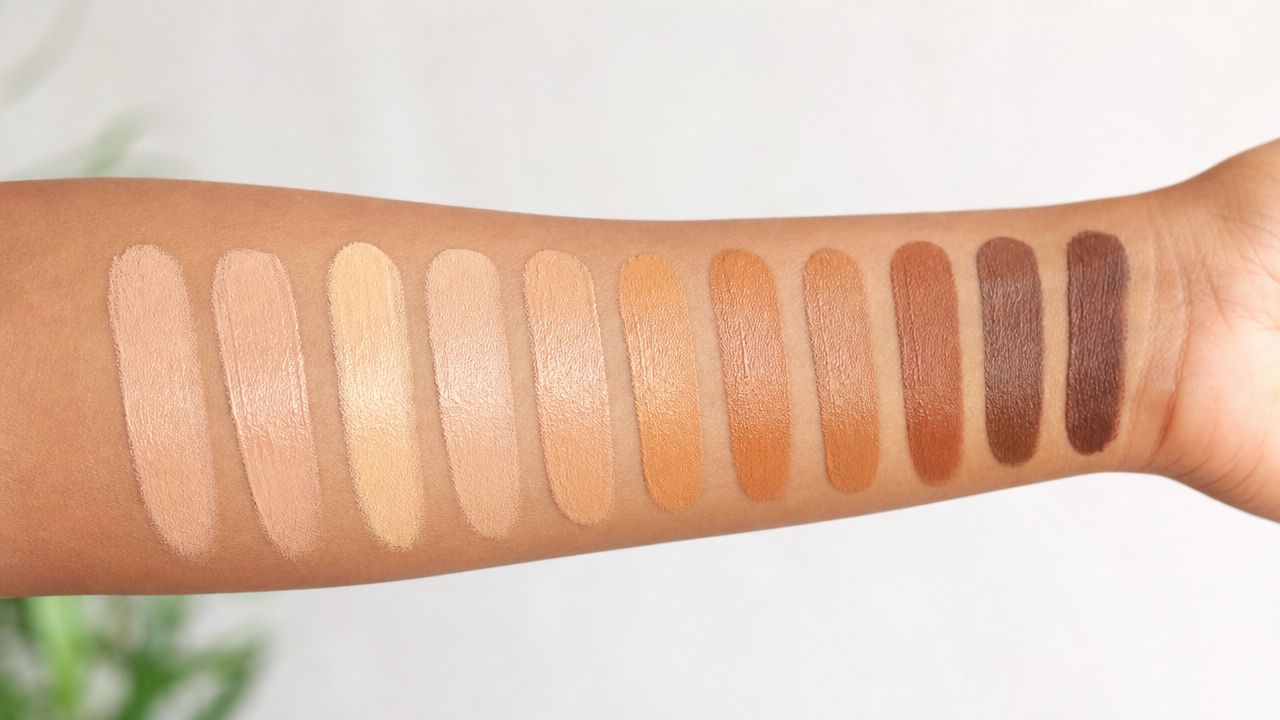
Start with your skin type
If your makeup disappears from your T-zone first, you need oil control more than extra glow. Matte or soft-matte formulas usually hold together better on oily skin because they help absorb surface oil before it breaks apart the pigment.
Dry skin is different. Matte formulas can look crisp at first, then start catching on flakes and rough texture. Hydrating liquids, serum foundations, and natural-finish formulas tend to sit better because they move with the skin instead of drying down too hard.
Combination skin usually does best with balance. A natural finish can be easier than going fully matte or fully dewy. If your skin changes with the weather, it also helps to know the difference between lighter base products and classic foundation. This guide on BB cream vs foundation is useful if you're stuck between flexible coverage and a more polished finish.
Pick the coverage you actually wear
A lot of people buy too much coverage for everyday life. Then they spend the week trying to sheer it out.
- Sheer coverage works if you want skin to look like skin, freckles to show through, and redness softened rather than erased.
- Medium coverage is often considered the sweet spot. It evens out tone but still looks believable in daylight.
- Full coverage earns its place when you want long wear, more discoloration coverage, or a polished event makeup look.
There's no prize for wearing the thickest base. A medium layer placed well usually looks more expensive than a heavy layer spread everywhere.
Matte feels like velvet on the skin. Dewy feels more like silk. Natural finish sits in the middle and usually looks the most forgiving up close.
Finish changes the whole look
Finish isn't just aesthetic. It changes how texture, pores, and oil show up through the day.
A matte finish can make makeup look cleaner and more controlled, especially in humid weather or on camera. A radiant finish can make tired skin look fresher, but if the formula is too slippery for your skin type, glow can drift into grease fast. Natural finish is often the safest blind buy because it gives enough life without exaggerating shine.
Here's the quick filter I use in the aisle:
- If you get shiny quickly, go matte or soft-matte.
- If your skin feels tight or looks dull, try hydrating or luminous.
- If you're not sure, choose natural finish and build with concealer where needed.
That one choice narrows the wall of options down fast.
Mastering Your Shade and Undertone
A foundation can be a beautiful formula and still look wrong if the undertone is off. That's why the jawline stripe happens. Most shade mistakes aren't depth mistakes. They're undertone mistakes.
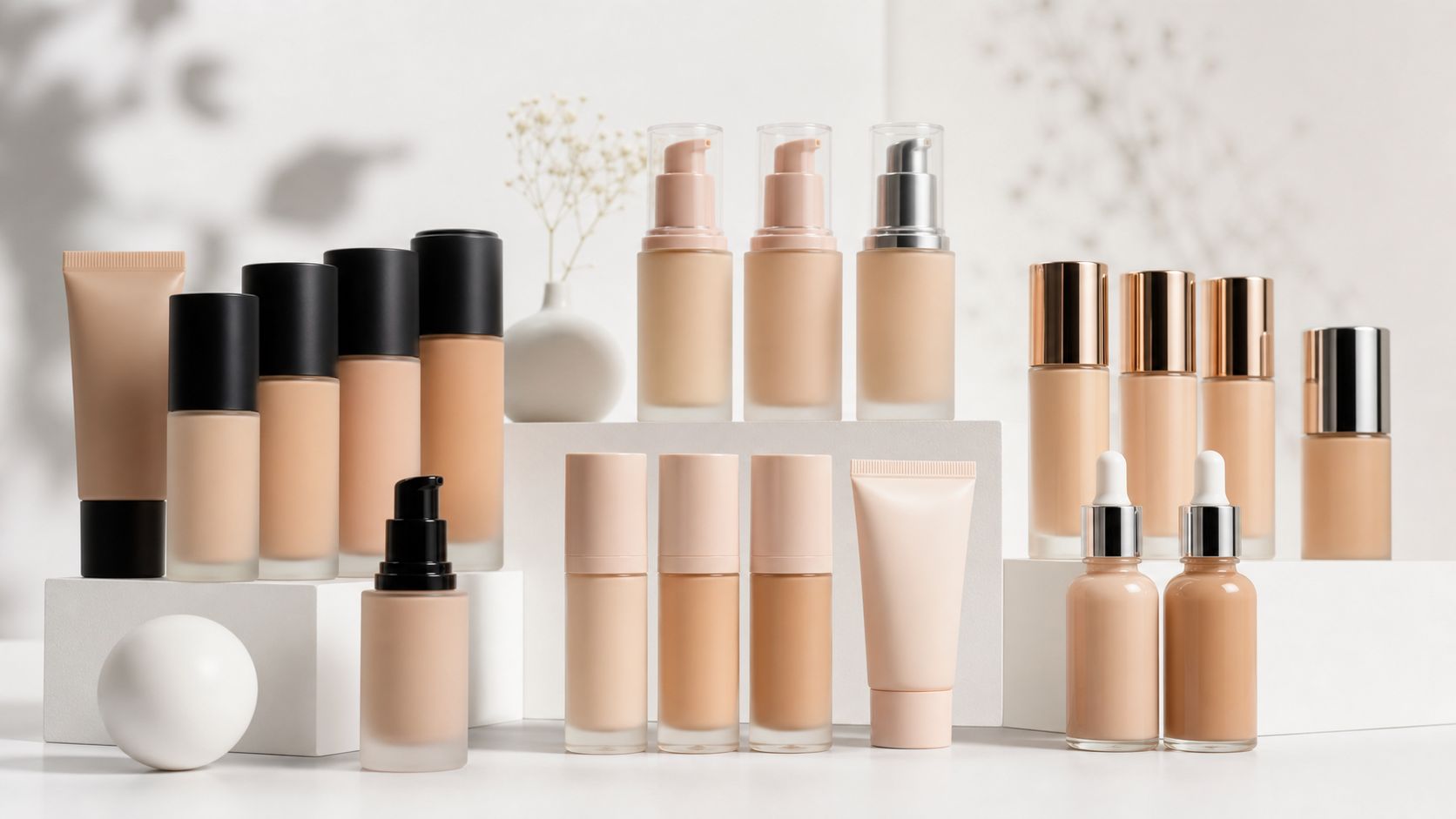
Figure out your undertone first
The simplest starting points are the vein test and jewelry test.
- Warm undertones often lean better with gold jewelry, and veins may look more green.
- Cool undertones often suit silver jewelry, and veins may look more blue or purple.
- Neutral undertones can usually wear both without one looking obviously better.
Undertone isn't the same as surface redness, acne, or tanning. You can have redness on top of warm skin. You can be fair and still be olive. If you want a clearer visual reference before shopping, this guide on how to identify your undertone is worth saving.
For anyone comparing shades from selfies or trying to judge how base makeup shifts in different lighting, these expert tips for skin tone are extremely helpful because lighting changes can distort what your skin looks like.
Swatch in the right place
Your hand is almost never the best match for your face. Test along the jawline or slightly down the side of the neck so you can see whether the shade connects your face and body naturally.
Pick two or three close shades. Swipe thin lines next to each other, then wait a minute. Some formulas settle deeper or warmer after a short dry-down. The shade that seems to disappear is usually the winner.
If you can't decide between "almost right" and "slightly too light," choose the one that disappears into your neck, not the one that only flatters your cheek.
Store lighting can sabotage even a good match. Use your phone camera, turn off beauty filters, and check the swatch near a window or outside if possible. That quick daylight check catches oxidation, peachiness, and weird gray casts that fluorescent lights hide.
A short visual demo helps if you want to see undertones and matching in action:
Top Drugstore Foundations by Category for 2026
You are standing in the Target aisle, comparing six bottles that all promise long wear, smooth skin, and a natural finish. The fastest way to cut through the noise is to shop by the problem you need your foundation to solve.
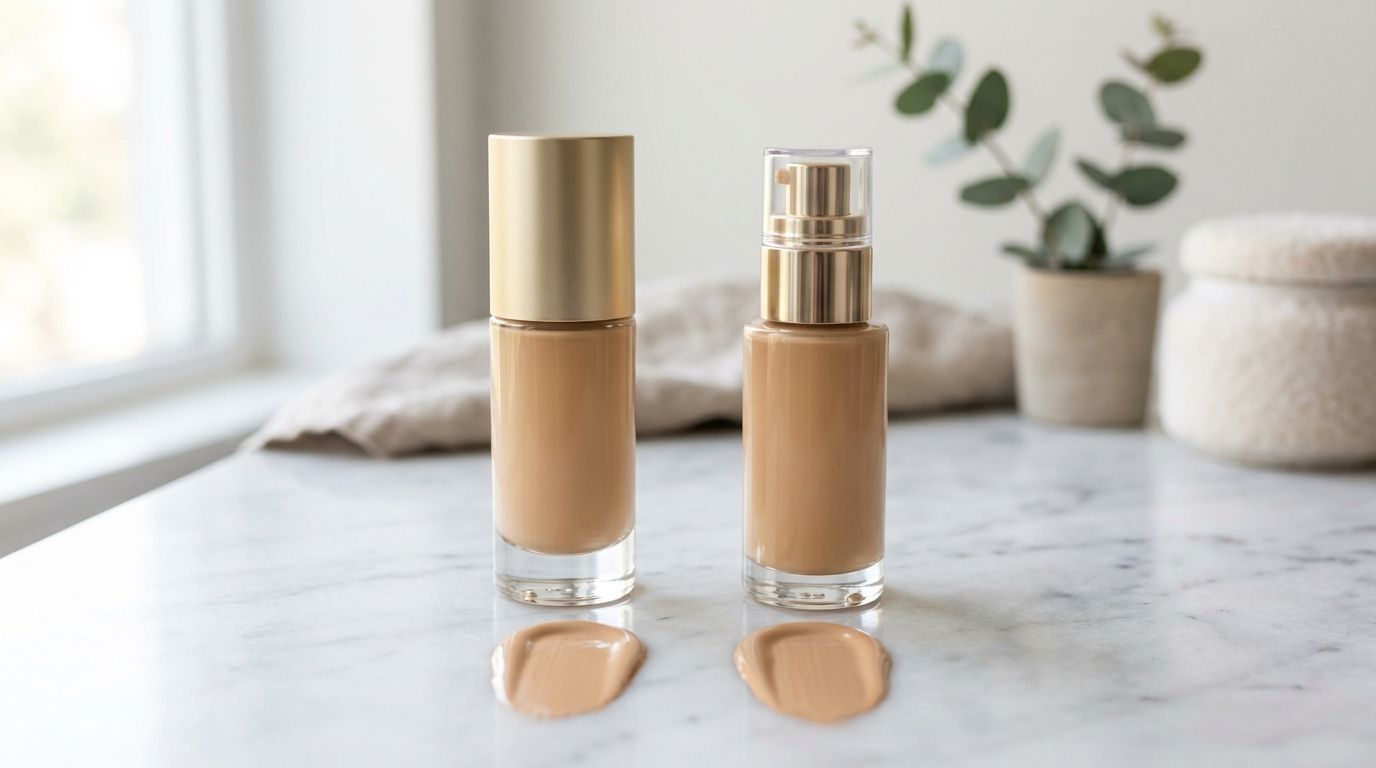
Some formulas are flexible enough to work for a lot of people. Others are worth buying because they do one job unusually well. After testing across oily zones, dry patches, long workdays, and bad store shade ranges, these are the standouts I would recommend by category.
Best for oily skin
Maybelline Fit Me Matte + Poreless is still one of the easiest drugstore foundations to recommend for oily and combination skin. MakeupTutorials highlights it for oil control and long wear, and that lines up with how it performs on the face.
The finish is matte, but not stiff. It helps cut shine through the T-zone and keeps pores from looking exaggerated, which is not always the case with budget mattes. The trade-off is that it can cling if you have dehydration around the nose or mouth, so skin prep matters more here than the low price tag suggests.
Best for a radiant glow
L'Oréal Infallible 32H Fresh Wear Foundation is the one I reach for when someone wants glow without slipping into greasy territory. Who What Wear calls out its long-wear reputation, and that balance of radiance plus hold is exactly why it stands out.
It gives light back to the skin without making the face look wet or heavy. On normal to slightly dry skin, it wears especially well and keeps enough structure to hold up through a full day. If you love the polished look of many higher-end luminous foundations, this is one of the smarter drugstore buys to test first.
Best overall hybrid formula
Milani Conceal + Perfect Two-in-One Foundation and Concealer works best for anyone who wants real coverage but does not want their makeup to feel fussy. It covers redness, unevenness, and leftover blemish marks faster than most lighter drugstore bases.
There is a trade-off. It builds quickly, and one pump too many can push it into heavy territory. Applied in thin layers with a damp sponge or a dense brush, it gives a smooth, perfected finish that can replace both foundation and spot concealer on busy mornings.
Best for mature or drier skin on a budget
L'Oréal Paris True Match Hyaluronic Tinted Serum earns its place because it makes dry, textured, or more mature skin look fresher instead of more covered. As noted earlier, it often sits at a higher drugstore price than classic foundations, but it is regularly discounted enough to make it a strong value buy.
This formula is fluid, light, and forgiving. It does not try to mask every line or dry patch, which is exactly why it tends to look better on skin that dislikes full-coverage bases. If your foundation usually breaks apart around expression lines or starts looking papery by noon, this type of serum texture is often the better call.
Best if you want a luxury-style long-wear feel
Revlon ColorStay is the practical pick for anyone who wants a more traditional long-wear foundation with real staying power. It is available in versions for normal to dry skin and combination to oily skin, and that split makes a noticeable difference in how the finish sits.
ColorStay has more structure than the newer serum and skin-tint formulas. That is the appeal. It sets down well, gives reliable coverage, and holds up better than many cheaper foundations when you need makeup to stay put for a full workday, an event, or hot weather. If you like a polished base that looks deliberate rather than barely there, this is still one of the strongest options on the drugstore shelf.
5 Perfect Dupes for Your Favorite High-End Foundations
You are standing in CVS under terrible fluorescent lighting, trying to decide whether the $14 bottle can really replace the $58 one you already know you like. That is the right question. The best dupe is not the one with the closest marketing claim. It is the one that wears the same way on your skin by hour six.
That means comparing finish, coverage, dry-down, and how the formula behaves around pores, texture, and oil, not just whether two shades look close in the bottle.
| Luxury Foundation | Drugstore Dupe | Why It's a Dupe |
|---|---|---|
| Estée Lauder Double Wear | Revlon ColorStay | Similar full-coverage hold and a more classic long-wear finish |
| NARS Sheer Glow | Maybelline Fit Me Dewy + Smooth | Closest match for that natural, lightly radiant skin finish |
| Giorgio Armani Luminous Silk | L'Oréal Pro Glow | Similar sheer-to-medium luminous look with a refined texture |
| NARS Sheer Glow | Maybelline Fit Me Matte + Poreless | Better practical swap if you want the same polished effect with more oil control |
| Charlotte Tilbury-style radiant foundations | L'Oréal Infallible 32H Fresh Wear Foundation | Long-wearing radiance that looks polished instead of greasy |
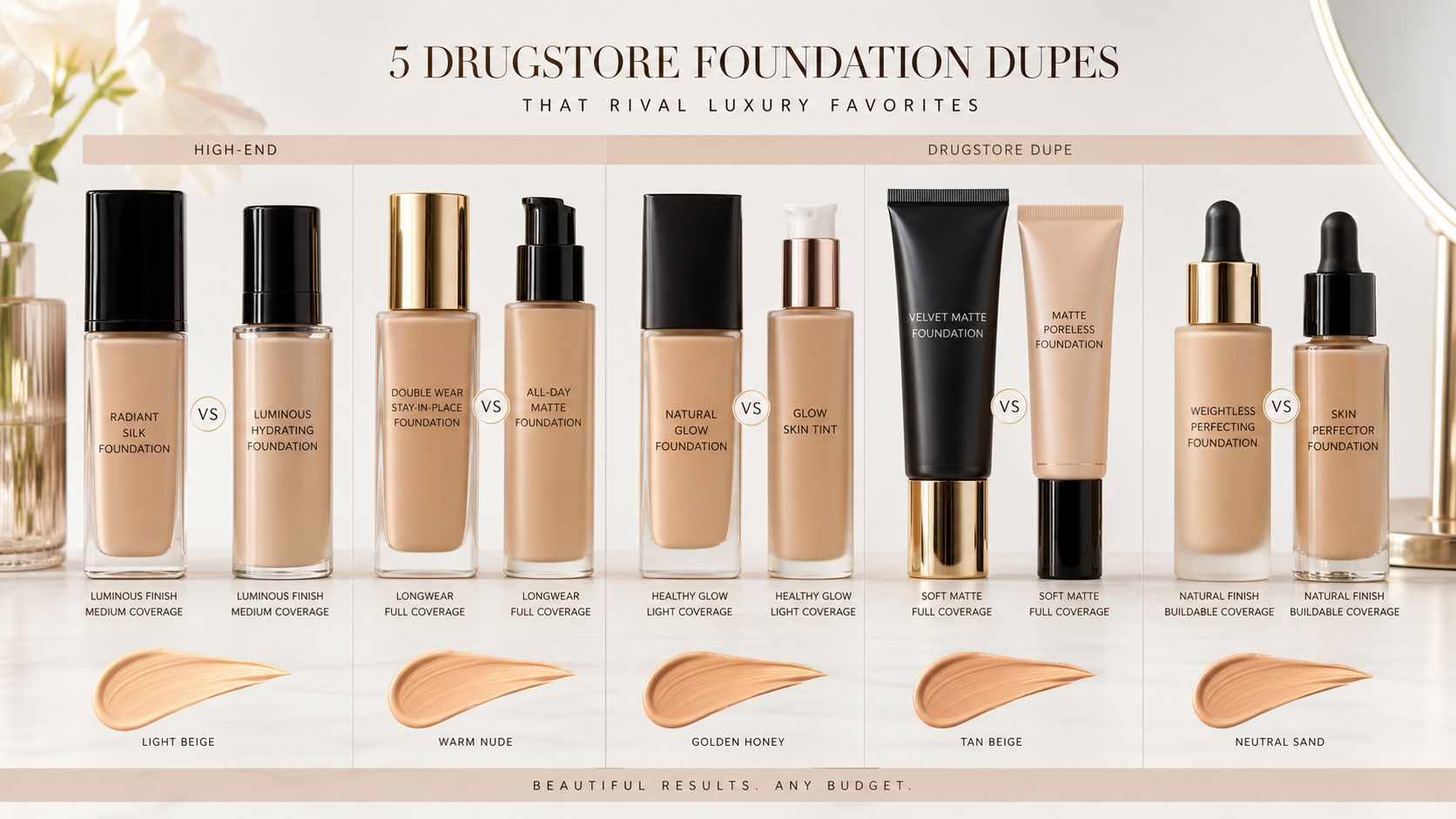
Luxury Foundation Dupe Finder
1. Estée Lauder Double Wear and Revlon ColorStay
If you wear Double Wear for the hold, the clean matte finish, and the way it stays put through a long day, Revlon ColorStay is the drugstore bottle to check first. It has that same more traditional foundation feel. It gives structure, sets down properly, and wears better than the softer serum-style formulas that can fade fast or turn shiny.
It is not a perfect copy. Double Wear usually looks a little more refined and can hold up better in heat and humidity. But for the price, ColorStay gets surprisingly close in overall effect, especially if you choose the right version for your skin type and apply in thin layers. If heavier long-wear formulas tend to go cakey on you, these tips on how to make makeup less cakey will help you get a smoother result.
2. NARS Sheer Glow and Maybelline Fit Me Dewy + Smooth
NARS Sheer Glow has a very specific appeal. It makes skin look even, healthy, and polished without crossing into obvious glow-bomb territory. Maybelline Fit Me Dewy + Smooth lands in a similar zone for a fraction of the price.
The trade-off is coverage and finesse. Sheer Glow usually looks a bit more elegant up close, especially on textured skin, while Fit Me can need more careful prep to keep the finish smooth. Still, if what you love is that fresh, skin-first look rather than heavy perfection, this is one of the more convincing drugstore swaps.
3. Giorgio Armani Luminous Silk and L'Oréal Pro Glow
Luminous Silk fans usually want light to medium coverage, a soft-focus sheen, and a finish that looks expensive without screaming foundation. L'Oréal Pro Glow delivers a similar mood. It gives bounce and light without looking slick, and it sits better on normal to dry skin than many matte drugstore formulas do.
The difference is mostly in texture. Armani feels thinner and more refined, and it tends to blur a bit better without much work. Pro Glow gets you close enough for everyday wear, especially if you apply with a damp sponge and keep powder away from the high points of the face.
A single Reddit discussion on real-world dupe picks grouped both the Maybelline and L'Oréal pairings among the more believable luxury-for-less swaps, which tracks with how these formulas perform on skin rather than how they look in packaging.
4. NARS-style skin finish with more oil control
Shopping by effect matters more than shopping by exact dupe name. If you like how NARS Sheer Glow makes skin look but your T-zone burns through luminous formulas by lunchtime, Maybelline Fit Me Matte + Poreless is the smarter buy.
It does not copy the glow. It copies the payoff. Skin still looks even, clean, and put-together, but with better shine control and a little more blur through the center of the face. For oily or combination skin, that is often the better dupe in real life.
5. Charlotte Tilbury-style glow and L'Oréal Infallible 32H Fresh Wear Foundation
Charlotte Tilbury-style foundations usually sell a polished radiant finish. The skin looks smoother, brighter, and more expensive, but still done. L'Oréal Infallible 32H Fresh Wear Foundation gives a similar result from the drugstore side.
I would not call it a one-to-one replacement for any single luxury bottle. I would call it a strong option for anyone chasing that long-wearing glow category without paying luxury prices. It has more staying power than many radiant formulas, and that matters if you want brightness that still looks controlled by the end of the day.
Pro Application Tips for a Flawless Finish
A budget foundation looks cheap fastest when it's applied badly. The product gets blamed, but technique is often the main issue.
Prep changes everything
Foundation sits on skin. If the surface is dry, oily, rough, or overloaded with skincare, you'll see it immediately. Use moisturizer that suits your skin type, then let it settle before going in with base. If you use primer, match it to the problem you're trying to solve. Mattifying for shine. Hydrating for tight, thirsty skin.
A thin first layer almost always looks better than a thick one. You can always add more where you need it.
Choose your tool on purpose
- Damp sponge gives the most natural, pressed-in finish and helps soften heavier formulas.
- Dense foundation brush gives more coverage and works well when you want a polished result fast.
- Fingers can be great with serum or tint-style foundations because body heat helps melt the product in.
If your foundation keeps turning heavy around the nose or chin, use less product there and blend outward. That's also one of the easiest fixes if your base keeps looking textured. This guide on how to make makeup less cakey covers the common mistakes that make even good formulas look thick.
Press foundation into the skin where you need longevity. Sweep it where you need less coverage.
Set only where it helps
You don't have to powder your entire face. Powder the spots that break down first, usually around the nose, chin, and forehead. Leaving the outer parts of the face less set often makes the whole base look fresher and less obvious.
Drugstore Foundation FAQs
How can I make my drugstore foundation last all day?
Prep and placement matter most. Use a primer that fits your skin type, keep foundation layers thin, and set the areas that fade first. A light powder on the T-zone plus setting spray usually works better than piling on more foundation.
Can I mix two foundation shades to get a perfect match?
Yes, and it's one of the smartest things you can do. It helps when your skin shifts between seasons or when one shade matches your depth but not your undertone. Mix small amounts first and make sure the formulas have a similar base so they blend smoothly.
Why does my foundation look cakey?
Usually it's either too much product, not enough skin prep, or both. Dry patches, heavy powder, and over-layering can all make a good formula look worse. If you're wearing foundation for photos, these Secta Labs headshot makeup tips are useful because camera-friendly makeup needs smooth texture and controlled placement, not just more coverage.
The best drugstore foundation is the one that fits your skin's habits, not the one with the loudest packaging. For oily skin, Maybelline Fit Me Matte + Poreless is a standout. For glow, L'Oréal Infallible 32H Fresh Wear Foundation is a strong pick. If you're chasing the best high-end dupe overall, Revlon ColorStay for Estée Lauder Double Wear is still the clearest, most practical swap because the texture and long-wear performance line up so well.
If you love finding beauty products that perform like luxury without the luxury price, Finding Favourites is worth bookmarking. It's packed with smart dupe guides, affordable beauty picks, and practical comparisons that make shopping a lot easier.