
Pressed Powder for Dry Skin: 5 Dupes That Look Flawless
You're probably here because powder has betrayed you before. It looked fine for five minutes, then suddenly your cheeks looked tight, your nose looked flaky, and every little dry patch seemed louder than your makeup. That experience makes a lot of people swear off powder entirely.
I don't think dry skin has to avoid powder. I think dry skin has to avoid the wrong powder, the wrong placement, and the wrong amount. A good pressed powder for dry skin can blur, set, and smooth without making your face look flat or thirsty.
This post may contain affiliate links, which means I may receive a commission if you purchase through my links, at no extra cost to you. Please read the disclosure policy for more information.
The Truth About Powder and Dry Skin
The biggest myth in makeup is that powder and dry skin don't mix. That's too simplistic. What usually goes wrong isn't powder as a category. It's a formula that's too heavy, too matte, or too drying, then applied all over the face like a blanket.
Dry skin needs selectivity. It also needs formulas built for comfort, not just oil control. That's why the better question isn't “Should I use powder at all?” It's which kind of powder makes sense for my skin, and how do I use it without wrecking the finish?
Practical rule: Dry skin usually does best with powder that sets strategically, not aggressively.
One of the most useful shifts in beauty guidance is this: ingredients matter more than the old powder-versus-no-powder debate. Product and expert guidance increasingly points to hyaluronic acid, glycerin, ceramides, mica, and silica as ingredients that can help reduce dryness, which makes the primary issue the powder's structure and feel on skin, not whether powder is automatically bad for you at all, as discussed in this dry-skin powder roundup.
What dry skin usually gets wrong with powder
A lot of people with dry skin make the same expensive mistake. They buy whatever powder is popular, then use a dense puff, apply too much, and press it over areas that were already short on moisture.
That leads to a few predictable problems:
- Too much product: Powder often builds up faster than expected, especially around the nose and mouth.
- Wrong zones: Cheeks often need less powder than the center of the face.
- Overly flat finishes: A hard matte finish can make healthy skin look dull, and dry skin even more so.
What actually works instead
Pressed powder for dry skin works best when you treat it like a detail product. Use it where makeup tends to crease, fade, or get too shiny. Leave the naturally drier parts of your face mostly alone unless they need setting.
That one change makes powder feel less like punishment and more like polish.
Why Pressed Powder Is a Smart Choice for Dry Skin
You finish your makeup, your base looks fresh, and then one heavy dusting of loose powder turns the whole thing flat. That is the moment a lot of dry skin types decide powder is not for them. In practice, the problem is usually the format, the formula, and the amount.
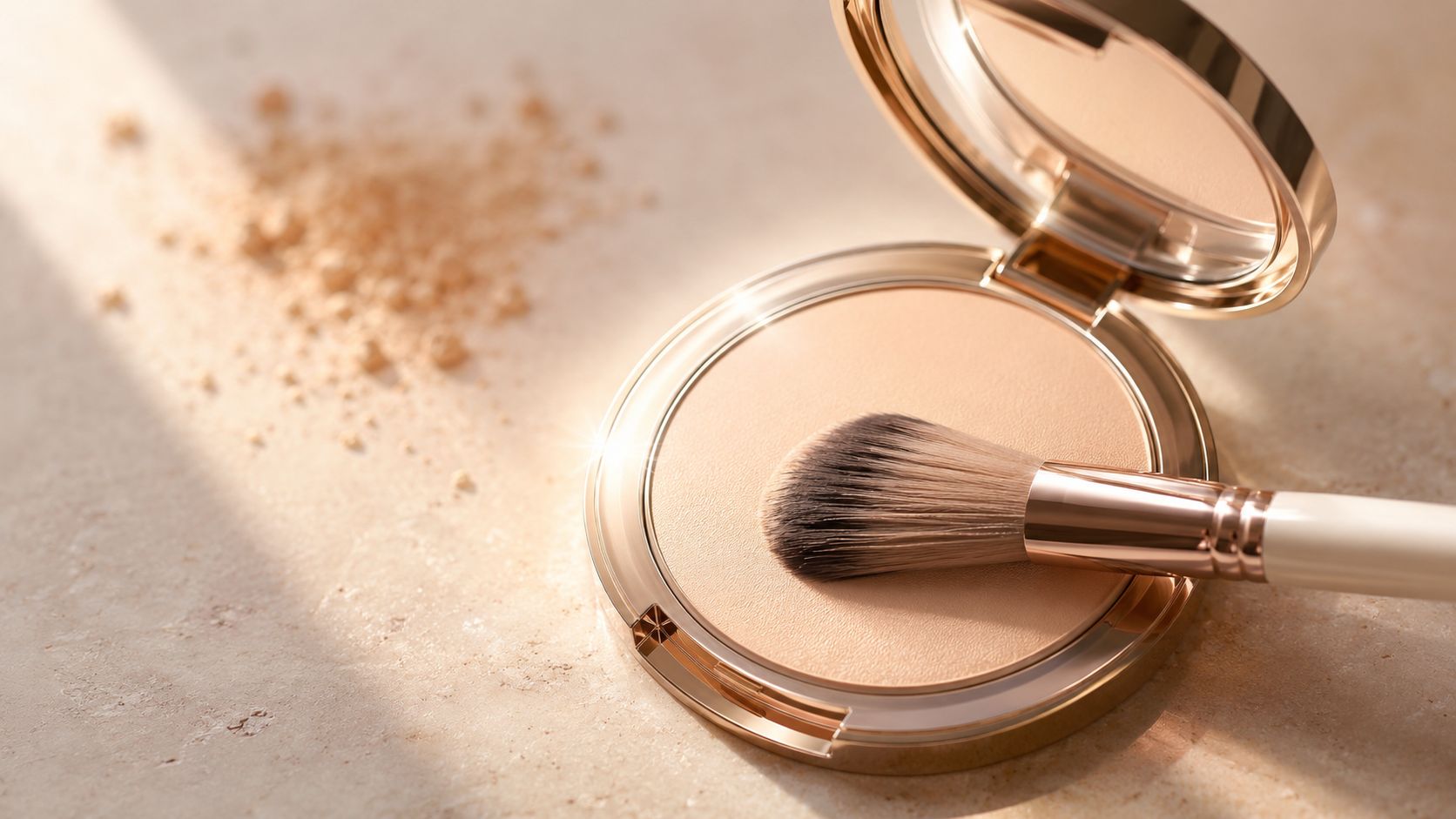
Pressed powder is easier to control.
That alone makes it a smarter buy for dry skin. The product is packed tightly, so you pick up less at once and can place it exactly where makeup needs support instead of dusting your whole face out of habit. e.l.f. makes the same point in its guide to pressed versus loose powder, noting that pressed powders can work better for dry skin.
The real advantage is precision
Dry skin rarely needs an all-over veil of powder. It usually needs small corrections.
With a pressed compact, it is much easier to tap product onto the places that benefit from setting:
- Under the eyes if concealer creases
- Around the nose if foundation separates there
- The T-zone if you want less shine but still want skin to look alive
- The chin if makeup fades faster there
That targeted approach is the whole reason powder can work on dry skin. Used this way, it acts more like maintenance than coverage.
Pressed powder suits dry skin best when you treat it like a touch-up tool, not a blanket layer.
Why the format saves money too
Loose powder often wastes product. It spills, over-dispenses, and encourages a heavier application because there is more sitting in the lid or on the brush than you meant to pick up.
Pressed powders are usually neater, more portable, and easier to ration. If you already spend money on hydrating prep, a good moisturizer, or a budget-friendly hyaluronic acid serum for dry skin, it makes sense to choose a powder that will not undo that work in thirty seconds.
I also find pressed compacts more realistic for daily life. Quick mirror check. One small tap around the nose. Done. That is a better match for dry skin than a full repowder that leaves cheeks looking tired by noon.
The finish is usually more forgiving
The best pressed powders for dry skin tend to sit thinner on the face when applied lightly. You get enough setting power to keep concealer and foundation in place, but with less of that dusty, overworked look that gives powder a bad name.
That is the myth worth dropping. Dry skin can wear powder beautifully. It just needs a pressed formula, a restrained hand, and the discipline to powder only where it earns its spot.
Decoding the Ingredient List for Hydrating Powders
A pressed powder can look silky in the pan and still wear badly on dry skin. The ingredient list tells you a lot. Not everything, but enough to save you from a bad buy.
The sweet spot is a formula that sets makeup without pulling moisture out of the face. Beauty guidance for dry skin consistently favors lightweight, non-drying pressed powders used sparingly, and some formulas include hydrating add-ins such as hyaluronic acid or jojoba seed oil to soften the usual powdery effect, as noted in this Marie Claire guide to pressed powder.
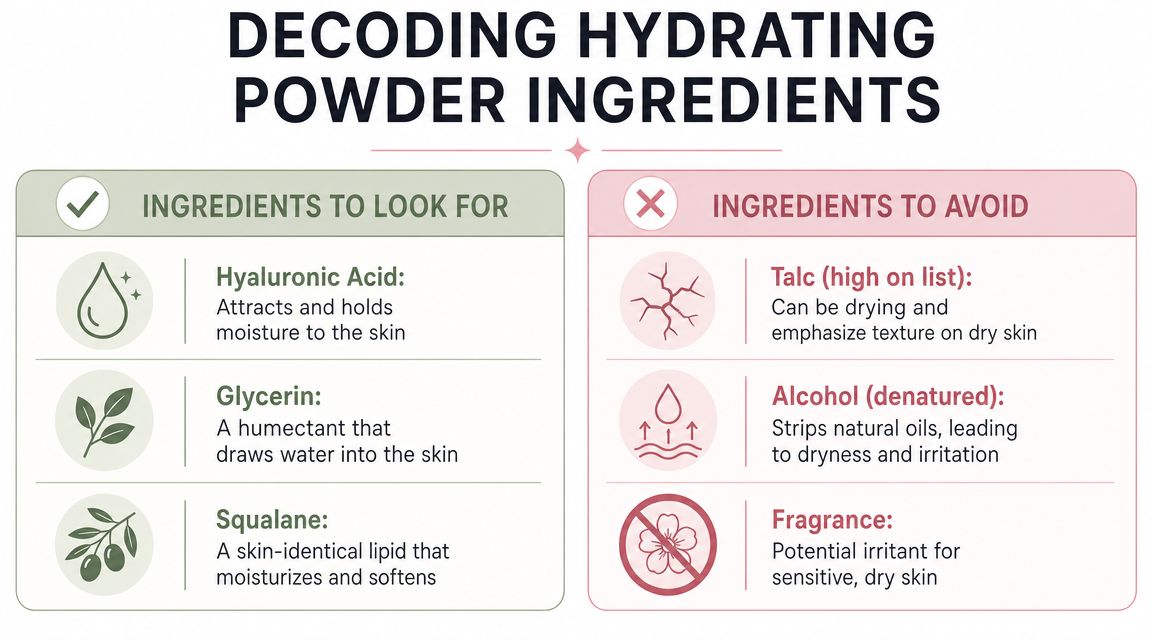
Ingredients worth spotting
If you're shopping for pressed powder for dry skin, these are the names I'd perk up for:
- Hyaluronic acid: Helps attract moisture, which can make a powder feel less tight on the skin.
- Glycerin: A classic humectant that supports a more comfortable wear.
- Ceramides: Helpful for dry skin because they support a less stripped feel.
- Mica: Often adds slip and a soft-focus look instead of a dead-flat finish.
- Silica: Can blur texture nicely when it's balanced well in the formula.
- Jojoba seed oil: A good sign in powders that are trying to feel smoother and less chalky.
If your skin is already parched, layering hydration underneath still matters. Pairing makeup with a solid prep step, like one of these affordable hyaluronic acid serums, can make your powder sit better.
Things I approach carefully
Not every ingredient is an automatic dealbreaker, but some formulas raise red flags for dry skin faster than others.
| Watch for | Why it can be tricky |
|---|---|
| Very heavy matte positioning | Often means the finish may read flatter and drier |
| Talc high on the list | Can feel too absorbent for some dry skin types |
| Strong fragrance | Can be irritating if your dry skin is also sensitive |
| Alcohol-heavy formulas | May feel uncomfortable on already dehydrated skin |
How to read a powder fast
If you're standing in a store aisle, I use this shortcut:
- Look at the finish claim. “Natural,” “luminous,” “blur,” and “skin-like” are usually more promising than “super matte.”
- Check for comfort ingredients. Hydrating or softening add-ins are a good sign.
- Think about your goal. If you only need touch-ups, you don't need a hardcore setting powder.
A dry-skin-friendly powder should disappear into makeup. If you can clearly see it sitting on top, it's probably not the right formula or the right amount.
The Flawless Application Method for Dry Skin
Even the best powder can look bad over rushed prep. Dry skin needs slip underneath makeup. If the base is under-moisturized, powder will catch on texture almost immediately.
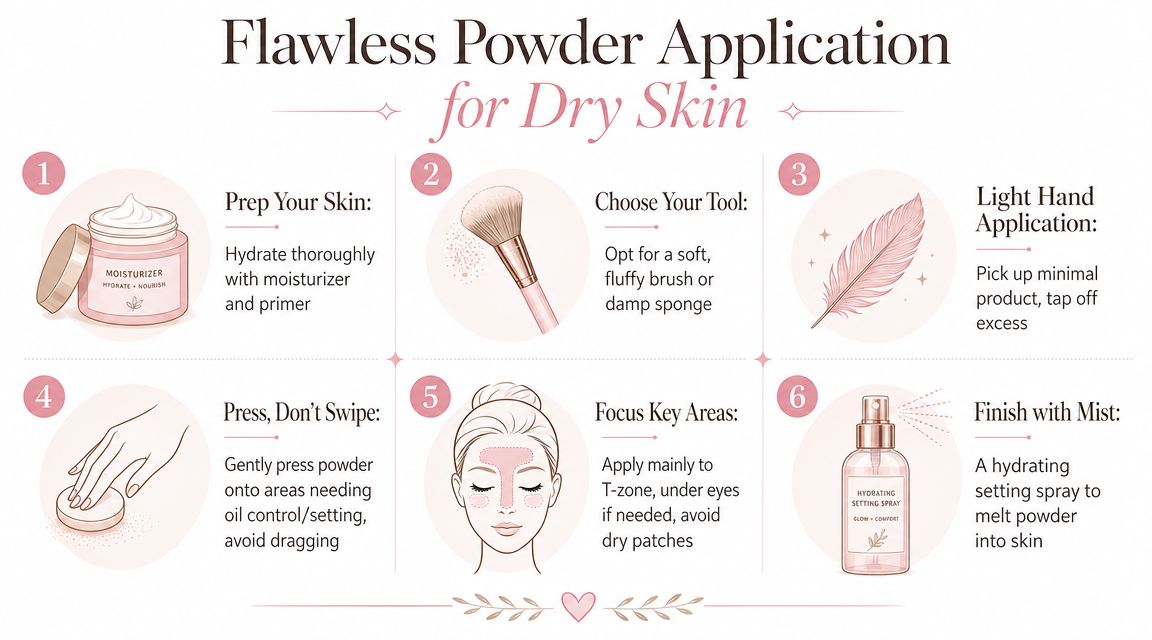
Start with skin that feels comfortable
Before powder touches your face, your skin should feel calm, cushioned, and not at all tight. That means moisturizer is not optional. A hydrating primer can help too, especially if foundation tends to cling around your nose or mouth.
If your current prep isn't doing enough, browse these budget moisturizers for dry skin and upgrade that step first. Powder problems often start long before the compact comes out.
Pick the right tool
The tool changes the finish more than people expect.
- Fluffy brush: Best for a light veil. Good if you only want a little setting in the center of the face.
- Damp sponge: Better for pressing powder into makeup so it looks more fused with the base.
- Velour puff: Useful in tiny amounts, but easy to overdo on dry skin.
If you're nervous about caking, start with a small fluffy brush. It's harder to make a mess with one.
Use the press-and-roll motion
Swiping is what gets a lot of people into trouble. It moves foundation, lifts flakes, and leaves powder sitting unevenly.
Do this instead:
- Pick up a small amount of product.
- Tap off excess if you're using a brush.
- Gently press onto the area you want to set.
- Slightly roll the tool rather than dragging it.
- Stop and check the finish before adding more.
This works especially well around the sides of the nose, under the eyes, and the center of the forehead.
If your powder looks obvious right away, don't keep layering. Pause, press in with a clean sponge, and let the base settle before deciding you need more.
Focus on placement, not full-face coverage
Most dry skin doesn't need powder everywhere. I usually recommend this pattern:
- Set first: Under eyes, around nostrils, smile lines if needed
- Set lightly: Forehead and chin
- Usually skip or barely touch: Outer cheeks
- Use caution: Around any flaky spots
How to fix overapplied powder
It happens. The fastest save is to press a clean damp sponge over the area. That picks up excess and re-melts the finish a bit.
A hydrating mist can help too, but don't soak the face. A few light sprays are enough. Then leave it alone for a minute before judging the result.
5 Best Drugstore Pressed Powders for Dry Skin
These are the affordable picks I'd point most dry-skin shoppers toward first. The focus here isn't just “cheap and decent.” It's drugstore powders that can give you a smoother, more expensive-looking result when your skin runs dry.
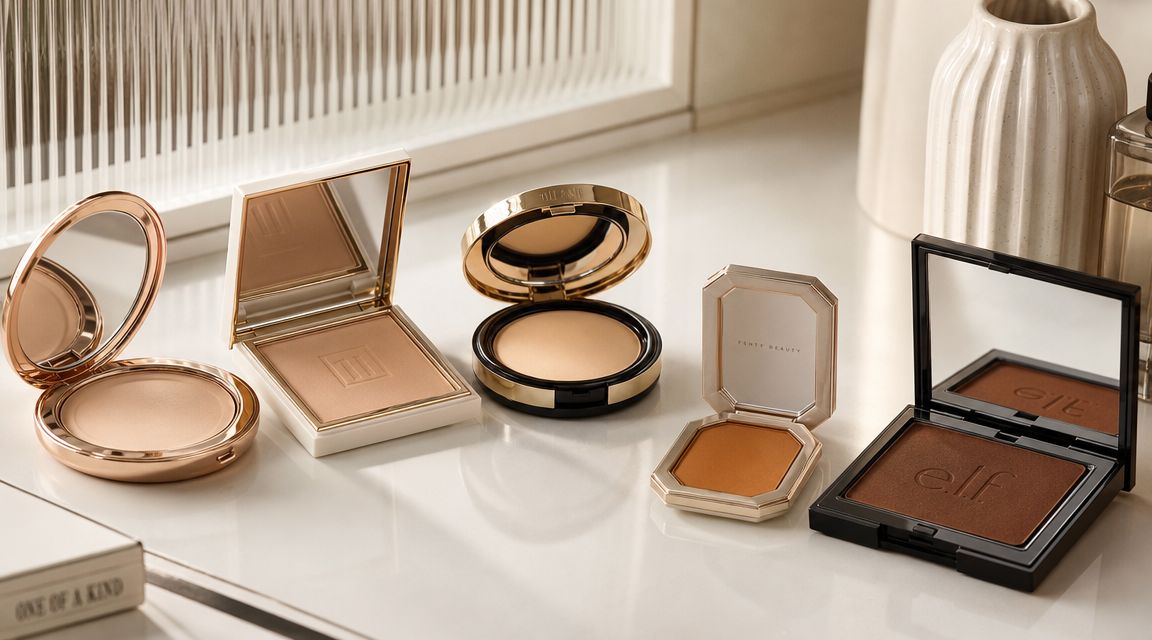
Best Pressed Powder Dupes for Dry Skin
| Drugstore Dupe | Best For | Price Range |
|---|---|---|
| e.l.f. Halo Glow Powder Filter | Soft-focus glow, light setting | Budget |
| NYX HD Finishing Powder Pressed | Blurring texture with a lighter hand | Budget |
| L'Oréal Paris Infallible Fresh Wear Foundation in a Powder | More coverage without a flat look | Budget to mid |
| Maybelline Fit Me Matte + Poreless Pressed Powder | Targeted T-zone setting | Budget |
| Wet n Wild 5-in-1 Essence Primer Powder | Quick touch-ups and smoothing | Budget |
For more options beyond this list, this roundup of facial powders worth trying is useful if you want to compare finishes and formats.
1. e.l.f. Halo Glow Powder Filter
Best dupe for: Charlotte Tilbury Airbrush Flawless Finish if what you want most is that softly perfected, not-too-matte look.
This is the one I'd start with for most dry skin types. It doesn't try to flatten the face. It gives that filtered effect people usually want from pricier powders, but with a little more forgiveness.
Why it works well for dry skin:
- Softer finish: It reads smoother and less stark than traditional matte powders.
- Good for touch-ups: You can target the nose and inner cheeks without making the whole face look powdered.
- Friendly learning curve: If you tend to overapply, this type of finish is easier to recover from.
Its weak point is oil control. If you're very oily through the T-zone, it may not be enough on its own. For dry skin, that's often a feature, not a flaw.
2. NYX HD Finishing Powder Pressed
Best dupe for: Hourglass Vanish Airbrush Pressed Powder in effect, especially if your main goal is a blurred look rather than added coverage.
NYX's pressed HD powder is one of those useful basics that can make the skin look more refined if you keep the application light. It's best for people who want smoothing around pores, the nose, and the center of the forehead.
Best reasons to buy it:
- Blurs nicely: Good for texture-prone areas.
- Thin feel: It doesn't automatically feel heavy on the skin.
- Easy to keep in a bag: Strong option for touch-ups.
The caution here is simple. Don't use too much under the eyes if that area is very dry.
A quick visual demo can help if you're deciding between powder styles and finishes:
3. L'Oréal Paris Infallible Fresh Wear Foundation in a Powder
Best dupe for: A more affordable alternative to higher-end powder foundations when you want coverage and setting in one step.
This is the wildcard pick. It isn't the airiest option here, but it can work beautifully for dry skin if you use it strategically instead of all over with a heavy sponge.
What it does well:
- Adds coverage: Great if you want to tidy redness around the nose or chin.
- Smooths quickly: Useful on low-effort makeup days.
- Looks better buffed lightly: A brush makes it much more forgiving.
If your skin is very flaky, I'd keep this away from the driest parts of the face. But for normal-to-dry or combo-dry skin, it can be a smart one-and-done compact.
4. Maybelline Fit Me Matte + Poreless Pressed Powder
Best dupe for: More expensive blurring pressed powders when you only need selective shine control.
This one isn't my first choice for an all-over dry-skin powder, but it deserves a spot because it's affordable, easy to find, and useful in a very specific way. If your skin is dry overall but still gets shine in the center of the face, this can handle that one job well.
Use it like this:
- Press lightly around the nostrils
- Dust over the forehead
- Skip broad application across the cheeks
That turns it from “too matte” into “very handy.”
5. Wet n Wild 5-in-1 Essence Primer Powder
Best dupe for: The quick-smoothing effect people often chase in luxury touch-up powders.
Wet n Wild often does one thing well. It makes products that are easy to use and easy to replace. This powder fits that pattern. It's best as a purse compact for midday cleanup when your makeup needs a little help but not a full reset.
Why I like it:
- Convenient texture: Good for fast touch-ups.
- Budget-friendly enough to experiment with
- Works best over well-prepped skin: It looks far better when you've moisturized properly underneath
Don't judge any powder for dry skin by how it performs on bare, under-moisturized skin. Judge it over a hydrated base, in the areas that actually need setting.
My short buying advice
If you want the safest overall pick, go with e.l.f. Halo Glow Powder Filter.
If you want stronger blur, try NYX HD Finishing Powder Pressed.
If you want coverage too, choose L'Oréal Infallible Fresh Wear Foundation in a Powder and keep the application light.
Frequently Asked Questions About Powder on Dry Skin
Can I still bake my makeup if I have dry skin
Usually, no. Or at least not in the classic heavy way people think of baking. Leaving a thick layer of powder sitting on dry skin tends to make the under-eye and smile-line area look older, tighter, and more textured.
A better approach is micro-setting. Press in a very small amount only where creasing happens, then dust away anything extra quickly.
How do I touch up during the day without looking cakey
Don't keep layering powder over dry patches. First, blot gently if you need to remove excess oil or broken-down makeup. Then use a small amount of pressed powder only on the areas that need a refresh.
If the skin looks tight already, pat in a little moisture with your fingertips or use a light facial mist first, then powder sparingly.
Should my pressed powder match my foundation exactly
Not always. If you use powder mainly for setting, a close match or a translucent option often works well. If you use a powder with coverage, then shade match matters more.
The main thing is undertone. A powder that's too yellow, pink, or deep can shift the whole base even if the formula itself is nice.
How can I fix powder that settled into fine lines
Use a clean fingertip or a barely damp sponge and gently press over the line. That usually lifts the excess and helps the product melt back into the skin.
If needed, add the tiniest bit of hydrating mist first. Then stop touching it. Constant fussing usually makes the texture worse.
Is pressed powder better than loose powder for dry skin
For many people, yes. Pressed powder is easier to apply lightly and more precisely, which makes it easier to avoid that over-powdered look. If your skin gets flaky fast, that control matters.
Where should I avoid powder if my skin is very dry
Usually the outer cheeks, any active flaky spots, and sometimes the under-eye area if concealer is already looking thin or creased. Powder only earns its keep where it improves the finish.
The Best Powder for a Flawless Hydrated Finish
You finish your makeup, catch the light, and suddenly your skin looks tighter and flatter than it did five minutes earlier. That result is what gives powder a bad name on dry skin. The problem usually is not powder itself. It is the wrong formula, too much product, or powder placed where skin already looks thirsty.
Dry skin can wear powder beautifully. The trick is choosing a pressed powder with a softer, less chalky texture and using it to refine the finish, not smother it. A good one takes down unwanted shine, smooths makeup that still feels tacky, and leaves enough natural glow behind that skin still looks alive.
That is why the best powder for a hydrated finish is not always the most mattifying one. It is the one that keeps texture in check without exaggerating flakes or fine lines.
If you want one buy from this list that balances price, ease, and a flattering finish, my pick is e.l.f. Halo Glow Powder Filter. It gives dry skin a gently blurred, polished look and is far less likely than a flat matte powder to tip the whole face into that dusty, over-set territory. If you want to spend carefully and still get a pretty result, start there.
If you love finding beauty products that look expensive without the painful price tag, Finding Favourites is worth bookmarking. It's packed with practical dupe roundups, affordable makeup picks, and smart swaps that make beauty shopping a lot easier.