
Master Your Skincare Routine with Retinol in 2026
You've probably seen the retinol before-and-afters. Smoother texture, fewer breakouts, more even tone, that polished glow everyone calls glass skin. Then you look at the fine print, see warnings about peeling and redness, and realize half the products people rave about are expensive. That's where most beginners get stuck. They either buy a strong formula too fast or give up before they build a routine that supports retinol.
This post may contain affiliate links, which means I may receive a commission if you purchase through my links, at no extra cost to you. Please read the disclosure policy for more information.
A good skincare routine with retinol doesn't need to be complicated or luxury priced. It needs a smart starter product, a gentle moisturizer, daily sunscreen, and enough patience to let your skin adjust. If you want to browse supportive products beyond a single serum, the Skin Renewal collection is a useful place to compare formulas built around barrier support and renewal-focused skincare.
Introduction
Retinol gets treated like a miracle ingredient or a disaster ingredient. In practice, it's neither. It's effective when you respect the trade-offs.
The big mistake I see is building a routine around the retinol and ignoring everything else. If your cleanser strips your skin, your moisturizer is too light, or your sunscreen is inconsistent, your retinol routine usually falls apart. A cheap but well-balanced routine beats an expensive, aggressive one almost every time.
What works is simple. Start with a low-strength product, use it only a few nights a week, buffer when needed, and treat sunscreen like part of the treatment, not an optional extra. That's how you get the upside without wrecking your barrier.
Practical rule: If your skin feels tight, hot, stingy, or flaky all week, your routine isn't “working through it.” It's asking for less.
Find Your Perfect Starter Retinol 5 Affordable Dupes
Your starter retinol matters more than people think. A rough, irritating formula can make you swear off retinol completely, even if the ingredient itself isn't the problem. The sweet spot for beginners is usually a low-strength over-the-counter formula, because a 2022 NIH review notes that retinol is about tenfold less potent than tretinoin, that 0.25% retinol has been considered roughly as effective as 0.025% tretinoin in the cited comparison without significant side effects or irritation, and that the maximum recommended concentration of retinol in leave-on cosmetics is 0.3%.
That's why I don't recommend jumping straight to the strongest thing you can find. A beginner-friendly skincare routine with retinol should feel sustainable from week one.
Top 5 Budget-Friendly Retinol Dupes
| Product | Price Range | Best For |
|---|---|---|
| The Ordinary Retinol 0.2% in Squalane | Budget | Dry or beginner skin |
| CeraVe Resurfacing Retinol Serum | Budget to mid-range | Acne marks and barrier support |
| Good Molecules Gentle Retinol Cream | Budget | Sensitive skin beginners |
| Versed Press Restart Gentle Retinol Serum | Budget to mid-range | First-time retinol users |
| Neutrogena Rapid Wrinkle Repair Regenerating Cream | Mid-range | Cream texture lovers |
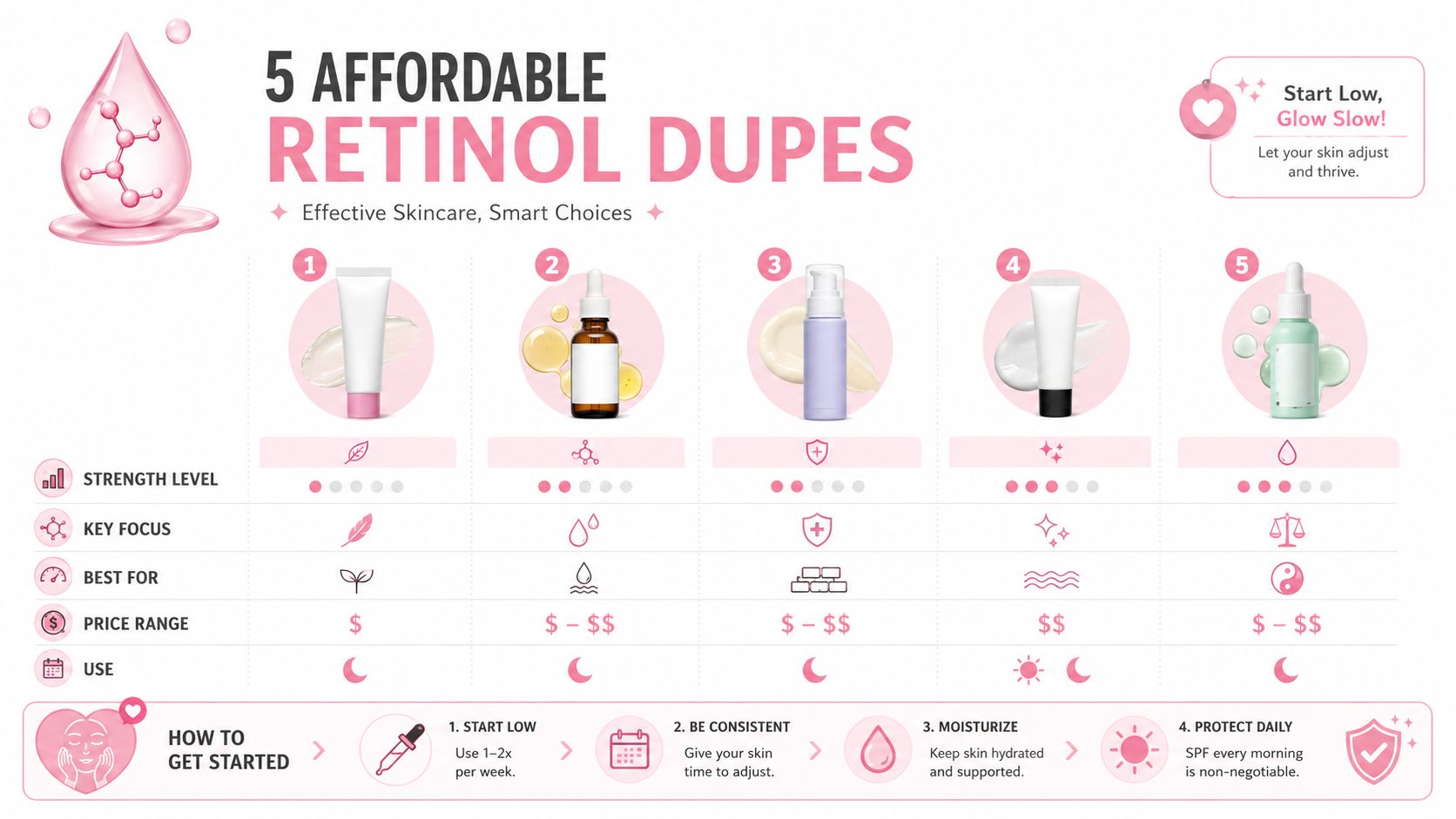
If you want a deeper serum-only roundup after this starter list, this guide to the best drugstore retinol serum is a helpful next stop.
1. The Ordinary Retinol 0.2% in Squalane
This is one of the clearest beginner picks because the strength is easy to understand and the formula keeps things simple. The oil base helps offset that dry, papery feeling some people get from early retinol use.
It's best for normal to dry skin, or for anyone who wants to start with the least intimidating option. The downside is texture. If you hate oily finishes or you're very acne-prone and already use several layers, you may find it a bit slippery.
2. CeraVe Resurfacing Retinol Serum
This is the practical pick for people who want a friendlier formula around the retinol itself. It's widely available, easy to repurchase, and tends to fit well into a no-fuss night routine.
It also makes sense for people focused on post-breakout marks and uneven texture. If your skin gets annoyed easily, formulas with a more moisturizing feel often outperform “stronger-feeling” serums because you'll keep using them.
3. Good Molecules Gentle Retinol Cream
This is one of the better budget choices if you already know your skin runs reactive. The cream texture helps soften the learning curve, especially if you're nervous about the classic flaky start.
I like cream-based beginner retinol products for readers who don't want to fuss with a separate heavy moisturizer right away. The trade-off is that they can feel richer than a serum, so very oily skin might prefer something lighter.
4. Versed Press Restart Gentle Retinol Serum
Versed tends to do a good job with approachable formulas, and this one fits the “start low, stay calm” mindset. It's a good middle ground for someone who wants a modern-feeling serum without spending prestige prices.
This is the pick I'd suggest for combo skin or for anyone who wants a starter retinol that feels a bit more elegant than the bare-bones drugstore basics. Elegant texture doesn't matter much in theory, but in real life it helps with consistency.
5. Neutrogena Rapid Wrinkle Repair Regenerating Cream
If you know you'll only use retinol when it feels like a moisturizer, this is a smart choice. Some people do much better with a cream format because it reduces the temptation to layer too many steps underneath.
The caution here is simple. A product marketed around wrinkle repair can make beginners use too much, too often. Don't do that. A pea-sized amount is still the rule.
Which dupe is best for you
Here's the fast way to decide:
- Choose The Ordinary if you want the lowest-cost, lowest-strength style of entry.
- Choose CeraVe if you want a beginner routine that feels safer and more supportive.
- Choose Good Molecules if your skin is sensitive and you prefer cream textures.
- Choose Versed if you want a balanced starter serum with a more polished feel.
- Choose Neutrogena if you know you'll stick to a cream, not a separate serum.
Start with the formula you'll actually use for months, not the one that sounds most impressive on paper.
Your First Month A Beginner Retinol Schedule
The first month is where most retinol routines succeed or fail. People either rush the process because they want faster results, or they get nervous and use it so rarely that they never build tolerance. The middle path works better.
A long-standing lesson from retinoid use is to start gradually, and beginner guidance still reflects that. As noted by Healthline's retinol overview, beginners often start with 1–2 applications per week or 2–3 nights per week, because retinol works best when tolerance builds over time.
Here's a simple first-month schedule you can follow.
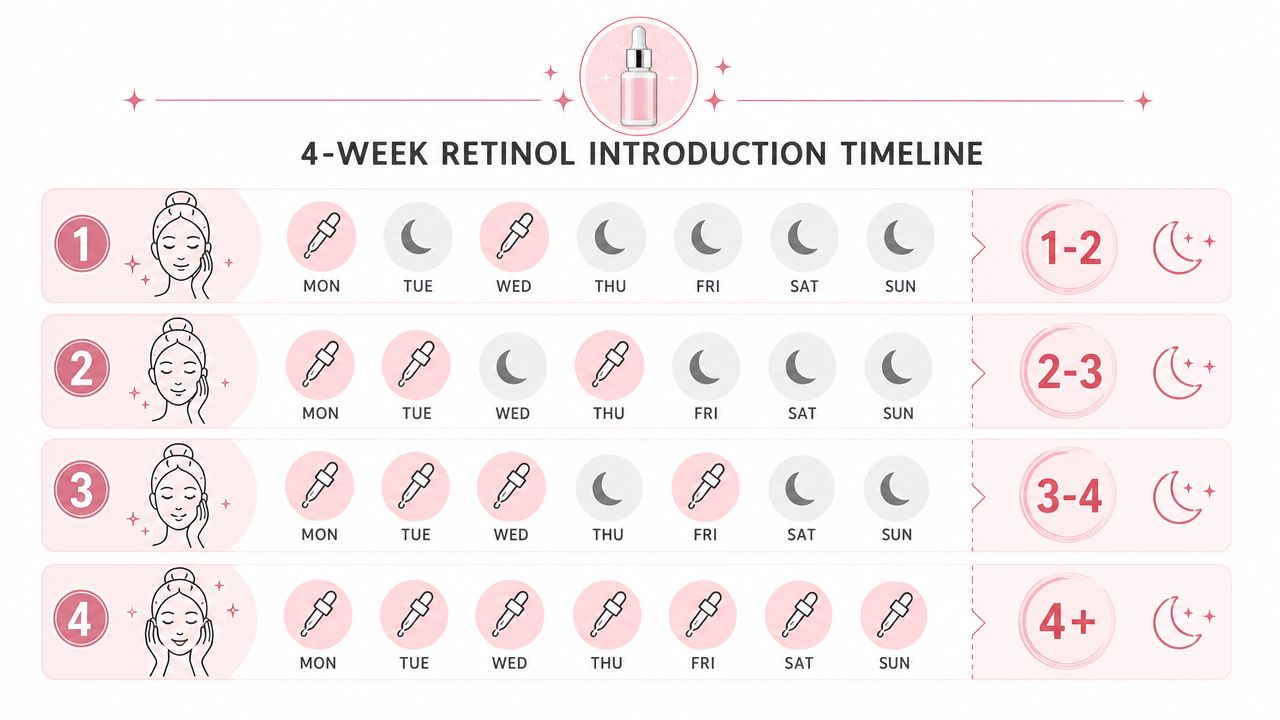
Week-by-week plan
- Week 1: Use retinol on one night. Pick a night when you're home and can pay attention to your skin.
- Week 2: Use it on two non-consecutive nights.
- Week 3: Stay at two nights if your skin feels dry or stingy. Move to three non-consecutive nights only if your skin is calm.
- Week 4: Continue three nights a week, or try every other night if you've had minimal irritation.
That's enough for a real start. You do not need to rush to nightly use.
What skin cycling means here
Skin cycling is just a rotation system. One night for retinol, one or more nights for recovery, then repeat. For beginners, it's useful because it forces rest days into the routine instead of turning retinol into a nightly dare.
A simple version looks like this:
- Night 1: Retinol
- Night 2: Recovery routine only
- Night 3: Recovery routine only
- Night 4: Retinol again if skin feels comfortable
Here's a visual walkthrough if you want to see how a slow introduction can look in practice.
Signs you should hold your schedule steady
Don't increase frequency just because the calendar says so. Hold at your current pace if you notice:
- Persistent tightness: Your skin feels dry even after moisturizer.
- Stinging on basic products: Gentle products suddenly burn.
- Flaking around the mouth or nose: That's often where overuse shows up first.
- Redness that lingers: A little temporary warmth can happen. Ongoing redness means back off.
The best retinol schedule is the one your skin can tolerate consistently.
How to Build Your AM and PM Retinol Routine
A skincare routine with retinol works better when the daytime and nighttime jobs are different. Morning protects. Night treats. Keeping those roles clear makes product choices easier and helps you avoid stacking too much.
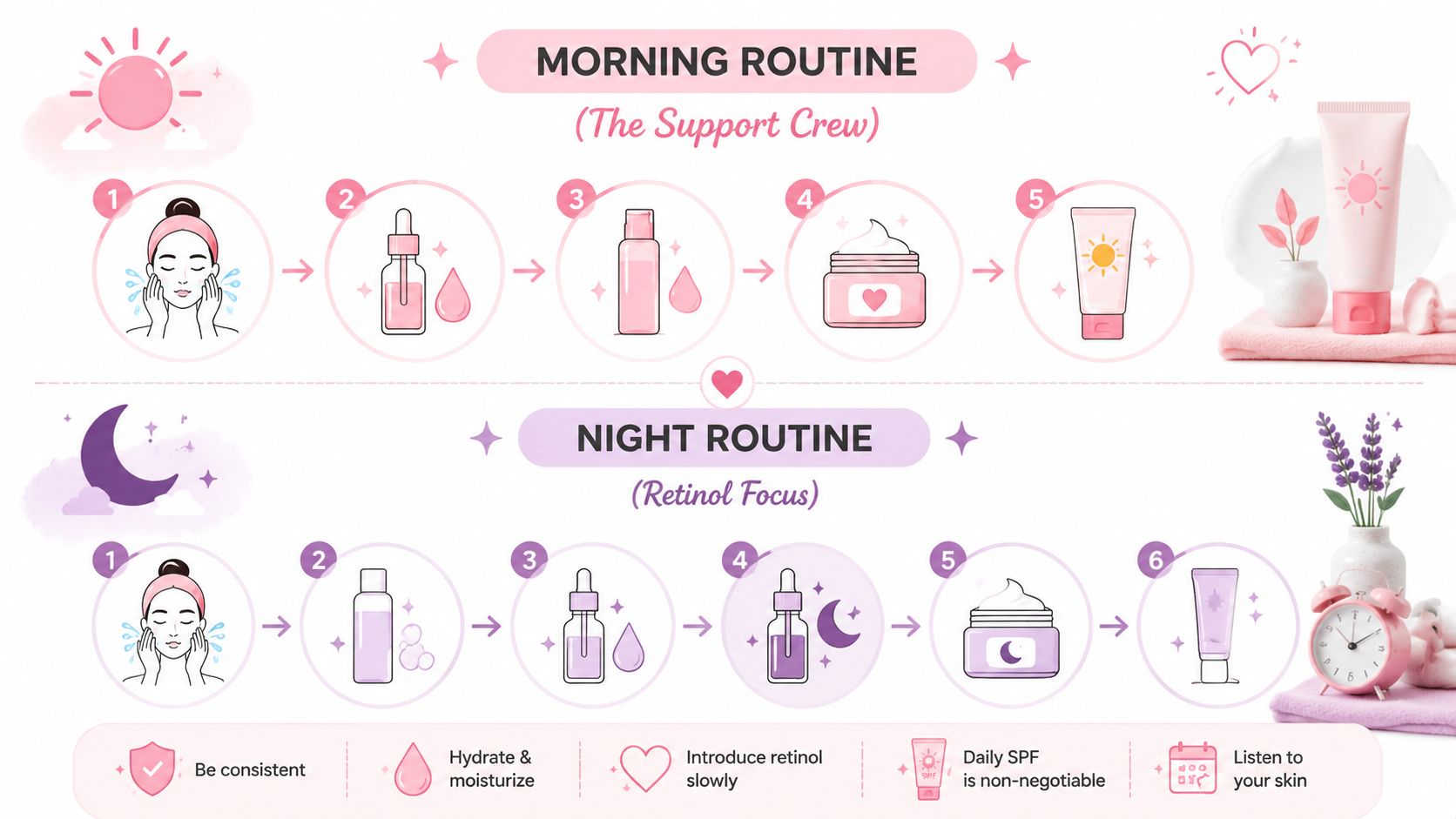
Your morning routine The support crew
Morning is about reducing stress on the skin and protecting the progress you're trying to make overnight.
A basic AM routine looks like this:
- Gentle cleanse or rinse if that's all your skin needs
- Hydrating or barrier-supportive serum if you use one
- Moisturizer
- Broad-spectrum sunscreen
Sunscreen is an essential step. If you use retinol and skip sunscreen, you're making your routine harder than it needs to be. If you need affordable options that wear well under makeup, this roundup of the best cheap sunscreen for face is worth saving.
Your night routine The main event
At night, keep the routine boring. That's a compliment.
According to Paula's Choice retinol application guidance, the core routine is to apply a pea-sized amount at night to clean, completely dry skin, then follow with moisturizer, while starting with only 2–3 nights per week and increasing as tolerated.
That turns into this sequence:
- Step 1: Cleanse gently
- Step 2: Let skin dry fully
- Step 3: Apply a pea-sized amount of retinol in a thin layer
- Step 4: Seal it in with moisturizer
What works and what usually doesn't
What works:
- Gentle textures: creamy cleansers, plain moisturizers, uncomplicated serums
- Dry-skin application: wet skin often makes retinol feel harsher
- Small amount: more product doesn't mean better results
What usually doesn't:
- Using retinol right after a hot shower: skin is often more reactive
- Layering three strong actives underneath it: such practices frequently result in many “my skin barrier is ruined” stories
- Chasing nightly use too quickly: frequency is earned, not forced
If you want better results from retinol, simplify everything around it first.
Smart Retinol Pairings What to Use and Avoid
The hardest part of a skincare routine with retinol usually isn't the retinol. It's figuring out what else can stay in the lineup.
A lot of readers already use vitamin C, acne treatments, exfoliating acids, or brightening serums. That's where routines get messy. Retinol can absolutely live in a multi-step routine, but it needs better neighbors.
Green lights
For sensitive skin, the Dermstore retinol layering guide recommends the retinol sandwich approach, with moisturizer before and after retinol to buffer intensity, and it also highlights supportive pairings like ceramides and hyaluronic acid while advising against using AHAs/BHAs on the same night.
These are the easiest ingredients to keep around retinol:
- Ceramides: Great for people whose skin gets flaky fast. They help your routine feel more stable.
- Hyaluronic acid: Useful when your skin feels dehydrated rather than oily.
- Niacinamide: Often helpful in routines focused on balancing oil, texture, and barrier comfort.
- Peptides: A solid low-drama option when you want a more supportive night routine.
If niacinamide is already on your radar, this guide on nicotinamide 500 mg benefits gives extra background on the ingredient family, and for topical options I'd compare formulas from this roundup of the best drugstore niacinamide serum.
Yellow lights
These aren't automatic bans. They're ingredients that require better timing.
- AHA and BHA exfoliants: Usually the first thing I separate from retinol. Put them on different nights unless you already know your skin tolerates both.
- Strong acne treatments: If your skin is already dry from breakouts or spot treatments, adding retinol too aggressively often backfires.
- Vitamin C at night with retinol: Some people do it, but beginners generally do better keeping routines simpler and separating stronger actives.
A simple decision rule
Use this filter before mixing anything with retinol:
- Does this product exfoliate? If yes, separate it.
- Does this product soothe or moisturize? If yes, it's usually safer.
- Does your skin already feel stressed? If yes, strip the routine back.
The affordable route is often the smarter one here. A plain ceramide moisturizer and a basic hydrating serum usually outperform a fancy stack of “treatment” products that all compete on the same night.
Troubleshooting Purging vs Irritation
It's common for people to panic. A breakout shows up, the skin gets flaky, and suddenly every product is suspect. The fix is to look at the pattern, not just the symptom.
Irritation is a primary reason people stop using retinoids, and visible results can take about 12 weeks. That same guidance also notes that excessive redness, stinging, or peeling points to irritation, not purging, and that it's a sign to pause and let the skin barrier recover.
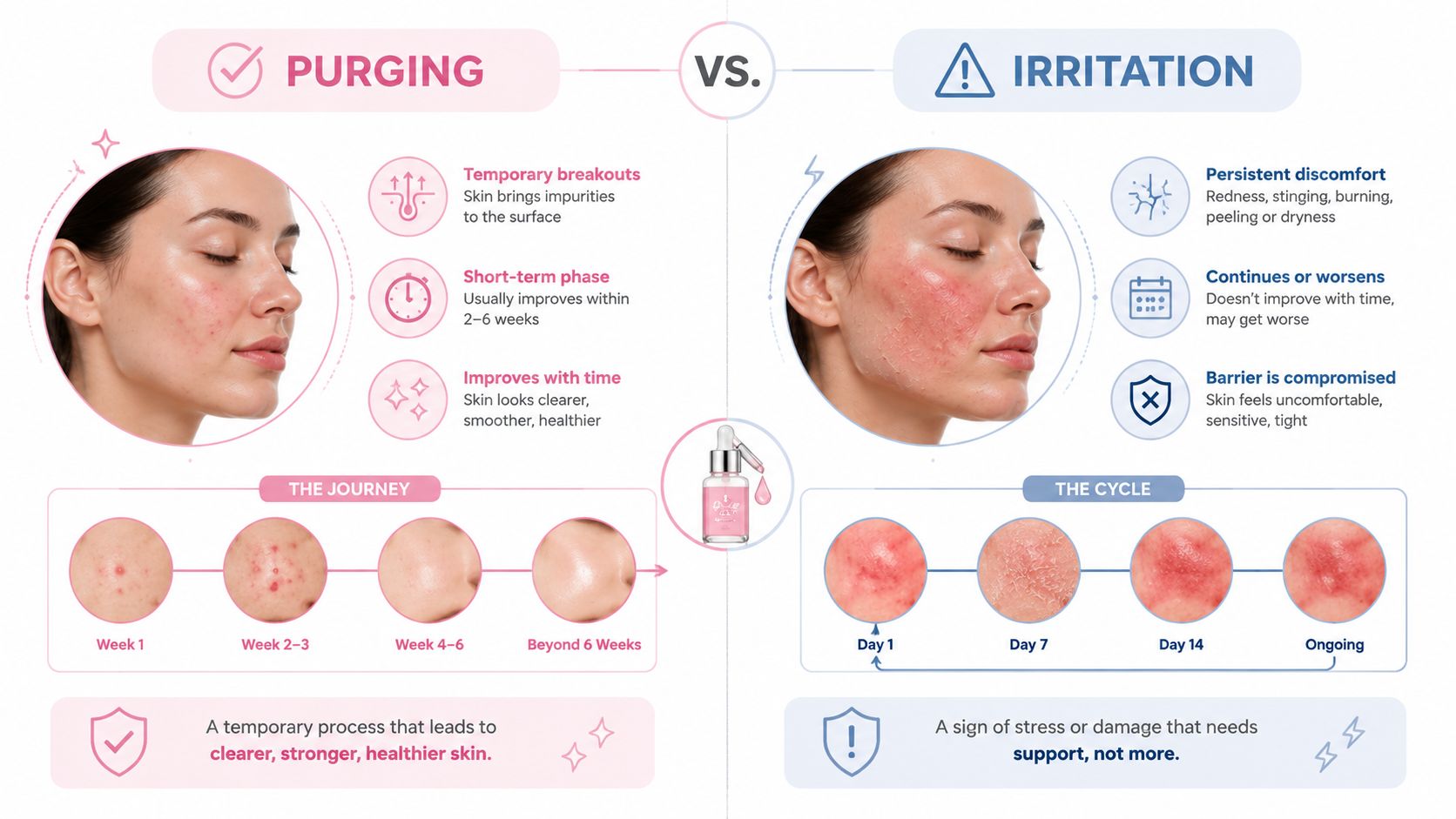
Signs that lean more like purging
Purging usually looks like your usual type of breakout showing up in the places you normally break out. The texture may be frustrating, but the overall skin barrier doesn't feel wrecked.
You might notice:
- Small breakouts in familiar areas
- A temporary rough phase
- Skin that still tolerates moisturizer and cleanser normally
Signs that point to irritation
Irritation feels different. The skin often looks angry and feels uncomfortable even when you apply basic products.
Watch for these:
- Stinging
- Excessive redness
- Peeling that keeps getting worse
- Burning with products that normally feel fine
If your entire face feels tender and reactive, treat that as irritation until proven otherwise.
Recovery plan that actually helps
If it looks like irritation, stop trying to push through. Pause retinol and other strong actives. Use a gentle cleanser, a simple moisturizer, and sunscreen in the morning.
Then wait until your skin feels normal again before restarting at a much slower pace. If you want extra reading on addressing retinol peeling and dryness, that breakdown is useful for spotting when your routine needs recovery instead of more treatment.
The hard truth is that a slower routine usually gets you better long-term results. Fast starts create dramatic setbacks.
Frequently Asked Questions About Retinol
What's the difference between retinol, retinoids, and tretinoin
Retinoids is the broad category. Retinol is one type commonly used in over-the-counter skincare. Tretinoin is a prescription retinoid and is stronger than retinol. For most beginners, retinol is the easier place to start because it fits more smoothly into a home routine.
Can I use retinol on my neck and chest
Yes, but go carefully. Those areas can be more reactive than the face. Use a small amount, reduce frequency, and moisturize well. If your face is barely tolerating retinol, don't extend it to other areas yet.
Is it okay to skip a night
Absolutely. Skipping a night is often the right move. Consistency matters more than perfect frequency, and irritated skin won't reward you for being stubborn.
At what age should I start retinol
There isn't one perfect age. People usually start because of a concern, not a birthday. That may be acne, texture, post-breakout marks, or early signs of photoaging. If you decide to start, start gently.
Conclusion Your Budget-Friendly Path to Glowing Skin
A good skincare routine with retinol doesn't require luxury products or a 10-step lineup. It requires restraint. Pick a low-strength starter, introduce it slowly, keep your moisturizer solid, and wear sunscreen every morning. For most beginners, CeraVe Resurfacing Retinol Serum is the best overall dupe in this list because it strikes the best balance between affordability, accessibility, and ease of use. Stay patient, keep the routine simple, and let consistency do the heavy lifting.
If you love affordable beauty that makes sense, visit Finding Favourites for practical dupes, budget-friendly skincare picks, and no-nonsense product roundups that save you time and money.